SFPMA

SFPMA Industry Articles | news, legal updates, events & education! 

Find Blog Articles for Florida’s Condo, HOA and the Management Industry. 

Loans and Borrowing Money – What Community Associations Need to Know

Loans and Borrowing Money – What Community Associations Need to Know

Loans and Borrowing Money – What Community Associations Need to Know

by Becker

There is a lot of confusion when it comes to obtaining a loan as a community association. This article is intended to help clear the confusion to obtain a loan.

Q: The board of directors of my condominium association has stated they are considering major restoration projects soon and have stated that they are considering a loan from a bank to fund part the projects. While nothing has been decided, the board has mentioned that considering a loan to pay for the work. Does the board have to get approval from the members before taking out a loan? (W.G., via e-mail)

A: As with many things in community associations, it depends. Chapter 718 of the Florida Statutes, the Florida Condominium Act, does not specifically require membership approval to authorize borrowing, not does it generally grant that authority to the board. The only instance where borrowing is addressed is in Section 718.1265, dealing with the emergency powers of an association. That part of the statute states a membership vote is not required to authorize the association to borrow money when dealing with certain types of catastrophic events.

Most condominium associations are also not for profit corporations charted under Chapter 617 of the Florida Statutes. Section 617.0302(7) of that law authorizes corporations to borrow money and many condominium documents vest all lawful authority in the board, except where the documents specifically require a vote of the owners. Accordingly, whether your association must have a membership vote to authorize borrowing money would be controlled your condominium documents. In my experience, there is no general rule, some documents require approval and some documents do not.

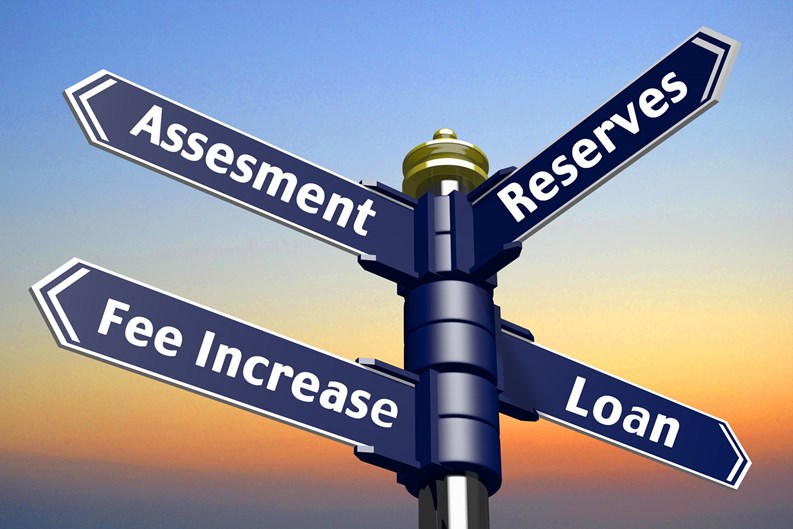
In addition to the question of whether the board has the authority to borrow money, with or without a membership vote, it would also be necessary to determine whether the association has the authority to levy special assessments without a membership vote. While the board may have the authority to borrow money without membership approval, the board may have to have membership approval to levy a special assessment. Most banks will require a special assessment as collateral for the loan.

When borrowing money for construction projects, there are a number of other important issues that must be reviewed. These include verifying that the money will be used for proper “common expenses,” most often verifying that the work planned is an association (and not unit owner) responsibility under the documents. It also needs to be verified that if any “material alterations” are involved, owner approval is obtained as may be necessary.

There are several technical legal issues that must be addressed with association loans. These include what kind of collateral the lender is requiring and whether an owner vote may be required for that, such as pledging reserves. Other issues involve the legalities and procedures to be considered if the association wants to give the owners the option to pay up front and not share in the interest expense of a loan.

It is important to involve the association’s attorney early in the process to anticipate these issues and assist with closing the loan and attend to other requirements, such as an “opinion of counsel” required by some lenders as a loan condition.

Q: Our association’s United States flag was badly damaged during Hurricane Ian. What is the proper etiquette for disposing of the flag in a respectful manner? (F.S., via e-mail)

A: Sections 8(j)-(k), Title 4 of the United States Flag Code states that the United States “Old Glory” flag “…represents a living country and is itself considered a living thing.” When it is of a condition no longer appropriate for display, it should be destroyed in a dignified way, preferably by burning.

Many county government offices and Veterans of Foreign Wars (“VFW”) posts, as well as police stations and some national retailer locations, collect tattered, torn, damaged or faded United States flags. Once collected, various community partners such as American Legion posts, VFW posts, the Girl Scouts, and the Boy Scouts hold flag retirement ceremonies consistent with The American Legion’s resolution passed in 1937.

Joseph E. Adams is a Board Certified Specialist in Condominium and Planned Development Law, and an Office Managing Shareholder with Becker & Poliakoff. Please send your community association legal questions to jadams@beckerlawyers.com. Past editions of the Q&A may be viewed at floridacondohoalawblog.com.


SFPMA’s Condo and HOA Guide for Budget Planning and RFP’s

SFPMA’s Condo and HOA Guide for Budget Planning and RFP’s

  • Posted: Feb 17, 2026
  • By:
  • Comments: Comments Off on SFPMA’s Condo and HOA Guide for Budget Planning and RFP’s

Guide for Budget Planning

Board membership can be a lot of fun socializing with neighbors and contributing ideas on how to improve the communities. But it also involves serious work with budgets, required by Florida Statutes (FS) and, generally, by the association’s by-laws for many the fun is over when its time to prepare the annual budget.

Budgets are typically approved on an annual basis during the months of October or November, but many smart boards start the budgeting process late in the summer months.

Some associations’ fiscal year does run with the annual calendar, so they should prepare their budget 4-5 months before the start of a new fiscal year. Regardless of when your fiscal year begins and ends, board members should begin the budget process by identifying operational needs and estimating expenses for the coming year.


“Who Is Responsible for Preparing the Budget?
The requirements for the preparation of the annual budget for condominium associations are set forth in Section 718.112 (2) (f) FS; and for homeowners’ associations, in Section 720.303 (6) FS.
Generally, the community association manager (CAM) is charged with the responsibility for preparing the preliminary draft of the budget and presenting it to the budget or finance committee for its review and approval. The budget committee, as appointed by the Board of Directors, and, ultimately, the Board itself, is responsible for the adoption of the association’s annual budget.”


A budget also helps to:

* Create proper reserve funds. Measure performance throughout the year.

* Determine the amount of fees to be assessed to each unit owner for the upcoming fiscal year.

Will homeowners be paying a little more, a little less, or about the same as last year? A well thought out budget supplies the answer.


-Association Budgeting Rules in Florida

Whether you serve on a condominium association or an HOA, Florida Statutes have a slew of legal requirements that affect the way budgets are presented and what they must contain. Longtime board members may be familiar with the state’s budgeting requirements under Statutes 718 and 720. If you’re a new board member, it helps to know what’s involved before diving in. Here’s a brief overview.

* All associations, whether a condominium or HOA, are required to prepare an annual budget.

* The budget must show the estimated revenues and expenses for the budget year.

* An estimated deficit or surplus for the end of the current year must be reported.


“Working Capital
As a generally accepted guideline, a community association should maintain its operating fund balance (“working capital”) at a minimum of two months’ maintenance assessments. If this guideline is not met, the Board should consider including a line item in the budget to increase working capital. However, if the working capital shortfall is significant, or if there is an accumulated deficit, a special assessment may be the more conservative alternative. The amount of the budget line item or special assessment should be determined after considering the current year’s expected results of operations.
If the current working capital is sufficient and the current year’s operations are projected to have an excess of revenues over expenses (“operating surplus”), the Board can take advantage of this situation by including line items for special projects or improvements in next year’s budget. Alternatively, that surplus can be applied as a credit to the following year’s assessments to the owners. There are generally income tax considerations in applying this credit and therefore, the Board should consult with the Association’s income tax advisor.”


-Preparing a Budget for your Condominium or HOA

The budgeting process really involves preparing two components: an operating and a reserve schedule. The objective is to determine what homeowners will be charged for maintaining the common areas.

* Operating budget ensures that all operational costs and expenses are identified. They assist in approximating expenses for the upcoming fiscal year.

* Reserve schedule determines the amounts needed to be set aside for capital expenditures and deferred maintenance.

Florida Statute regulations may be complex, but that doesn’t mean preparing a budget has to be complicated or overwhelming. In fact, once you understand the basics of calculating expenses, the process becomes clear-cut.

-Budgeting Tips & Considerations

Unlike a personal household budget where you figure out what you can spend based on your income, a condominium or HOA budget must begin by estimating costs first, which will then determine the amount an owner will be charged.

-Operating Component

1-Compile the current year’s year-to-date expenses. They will serve as the basis for the new budget year.

2-Analyze these expenses carefully and factor out any that are non- recurring, such as plumbing or storm-related emergencies.

3-Review your current contracts for escalation clauses and/or scheduled increases.

4-Request estimated costs for non-contractual expenses like general repairs and maintenance, utilities, and certain administrative expenses.

“Reserve Schedule

Reserve funds are used for two expenses: capital expenditures for common area components, such as roof replacement, pavement resurfacing, and elevator upgrades; and deferred maintenance that generally refers to interior and exterior painting. The funds for these big-ticket items are generally collected over years, not just in the year they’re expected to occur.

The condominium or HOA board may also have certain projects it wants to do that are not covered by reserves. This can include things like pool re-tiling, termite treatments, landscape improvements, and costs to maintain tennis, racquetball, or pickleball courts.

The projection of these fees must be as accurate as possible. Remember, condominiums and HOAs are not-for-profits so it’s important that they do not have a surplus; of course, you don’t want a deficit, either.

Budgeting is a big job, but if you break it down in these easy steps should take the stress away. Preparing an accurate budget keeps your condominium or HOA thriving financially now and in the years to come.”


“Reserves
Chapters 718 and 720 of the Florida Statutes both require the funding of reserves in the association’s annual budget (with specific waiver provisions for condominium and homeowners’ associations). The use of reserve funds is restricted for capital expenditures and deferred maintenance. A capital expenditure is the use of funds for the replacement or major repair of a common area component. Examples of capital expenditures are roof replacement, pavement resurfacing and elevator upgrades. The term “deferred maintenance” generally refers to interior and exterior painting. Reserves are included in the association’s budget so that funds are available for the eventual replacement of common area components and deferred maintenance. The alternative to funding reserves is the use of available operating funds or, more likely, the adoption of a special assessment. Sound financial management dictates that, concurrent with the adoption of a special assessment, a detailed budget should be established. Include a provision for bad debts commensurate with that of maintenance assessments.


-Financial stability including accounting, collections, and accounts payable services are the core to a Condo and homeowners association’s strength and future success.

Boards and their Property Management company work hand in hand providing a checks and balances system. where payables for buildings services are entered by the community manager, processed by the Payables/Accounting dept, reviewed by senior management. These are put in place for protections for all owners of the community.

Having a Management Company to aid Board Members is important. unlike self managed community associations, no one person or Board member has total control with the financial responsibility for

*Online payables processing
*Electronic signatures
*Accounts receivable collection process
*Effective internal controls
*Financial statement preparation
*Annual Budget preparation

This way the Management Company and Boards can work together on everything from The Communities:


“Here are some other guidelines to consider when preparing the Association’s budget:

*For contractual expenses, read the related contracts to identify any increases that are anticipated in the following year.

*Contact your insurance agent as early as possible to determine insurance premiums. If financing insurance, try to obtain favorable rates.

*Request estimated costs for non-contractual expenses such as general repairs and maintenance, certain administrative expenses, trash removal, and utilities.

*Include a reasonable amount for bad debt expense.

*Avoid a “Contingency” line item if possible.

*Look at revenue trends for fee-for-service charges to unit owners such as work orders, laundry, parking, etc. Be sure to consider possible increases.

*If loan repayments will be required, include the entire payment amount (i.e., principal and interest) in the budget.


There are other concepts to keep in mind in preparing the annual budget: Be realistic. It is generally difficult to keep maintenance assessments at last year’s levels. The role of an association’s treasurer or president is to run the association’s business. It is not to win a popularity contest. That role should be treated with as much, if not more, respect than the association’s officers’ own businesses.

The budgeting process doesn’t end with the adoption of the annual budget. Careful and routine monitoring of budget-to-actual results of operations is a vital part of the effective management of a community association.


Defination of budget Terms:

-Balance Sheet

One of the reports included in the Financial Reports presented to the Board of Directors is the Balance Sheet. The Balance Sheet is a statement of the book value of all of the assets and liabilities (including equity) of the association. It provides a “snapshot” of the association’s financial standing as of the end of that particular month.

-Collection Status Report

By far one of the most popular and most important reports is the aging report or the Collection Status Report. This report provides the Board with a listing of the owners that are past due. There are many variations of this report, however, the sample shown is the most concise. This report provides a glimpse of the names of those owners that are past due, the total amount past due, and at what stage in the collection process the account is in.

-Check Register and/or Accounting Software

A Check Register its a monthly report. This report is a list of all of the checks written by the association during a given period, typically each month. Among other information, it lists, the check number, the vendor’s name, the invoice number, brief description of the payment, and the check mount.

-Profit & Loss Report

The second page of the Financial Report summarizes the revenues, costs and expenses incurred during a specific period of time. The Income and Expense Report follows a general format that begins with an entry for Income and subtracts from Income the costs of running thebusiness, including operating expenses, insurance, contracted vendors, and repairs. The bottom line, literally and figuratively, is net income or loss.

Because we know Associations depend on their budget, our P&L reflects the Actual Expenses vs. the Budget Amount. This comparison is done for the current month as well as year-to-date. You are also provided with the variance (if any) between the actual expense and the budgeted amount.

-Monthly Ledger

The Monthly General Ledger is the main accounting record of a business which uses double-entry bookkeeping and is a summary of all of the transactions that occur in the company. It is built up by posting transactions recorded in the general journal. The Balance Sheet and the Income and Expense Report are both derived from the general ledger. The general ledger is where posting to the accounts occurs. Posting is the process of recording amounts as credits and debits in the pages of the general ledger. Because each bookkeeping entry debits one account and credits another account in an equal amount, the double-entry bookkeeping system will ensure that the general ledger will always be in balance.


In the end Board and Management Companies should upload these reports to the Secure Association website where Owners can view the financial records each year. This avoids Questioning and sometimes fighting by owners in the association regarding fees being paid with the new budgets.


Tags: , ,
Call Chuck’s Painting Inc. Today for All Your Residential, Commercial and Industrial Painting Needs 

Call Chuck’s Painting Inc. Today for All Your Residential, Commercial and Industrial Painting Needs 

Call Chuck’s Painting Inc. Today for All Your Residential, Commercial and Industrial Painting Needs 

A1 Chuck’s Painting

Alex Manganiello
Owner/President
Cell: 954-868-0494
Fax: 954-966-3371
E-Mail: a1chuckspainting@yahoo.com


We are a full service painting company we provide the highest level of quality and service and we are capable of handling all of your painting needs. We specialize in Interior/Exterior Residential painting Townhouse communities Condominium communities Commercial buildings Shopping Plazas and Business Parks.


Tags:
ASSOCIATION BUDGETING FOR DUMMIES

ASSOCIATION BUDGETING FOR DUMMIES

ASSOCIATION BUDGETING FOR DUMMIES by Steven J. Weil, PhD, EA, LCAM, Royale Management Services, Inc. A “dummie,” in this case, is a first-time association member and/or someone with little or no association budgeting experience who wants to know more about how and why the budget is created before they vote on it.  

Bookkeeping sfpmaIs it really necessary to go through all that work year after year? The first answer is, yes, because it’s the law. Florida law (718.112 (2) (f) 2) requires that annual budgets be prepared and, further, that reserve calculations be made by using a formula that estimates useful life and replacement cost.
The real answer is that the budget is a tool used by the association’s board to determine how much owners will be required to pay in maintenance costs for the coming year in order to keep the association financially stable. The budget is a financial plan, a guide; but the process is an art, not a science. That’s why it’s important to leave room for unplanned expenses. A shortfall may result in an assessment, which will not make anyone happy.

The only thing owners hate more than a maintenance fee increase is a special assessment that is necessary because the budget does not adequately cover the ongoing operating and maintenance costs. The tricky part of the process is to balance what is required with the often competing interests of those who want the lowest possible increase with those who are willing to pay more for better services, better amenities or other improvements.

There are two parts to every budget: the operating budget and the reserve budget. • The operating budget should include all the necessary regular and recurring expenses that are expected in the coming year, no matter how small, such as repairs, maintenance, payroll, utilities, supplies, insurance and administrative costs. • The reserves are designed to accumulate funds for major ongoing repair and replacement. Statutes make it mandatory that reserve budgets first include estimated expenditures for roof replacement, building painting and pavement resurfacing at a minimum.  

Aside from what the law requires, a good reserve budget also covers other large capital items that will wear out and need to be replaced over the life of the association, such as: elevators, windows, common area air conditioners, docks, generators, et al. Projected estimates take into consideration the cost to replace each item, prorated over the years of its estimated life. A common mistake in estimating this value is the failure to take into account the rise in replacement costs that occurs over time.

Reserve funds cannot be used for purposes other than those intended without a majority owner’s vote of approval in advance.  

  How do you build a budget that works? The big secret is to start months before your current budget year ends!

  1. Step one is the information-gathering process, including a review of long-term contracts, upcoming expected maintenance and repairs, details of possible fee increases and a “wish list.” This time-consuming step includes getting quotes from vendors, examining recurring contracts for things like insurance policies, lawn and landscaping, trash removal, etc. Sometimes closely-scrutinized contracts can be renegotiated to save money. It’s also important to use caution when reducing maintenance and repairs numbers to delay an expense outlay. That could result in increased costs in the long run.
  2. Step two is to compare and, using a spreadsheet or special budget software, enter into the appropriate columns the year-to-date income and expenses — projected through year end — with the budget for the current year, to review for increases, and show the percent of difference.

  3. Step three: compare projected expenses for the coming year with “other” income (non-assessed) — such as laundry income, application fees, clubhouse rental, dock rental and any other items for which the Association collects fees other than maintenance fees. Using those figures, it is then possible to calculate the maintenance fees needed to fund the budget for the coming year. These required maintenance fees are calculated by subtracting the total projected “other” (non-assessed) income from the total projected expenses. This number is then allocated by the formula shown in the association documents. (The number is often based on the number of units or on square footage.)

According to the Statutes, owners may petition the Board if it adopts a budget where assessments rise more than 15% over those for the prior year. The budget must be in keeping not only with the State Statutes but also with the association’s documents, which may be more stringent. Final approval by the board where the proposed budget is adopted must be done at a properly noticed budget meeting. A notice of this meeting, along with a copy of the proposed budget, must be sent to all owners at least 14 days prior to the meeting. Only association members may vote to waive or reduce the budgeted reserves through full or partial funding. Failing to fund reserves at all puts everyone’s future at risk. If owners can’t afford the monthly cost how are they going to come up with the money when the roof, elevator or other capital component needs replacing? Often this is done by borrowing, making monthly maintenance payments higher because of what is required to pay back a loan, creating a double whammy of current debt repayment for past depreciation and creating an excuse not to meet current obligations. In some buildings this can create a death spiral.  


Tags:
Maximizing the value and life cycle of a building requires continuously maintaining performance and improving energy efficiency Learn how Rimkus can help with your Building Inspections & Repair.

Maximizing the value and life cycle of a building requires continuously maintaining performance and improving energy efficiency Learn how Rimkus can help with your Building Inspections & Repair.

Building Envelope Services

Maximizing the value and life cycle of a building requires continuously maintaining performance and improving energy efficiency Learn how Rimkus can help with your Building Inspections & Repair.

From the design of new buildings to the construction materials and technologies used to repair and maintain existing structures, we are uniquely qualified to provide a full range of global building envelope consulting services to help prevent and eliminate problems.

Performance for the Life Cycle of Your Project

Committed to utilizing sustainable materials and methods as applicable, we proactively address performance issues to improve the way buildings are constructed and maintained.


View our building envelope services:

  • Building Envelope Assessments
  • Façade Inspections
  • Façade Restoration
  • Historic Preservation
  • Pavement Engineering
  • Roof Consulting
  • Waterproofing and Weatherproofing Assessments and Design


Building Envelope Assessments

The Rimkus Built Environment Solutions team can provide a complete assessment of a structure’s building envelope (façades, roofs, windows, balconies, walkways, parking areas, etc.) describing the condition of such and all items in need of repair. A recommended timeline and a projected construction cost will also be provided to assist the owner in projecting future budgets. For a full survey of all building components, Rimkus can increase the scope of the survey and provide a full Property Condition Assessment (PCA) including mechanical, electrical and plumbing systems, elevators, and interiors. Building envelope assessments and PCAs are typically provided with 5- or 10-year projections; however, they may be customized to the client’s needs. These reports can be utilized as a tool to help create capital expenditure budgets and establish maintenance schedules.
 

Contract Administration

Retaining Rimkus to handle your Contract Administration services on your roof construction projects will provide you with seasoned professionals who know how to control costs and long term outcomes. You will experience greatly improved transparency and accountability from your contractors and you will also be far more likely to maintain critical schedules, budgets, and deadlines on your projects. Rimkus achieves these benefits by maintaining a free flow of information between the Contractor and Owner. Our services also include payment certification and preparation of change orders for any additional work that may be encountered during the course of the project. We strive to protect our clients by confirming that the solutions you invest in meet all of your roofing and building portfolio needs. At Rimkus, you will find a level of personal attention on every project that is unmatched by any of our competitors. Trust in our veteran team, state-of-the-art technology, and our decades of experience in the industry. We offer:

  • Contract Administration
  • Schedule, budget, and deadline maintenance
  • Minimization of building occupant disruptions
  • Payment certification
  • Preparation of change orders
  • Review of shop drawings / material submissions


Diagnostic Testing

To properly assess the condition of your roof we need to determine its composition, quality, and moisture content. At Rimkus, we can accurately assess each of those factors with our Destructive and Non-Destructive Testing protocols. It is one of the steps taken during your Roof Condition Analysis and a necessary tool in projecting the life expectancy and long-term costs of your roof. We can also use the results to save you money by identifying problems before they become catastrophic. We strive to protect our clients by confirming that the solutions you invest in meet all of your roofing and building portfolio needs. At Rimkus, you will find a level of personal attention on every project that is unmatched by any of our competitors. You can place your trust in our veteran team, state-of-the-art technology, and our decades of experience in the industry.
We offer a variety of diagnostic testing methods:

  • Infrared thermography
  • Tramex moisture meter
  • Electrical Field Vector Mapping (EFVM)
  • Core cut testing
  • Delmhorst Probe


Façade Inspections

When façade elements fail, components could fall, thereby putting people and property at risk. As a response to this, many cities have passed façade ordinances to identify unsafe conditions, such as loose façade components or materials that may fall and cause damage to property or injury to pedestrians. At Rimkus, we provide professional building inspections supported by recommendations and design for proactive maintenance and repair programs. Façade inspections typically fall into one of the following categories:

  • Safe: Requires no attention
  • Safe with a Repair and Maintenance Program: Requires repairs or maintenance within a time period designated by the professional in order to prevent deterioration into an unsafe condition
  • Unsafe: Has no reliable means of structural support and is dangerous to persons or property. Requires prompt remedial action.

Conducting Inspections Inspection requirements range from visual inspection of street-facing façades by architects, engineers, or contractors, to “hands-on inspections” that require licensed engineers or architects to physically touch façade components for each elevation of the building along the entire height of each elevation. Typically, inspections are required for buildings over five stories, with inspection frequencies ranging from two to five years. Our experts are well versed in façade condition assessments and have the experience and knowledge needed to identify repair details as well as oversee the completion of the repairs on behalf of the property owner.


Façade Restoration

The appurtenances of a façade (balconies, fire escapes, etc.) often deteriorate faster than the façade itself and therefore require particular attention and, often, increased maintenance. Repairs to these elements should be addressed in a manner that will prolong the useful life of the appurtenance as well as the repairs performed. The Rimkus Building Envelope team can assist in all phases of façade restoration. We are well versed in façade restoration, with a long track record of success on projects varying from low-rise commercial and residential buildings to luxury high-rise towers. The façade, while best known for its aesthetic, also provides structural support for a building and vertical weatherproofing for its interior spaces. All three of these components should be analyzed during façade restoration. Performing a thorough analysis of the building’s façade prior to design, Rimkus provides a detailed list of findings and recommendations for immediate repairs as well as preventative maintenance to completely address façade functions. At Rimkus, we believe that the key to a successful façade restoration project often occurs before the contractor arrives on-site. A thorough and detailed pre-construction effort, including preliminary investigation, preparation of contract documents, bid process and review, pre-construction meeting(s), and review of all mock-ups and submittals, will often eliminate unnecessary costs and construction delays.


Historic Preservation

Rimkus has had the distinct pleasure of working on numerous historic and landmark structures, including both high-rise and low-rise office buildings as well as a number of ornate residential buildings. Exhaustive research, early coordination with all governing agencies, and involvement of qualified experienced professionals are all essential components in the preservation of these delicate historic structures. When analyzing and repairing the building envelope of historic structures a conservationist perspective is preferable, full-scale repair or replacement is not always best. Thorough documentation of existing conditions including sketches, photographs, and cataloging of deteriorated elements is imperative to the restoration process. The use of new technologies to eliminate unnecessary probes and demolition is advisable. By incorporating the use of laser scanning, Rimkus can achieve an unprecedented level of detail and accuracy during the design phase often without the need for hands-on visual inspections. In addition to providing thorough contract documents; these laser scans will allow for the creation of 3D models of decorative stone units for shop drawings and mold casting.


Leak Investigations

Rimkus offers a thorough approach to leak investigations, recognizing that a successful investigation requires pursuing all possible sources of water infiltration. With years of experience, Rimkus understands that there may be multiple factors contributing to a leak. Rimkus offers a range of services to assist in determining the source(s) of water infiltration, including hands-on and visual inspections, non-destructive testing techniques, and more traditional methods of probes and water tests. Our non-destructive testing techniques include the use of infrared imaging to identify thermal anomalies and moisture-compromised insulation, the use of roof and wall moisture scanners and moisture meters to perform impedance testing and identify the relative moisture content of the material, and electronic leak detection (electric field vector mapping) to identify the precise location of water infiltration.
 

Roof Condition Assessments

Rimkus recommends a roof condition assessment to better understand the life expectancy of a roof and to address an immediate concern. The result is a promptly delivered roof analysis outlining the strengths and weaknesses of the existing roof system. Our findings are put into a clear and legible report that includes photo evidence, illustrations, and a colored AutoCAD roof plan. We believe that a high level of clarity and transparency is crucial to help our clients make informed decisions. Many of our technicians are RCI Inc., RRC, and RRO certified. Our emergency leak responders can diagnose numerous problems on the spot and expedite the remediation strategy. Capital planning is also an important component that we provide as part this process. We believe it is important to provide our clients with a strategy for future investments and expenditures to meet both the short and long-term budget plans.
 

Waterproofing and Weatherproofing Assessments and Design

Rimkus assists in the evaluation of existing roofing/waterproofing systems, as well as the design and construction administration of the repair or replacement, of all roofing/waterproofing systems including:

  • Single Ply (Thermoset and Thermoplastic) Systems
  • Modified Bitumen Roof Systems
  • Fluid-Applied Liquid Membranes
  • Vegetative/Green Roofs
  • Balcony Waterproofing
  • Below-Grade and Sidewalk Vault Waterproofing

Similar to most aspects of construction one size, does not fit all with respect to roofing and waterproofing systems. Several factors determine the appropriate system for a particular building, including:

  • Building Code Regulations
  • Requirements of Owner’s Insurance Provider
  • Climate and Wind/Weather Exposure
  • Frequency and Type of Foot Traffic
  • Intended Use (of Roof Surface and Interior Space Below)
  • Mechanical Equipment and Exhaust Units
  • Overall Size
  • Roof Slope
  • Desired Life Expectancy
  • Owner’s Budget
  • Number of Penetrations
  • Roof Deck Composition

Several commonly overlooked processes can be established during the installation of a new roof that will help reduce the cost of future maintenance and extend the service life of the roof system:

Leak detection systems can be installed in most roof systems to use as a quality assurance tool and to allow for easy identification of future leaks. This is particularly important in roofs with an overburden (i.e., inverted roof systems and vegetative roofs). A custom-tailored roof inspection and maintenance schedule should be provided for the owner’s use in prolonging the useful life of the roof system and minimizing the risk of leaks resulting from roof damage.


General Contact Information


[AdSense-C]
 
Tags: , , ,
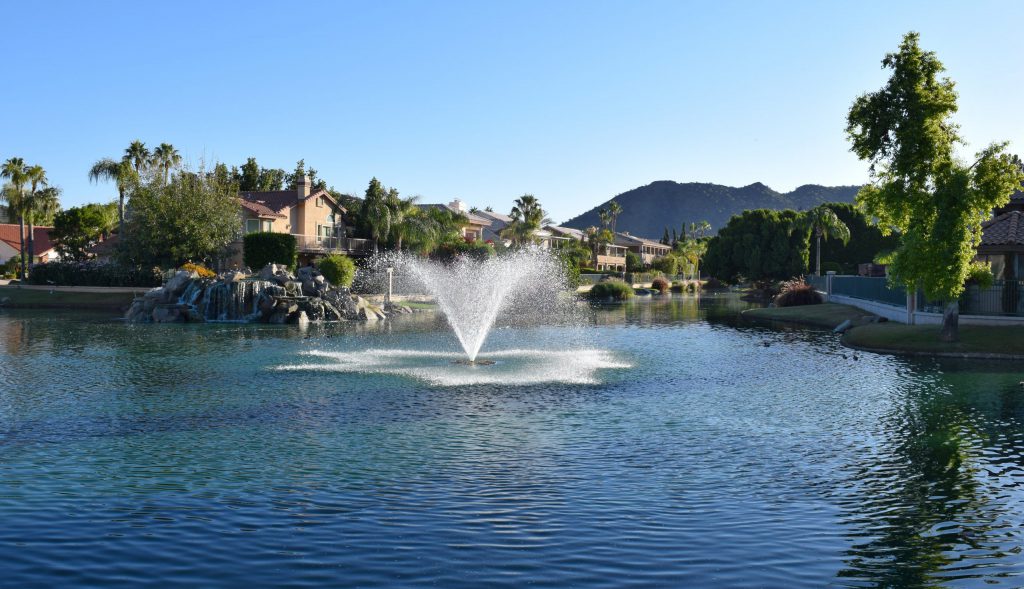
Claim Your Discounted Fountain or Aerator! from Solitude Lake Management

Claim Your Discounted Fountain or Aerator! from Solitude Lake Management

SOLitude Lake Management Winter Tip for Pond & Marina Owners

SOLitude Lake Management Winter Tip for Pond & Marina Owners

SOLitude Lake Management Winter Tip for Pond & Marina Owners


Notice how some areas stay ice-free while everything else is frozen? That’s the power of proper de-icing.

By circulating warmer water from below the surface, a de-icer helps prevent ice from forming around docks, boats, and equipment—protecting your investment and keeping your waterbody healthy through the coldest months.

Even in winter, balanced water is active water. 💧

https://hubs.ly/Q03Q-fhx0


Tags:
Try GlazeGuard® today and experience the best hard surface sealer on the market.

Try GlazeGuard® today and experience the best hard surface sealer on the market.

Looking to protect your floors? Look no further—GlazeGuard® is the gold standard in surface sealers! Delivering unmatched durability against stains, water, chemicals, everyday wear and more.

Whether you’re sealing a busy commercial space or a home sanctuary, this high-performance sealer provides long-lasting, beautiful results you can count on.

click above to watch the video

Available in Gloss, Satin, and Matte finishes, GlazeGuard® lets you choose the perfect look while delivering maximum protection.

🎥 Watch our quick video to learn the floor types GlazeGuard® brilliantly performs on like:
Porcelain
Ceramic
Stone
Concrete
Terrazzo
Epoxy
and other hard surfaces!
Try GlazeGuard® today and experience the best hard surface sealer on the market.
Have questions? We’re just a call away—our expert team is always here to help!

Charles Idowu
Technical Director
CoverTec Products LLC
P: 754-253-3401
C: 954-512-8019
www.covertecproducts.com

Tags: ,