SFPMA

SFPMA Industry Articles | news, legal updates, events & education! 

Find Blog Articles for Florida’s Condo, HOA and the Management Industry. 

New Florida laws are changing property management by increasing transparency

New Florida laws are changing property management by increasing transparency

New Florida laws are changing property management by increasing transparency, requiring photo documentation for move-in/move-out inspections, mandating flood disclosures, and tightening regulations for community associations. Specifically, property managers must now provide tenants with flood disclosures, document unit conditions with photos to justify security deposit deductions, and adhere to new rules for homeowners’ and condominium associations regarding inspections, reserves, and records. 
 
Key changes for property managers 
 
Move-in and move-out documentation: Property managers must take photos of the unit’s condition at move-in and move-out. This documentation is crucial for justifying any deductions from a tenant’s security deposit. 
 
Flood disclosures: A new law effective October 1, 2025, requires landlords to provide a flood disclosure to tenants for rental agreements of one year or longer, notes the Florida Department of Agriculture & Consumer Services. 
 
Community association regulations: Significant changes affect HOAs and condominiums, including new requirements for structural integrity reserve studies and milestone inspections, enhanced financial transparency, and updated rules for official records and member access, says the Naples Daily News. 
 
Enhanced transparency and records management: 
 
Property managers must ensure proper maintenance of all official records and follow legal processes, explains Advanced Collection Bureau. 
 
Some HOA laws now allow for more documents to be inspected by members without a specific reason, notes Seward Law Office, P.A.. 
 
Fee restrictions: Some new laws prohibit landlords from charging tenants for certain actions, such as serving termination notices. 
 
Risk management: Property managers must proactively update their processes, ensure accurate documentation, and maintain clear communication with tenants and homeowners to manage risks effectively, says Advanced Collection Bureau. 
 
Slower eviction process for squatters: A new law passed in 2025 allows for a faster process for removing squatters from commercial properties by enabling owners to file a complaint with the sheriff, states Florida Realtors. 
 
Risk of new fees: Some property management companies are changing their fee structures to be more transparent with clients and to comply with new regulations. 
 
HB 913 compliance isn’t optional—and the December 31 deadline is coming fast. : SRI Consultants, Inc.

HB 913 compliance isn’t optional—and the December 31 deadline is coming fast. : SRI Consultants, Inc.

SRI Consultants, Inc.


HB 913 compliance isn’t optional—and the December 31 deadline is coming fast.

At SRI, we’re turning questions into clarity with AI-powered insights. Visit our updated “AI for Building Safety” webpage for the guidance you need before time runs out.

Find the answers to your Questions using our AI today.

https://hb913.sriconsultants.net/


Tags:
At Axela, we don’t replace your process — we enhance it.  Easy Collect simplifies collections with transparency, automation, and real-time reporting

At Axela, we don’t replace your process — we enhance it. Easy Collect simplifies collections with transparency, automation, and real-time reporting

At Axela, we don’t replace your process — we enhance it.
Easy Collect simplifies collections with transparency, automation, and real-time reporting, leaving your managers free to focus on what matters: keeping Boards and communities happy and healthy.

Because when you give your managers have the right tools, your communities thrive.

✅ Less workload
✅ Faster recovery
✅ Happier boards

🔗 Learn more about our Management Company partnerships:
https://lnkd.in/euSCQsNf


Finding top Companies is important for Property Managers Condo & HOA Boards.

Finding top Companies is important for Property Managers Condo & HOA Boards.

  • Posted: Nov 26, 2025
  • By:
  • Comments: Comments Off on Finding top Companies is important for Property Managers Condo & HOA Boards.

It starts with: Membership and being listed on the Florida Directory.

Property Managers, Condo & HOA Board Members use our members for repairs in the buildings and communities they manage, for them this equates to happier residents, fewer high-priced emergency repair bills and cost savings overall. Through your membership we help with forming relationships in our industry that lead to increased business for your company and lasting relationships for you.

Board Members that represent Condos and HOA’s all over Florida. Property Management Companies, Property Owners and Private Landlords that wish to stay informed and up to date with our industry.

For these people having a reliable source is important to them and with our goal of “Having a Trusted Member to care for their Properties either through Management, Business Related Services or Maintenance Services” is what they get!


When you are listed on the Florida Directory, Clients can find you as one of the Top Companies used in our industry. Your company will benefit from being listed.

“Start forming lasting relationships in the Property Management Industry”


Sign up On-Line Today: Select Categories and the counties you work in?  – Fill out the information Form send to us,  – Become a member!

You should take advantage of professional associations it allows you to meet like minded professionals and opens up opportunities for future business ventures and lifelong partnerships. 
 
1. You are listed on the Website Members Directory.
2. Write Articles (our Blog) we send to the Industry Professionals, Let them get to know what you do!
3. Take out Advertising in the Magazine and Write Articles ( Half Page and Full Page Ads)
4. Get Listed this year: Business, Service or Property Management Memberships
(the memberships are set at recurring auto billed only one time per year)
 

Once you fill out the Company Information Form and Make the online Membership fee payment we will upload the information and assign it to a page for your company. Any Form sent without payment will not be uploaded to our Directory, Thank You


[one_third]

Property Managers

Listing your Company on the Directory is important
We give clients the information to make an informed decision about which property management company to use. Addressing the questions for owners and board members helps them to understand what a manager does and how important it is to take the time to find the right company for there properties.

[/one_third] [one_third]

Business

Using the right company the first time solves your problem faster
Many clients are using the Listed Companies to find accounting, architecture, collections, insurance and building claims, public relations, telecommunications, tower management, and web design to name a few. When they use our Florida Directory combined with their company’s in-house dept’s they get companies that have passed our screening and industry standards.

[/one_third] [one_third_last]

Service Vendors

When they are looking for the highly trained companies who are licensed, bonded and insured that is what they get!
Many property managers use the companies on the Florida Directory for faster quality repairs in the buildings and communities they manage, this equates to happier residents, fewer high-priced emergency repair bills and cost savings overall.

[/one_third_last]


Tags: ,
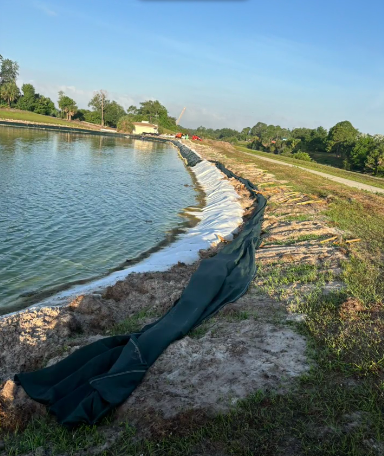
International Subsea Services -Geosynthetic clay liners have a long-lasting resistance to physical and chemical break-down

International Subsea Services -Geosynthetic clay liners have a long-lasting resistance to physical and chemical break-down

Derrek Offutt, PM Chief Executive Officer at International Subsea Services

GCL Liners

Geosynthetic Clay Liners (GCL) are high-performance geocomposites that are used as an alternative to conventional compacted clay liners. GCLs consist of two layers of geotextile stitched together enclosing a layer of processed sodium bentonite. Bentonite is a natural sealant, and when in contact with water, swells to form a low permeability clay liner. Geosynthetic clay liners have a long-lasting resistance to physical and chemical break-down in harsh environments such as landfills and other containment systems.

Advantages
* Unique self-sealing attributes that reduce the risk of punctures and leakage.
* Excellent shear resistance properties due to needlepoint reinforcement.
* Reduced leakage by a factor of 30 over compacted clay.
* Better hydraulic performance.
* Ease of installation. & Increased air space.
* Cost-effective: one truckload of GCL replaces 200 truckloads of clay.

SS your Lake Bank Restoration Specialist!!!!

Call today to schedule a free onsite estimate !
https://lnkd.in/ebRqUP2X
727-742-5982

When are Budgets due?

When are Budgets due?

  • Posted: Nov 12, 2025
  • By:
  • Comments: Comments Off on When are Budgets due?

Within 90 days after the end of the fiscal year, or annually on such date provided in the bylaws, the association must have prepared a financial report on the financial activities of the preceding fiscal year.

Within 21 days after the financial report is completed, but no later than 120 days after the end of the fiscal year, the board must provide each member with a copy of the financial report or, at a minimum, provide written notice that a copy of the financial report is available upon request, at no charge to the members.


Some things to consider:

  • Don’t delay – Start the process as early as possible so that you don’t miss items that could significantly impact your budget. Now is the perfect time to start preparations if your budget starts January 1.
  • It is a monotonous task, but a vital one. In this day and age, assessments will more than likely have to increase due to increases in insurance, utilities, and that never ending “wish list.” Have a budget plan. Look at the goals for the community. What does the Board want to achieve?
  • Review past budgets and the final year performance. If you overspent more years than not, obviously you need to make some changes.
  • Pet projects don’t always make the cut. Be realistic about what can be achieved.
  • Go over all contracts. You should have a spreadsheet of all contracts with expiration dates, whether they are auto renewed unless you send a cancellation notice, what is the cancellation timeline, does auto-renew have an increase and how much.
  • Ensure you are funding enough for your reserves.
  • Get a Reserve Study, or at least an updated Reserve Study to ensure you have accurate numbers.
  • Have a well-funded maintenance program. The disasters of the recent past is an indication of just how important it is to keep up even the most mundane maintenance. Proper maintenance may help delay some of the replacement items in your reserve study.


The financial report must consist of a complete set of financial statements prepared in accordance with generally accepted accounting principles. The level of financial reporting that must be prepared by the board is based on the total annual revenue (including reserves) of the association, as follows:


1. An association with total annual revenues of $150,000 or more, but less than $300,000, shall prepare compiled financial statements.

2. An association with total annual revenues of at least $300,000, but less than $500,000, shall prepare reviewed financial statements.

3. An association with total revenues of $500,000 or more shall prepare audited financial statements.

4. An association with total annual revenues of less than $150,000 shall prepare a report of cash receipts and expenditures.


Interestingly, if the board desires to raise the level of financial reporting, it may be increased without membership approval by board action alone, unless the governing documents provide otherwise. In addition, if the board is not inclined to approve a heightened level of reporting, but the members want to do so, then upon twenty (20%) percent of the parcel owners petitioning the board to increase the level of financial reporting from that required by Statute for that fiscal year, the board must notice and hold a membership meeting within thirty (30) days of receipt of the petition. To raise the level of financial reporting, a majority of members present at such meeting must cast their vote in favor of doing so.


However, lowering the reporting threshold is a different matter entirely because only the members can make that decision. To accomplish this, a majority of members present at a properly noticed membership meeting must cast their vote in favor of lowering the level of financial reporting. The meeting must take place prior to the end of the fiscal year in question.


Tags: ,
What Is Dissolved Oxygen and Why Is it Important for My Waterbody? by SOLitude

What Is Dissolved Oxygen and Why Is it Important for My Waterbody? by SOLitude

What Is Dissolved Oxygen and Why Is it Important for My Waterbody?

Dissolved oxygen (DO) refers to the concentration of oxygen in water. DO is vital for healthy lakes and ponds and key to the survival of fish, other aquatic life, and beneficial bacteria. DO also helps prevent muck build-up by supporting the decomposition of organic materials like dead plants and animal waste.
Waterbodies with insufficient DO are more likely to experience water quality and nutrient imbalances that may lead to:

  • Nuisance weeds
  • Algae
  • Toxic cyanobacteria (blue-green algae)
  • Fish kills
  • Foul odors
  • Bottom sludge
  • Loss of depth and flooding

Fortunately, many solutions are available to correct DO deficiencies, promote healthy water quality, and help prevent future issues.
 

Kasco-VFX-8400 - - fountains and aeration services at solitude lake management - vendor partners

Floating Pond Fountains

Fountains and surface aerators are some of the most recognizable tools designed to help oxygenate and circulate water. Both types of units improve water quality by creating surface movement and are most effective in waterbodies between 4-8 feet deep.
Fountains use specialized pumps to spray water into the air in decorative patterns. As it falls, it creates turbulence that facilitates the transfer of oxygen into the water column. However, the water quality benefits of fountains are often secondary to the aesthetic benefits.
Kasco Surface Aerator

Pond Surface Aerators

Surface aerators are low-profile units with strong propellers that create a boil-like flow. Though they’re less eye-catching than fountains, these systems can infuse up to 72 pounds of oxygen into the water in 24 hours, making them an excellent choice if water quality improvement is the priority.

Pond Submersed Aerator

For waterbodies greater than 6-8 feet deep, experts may recommend a submersed aerator, which uses an on-shore compressor to pump air through tubing to the bottom of a lake or pond where it is released through diffusers. The fine bubbles that are produced help oxygenate and circulate the water column as they rise. Submersed aerators can be placed directly under or near a fountain or surface aerator for maximum benefits.

Oxygenation Technologies

In addition to fountains and pond aerators, which have been used in the lake management industry for decades, there are also several new premium solutions for improving oxygen levels in waterbodies. Nanobubbles, side stream saturation, and other modern technologies help provide a more direct means of elevating DO.
Nanobubbles are microscopic bubbles that are continuously injected into the water with a compact, on-shore unit. They are negatively charged, allowing them to oxidize and degrade positively charged algal cells, toxins, and excess nutrients when they come in contact. Because they also lack natural buoyancy, they can remain in the water for months.
Side stream saturation offers comparable benefits to traditional aeration without producing bubbles. By injecting oxygen at low pressure through suction and discharge lines into specific water depths, this method achieves five to ten times the oxygenation efficiency. The oxygen-rich water is then infused into bottom sediments, where it remains for extended periods.
 
Tags: ,
Tips for Budgeting in HOAS and Condominium Associations. by Campbell Property Management

Tips for Budgeting in HOAS and Condominium Associations. by Campbell Property Management

Tips for Budgeting in HOAS and Condominium Associations

by Campbell Property Management 

Creating a budget is one of the primary and most important functions that any community association board does during its tenure. The budget will serve as the guideline to determine the dollar amount owners are charged to live in their communities. There are differing obligations to consider when budgeting for a Homeowners Association (HOA) versus a condominium association. Today, we will discuss the differences and offer tips when creating your own community association budget.

Let’s start with HOAs.

HOA budgets are often a bit simpler than those for condominium associations. That is because HOA budgets normally do not require reserves. Reserves refer to funds set aside for future capital expenses and major repairs or replacements of common property or assets within the community. Unless members of the association have voted to create reserve accounts, or the original developer of the property put reserves in the HOA’s Declaration of Covenants, Conditions, and Restrictions (CC&R) – commonly referred to as simply the “declaration” – reserves are not mandatory for HOAs. However, if the HOA votes to put money away for future capital expenses, or defer line items (like maintenance), they have that option. Unlike condominium associations, HOAs are not limited or hamstrung by Florida’s Reserve Statutes, which require specific line items in the condo’s budget. For HOAs, the reserves are more like a savings account to use at the board’s discretion.

One of the misconceptions of the budgeting process is going into it with the intention of trying to hit a target assessment mark. Members may get in the mindset of trying to raise or lower assessments or reach a specific number, like deciding we want $400 a month assessments, then trying to figure out how to get there. Whether for HOAS or condominium associations, that’s really not how budgets are supposed to work.

Budgets are estimates of expected expenses for the upcoming year that are created in order to derive a necessary revenue stream. The idea is to put all of your expected expenses into a basket, itemize them through your budget, the sum of which is the necessary amount of revenue you have to generate. When you divide that amount by unit owners, that is what produces the amount of the community’s assessments, which are the monthly fees associated with living within that community.

Of course, budgets are guidelines – you’re not restricted or expected to spend every dollar on each line item. A budget is not a cap for how much you are able to spend on those items and it’s also not a restriction to only spend those specific items listed in the budget. Again, it’s an estimate and guideline so an association can collect the appropriate amount of money from its residents.

Ultimately, things may happen that were not taken into account at the time of the budgeting process. Sometimes more money is needed and other times less money is spent than what was budgeted. Both situations are certainly within the parameters of what is acceptable because this is an estimation and a guideline for best practices relative to budgets; it is not a hard and steadfast rule.

Regarding condominium associations

Florida’s Condominium and Cooperative Acts law requires associations to fund for reserves, which is the default that has existed for decades. Through next year, the board will retain the ability to call for a vote to waive or partially fund reserves. However, as of January 1, 2025, all structural integrity reserve items must be fully funded and can no longer be waived or partially funded (the well-intended purpose of this legislation is to prevent another Surfside tragedy).

With these tips in mind, we hope you have a good budget season. If ever you have any questions or concerns, please feel free to reach out to one of Sachs Sax Caplan’s experienced community association attorneys at 561-994-4499. We look forward to working with you.


Tags:
How To Seal Pavers For a High Gloss Wet Look | Brick, Driveway & Concrete Pavers

How To Seal Pavers For a High Gloss Wet Look | Brick, Driveway & Concrete Pavers

  • Posted: Oct 22, 2025
  • By:
  • Comments: Comments Off on How To Seal Pavers For a High Gloss Wet Look | Brick, Driveway & Concrete Pavers

A bit of gloss on your driveway gives it a beautiful, just-finished look that will last for a long time if done correctly. Click the link for our tips on how to seal brick and concrete driveways, and be sure to contact us today for all of your indoor or outdoor flooring needs!

Looking for a wet look, gloss appearance that brings out the colors in your pavers?  Do you want something that holds up to sun and weathering for 2 to 3 years – or more?
You’re in the right place.  To get the results above, it’s important to understand how to seal pavers… and why.  We’ve got your answers below.
 

Details below. Click to go there now.


It’s Easier Than You Think To Seal Your Pavers

 
After 18 years of dealing with the question of how to seal pavers the right way, my best recommendations are as follows:

  1. Spray apply rather than roller apply.
  2. Use water based sealers rather than solvent based.
  3. Use urethane sealers rather than acrylic sealers.

Let’s expand on these 3 guidelines a little further. (And here’s a quick video to show you what we mean.)


Spray Application vs Roller to Seal Pavers

While roller applying a sealer is easier than spraying, roller application does not work as well on pavers compared to something like concrete.
The biggest drawback when rolling sealer on brick pavers is that the roller can pick up the joint sand and roll it over the top of the brick paver surface.  This is especially true if the joints are wide. Furthermore, the amount of sealer that soaks into the sand joints is difficult to control when rolling.
 

How Much Sealer Do I Apply

Apply a flood coat to the paver surface including the joints. This method will apply the sealer very generously while allowing the sealer to soak into the sand joints as well.
As long as you apply the paver sealer on a windless day, the coverage can be generous and effortless.
If you really can’t get a pump up garden sprayer, opt for a sponge-type roller to apply the sealer. A nap roller is more likely to grab and trap your joint sand.


Water Based Sealer vs Solvent Based

Solvent based sealers are bad for the environment! Manufacturers are gradually moving away from these type products.
Regardless, solvent based sealers are more difficult to spray apply than water-based sealers, and they don’t really seal the joint sand, as well as the water based products.
The solvent based sealer tends to seal only the top surface of the sand compared to the water based, which soak down deeper into the sand.
 
From our lead chemist:
” While solvent-based sealers can produce a nice high gloss surface, they can also make the surface slippery if applied too thick
Also the gloss finish, typically burns off after 6 months of exposure to the sun. “
 
 
Water based acrylic sealers eliminate the issues with using solvents and are better at stabilizing joint sand to prevent sand loss.
However, it is important to use a high solids acrylic sealer or a urethane modified acrylic sealer, otherwise they fade and lose the glossy appearance after 6 months to a year.

Polyurethane vs Acrylic

Water based polyurethanes are a tougher sealer than acrylics and are more UV resistant and chemically resistant.
They don’t yellow, perform better outside and they are more resistant to chemicals oil, brake fluid, and chlorine.
The best water based polyurethanes are 2-part products (Part A and B requiring mixing). These 2-part polyurethanes when mixed together chemically cross link to form a paver sealer that is highly durable and long lasting when exposed to sunlight and/or freeze thaw.
A big plus is that they are much less sensitive to moisture. You can apply a 2-part polyurethane water based sealer as soon as you finish pressure washing. We call it “same day” sealing.
 
 
” The down side of using 2 part polyurethanes to seal pavers is that they are more expensive.  And once you have mixed them, you have to use them.  There is no shelf life or coming back the next day to seal pavers, with left over mixed product. 
Tags: