SFPMA

SFPMA Industry Articles | news, legal updates, events & education! 

Find Blog Articles for Florida’s Condo, HOA and the Management Industry. 

How to Know When Your Fire Alarm System Needs Repair? by PREMIER FIRE ALARMS AND INTEGRATION SYSTEMS

How to Know When Your Fire Alarm System Needs Repair? by PREMIER FIRE ALARMS AND INTEGRATION SYSTEMS

How to Know When Your Fire Alarm System Needs Repair?

 If your fire alarm system starts sounding like a horror movie sequel, it’s time for you to take action.
Sure, being reminded of danger with sporadic false alarms might make for some good Sunday afternoon entertainment – but do you want your guests running out scared all the time? We don’t think so, which is why we’ve put together this guide on how to know when your fire alarm system needs repair!
Whether you need a new battery or just some help troubleshooting the cause of those pesky alerts, we have your back. Read on and prepare for peace of mind (and less screaming)
Premier Fire Alarms and Integration Systems Installation Division offers Miami’s best fire alarm systems repair. Our top-notch services help protect your family and business in a fire. Forget about unheard or unattended alarms, and let our experts monitor your system 24 hours a day, seven days a week!
When protecting your family and your property from fire, you must always keep your fire alarm system in good working order. Regular maintenance and system checks are essential to ensure your fire alarm functions correctly.
Here are a few signs that indicate your fire alarm system needs repair:

False Alarms

Various issues with the system components, such as a broken smoke detector, faulty wiring, or damaged sensors, can cause false alarms. If false alarms occur regularly, it’s likely time for your fire alarm system annual inspection.

Flashing Lights

Flashing lights on your fire alarm panel are an indication that there is something wrong with the system. Suppose these lights persist after performing the recommended reset procedure from the manufacturer. In that case, it’s time to call for professional assistance from a fire alarm service and inspection company in Miami Dade.

System Malfunction

If your fire alarm isn’t responding appropriately when tested or during an emergency, this could be evidence of a malfunction in one or more components within the system. It is also time to contact a commercial fire alarm company to diagnose and repair any malfunctioning parts or replace them if necessary.

Age of the System

Even if everything seems to be functioning normally, it’s important to remember that all electrical systems have an expiry date which varies depending on how often they are used and their quality.
If all other tests reveal no significant problems, but you know you installed your current system many years ago, consider replacing it with newer technology. Due to age, outdated systems may not provide adequate protection against fires.
A fire alarm installation in Miami-Dade County can help with this.

Contact Us Today!

By being aware of these signs indicating potential repairs needed for your fire alarm system, you can avoid any issues before they become severe emergencies.
Finding the best fire alarm systems repair company is the first step. They will come to inspect and diagnose all possible problems promptly and efficiently, so you don’t have to worry about exposing yourself to potential danger caused by faulty equipment!
Premier Fire Alarms & Intergration Systems is the best fire alarm systems repair company. We have modern and reliable methods and serve the entire Florida area. Please reach out to us to discuss our given services:

You can also consult us to get assistance for the following domains:


Fire Alarm Systems & Installation


WHEN IT COMES TO FIRE ALARM SYSTEMS & INSTALLATION, YOU CAN COUNT ON OUR EXPERTS TO METICULOUSLY DESIGN, INSTALL, MONITOR, AND MAINTAIN ALL THE CRITICAL SYSTEMS THAT KEEP YOU AND YOUR ASSETS SAFE.

Matt Haiman
President
Premier Fire Alarms and Integration Systems, INC.
430 Ansin Blvd suite M
Hallandale Beach Florida
(O) 954-797-7692
(F) 954-797-7289
(C) 954-638-5581
matt@premierfirefl.com
Members of SFPMA.com find them on our members directory of vendors for condo and hos’s for Florida’s Properties, Boards and Managers Resource.
Tags: , ,
Sarasohn & Company – Public Insurance Adjusters since 1924

Sarasohn & Company – Public Insurance Adjusters since 1924

Sarasohn & Company –  Public Adjusters

561-368-5000

For four generations, the name Sarasohn has been synonymous with the highest levels of integrity and expertise in the field of insurance adjusting.

Emmanuel Sarasohn founded his public adjusting business in 1924 in Newark, NJ.  His sons, Ira and Roy, grew up in the family business and came on board full time after college and the army.

In 1951, Ira Sarasohn was one of the founding members of the National Association of Public Insurance Adjusters. Ira and Roy would both later serve as president of that esteemed organization.

Ira J. Sarasohn took over the helm of Sarasohn & Company  after his father’s passing. In 1970, Stephen Sarasohn joined the firm in NJ, but he settled in Florida a few years later. In 1985, both Ira and Stephen helped found the Florida Association of Public Insurance Adjusters. After 72 years of public adjusting, Ira J. Sarasohn passed away in 2006 with many active files on his desk. In 2018, Bernard Sarasohn joined the firm as a licensed public adjuster.

Stephen Sarasohn is now CEO of Sarasohn & Company and he maintains the same high standards as his predecessors.  Sarasohn & Company, Inc. is based in Boca Raton, FL but is licensed to handle claims in other states as well.


Building Claims

In order to properly adjust any claim for damage to a structure, it is important to prepare a detailed repair estimate.  Sarasohn & Company will do that on your behalf.  Whenever necessary, we will employ the services of architects, engineers, contractors and other independent experts at no additional cost to you.

Full consideration is given to the provisions of your policy, as well as applicable statutes and case law, so as to maximize the recovery. This includes consideration of depreciation, coinsurance, code upgrades, deductibles and any other factors important to a successful adjustment.  Sarasohn & Company is also equipped to provide project management for the reconstruction process.  Project management is a field used in large construction projects to coordinate the various aspects of the repairs. This service is provided at no additional cost.


Personal Property Losses

All insurance policies require the submission of a complete inventory of both the damaged and undamaged personal property.  This includes machinery, trade fixtures, appliances, merchandise inventory, household furnishings, clothing and all other movable property insured under the policy.  This coverage also covers improvements and betterments on tenants’ policies, which can be treated several ways for claims purposes.

Sarasohn & Company has on its staff, experienced personnel who are capable of filling these requirements.   In addition to listing the property involved, our experts will calculate the replacement cost and actual cash value of each item as well as the repair cost when appropriate.  We will determine salvage value, if any, and help arrange for protection of the property from further damage, as required by the policy.  Our services can be helpful in documenting your tax loss, if any.


Loss of Income Claims

One of the most complex aspects of your claim involves calculating the loss of income you will suffer as a direct result of damage to real or personal property.  Sarasohn’s long term experience has helped to develop a team of forensic accountants who have proven to be outstanding in their ability to adjust claims in a way most favorable to the policyholder.  The services of CPA’s and tax attorneys are engaged when necessary, at no additional cost to you.

One of the questions that usually arise in a loss of income claim involves the continuation of payroll during the period of restoration.  It is extremely important that a method be established as soon as possible after the loss, to resolve this aspect of the claim.  Sarasohn & Company, with its years of experience will assist you with these important decisions.  Extra expense coverage can be used creatively to make up for insufficient property coverage, should that scenario exist.


Sarasohn & Company –
Public Insurance Adjusters since 1924

Contact Us Today for Help with your Property


Do you have a residential or commercial property in Florida, Georgia, Texas, North Carolina or South Carolina? The public adjusters at Sarasohn & Company are experts at maximizing your insurance claim recovery. We don’t get paid unless you do!

Most states license all insurance adjusters, whether they work for an insurance company or for the public. Adjusters working for the insurance companies are obligated to treat all claimants fairly and impartially. However, they are paid by the insurance companies for their efforts. The state recognizes that you, the policyholder, are entitled to equal representation and you may retain the services of an expert adjuster to assist in the claim process.  Sarasohn & Company can assist in preparing your claim, guiding you through the claim process and helping to achieve the most favorable settlement. In addition to numerous state licenses, Stephen Sarasohn has held the nationally recognized designation of Senior Professional Public Adjuster since 1988.

Stephen Sarasohn SPPA
stephensarasohn@gmail.com
Public Adjusters since 1924
www.sarasohn.net
561-368-5000 office
561-866-3589 cell


Tags:
Only a licensed, structural engineer can provide accurate assessments and solutions for a home buyer or seller.

Only a licensed, structural engineer can provide accurate assessments and solutions for a home buyer or seller.

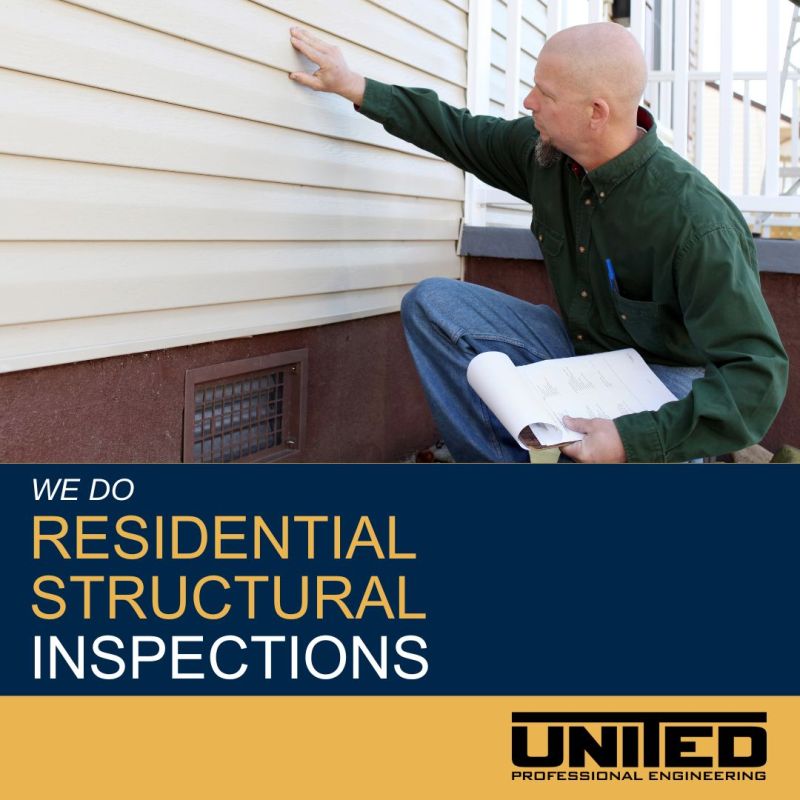
Many engineering firms do not offer residential services. But United Professional Engineering (UPE) does.

We understand the residential market and the homeowner and we value their business. Only a licensed, structural engineer can provide accurate assessments and solutions for a home buyer or seller.


Residential Structural Inspections

Many engineering firms do not offer residential services. At UPE, we understand the residential market and the homeowner. We value their business and our team is proud to service this sector. Most of the work that we perform for residential homeowners begins with an onsite engineering assessment. Our licensed, structural engineers make a site visit to the property. We survey the areas of concern and assess the severity of the structural problems in question.

After a site investigation is conducted, our structural engineers prepare a structural engineering report outlining onsite findings, identifying probable cause of the structural issue and recommendations for remediation of any structural deficiency uncovered. We provide our clients with a photograph log documenting existing conditions at the time of the site visit. Only a licensed, structural engineer can provide accurate assessments and solutions for a home buyer or seller. Give us a call today!


United Professional Engineering (UPE)

Provides a unique “one-stop-shop” for all your structural engineering needs in Palm Beach and Broward County. Our South Florida area founded firm has been in business since 1999 and we have a diverse team; from licensed designers and structural engineers to inspectors and general contractors. For that reason, our projects range from designing and restoration to structural inspections and more!

We understand how valuable your time is and we are committed to providing our industry leading expertise to your next project. Our team welcomes any and all challenges to ensure a smooth and cost effective project for all our clients and everyone involved. Your journey with us is important, and we take pride in making it memorable!

At UPE, we understand it is hard to find a service provider you can trust and count on and we are here to change that.

Today, one of the largest investments is building a structure and how to maintain its lifespan. Structural integrity, environmental factors, atmospheric elements, and maintaining aesthetics are all important factors that we evaluate very carefully, when working on a project.

Our highly qualified licensed designers, engineers and general contractors promises to ensure your investment is protected. We believe it’s important to exhibit and maintain an open communication network, while working towards each of our client’s best interests, as well as everyone involved.

We are committed to structural safety and serviceability, identify equilibrium conditions, resolve limitations and utilize preventive and corrective maintenance behavior. UPE is here to help accomplish each milestone of your project, together!

Give us a call today!
📱(561) 582-1733
💻 upefl.com

Find us on the Members Directory on SFPMA.com

LinkedIn:  Find us on LinkedIn


Tags:
30/40 Year Building Recertification: Your Property Depends on it.

30/40 Year Building Recertification: Your Property Depends on it.

  • Posted: Apr 29, 2026
  • By:
  • Comments: Comments Off on 30/40 Year Building Recertification: Your Property Depends on it.

30/40 Year Building Recertification: Your Property Depends on it.

Building inspections are crucial for maintaining the safety and integrity of buildings. This is particularly true here in South Florida due to our region’s unique climate and environmental conditions. High humidity, Salt Air, extreme heat, and the hurricane season can all cause damage to building’s structure and envelopes over time. These are some of the reasons why building recertification has become mandated in South Florida every 30 or 40 years, depending on the building’s age.


Identifying Hidden Problems

Building inspections are essential to identify underlying problems that may not be readily apparent to residents. For instance, buildings may develop foundation cracks, leaks in the roof, or other issues that can pose significant risks to the property’s structural integrity. Regular inspections can catch these issues early and detect severe problems that may cause serious water damage or building collapse.

Building inspections can prevent these situations, uncover hidden issues, and allow for prompt repair or replacement. Identifying problems early on can also save property owners money and time by preventing more severe cases from developing. Deterioration in coastal environments is a progressive problem that will cost more to address as time passes. By addressing these problems, property owners can promote their buildings’ safety and structural integrity.


Cost Savings

Building inspections can provide property owners with significant cost savings in the long run by identifying potential issues early on. Often, structural engineers can find problems during an inspection that can be repaired immediately at a lower cost than if they were allowed to escalate into more significant issues.

For example, if a building inspector discovers a small leak in the roof, the property owner can have it repaired before it causes more extensive damage to the interior of the building. If left unattended, this leak could cause extensive water damage, resulting in costly repairs and possible damage to the building’s structure.

Inspectors may identify areas in the building that could be more energy-efficient. In this case, the property owner can upgrade the building’s insulation, HVAC, or lighting systems—leading to significant savings in energy costs and reducing the property owner’s overall operating expenses.


Experience and Expertise

Structural Workshop has extensive experience conducting building inspections. Our experienced engineers and inspectors work closely with clients to help them keep their buildings safeand well-maintained. Whether you are a property manager, building owner, or homeowner, we can help you navigate the complexity of building inspections. Please get in touch with us today to schedule a recertification or learn more about our services.


If your company needs marketing please contact our member
Jessica Vail
Vail Marketing Solutions
(908) 528.4087
www.vailmarketingsolutions.com


Tags: ,
Architectural Committees Formal Procedures, Published Standards, and Self Help by REMBAUM’S ASSOCIATION ROUNDUP

Architectural Committees Formal Procedures, Published Standards, and Self Help by REMBAUM’S ASSOCIATION ROUNDUP

  • Posted: Apr 29, 2026
  • By:
  • Comments: Comments Off on Architectural Committees Formal Procedures, Published Standards, and Self Help by REMBAUM’S ASSOCIATION ROUNDUP

Architectural Committees Formal Procedures, Published Standards, and Self Help

by REMBAUM’S ASSOCIATION ROUNDUP

Formal Procedures

There are strict legal requirements that a homeowners’ association’s (HOA) architectural review committee (ARC) must follow, most especially if the ARC intends to deny an owner’s request. As this author has witnessed countless times, it is likely that many ARCs do not conduct their activities in conformity with Florida law such that an ARC denial may not withstand judicial scrutiny. If these legal requirements are not followed, and the ARC denies the owner’s architectural request, then it would be quite easy for the owner to challenge the ARC’s decision and prevail. Upon prevailing, the owner would be entitled to their prevailing party attorney’s fees and costs, as well. It is so easy to avoid this outcome, yet so few associations take the time to do it right.

Pursuant to §720.303(2), Florida Statutes, a meeting of the ARC is required to be open and noticed in the same manner as a meeting of the association’s board of directors. Notice of the ARC meeting must be posted in a conspicuous place in the community at least 48 hours in advance of the meeting, and the meeting must be open for all members to attend. Further, pursuant to §720.303(2)(c)(3), Florida Statutes, members of the ARC are not permitted to vote by proxy or secret ballot. Also, bare bone minutes should be taken to create a record of ARC decisions—especially denials.

We often hear from many HOAs that the ARC does not meet openly and does not notice their meetings. This leaves decisions made by the ARC vulnerable to challenge. If the ARC denies an application but fails to do so at a properly noticed board meeting, the owner can challenge the denial, claiming that it is not valid because the ARC did not follow proper procedure. In such cases, the ARC’s denial of an application is not valid because the ARC failed to comply with the procedural requirements for the meeting even if an application violates the declaration or other association-adopted architectural standards. However, by complying with the provisions of Chapter 720, Florida Statutes, your HOA can work to avoid this debacle.


[AdSense-A]


Published Standards

Often a top priority for an HOA is ensuring that homes in the community maintain a harmonious architectural scheme in conformity with community standards and guidelines, and because the ARC is at the frontline of owners’ alterations and improvements to their homes, it is instrumental in ensuring that the community standards and guidelines are met. Pursuant to §720.3035(1), Florida Statutes, an HOA, or the ARC, “has the authority to review and approve plans and specifications only to the extent that the authority is specifically stated or reasonably inferred as to location, size, type, or appearance in the declaration or other published guidelines and standards.” But not every owner request is typically addressed in the declaration or other published guidelines and standards. If not, then the association may not be in a good position for proper denial. Therefore, the ARC is only as effective as the objective guidelines and standards (set forth in the declaration and other published guidelines and standards) are inclusive. So, what is the association to do when the ARC receives an owner’s application for an alteration to the home, but the association does not have any architectural guidelines or standards regulating the requested alteration?

While not court tested yet, a possible solution for this conundrum is to include a “catch-all” provision in the declaration to proactively address those ARC applications where a member may request a modification that is not directly addressed by the governing documents. Such a “catch-all” provision stands for the proposition that, if such a request is made, then the existing state of the community is the applicable standard by which the ARC application is to be judged. For example, imagine if an owner applies to the ARC to paint the owner’s house pink. If there are no architectural guidelines or standards that address what color a house must be, and there are no pink houses in the community, then the existing state of the community may provide a lawful basis for the ARC to deny the request because there are no existing pink houses in the community.

The Trouble With Self-Help Provisions

What if an owner refuses to maintain the owner’s property, such as pressure washing a dirty roof, despite the HOA sending demand letters, levying a fine, and perhaps even suspending the owner’s right to use the HOA’s recreational facilities? What is the HOA’s next step? Is it time to file a lawsuit to compel compliance? Well, Chapter 718 (governing condominiums), Chapter 719 (governing cooperatives), and Chapter 720 (governing HOAs) of the Florida Statutes authorize the association to bring an action at law or in equity to enforce the provisions of the declaration against the owner. Additionally, many declarations contain “self-help” language that authorizes the association to cure a violation on behalf of the owner and even, at times, assess the owner for the costs of doing so. These “self-help” provisions generally contain permissive language, meaning the association, may, but is not obligated to, cure the violation. Sadly, in this instance the word “may” means “shall,” and to find out why, read on.

There is a general legal principal that, if a claimant has a remedy at law (e.g., the ability to recover money damages under a contract), then it lacks the legal basis to pursue a remedy in equity (e.g., an action for injunctive relief). Remember, too, that an association’s declaration is a contract. In the context of an association, the legal remedy would be exercising the “self-help” authority granted in the declaration. An equitable remedy would be bringing an action seeking an injunction to compel an owner to take action to comply with the declaration. Generally, a court will only award an equitable remedy when the legal remedy is unavailable, insufficient, or inadequate.

Assume that the association’s declaration contains both the permissive “self-help” remedy and the right to seek an injunction from the court. Accordingly, it would appear the association has a decision to make—go to court to seek the injunction or enter onto the owner’s property, cure the violation, and assess the costs of same to the owner. However, recent Florida case law affirmed a complication to what should be a simple decision. In two cases decided ten years apart, Alorda v. Sutton Place Homeowners Association, Inc., 82 So.3d 1077 (Fla. 2nd DCA 2012) and Mauriello v. Property Owners Association of Lake Parker Estates, Inc., 337 So.3d 484 (Fla. 2nd DCA 2022), Florida’s Second District Court of Appeal decided that an association did not have the right to seek an injunction to compel an owner to comply with the declaration if the declaration provided the association the authority, but not the obligation, to engage in “self-help” to remedy the violation. Expressed simply, this is because the legal contractually based “self-help” remedy must be employed before one can rely upon equitable remedy of an injunction. Therefore, even though the declaration provided for an optional remedy of “self-help,” it must be used before seeking the equitable remedy of an injunction.

In Alorda, the owners failed to provide the association with proof of insurance required by the declaration. Although the declaration allowed the association to obtain the required insurance, the association filed a complaint against the owners seeking injunctive relief, asking the court to enter a permanent mandatory injunction requiring the owners to obtain the requested insurance. The owners successfully argued that even though they violated the declaration, the equitable remedy of an injunction was not available because the association already had an adequate legal remedy—the “self-help” option of purchasing the required insurance and assessing them for same. The Court agreed.

In Mauriello, the declaration contained similar language as in Alorda but involved the issue of the owners failing to keep their lawn and landscaping in good condition as required by the declaration. The association filed a complaint seeking a mandatory injunction ordering the owners to keep their lawn and landscaping in a neat condition. However, the facts were complicated by the sale of the home in the middle of the suit when the new owners voluntarily brought the home into compliance with the declaration. The parties continued to fight over who was entitled to prevailing party attorney’s fees with the association arguing it was entitled to same because the voluntary compliance was only obtained after the association was forced to commence legal action. The owners, citing Alorda, argued that the complaint should have been dismissed at the onset because the association sought an equitable remedy (injunction) when a legal remedy was already available—the exercise of its “self-help” authority. The Court considered the award of attorney’s fees after the dismissal of the association’s action for an injunction. Ultimately, the Court held that the owners were the prevailing party as the association could not seek the injunction because it already had an adequate remedy at law.

Accordingly, if your association’s declaration contains a “self-help” provision, and your association desires to seek an injunction against an owner rather than pursue “self-help,” the board should discuss the issue in greater detail with the association’s legal counsel prior to proceeding. Also, remember that if the association wants to enforce architectural standards, then they must be published to the membership; and always remember to notice ARC meetings and take minutes.

[AdSense-C]


Tags: , , ,
Florida Building Inspections By: Structural Engineering and Building Consulting firm – Joe DiPompeo, PE

Florida Building Inspections By: Structural Engineering and Building Consulting firm – Joe DiPompeo, PE

  • Posted: Apr 29, 2026
  • By:
  • Comments: Comments Off on Florida Building Inspections By: Structural Engineering and Building Consulting firm – Joe DiPompeo, PE

Florida Building Inspections
Structural Engineering and Building Consulting firm

By: Joe DiPompeo, PE

Building inspections are a critical component of property management in the state of Florida. They help to ensure that buildings are maintained in good condition and meet building codes, which is essential for protecting both tenants and property owners.

First and foremost, building inspections are necessary to ensure that buildings are compliant with certain codes and regulations. In Florida, building codes are set by the Florida Building Code (FBC), which establishes standards for the construction, maintenance, and repair of buildings in the state. These codes cover everything from electrical and plumbing systems to fire safety and structural integrity. While most codes are applicable to the construction of the building, Florida has significant codes and requirements throughout the life of the building, such as structural and electrical recertification inspections. Failure to comply with these codes can result in fines, legal action, and even the closure of the building.

By conducting regular inspections, property managers can identify any issues that may be in violation of these codes and requirements and take corrective action before they become serious problems. For example, an inspector may find deteriorating structural concrete or issues with the electrical wiring. These issues can be addressed before they put the safety of tenants and the property at risk or become a larger, more expensive problem to fix.

In some places, such as Florida, there are mandatory ordinances which enforce regular building inspections. These inspections should be conducted by a certified Professional Engineer and then file a report with the local building department or and/or state. If these requirements are not met, the property owner or manager will receive a fine.

Furthermore, building inspections can also help property managers identify maintenance needs. Over time, buildings can experience wear and tear, and components can break down. By conducting regular inspections, property managers can identify these issues and take corrective action before they become more serious and costly to repair. This can help to extend the lifespan of the building and save money in the long run.

Moreover, building inspections are essential for protecting property values. Properties that are well-maintained and free of hazards are more attractive to tenants and can command higher rents and sale prices. Regular inspections can help to identify issues that may be causing damage to the building, such as water leaks or structural issues. By addressing these issues early, property managers can prevent further damage and ensure that the building maintains its value.

Finally, building inspections can also provide peace of mind for property owners and tenants alike. By knowing that the building is being regularly inspected and maintained, owners can be confident that their investment is being protected. Tenants, on the other hand, can feel reassured that they are living in a safe and well-maintained environment.

In conclusion, building inspections are a crucial part of property management in Florida. They help to ensure compliance with building codes and regulations, identify potential hazards, identify maintenance needs, protect property values, and provide peace of mind for owners and tenants. By conducting regular inspections, property managers can prevent serious problems from occurring and ensure that their buildings are safe and well-maintained and compliant with state and local requirements.

Structural Workshop

Structural Engineering and Building Consulting firm

754-277-4245

info@structuralworkshop.com

Contact us for an Inspection. 


Tags: , ,
If your property is near the coast, corrosion is a given. Reach out to SRI to stay ahead of it.

If your property is near the coast, corrosion is a given. Reach out to SRI to stay ahead of it.

  • Posted: Apr 29, 2026
  • By:
  • Comments: Comments Off on If your property is near the coast, corrosion is a given. Reach out to SRI to stay ahead of it.
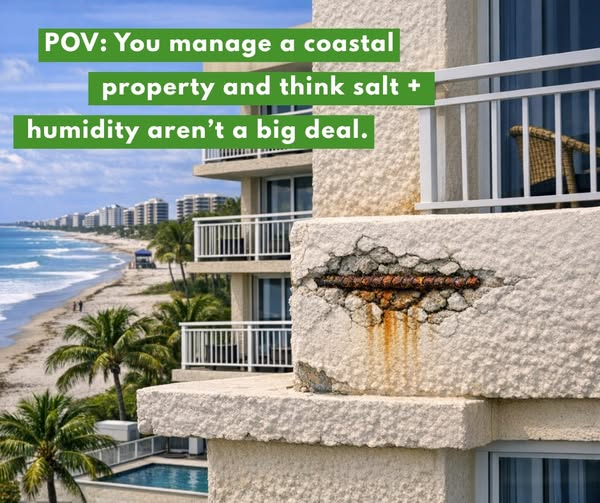
In coastal environments, salt and humidity don’t stay on the surface—they move into the concrete and accelerate deterioration from the inside out. Rebar corrodes, rust expands, and structures crack.
At SRI, our professional engineers leverage decades of experience in structural rehabilitation and corrosion engineering to increase the longevity of coastal properties. We identify structural deficiencies and design long-term repair strategies that keep communities safe and compliant.
If your property is near the coast, corrosion is a given. Reach out to SRI to stay ahead of it.
A Milestone Condominium Structural Inspection is a structural inspection performed by licensed engineers like EMA Structural Forensic Engineers of a building conducted for the purposes of determining a buildings’ life safety and structural component integrity or adequacy.

A Milestone Condominium Structural Inspection is a structural inspection performed by licensed engineers like EMA Structural Forensic Engineers of a building conducted for the purposes of determining a buildings’ life safety and structural component integrity or adequacy.


Condominium Structural Safety Inspections

Florida Laws now require all 3 stories or taller buildings to undergo Condominium Structural Safety inspections. EMA Structural Forensic Engineers can help you fulfill your needs to comply with the new laws.

Structural Engineers


Building Inspection Services, Serving our clients with a high degree of professionalism, imagination and skill is a Feller Engineering trademark.

Building Inspection Services, Serving our clients with a high degree of professionalism, imagination and skill is a Feller Engineering trademark.


Feller Engineering has been providing high-quality, state-of-the-art MEPFP Engineering consulting services since 1979. Since then we have provided quality HVAC, Electrical, Plumbing, Fire Sprinkler, Life Safety Systems Design, Peer Review, LEED and Green Building Design as well as Forensic Investigative Services for any type and size project. Our expertise has been applied to a wide range of new construction projects as well as retrofit and reuse of existing and historic buildings.


Serving our clients with a high degree of professionalism, imagination and skill is a Feller Engineering trademark.

  • Encompass the latest technological innovations where applicable
  • Are creative in approach (especially with renovation projects)
  • Will be in complete accord with the architect’s design concept and the owner’s operational and financial objectives


MEPFP Engineering Services

Servicing clients with a high degree of professionalism, imagination and skill is a Feller Engineering trademark. Our designs encompass the latest technological innovations where applicable and our creative approach (especially with renovation projects) will be in coordination with the architect’s design concept and the owner’s operational and financial objectives as well.

Mechanical Systems Design

Our HVAC department, headed by Eser Hur, has a staff of engineers and designers (several registered Professional Engineers and LEED AP). It has enormous experience and expertise with every conceivable type of air conditioning and ventilation system commercially available. Our engineers are constantly being briefed by major manufacturers as to the current state of the art equipment in monthly lunch and learn sessions.
Mechanical Systems Design

Electrical Systems Design

The Electrical Department headed by Bob Raynor with his staff of Electrical Engineers and Electrical Designers (several of whom are registered Professional Engineers and or maintain LEED AP status) have the responsibility to support our HVAC, Plumbing and Fire Sprinkler Departments.
Electrical Systems Design

Plumbing Systems Design

Greg Badal (Department Head) and his staff of engineers and designers (several of whom are CIPD and LEED AP) have extensive experience and expertise in a myriad of projects. Some members of the staff (including Greg) at Feller Engineering have over 30 years of design experience.
Plumbing Systems Design

Fire Protection Systems Design

We know that a fire can be an overwhelming experience. We believe in treating your home or business like it is our own, because we want you to feel comfortable when visiting us. Fire Protection Systems Design offers a comprehensive fire protection system that optimizes the effectiveness of your space to protect against fire, smoke and other hazards. Headed by Anand Kris Singh our engineering team will create a fire protection design for your project and save you time, money and heartache! Fire protection systems design and installations are fundamental to the safety, success and code compliances of your facility.
Fire Protection Systems Design

Feller Engineering
myenni@fellerpe.com
cdiaz@fellerpe.com
914-467-1402
http://www.fellerpe.com

Tags: , , ,