SFPMA

SFPMA Industry Articles | news, legal updates, events & education! 

Find Blog Articles for Florida’s Condo, HOA and the Management Industry. 

COMMUNITY ASSOCIATION WEBSITES  By Eric Glazer, Esq.

COMMUNITY ASSOCIATION WEBSITES By Eric Glazer, Esq.

COMMUNITY ASSOCIATION WEBSITES

By Eric Glazer, Esq.

As you all know by now, Florida condominiums having 150 or more units must have a website that only owners can access and which posts the official records of the association.  Here’s a little background as to how the law was passed.  When originally drafted, the law was only to apply to condominiums with 500 or more units.  That was ridiculous.  So, I flew up to Tallahassee and met with the then Speaker of the House and informed him that the law was a fake, inasmuch as less than one percent of all condominiums in the state contained 500 or more units.  I suggested 50 units.  The compromise was 150.

I never heard one person tell me this was a bad law.  In fact, it’s a great law.  It’s about transparency.  It takes the burden off of managers having to respond to requests for records.  It prevents lawsuits or arbitrations, as long as the website is kept up to date.

Just because the law requires condominiums of 150 units or more to have a website does not mean that condominiums of less than 150 units cannot have a website.  In fact, in this attorney’s opinion, if your condominium contains 50 units or more, you can and should have a website for the same reason that condominiums with 150 units should.

Think about how large some HOAs are.  Many contain well in excess of 500 homes and are sprawling mini cities.  You would think that those communities should be required to post their records on an official website as well.  But no.  HOAs are not required to have a website.  There is simply a hands off approach when it comes to HOAS.

Again, just because the law requires condominiums of 150 units or more to have a website does not mean that HOAs cannot have a website.  In fact, in this attorney’s opinion, if your HOA contains 50 homes or more, you can and should have a website for the same reason that condominiums with 150 units should.

This is one law the legislature should amend.  All communities, both condos, co-ops and HOAs with 50 or more units or homes should be required to have a community association website where the official records and notices of meetings are posted.  Bottom line…….it will make the residents less suspicious and happier.


Community associations, whether condominiums, co-ops, or HOAs, are responsible for providing transparency to their owners. One way to achieve this is through a community association website. In Florida, the state recognizes the importance of transparency in community associations and requires condominiums with 150 or more units to have an owners-only website that posts official records. However, this requirement should extend beyond just large condominiums.

Community associations of all sizes should consider having their website to give owners transparency. Even if a community does not meet the state-mandated requirement, having a website is still a good idea.

A website can provide owners with easy access to official records, notices of meetings, and other important information. It can also help reduce the burden on managers to respond to document requests. Additionally, it can prevent lawsuits or arbitrations if the website is kept up-to-date. It’s about more than just meeting legal requirements. It’s about providing owners with a sense of transparency and openness. This can build trust between the board, management, and owners and foster a happier community.

However, it’s important to note that the community association website should be more comprehensive than just the required information. It should also include commonly asked questions, how to apply to the association, how to pay fees, and other relevant information owners may need. This will help to make the website more user-friendly and informative for owners.

In conclusion, having a community association website is essential for transparency, no matter the size of the community. It can build trust and create a more positive living experience for all owners. The state of Florida has recognized the importance of transparency in condominiums, and it is time for all community associations to follow suit by establishing their websites with informative content.


I guess the Florida Legislature thought they did a great job to assure transparency in condominiums when they enacted bills in 2017 and 2018 [FS 718.111(12)(g)], that required condominium associations with more than 150 units to operate a website featuring all so-called “public documents”.

They would have done a great job — the bills were actually well intended – if there would be as well some sort of enforcement.

In the real world we are seeing lots of totally incomplete websites, only showing what board members and CAMs want the owners to see – and otherwise it’s business as usual.

The fights over record requests are keeping arbitrators and courts busy – and the attorneys are still smiling at their bank account statements.

If the legislators thought that they finally found a solution to end litigation about association records they were dead wrong.

Everybody knows that laws without enforcement are pretty useless and all these laws created each year are only laws for the rich, meaning the folks who have enough money to hire attorneys and fight for their rights, given to them by these kinds of laws, in district and appeals courts.

Wouldn’t that mean that all these laws, created year for year adding to the community association statutes, are only LAWS FOR THE  RICH?

Every other owner who might dare to mention at a board meeting that the board is violating statutes can still be told by the association attorney: “Sit down and shut up. You don’t have the money to sue the association!”


Read more industry articles on Florida HOA & Condo Blog – 


Tags: , ,
Discover the Power of HOA Websites!  From simplifying admin tasks to enhancing community engagement, learn why every HOA needs a website.

Discover the Power of HOA Websites! From simplifying admin tasks to enhancing community engagement, learn why every HOA needs a website.

5 examples of HOA websites (plus important features)

Almost every company and business has a website today – and for good reason. Anyone who wants to know more about you, or the products or services you provide, is going to search for you online. A well designed, user-friendly website helps ensure prospective clients convert to long-term customers.

Download our free HOA website template/guide

Now, a homeowners association isn’t exactly like a business, but there are many similarities. HOAs must keep homeowners informed, collect payments (in the form of fees or dues) and  advertise the community to prospective homebuyers. These are just a few of the many reasons why HOAs are strongly encouraged to have their own community website.

Table of contents


How a website can help HOAs operate with fewer glitches

An HOA website acts as a secure platform for sharing and receiving essential information like news, announcements, notices, forms, governing documents, resources, directories, and more.  Instead of having to ask management or the board about upcoming member meetings or request an architectural change form, owners can log on to the association’s website and immediately get everything they need from one place.

The best websites will have a secure portal or page that only members can access. This helps with information sharing while being mindful of security and privacy.

Public photos of events, amenities and the HOA can also be shared to showcase the best of your community and entice prospective buyers. It’s an affordable and effective way to advertise.

Administrative tasks, such as maintenance requests or payments, can be streamlined and automated when they are brought online. Best of all, having an online system keeps everyone more accountable. Once a payment is made or a request is submitted, proof of that action is immediately available to management and owners.


Some states have made websites mandatory for associations  

In some states, websites are actually required for larger communities. In Florida, if your condo association has 150 or more units, then it must have a website that complies with specific requirements (timeshare units are excluded).

Texas just put a similar rule into effect for HOAs with at least 60 lots, or any association under contract with a management company. These HOAs must make the most current version of the association’s “dedicatory instruments” relating to the association or subdivision—and filed in the county deed records—available on an internet website. Information must be maintained by the association or management company working for the HOA; it must be made available to all members.

When it comes to maintaining a happy and efficient HOA, communication is key. User-friendly technology has given HOAs an opportunity to improve connectivity and engagement. A website is one tool that will help HOA members to stay informed and involved. Apathy can lead to a fractured and stagnant HOA; a website encourages the opposite.


 Why don’t more HOAs have websites?

Websites have come a long way, and with so many DIY platforms available, it’s become much easier to make one. But some boards may still be apprehensive about having a community website, while others may be worried about the time or costs involved in maintaining it. These are valid concerns, and it is important to discuss the following points with your HOA board before you move forward with getting a website:

  • What problems will the website aim to solve for owners, board members and management?
  • Can (and should) the HOA maintain the website on its own?
  • How much can the association afford to spend on a website? There are hosting fees and maintenance fees to consider in addition to the initial cost of the site
  • Has the board spoken with an attorney about the website and what information should be gated?
  • What are the requirements of the association? What features would it like the website to have?
  • Does the state or municipality have any requirements when it comes to HOA websites?
  • Can the website integrate with any of our current online systems?
  • Is there an HOA software company that could offer more options and features?


Getting a custom website

If the budget is available, many HOAs will elect to have someone else build their website for them. It’s usually a less stressful process when there’s a professional taking care of the hard stuff. While there are dozens of exceptional web designers out there, it can be hard to find the right one for your community.

Consider taking a less traditional route and hiring an HOA software company to build a custom site for you. Condo Control has a professional in-house designer available, and we work exclusively with residential communities. That means we’re in a better position to build an HOA-specific website than other developers.

Furthermore, we’ll make sure that owners have a password-protected section where they can easily find community news and information. Owners also have the option to login to their personal Condo Control account directly from the HOA website. From there, they can make online payments, book amenities, submit service requests/ architectural change forms and much more.


Make sure you get these 5 features

Your HOA website should be built based around the specific needs and goals of your community. That may mean you only need a few pages. Conversely, you may require multiple pages if your owners prefer to get documents and information online.

That being said, most communities will want to have the following features available to owners:


Desktop and mobile-friendly design

Your website must be available through mobile and desktop. Mobile traffic accounts for almost half of web traffic worldwide. According to Statista, In the first quarter of 2021, mobile devices (excluding tablets) generated 54.8% of global website traffic. Basically, more and more people are visiting websites through their phones. The convenience and ease of access means this trend will continue.


Community calendar

One of the best ways to ensure your owners show up to events is to integrate a community calendar right into the website. This is an easy way to keep everyone in the loop. When used collaboratively with HOA management software, admins can add events from the system and include details for meetings, social activities and even things like garbage pickup. These activities will then appear on the website calendar. Plus events can be added ahead of time or as they come up – it’s a flexible and simple solution.


Document storage

Giving owners 24/7 access to forms and governing documents, or board members a place where they can store and review every item relating to HOA business, is a gamechanger. Trying to keep papers organized is a lot of work, and trying to locate that one item you need in a file cabinet of folders is even harder. With online document storage, owners simply need to log in to the password protected area of the website, enter a keyword and they should be able to find what they’re looking for in seconds.


Resident maintenance requests

Since we’re keeping with the theme of simplifying and streamlining processes, online resident maintenance requests is another must-have website feature. Digital forms can be submitted by owners, and they can do this while they’re watching tv or commuting to work (since your site is mobile friendly). Management can see when new forms are submitted and request to receive notifications if they forget to follow up after a certain number of days.


Digital bulletin board and announcements

Communication is often the biggest issue impacting HOA communities. Sometimes, management thinks they are sharing enough, but owners still want more. Having an online system to post updates, notices and other information is an effective, cost-efficient solution. Messages can be created and shared in seconds, and associations forgo the print and mailing costs. Management can include links and attachments with these messages, too. Set expiry dates for time-sensitive announcements, or keep them up on the board for the entire year.


5 examples of great HOA websites

Below are some great examples of simple, user-friendly websites:


Lake Linganore Association

About the association

Lake Linganore is a very large association located in Maryland. It has dozens of private amenities available to users, including beaches, basketball courts, a dog park and even an events tent. Lake Linganore water is used as the primary source of drinking water for the City of Frederick, and it’s the emergency back-up water supply for Frederick County. It holds over 500-million gallons of water!


Why we like this website

The Lake Linganore site is very easy to navigate. There is contact information listed on the site, and a few small dropdown menus so as not to overwhelm the user. The visuals are also “on-brand,” or representative of the association’s qualities and characteristics. The interactive sections, such as the amenities map and historical timeline, is a great way to attract prospects.


Solano Grove

About the association

Solano Grove is a well-established community located in Jacksonville, Florida. It is an older condominium community, but that just means the units are more spacious than some of the newer builds.


Why we like this website

Solano Grove’s website offers users a clean and visually appealing space. There is just enough information; everything you need is easy to find. Owners won’t have a hard time figuring out where to login or register for the password-protected section.


Surfsong Condos

About the association

Surfsong Condos has 72 condominium units, a lovely clubhouse situated next to an oceanfront swimming pool and hot tub, and two tennis courts. Located in San Diego, atop a ninety-foot bluff overlooking the Pacific Ocean, it is a truly beautiful place to live.


Why we like this website

Surfsong’s website sets the tone for the community. It is organized, but has a fun, laidback feel too. Not only are there photos of the area, but the website also offers visitors a breathtaking video of the condo community as well.

The site encourages new owners to sign up for an account using information they would have received in their welcome letter. Moreover, it has a small list at the bottom of the website informing owners of the information they will be able to obtain on the password-protected section.

Detailed contact information for the management team can also be found at the bottom of the website so that anyone who wishes to speak with them can get in touch quickly and easily.


Deering Bay Marina

About the association

Deering Bay Marina, located in South Miami-Dade County, is a pristine marina community that caters to lovers of boating, nature, and outdoor sport. Members have access to some of the best fishing spots around.


Why we like this website

Beside the beautiful photos of this stunning marina, Deering Bay Marina’s website has lots of helpful information readily available. For example, you can check local tides and weather, and any slips that are for sale or for lease. Members can access a password-protected section of the site as well where they will get to see information and updates released exclusively for them.


The Willows HOA

About the association

The Willows HOA Resort Living boasts the perfect climate with tranquil and beautiful landscapes bordering the Bay. The Willows’ 201 homes are adjacent to Alameda’s shopping mall. There is a large clubhouse, perfect for parties and a gym as well as an inviting pool.

Why we like this website

The design is ideal for HOAs looking for a simple, straightforward layout. Updates to the community are posted on the landing page for ease of access and immediate viewing by community members. Important HOA documents are accessible with a login from the home page. Tabs at the top take you directly to the specific page, without a long dropdown menu to scan.


Bonus: An HOA website template created by Condo Control

Condo Control offers all of the must-have features that we highlighted earlier on. Our HOA management software supports and works directly with the websites our team creates. We build professional, user-friendly websites for HOAs that want to improve communications and augment the association’s brand. Click here to see an example.

Note that we can customize even simple templates. On this one, we include amenities and information about board meetings and board members. You will also see how the events calendar looks from a resident’s perspective. Admins can update monthly calendars directly from their Condo Control account. Our goal is to showcase the very best of your community.


What makes a great website

It’s really important that your website is aesthetically pleasing. To put it bluntly, an ugly site isn’t going to encourage owners to use it. But – looks aren’t everything. A great website is fast, user-friendly, current and secure. Some of these qualities will overlap with must-have website features we mentioned earlier.


Mobile-friendly

We’ve already talked about the importance of making sure your HOA website is mobile friendly.


Fast

Our attention spans are shorter than ever, and people expect fast load times. Your website should be capable of solving problems for owners, not creating more frustrations for them. If you hire someone to build your website for you, they will be able to take the proper steps to ensure your site loads quickly without compromising on the quality of images or functionalities.


Informative

The website should have all of the resources that owners frequently ask for. This saves you and your staff time since owners will be able to do more for themselves. Announcements, governing documents, and events should be available on the password-protected section of the site.


User-friendly

The website should be easy to navigate and allow visitors to find what they are looking for right away. Simplicity trumps complexity when it comes to websites.


Secure

Security must always be prioritized. Personal and sensitive information is invaluable; HOAs must take every step possible to ensure only authorized individuals have access to this information. In addition to creating a section just for residents, be sure to Secure your site with HTTPS (Hypertext Transfer Protocol Secure).


Costs                                                                        

The last aspect of HOA websites we will discuss is the costs. While you could probably find a free website template, we strongly recommend investing in a site that will offer you the most value for your investment. Free sites will be slow, may have tons of ads and they are not very customizable. Free websites will not provide a great experience for you or your owners.

If you are fortunate enough to have a board or committee member who is comfortable with something like WordPress and a bit of code, your association might spend anywhere from $150 – $600 per year. Costs will depend on whether you build from scratch, or pay for a website builder like Wix or Squarespace.

This cost estimate takes into account things like the domain name, hosting, premium themes and add-ons. The downside here is that you are responsible for updating and maintaining everything.

Prefer to hire a professional instead? You could be charged anywhere from $3,000 – $20,000 (or more). That’s a huge range, but there are a lot of variables to consider. The skill of the developer, whether you hire a freelancer or agency to do the work, the custom features you require, add-ons like quarterly updates and any additional services will all impact the price.


Conclusion  

HOA websites can act as a central resource hub for associations. Even if your owners aren’t tech-savvy, almost anyone can navigate and use a well-designed website. Plus, it doubles as an efficient advertising tool. With so many features and functions, having an HOA website just makes sense.


LOCATIONS

Suite 1000 – 2 Carlton St.Toronto, ON M5B 1J3

276 5th Avenue – Suite 704, New York, NY 10001

PHONE

Toll-Free: 1-888-762-6636
Sales: 416-961-7884
Support: 647-365-1746


Tags: , ,
Introducing The Auto-Submit Platform for Servicing Delinquent Accounts! by Axela

Introducing The Auto-Submit Platform for Servicing Delinquent Accounts! by Axela

  • Posted: Apr 12, 2026
  • By:
  • Comments: Comments Off on Introducing The Auto-Submit Platform for Servicing Delinquent Accounts! by Axela

We’re thrilled to announce a groundbreaking advancement in community association management: the launch of Auto-Submit, the industry’s first AI platform for identifying and servicing delinquent accounts, by Axela Technologies.
 
In an industry where timely recovery of past-due assessments is paramount to financial stability, Axela’s Auto-Submit is a game-changer. This cutting-edge AI engine is designed to streamline collections processes, resulting in faster resolutions and cost-effective outcomes.


Here’s what you need to know about Auto-Submit:
 
Efficiency at Scale: With deep integrations with leading accounting systems, Auto-Submit allows you to automate uniform collections policies and unit submissions. This ensures consistency across your portfolio and drastically improves aging trends, all while maintaining compliance with federal, state, and local laws.

Set It and Forget It: Configuring Auto-Submit is a breeze. Set your preferences, and the system executes the process from start to finish. Say goodbye to manual interventions and hello to autopilot collections.

Enhanced Responsiveness: Auto-submit doesn’t stop at collections. Our latest release also includes features for email responsiveness and call archiving. You can ensure prompt and accurate communication with homeowners with near-immediate email responses and detailed call transcriptions.

Continuous Innovation: We’re committed to advancing our AI platform to serve your needs better. As we develop new features, you can rest assured that Axela remains at the forefront of community association management technology.

We invite you to experience the future of collections with Auto-Submit. Schedule a demo today to see how Axela can transform your collections process and drive financial stability for your community.


Alexa Technologies is the top Collections Company SFPMA stands behind for every Condo, HOA in the State of Florida.  Every Property Management Company and their Team members should learn how Alexa can aid them with the properties they manage.  View Axela Tech’s Membership page on our members directory.


Tags: , ,
Community Association Software Solutions for Condo, Co-Op, and HOA Management

Community Association Software Solutions for Condo, Co-Op, and HOA Management

Trusted by over 6,500 communities throughout the U.S. and worldwide

BuildingLink is the premier provider of  community management software solutions. BuildingLink leverages over two decades of innovation and experience,  offering 60+ intuitive modules to manage documents, maintenance, vehicle, keys, packages, amenity reservations, community communications and more! Managers love the functionality and service while residents love the convenience of our mobile app!

FULLY EQUIPPED WITH DOZENS OF TIMESAVING, AND INNOVATIVE FEATURES.
Solutions-Icon

Maintenance

BuildingLink’s suite of maintenance solutions ensures your property is running efficiently.
People-Cheering-Icon

Resident Experience

Elevate your resident experience with BuildingLink’s mobile, portal, and smart home features.
Integration-Icon

Record-Keeping & Administration

Streamlined record-keeping, administrative tasks, and building details at your fingertips.
Person-Laptop-Icon

Concierge & Front Office

From hyper-efficient package tracking to formatted incident reports and key management, all seamlessly managed with BuildingLink.
Customer-Support-Icon

Communications

Strong communication tools mean more informed, cohesive, engaged, and organized communities.
Pay-Icon

BuildingLink Payments

Our payments solution seamlessly integrates with many accounting platforms, ensuring a smooth resident payment experience. Residents can pay monthly account balances securely online with single sign-on.


Start Running a Better Community Today!

BuildingLink is the market’s undisputed leader in property management solutions, empowering customers through industry-leading technologies, extraordinary support and training programs, and the ability to tailor our solutions to fit their unique needs.
Tags: , ,
“FIDUCIARY DUTY: What it Means to Your Community Association” by KBR Legal

“FIDUCIARY DUTY: What it Means to Your Community Association” by KBR Legal

We have all read about Board Members Stealing or misusing association funds, but what happens when that duty is breached?

REMBAUM’S ASSOCIATION ROUNDUP | The Community Association Legal News You Can Use


What duty does a community association board member owe to their association?

What happens if that duty is breached? During the legislative session, legislation was proposed that would have made directors criminally liable for failure to timely respond to official record requests, among other provisions. The legislation in House Bill 919 was proposed by Representative Porras in response to the alleged $3.4 million dollar embezzlement scheme that took place at the Hammocks Community Association, located in Miami-Dade County. Parts of this proposed bill were well-intentioned; however, several provisions were commonly viewed as too broad and expansive.

Case:  November 15, 2022, the Miami-Dade State Attorney’s Office announced charges related to the Hammocks’ criminal case, including racketeering, organized scheme to defraud, money laundering, grand theft, and fabricating physical evidence against five board members. These board members have been accused of the following:

i) running a scheme in which they used HOA checks and HOA credit cards from 55 bank accounts to pay for “no-show” work by shell companies or vendors, who would funnel money back to the directors for their personal use;

ii) withholding official records from members; and,

iii) failure to hold valid elections, among other bad acts.

If found guilty these board members overtly breached their fiduciary duty to their association.

During the 2023 legislative session, House Bill 919 initially contained significant criminal penalties to punish board members who failed to provide official records when they otherwise should have, criminal penalties for kickbacks, and criminal penalties for improper election interference, among other provisions. Such laws, while well intended, went overboard as evidenced by the creation of criminal penalties for failure to provide official records, as such severe criminal penalties for operational matters would likely only deter good people from running for the board. Recognizing this potential issue, parts of HB 919 were tempered a bit prior to it becoming law. That said, in the opinion of this author, new laws with new criminal penalties are not the answer. Bad people do bad things, and no amount of laws will likely significantly change that. So, what is the answer?

One answer is to shore up the educational and certification requirements for board members. At present, there are two ways to be certified as a board member. One method is to take a State-approved class, which provides an overview of the voluminous information board members need to know in order to perform their duties. The other method is to sign a piece of paper that the board member has read the governing documents, will abide by them, and will faithfully discharge their duties. This second method should be eliminated as there is no method to confirm compliance, and this method does not have any educational component. In addition, continuing education requirements should be required for any board member serving consecutive years.

During a board certification class, time should be spent discussing the term “fiduciary duty.” While the term is repeatedly used in Chapters 718 and 720 of the Florida Statutes, it is not expressly defined in these statutes. Section 718.111, Florida Statutes, makes reference to Section 617.0830, Florida Statutes, which provides for general standards for directors of not-for-profit corporations, such as community associations.

Section 617.0830, Florida Statutes, provides the following:

      1. A director shall discharge his or her duties as a director, including his or her duties as a member of a committee i) in good faith; ii) with the care an ordinarily prudent person in a like position would exercise under similar circumstances; and iii) in a manner he or she reasonably believes to be in the best interests of the corporation.
      2. In discharging his or her duties, a director may rely on information, opinions, reports, or statements, including financial statements and other financial data, if prepared or presented by: i) One or more officers or employees of the corporation whom the director reasonably believes to be reliable and competent in the matters presented; ii) legal counsel, public accountants, or other persons as to matters the director reasonably believes are within the persons’ professional or expert competence; or iii) a committee of the board of directors of which he or she is not a member if the director reasonably believes the committee merits confidence.
      3. A director is not acting in good faith if he or she has knowledge concerning the matter in question that makes reliance otherwise permitted by subsection (2) unwarranted.
      4. A director is not liable for any action taken as a director, or any failure to take any action, if he or she performed the duties of his or her office in compliance with this section.

Still, though, there is no express definition of the term “fiduciary duty.” The purpose of studying fiduciary relationships is to identify the areas where it exists and gain an insight into the duties of a fiduciary. After all, every board member is a fiduciary for their community association. Common definitions of the term “fiduciary” include:

      • A fiduciary relationship is a relation between two parties wherein one party (fiduciary) has the duty to act in the best interest of the other party (beneficiary or principal).
      • A fiduciary is a person who holds a legal or ethical relationship of trust with one or more other parties. Typically, a fiduciary prudently takes care of money or other assets for another person.
      • A fiduciary duty is a relationship in which one party places special trust, confidence, and reliance in and is influenced by another who has a fiduciary duty to act for the benefit of the party.
      • Most importantly, and germane to this discussion, a fiduciary is a person or organization that acts on behalf of another person or persons, putting their clients’ interests ahead of their own, with a duty to preserve good faith and trust.

In other words, a good community association board member puts the interest of their association above their own personal interests. Thus, while we may not be able to stop bad people from doing bad things, through continuing education we can help good people do better.

To recap, there are three things that can be readily accomplished that would make a positive difference for Florida’s community associations.

      1. Remove the ability of a board member to be “certified” by signature alone.
      2. Require continuing education for board members serving continuous years.
      3. Amend Florida Statutes, Chapters 718 and 720, to include express definitions of fiduciary duty so that it is made patently clear that every board member must put their community association above and ahead of their own personal interests.


Tags: ,
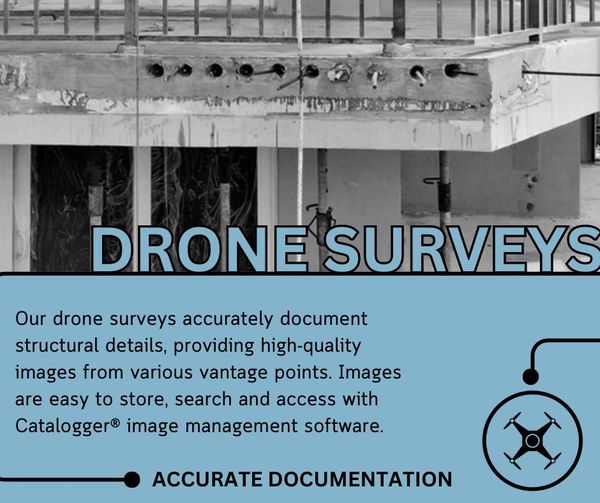
Drones capture thousands of high-quality photos as they move in and around buildings at different altitudes.

Drones capture thousands of high-quality photos as they move in and around buildings at different altitudes.

Drones capture thousands of high-quality photos as they move in and around buildings at different altitudes.

 
Performing drone inspections on a consistent basis allows property managers to observe time-dependent changes such as concrete deterioration, roof wear and tear, and hurricane damage.
 
At SRI, our FAA-certified pilots perform drone surveys of residential and commercial properties throughout South Florida.
 
Learn more about our drone services @ https://ow.ly/Qy6u50QWZNw


DRONE SURVEYS

Red circle blog post icon

Drones take many videos and high-quality photos as they move in and around buildings at different altitudes. In a single mission, hundreds of data points can be captured for later use. That data provides a historical record to aid in insurance claims, maintenance and future renovations. At SRI, our FAA-certified pilots perform drone surveys of residential and commercial properties throughout South Florida. We use Catalogger image management software to easily store, search and access image and video data.

FAA-Certified Drone Pilots

All of our pilots have passed the FAA’s Small UAS Rule (Part 107) examination and maintain their flying credentials by passing recurrent examinations every two years.

Image Management with Catalogger
 
With a simple interface, Catalogger allows users to quickly access and share drone survey photos to guide maintenance, repair, and improvement projects. Image data is stored on the cloud and can be viewed on multiple devices via a password-protected portal.
Mission Planning With Recorded GPS Coordinates

Allows for repeated flights along the same path. Missions can be scheduled periodically to observe time-dependent changes such as concrete deterioration, roof wear and tear, hurricane damage, and modifications to surrounding structures.

Catalogger image management system logo
 
Tags: , ,
Preparing for Extreme Heat: The New Natural Disaster by Donna DiMaggio Berger of Becker

Preparing for Extreme Heat: The New Natural Disaster by Donna DiMaggio Berger of Becker

  • Posted: Jul 08, 2025
  • By:
  • Comments: Comments Off on Preparing for Extreme Heat: The New Natural Disaster by Donna DiMaggio Berger of Becker

Preparing for Extreme Heat this Summer: The New Natural Disaster

by Donna DiMaggio Berger / Becker

The word “hot” has many connotations: it can reveal anger when you say someone is “hot around the collar”; it can invoke personal appeal or desirability “he’s so hot”; it can refer to a disorganized person or situation, hence the description as “a hot mess”; and can also be used to describe an emotional issue or topic as a “hot button”. However, since the earliest of times, the word hot has been used to describe the temperature and we’ve been hearing this word a lot lately in many parts of the US given the ongoing heat waves. More than 61,000 people died because of the heat waves that swept the European continent. We won’t know for some time how many US fatalities have occurred due to our extreme heat during the summer.

Extreme heat can cause dehydration, heat exhaustion, exacerbation of existing medical and mental health conditions, respiratory distress, and heatstroke. Dehydration can cause dizziness, fatigue, and muscle weakness. Heat exhaustion may result in heavy sweating, nausea, headache, rapid heartbeat, faintness, and muscle cramps. Extreme heat can more greatly affect people with underlying respiratory, cardiovascular and kidney disorders with extreme heat being tied to an increased risk of heart attacks or other cardiovascular events. Heatwaves have also been linked to diminished air quality in urban areas which can worsen respiratory conditions such as asthma. Lastly, extreme heat can impact mental well-being, leading to irritability, mood swings and difficulty concentrating, all of which can make communal living more stressful.

Dealing with extreme heat events in a multifamily building, especially for those on fixed incomes, can be challenging. What should your association board and management team be doing in response to an extreme heat event? Certainly, including preparation for heat waves into your emergency disaster plan is recommended. The following are some items you may wish to consider:

  • If your association has employees, work with counsel to review your employee guidebook particularly for employees whose work requires them to be outdoors. For those employees, you will want to be sure that they have access to plenty of water throughout the day to stay hydrated and replace fluids lost through perspiration. If those employees are required to wear a certain uniform that is not well suited to an extreme heat event, you should consider an alternate uniform for extreme heat event. You may also want to be confirm that your outside vendors who provide services outdoors have provided adequate water and protection from the sun for their workers.
  • Create shade around the building by using umbrellas, awnings, or strategically placed vegetation to reduce the impact of direct sunlight. Bear in mind that some of these shade additions may require advance membership approval.
  • Revisit any architectural control guidelines you have in place which may restrict or prohibit the use of fans on patios, balconies and lanais. Fans are used to circulate air and can create a cooling effect. Consider how curtains, blinds and blackout shades may reduce the temperature inside units particularly if a unit owner is not running the AC at reasonable temperatures. Allow people to close their blinds and/or their hurricane shutters during the day to block out direct

    sunlight and prevent heat from entering the living space.
  • Consider limiting daytime hours of play for outdoor tennis and pickleball courts as well as any other outdoor recreational areas when temperatures are soaring. Installing thermometers on the common areas may also help remind your residents about climbing temperatures.
  • Consider purchasing a whole building generator if you don’t already have one. In the event that increased electric demands during a heat wave cause a blackout or brownout that generator may save lives in your building. Naturally, a generator will also help in the aftermath of a windstorm which knocks out electricity.
  • Check in with your residents who may be living alone and dealing with physical or mental health challenges as well as economic burdens. These residents may not be running their A/C as often or at a

    temperature that is needed for their wellbeing. This is also the time to confirm that you have emergency contacts for your residents.
  • Reach out to local community organizations, social services, or government agencies that provide assistance during extreme weather events. They may offer cooling centers, fan distribution programs, or other resources for your residents.

The strategies your board and management team use in response to an extreme heat event depends, in large part, on your building’s location and infrastructure as well as the available monetary and personnel resources. However, there are some basic steps all associations can take to educate their residents about the dangers of extreme heat. The phrase, “we’re having a heat wave” doesn’t have to spell disaster in a well-prepared community.

For additional information please listen to my podcast conversation with Jane Gilbert, Miami-Dade’s Chief Heat Officer which can be found here.


 Donna DiMaggio Berger is a Shareholder with the Becker law firm, is Board-certified, is a Fellow with the College of Community Association Lawyers (CCAL) and is a keynote speaker and the host of the popular Take It To The Board podcast on association issues.

Donna DiMaggio Berger is a Shareholder in Becker’s Community Association Practice in Ft. Lauderdale, Florida. She is a member of the College of Community Association Lawyers (CCAL), a prestigious national organization that acknowledges community association attorneys who have distinguished themselves through contributions to the evolution or practice of community association law and who have committed themselves to high standards of professional and ethical conduct in the practice of community association law. She is also one of only 190 attorneys statewide who is a Board Certified Specialist in Condominium and Planned Development Law.

As Founder and Executive Director of Becker’s Community Association Leadership Lobby (CALL), Ms. DiMaggio Berger has led various community association advocacy initiatives, working with legislators and other public policymakers on behalf of those who live, serve, and work in common interest ownership communities. She has testified before the Florida Legislature regarding community association law and frequently appears on radio talk shows and in print media discussing these issues.

Tags: , , ,
FIDUCIARY DUTY: What it Means to Your Community Association. by REMBAUM’S ASSOCIATION ROUNDUP

FIDUCIARY DUTY: What it Means to Your Community Association. by REMBAUM’S ASSOCIATION ROUNDUP

  • Posted: May 11, 2025
  • By:
  • Comments: Comments Off on FIDUCIARY DUTY: What it Means to Your Community Association. by REMBAUM’S ASSOCIATION ROUNDUP

What duty does a community association board member owe to their association? What happens if that duty is breached? During the legislative session, legislation was proposed that would have made directors criminally liable for failure to timely respond to official record requests, among other provisions.

The legislation in House Bill 919 was proposed by Representative Porras in response to the alleged $3.4 million dollar embezzlement scheme that took place at the Hammocks Community Association, located in Miami-Dade County. Parts of this proposed bill were well-intentioned; however, several provisions were commonly viewed as too broad and expansive.

On November 15, 2022, the Miami-Dade State Attorney’s Office announced charges related to the Hammocks’ criminal case, including racketeering, organized scheme to defraud, money laundering, grand theft, and fabricating physical evidence against five board members. These board members have been accused of the following:

i) running a scheme in which they used HOA checks and HOA credit cards from 55 bank accounts to pay for “no-show” work by shell companies or vendors, who would funnel money back to the directors for their personal use;

ii) withholding official records from members; and,

iii) failure to hold valid elections, among other bad acts.

If found guilty these board members overtly breached their fiduciary duty to their association.

During the 2023 legislative session, House Bill 919 initially contained significant criminal penalties to punish board members who failed to provide official records when they otherwise should have, criminal penalties for kickbacks, and criminal penalties for improper election interference, among other provisions. Such laws, while well intended, went overboard as evidenced by the creation of criminal penalties for failure to provide official records, as such severe criminal penalties for operational matters would likely only deter good people from running for the board. Recognizing this potential issue, parts of HB 919 were tempered a bit prior to it becoming law. That said, in the opinion of this author, new laws with new criminal penalties are not the answer. Bad people do bad things, and no amount of laws will likely significantly change that. So, what is the answer?

One answer is to shore up the educational and certification requirements for board members. At present, there are two ways to be certified as a board member. One method is to take a State-approved class, which provides an overview of the voluminous information board members need to know in order to perform their duties. The other method is to sign a piece of paper that the board member has read the governing documents, will abide by them, and will faithfully discharge their duties. This second method should be eliminated as there is no method to confirm compliance, and this method does not have any educational component. In addition, continuing education requirements should be required for any board member serving consecutive years.

During a board certification class, time should be spent discussing the term “fiduciary duty.” While the term is repeatedly used in Chapters 718 and 720 of the Florida Statutes, it is not expressly defined in these statutes. Section 718.111, Florida Statutes, makes reference to Section 617.0830, Florida Statutes, which provides for general standards for directors of not-for-profit corporations, such as community associations.

Section 617.0830, Florida Statutes, provides the following:

      1. A director shall discharge his or her duties as a director, including his or her duties as a member of a committee i) in good faith; ii) with the care an ordinarily prudent person in a like position would exercise under similar circumstances; and iii) in a manner he or she reasonably believes to be in the best interests of the corporation.
      2. In discharging his or her duties, a director may rely on information, opinions, reports, or statements, including financial statements and other financial data, if prepared or presented by: i) One or more officers or employees of the corporation whom the director reasonably believes to be reliable and competent in the matters presented; ii) legal counsel, public accountants, or other persons as to matters the director reasonably believes are within the persons’ professional or expert competence; or iii) a committee of the board of directors of which he or she is not a member if the director reasonably believes the committee merits confidence.
      3. A director is not acting in good faith if he or she has knowledge concerning the matter in question that makes reliance otherwise permitted by subsection (2) unwarranted.
      4. A director is not liable for any action taken as a director, or any failure to take any action, if he or she performed the duties of his or her office in compliance with this section.

Still, though, there is no express definition of the term “fiduciary duty.” The purpose of studying fiduciary relationships is to identify the areas where it exists and gain an insight into the duties of a fiduciary. After all, every board member is a fiduciary for their community association. Common definitions of the term “fiduciary” include:

      • A fiduciary relationship is a relation between two parties wherein one party (fiduciary) has the duty to act in the best interest of the other party (beneficiary or principal).
      • A fiduciary is a person who holds a legal or ethical relationship of trust with one or more other parties. Typically, a fiduciary prudently takes care of money or other assets for another person.
      • A fiduciary duty is a relationship in which one party places special trust, confidence, and reliance in and is influenced by another who has a fiduciary duty to act for the benefit of the party.
      • Most importantly, and germane to this discussion, a fiduciary is a person or organization that acts on behalf of another person or persons, putting their clients’ interests ahead of their own, with a duty to preserve good faith and trust.

In other words, a good community association board member puts the interest of their association above their own personal interests. Thus, while we may not be able to stop bad people from doing bad things, through continuing education we can help good people do better.

To recap, there are three things that can be readily accomplished that would make a positive difference for Florida’s community associations.

      1. Remove the ability of a board member to be “certified” by signature alone.
      2. Require continuing education for board members serving continuous years.
      3. Amend Florida Statutes, Chapters 718 and 720, to include express definitions of fiduciary duty so that it is made patently clear that every board member must put their community association above and ahead of their own personal interests.


[AdSense-A]


Tags: , ,
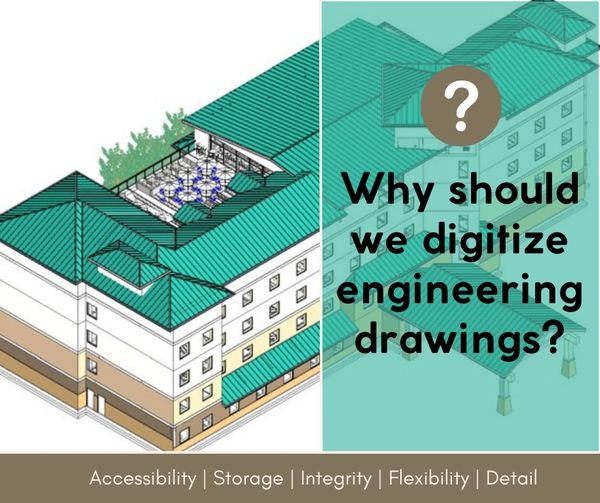
Need a few reasons to digitize your paper-based engineering and architectural drawings? How about these?

Need a few reasons to digitize your paper-based engineering and architectural drawings? How about these?

1- Accessibility and Sharing. Digital files are easy to search, copy and share, saving valuable time and improving collaboration.
2- Storage and Document Integrity. Digital drawings are much less expensive to store than paper copies and are not subject to degradation over time.
3- Flexibility. Digital drawings are easy to rework or update, streamlining change processes and speeding renovations.
4- Details. Digital designs allow for the addition of audio or video to individual elements, providing an extra level of detail (e.g., materials, site layout, construction processes).
At the end of the day, digitization is a huge time and cost saver.
Call Us—561.372.1290
Tags: , ,