MANDATORY CONDOMINIUM & COOPERATIVE BUILDING INSPECTIONS & NON-WAIVABLE RESERVE REQUIREMENTS
We are reposting this, for all the buildings That have not had inspections…..
SENATE BILL 4-D
With home insurers leaving Florida in droves, and following pressure from members of both political parties in the legislature to actually do something about it, in May 2022, the governor called a special legislative session to address the problem. A very real concern to the insurers is the effect of both time and inclement weather on Florida’s aging high-rise buildings. Until now, and for the most part, Florida law largely ignored these concerns. Enter Senate Bill 4-D (SB 4-D) which already became effective upon being signed into law by Governor DeSantis on May 26, 2022. This new piece of legislation addresses condominium and cooperative building inspections and reserve requirements (while this article primarily addresses these new laws in the context of condominium association application, they are equally applicable to cooperative associations).
By way of background, during the regular legislative session, there were several bills introduced in the Florida House of Representatives (House) and in the Florida Senate (Senate) addressing building safety issues, but none of them were passed into law due to the inability to match the language of the bills in both the House and the Senate which is a requirement for legislation to pass and go to the governor for consideration. As such, it was a little surprising to many observers that the legislature was able to approve SB 4-D in essentially a 48-hour window during the special session in May. The language used in SB 4-D was initially drafted into a proposed bill in November 2021. At that time, and during the most recent legislative session, input was provided by many industry professional groups including engineers, reserve study providers, and association attorneys. Many of these industry professionals indicated that there were challenges with some of the language and concepts being proposed in SB 4-D during session.
Notwithstanding these challenges, and in an effort to ensure some form of life safety legislation was passed this year, SB 4-D was unanimously approved in both the House and Senate and signed by the governor. A plain reading of this well intended, but in some instances not completely thought-out, legislation evidences these challenges. Some will say it is a good start that will need significant tweaking, which is expected during the 2023 Legislative Session. Others praise it, and yet others say it is an overreach of governmental authority, such as an inability to waive or reduce certain categories of reserves. You be the judge. We begin by examining the mandatory inspection and reserve requirements of SB 4-D.
I. MILESTONE INSPECTIONS: MANDATORY STRUCTURAL INSPECTIONS FOR CONDOMINIUM AND COOPERATIVE BUILDINGS. (§553.899, Fla. Stat.)
You will not find these new milestone inspection requirements in Chapters 718 or 719 of the Florida Statutes, but rather in Chapter 553, Florida Statutes, as cited above.
MILESTONE INSPECTIONS:
The term “milestone inspection” means a structural inspection of a building, including an inspection of load-bearing walls and the primary structural members and primary structural systems as those terms are defined in section 627.706, Florida Statutes, by a licensed architect or engineer authorized to practice in this state for the purposes of attesting to the life safety and adequacy of the structural components of the building and, to the extent reasonably possible, determining the general structural condition of the building as it affects the safety of such building, including a determination of any necessary maintenance, repair, or replacement of any structural component of the building. The purpose of such inspection is not to determine if the condition of an existing building is in compliance with the Florida Building Code or the fire safety code.
SUBSTANTIAL STRUCTURAL DETERIORATION:
The term “substantial structural deterioration” means substantial structural distress that negatively affects a building’s general structural condition and integrity. The term does not include surface imperfections such as cracks, distortion, sagging, deflections, misalignment, signs of leakage, or peeling of finishes unless the licensed engineer or architect performing the phase one or phase two inspection determines that such surface imperfections are a sign of substantial structural deterioration.
MILESTONE INSPECTIONS FOR BUILDINGS THREE STORIES OR MORE IN HEIGHT:
A condominium association under chapter 718 and a cooperative association under chapter 719 must have a milestone inspection performed for each building that is three stories or more in height by December 31 of the year in which the building reaches 30 years of age, based on the date the certificate of occupancy for the building was issued, and every 10 years thereafter.
WITHIN THREE MILES OF COASTLINE:
If the building is three or more stories in height and is located within three miles of a coastline, the condominium association or cooperative association must have a milestone inspection performed by December 31 of the year in which the building reaches 25 years of age, based on the date the certificate of occupancy for the building was issued, and every 10 years thereafter.
The condominium association or cooperative association must arrange for the milestone inspection to be performed and is responsible for ensuring compliance.
The condominium association or cooperative association is responsible for all costs associated with the inspection.
IF THE CERTIFICATE OF OCCUPANCY WAS ISSUED BEFORE JULY 1, 1992:
If a milestone inspection is required under this statute and the building’s certificate of occupancy was issued on or before July 1, 1992, the building’s initial milestone inspection must be performed before December 31, 2024. If the date of issuance for the certificate of occupancy is not available, the date of issuance of the building’s certificate of occupancy shall be the date of occupancy evidenced in any record of the local building official.
Upon determining that a building must have a milestone inspection, the local enforcement agency must provide written notice of such required inspection to the condominium association or cooperative association by certified mail, return receipt requested.
Within 180 days after receiving the written notice the condominium association or cooperative association must complete phase one of the milestone inspection. For purposes of this section, completion of phase one of the milestone inspection means the licensed engineer or architect who performed the phase one inspection submitted the inspection report by e-mail, United States Postal Service, or commercial delivery service to the local enforcement agency.
A MILESTONE INSPECTION CONSISTS OF TWO PHASES:
(a) PHASE 1: For phase one of the milestone inspection, a licensed architect or engineer authorized to practice in this state must perform a visual examination of habitable and non-habitable areas of a building, including the major structural components of a building, and provide a qualitative assessment of the structural conditions of the building. If the architect or engineer finds no signs of substantial structural deterioration to any building components under visual examination, phase two of the inspection (discussed below) is not required. An architect or engineer who completes a phase one milestone inspection shall prepare and submit an inspection report.
(b) PHASE 2: A phase two of the milestone inspection must be performed if any substantial structural deterioration is identified during phase one. A phase two inspection may involve destructive or nondestructive testing at the inspector’s direction. The inspection may be as extensive or as limited as necessary to fully assess areas of structural distress in order to confirm that the building is structurally sound and safe for its intended use and to recommend a program for fully assessing and repairing distressed and damaged portions of the building. When determining testing locations, the inspector must give preference to locations that are the least disruptive and most easily repairable while still being representative of the structure. An inspector who completes a phase two milestone inspection must prepare and submit an inspection report.
POST-MILESTONE INSPECTION REQUIREMENTS:
Upon completion of a phase one or phase two milestone inspection, the architect or engineer who performed the inspection must submit a sealed copy of the inspection report with a separate summary of, at minimum, the material findings and recommendations in the inspection report to the condominium association or cooperative association, and to the building official of the local government which has jurisdiction. The inspection report must, at a minimum, meet all of the following criteria:
(a) Bear the seal and signature, or the electronic signature, of the licensed engineer or architect who performed the inspection.
(b) Indicate the manner and type of inspection forming the basis for the inspection report.
(c) Identify any substantial structural deterioration within a reasonable professional probability based on the scope of the inspection, describe the extent of such deterioration, and identify any recommended repairs for such deterioration.
(d) State whether unsafe or dangerous conditions, as those terms are defined in the Florida Building Code, were observed.
(e) Recommend any remedial or preventive repair for any items that are damaged but are not substantial structural deterioration.
(f) Identify and describe any items requiring further inspection.
LOCAL GOVERNMENT ENFORCEMENT:
A local enforcement agency may prescribe time lines and penalties with respect to compliance with the milestone inspection requirements.
A board of county commissioners may adopt an ordinance requiring that a condominium or cooperative association schedule or commence repairs for substantial structural deterioration within a specified time frame after the local enforcement agency receives a phase two inspection report; however, such repairs must be commenced within 365 days after receiving such report. If an association fails to submit proof to the local enforcement agency that repairs have been scheduled or have commenced for substantial structural deterioration identified in a phase two inspection report within the required time frame, the local enforcement agency must review and determine if the building is unsafe for human occupancy.
BOARD’S DUTY AFTER OBTAINING THE MILESTONE REPORT:
Upon completion of a phase one or phase two milestone inspection and receipt of the inspector-prepared summary of the inspection report from the architect or engineer who performed the inspection, the association must distribute a copy of the inspector-prepared summary of the inspection report to each unit owner, regardless of the findings or recommendations in the report, by United States mail or personal delivery and by electronic transmission to unit owners who previously consented to receive notice by electronic transmission; must post a copy of the inspector-prepared summary in a conspicuous place on the condominium or cooperative property; and must publish the full report and inspector-prepared summary on the association’s website, if the association is required to have a website.
WHO PAYS FOR THE MILESTONE INSPECTION:
Pursuant to section 718.112, Florida Statutes, if an association is required to have a milestone inspection performed, the association must arrange for the milestone inspection to be performed and is responsible for ensuring compliance with all of the requirements thereof. The association is responsible for all costs associated with the inspection.
FAILURE TO OBTAIN THE MILESTONE INSPECTION:
If the officers or directors of an association willfully and knowingly fail to have a milestone inspection performed pursuant to section 553.899, Florida Statutes, such failure is a breach of the officers’ and directors’ fiduciary relationship to the unit owners.
MANAGER’S DUTY:
If a community association manager or a community association management firm has a contract with a community association that has a building on the association’s property that is subject to milestone inspection, the community association manager or the community association management firm must comply with the requirements of performing such inspection as directed by the board.
EXEMPTIONS:
For clarity, the otherwise required milestone inspection does not apply to a single family, two-family, or three-family dwelling with three or fewer habitable stories above ground.
FLORIDA BUILDING COMMISSION REQUIREMENTS:
The Florida Building Commission must review the milestone inspection requirements and make recommendations, if any, to the legislature to ensure inspections are sufficient to determine the structural integrity of a building. The commission must provide a written report of any recommendations to the Governor, the President of the Senate, and the Speaker of the House of Representatives by December 31, 2022.
The Florida Building Commission must consult with the State Fire Marshal to provide recommendations to the legislature for the adoption of comprehensive structural and life safety standards for maintaining and inspecting all types of buildings and structures in this state that are three stories or more in height. The commission must provide a written report of its recommendations to the Governor, the President of the Senate and the Speaker of the House of Representatives by December 31, 2023.
II. STRUCTURAL INTEGRITY RESERVE STUDIES AND MANDATORY RESERVES:
The reserve legislation set out in section 718.112 (f)(2)(a), Florida Statutes, is, for all intents and purposes, re-written. Prior to examining these most recent revisions, it is necessary to first examine the definitions set out in section 718.103, Florida Statutes, where a brand new term is added as follows:
Structural integrity reserve study means a study of the reserve funds required for future major repairs and replacement of the common areas based on a visual inspection of the common areas applicable to all condominiums and cooperative buildings 3 stories or higher.
Hereafter, the structural integrity reserve study is referred to as “SIRS”. Now we can turn our attention to the requirements of the SIRS as set out in section 718.112 (f)(2)(a), Florida Statutes
THE STRUCTURAL INTEGRITY RESERVE STUDY (required for all condominium and cooperative buildings three stories or higher regardless of date of certificate of occupancy):
An association must have a SIRS completed at least every 10 years after the condominium’s creation for each building on the condominium property that is three stories or higher in height which includes, at a minimum, a study of the following items as related to the structural integrity and safety of the building:
a. Roof.
b. Load-bearing walls or other primary structural members.
c. Floor.
d. Foundation.
e. Fireproofing and fire protection systems.
f. Plumbing.
g. Electrical systems.
h. Waterproofing and exterior painting.
i. Windows.
j. Any other item that has a deferred maintenance expense or replacement cost that exceeds $10,000 and the failure to replace or maintain such item negatively affects the items listed in subparagraphs a.-i., as determined by the licensed engineer or architect performing the visual inspection portion of the structural integrity reserve study.
The SIRS may be performed by any person qualified to perform such study. However, the visual inspection portion of the structural integrity reserve study MUST be performed by an engineer licensed under chapter 471 or an architect licensed under chapter 481.
As further set out in the legislation, at a minimum, “a structural integrity reserve study must identify the common areas being visually inspected, state the estimated remaining useful life and the estimated replacement cost or deferred maintenance expense of the common areas being visually inspected, and provide a recommended annual reserve amount that achieves the estimated replacement cost or deferred maintenance expense of each common area being visually inspected by the end of the estimated remaining useful life of each common area.”
The amount to be reserved for an item is determined by the association’s most recent structural integrity reserve study that must be completed by December 31, 2024. If the amount to be reserved for an item is not in the association’s initial or most recent structural integrity reserve study or the association has not completed a structural integrity reserve study, the amount must be computed using a formula based upon estimated remain useful life and estimated replacement cost or deferred maintenance expense of each reserve item.
If the condominium building is less than three stories then the legislation provides that, “in addition to annual operating expenses, the budget must include reserve accounts for capital expenditures and deferred maintenance. These accounts must include, but are not limited to, roof replacement, building painting, and pavement resurfacing, regardless of the amount of deferred maintenance expense or replacement cost, and any other item that has a deferred maintenance expense or replacement cost that exceeds $10,000.”
The association may adjust replacement reserve assessments annually to take into account any changes in estimates or extension of the useful life of a reserve item caused by deferred maintenance.
If an association fails to complete a SIRS, such failure is a breach of an officer’s and director’s fiduciary relationship to the unit owners.
NON-WAIVABLE AND WAIVABLE RESERVES IN THE UNIT OWNER CONTROLLED ASSOCIATION:
As to the SIRS, the legislation is patently clear that unit owners may not vote for no reserves or lesser reserves for items set forth SIRS report. There is on-going debate amongst attorneys in regard to whether a condominium under three stories can waive or reduce reserves for any of the reserve items required to be in the SIRS that are included in the under three story condominium reserve, for example, roof and painting (For those interested, examine lines 1029 to 1033 and 1050 to 1071 in SB 4-D).
MANDATORY RESERVES IN THE DEVELOPER CONTROLLED ASSOCIATION:
Before turnover of control of an association by a developer to unit owners other than a developer pursuant to section 718.301, Florida Statutes, the developer-controlled association may not vote to waive the reserves or reduce the funding of the reserves (Previously, a developer could fully waive all reserves for the first two years, meaning this is a monumental change).
PRE-TURNOVER DEVELOPER DUTY:
Before a developer turns over control of an association to unit owners other than the developer, the developer must have a SIRS completed for each building on the condominium property that is three stories or higher in height.
III. OFFICIAL RECORDS:
Official records of the condominium and cooperative association include structural integrity reserve studies, financial reports of the association or condominium, and a copy of the inspection reports and any other inspection report relating to a structural or life safety inspection of condominium or cooperative property.
In addition to the right to inspect and copy the declaration, bylaws and rules renters have the right to inspect the milestone inspection report and structural integrity reserve study inspection reports as well.
Structural integrity reserve studies must be maintained for at least 15 years after the study is completed. In addition, inspection reports report and any other inspection report relating to a structural or life safety inspection of condominium property must be maintained for 15 years after receipt of such report.
IV. ASSOCIATION WEBSITES:
In addition to other positing requirements, the inspection reports described above and any other inspection report relating to a structural or life safety inspection of condominium property and the association’s most recent structural integrity reserve study must be posted to the website.
V. JURISDICTION OF DIVISION OF CONDOMINIUMS, TIMESHARES, AND MOBILE HOMES:
Pre-turnover, the Division of Florida Condominiums, Timeshares, and Mobile Homes (Division) may enforce and ensure compliance with rules relating to the development, construction, sale, lease, ownership, operation, and management of residential condominium units, and complaints related to the procedural completion of milestone inspections. After turnover has occurred, the Division has jurisdiction to investigate complaints related only to financial issues, elections, and the maintenance of and unit owner access to association records, and the procedural completion of structural integrity reserve studies.
VI. NEW REPORTING REQUIREMENTS FOR ALL CONDOMINIUM AND COOPERATIVE ASSOCIATIONS:
On or before January 1, 2023, condominium associations existing on or before July 1, 2022, must provide the following information to the Division in writing, by e-mail, United States Postal Service, commercial delivery service, or hand delivery, at a physical address or e-mail address provided by the division and on a form posted on the division’s website:
- The number of buildings on the condominium property that are three stories or higher in height.
- The total number of units in all such buildings.
- The addresses of all such buildings.
- The counties in which all such buildings are located.
An association must provide an update in writing to the division if there are any changes to the information in the list within six months after the change.
VII. APPLICABLE TO ALL SELLERS OF UNITS:
As a part of the sales process, the seller of a condominium or cooperative unit and developers must provide to potential purchasers a copy of the inspector-prepared summary of the milestone inspection report and a copy of the association’s most recent structural integrity reserve study or a statement that the association has not completed a structural integrity reserve study.
VIII. GLITCHES:
As with any new legislation of such a substantial nature, there often follow in subsequent years what are referred to as “glitch bills” which help provide additional clarity, remove ambiguity, and fix unintended errors. To name a few: (i) the term “common areas” is used in the legislation when in fact the correct term is “common element;” (ii) clarity needs to be provided regarding whether reserve items that are required to be in SIRS, but show up in the under three story reserves, such as paint and paving, can be waived or reduced by the membership; and (iii) for those buildings that are within three miles of the coastline, additional clarity could be provided to provide better guidance as to how to perform the measurement.
Tags:
Board of Directors,
Condo and HOA Law,
Reserves

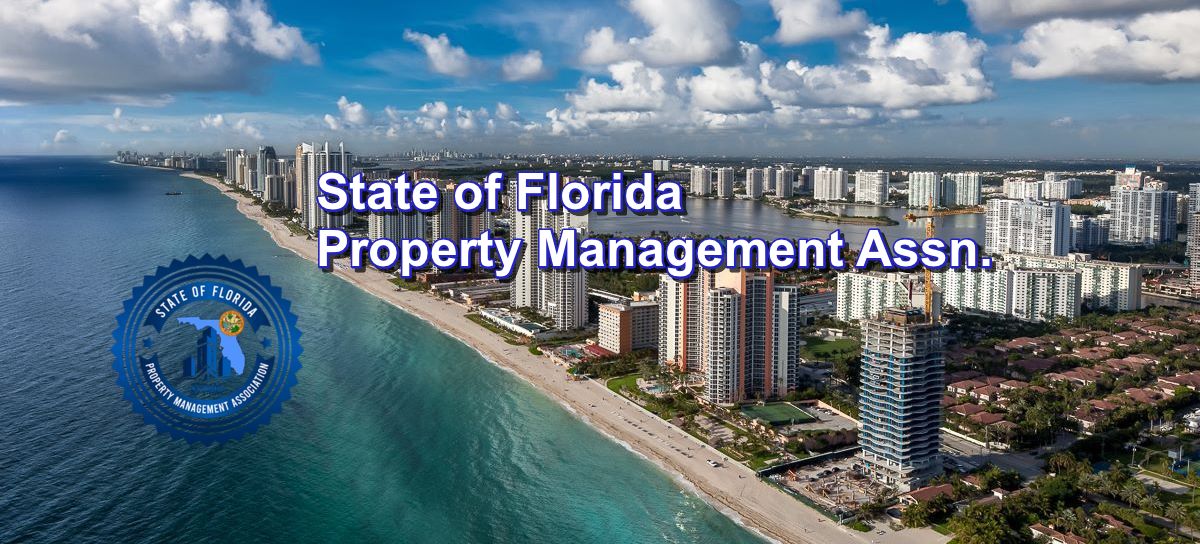
 Don Tyre, building official manager, provided city council members an update on the local process at a committee meeting. He noted that 225 condo buildings must submit reinspection reports this year, as all exist within three miles of the coast.