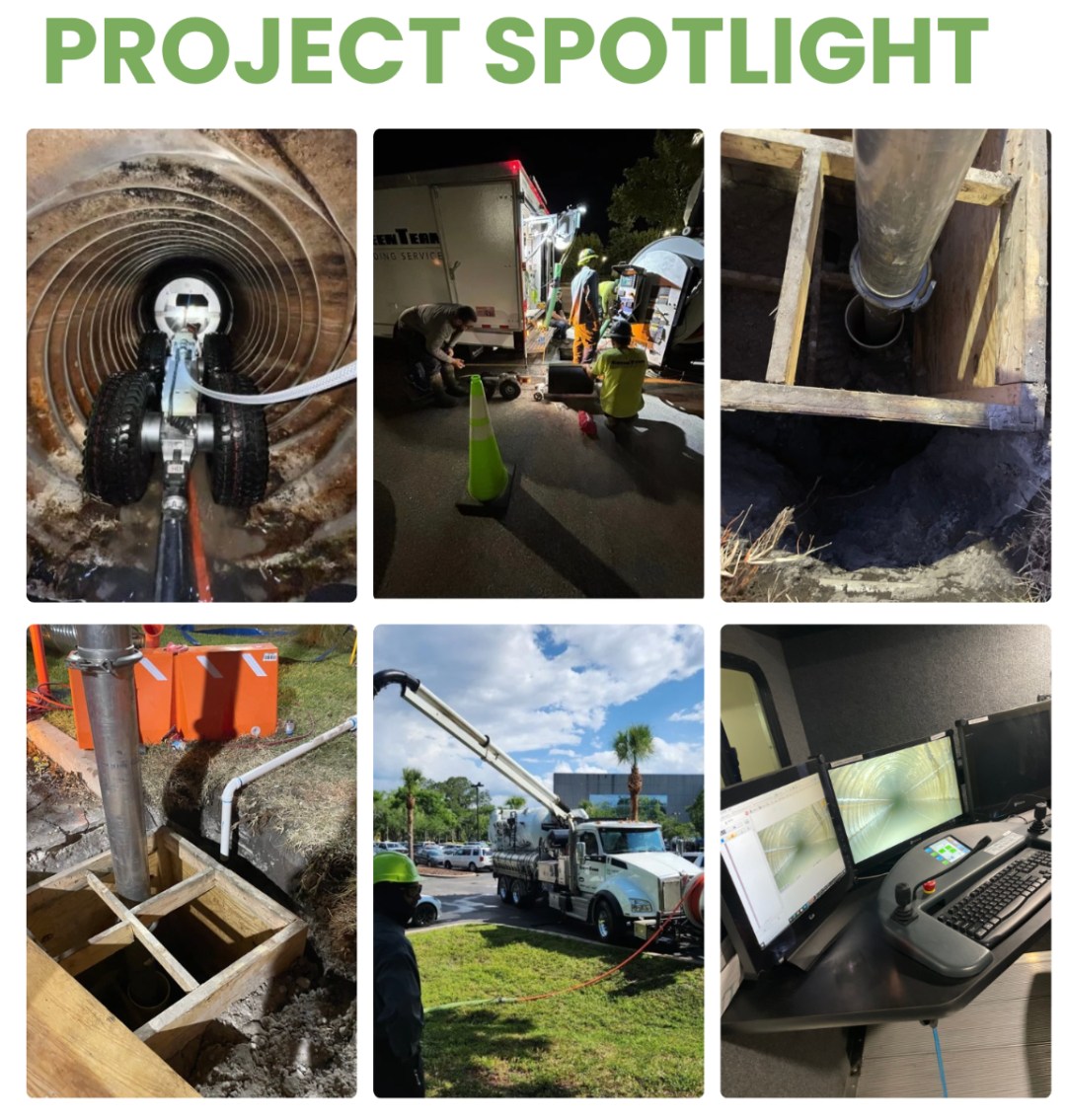
Did you know that CCTV trucks are vital tools for inspecting the condition of underground pipes?

Find Blog Articles for Florida’s Condo, HOA and the Management Industry.

We provide extensive consulting to every accounting client. Detailed management notes are provided in addition to a comprehensive Financial Statement package.
Our bookkeeping help goes far beyond just balancing the books. Our Bookkeeping outsourcing, saves you time and money, while reducing stress levels.
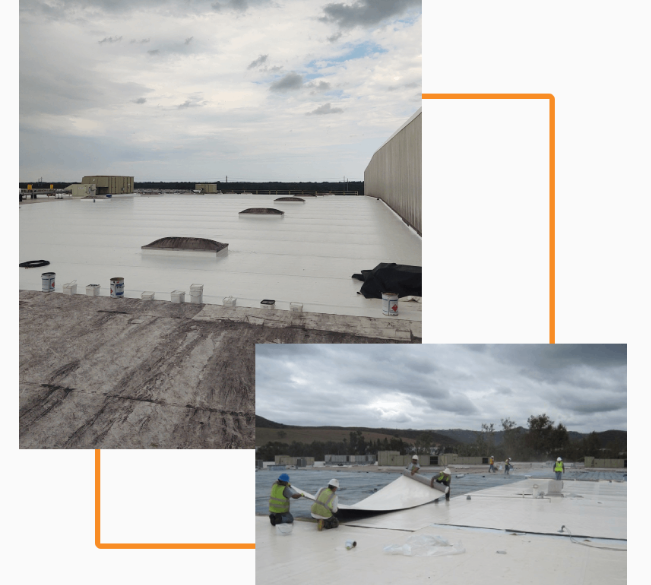
At TLC Construction Industries, Corp., we provide turnkey solutions for all your roofing needs. Our goal is to provide the highest level of quality and service at a fair cost. Established in 2022 with a goal to provide property owners with professional roofing solutions.
Our team is located in North Port, Florida, offering our services to clients on the East Coast and the rest of the United States.
Claremont Property Co. recently opened its new office in Bonita Springs, Florida, and it is helping rebuild our beautiful West Coast after Hurricane Ian. They joined SFPMA to offer their services to Boards and Managers all over Florida. View their website, learn more about the services they offer!
They started in 1995 and are headquartered in Houston, Texas. They have additional offices in Dallas, Texas, Wilmington, North Carolina, Charleston and Myrtle Beach, South Carolina, Fort Lauderdale, Destin, and Panama City, Florida, and Mobile and Orange Beach, Alabama.
They can service your property needs just about anywhere your property is located.
Whether your property has been impacted by a loss from fire, water, hail, wind or you simply need improvements to your property, their many years of experience allows them to provide you with the complete spectrum of remediation, roofing, and general contracting services.
Their list of services include:
· Claims Advocacy
· Emergency Services
· Remediation Services
· Restoration Services
· Roofing Services
· Pre-Loss Services
Their management team has decades of collective practice managing large scale commercial, multi-family, and hospitality projects from the design stages through completion. They have helped their clients settle millions of dollars in insurance claims and completed tens of thousands of square feet of demolition, mitigation, restoration, and roofing projects along the way.
For more information, please visit their website at www.cpc-tx.com or contact Diana Kato, Business Developer, Email: Diana@cpc-tx.com Cell: 954-832-4573.

SFPMA.com
SFPMA works throughout the State of Florida, we are a multi-member organization for the Condo, HOA and Property Management industry. Through knowledge based Articles, Events and our Members Directory, Clients find the right information to make an informed decisions for their Florida properties.
Tags: Board of Directors, Damage Restoration, Management News, SFPMA Members News
Broward County task force agreed, informally, to recommend a change in state law that would make it harder for condos to waive the proper funding of reserves and to require more frequent inspections for coastal condos. The changes, if adopted by the state, could make condo living more expensive, but safer.
“It’s going to hurt in the beginning, but that’s where we have to get,” insurance expert Paul Handerhan, president of the Federal Association for Insurance Reform (FAIR), told the committee Monday, echoing many of their own opinions. “… There’s no way to get out of this without paying.”
Monday’s was the second of three meetings for the Broward County Condominium Structural Issues Committee, set up by Mayor Steve Geller to quickly offer recommendations to the Florida Legislature, whose committee meetings begin next month.
The Florida Bar and the Community Associations Institute trade group also are studying issues arising from the June 24 condo collapse in Surfside, and will offer recommendations to the governor and Legislature.
All are focused on just a few topics, including the issues of reserves and inspections.
Currently, reserves can be waived by majority vote of those present at a condo meeting. And the first major inspection is not required in Broward until a building turns 40.
“We’re here to try to come up with creative ways to make buildings safe. What Surfside has done is made city officials, building officials, condo residents, everybody aware of the widespread lack of maintenance in older condos,” said Hollywood Commissioner Caryl Shuham, who has a degree in civil engineering and is an attorney.
She recommended, and the committee conceptually agreed, that condos should have to present a reserve study to unit owners and secure a super-majority vote to waive full funding of reserves. She also suggested reserves not be waived unless an engineer has inspected the building and issued a report.
The potential cost to condo owners is not lost on state, county and city officials or the civic and industry leaders huddling on the issue. While some million-dollar condo owners might have no trouble forking over extra money, many unit owners are not in that category. Even the inspections are costly, one condo representative said. Unit owners could be forced out and condo sales could be stifled, some said.
“In certain cases, you could be mandating the death of a building,” said Fred Nesbitt, president of the Galt Ocean Mile condo association in Fort Lauderdale, which opposes reserve mandates. “I think we should still give owners choice.”
Geller said condos that don’t properly save for repairs face sticker shock with giant special assessments. By the time a major problem is found, he said, it’s too late to start paying into reserves.
“You can’t insure a burning building, and you can’t start reserving for an emergency that has already arrived,” he said.
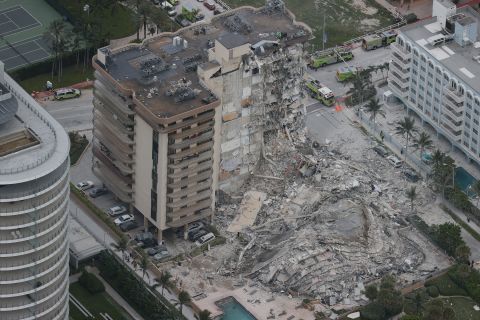
The cause of the Champlain collapse remains unknown but is under investigation. Because there was evidence of poor maintenance and crumbling, cracking concrete at the Champlain, there has been a sharp focus on how government can ensure that condos are kept in good repair.
“It’s terrifying to me that we’re in this place,” said state Sen. Lauren Book, one of four state legislators on the county committee. Book complained that there’s no one keeping track of individual condos – where they stand with insurance, reserves and repairs.
The committee also debated whether more frequent inspections are needed. Broward is one of two counties in Florida – the other being Miami-Dade – that requires buildings to be inspected for electrical and structural safety at age 40 and every 10 years subsequently.
Dr. Jennifer Jurado, Broward County’s climate change sustainability director, said the striking increase in sea level here – more than a foot over 20 years – could increase deterioration of concrete in buildings along the coast. She also cited temperate change and flood levels in saying that inspections should begin earlier, at 25 or 30 years.
But Dan Lavrich, a structural engineer and chairman of the Broward County Board of Rules and Appeals, which oversees application of the building code, questioned the need. Any change in the inspection program would have to be approved by Rules and Appeals, and the Florida Building Commission.
“The rest of the state has no program at all,” he said of the 40-year safety program, “and they don’t have any problems.”
The Broward committee will hold what it expects to be its final meeting next week, on Aug. 30, where formal recommendations will be voted on.
Reposted via: https://www.floridarealtors.org/news-media/news-articles/2021/08/condo-law-changes-likely-after-surfside-its-complicated
Tags: Assessments, Board of Directors, Condo and HOA, Condo and HOA Laws, Management News
By: Mitchell Drimmer, CAM
President, Axela Technologies
Starting next year, Community Associations (HOAs & Condos) in the U.S. will have to follow new rules. These rules are part of something called the Corporate Transparency Act (CTA). The CTA requires most Community Associations (HOAs & Condos) to share information about the people who own or control the association. This is called a beneficial ownership report. While some non-profit groups are exempt from this rule, most Community Associations (HOAs & Condos) are not.
Community Associations (HOAs & Condos) are groups that take care of neighborhoods. There is a lot of money flowing in and out of these associations and many boards of directors and even their management companies are not quite ready for this process. There are a lot of Community Associations (HOAs & Condos) in the U.S., more than 355,000 of them. They serve around 74 million people which is about 24% of the population of the United States. Community Associations (HOAs & Condos) are not exempt as they may be the perfect place to engage in money laundering for the purposes of fraud (unjust enrichment), and terrorism. The CTA was specifically established to make money laundering more difficult.
The new rule says that Community Associations (HOAs & Condos) need to provide specific information about the people who own or control the association. This includes their names, addresses, and other details. This information will be collected by a government agency called FinCEN. The goal is to make sure this information is not available to the public, but it can be used by law enforcement. There remain some questions regarding owner access to association records but as we all know Federal law overrides State laws and an association’s by-laws.
Most Community Associations (HOAs & Condos) need to report. They are considered “reporting companies” under the CTA. This means they must file the beneficial ownership report. There are some exemptions, but most Community Associations (HOAs & Condos) won’t qualify for these exemptions. This will add costs to the management of community associations and naturally will be passed through to the owners making life more expensive for community associations. Adding this to structural inspections, increased insurance premiums, and rising costs, this is not good news.
Community Associations (HOAs & Condos) need to figure out who their beneficial owners are. These are people who have control over important decisions in the HOA. It could be board members or others who influence how the HOA operates. Community Associations (HOAs & Condos) need to collect specific information about these people and report it to FinCEN. They also need to update this information if anything changes. The Board of Directors will now be scrutinized more than ever before, making it even more difficult to enjoin volunteers to run for board positions.
The new rule starts on January 1, 2024.
Existing Community Associations (HOAs & Condos) have until January 1, 2025, to file their first report.
Community Associations (HOAs & Condos) formed after this date must file within 30 days of their formation.
Community Associations (HOAs & Condos) need to understand these new rules and make sure they follow them. It’s important to collect the right information and report it on time. If they need help, they can talk to community association specialists who have studied this matter. These rules are meant to increase transparency and prevent fraud, so following them is essential.

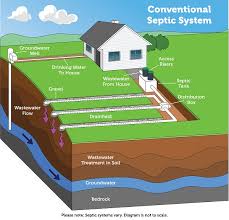
Some of those issues start with failing septic systems.
To help solve the problem, lawmakers passed new septic system requirements in Florida. Take a look below to get up to speed on these new requirements and their deadlines.

This new law impacts condominium associations governed under Chapter 718 of the Florida Statutes and for the most part has an effective date of July 1, 2024 (one Section is effective January 2026).
There have been several local (and even national) news stories focusing on various aspects of these wide-ranging changes, which are intended to strengthen what is perceived as a lack of oversight of board members and other stakeholders in the operation of condominium associations….
Read the full article on our website:
Thank You to our Legal Member and Sponsor.