When talking about people we often say it’s what is on the inside that counts, well the same can be said for condominiums. What you can’t see is often more important than what you can.
Many associations came about when developers converted apartment buildings into condos. Others in south Florida are just getting old and while it might not always be obvious on the outside a look inside the walls, under the slab or in the elevator equipment room will give you a better picture of the problems that lurk beneath the surface. All of these things have useful life’s and tend to wear out over time.
If the association has not made plans for replacing and updating these things as they wear out, by putting away the reserves necessary to replace them the question is not will there be an ugly surprise it is when will there be an ugly surprise. Developers and ever boards are good at investing in the things we can see and they help drive value like fancy wallpaper, marble floors, landscaping and quality amenities but often overlook things like old plumbing, outdated electrical services panels, and mechanical equipment.
If the association does not have the funds to give these items attention when needed, the result is special assessments or worse yet failures and disruptions in the lives of residents.
SFPMA and our Vendors and Members serve the Property Management Industry right here in Florida. Find the Top professionals on our
Directory for all of your buildings repairs. we are building our new Directory sign up Now to get your company listed.
find-a-service: for companies that work with Condo and HOA Boards and Property Managers in Florida.
Comments: Comments Off on Free Webinar: Nuclear Verdicts Are Still Happening. Are You Protected?
Nuclear Verdicts Are Still Happening. Are You Protected?
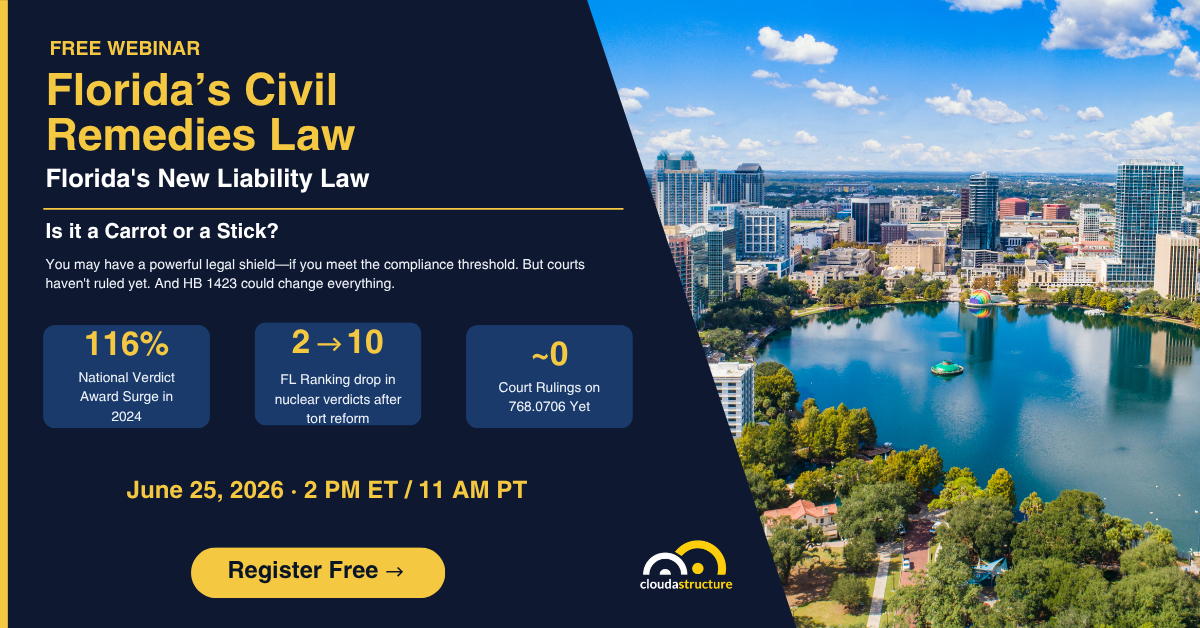
Tort reform moved Florida from 2nd to 10th nationally in nuclear verdict payouts – payouts over $10 million. That’s progress — but national verdict awards jumped 116% in 2024, and plaintiff attorneys are watching. Florida liability attorney Amanda Podlucky and security expert Randy Atlas join us June 25 to tell you whether the Civil Remedies certification can help protect you.
Florida gave multifamily owners a legal shield against negligence lawsuits — but no court has tested it yet. One ruling could change everything. Join attorney Amanda Podlucky of Cobb/Gonzalez and CPTED expert Randy Atlas on June 25 to find out if you actually qualify for the protection — and what gaps could still cost you. Free. Online. One hour. 👉 Reserve your seat
Kathleen Hannon
Sr Director of Communications | Cloudastructure, Inc.
Addressing Major Lake Issues Before the Growing Season
The growing season refers to the time of year – typically the spring months – when aquatic weeds, algae, and toxic cyanobacteria (blue-green algae) begin to appear in the water. The timeframe can differ depending on the region of the country in which a waterbody is located and natural weather variations. But no matter where you live, nuisance growth may indicate imbalances in the aquatic ecosystem that were not addressed in the weeks and months leading up to this defining season.
Many property owners do not realize that the management of lakes and ponds shouldn’t end when winter weather arrives. In fact, it is a great time to reevaluate waterbody goals for the coming year and implement management solutions that are more difficult to apply when the water is being actively used for recreation, stormwater collection, or aesthetic purposes.
Prepare Your Lake for Spring: Here’s Where to Start
Typically, the off-season months provide a valuable window to complete long-awaited projects like shoreline restoration, mechanical hydro-raking, or dredging, and nutrient remediation. Each of these solutions can help support healthier water quality conditions and reduce the risk of major lake issues when the growing season arrives.
Prevent algae and weeds next growing season with these management tips:
Repair Shoreline Damage & Enhance Your Buffer Zone
Jagged, crumbling, exposed shorelines can endanger people working or spending time in and around the water. Degraded shorelines can also contribute to the accumulation of muck at the bottom of lakes and ponds, and even cause waterfront properties to “shrink” as earth collapses into the water. These conditions don’t occur overnight; rather, they are a result of prolonged wear and tear from recreation, wind and rainfall, nuisance wildlife activity, urban development, and poor landscaping practices.
If ignored, erosion can aggravate water quality imbalances that increase the risk of weeds, toxic algae, and other problems during the growing season. Restoring degraded shorelines well before this time will help ensure your waterbody starts off on the right foot come spring.
Repair Erosion Damage with Bioengineered Shorelines
Cutting-edge bioengineering techniques using a durable mesh material have made it possible to safely restore the aesthetics and functionality of degraded shorelines while repurposing eroded earth. Depending on the size and scope of a project, this process may require significant downtime, so the fall and winter months are an opportune time to take advantage of this service.
Once installed, these bioengineered shorelines will provide many years of stabilization and erosion control, particularly when beneficial vegetative buffers are also maintained around the waterbody to filter pollutants from stormwater runoff known to provoke water quality imbalances.
Shoreline Erosion Repair Results
Remove Muck & Debris with Hydro-raking
Lakes and ponds are consistently inundated with eroded sediment and debris such as branches, leaves, lawn clippings, trash, and other detritus that create bottom muck containing highly concentrated nutrients as they decompose. Over time, muck levels can increase, reducing the overall depth and volume of the waterbody. Excessive build-up may lead to a host of problems during the growing season, including flooding, depleted dissolved oxygen levels, water murkiness, bad odors, fish kills, and increased weed and algae infestations.
It is possible to physically remove build-up using mechanical solutions like hydro-raking and dredging. Hydro-raking is often used for “spot treatments” in areas with disproportionate materials, such as stormwater pipes and dock areas. A hydro-rake is essentially a floating barge with a rake attachment that can remove up to 500 pounds of decomposing material in each scoop and deposit it on the shore for physical removal or repurposing during shoreline restoration projects.
Restore Depth with Dredging
If build-up has reached more concerning levels, dredging may be required. Professionals choose from two primary types of dredging equipment based on the goals for the property – each can restore the waterbody to its original depth and volume, but may reset the ecosystem entirely. Conducting dredging far ahead of the upcoming growing season provides a window to begin implementing proactive solutions to ensure water quality is healthy and stable come spring.
The off-season is an excellent time to complete mechanical projects as they can both interfere dramatically with the use of the waterbody. Removing muck and debris that accumulated during the warmer months will also help reduce overall nutrient concentrations, providing less fuel for algae and weeds when the growing season arrives.
Balance Water Quality with Nutrient Management
Phosphorus and nitrogen are the primary nutrients responsible for the growth of excess weeds and algae and are found in both the water column and the bottom sediments. Naturally-occurring nutrient remediation products like Phoslock and Aluminum Sulfate (Alum) can be professionally applied to bind with nutrients, making them unavailable for uptake by weeds and algae. Other solutions like EutroSORB may be used to filter and physically remove undesirable nutrients from the water.
Nutrient remediation can be effective in the warmer months and, when implemented by licensed professionals, is low-risk for use around people and animals. However, conducting nutrient remediation services during the off-season can help prevent nuisance growth before it becomes a problem, allowing people to start enjoying their waterbodies sooner. It’s important to note that regions that experience more severe winters and freezing waters may not be candidates for off-season nutrient remediation services. A professional can help stakeholders determine the most effective time of year to apply nutrient remediation products.
Avoid Water Quality Issues This Growing Season
It can be confusing for stakeholders to know what their waterbodies need – and when – but it’s never too early or late to begin implementing these or other lake and pond management solutions. Ultimately, we share your goal of maximizing the use of your water resources throughout the year. By taking advantage of the cooler months to complete these impactful projects, stakeholders can avoid major water quality issues that the growing season is known for. Instead, they can focus on enjoying the water without looming threats of nuisance growth – and the complaints, safety concerns, and unexpected costs that come with it.
If your fire alarm system starts sounding like a horror movie sequel, it’s time for you to take action.
Sure, being reminded of danger with sporadic false alarms might make for some good Sunday afternoon entertainment – but do you want your guests running out scared all the time? We don’t think so, which is why we’ve put together this guide on how to know when your fire alarm system needs repair!
Whether you need a new battery or just some help troubleshooting the cause of those pesky alerts, we have your back. Read on and prepare for peace of mind (and less screaming) Premier Fire Alarms and Integration Systems Installation Division offers Miami’s best fire alarm systems repair. Our top-notch services help protect your family and business in a fire. Forget about unheard or unattended alarms, and let our experts monitor your system 24 hours a day, seven days a week!
When protecting your family and your property from fire, you must always keep your fire alarm system in good working order. Regular maintenance and system checks are essential to ensure your fire alarm functions correctly.
Here are a few signs that indicate your fire alarm system needs repair:
False Alarms
Various issues with the system components, such as a broken smoke detector, faulty wiring, or damaged sensors, can cause false alarms. If false alarms occur regularly, it’s likely time for your fire alarm system annual inspection.
Flashing Lights
Flashing lights on your fire alarm panel are an indication that there is something wrong with the system. Suppose these lights persist after performing the recommended reset procedure from the manufacturer. In that case, it’s time to call for professional assistance from a fire alarm service and inspection company in Miami Dade.
System Malfunction
If your fire alarm isn’t responding appropriately when tested or during an emergency, this could be evidence of a malfunction in one or more components within the system. It is also time to contact a commercial fire alarm company to diagnose and repair any malfunctioning parts or replace them if necessary.
Age of the System
Even if everything seems to be functioning normally, it’s important to remember that all electrical systems have an expiry date which varies depending on how often they are used and their quality.
If all other tests reveal no significant problems, but you know you installed your current system many years ago, consider replacing it with newer technology. Due to age, outdated systems may not provide adequate protection against fires.
A fire alarm installation in Miami-Dade County can help with this.
Contact Us Today!
By being aware of these signs indicating potential repairs needed for your fire alarm system, you can avoid any issues before they become severe emergencies.
Finding the best fire alarm systems repair company is the first step. They will come to inspect and diagnose all possible problems promptly and efficiently, so you don’t have to worry about exposing yourself to potential danger caused by faulty equipment!
Premier Fire Alarms & Intergration Systems is the best fire alarm systems repair company. We have modern and reliable methods and serve the entire Florida area. Please reach out to us to discuss our given services:
WHEN IT COMES TO FIRE ALARM SYSTEMS & INSTALLATION, YOU CAN COUNT ON OUR EXPERTS TO METICULOUSLY DESIGN, INSTALL, MONITOR, AND MAINTAIN ALL THE CRITICAL SYSTEMS THAT KEEP YOU AND YOUR ASSETS SAFE.
For four generations, the name Sarasohn has been synonymous with the highest levels of integrity and expertise in the field of insurance adjusting.
Emmanuel Sarasohn founded his public adjusting business in 1924 in Newark, NJ. His sons, Ira and Roy, grew up in the family business and came on board full time after college and the army.
In 1951, Ira Sarasohn was one of the founding members of the National Association of Public Insurance Adjusters. Ira and Roy would both later serve as president of that esteemed organization.
Ira J. Sarasohn took over the helm of Sarasohn & Company after his father’s passing. In 1970, Stephen Sarasohn joined the firm in NJ, but he settled in Florida a few years later. In 1985, both Ira and Stephen helped found the Florida Association of Public Insurance Adjusters. After 72 years of public adjusting, Ira J. Sarasohn passed away in 2006 with many active files on his desk. In 2018, Bernard Sarasohn joined the firm as a licensed public adjuster.
Stephen Sarasohn is now CEO of Sarasohn & Company and he maintains the same high standards as his predecessors. Sarasohn & Company, Inc. is based in Boca Raton, FL but is licensed to handle claims in other states as well.
Building Claims
In order to properly adjust any claim for damage to a structure, it is important to prepare a detailed repair estimate. Sarasohn & Company will do that on your behalf. Whenever necessary, we will employ the services of architects, engineers, contractors and other independent experts at no additional cost to you.
Full consideration is given to the provisions of your policy, as well as applicable statutes and case law, so as to maximize the recovery. This includes consideration of depreciation, coinsurance, code upgrades, deductibles and any other factors important to a successful adjustment. Sarasohn & Company is also equipped to provide project management for the reconstruction process. Project management is a field used in large construction projects to coordinate the various aspects of the repairs. This service is provided at no additional cost.
Personal Property Losses
All insurance policies require the submission of a complete inventory of both the damaged and undamaged personal property. This includes machinery, trade fixtures, appliances, merchandise inventory, household furnishings, clothing and all other movable property insured under the policy. This coverage also covers improvements and betterments on tenants’ policies, which can be treated several ways for claims purposes.
Sarasohn & Company has on its staff, experienced personnel who are capable of filling these requirements. In addition to listing the property involved, our experts will calculate the replacement cost and actual cash value of each item as well as the repair cost when appropriate. We will determine salvage value, if any, and help arrange for protection of the property from further damage, as required by the policy. Our services can be helpful in documenting your tax loss, if any.
Loss of Income Claims
One of the most complex aspects of your claim involves calculating the loss of income you will suffer as a direct result of damage to real or personal property. Sarasohn’s long term experience has helped to develop a team of forensic accountants who have proven to be outstanding in their ability to adjust claims in a way most favorable to the policyholder. The services of CPA’s and tax attorneys are engaged when necessary, at no additional cost to you.
One of the questions that usually arise in a loss of income claim involves the continuation of payroll during the period of restoration. It is extremely important that a method be established as soon as possible after the loss, to resolve this aspect of the claim. Sarasohn & Company, with its years of experience will assist you with these important decisions. Extra expense coverage can be used creatively to make up for insufficient property coverage, should that scenario exist.
Sarasohn & Company –
Public Insurance Adjusters since 1924
Do you have a residential or commercial property in Florida, Georgia, Texas, North Carolina or South Carolina? The public adjusters at Sarasohn & Company are experts at maximizing your insurance claim recovery. We don’t get paid unless you do!
Most states license all insurance adjusters, whether they work for an insurance company or for the public. Adjusters working for the insurance companies are obligated to treat all claimants fairly and impartially. However, they are paid by the insurance companies for their efforts. The state recognizes that you, the policyholder, are entitled to equal representation and you may retain the services of an expert adjuster to assist in the claim process. Sarasohn & Company can assist in preparing your claim, guiding you through the claim process and helping to achieve the most favorable settlement. In addition to numerous state licenses, Stephen Sarasohn has held the nationally recognized designation of Senior Professional Public Adjuster since 1988.
Stephen Sarasohn SPPA stephensarasohn@gmail.com Public Adjusters since 1924 www.sarasohn.net 561-368-5000 office 561-866-3589 cell
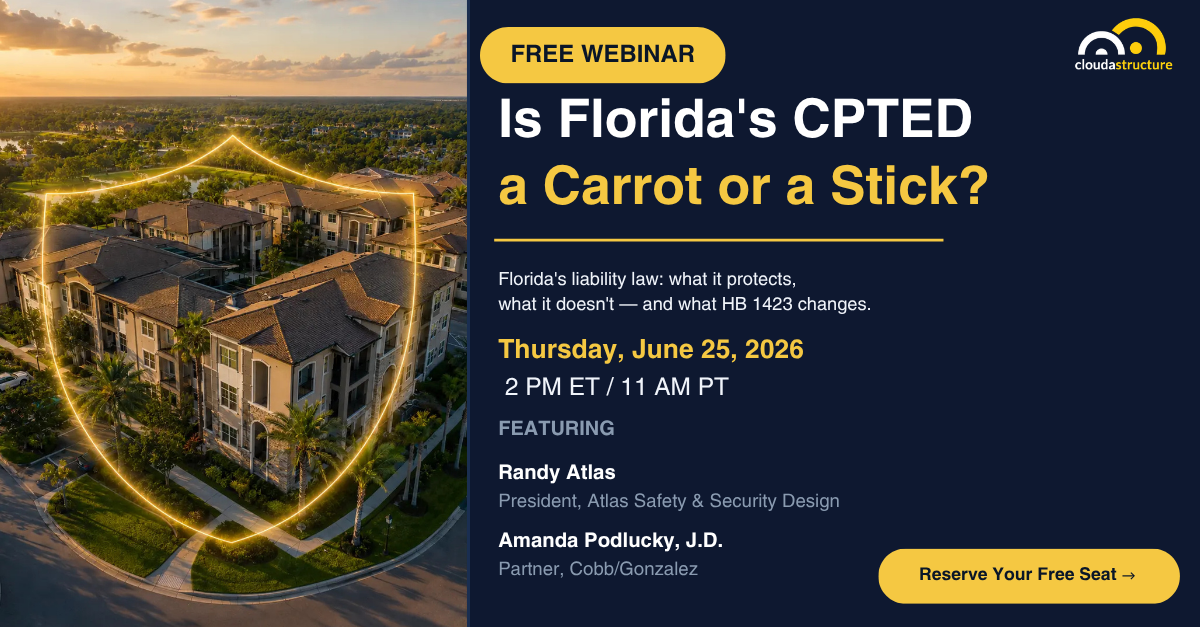
Florida gave multifamily owners a legal shield against negligence lawsuits — but no court has tested it yet. One ruling could change everything.
Join attorney Amanda Podlucky of Cobb/Gonzalez and CPTED expert Randy Atlas on June 25 to find out if you actually qualify for the protection — and what gaps could still cost you.
5 examples of HOA websites (plus important features)
Almost every company and business has a website today – and for good reason. Anyone who wants to know more about you, or the products or services you provide, is going to search for you online. A well designed, user-friendly website helps ensure prospective clients convert to long-term customers.
Now, a homeowners association isn’t exactly like a business, but there are many similarities. HOAs must keep homeowners informed, collect payments (in the form of fees or dues) and advertise the community to prospective homebuyers. These are just a few of the many reasons why HOAs are strongly encouraged to have their own community website.
How a website can help HOAs operate with fewer glitches
An HOA website acts as a secure platform for sharing and receiving essential information like news, announcements, notices, forms, governing documents, resources, directories, and more. Instead of having to ask management or the board about upcoming member meetings or request an architectural change form, owners can log on to the association’s website and immediately get everything they need from one place.
The best websites will have a secure portal or page that only members can access. This helps with information sharing while being mindful of security and privacy.
Public photos of events, amenities and the HOA can also be shared to showcase the best of your community and entice prospective buyers. It’s an affordable and effective way to advertise.
Administrative tasks, such as maintenance requests or payments, can be streamlined and automated when they are brought online. Best of all, having an online system keeps everyone more accountable. Once a payment is made or a request is submitted, proof of that action is immediately available to management and owners.
Some states have made websites mandatory for associations
In some states, websites are actually required for larger communities. In Florida, if your condo association has 150 or more units, then it must have a website that complies with specific requirements (timeshare units are excluded).
Texas just put a similar rule into effect for HOAs with at least 60 lots, or any association under contract with a management company. These HOAs must make the most current version of the association’s “dedicatory instruments” relating to the association or subdivision—and filed in the county deed records—available on an internet website. Information must be maintained by the association or management company working for the HOA; it must be made available to all members.
When it comes to maintaining a happy and efficient HOA, communication is key. User-friendly technology has given HOAs an opportunity to improve connectivity and engagement. A website is one tool that will help HOA members to stay informed and involved. Apathy can lead to a fractured and stagnant HOA; a website encourages the opposite.
Why don’t more HOAs have websites?
Websites have come a long way, and with so many DIY platforms available, it’s become much easier to make one. But some boards may still be apprehensive about having a community website, while others may be worried about the time or costs involved in maintaining it. These are valid concerns, and it is important to discuss the following points with your HOA board before you move forward with getting a website:
What problems will the website aim to solve for owners, board members and management?
Can (and should) the HOA maintain the website on its own?
How much can the association afford to spend on a website? There are hosting fees and maintenance fees to consider in addition to the initial cost of the site
Has the board spoken with an attorney about the website and what information should be gated?
What are the requirements of the association? What features would it like the website to have?
Does the state or municipality have any requirements when it comes to HOA websites?
Can the website integrate with any of our current online systems?
Is there an HOA software company that could offer more options and features?
Getting a custom website
If the budget is available, many HOAs will elect to have someone else build their website for them. It’s usually a less stressful process when there’s a professional taking care of the hard stuff. While there are dozens of exceptional web designers out there, it can be hard to find the right one for your community.
Consider taking a less traditional route and hiring an HOA software company to build a custom site for you. Condo Control has a professional in-house designer available, and we work exclusively with residential communities. That means we’re in a better position to build an HOA-specific website than other developers.
Furthermore, we’ll make sure that owners have a password-protected section where they can easily find community news and information. Owners also have the option to login to their personal Condo Control account directly from the HOA website. From there, they can make online payments, book amenities, submit service requests/ architectural change forms and much more.
Make sure you get these 5 features
Your HOA website should be built based around the specific needs and goals of your community. That may mean you only need a few pages. Conversely, you may require multiple pages if your owners prefer to get documents and information online.
That being said, most communities will want to have the following features available to owners:
Desktop and mobile-friendly design
Your website must be available through mobile and desktop. Mobile traffic accounts for almost half of web traffic worldwide. According to Statista, In the first quarter of 2021, mobile devices (excluding tablets) generated 54.8% of global website traffic. Basically, more and more people are visiting websites through their phones. The convenience and ease of access means this trend will continue.
Community calendar
One of the best ways to ensure your owners show up to events is to integrate a community calendar right into the website. This is an easy way to keep everyone in the loop. When used collaboratively with HOA management software, admins can add events from the system and include details for meetings, social activities and even things like garbage pickup. These activities will then appear on the website calendar. Plus events can be added ahead of time or as they come up – it’s a flexible and simple solution.
Document storage
Giving owners 24/7 access to forms and governing documents, or board members a place where they can store and review every item relating to HOA business, is a gamechanger. Trying to keep papers organized is a lot of work, and trying to locate that one item you need in a file cabinet of folders is even harder. With online document storage, owners simply need to log in to the password protected area of the website, enter a keyword and they should be able to find what they’re looking for in seconds.
Resident maintenance requests
Since we’re keeping with the theme of simplifying and streamlining processes, online resident maintenance requests is another must-have website feature. Digital forms can be submitted by owners, and they can do this while they’re watching tv or commuting to work (since your site is mobile friendly). Management can see when new forms are submitted and request to receive notifications if they forget to follow up after a certain number of days.
Digital bulletin board and announcements
Communication is often the biggest issue impacting HOA communities. Sometimes, management thinks they are sharing enough, but owners still want more. Having an online system to post updates, notices and other information is an effective, cost-efficient solution. Messages can be created and shared in seconds, and associations forgo the print and mailing costs. Management can include links and attachments with these messages, too. Set expiry dates for time-sensitive announcements, or keep them up on the board for the entire year.
5 examples of great HOA websites
Below are some great examples of simple, user-friendly websites:
Lake Linganore Association
About the association
Lake Linganore is a very large association located in Maryland. It has dozens of private amenities available to users, including beaches, basketball courts, a dog park and even an events tent. Lake Linganore water is used as the primary source of drinking water for the City of Frederick, and it’s the emergency back-up water supply for Frederick County. It holds over 500-million gallons of water!
Why we like this website
The Lake Linganore site is very easy to navigate. There is contact information listed on the site, and a few small dropdown menus so as not to overwhelm the user. The visuals are also “on-brand,” or representative of the association’s qualities and characteristics. The interactive sections, such as the amenities map and historical timeline, is a great way to attract prospects.
Solano Grove
About the association
Solano Grove is a well-established community located in Jacksonville, Florida. It is an older condominium community, but that just means the units are more spacious than some of the newer builds.
Why we like this website
Solano Grove’s website offers users a clean and visually appealing space. There is just enough information; everything you need is easy to find. Owners won’t have a hard time figuring out where to login or register for the password-protected section.
Surfsong Condos
About the association
Surfsong Condos has 72 condominium units, a lovely clubhouse situated next to an oceanfront swimming pool and hot tub, and two tennis courts. Located in San Diego, atop a ninety-foot bluff overlooking the Pacific Ocean, it is a truly beautiful place to live.
Why we like this website
Surfsong’s website sets the tone for the community. It is organized, but has a fun, laidback feel too. Not only are there photos of the area, but the website also offers visitors a breathtaking video of the condo community as well.
The site encourages new owners to sign up for an account using information they would have received in their welcome letter. Moreover, it has a small list at the bottom of the website informing owners of the information they will be able to obtain on the password-protected section.
Detailed contact information for the management team can also be found at the bottom of the website so that anyone who wishes to speak with them can get in touch quickly and easily.
Deering Bay Marina
About the association
Deering Bay Marina, located in South Miami-Dade County, is a pristine marina community that caters to lovers of boating, nature, and outdoor sport. Members have access to some of the best fishing spots around.
Why we like this website
Beside the beautiful photos of this stunning marina, Deering Bay Marina’s website has lots of helpful information readily available. For example, you can check local tides and weather, and any slips that are for sale or for lease. Members can access a password-protected section of the site as well where they will get to see information and updates released exclusively for them.
The Willows HOA
About the association
The Willows HOA Resort Living boasts the perfect climate with tranquil and beautiful landscapes bordering the Bay. The Willows’ 201 homes are adjacent to Alameda’s shopping mall. There is a large clubhouse, perfect for parties and a gym as well as an inviting pool.
Why we like this website
The design is ideal for HOAs looking for a simple, straightforward layout. Updates to the community are posted on the landing page for ease of access and immediate viewing by community members. Important HOA documents are accessible with a login from the home page. Tabs at the top take you directly to the specific page, without a long dropdown menu to scan.
Bonus: An HOA website template created by Condo Control
Condo Control offers all of the must-have features that we highlighted earlier on. Our HOA management software supports and works directly with the websites our team creates. We build professional, user-friendly websites for HOAs that want to improve communications and augment the association’s brand. Click here to see an example.
Note that we can customize even simple templates. On this one, we include amenities and information about board meetings and board members. You will also see how the events calendar looks from a resident’s perspective. Admins can update monthly calendars directly from their Condo Control account. Our goal is to showcase the very best of your community.
What makes a great website
It’s really important that your website is aesthetically pleasing. To put it bluntly, an ugly site isn’t going to encourage owners to use it. But – looks aren’t everything. A great website is fast, user-friendly, current and secure. Some of these qualities will overlap with must-have website features we mentioned earlier.
Mobile-friendly
We’ve already talked about the importance of making sure your HOA website is mobile friendly.
Fast
Our attention spans are shorter than ever, and people expect fast load times. Your website should be capable of solving problems for owners, not creating more frustrations for them. If you hire someone to build your website for you, they will be able to take the proper steps to ensure your site loads quickly without compromising on the quality of images or functionalities.
Informative
The website should have all of the resources that owners frequently ask for. This saves you and your staff time since owners will be able to do more for themselves. Announcements, governing documents, and events should be available on the password-protected section of the site.
User-friendly
The website should be easy to navigate and allow visitors to find what they are looking for right away. Simplicity trumps complexity when it comes to websites.
Secure
Security must always be prioritized. Personal and sensitive information is invaluable; HOAs must take every step possible to ensure only authorized individuals have access to this information. In addition to creating a section just for residents, be sure to Secure your site with HTTPS (Hypertext Transfer Protocol Secure).
Costs
The last aspect of HOA websites we will discuss is the costs. While you could probably find a free website template, we strongly recommend investing in a site that will offer you the most value for your investment. Free sites will be slow, may have tons of ads and they are not very customizable. Free websites will not provide a great experience for you or your owners.
If you are fortunate enough to have a board or committee member who is comfortable with something like WordPress and a bit of code, your association might spend anywhere from $150 – $600 per year. Costs will depend on whether you build from scratch, or pay for a website builder like Wix or Squarespace.
This cost estimate takes into account things like the domain name, hosting, premium themes and add-ons. The downside here is that you are responsible for updating and maintaining everything.
Prefer to hire a professional instead? You could be charged anywhere from $3,000 – $20,000 (or more). That’s a huge range, but there are a lot of variables to consider. The skill of the developer, whether you hire a freelancer or agency to do the work, the custom features you require, add-ons like quarterly updates and any additional services will all impact the price.
Conclusion
HOA websites can act as a central resource hub for associations. Even if your owners aren’t tech-savvy, almost anyone can navigate and use a well-designed website. Plus, it doubles as an efficient advertising tool. With so many features and functions, having an HOA website just makes sense.
The word “hot” has many connotations: it can reveal anger when you say someone is “hot around the collar”; it can invoke personal appeal or desirability “he’s so hot”; it can refer to a disorganized person or situation, hence the description as “a hot mess”; and can also be used to describe an emotional issue or topic as a “hot button”. However, since the earliest of times, the word hot has been used to describe the temperature and we’ve been hearing this word a lot lately in many parts of the US given the ongoing heat waves. More than 61,000 people died because of the heat waves that swept the European continent. We won’t know for some time how many US fatalities have occurred due to our extreme heat during the summer.
Extreme heat can cause dehydration, heat exhaustion, exacerbation of existing medical and mental health conditions, respiratory distress, and heatstroke. Dehydration can cause dizziness, fatigue, and muscle weakness. Heat exhaustion may result in heavy sweating, nausea, headache, rapid heartbeat, faintness, and muscle cramps. Extreme heat can more greatly affect people with underlying respiratory, cardiovascular and kidney disorders with extreme heat being tied to an increased risk of heart attacks or other cardiovascular events. Heatwaves have also been linked to diminished air quality in urban areas which can worsen respiratory conditions such as asthma. Lastly, extreme heat can impact mental well-being, leading to irritability, mood swings and difficulty concentrating, all of which can make communal living more stressful.
Dealing with extreme heat events in a multifamily building, especially for those on fixed incomes, can be challenging. What should your association board and management team be doing in response to an extreme heat event? Certainly, including preparation for heat waves into your emergency disaster plan is recommended. The following are some items you may wish to consider:
If your association has employees, work with counsel to review your employee guidebook particularly for employees whose work requires them to be outdoors. For those employees, you will want to be sure that they have access to plenty of water throughout the day to stay hydrated and replace fluids lost through perspiration. If those employees are required to wear a certain uniform that is not well suited to an extreme heat event, you should consider an alternate uniform for extreme heat event. You may also want to be confirm that your outside vendors who provide services outdoors have provided adequate water and protection from the sun for their workers.
Create shade around the building by using umbrellas, awnings, or strategically placed vegetation to reduce the impact of direct sunlight. Bear in mind that some of these shade additions may require advance membership approval.
Revisit any architectural control guidelines you have in place which may restrict or prohibit the use of fans on patios, balconies and lanais. Fans are used to circulate air and can create a cooling effect. Consider how curtains, blinds and blackout shades may reduce the temperature inside units particularly if a unit owner is not running the AC at reasonable temperatures. Allow people to close their blinds and/or their hurricane shutters during the day to block out direct sunlight and prevent heat from entering the living space.
Consider limiting daytime hours of play for outdoor tennis and pickleball courts as well as any other outdoor recreational areas when temperatures are soaring. Installing thermometers on the common areas may also help remind your residents about climbing temperatures.
Consider purchasing a whole building generator if you don’t already have one. In the event that increased electric demands during a heat wave cause a blackout or brownout that generator may save lives in your building. Naturally, a generator will also help in the aftermath of a windstorm which knocks out electricity.
Check in with your residents who may be living alone and dealing with physical or mental health challenges as well as economic burdens. These residents may not be running their A/C as often or at a temperature that is needed for their wellbeing. This is also the time to confirm that you have emergency contacts for your residents.
Reach out to local community organizations, social services, or government agencies that provide assistance during extreme weather events. They may offer cooling centers, fan distribution programs, or other resources for your residents.
The strategies your board and management team use in response to an extreme heat event depends, in large part, on your building’s location and infrastructure as well as the available monetary and personnel resources. However, there are some basic steps all associations can take to educate their residents about the dangers of extreme heat. The phrase, “we’re having a heat wave” doesn’t have to spell disaster in a well-prepared community.
For additional information please listen to my podcast conversation with Jane Gilbert, Miami-Dade’s Chief Heat Officer which can be found here.
Donna DiMaggio Berger is a Shareholder with the Becker law firm, is Board-certified, is a Fellow with the College of Community Association Lawyers (CCAL) and is a keynote speaker and the host of the popularTake It To The Board podcast on association issues.
Donna DiMaggio Berger is a Shareholder in Becker’s Community Association Practice in Ft. Lauderdale, Florida. She is a member of the College of Community Association Lawyers (CCAL), a prestigious national organization that acknowledges community association attorneys who have distinguished themselves through contributions to the evolution or practice of community association law and who have committed themselves to high standards of professional and ethical conduct in the practice of community association law. She is also one of only 190 attorneys statewide who is a Board Certified Specialist in Condominium and Planned Development Law.
As Founder and Executive Director of Becker’s Community Association Leadership Lobby (CALL), Ms. DiMaggio Berger has led various community association advocacy initiatives, working with legislators and other public policymakers on behalf of those who live, serve, and work in common interest ownership communities. She has testified before the Florida Legislature regarding community association law and frequently appears on radio talk shows and in print media discussing these issues.
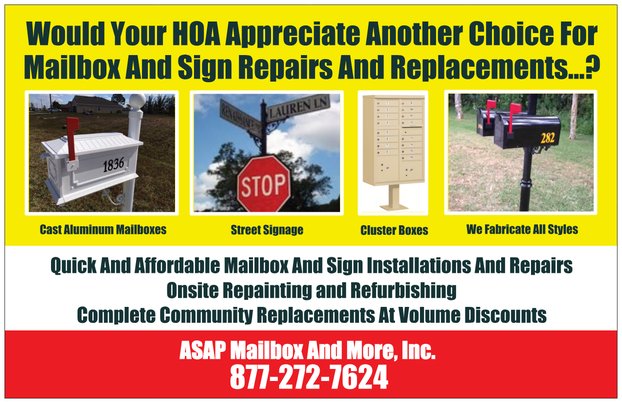
Professional mailbox installation and repair company servicing all Florida counties
ASAP Mailbox and More, Inc. supplies and installs all types of residential curbside mailboxes and all styles of cluster box units ( CBU’s) We are a one-stop source for everything related to installing a new mailbox. From removal of the existing mailbox, to the installation of the new one in concrete, to the address numbering, we handle everything and provide our services in all Florida counties.
ASAP Mailbox And More, Inc.’s main facility is located in Cape Coral, Florida. From this main warehouse and fabrication location, we are able to sell and ship our mailboxes WITH INSTALLATION INCLUDED Nationwide in conjunction with our network of local dealers located in each county.
We take pride in living up to our name “ASAP” when it comes to handling mailbox installs and repairs for HOA’s, property managers and individual homeowners.
From providing complete Community mailbox and signage replacement to repairing a broken bracket for a homeowner, we always handle the project professionally and in a timely manner.
If you need a Mailbox installed please fill out the form below, when filling out the form, make sure to select “I Need A Mailbox Installed” in the select box.
If your need is urgent (mailbox installation, repairs or other needs), please call us at 877-272-7624.
An effective portal solution for managing electronic communications with features that increases the resident experience. In this article, we look at how our Resident Experience Management platform can help you deliver superior resident experiences and help you exceed resident expectations.
Due to pandemic restrictions, many management offices were inaccessible to residents. This caused a greater reliance on telephone and e-mail communication. For many residents, failure of management to respond to their queries in a proper way created distrust and a perception that the management company is incompetent. The root cause to this problem is the lack of an effective portal solution for managing electronic communications with features that increases the resident experience. In this article, we look at how our Resident Experience Management platform can help you deliver superior resident experiences and help you exceed resident expectations.
Efficient maintenance request process
The main responsibility of any management company is to ensure that community associations are well maintained. Residents should be able to report maintenance requests as soon as possible from wherever they are. While calls and text messages can get your attention, residents might not be able to explain the situation entirely. However, via Concierge Plus’ Service Request feature, they can give details of their concern and even upload pictures or videos to aid their explanation.
Requests are always tracked by unit, so you’ll always be able to access a history of what happened. And full reporting features mean you can very quickly generate all the information you need to update your board or your residents.
Transparency in association governance
Since the tragic Surfside condo collapse in Miami, residents are asking for more transparency from their elected board members. Transparency is characterized by visibility or accessibility of information concerning association practices.
Board members can use Concierge Plus as a platform for keeping residents in the loop with regards to anything related to building maintenance. Since the tragic Surfside condo collapse, we’ve been told that residents are particularly asking for their board’s plan on risk mitigation.
Board members can share documents such as a Reserve Study with unit owners using our File Sharing feature. This is a password-protected repository for important documents and is a great place to store articles of incorporation, meeting minutes, rules and regulations.
Virtual owner meetings and AGMs
As the pandemic eases and we resume in-person gatherings, hybrid meetings are slowly becoming a permanent part of how community associations function.
Board members can easily add HD web conferencing, automate attendance, enable eligible owners to vote online, and more through our all-in-one virtual meeting platform integration with GetQuorum.
Advanced and real-time electronic voting allows owners to vote securely on important meeting matters before or during the meeting using GetQuorum’s dynamic online platform.
Electronic voting offers substantial cost savings, improved efficiency and significantly reduces errors associated with traditional paper-based voting.
Efficient package management
Community managers, security guards and concierges everywhere are fighting a losing battle trying to keep up with the unrelenting wave of incoming parcels during the holiday season. When staff members spend more time accepting, storing and retrieving parcels, they can’t focus on their security duties.
With Concierge Plus’ Notification feature, you can avoid ending up with front desk congestion and angry residents. Use Concierge Plus to manage package deliveries with automated emails and an easy tracking process. Residents can select to be notified by text message (SMS) or by an automated phone call, which is perfect for urgent and timely notifications.
With our barcode scanner your team can quickly scan every package that arrives, and when residents come to pick-up their packages, they simply sign on a digital signature pad to confirm their identity permanently and securely.
Last but not least, we also offer beautifully designed, 40″ digital lobby display screens which you can use to alert residents that items are available for pick-up.
Secure resident and visitor parking
For most residents, the safety factors associated with condo living are a huge consideration in choosing life in a community association.
Concierge Plus can help you manage who is coming in and out, where they are parking, and if they have permission to enter the building. Our integrated hardware offerings alleviate confusion with parking pass printers that clearly denote who is parking where.
The printer connects easily to your computer and facilitates tracking of visitor vehicle details such as license plate number, make, and color. A parking pass receipt will print automatically for visitors to display on their dashboards.







 If your fire alarm system starts sounding like a horror movie sequel, it’s time for you to take action.






 ASAP Mailbox And More, Inc.’s