SFPMA

SFPMA Industry Articles | news, legal updates, events & education! 

Find Blog Articles for Florida’s Condo, HOA and the Management Industry. 

Does an HOA have to renew records for the entire community and for each homeowner

Does an HOA have to renew records for the entire community and for each homeowner

  • Posted: Jan 02, 2019
  • By:
  • Comments: Comments Off on Does an HOA have to renew records for the entire community and for each homeowner

We were asked a Question– In Broward County does an HOA have to renew our records for our entire community or just for each homeowner? 

Florida Department of Economic Opportunity

Revitalization of Expired Homeowners Association Declarations and Covenants

In 1963, the Florida Legislature enacted the Marketable Record Title Act (“the Act”), codified as Chapter 712, Florida Statutes. The Act was intended to simplify title searches by extinguishing old title defects and other recorded issues affecting title to real property after 30 years, except for certain matters (see Section 712.03, Florida Statutes – Exceptions to marketability).

An unanticipated consequence of the Act was that it extinguished the covenants of some planned communities, which suddenly found they had lost their legal authority to collect assessments and enforce the covenants. Since then, the Florida Legislature has amended the statutes to provide both a process to preserve the covenants before they are extinguished by the Act, and a process to reinstate them if they have already been extinguished or have expired.

Applicable Statutes


[AdSense-B]


Revitalizing Expired / Extinguished Homeowner Association Declarations of Covenants

Chapter 720, Part III, Florida Statutes, creates a mechanism to revive / reinstate / revitalize (these terms are all used to mean the same thing) a declaration of covenants that has ceased to govern some or all of the parcels in a subdivision. Briefly, the process includes the following steps:

  1. Parcel owners within a community must create an organizing committee composed of not less than three community members.
  2. The organizing committee must prepare the declaration of covenants and, if necessary, updated governing documents for the homeowners association, which must then be approved by a majority of affected parcel owners.
  3. Next, the committee must send the proposed revived declaration and homeowners association governing documents to the Department of Economic Opportunity (DEO) at the following address:
    • Department of Economic Opportunity
    • Attn: Division of Community Development
    • 107 East Madison Street, MSC 160
    • Tallahassee, Florida 32399-4120
  4. DEO has 60 days to determine whether the documents comply with the requirements of Chapter 720, Part III, Florida Statutes, and issue a letter determination approving or denying the requested revitalization. It is not uncommon for DEO to complete its review and issue a letter approval or denial before the sixtieth day.
  5. If DEO approves the proposed revitalized declaration and homeowners association governing documents, the declaration of covenants, articles of incorporation and bylaws of the homeowners association, the DEO determination letter of approval, and a legal description of each affected parcel must be recorded with the Clerk of the Circuit Court in the county where the affected parcels are located within 30 days after the organizing committee receives DEO’s approval. The articles of incorporation must also be filed with the Department of State if they have not been previously filed. Immediately after recording, the organizing committee must provide copies of the recorded documents to the owners of all affected parcels.

[AdSense-C]

Limited Role of DEO

As noted above, DEO’s role with regard to homeowners association covenants is limited to deciding whether documents proposing to revitalize expired/extinguished covenants that are submitted to DEO by an organizing committee comply with the requirements in Chapter 720, Part III, Florida Statutes. DEO has no authority to:

  • Extend the duration of homeowners association covenants that have not expired,
  • Deny approval of proposed revitalized covenants because of a dispute between a homeowners association and one or more of its members, including disputes in litigation,
  • Decide whether any of the lots in a subdivision are exempt from revitalized covenants,
  • Regulate homeowners associations,
  • Resolve complaints about homeowners associations, or
  • Provide legal advice.

If you need legal advice in connection with proposed revitalized homeowners association declarations, you may contact The Florida Bar’s Lawyer Referral Service at 1-800-342-8011, Monday through Friday, from 8:00 a.m. to 5:30 p.m. Eastern time, or through its website (The Florida Bar). The Florida Bar can provide you the names of attorneys in your area who may be able to assist you.


Frequently Asked Questions

What is Meant by “Verified Copies” and “Affidavits”

Part III of Chapter 720, Florida Statutes, states that “verified copies” and “affidavits” must be submitted to DEO as part of the covenant revitalization process.

Verified Copies

A “verified copy” means that someone has sworn under oath and in the presence of a notary public or other officer legally authorized to administer oaths that the copy is a true and accurate copy of the original document. When verified copies are required, a notarized letter from a member of the organizing committee or an officer of the homeowners’ association may be attached to the copies as verification that they are accurate copies. The letter should say that the person signing it verifies that the documents attached to the letter are accurate (or true and correct, or exact) copies of the original documents. If the documents are not attached to the letter, the letter must identify the specific documents to which it refers. Copies of the association’s governing documents that have been obtained from the official records of the county where the subdivision is located and have been certified as accurate by the Clerk of Court are also acceptable.

[AdSense-A]

Affidavits

An “affidavit” is a written statement confirmed by the oath or affirmation of the person making it (the affiant), taken before a person having authority to administer such an oath or affirmation. In other words, it is a written statement that is signed and sworn to be true in the presence of a notary public or other official who is legally authorized to administer oaths. It must be signed by the person making it, and be signed by and bear the original stamp or seal of the notary/official.


How Do I Obtain Copies of My Homeowners Association Governing Documents and Covenants?

The governing documents for a subdivision and homeowners association consist of the declaration of covenants, the articles of incorporation, and the bylaws. The declaration of covenants for a subdivision is usually recorded in the Official Records of the Clerk of the Circuit Court for the county in which the subdivision is located. Copies of the Articles of Incorporation and bylaws of the homeowners association can be obtained from the Florida Department of State, Division of Corporations. Copies of the governing documents may also be obtained directly from the homeowners association.


Does the State of Florida Regulate Homeowners Associations?

No. Homeowners associations are required to comply with applicable Florida Statutes. However, they are not regulated by any state agency.


Who Handles Disputes / Complaints about Homeowners Associations?

Under Section 720.311, Florida Statutes, the Department of Business and Professional Regulation offers a dispute resolution program for some types of disputes between a homeowners association and parcel owners.


[AdSense-A]

Tags: , ,
Here are five holiday party ideas that are sure to please your residents

Here are five holiday party ideas that are sure to please your residents

  • Posted: Nov 25, 2018
  • By:
  • Comments: Comments Off on Here are five holiday party ideas that are sure to please your residents

Want to throw a holiday party that will bring residents of your community together for a fun-filled evening?

Here are five holiday party ideas that are sure to please your residents:


  1. Tacky Sweater Party

While so cliché these days, hosting a tacky sweater party is a great way for residents to break the ice and start mingling with each other. The ugly holiday sweater that was once popular in the 80s is making a big come back, and residents can easily find this festive attire online or come up with their own creations. Encourage residents to channel their inner-tackiness by offering prizes for the ugliest sweaters. If hosting the party at your neighborhood clubhouse, you can spruce up your community amenities for the event with bright-colored lights, oversized holiday inflatables, and tinsel-filled trees.


  1. Holiday Caroling Party

Round up your neighbors to meet at the community clubhouse for hot chocolate (and perhaps a seasonal adult beverage) and holiday cookies. Once everyone arrives, head out for an evening of holiday caroling. Having several copies of sheet music on hand will be beneficial for the group. It’s also helpful if you notify neighbors ahead of time that you will be caroling in the community to ensure that you will have an audience.


  1. Beer Tasting Party

There’s a very good chance that residents in your community have been to a wine tasting party, but what about a beer tasting party? Craft beer is on the rise, and it seems as though there are new breweries popping up in Florida every day. Encourage your guests to make an unbiased vote on their favorite beers by concealing the beverages in brown paper bags. As the evening comes to an end, make a toast and reveal the winning beers.


  1. Holiday Cookie Exchange Party

A cookie exchange is a classic holiday party and provides guests with an opportunity to load up on a diverse selection of festive cookies. Ask each guest to bring two dozen cookies and copies of the recipe to trade at the party. You can choose to either ask guests to bring a separate container to collect the cookies or provide containers for the guests.


  1. Winter Wonderland Party

While snow is a rare site in Florida, you can still get into the holiday spirit by hosting a winter wonderland party. Choose food and beverages that correspond with the snowy theme, such as marshmallows for roasting, snow cones, cheese fondue, and a white party punch. Decorate your community amenities with an abundance of white string lights, and take the ambiance up a notch by renting a snow machine.

As you begin to plan the holiday party for your HOA community, take these five suggestions into consideration to throw a party that is sure to be a crowd pleaser.


[AdSense-B]

Tags: , , ,
Recruiting Potential HOA Board Members

Recruiting Potential HOA Board Members

  • Posted: Jun 26, 2018
  • By:
  • Comments: Comments Off on Recruiting Potential HOA Board Members

Recruiting Potential HOA Board Members

Interview qualifications a candidate must be given are communication, education, willingness and other skills necessary for a new position on the Board

One of the best ways to enhance your community and make it the best that it can be is to volunteer as a member of the HOA board. Becoming a board member can take up a lot of valuable time, but it is well worth the investment of energy and passion. At times, filling positions on the board can be a challenge because homeowners have a lot of demands on their time, but having a stable and energetic board is one of the most crucial parts of a successful homeowners association. Here are a few tips for recruiting potential HOA board members.

Appeal to the Specific Talents of Your Homeowners

Sometimes homeowners may not be getting involved in their community because they believe they do not have the right strengths or talents for the job. However, an HOA board does not simply need people who are good at accounting (although this is a very important skill for HOA boards to possess), it needs people with all manner of skills. Find people in your community who are skilled at construction, design, information technology, or gardening and appeal to their specific skill-set to help get them involved

Direct Complaints into Participatory Roles

When a homeowner expresses discontent in the way the association is being run, far from being a bad thing, these complaints are actually opportunities for wonderful, passionate residents of the community to get involved. If you find that a particular homeowner is often politely complaining, try to see if you can encourage them to get involved so that they can have an active hand in improving the community.

[AdSense-B]

Continue reading

Tags: , ,
DEFIBRILLATORS  Is the Liability Worth the Risk?

DEFIBRILLATORS Is the Liability Worth the Risk?

  • Posted: Mar 24, 2018
  • By:
  • Comments: Comments Off on DEFIBRILLATORS Is the Liability Worth the Risk?

DEFIBRILLATORS

Is the Liability Worth the Risk?

About the Editor: Jeffrey Rembaum, Esq.


Jeffrey Rembaum, Esq.’s law practice consists of representation of condominium, homeowner, commercial  and mobile home park associations, as well as exclusive country club communities and the developers who build them.  He is a regular columnist for The Condo News, a biweekly publication.

Kaye Bender Rembaum, Attorneys at Law

The law firm of Kaye Bender Rembaum, with its 16 lawyers and offices in Broward and Palm Beach Counties, is a full service law firm devoted to the representation of more than 1,000 community and commercial associations, developers, and their members throughout the State of Florida. Under the direction of attorneys Robert L. Kaye, Michael S. Bender and Jeffrey A. Rembaum, the law firm of Kaye Bender Rembaum strives to provide its clients with an unparalleled level of personalized and professional service that takes into account their clients’ individual needs and financial concerns.

The Firm is ranked ninth in South Florida and 62nd in the Southern U.S. among “Top 300 Small Businesses” by Business Leader magazine.


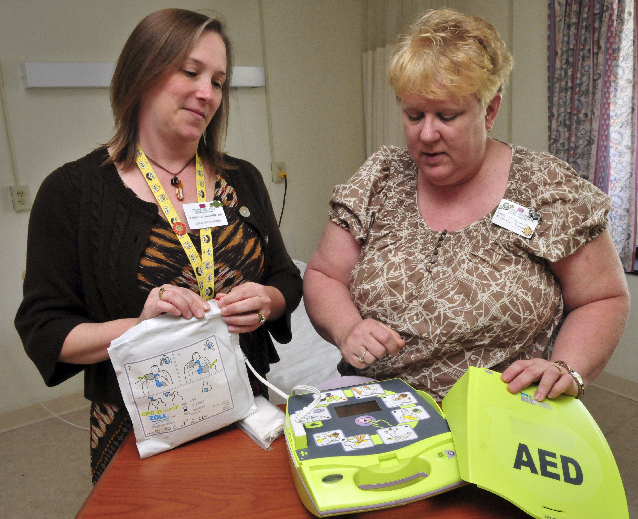
According to the American Heart Association, sudden cardiac arrest (“SCA”) is a leading cause of death in the United States. It is estimated that more than 350,000 lives are taken each year due to the abrupt loss of heart function. However, with technological advances, the number of deaths due to SCA have been lowered through the use of an automated external defibrillator (“AED”). An AED is a portable medical instrument that delivers an electrical impulse to the heart to disrupt and correct an otherwise fatal irregular heartbeat (arrhythmia) and allows a normal rhythm to resume. Although AEDs have been credited with saving countless lives by making it possible for non-medical individuals to respond to a medical emergency, the question must be asked: “Is the liability worth the risk?”

The purchase and availability of AEDs is controlled by state and federal laws and regulations. Pursuant to Florida law, AEDs are required to be installed in public schools, dental offices, and assisted living facilities. AEDs are optional in state parks and state owned or leased facilities. There is no requirementthat community associations in Florida install AED devices on association property and/or association fitness facilities. Although not legally required, there is a growing trend of community associations considering installing AEDs on association property to better protect their residents. When considering whether or not to install an AED device, associations must ensure that all parties (i.e., association management, board of directors, residents, and any other authorized user) understand the potential liability associated with the use of an AED and the protections afforded to them under Florida law.

Continue reading

Tags: , , ,
A few tips and reminders with everyone, as associations plan their annual meetings

A few tips and reminders with everyone, as associations plan their annual meetings

As associations plan their annual meetings, we thought we would share a few tips and reminders with everyone.

Annual Meetings

RePublished with permission from Our Members:  http://royalemanagement.com/home/

Royale Management Services, Inc.
2319 N. Andrews Avenue, Fort Lauderdale FL 33311
Phone: (954) 563-1269 | (800) 382-1040 | Fax: (954) 563-2153 | Email: CAM@rmsaccounting.com


The annual meeting is a member meeting, hence every member can participate. Participation is by properly made motions, seconds, taking part in discussion of motions and through voting.

The first order of business is to appoint the chairperson to run the meeting.  The chairperson can be anyone that the members agree should chair the meeting.  In many associations the board president chairs the meeting; however this requires approval of the members. Some associations ask their manager or attorney to chair the meeting which is acceptable as long as this is approved by the membership.  In large associations having a professional chair the meeting can help to keep it on track and see that the required business gets done properly.

A motion can be made by any member of the association as to who shall chair the meeting.  This motion must be seconded and then voted on by the members present. If the motion is approved by a majority of the member’s present, the chairperson is elected for the meeting.

The Second order of business is to determine whether a quorum of the members is present in person or by proxy.  The quorum requirement is spelled out in the association documents or by state statute.  Without a quorum no business can take place at the meeting.  However, ballots must still be collected.

Continue reading

Tags: , ,
A Guide to Being Politically Smart for Board Members

A Guide to Being Politically Smart for Board Members

A Guide to Being Politically Smart for Board Members

RePublished with permission from Our Members:  http://royalemanagement.com/home/

Royale Management Services, Inc.
2319 N. Andrews Avenue, Fort Lauderdale FL 33311
Phone: (954) 563-1269 | (800) 382-1040 | Fax: (954) 563-2153 | Email: CAM@rmsaccounting.com


Tags: , ,
Over the past several years, all of Florida’s community association statutes have been amended to require that board members be “certified.”

Over the past several years, all of Florida’s community association statutes have been amended to require that board members be “certified.”

Board Members Courses:

Newly elected or appointed board members must sign a form, that provides that the board member has read the association’s governing documents, and that such board member will work to uphold such documents to the best of his or her ability.

Further, the board member must agree that he or she will faithfully discharge his or her fiduciary duty to the association’s members.

In lieu of signing this written certification, a newly elected or appointed director may instead provide a certificate demonstrating that they have satisfactorily completed an approved educational course.    

 Find Upcoming Board Member Courses on our Calendar on SFPMA.COM

A prospective board member can attend and complete such an educational course up to one year in advance of taking a seat on the board.

In the event that a board member fails to either complete an educational course or sign the required form within ninety days of their election or appointment to the board, such board member is suspended from service on the board until they complete the requirement.

SFPMA.COM has a full list of Courses that are offered by our members. View our Calendar of Events and keep informed. Take advantage of these required courses.

Thank You SFPMA

Tags: , , ,
Truant Board Members

Truant Board Members

Truant Board members
By: Mitch Drimmer, CAM


giving paperwork to new board members Most students by law they are required to either attend school or prove that they are being properly home schooled. In a very similar parallel the law in Florida requires that board members of HOAs and Condos attest in writing that they have read the governing documents of their community associations or attend a two hour board certification class. Both students and board members must either prove that they have gone to school or done their reading. The parallel ends here because when it comes to students that are either home schooled or go to accredited schools the government has standards. When it comes to board members in Florida there are no standards, and most certainly two hours of board certification or merely reading governing documents without requiring comprehension is a requirement without any measure of competency.


[AdSense-A]


Without exaggeration there are billions of dollars of real estate assets that are in the hands of boards of directors. People’s homes, investments, security and lives are put into the stewardship of volunteer boards. It’s a democratic process but it does not guarantee the ability of those who are elected to govern your community association, and that is where the trouble begins.
Many associations hire community association managers who are required to take at least 20 hours of continuing education classes every two years and although it is a system that is wanting it does require that managers have a modicum of knowledge. Some management companies also have excellent in house educational programs and that is also very helpful. Having trained professionals manage communities may gong a long way, but only if they are allowed to practice their craft.
All too often it is the case that boards of directors do not understand what is required of them, and more times than not community association managers are too timid to stand up to a board of directors for fear of being dismissed and losing their jobs when the boards are out of order and need proper direction. It will never come to pass that the attitudes of board members will change and they will forever misunderstand that their job is to set policy, assume fiduciary responsibility, and insure that the managers they hire are doing a proper job. It is not their place to manage and run their community association albeit it is their right. There will always be boards of directors who over reach and interfere with licensed managers or take associations “self-managed.” So how do we address this quandary?


Volunteer boards of directors must do more than just volunteer one hour a month to sit at a meeting, they should assume to take the same CEU courses that are offered to managers. It is very fortunate that in Florida these Community Association Management CEU courses are given often, in many locations, and often for no cost. There are also many good community association schools that provide educational opportunities and any association who budgets and spends money will see a great benefit in return. A month does not pass by when a trade event is not presented in any given area in Florida without a complete curriculum of courses being offered for managers that board members are welcome to attend. From September through December dozens of these courses are offered at no charge to managers and board members by various organizations, trade event providers, and industry specialists. Educational opportunities also abound throughout the year but the season is more towards the end of the year.
There are no truant officers for board members and if they want to govern their associations properly they must realize that two hours of a board certification class is not near what they need. Without this education they are going to put their associations in harm’s way and eventually create costs and problems that could have been avoided. Classes and seminars for board members can easily be found in your area with a simple search on your home computer. I urge board members to take the time to come to class and get the education that they need to govern their own associations better.

[AdSense-B]

Tags: ,