
SFPMA

SFPMA Industry Articles | news, legal updates, events & education! 

Find Blog Articles for Florida’s Condo, HOA and the Management Industry. 

HOA Architectural Committees Required Statutory Procedures Requirement For Published Standards Required Self Help

HOA Architectural Committees Required Statutory Procedures Requirement For Published Standards Required Self Help

HOA Architectural Committees

Required Statutory Procedures, Requirement For Published Standards and Required Self Help.


REQUIREMENT OF FORMAL PROCEDURES

There are strict legal requirements that a homeowners’ association’s (HOA) architectural review committee (ARC) must follow, most especially if the ARC intends to deny an owner’s request. As this author has witnessed countless times, it is likely that many ARCs do not conduct their activities in conformity with Florida law such that an ARC denial may not withstand judicial scrutiny. If these legal requirements are not followed, and the ARC denies the owner’s architectural request, then it would be quite easy for the owner to challenge the ARC’s decision and prevail. Upon prevailing, the owner would be entitled to their prevailing party attorney’s fees and costs, as well. It is so easy to avoid this outcome, yet so few associations take the time to do it right.

Pursuant to §720.303(2), Florida Statutes, a meeting of the ARC is required to be open and noticed in the same manner as a meeting of the association’s board of directors. Notice of the ARC meeting must be posted in a conspicuous place in the community at least 48 hours in advance of the meeting, and the meeting must be open for all members to attend. Further, pursuant to §720.303(2)(c)(3), Florida Statutes, members of the ARC are not permitted to vote by proxy or secret ballot. Also, bare bone minutes should be taken to create a record of ARC decisions—especially denials.

We often hear from many HOAs that the ARC does not meet openly and does not notice their meetings. This leaves decisions made by the ARC vulnerable to challenge. If the ARC denies an application but fails to do so at a properly noticed board meeting, the owner can challenge the denial, claiming that it is not valid because the ARC did not follow proper procedure. In such cases, the ARC’s denial of an application is not valid because the ARC failed to comply with the procedural requirements for the meeting even if an application violates the declaration or other association-adopted architectural standards. However, by complying with the provisions of Chapter 720, Florida Statutes, your HOA can work to avoid this debacle.

PUBLISHED STANDARDS

Often a top priority for an HOA is ensuring that homes in the community maintain a harmonious architectural scheme in conformity with community standards and guidelines, and because the ARC is at the frontline of owners’ alterations and improvements to their homes, it is instrumental in ensuring that the community standards and guidelines are met. Pursuant to §720.3035(1), Florida Statutes, an HOA, or the ARC, “has the authority to review and approve plans and specifications only to the extent that the authority is specifically stated or reasonably inferred as to location, size, type, or appearance in the declaration or other published guidelines and standards.” But not every owner request is typically addressed in the declaration or other published guidelines and standards. If not, then the association may not be in a good position for proper denial. Therefore, the ARC is only as effective as the objective guidelines and standards (set forth in the declaration and other published guidelines and standards) are inclusive. So, what is the association to do when the ARC receives an owner’s application for an alteration to the home, but the association does not have any architectural guidelines or standards regulating the requested alteration?

While not court tested yet, a possible solution for this conundrum is to include a “catch-all” provision in the declaration to proactively address those ARC applications where a member may request a modification that is not directly addressed by the governing documents. Such a “catch-all” provision stands for the proposition that, if such a request is made, then the existing state of the community is the applicable standard by which the ARC application is to be judged. For example, imagine if an owner applies to the ARC to paint the owner’s house pink. If there are no architectural guidelines or standards that address what color a house must be, and there are no pink houses in the community, then the existing state of the community may provide a lawful basis for the ARC to deny the request because there are no existing pink houses in the community.


THE TROUBLE WITH SELF-HELP PROVISIONS

What if an owner refuses to maintain the owner’s property, such as pressure washing a dirty roof, despite the HOA sending demand letters, levying a fine, and perhaps even suspending the owner’s right to use the HOA’s recreational facilities? What is the HOA’s next step? Is it time to file a lawsuit to compel compliance? Well, Chapter 718 (governing condominiums), Chapter 719 (governing cooperatives), and Chapter 720 (governing HOAs) of the Florida Statutes authorize the association to bring an action at law or in equity to enforce the provisions of the declaration against the owner. Additionally, many declarations contain “self-help” language that authorizes the association to cure a violation on behalf of the owner and even, at times, assess the owner for the costs of doing so. These “self-help” provisions generally contain permissive language, meaning the association, may, but is not obligated to, cure the violation. Sadly, in this instance the word “may” means “shall,” and to find out why, read on.

There is a general legal principal that, if a claimant has a remedy at law (e.g., the ability to recover money damages under a contract), then it lacks the legal basis to pursue a remedy in equity (e.g., an action for injunctive relief). Remember, too, that an association’s declaration is a contract. In the context of an association, the legal remedy would be exercising the “self-help” authority granted in the declaration. An equitable remedy would be bringing an action seeking an injunction to compel an owner to take action to comply with the declaration. Generally, a court will only award an equitable remedy when the legal remedy is unavailable, insufficient, or inadequate.

Assume that the association’s declaration contains both the permissive “self-help” remedy and the right to seek an injunction from the court. Accordingly, it would appear the association has a decision to make—go to court to seek the injunction or enter onto the owner’s property, cure the violation, and assess the costs of same to the owner. However, recent Florida case law affirmed a complication to what should be a simple decision. In two cases decided ten years apart, Alorda v. Sutton Place Homeowners Association, Inc., 82 So.3d 1077 (Fla. 2nd DCA 2012) and Mauriello v. Property Owners Association of Lake Parker Estates, Inc., 337 So.3d 484 (Fla. 2nd DCA 2022), Florida’s Second District Court of Appeal decided that an association did not have the right to seek an injunction to compel an owner to comply with the declaration if the declaration provided the association the authority, but not the obligation, to engage in “self-help” to remedy the violation. Expressed simply, this is because the legal contractually based “self-help” remedy must be employed before one can rely upon equitable remedy of an injunction. Therefore, even though the declaration provided for an optional remedy of “self-help,” it must be used before seeking the equitable remedy of an injunction.

In Alorda, the owners failed to provide the association with proof of insurance required by the declaration. Although the declaration allowed the association to obtain the required insurance, the association filed a complaint against the owners seeking injunctive relief, asking the court to enter a permanent mandatory injunction requiring the owners to obtain the requested insurance. The owners successfully argued that even though they violated the declaration, the equitable remedy of an injunction was not available because the association already had an adequate legal remedy—the “self-help” option of purchasing the required insurance and assessing them for same. The Court agreed.

In Mauriello, the declaration contained similar language as in Alorda but involved the issue of the owners failing to keep their lawn and landscaping in good condition as required by the declaration. The association filed a complaint seeking a mandatory injunction ordering the owners to keep their lawn and landscaping in a neat condition. However, the facts were complicated by the sale of the home in the middle of the suit when the new owners voluntarily brought the home into compliance with the declaration. The parties continued to fight over who was entitled to prevailing party attorney’s fees with the association arguing it was entitled to same because the voluntary compliance was only obtained after the association was forced to commence legal action. The owners, citing Alorda, argued that the complaint should have been dismissed at the onset because the association sought an equitable remedy (injunction) when a legal remedy was already available—the exercise of its “self-help” authority. The Court considered the award of attorney’s fees after the dismissal of the association’s action for an injunction. Ultimately, the Court held that the owners were the prevailing party as the association could not seek the injunction because it already had an adequate remedy at law.

Accordingly, if your association’s declaration contains a “self-help” provision, and your association desires to seek an injunction against an owner rather than pursue “self-help,” the board should discuss the issue in greater detail with the association’s legal counsel prior to proceeding. Also, remember that if the association wants to enforce architectural standards, then they must be published to the membership; and always remember to notice ARC meetings and take minutes.

[AdSense-A]

Tags: , ,
RECOGNITION OF PRESIDENTS?  By Jan Bergemann on Condo and HOA Blog

RECOGNITION OF PRESIDENTS? By Jan Bergemann on Condo and HOA Blog

RECOGNITION OF PRESIDENTS?

By Jan Bergemann on Condo HOA Blog


I know that there are many good presidents who are working hard for the good of the community, keep open books and openly communicate with the members of the association.

But then there are lots of presidents, drunk with power and full of themselves. You wouldn’t believe the many ugly stories I’m hearing daily about presidents behaving like Joseph Stalin, Adolf Hitler or Fidel Castro. With the help of greedy attorneys and community association managers they create dictatorships that make living in community associations a living nightmare. They are even willing to ignore arbitration and court rulings and continue their evil doings even after being officially removed by elections or recalls. They are even willing to waste the association’s money on ridiculous appeals court filings.


The real reason why this can even happen in a so-called “civilized” country like the USA: The unwillingness of our government to enforce the many laws legislators create every year.

Many of these laws turn out to be just a waste of paper because too many of the so-called “specialized” community association attorneys are willing to help these dictatorial presidents to circumvent these laws, telling owners, who stand up at meetings to challenge actions of the board that violate the laws, to “sit down and shut up since they don’t have the money to sue the board anyway”!

Living in a community association isn’t something you can just enjoy by not participating, willing to ignore to happenings in the neighborhood until it’s too late. Apathy of owners allows these dictatorships to be created in the first place. Don’t let apathy destroy your community.

REMEMBER: EVEN THE BEST COMMUNITY IS ONLY ONE ELECTION AWAY FROM DICTATORSHIP.


Jan Bergemann

Jan Bergemann is president of Cyber Citizens For Justice, Florida ‘s largest state-wide property owners’ advocacy group. CCFJ works on legislation to help owners living in community  associations. He moved to Florida in 1995 – hoping to retire. He moved into a HOA, where the developer cheated the homeowners and used the association dues for his own purposes. End of retirement!

[AdSense-A]

Tags: , , ,
Beachfront is thrilled to be working with The Bridges, a luxe Delray Beach community surrounded by 299 acres of sparkling lakes, pristine landscapes, and cascading waterfalls.

Beachfront is thrilled to be working with The Bridges, a luxe Delray Beach community surrounded by 299 acres of sparkling lakes, pristine landscapes, and cascading waterfalls.

Beachfront is thrilled to be working with The Bridges, on all of their Painting needs, its a luxe Delray Beach community surrounded by 299 acres of sparkling lakes, pristine landscapes, and cascading waterfalls.

After completing a clubhouse refresh, we’re now offering homeowners a special group rate for exterior painting for its 590 single-family residences. Residents who wish to have their homes painted, or who would like more information about the project, can contact Jim Wolff,

Business Development Manager, at jim.wolff@beachfrontpainting.net or 772.789.7915.

Our team is honored to have been selected to help maintain the beauty and luxury expected at The Bridges. We have a lot of painting ahead of us. Stay tuned for “after” reveals in the coming months

Our Services:

 From single-family homes to shopping centers to high-rise condos, Beachfront combines quality workmanship with competitive pricing to give each client a meticulous paint job that lasts. Preparation is critical to our success and includes pressure washing, priming, and patching as needed.

Waterproofing

 At Beachfront, we make sure buildings are watertight. Our mastery of vertical and horizontal waterproofing extends to glazing and sealants, expansion joints and waterproof deck coatings.

Roofing

Through Beachfront Roofing, Inc, we repair, re-cover, and replace flat and sloped roofs no matter the material—metal, tile or shingle. We’re licensed applicators of Truco, Sika, PM, Karnak, Uniflex, Tropical, Henry and Gaco coatings. Our goal? To extend the useful life of your assets.

Restoration

We’re experts in concrete restoration and can quickly address issues like cracking, spalling and buckling. Whether surface repair or intricate strengthening project, clients count on us to keep their structures safe and sound.

Sealants

Beachfront specializes in sealant replacement and repair. Sealants are integral to the waterproofing process, serving as a water barrier in all types of exterior applications. We perform all of our sealant projects with precision using only the finest products available.

Pressure Cleaning

Regular pressure cleaning helps protect homes, hardscaping, decks and fences from damage and deterioration. Our low-pressure cleaning devices rid clients’ properties of dirt, oil, grease, algae, mold, rust and staining.


  Contact Us at

561.557.8534
info@beachfrontpainting.net

5840 Corporate Way, Suite 102
West Palm Beach, Florida 33407

[AdSense-B]
Tags: ,
CAN YOU REPEAT THAT?     Is Your Condominium in Compliance?

CAN YOU REPEAT THAT? Is Your Condominium in Compliance?

  • Posted: Feb 08, 2023
  • By:
  • Comments: Comments Off on CAN YOU REPEAT THAT? Is Your Condominium in Compliance?

CAN YOU REPEAT THAT?

Is Your Condominium in Compliance?

Additional Clarity Provided

If your condominium is greater than 75 feet tall, then you need to read this article (most especially due to a small but meaningful typo in the prior version which is now revised with the red text below).

It is essential for condominium associations to ensure that their buildings are in compliance with the requirements of the Florida Fire Prevention Code (the “Fire Code”). For the safety of all residents, associations must ensure they stay up to date with the latest and greatest in fire safety provisions. One of these essential safety features is a requirement that systems be built into new and existing buildings to ensure that first responders’ radios will work throughout buildings in an emergency situation. Pursuant to Section 11.10.1 of the Fire Code, “in all new and existing buildings, minimum radio signal strength for fire department communications shall be maintained at a level determined by the AJH [the authority having jurisdiction]. Additionally, Section 11.10.2. provides that where required by the authority having jurisdiction, two-way radio communication enhancement systems must comply with the requirements of the Fire Code.

When originally adopted, the requirements of Sections 11.10.1 and 11.10.2 of the Fire Code applied only to new buildings, so the requirement was not a burden on existing buildings. However, in 2013, the Fire Code was updated as set out above to provide that all new and existing buildings must maintain adequate fire department radio signal strength inside the building. This new requirement applied to all buildings and did not provide a grace period. This posed a significant problem for many high-rise condominiums, as the installation of the necessary equipment involves opening walls and ceilings and can be quite costly to the association. The cost of such installation was a substantial burden to condominiums, not expecting to be required to install same, and therefore never budgeted for the installation.

Recognizing the problem, in 2016 the Florida Legislature adopted section 633.202(18), Florida Statutes, which provided a grace period for high-rise buildings. Existing high-rise buildings were not required to comply with minimum radio strength for fire department communications until January 1, 2022. You may be thinking, “that date is passed”, but do not panic. If your condominium has not yet complied with the requirements, have no fear. The 2021 Florida Legislature amended section 633.202(18), Florida Statutes, to provide another extension for compliance.

In accordance with the newly amended statute, existing high-rise buildings now have until January 1, 2025 to come into compliance with the requirements. However, the association must apply for an appropriate permit for the required installation by January 1, 2024. More specifically, section 633.202(18), Florida Statutes, is amended to provide, in pertinent part, that:

(18) The authority having jurisdiction shall determine the minimum radio signal strength for fire department communications in all new high-rise and existing high-rise buildings. Existing buildings are not required to comply with minimum radio strength for fire department communications and two-way radio system enhancement communications as required by the Florida Fire Prevention Code until January 1, 2025. However, by January 1, 2024, an existing building that is not in compliance with the requirements for minimum radio strength for fire department communications must apply for an appropriate permit for the required installation with the local government agency having jurisdiction and must demonstrate that the building will become compliance by January 1, 2025. Existing apartment buildings are not required to comply until January 1, 2025…

Therefore, all existing high-rise buildings must come into compliance by January 1, 2025. It is important to note that this time extension applies only to high-rise buildings. By way of over simplification, it does not apply to buildings less than 75 feet tall (the measurement can be tricky, so if your building is close to 75 feet check with your association attorney regarding this measurement). In 2018, the Florida Department of Financial Services, Division of State Fire Marshal issued a Declaratory Statement finding that section 633.202(18), Florida Statutes does not apply to the enforcement of Section 11.10 of the Fire Code to buildings under 75 feet in height. Therefore, if your building is greater than 75 feet in height, it is required to comply with the radio signal strength required by the authority having jurisdiction at this time.

In light of the foregoing, it is essential that your association take action to determine whether sufficient fire department radio signal exists in your building. We recommend the association reach out to the local fire code official to determine the exact requirements for your jurisdiction. If sufficient signal does not exist in your building, it is essential to prepare a plan (including design, permits, financing, etc.) to ensure that your building will comply by the deadline of January 1, 2025.

Reliable Technology for Peace of Mind

Reliable Technology for Peace of Mind

  • Posted: Dec 28, 2022
  • By:
  • Comments: Comments Off on Reliable Technology for Peace of Mind

Reliable Technology for Peace of Mind

Every facility, be it a private home, apartment complex, condo building, or hotel is threatened by water leaks issues. The cost of this damage to the population runs in the hundreds of millions of dollars and represent about 48% of insurance claims*. Burst hoses connecting refrigerators, washing machines or dishwashers; overflowing sinks and toilet bowls; leaky pipes and damaged water heaters or AC units are all sources of this destruction. And it seems that every leak in a high-rise building always occurs on the top floor when no one is at home, multiplying the catastrophic consequences.

Fortunately, there is now a reliable, cost-effective solution to prevent and detect water-related damage, with the associated insurance claims, repairs, and personal losses. The answer is AKWA Technologies, an innovative, customizable solution designed for residential and commercial buildings. The AKWA Technologies system,100% manufactured in Quebec, Canada, has a advanced design, and is fully autonomous, as an alarm system. It consists of a Master Valve installed on the property’s incoming water line with a Water Alarm Controller that supervises the entire system. Discreet Wireless leak sensors are placed at all water sources, including sinks, toilets, and other water appliances, such as washing machines, dishwashers, etc. An optional Flow sensor can be added for invisible leaks inside the walls and water usage management.

When water is detected in any of these locations, a signal is immediately sent to the Master Valve and the incoming water is shut off. This will minimize the flooding and prevent critical damage. An alarm will sound and notifications are sent to designated parties reporting the occurrence. The benefits of this customizable system are many. They include cost-effective installation with minimum disruption, elimination of expensive repairs and remediation caused by flooding, potential saving on insurance costs, and of course, your peace of mind.

Whether you are sleeping, at work, or on vacation halfway around the world, your domicile is safe with a solution that does not need Wi-Fi to be functional and requires very low maintenance. Water to your home can be shut off manually, from a distance or automatically when leaving your property for a long period of time. Whether you are a property manager or an individual user, you can manage your properties remotely from anywhere on the planet and keep your peace of mind!


Tags:
WHEN THE GOING GETS TOUGH  By Eric Glazer, Esq.

WHEN THE GOING GETS TOUGH By Eric Glazer, Esq.

WHEN THE GOING GETS TOUGH

By Eric Glazer, Esq.

It has always been difficult to get volunteers to be on the Board of Directors.  Even when times are good and the building has made repairs and has some money in the bank, you can never count on owners to volunteer their time for a position where on their best day they will be second guessed and criticized.  It’s always touch and go as to whether an election will even be required in most condominiums because there won’t be enough volunteers.  Maybe it’s because the job doesn’t pay too much.

Well, if you thought it was hard to get volunteers for the Board before, you ain’t seen nothing yet.  Members of Boards starting in 2025, and perhaps some Boards getting a jump on the new laws know that they certainly won’t be winning any popularity contests by serving on the board, especially when they prepare the association’s annual budget.  These new Board members will be the ones who have to tell the members of the community that their monthly assessments are about to skyrocket due to:

  1. Mandatory Phase One Inspections;
  2. Probable Phase Two Inspections;
  3. Massive required repairs in order to pass the 25,  30, 40 or 50 year inspections;
  4. The full funding of a reserve account based upon a structural integrity reserve study;
  5. The fact that reserves can no longer be waived.
  6. Massive Increases in the association’s insurance.

These board members will need to sit behind barbed wire and Police “Do Not Cross” tape during the budget meeting.  They will probably want to be escorted to their units after the meeting by security.  Bottom line is they are going to be facing hostile crowds.

Let’s say they make it back to their unit and still wish to remain on the Board.  Now the fun begins.  These board members will have to hire the architects, hire the engineers, hire the contractors, make sure the repairs get made and pay all of the association’s massive bills. They may also have to negotiate a loan from a local bank so that everyone doesn’t have to come out of pocket for all the repairs.  Of course they will also still have the usual responsibilities of Board members such as attending meetings.

So who in the world is going to want to serve on the Board in 2025 when all of these new laws go into effect?  Why would anyone stick their neck out so far?  Well, if you were always a board member, you may not be scared of the responsibilities to come.  On the other hand, if you were shy of becoming a board member before, I don’t doubt that you’re going to remain the same and stay away.  It’s going to get tough ladies and gentlemen.  But will the tough get going and make the association’s Board the best it can be?

Read others: 

Federal Court Identifies Potential Collection Issue for Community Associations in Florida

Federal Court Identifies Potential Collection Issue for Community Associations in Florida

Federal Court Identifies Potential Collection Issue for Community Associations in Florida

Community association operations rely upon the timely and full payment of all assessments by all of the owners. One of the mechanisms that Florida law provides to put associations in a stronger position when an owner becomes delinquent is the “secured interest” of the association in the unpaid assessments by way of its ongoing lien against the unit or lot for the unpaid assessments. This secured interest puts the claim of the association at a higher priority than most other claims, other than a first mortgage or unpaid property taxes. However, a recent decision in the United States Bankruptcy Court for the Southern District of Florida, In re: Adam, Case No.: 22-10140-MAM, September 23, 2022, has cast a potential cloud on that secured interest.

In the In re Adam case, the Association previously obtained a judgment of foreclosure for over $76,000, which was considered as a secured interest by the Court. The Association was also claiming an additional $36,558 which came due after the judgment was entered. The owners were asking the Court to decide that the $36,000 was not secured and therefore uncollectible in the bankruptcy (or at least not fully collectible).

In deciding whether certain association claims were secured and collectible in the bankruptcy setting, the Court undertook an analysis of Florida law on the subject. The Court noted that both the Florida Condominium Act (Chapter 718 F.S.) and the Homeowner’s Association Act (Chapter 720 F.S.) currently contain express provisions that identify that the lien of the association is effective from the original recording of the declaration (with the added requirement in HOA’s that the declaration specifically expresses this lien right). However, the Court also points out that the Condominium Act was amended in 1992 to provide for this effective date. (The Homeowner’s Association Act was amended to provide for it in 2008.) Prior to these amendments, these Statutes provided for the effective date of the lien to be when it was recorded in the public records of the county. The analysis of the Court required it to consider whether the current version of the Statute applies to the situation or whether an earlier version of the Statute is the controlling authority. (This case involved a condominium so only the Condominium Act was considered in the decision.)

To make that determination, the Court applied the principles of the seminal case of Kaufman v. Shere, 347 So.2d 627 (Fla. 3d DCA 1977), which require declarations to contain the specific phrase “as amended from time to time” when identifying the Statute that governs the documents in order for the current version of the Statute to apply. This is because Statutes are not retroactive in their application unless the legislature expressly makes them so in the Statute itself. Both the U.S. and Florida Constitutions do not allow for the State to make a law that infringes upon the vested rights in an existing contract (which would be the declaration). As a result, the contract (declaration) would need to have the specific “as amended from time to time” language (often called “Kaufman” language) to automatically incorporate changes to the Statute that is not otherwise retroactive.

When the Court reviewed the governing documents, it noted that they were from 1987 and did not have the Kaufman language. As such, the Court held that the provisions of the declaration were the same as the Statute in 1987, which provided that the lien was effective only upon being recorded in the public records of the county. Since the Association did not file another lien for the amount being claimed subsequent to the foreclosure judgment, the Court concluded that this portion was not secured. In the bankruptcy setting, this meant that the Association would likely be unable to recover most, if not all of this claim from the Debtors, Mr. and Ms. Adam.

While this issue may be most relevant to associations when dealing with a case in bankruptcy, it is possible that it could also be raised in state court foreclosure cases under certain circumstances. It is also important to note that this Bankruptcy Court did not include a significant issue in the analysis regarding the Statute at issue, that being whether or not the statutory provision was “substantive” or “procedural”, as those terms apply to this situation, which could have led to a different result. (This portion of the legal analysis is quite technical and beyond the scope of this article.)

For communities whose declarations were recorded prior to the statutory changes described above, the first step in protecting the interests of the association is to review the documents to determine whether Kaufman language is already in them. If not, the board may wish to consider proposing an amendment to the owners to change the documents to include this language, if not for the entire declaration, then at least for the timing of the effectiveness of the lien of the association. Having qualified legal counsel review these issues in the documents is a strong business practice.

About Robert
Robert L. Kaye is Board Certified in Condominium and Planned Development Law. Mr. Kaye attended Michigan State University, graduating with a B.B.A. in General Business in 1976. In 1986, Mr. Kaye graduated from the Detroit College of Law, magna cum laude. Mr. Kaye initially practiced tax law for the firm of Raymond, Rupp, Weinberg, Stone & Zuckerman, P.C. in Troy, Michigan, before moving to South Florida in 1987, joining Becker & Poliakoff to concentrate in the area of community association representation. In 1991, Robert Kaye left that employ to start Kaye & Roger, P.A. He was the managing shareholder of the Firm from its inception, directing all legal operations and overseeing its growth to represent over 1,000 Communities in South Florida at the time of its name change to Robert Kaye & Associates, P.A. on January 1, 2003.
On January 1, 2009 Mr. Kaye joined with Michael Bender to form Kaye & Bender, now known as Kaye Bender Rembaum, after Jeffrey Rembaum joined in 2012. Mr. Kaye serves on the Florida Bar’s Grievance Committee, is a member of the Condominium Committee of the Real Property Section of The Florida Bar, and previously served on the Committee on the Unlicensed Practice of Law. He also lectures on Community Association law and is regularly published on the subject. Mr. Kaye hosts KBR’s appearances on the radio show, ‘Ask the Experts’, from 6pm to 7pm, the first Thursday of each month.
See his full bio HERE.

Tags: ,
15% OFF YOUR RETAIL ROOF REPLACEMENT OR WATER MITIGATION PROJECT! Savings Code: FALL15

15% OFF YOUR RETAIL ROOF REPLACEMENT OR WATER MITIGATION PROJECT! Savings Code: FALL15

15% OFF YOUR RETAIL ROOF REPLACEMENT OR WATER MITIGATION PROJECT!

Savings Code: FALL15


EMERGENCY ROOF REPAIR IN CENTRAL FLORIDA

Your home is one of your most important investments, so protecting it is a top priority. Sometimes that means dealing with an emergency roof leak repair—and such needs don’t always occur during regular business hours. That’s why you need a reliable emergency roofer you can count on, no matter the time of day.

Since 2008, the award-winning Dynasty Building Solutions team has been available for after-hours emergencies throughout Central Florida. If the damage requires it, we’ll install an emergency roof covering to prevent further issues.

Needing an emergency roof repair is a stressful situation, but it’s a lot easier when we’re on your side!

24/7 Roof Repair Services

No homeowner wants to deal with emergency roof damage, but knowing you can call on our 24/7 roof repair professionals gives you some peace of mind. It’s not enough that we’re available; we also provide superior repairs using premium materials.

Those are some of the reasons we should be your first call when you have a roofing emergency. Other reasons include:

  • We’re a BBB-accredited business.
  • We’ve won industry awards from Home Guide and Angie’s List.
  • We’re a GAF Master Elite Contractor.
  • Our competitive prices and simple financing make it easier to budget for any emergency roof repair cost.
  • Our roofers work on any type of roofing, including asphalt shingles, tile, metal, and wood.
  • We stand behind our work with impressive warranties and a 100% satisfaction guarantee.

Contact Our Central Florida Roof Repair Professionals for Emergency Service

We hope you’ll never need an emergency roof repair, but we’ll be here for you if you do! No matter the time of day, we’ll help you determine if your situation is an emergency and respond quickly if your home needs immediate attention.

Call Dynasty Building Solutions today to learn more about our expert roof repairs, or fill out our online form now to request a consultation.

Tags:
The Truth About HOA Bank Foreclosure, by Mitch Drimmer

The Truth About HOA Bank Foreclosure, by Mitch Drimmer

The Truth About HOA Bank Foreclosure

This subject is very painful. We see it all too often in the HOA delinquency and collection world. And yet, it is not hopeless.

It is hard for a community to have to write off amounts that were left owing from a bank foreclosure in your community association. If you are in a super lien state, upon an HOA bank foreclosure, lending institutions will throw you a few bucks for your trouble. If an owner was foreclosed upon in a super lien state, don’t expect more than 6 months’ worth of assessments (it varies between states, but six months is the average).

It’s a pittance! And what makes it worse is that the banks are often unconcerned about speed when foreclosing–especially when dealing with a non-performing unit. Is a super lien amount enough to satisfy your association’s needs? I think not.

Communities will wonder: does my association have to write off the balance owed?

But that isn’t the question you should be asking. Instead, you need to focus all of your attention on recovering that money.

Was It Really an HOA Bank Foreclosure?

When the bank foreclosed, did they take title, or did they sell the property to a third-party purchaser?

This is a critical question. The answer can make all the difference between getting nothing or getting everything–and I mean every dime that was owed when the bank foreclosed.

In state statutes (and most likely in your governing documents) there is the concept of “Joint and Several Liability.” This doctrine makes it possible for community associations to exist, in that if I sell a property and owe the association money that obligation rides along and is the responsibility of a new purchaser.

With that in mind, when a bank forecloses and the unit is purchased, it is important to determine who was on the chain of title. If the bank foreclosed and sold the unit before they took title, then the association’s lien was not extinguished. This was not a foreclosure where the bank could hide behind their lien priority. THIS WAS A SALE.

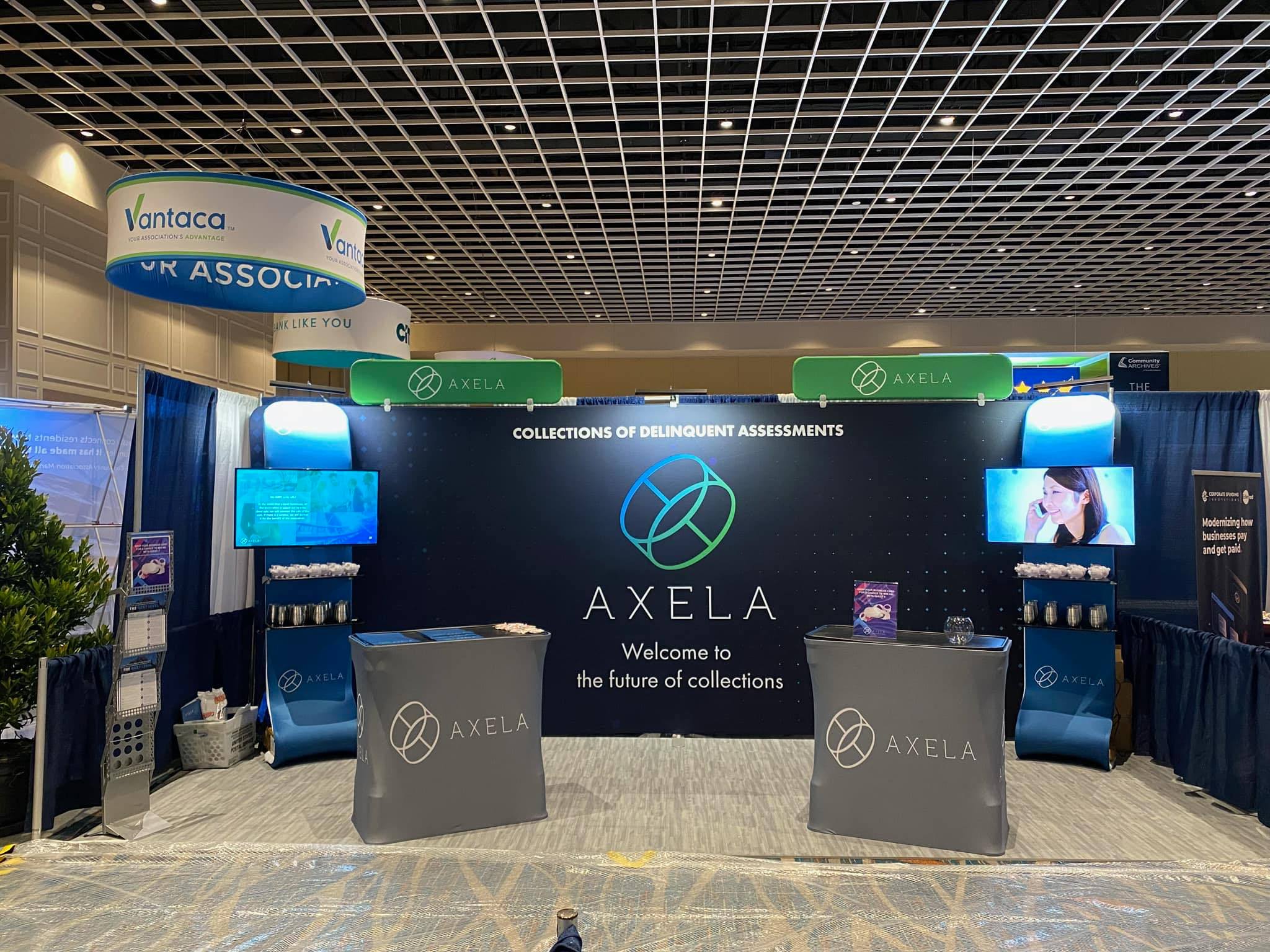
Because it was a sale, the association is entitled to recover every penny. When Axela Technologies is servicing a debt, we do not depend on the lender to be an honest agent. This is an arm’s length transaction, and although the association is not a buyer or a seller in this deal, they do have money at stake and require professional representation (that does not cost $350 an hour) that has their interests at heart.

When a bank forecloses, look and see if they had title and sold it, or sold it post-judgment. If they did not take title, this is the difference between a successful collection event and taking a hit (sometimes substantial).

Pursuing a Surplus From a Bank Sale

Often when a bank forecloses and takes title, they will sell their REO (Real Estate Owned Property) at auction or through standard real estate brokers. In these times of real estate appreciating at a rapid rate and inflation roaring, banks will often sell the property that they foreclosed upon for more than they are allowed to recover. That results in a foreclosure surplus, and the association (by right of the contractual lien in your governing documents) has the right to claim that surplus amount.

At Axela Technologies we do this every day because if we do not recover our fees, then we do not get paid. Unlike your attorney, we don’t tell you to write it off and send you a bill, because our interests are aligned with the association. If you have had a unit foreclosed upon and don’t know if it was sold at a surplus, then somebody is not trying hard enough to recover what is legally, rightfully, and ethically money that belongs to the association.

Post-Foreclosure Recovery From the Delinquent Owner

Let’s assume that when the HOA bank foreclosure concluded, everything was done in order and there was no surplus for the association to recover. What happens then?

Well when the bank foreclosed on that unfortunate member of your association, and they left the membership holding the bag for their delinquent assessments, the debt was not extinguished.

Let me repeat that: an owner who owes the association money before an HOA bank foreclosure STILL owes that money after they have lost their house.

Now you may be inclined to say that this was a poor unfortunate person and to pursue them is heartless. In reality, it is heartless NOT to pursue this money. You must consider the good paying owners who picked up the cash shortfall by way of increased assessments and special assessments. Choosing not to pursue that debt means they footed the bill for nothing.

Axela Technologies has a cure for that as well.

Our Post-Foreclosure recovery program allows us to pursue these debts on a contingency basis. If we recover, it is like finding $20.00 in your jeans when you pull them out of the dryer, but way better. (Note: Contingency collections are not available in Texas.)

Let Axela Technologies Help

If your community association has delinquencies, remember that they do not end with an HOA bank foreclosure, or even an association/foreclosure. It ends when the debt is either collected or determined to be absolutely, positively uncollectible. Contact Axela Technologies and speak with our knowledgeable recovery specialists. Let us help you obtain the holy grail of community association governance that is a balanced budget.


Tags: