Become our Member : JOIN SFPMA TODAY   LogIn / Register: LOGIN/REGISTER

SFPMA Industry Articles | news, legal updates, events & education! 

Find Blog Articles for Florida’s Condo, HOA and the Management Industry. 

Finding top Companies is important for Property Managers Condo & HOA Boards.

Finding top Companies is important for Property Managers Condo & HOA Boards.

  • Posted: Nov 26, 2025
  • By:
  • Comments: Comments Off on Finding top Companies is important for Property Managers Condo & HOA Boards.

It starts with: Membership and being listed on the Florida Directory.

Property Managers, Condo & HOA Board Members use our members for repairs in the buildings and communities they manage, for them this equates to happier residents, fewer high-priced emergency repair bills and cost savings overall. Through your membership we help with forming relationships in our industry that lead to increased business for your company and lasting relationships for you.

Board Members that represent Condos and HOA’s all over Florida. Property Management Companies, Property Owners and Private Landlords that wish to stay informed and up to date with our industry.

For these people having a reliable source is important to them and with our goal of “Having a Trusted Member to care for their Properties either through Management, Business Related Services or Maintenance Services” is what they get!


When you are listed on the Florida Directory, Clients can find you as one of the Top Companies used in our industry. Your company will benefit from being listed.

“Start forming lasting relationships in the Property Management Industry”


Sign up On-Line Today: Select Categories and the counties you work in?  – Fill out the information Form send to us,  – Become a member!

You should take advantage of professional associations it allows you to meet like minded professionals and opens up opportunities for future business ventures and lifelong partnerships. 
 
1. You are listed on the Website Members Directory.
2. Write Articles (our Blog) we send to the Industry Professionals, Let them get to know what you do!
3. Take out Advertising in the Magazine and Write Articles ( Half Page and Full Page Ads)
4. Get Listed this year: Business, Service or Property Management Memberships
(the memberships are set at recurring auto billed only one time per year)
 

Once you fill out the Company Information Form and Make the online Membership fee payment we will upload the information and assign it to a page for your company. Any Form sent without payment will not be uploaded to our Directory, Thank You


[one_third]

Property Managers

Listing your Company on the Directory is important
We give clients the information to make an informed decision about which property management company to use. Addressing the questions for owners and board members helps them to understand what a manager does and how important it is to take the time to find the right company for there properties.

[/one_third] [one_third]

Business

Using the right company the first time solves your problem faster
Many clients are using the Listed Companies to find accounting, architecture, collections, insurance and building claims, public relations, telecommunications, tower management, and web design to name a few. When they use our Florida Directory combined with their company’s in-house dept’s they get companies that have passed our screening and industry standards.

[/one_third] [one_third_last]

Service Vendors

When they are looking for the highly trained companies who are licensed, bonded and insured that is what they get!
Many property managers use the companies on the Florida Directory for faster quality repairs in the buildings and communities they manage, this equates to happier residents, fewer high-priced emergency repair bills and cost savings overall.

[/one_third_last]


Tags: ,
Don’t let a natural disaster catch your community off guard! Take charge and be prepared!

Don’t let a natural disaster catch your community off guard! Take charge and be prepared!

The coastal Northeast is experiencing a concerning trend of heating at a faster rate compared to other regions in North America. Researchers have identified a strong correlation between the accelerated warming and the rapidly increasing temperatures in the North Atlantic Ocean and increasing storm intensity. Natural disasters such as hurricanes, tornadoes and coastal flooding can strike at any moment, leaving communities devastated and in need of immediate assistance. It is crucial for communities to be prepared in order to minimize the impact of these disasters and ensure the safety of their residents.

Preparing your community for a natural disaster is crucial to minimize damage, save lives, and facilitate a swift recovery. Here are a few steps to assist with your preparation:

Assessment and Planning:

  • Identify the types of natural disasters that are common in your area, such as earthquakes, hurricanes, floods, wildfires, or tornadoes.
  • Conduct a thorough risk assessment to understand the potential impact of these disasters on infrastructure, buildings, and residents.
  • Collaborate with professionals to create a comprehensive disaster preparedness plan.
  • Make sure that the community has backed up records of their site plans, architectural and structural drawings, as this can greatly assist in the post disaster assessment and recovery process.

Initial building evaluation performed based on the severity of the storm/event:

  • The degree of safety & habitability of the subject building is not always obvious. If there is any doubt or question that there may be structural or building envelope damage to a building, call you Professional Engineer or Architect and have an evaluation performed.
  • In some instances, you may be required by your local municipality to have your professional assist with stabilizing the structure before parties can enter the structure to collect personal belonging that may remain.

Communication and Engagement:

  • Establish a reliable communication system to disseminate information before, during, and after a disaster. This can include email, social media, or text alerts.
  • Designate community leaders or volunteers responsible for communicating updates and instructions.

Contact Insurance:

  • It can take a while to get adjusters to scene following an event. Be sure to take before, during and after photos of any damage that occurred.

Post-Disaster Recovery:

  • Establish a recovery plan that includes damage assessment, debris removal, and restoration of essential services.
  • Plans and specifications may be required to repair or reconstruct the building, depending on severity.
  • Code requirements can impact the work based on if it is classified as repair vs reconstruction. This needs to be carefully reviewed and considered as insurance carriers may try to exclude some of the necessary work, so the Architect or Engineer needs to be well versed on preparing plans for this type of work.

Remember, disaster preparedness is an ongoing effort. Regularly review and update your plans based on new information, changing community demographics, and emerging technologies. By taking proactive steps, you can help your community minimize the impact of natural disasters and ensure a more resilient future.

Contact our team for more information how to be proactive! 

[AdSense-C]

The Falcon Group
Miami
15405 NW 7th Avenue in Miami, FL 33169
ph: 305.663.1970 x509
info@falconengineering.com
 
WEST PALM BEACH, FLORIDA
5651 Corporate Way, Suite 4, West Palm Beach, Florida 33407
Phone: 561-290-0504
info@falconengineering.com
 
Tags: , , ,
Preparing for Extreme Heat: The New Natural Disaster by Donna DiMaggio Berger of Becker

Preparing for Extreme Heat: The New Natural Disaster by Donna DiMaggio Berger of Becker

  • Posted: Jul 08, 2025
  • By:
  • Comments: Comments Off on Preparing for Extreme Heat: The New Natural Disaster by Donna DiMaggio Berger of Becker

Preparing for Extreme Heat this Summer: The New Natural Disaster

by Donna DiMaggio Berger / Becker

The word “hot” has many connotations: it can reveal anger when you say someone is “hot around the collar”; it can invoke personal appeal or desirability “he’s so hot”; it can refer to a disorganized person or situation, hence the description as “a hot mess”; and can also be used to describe an emotional issue or topic as a “hot button”. However, since the earliest of times, the word hot has been used to describe the temperature and we’ve been hearing this word a lot lately in many parts of the US given the ongoing heat waves. More than 61,000 people died because of the heat waves that swept the European continent. We won’t know for some time how many US fatalities have occurred due to our extreme heat during the summer.

Extreme heat can cause dehydration, heat exhaustion, exacerbation of existing medical and mental health conditions, respiratory distress, and heatstroke. Dehydration can cause dizziness, fatigue, and muscle weakness. Heat exhaustion may result in heavy sweating, nausea, headache, rapid heartbeat, faintness, and muscle cramps. Extreme heat can more greatly affect people with underlying respiratory, cardiovascular and kidney disorders with extreme heat being tied to an increased risk of heart attacks or other cardiovascular events. Heatwaves have also been linked to diminished air quality in urban areas which can worsen respiratory conditions such as asthma. Lastly, extreme heat can impact mental well-being, leading to irritability, mood swings and difficulty concentrating, all of which can make communal living more stressful.

Dealing with extreme heat events in a multifamily building, especially for those on fixed incomes, can be challenging. What should your association board and management team be doing in response to an extreme heat event? Certainly, including preparation for heat waves into your emergency disaster plan is recommended. The following are some items you may wish to consider:

  • If your association has employees, work with counsel to review your employee guidebook particularly for employees whose work requires them to be outdoors. For those employees, you will want to be sure that they have access to plenty of water throughout the day to stay hydrated and replace fluids lost through perspiration. If those employees are required to wear a certain uniform that is not well suited to an extreme heat event, you should consider an alternate uniform for extreme heat event. You may also want to be confirm that your outside vendors who provide services outdoors have provided adequate water and protection from the sun for their workers.
  • Create shade around the building by using umbrellas, awnings, or strategically placed vegetation to reduce the impact of direct sunlight. Bear in mind that some of these shade additions may require advance membership approval.
  • Revisit any architectural control guidelines you have in place which may restrict or prohibit the use of fans on patios, balconies and lanais. Fans are used to circulate air and can create a cooling effect. Consider how curtains, blinds and blackout shades may reduce the temperature inside units particularly if a unit owner is not running the AC at reasonable temperatures. Allow people to close their blinds and/or their hurricane shutters during the day to block out direct

    sunlight and prevent heat from entering the living space.
  • Consider limiting daytime hours of play for outdoor tennis and pickleball courts as well as any other outdoor recreational areas when temperatures are soaring. Installing thermometers on the common areas may also help remind your residents about climbing temperatures.
  • Consider purchasing a whole building generator if you don’t already have one. In the event that increased electric demands during a heat wave cause a blackout or brownout that generator may save lives in your building. Naturally, a generator will also help in the aftermath of a windstorm which knocks out electricity.
  • Check in with your residents who may be living alone and dealing with physical or mental health challenges as well as economic burdens. These residents may not be running their A/C as often or at a

    temperature that is needed for their wellbeing. This is also the time to confirm that you have emergency contacts for your residents.
  • Reach out to local community organizations, social services, or government agencies that provide assistance during extreme weather events. They may offer cooling centers, fan distribution programs, or other resources for your residents.

The strategies your board and management team use in response to an extreme heat event depends, in large part, on your building’s location and infrastructure as well as the available monetary and personnel resources. However, there are some basic steps all associations can take to educate their residents about the dangers of extreme heat. The phrase, “we’re having a heat wave” doesn’t have to spell disaster in a well-prepared community.

For additional information please listen to my podcast conversation with Jane Gilbert, Miami-Dade’s Chief Heat Officer which can be found here.


 Donna DiMaggio Berger is a Shareholder with the Becker law firm, is Board-certified, is a Fellow with the College of Community Association Lawyers (CCAL) and is a keynote speaker and the host of the popular Take It To The Board podcast on association issues.

Donna DiMaggio Berger is a Shareholder in Becker’s Community Association Practice in Ft. Lauderdale, Florida. She is a member of the College of Community Association Lawyers (CCAL), a prestigious national organization that acknowledges community association attorneys who have distinguished themselves through contributions to the evolution or practice of community association law and who have committed themselves to high standards of professional and ethical conduct in the practice of community association law. She is also one of only 190 attorneys statewide who is a Board Certified Specialist in Condominium and Planned Development Law.

As Founder and Executive Director of Becker’s Community Association Leadership Lobby (CALL), Ms. DiMaggio Berger has led various community association advocacy initiatives, working with legislators and other public policymakers on behalf of those who live, serve, and work in common interest ownership communities. She has testified before the Florida Legislature regarding community association law and frequently appears on radio talk shows and in print media discussing these issues.

Tags: , , ,
FIDUCIARY DUTY: What it Means to Your Community Association. by REMBAUM’S ASSOCIATION ROUNDUP

FIDUCIARY DUTY: What it Means to Your Community Association. by REMBAUM’S ASSOCIATION ROUNDUP

  • Posted: May 11, 2025
  • By:
  • Comments: Comments Off on FIDUCIARY DUTY: What it Means to Your Community Association. by REMBAUM’S ASSOCIATION ROUNDUP

What duty does a community association board member owe to their association? What happens if that duty is breached? During the legislative session, legislation was proposed that would have made directors criminally liable for failure to timely respond to official record requests, among other provisions.

The legislation in House Bill 919 was proposed by Representative Porras in response to the alleged $3.4 million dollar embezzlement scheme that took place at the Hammocks Community Association, located in Miami-Dade County. Parts of this proposed bill were well-intentioned; however, several provisions were commonly viewed as too broad and expansive.

On November 15, 2022, the Miami-Dade State Attorney’s Office announced charges related to the Hammocks’ criminal case, including racketeering, organized scheme to defraud, money laundering, grand theft, and fabricating physical evidence against five board members. These board members have been accused of the following:

i) running a scheme in which they used HOA checks and HOA credit cards from 55 bank accounts to pay for “no-show” work by shell companies or vendors, who would funnel money back to the directors for their personal use;

ii) withholding official records from members; and,

iii) failure to hold valid elections, among other bad acts.

If found guilty these board members overtly breached their fiduciary duty to their association.

During the 2023 legislative session, House Bill 919 initially contained significant criminal penalties to punish board members who failed to provide official records when they otherwise should have, criminal penalties for kickbacks, and criminal penalties for improper election interference, among other provisions. Such laws, while well intended, went overboard as evidenced by the creation of criminal penalties for failure to provide official records, as such severe criminal penalties for operational matters would likely only deter good people from running for the board. Recognizing this potential issue, parts of HB 919 were tempered a bit prior to it becoming law. That said, in the opinion of this author, new laws with new criminal penalties are not the answer. Bad people do bad things, and no amount of laws will likely significantly change that. So, what is the answer?

One answer is to shore up the educational and certification requirements for board members. At present, there are two ways to be certified as a board member. One method is to take a State-approved class, which provides an overview of the voluminous information board members need to know in order to perform their duties. The other method is to sign a piece of paper that the board member has read the governing documents, will abide by them, and will faithfully discharge their duties. This second method should be eliminated as there is no method to confirm compliance, and this method does not have any educational component. In addition, continuing education requirements should be required for any board member serving consecutive years.

During a board certification class, time should be spent discussing the term “fiduciary duty.” While the term is repeatedly used in Chapters 718 and 720 of the Florida Statutes, it is not expressly defined in these statutes. Section 718.111, Florida Statutes, makes reference to Section 617.0830, Florida Statutes, which provides for general standards for directors of not-for-profit corporations, such as community associations.

Section 617.0830, Florida Statutes, provides the following:

      1. A director shall discharge his or her duties as a director, including his or her duties as a member of a committee i) in good faith; ii) with the care an ordinarily prudent person in a like position would exercise under similar circumstances; and iii) in a manner he or she reasonably believes to be in the best interests of the corporation.
      2. In discharging his or her duties, a director may rely on information, opinions, reports, or statements, including financial statements and other financial data, if prepared or presented by: i) One or more officers or employees of the corporation whom the director reasonably believes to be reliable and competent in the matters presented; ii) legal counsel, public accountants, or other persons as to matters the director reasonably believes are within the persons’ professional or expert competence; or iii) a committee of the board of directors of which he or she is not a member if the director reasonably believes the committee merits confidence.
      3. A director is not acting in good faith if he or she has knowledge concerning the matter in question that makes reliance otherwise permitted by subsection (2) unwarranted.
      4. A director is not liable for any action taken as a director, or any failure to take any action, if he or she performed the duties of his or her office in compliance with this section.

Still, though, there is no express definition of the term “fiduciary duty.” The purpose of studying fiduciary relationships is to identify the areas where it exists and gain an insight into the duties of a fiduciary. After all, every board member is a fiduciary for their community association. Common definitions of the term “fiduciary” include:

      • A fiduciary relationship is a relation between two parties wherein one party (fiduciary) has the duty to act in the best interest of the other party (beneficiary or principal).
      • A fiduciary is a person who holds a legal or ethical relationship of trust with one or more other parties. Typically, a fiduciary prudently takes care of money or other assets for another person.
      • A fiduciary duty is a relationship in which one party places special trust, confidence, and reliance in and is influenced by another who has a fiduciary duty to act for the benefit of the party.
      • Most importantly, and germane to this discussion, a fiduciary is a person or organization that acts on behalf of another person or persons, putting their clients’ interests ahead of their own, with a duty to preserve good faith and trust.

In other words, a good community association board member puts the interest of their association above their own personal interests. Thus, while we may not be able to stop bad people from doing bad things, through continuing education we can help good people do better.

To recap, there are three things that can be readily accomplished that would make a positive difference for Florida’s community associations.

      1. Remove the ability of a board member to be “certified” by signature alone.
      2. Require continuing education for board members serving continuous years.
      3. Amend Florida Statutes, Chapters 718 and 720, to include express definitions of fiduciary duty so that it is made patently clear that every board member must put their community association above and ahead of their own personal interests.


[AdSense-A]


Tags: , ,
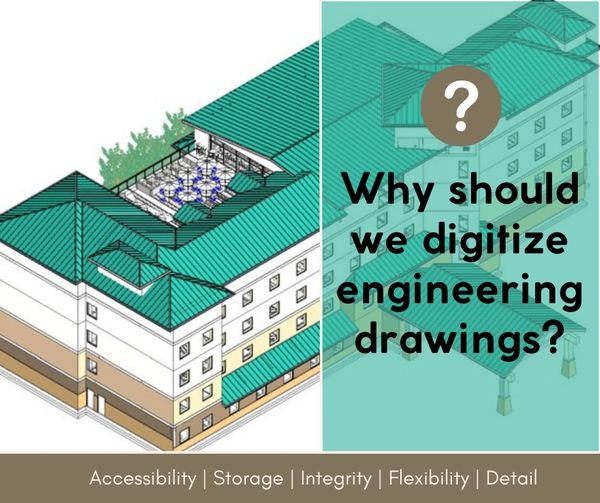
Need a few reasons to digitize your paper-based engineering and architectural drawings? How about these?

Need a few reasons to digitize your paper-based engineering and architectural drawings? How about these?

1- Accessibility and Sharing. Digital files are easy to search, copy and share, saving valuable time and improving collaboration.
2- Storage and Document Integrity. Digital drawings are much less expensive to store than paper copies and are not subject to degradation over time.
3- Flexibility. Digital drawings are easy to rework or update, streamlining change processes and speeding renovations.
4- Details. Digital designs allow for the addition of audio or video to individual elements, providing an extra level of detail (e.g., materials, site layout, construction processes).
At the end of the day, digitization is a huge time and cost saver.
Call Us—561.372.1290
Tags: , ,
Out With the Old, In With the New by Published by Eric Glazer, Esq.

Out With the Old, In With the New by Published by Eric Glazer, Esq.

The Presidential Inauguration is a reminder of how smoothly leadership transitions can happen at the national level. But in our community associations, things aren’t always so predictable. Discover insights into the often chaotic turnover of power in Florida condos and HOAs—and what it means for your community.

Whether you’re happy about today’s Presidential Inauguration or not, one thing is for sure and for certain; it’s going to happen. Since 1937, it has taken place at noon on January 20, the first day of the new term, except in 1957, 1985, and 2013, when January 20 fell on a Sunday. In those years, the presidential oath of office was administered on that day privately and then again in a public ceremony the next day, on Monday, January 21.

That consistency is a lot more than we can say for our community associations. How many of you have complained that our associations have not held an annual meeting or an election in forever, or at least not in the last year? What about complaints that the Board of Directors has simply changed the dates of our annual meeting on more than one occasion and extended their term in office?

The terms of Board members expire at the annual meeting. So when are you supposed to have an annual meeting and election? The date of your annual meeting is contained within your bylaws. But suppose the Board wants to have the annual meeting on another date for any variety of reasons? Can they do so? Not according to one court which held that the annual meeting must be held on the date contained in the association’s bylaws. Not to do so would be as if an amendment was made to those bylaws without the proper vote of the unit owners.

And despite this ruling, dozens, if not hundreds or maybe even thousands of condominium and HOAs won’t hold their annual meeting and election this year on the date mandated by their own documents.

The last few years has also brought drama to the country regarding the requirements of outgoing administrations to turn over official records. Trump got charged with a crime and Biden was found to have wrongfully retained official records but wasn’t charged with a crime.

When it comes to condominiums, “An outgoing board or committee member must relinquish all official records and property of the association in his or her possession or under his or her control to the incoming board within 5 days after the election. The division shall impose a civil penalty as set forth in s. 718.501(1)(d)6. against an outgoing board or committee member who willfully and knowingly fails to relinquish such records and property.” Surprisingly, there is no equivalent statute for HOAs, except if that director was removed by way of recall.

So today, pomp and circumstance and tradition will rule the day and like clockwork, one administration will hand off to the incoming administration. And in our community associations, no doubt tradition is likely to continue as well. Perhaps that’s a rare example of where the government works better than we think.


Eric is Board Certified by The Florida Bar in Condominium and Planned Development Law.

Since 2009, Eric has been the host of Condo Craze and HOAs, a weekly one-hour show airing at 7 p.m. each Thursday on YouTube. This show allows viewers to engage in live chats with Eric and other participants but also enables a broader audience to access free advice, making valuable insights more widely available.

See: www.condocrazeandhoas.com

Eric is the first attorney in the State of Florida that designed a course that certifies condominium and HOA residents as eligible to serve on a Board of Directors and has now certified more than 20,000 Floridians all across the state. He is certified as a Circuit Court Mediator by The Florida Supreme Court and has mediated dozens of disputes between associations and unit owners. Eric also devotes significant time to advancing legislation in the best interest of Florida community association members.


Tags: , ,
HOW TO COLLECT WHAT’S DUE?  By Eric Glazer, Esq.

HOW TO COLLECT WHAT’S DUE? By Eric Glazer, Esq.

We are already starting to see an uptick in the amount of owners falling behind on paying their assessments to their association.  It is wise for an association to know how the collections process works in for the board to put in place a policy that works best for the association.

In both condos, Co-ops, and HOAs, the procedure is the same.

  1. To start, the association must first deliver a thirty day written notice of late assessments to the unit owner which specifies the amount owed the association and provides the unit owner an opportunity to pay the amount owed without the assessment of attorney fees.
  2. If the owner fails to bring their account current, the association must then provide the delinquent unit owner with another letter which is a 45 day notice of its intent to file a lien and its intent to foreclose its lien. The association can demand attorney’s fees, interest and late fees in this letter.
  3. If the owner fails to bring their account current, the attorney can record a lien and threaten to foreclose on the lien if their account is not brought current within 45 days.  The association can demand attorney’s fees, interest and late fees in this letter.
  4. If after 45 days the owner still fails to bring their account current, the association may file a foreclosure action in court.

Keep in mind that because the unit owner must receive a 30 day letter, a 45 day letter and another 45 day letter, it takes a long time to bring a delinquent owner into court.  That is why associations may need to rethink their collection process and start it a little earlier.  If not, by the time it gets to court, the owner may by 9 or 10 months delinquent.

Especially in condominium buildings, things are about to get tough.  There are now mandatory inspections, mandatory repairs, mandatory fire sprinkler or ELSS installation, a tremendous rise in insurance and the inability to waive reserves.  Stay on top of your collections.


About HOA & Condo Blog

Read other industry Legal Articles

Eric Glazer

Eric Glazer graduated from the University of Miami School of Law in 1992 after receiving a B.A. from NYU. He has practiced community association law for three decades and is the owner of Glazer and Sachs, P.A. a five attorney law firm with offices in Fort Lauderdale and Orlando.

Eric is Board Certified by The Florida Bar in Condominium and Planned Development Law.

Tags: , ,

You don’t get to take a holiday break from condo rules.

You don’t get to take a holiday break from condo rules.

  • Posted: Dec 20, 2024
  • By:
  • Comments: Comments Off on You don’t get to take a holiday break from condo rules.

If you’re one of the 62 million Americans living in condo and homeowners associations (HOAs), you don’t get to take a holiday break from condo rules.

Humbug, you say? Well…

“A hallmark of a shared ownership community is that you give up some of your rights for the good of the community. If there are restrictions involving holiday decorations, including lights and signage, you’re generally bound by them

Option 1: Nothing may happen if the HOA rules aren’t enforced.
Option 2: You might get a letter asking you to take down your decor.
Option 3: You might get fined for breaking condo rules.


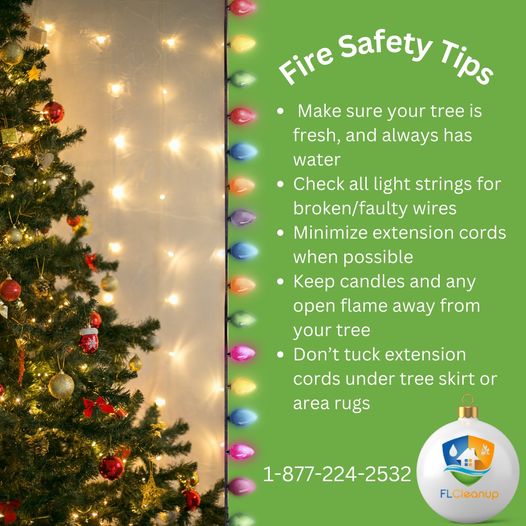
Be safe, Ask your board for rules they may have for decorations on the Grounds….

Constructive ways to balance your need to deck the halls with condo rules that ban decorations:

  • Talk to your neighbors.
  • If it’s your first holiday in your new home, check your association’s rules and regulations to find out what’s really allowed.
  • Condos that ban lights and signage most of the year may be lenient about decorations during the holiday season. “But do understand these rules and regulations are enforceable by boards of corporations that are created contractually,”

Take your holiday case to the board. Call the president and ask if you can speak at the next meeting. Show up with a short written proposal to modify the HOA rules to allow specific kinds of decorations, like lights on balconies or door wreaths.

Check state laws on condo rules. Got no satisfaction from your trip to the condo board? You might be able to appeal to a higher authority. Some states have a large body of home owners association laws that may override HOA rules in certain instances, while other states have few home owners association laws.

Tags: ,
MANDATORY CONDOMINIUM & COOPERATIVE BUILDING INSPECTIONS & NON-WAIVABLE RESERVE REQUIREMENTS SENATE BILL 4-D

MANDATORY CONDOMINIUM & COOPERATIVE BUILDING INSPECTIONS & NON-WAIVABLE RESERVE REQUIREMENTS SENATE BILL 4-D

  • Posted: Dec 18, 2024
  • By:
  • Comments: Comments Off on MANDATORY CONDOMINIUM & COOPERATIVE BUILDING INSPECTIONS & NON-WAIVABLE RESERVE REQUIREMENTS SENATE BILL 4-D

MANDATORY CONDOMINIUM & COOPERATIVE BUILDING INSPECTIONS & NON-WAIVABLE RESERVE REQUIREMENTS

We are reposting this, for all the buildings That have not had inspections…..

SENATE BILL 4-D

With home insurers leaving Florida in droves, and following pressure from members of both political parties in the legislature to actually do something about it, in May 2022, the governor called a special legislative session to address the problem. A very real concern to the insurers is the effect of both time and inclement weather on Florida’s aging high-rise buildings. Until now, and for the most part, Florida law largely ignored these concerns. Enter Senate Bill 4-D (SB 4-D) which already became effective upon being signed into law by Governor DeSantis on May 26, 2022. This new piece of legislation addresses condominium and cooperative building inspections and reserve requirements (while this article primarily addresses these new laws in the context of condominium association application, they are equally applicable to cooperative associations).

By way of background, during the regular legislative session, there were several bills introduced in the Florida House of Representatives (House) and in the Florida Senate (Senate) addressing building safety issues, but none of them were passed into law due to the inability to match the language of the bills in both the House and the Senate which is a requirement for legislation to pass and go to the governor for consideration. As such, it was a little surprising to many observers that the legislature was able to approve SB 4-D in essentially a 48-hour window during the special session in May. The language used in SB 4-D was initially drafted into a proposed bill in November 2021. At that time, and during the most recent legislative session, input was provided by many industry professional groups including engineers, reserve study providers, and association attorneys. Many of these industry professionals indicated that there were challenges with some of the language and concepts being proposed in SB 4-D during session.

Notwithstanding these challenges, and in an effort to ensure some form of life safety legislation was passed this year, SB 4-D was unanimously approved in both the House and Senate and signed by the governor. A plain reading of this well intended, but in some instances not completely thought-out, legislation evidences these challenges. Some will say it is a good start that will need significant tweaking, which is expected during the 2023 Legislative Session. Others praise it, and yet others say it is an overreach of governmental authority, such as an inability to waive or reduce certain categories of reserves. You be the judge. We begin by examining the mandatory inspection and reserve requirements of SB 4-D.

I. MILESTONE INSPECTIONS: MANDATORY STRUCTURAL INSPECTIONS FOR CONDOMINIUM AND COOPERATIVE BUILDINGS. (§553.899, Fla. Stat.)

You will not find these new milestone inspection requirements in Chapters 718 or 719 of the Florida Statutes, but rather in Chapter 553, Florida Statutes, as cited above.

MILESTONE INSPECTIONS:

The term “milestone inspection” means a structural inspection of a building, including an inspection of load-bearing walls and the primary structural members and primary structural systems as those terms are defined in section 627.706, Florida Statutes, by a licensed architect or engineer authorized to practice in this state for the purposes of attesting to the life safety and adequacy of the structural components of the building and, to the extent reasonably possible, determining the general structural condition of the building as it affects the safety of such building, including a determination of any necessary maintenance, repair, or replacement of any structural component of the building. The purpose of such inspection is not to determine if the condition of an existing building is in compliance with the Florida Building Code or the fire safety code.

SUBSTANTIAL STRUCTURAL DETERIORATION:

The term “substantial structural deterioration” means substantial structural distress that negatively affects a building’s general structural condition and integrity. The term does not include surface imperfections such as cracks, distortion, sagging, deflections, misalignment, signs of leakage, or peeling of finishes unless the licensed engineer or architect performing the phase one or phase two inspection determines that such surface imperfections are a sign of substantial structural deterioration.

MILESTONE INSPECTIONS FOR BUILDINGS THREE STORIES OR MORE IN HEIGHT:

A condominium association under chapter 718 and a cooperative association under chapter 719 must have a milestone inspection performed for each building that is three stories or more in height by December 31 of the year in which the building reaches 30 years of age, based on the date the certificate of occupancy for the building was issued, and every 10 years thereafter.

WITHIN THREE MILES OF COASTLINE:

If the building is three or more stories in height and is located within three miles of a coastline, the condominium association or cooperative association must have a milestone inspection performed by December 31 of the year in which the building reaches 25 years of age, based on the date the certificate of occupancy for the building was issued, and every 10 years thereafter.

The condominium association or cooperative association must arrange for the milestone inspection to be performed and is responsible for ensuring compliance.

The condominium association or cooperative association is responsible for all costs associated with the inspection.

IF THE CERTIFICATE OF OCCUPANCY WAS ISSUED BEFORE JULY 1, 1992:

If a milestone inspection is required under this statute and the building’s certificate of occupancy was issued on or before July 1, 1992, the building’s initial milestone inspection must be performed before December 31, 2024. If the date of issuance for the certificate of occupancy is not available, the date of issuance of the building’s certificate of occupancy shall be the date of occupancy evidenced in any record of the local building official.

Upon determining that a building must have a milestone inspection, the local enforcement agency must provide written notice of such required inspection to the condominium association or cooperative association by certified mail, return receipt requested.

Within 180 days after receiving the written notice the condominium association or cooperative association must complete phase one of the milestone inspection. For purposes of this section, completion of phase one of the milestone inspection means the licensed engineer or architect who performed the phase one inspection submitted the inspection report by e-mail, United States Postal Service, or commercial delivery service to the local enforcement agency.

A MILESTONE INSPECTION CONSISTS OF TWO PHASES:

    (a) PHASE 1: For phase one of the milestone inspection, a licensed architect or engineer authorized to practice in this state must perform a visual examination of habitable and non-habitable areas of a building, including the major structural components of a building, and provide a qualitative assessment of the structural conditions of the building. If the architect or engineer finds no signs of substantial structural deterioration to any building components under visual examination, phase two of the inspection (discussed below) is not required. An architect or engineer who completes a phase one milestone inspection shall prepare and submit an inspection report.

    (b) PHASE 2: A phase two of the milestone inspection must be performed if any substantial structural deterioration is identified during phase one. A phase two inspection may involve destructive or nondestructive testing at the inspector’s direction. The inspection may be as extensive or as limited as necessary to fully assess areas of structural distress in order to confirm that the building is structurally sound and safe for its intended use and to recommend a program for fully assessing and repairing distressed and damaged portions of the building. When determining testing locations, the inspector must give preference to locations that are the least disruptive and most easily repairable while still being representative of the structure. An inspector who completes a phase two milestone inspection must prepare and submit an inspection report.

POST-MILESTONE INSPECTION REQUIREMENTS:

Upon completion of a phase one or phase two milestone inspection, the architect or engineer who performed the inspection must submit a sealed copy of the inspection report with a separate summary of, at minimum, the material findings and recommendations in the inspection report to the condominium association or cooperative association, and to the building official of the local government which has jurisdiction. The inspection report must, at a minimum, meet all of the following criteria:

    (a) Bear the seal and signature, or the electronic signature, of the licensed engineer or architect who performed the inspection.

    (b) Indicate the manner and type of inspection forming the basis for the inspection report.

    (c) Identify any substantial structural deterioration within a reasonable professional probability based on the scope of the inspection, describe the extent of such deterioration, and identify any recommended repairs for such deterioration.

    (d) State whether unsafe or dangerous conditions, as those terms are defined in the Florida Building Code, were observed.

    (e) Recommend any remedial or preventive repair for any items that are damaged but are not substantial structural deterioration.

(f) Identify and describe any items requiring further inspection.

LOCAL GOVERNMENT ENFORCEMENT:

A local enforcement agency may prescribe time lines and penalties with respect to compliance with the milestone inspection requirements.

A board of county commissioners may adopt an ordinance requiring that a condominium or cooperative association schedule or commence repairs for substantial structural deterioration within a specified time frame after the local enforcement agency receives a phase two inspection report; however, such repairs must be commenced within 365 days after receiving such report. If an association fails to submit proof to the local enforcement agency that repairs have been scheduled or have commenced for substantial structural deterioration identified in a phase two inspection report within the required time frame, the local enforcement agency must review and determine if the building is unsafe for human occupancy.

BOARD’S DUTY AFTER OBTAINING THE MILESTONE REPORT:

Upon completion of a phase one or phase two milestone inspection and receipt of the inspector-prepared summary of the inspection report from the architect or engineer who performed the inspection, the association must distribute a copy of the inspector-prepared summary of the inspection report to each unit owner, regardless of the findings or recommendations in the report, by United States mail or personal delivery and by electronic transmission to unit owners who previously consented to receive notice by electronic transmission; must post a copy of the inspector-prepared summary in a conspicuous place on the condominium or cooperative property; and must publish the full report and inspector-prepared summary on the association’s website, if the association is required to have a website.

WHO PAYS FOR THE MILESTONE INSPECTION:

Pursuant to section 718.112, Florida Statutes, if an association is required to have a milestone inspection performed, the association must arrange for the milestone inspection to be performed and is responsible for ensuring compliance with all of the requirements thereof. The association is responsible for all costs associated with the inspection.

FAILURE TO OBTAIN THE MILESTONE INSPECTION:

If the officers or directors of an association willfully and knowingly fail to have a milestone inspection performed pursuant to section 553.899, Florida Statutes, such failure is a breach of the officers’ and directors’ fiduciary relationship to the unit owners.

MANAGER’S DUTY:

If a community association manager or a community association management firm has a contract with a community association that has a building on the association’s property that is subject to milestone inspection, the community association manager or the community association management firm must comply with the requirements of performing such inspection as directed by the board.

EXEMPTIONS:

For clarity, the otherwise required milestone inspection does not apply to a single family, two-family, or three-family dwelling with three or fewer habitable stories above ground.

FLORIDA BUILDING COMMISSION REQUIREMENTS:

The Florida Building Commission must review the milestone inspection requirements and make recommendations, if any, to the legislature to ensure inspections are sufficient to determine the structural integrity of a building. The commission must provide a written report of any recommendations to the Governor, the President of the Senate, and the Speaker of the House of Representatives by December 31, 2022.

The Florida Building Commission must consult with the State Fire Marshal to provide recommendations to the legislature for the adoption of comprehensive structural and life safety standards for maintaining and inspecting all types of buildings and structures in this state that are three stories or more in height. The commission must provide a written report of its recommendations to the Governor, the President of the Senate and the Speaker of the House of Representatives by December 31, 2023.

II.    STRUCTURAL INTEGRITY RESERVE STUDIES AND MANDATORY RESERVES:

The reserve legislation set out in section 718.112 (f)(2)(a), Florida Statutes, is, for all intents and purposes, re-written. Prior to examining these most recent revisions, it is necessary to first examine the definitions set out in section 718.103, Florida Statutes, where a brand new term is added as follows:

    Structural integrity reserve study means a study of the reserve funds required for future major repairs and replacement of the common areas based on a visual inspection of the common areas applicable to all condominiums and cooperative buildings 3 stories or higher.

Hereafter, the structural integrity reserve study is referred to as “SIRS”. Now we can turn our attention to the requirements of the SIRS as set out in section 718.112 (f)(2)(a), Florida Statutes

THE STRUCTURAL INTEGRITY RESERVE STUDY (required for all condominium and cooperative buildings three stories or higher regardless of date of certificate of occupancy):

An association must have a SIRS completed at least every 10 years after the condominium’s creation for each building on the condominium property that is three stories or higher in height which includes, at a minimum, a study of the following items as related to the structural integrity and safety of the building:

a.     Roof.

b. Load-bearing walls or other primary structural members.

c. Floor.

d. Foundation.

e. Fireproofing and fire protection systems.

f. Plumbing.

g. Electrical systems.

h. Waterproofing and exterior painting.

i.  Windows.

j. Any other item that has a deferred maintenance expense or replacement cost that exceeds $10,000 and the failure to replace or maintain such item negatively affects the items listed in subparagraphs a.-i., as determined by the licensed engineer or architect performing the visual inspection portion of the structural integrity reserve study.

The SIRS may be performed by any person qualified to perform such study. However, the visual inspection portion of the structural integrity reserve study MUST be performed by an engineer licensed under chapter 471 or an architect licensed under chapter 481.

As further set out in the legislation, at a minimum, “a structural integrity reserve study must identify the common areas being visually inspected, state the estimated remaining useful life and the estimated replacement cost or deferred maintenance expense of the common areas being visually inspected, and provide a recommended annual reserve amount that achieves the estimated replacement cost or deferred maintenance expense of each common area being visually inspected by the end of the estimated remaining useful life of each common area.”

The amount to be reserved for an item is determined by the association’s most recent structural integrity reserve study that must be completed by December 31, 2024. If the amount to be reserved for an item is not in the association’s initial or most recent structural integrity reserve study or the association has not completed a structural integrity reserve study, the amount must be computed using a formula based upon estimated remain useful life and estimated replacement cost or deferred maintenance expense of each reserve item.

If the condominium building is less than three stories then the legislation provides that, “in addition to annual operating expenses, the budget must include reserve accounts for capital expenditures and deferred maintenance. These accounts must include, but are not limited to, roof replacement, building painting, and pavement resurfacing, regardless of the amount of deferred maintenance expense or replacement cost, and any other item that has a deferred maintenance expense or replacement cost that exceeds $10,000.”

The association may adjust replacement reserve assessments annually to take into account any changes in estimates or extension of the useful life of a reserve item caused by deferred maintenance.

If an association fails to complete a SIRS, such failure is a breach of an officer’s and director’s fiduciary relationship to the unit owners.

NON-WAIVABLE AND WAIVABLE RESERVES IN THE UNIT OWNER CONTROLLED ASSOCIATION:

As to the SIRS, the legislation is patently clear that unit owners may not vote for no reserves or lesser reserves for items set forth SIRS report. There is on-going debate amongst attorneys in regard to whether a condominium under three stories can waive or reduce reserves for any of the reserve items required to be in the SIRS that are included in the under three story condominium reserve, for example, roof and painting (For those interested, examine lines 1029 to 1033 and 1050 to 1071 in SB 4-D).

MANDATORY RESERVES IN THE DEVELOPER CONTROLLED ASSOCIATION:

Before turnover of control of an association by a developer to unit owners other than a developer pursuant to section 718.301, Florida Statutes, the developer-controlled association may not vote to waive the reserves or reduce the funding of the reserves (Previously, a developer could fully waive all reserves for the first two years, meaning this is a monumental change).

PRE-TURNOVER DEVELOPER DUTY:

Before a developer turns over control of an association to unit owners other than the developer, the developer must have a SIRS completed for each building on the condominium property that is three stories or higher in height.

III.    OFFICIAL RECORDS:

Official records of the condominium and cooperative association include structural integrity reserve studies, financial reports of the association or condominium, and a copy of the inspection reports and any other inspection report relating to a structural or life safety inspection of condominium or cooperative property.

In addition to the right to inspect and copy the declaration, bylaws and rules renters have the right to inspect the milestone inspection report and structural integrity reserve study inspection reports as well.

Structural integrity reserve studies must be maintained for at least 15 years after the study is completed. In addition, inspection reports report and any other inspection report relating to a structural or life safety inspection of condominium property must be maintained for 15 years after receipt of such report.

IV.    ASSOCIATION WEBSITES:

In addition to other positing requirements, the inspection reports described above and any other inspection report relating to a structural or life safety inspection of condominium property and the association’s most recent structural integrity reserve study must be posted to the website.

V.    JURISDICTION OF DIVISION OF CONDOMINIUMS, TIMESHARES, AND MOBILE HOMES:

Pre-turnover, the Division of Florida Condominiums, Timeshares, and Mobile Homes (Division) may enforce and ensure compliance with rules relating to the development, construction, sale, lease, ownership, operation, and management of residential condominium units, and complaints related to the procedural completion of milestone inspections. After turnover has occurred, the Division has jurisdiction to investigate complaints related only to financial issues, elections, and the maintenance of and unit owner access to association records, and the procedural completion of structural integrity reserve studies.

VI. NEW REPORTING REQUIREMENTS FOR ALL CONDOMINIUM AND COOPERATIVE ASSOCIATIONS:

On or before January 1, 2023, condominium associations existing on or before July 1, 2022, must provide the following information to the Division in writing, by e-mail, United States Postal Service, commercial delivery service, or hand delivery, at a physical address or e-mail address provided by the division and on a form posted on the division’s website:

  1. The number of buildings on the condominium property that are three stories or higher in height.
  2. The total number of units in all such buildings.
  3. The addresses of all such buildings.
  4. The counties in which all such buildings are located.

An association must provide an update in writing to the division if there are any changes to the information in the list within six months after the change.

VII.    APPLICABLE TO ALL SELLERS OF UNITS:

As a part of the sales process, the seller of a condominium or cooperative unit and developers must provide to potential purchasers a copy of the inspector-prepared summary of the milestone inspection report and a copy of the association’s most recent structural integrity reserve study or a statement that the association has not completed a structural integrity reserve study.

VIII.    GLITCHES:

As with any new legislation of such a substantial nature, there often follow in subsequent years what are referred to as “glitch bills” which help provide additional clarity, remove ambiguity, and fix unintended errors. To name a few: (i) the term “common areas” is used in the legislation when in fact the correct term is “common element;” (ii) clarity needs to be provided regarding whether reserve items that are required to be in SIRS, but show up in the under three story reserves, such as paint and paving, can be waived or reduced by the membership; and (iii) for those buildings that are within three miles of the coastline, additional clarity could be provided to provide better guidance as to how to perform the measurement.    

Tags: , ,