Happy Holidays & A Joyful New Year from the SOLitude Family
Happy Holidays & A Joyful New Year
As 2025 wraps up, we want to thank you for joining us in our mission to protect freshwater resources.

Find Blog Articles for Florida’s Condo, HOA and the Management Industry.
As 2025 wraps up, we want to thank you for joining us in our mission to protect freshwater resources.

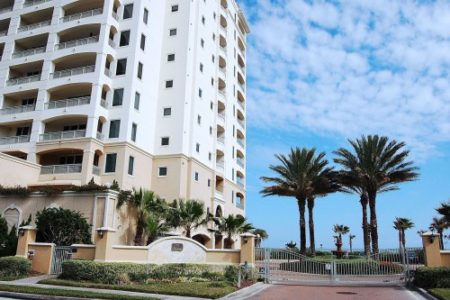
A new state law requires mandatory structural studies on older condo buildings with three or more stories. Senate Bill 4-D also requires association boards to increase repair funding reserves, and many owners now face six-figure special assessment fees.
Don Tyre, building official manager, provided city council members an update on the local process at a committee meeting. He noted that 225 condo buildings must submit reinspection reports this year, as all exist within three miles of the coast.
“I’m hoping to get three-quarters of the buildings to submit by December,” Tyre said. “There are going to be some issues; this is a new regulatory requirement. There’s only so many engineering firms that do this work.”
He said bill provisions allow deadline extension in some extenuating circumstances. The city will address delinquent buildings on a “case-by-case basis.”
The legislation, stems from the Chaplain South Tower’s collapse in Surfside, Florida. The catastrophe – still under investigation and blamed on several factors – killed 98 people
Miami-Dade and Broward Counties were the only jurisdictions to mandate structural inspection programs for existing buildings before the collapse. The local ordinances required buildings over 40 years old to receive a 10-year recertification.
“That’s, basically, what we’re going to be following – a 25-year inspection program with a 10-year reinspection portion,” Tyre said. “December of this year is the big date. It’s been postponed once; I don’t anticipate it being postponed again.”
He noted that 68 of the 225 buildings have submitted milestone reports. The legislation also applies to commercial structures of any height with an occupancy limit exceeding 500 people.
Local governments must submit a 180-day notice to affected owners and associations. St. Petersburg issued those forms
Tyre explained Phase I is a visual inspection from an architect or engineer to discern “any possible substantial structural deterioration.” Those could require further evaluations, and stakeholders must submit a Phase II Inspection report within 180 days.
“The responsibility falls to the condo ownership group and architectural or engineering firm they hire to provide that documentation,” Tyre added. “If they deem it necessary to go into a Phase II inspection, that’s a more forensic investigation.”
He said that could include building material sample testing, movement measurements, soil studies and “a number of different building imaging options.” The owners have one year to pull permits and start repairs if the architectural or engineering firm finds significant deterioration.
“If there’s a life safety issue, that’s when we (the city) would step in as a regulatory authority,” Tyre said. “And potentially, either evacuate the building or a portion of the building – it could be limited to just a small area, like a couple of balconies or something like that.
“There’s going to be some condo associations or buildings that will require a deeper review.”
Tyre said the inspections focus on structural integrity rather than code violations and fall outside the city’s scope. However, building officials will provide oversight.
Councilmember Brandi Gabbard requested the update and noted that received reports would constitute municipal public records. She said that would help inform prospective buyers.
“Anybody who has ever bought or sold a condo knows that sometimes it is challenging to get all of the documentation regarding the condo association the way it is now,” Gabbard said. “But then when you add this on top of it, and the type of reserves that we could potentially see being increased, there is some concern over transparency …”
Tyre said building officials must redact some information, and residents must submit a formal public records request to receive documentation. Elizabeth Abernethy, director of planning and development services, said they could explore creating an online portal to streamline the process.
The legislation allows local governments to implement a fee for reviewing submitted inspection reports. Abernethy believes the city has adequate staff to “get through this initial push and wouldn’t be necessary to charge an additional fee for review those reports.”
However, buildings needing repairs must pay associated permitting costs. Gabbard said she has “no desire” to require additional payments.
“Some of these reserve needs are going to be pretty hefty,” she added. “I don’t think we need to pile on.”
Thank You for the contribution of this article so others can learn.
The State of Florida Property Management Association with Legal & Engineering Members are here to provide help so you understand the new laws and how to take the correct action to ensure you are in full compliance.
<
p style=”text-align: center;”>
Tags: Engineering Articles, Florida Building Inspections, Inspection ArticlesBecause when you give your managers have the right tools, your communities thrive.
✅ Less workload
✅ Faster recovery
✅ Happier boards
🔗 Learn more about our Management Company partnerships:
https://lnkd.in/euSCQsNf
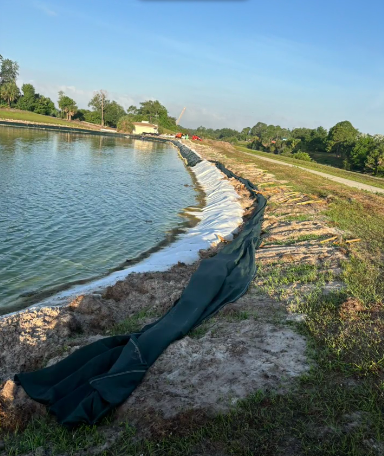
Geosynthetic Clay Liners (GCL) are high-performance geocomposites that are used as an alternative to conventional compacted clay liners. GCLs consist of two layers of geotextile stitched together enclosing a layer of processed sodium bentonite. Bentonite is a natural sealant, and when in contact with water, swells to form a low permeability clay liner. Geosynthetic clay liners have a long-lasting resistance to physical and chemical break-down in harsh environments such as landfills and other containment systems.
Advantages
* Unique self-sealing attributes that reduce the risk of punctures and leakage.
* Excellent shear resistance properties due to needlepoint reinforcement.
* Reduced leakage by a factor of 30 over compacted clay.
* Better hydraulic performance.
* Ease of installation. & Increased air space.
* Cost-effective: one truckload of GCL replaces 200 truckloads of clay.
SS your Lake Bank Restoration Specialist!!!!
Call today to schedule a free onsite estimate !
https://lnkd.in/ebRqUP2X
727-742-5982
Within 90 days after the end of the fiscal year, or annually on such date provided in the bylaws, the association must have prepared a financial report on the financial activities of the preceding fiscal year.
Within 21 days after the financial report is completed, but no later than 120 days after the end of the fiscal year, the board must provide each member with a copy of the financial report or, at a minimum, provide written notice that a copy of the financial report is available upon request, at no charge to the members.
Some things to consider:
The financial report must consist of a complete set of financial statements prepared in accordance with generally accepted accounting principles. The level of financial reporting that must be prepared by the board is based on the total annual revenue (including reserves) of the association, as follows:
1. An association with total annual revenues of $150,000 or more, but less than $300,000, shall prepare compiled financial statements.
2. An association with total annual revenues of at least $300,000, but less than $500,000, shall prepare reviewed financial statements.
3. An association with total revenues of $500,000 or more shall prepare audited financial statements.
4. An association with total annual revenues of less than $150,000 shall prepare a report of cash receipts and expenditures.
Interestingly, if the board desires to raise the level of financial reporting, it may be increased without membership approval by board action alone, unless the governing documents provide otherwise. In addition, if the board is not inclined to approve a heightened level of reporting, but the members want to do so, then upon twenty (20%) percent of the parcel owners petitioning the board to increase the level of financial reporting from that required by Statute for that fiscal year, the board must notice and hold a membership meeting within thirty (30) days of receipt of the petition. To raise the level of financial reporting, a majority of members present at such meeting must cast their vote in favor of doing so.
However, lowering the reporting threshold is a different matter entirely because only the members can make that decision. To accomplish this, a majority of members present at a properly noticed membership meeting must cast their vote in favor of lowering the level of financial reporting. The meeting must take place prior to the end of the fiscal year in question.
Tags: Budgets, Budgets & Finance
by Campbell Property Management
Creating a budget is one of the primary and most important functions that any community association board does during its tenure. The budget will serve as the guideline to determine the dollar amount owners are charged to live in their communities. There are differing obligations to consider when budgeting for a Homeowners Association (HOA) versus a condominium association. Today, we will discuss the differences and offer tips when creating your own community association budget.
Let’s start with HOAs.
HOA budgets are often a bit simpler than those for condominium associations. That is because HOA budgets normally do not require reserves. Reserves refer to funds set aside for future capital expenses and major repairs or replacements of common property or assets within the community. Unless members of the association have voted to create reserve accounts, or the original developer of the property put reserves in the HOA’s Declaration of Covenants, Conditions, and Restrictions (CC&R) – commonly referred to as simply the “declaration” – reserves are not mandatory for HOAs. However, if the HOA votes to put money away for future capital expenses, or defer line items (like maintenance), they have that option. Unlike condominium associations, HOAs are not limited or hamstrung by Florida’s Reserve Statutes, which require specific line items in the condo’s budget. For HOAs, the reserves are more like a savings account to use at the board’s discretion.
One of the misconceptions of the budgeting process is going into it with the intention of trying to hit a target assessment mark. Members may get in the mindset of trying to raise or lower assessments or reach a specific number, like deciding we want $400 a month assessments, then trying to figure out how to get there. Whether for HOAS or condominium associations, that’s really not how budgets are supposed to work.
Budgets are estimates of expected expenses for the upcoming year that are created in order to derive a necessary revenue stream. The idea is to put all of your expected expenses into a basket, itemize them through your budget, the sum of which is the necessary amount of revenue you have to generate. When you divide that amount by unit owners, that is what produces the amount of the community’s assessments, which are the monthly fees associated with living within that community.
Of course, budgets are guidelines – you’re not restricted or expected to spend every dollar on each line item. A budget is not a cap for how much you are able to spend on those items and it’s also not a restriction to only spend those specific items listed in the budget. Again, it’s an estimate and guideline so an association can collect the appropriate amount of money from its residents.
Ultimately, things may happen that were not taken into account at the time of the budgeting process. Sometimes more money is needed and other times less money is spent than what was budgeted. Both situations are certainly within the parameters of what is acceptable because this is an estimation and a guideline for best practices relative to budgets; it is not a hard and steadfast rule.
Regarding condominium associations
Florida’s Condominium and Cooperative Acts law requires associations to fund for reserves, which is the default that has existed for decades. Through next year, the board will retain the ability to call for a vote to waive or partially fund reserves. However, as of January 1, 2025, all structural integrity reserve items must be fully funded and can no longer be waived or partially funded (the well-intended purpose of this legislation is to prevent another Surfside tragedy).
With these tips in mind, we hope you have a good budget season. If ever you have any questions or concerns, please feel free to reach out to one of Sachs Sax Caplan’s experienced community association attorneys at 561-994-4499. We look forward to working with you.
Tags: Budgets
Let’s expand on these 3 guidelines a little further. (And here’s a quick video to show you what we mean.)
For four generations, the name Sarasohn has been synonymous with the highest levels of integrity and expertise in the field of insurance adjusting.
Emmanuel Sarasohn founded his public adjusting business in 1924 in Newark, NJ. His sons, Ira and Roy, grew up in the family business and came on board full time after college and the army.
In 1951, Ira Sarasohn was one of the founding members of the National Association of Public Insurance Adjusters. Ira and Roy would both later serve as president of that esteemed organization.
Ira J. Sarasohn took over the helm of Sarasohn & Company after his father’s passing. In 1970, Stephen Sarasohn joined the firm in NJ, but he settled in Florida a few years later. In 1985, both Ira and Stephen helped found the Florida Association of Public Insurance Adjusters. After 72 years of public adjusting, Ira J. Sarasohn passed away in 2006 with many active files on his desk. In 2018, Bernard Sarasohn joined the firm as a licensed public adjuster.
Stephen Sarasohn is now CEO of Sarasohn & Company and he maintains the same high standards as his predecessors. Sarasohn & Company, Inc. is based in Boca Raton, FL but is licensed to handle claims in other states as well.
In order to properly adjust any claim for damage to a structure, it is important to prepare a detailed repair estimate. Sarasohn & Company will do that on your behalf. Whenever necessary, we will employ the services of architects, engineers, contractors and other independent experts at no additional cost to you.
Full consideration is given to the provisions of your policy, as well as applicable statutes and case law, so as to maximize the recovery. This includes consideration of depreciation, coinsurance, code upgrades, deductibles and any other factors important to a successful adjustment. Sarasohn & Company is also equipped to provide project management for the reconstruction process. Project management is a field used in large construction projects to coordinate the various aspects of the repairs. This service is provided at no additional cost.
All insurance policies require the submission of a complete inventory of both the damaged and undamaged personal property. This includes machinery, trade fixtures, appliances, merchandise inventory, household furnishings, clothing and all other movable property insured under the policy. This coverage also covers improvements and betterments on tenants’ policies, which can be treated several ways for claims purposes.
Sarasohn & Company has on its staff, experienced personnel who are capable of filling these requirements. In addition to listing the property involved, our experts will calculate the replacement cost and actual cash value of each item as well as the repair cost when appropriate. We will determine salvage value, if any, and help arrange for protection of the property from further damage, as required by the policy. Our services can be helpful in documenting your tax loss, if any.
One of the most complex aspects of your claim involves calculating the loss of income you will suffer as a direct result of damage to real or personal property. Sarasohn’s long term experience has helped to develop a team of forensic accountants who have proven to be outstanding in their ability to adjust claims in a way most favorable to the policyholder. The services of CPA’s and tax attorneys are engaged when necessary, at no additional cost to you.
One of the questions that usually arise in a loss of income claim involves the continuation of payroll during the period of restoration. It is extremely important that a method be established as soon as possible after the loss, to resolve this aspect of the claim. Sarasohn & Company, with its years of experience will assist you with these important decisions. Extra expense coverage can be used creatively to make up for insufficient property coverage, should that scenario exist.
Contact Us Today for Help with your Property
Do you have a residential or commercial property in Florida, Georgia, Texas, North Carolina or South Carolina? The public adjusters at Sarasohn & Company are experts at maximizing your insurance claim recovery. We don’t get paid unless you do!
Most states license all insurance adjusters, whether they work for an insurance company or for the public. Adjusters working for the insurance companies are obligated to treat all claimants fairly and impartially. However, they are paid by the insurance companies for their efforts. The state recognizes that you, the policyholder, are entitled to equal representation and you may retain the services of an expert adjuster to assist in the claim process. Sarasohn & Company can assist in preparing your claim, guiding you through the claim process and helping to achieve the most favorable settlement. In addition to numerous state licenses, Stephen Sarasohn has held the nationally recognized designation of Senior Professional Public Adjuster since 1988.
Stephen Sarasohn SPPA
stephensarasohn@gmail.com
Public Adjusters since 1924
www.sarasohn.net
561-368-5000 office
561-866-3589 cell
Tags: Public Adjuster Articles