Become our Member : JOIN SFPMA TODAY   LogIn / Register: LOGIN/REGISTER

SFPMA Industry Articles | news, legal updates, events & education! 

Find Blog Articles for Florida’s Condo, HOA and the Management Industry. 

Deep Dive on Insurance Deductibles – by Cohen Law Group

Deep Dive on Insurance Deductibles – by Cohen Law Group

  • Posted: Feb 02, 2024
  • By:
  • Comments: Comments Off on Deep Dive on Insurance Deductibles – by Cohen Law Group

In almost every homeowner’s insurance contract, there is a deductible that the homeowner is
required to pay before insurance proceeds become due and owing. Many times, the amount of the
deductible is dependent on whether the claim is a hurricane loss or a non-hurricane loss. Although
homeowners can obtain lower deductible amounts, usually by paying higher premiums, a vast
number of policies in Florida contain higher deductibles for hurricane losses than non-hurricane losses.
A very basic way of looking at the deductible, if the homeowner has a deductible of $5,000 on a
hurricane claim, the loss must have a value of more than that $5,000 before the insurance company is
required to pay any funds for the loss. If the value of the claim is below $5,000 that is typically referred
to as being below deductible. If the claim is valued at $6,000 then the insurance company will reduce
the payment by the $5,000 deductible, as the homeowner is responsible for paying this for the repairs,
and will make a payment to the homeowner for $1,000.

I often speak with homeowners who will receive a small payment for their damages that was
reduced by the deductible. Many homeowners are under the impression that because the amount paid
was reduced by the amount of the deductible, that the deductible has been paid. This is not the case. In
its simplest form, if the homeowner needs $20,000 for the damages and there is a $5,000 deductible,
then the homeowner will receive $15,000 and will be required to pay out of pocket the $5,000
deductible.

Florida statute 489.147 (2023) addresses prohibited property insurance practices. The statute
states that the “consumer is responsible for payment of any insurance deductible.” Subsection (3) states
that it is a felony of the third degree to pay, waive, or rebate any part of the insurance deductible with
the intent to injure, defraud, or deceive.

It is important for homeowners to understand how their policy works and specifically, what type
of costs the homeowner could be liable for when shopping for insurance. Many times, I believe, it is
better to pay a little extra in premium for a lower deductible than to be subject to much larger hurricane
deductibles.

Brandon Pharis, Esq.

Cohen Law Group

Tags: , ,
Now is the perfect time to start planning for the upcoming construction season!

Now is the perfect time to start planning for the upcoming construction season!

  • Posted: Jan 26, 2024
  • By:
  • Comments: Comments Off on Now is the perfect time to start planning for the upcoming construction season!

Now is the perfect time to start planning for the upcoming construction season!

At Falcon, we understand the challenges communities face when it comes to site improvements. That’s why we offer comprehensive engineering services to help you tackle these projects effectively.
Contact us today for a free consultation and proposal and let us help you transform your community into a better place to live.

Are you tired of the deteriorating condition of the roadways in your community?

Is drainage becoming a major concern during heavy rains?

Are the retaining walls in your neighborhood showing signs of wear and tear?

If so, it’s time to take action! 


Planning and executing site improvement projects can be a complex process. From roadway resurfacing to tennis court replacement, these projects require careful planning and development.

Now is the perfect time to start planning for the upcoming construction season.

At Falcon, we understand the challenges communities face when it comes to site improvements. That’s why we offer comprehensive engineering services to help you tackle these projects effectively.

Our team can assist you with feasibility studies, design plans, construction documents, bidding, and even construction management services.

Don’t wait until it’s too late. Take advantage of the construction off-season to plan your site improvement project.

Contact us today for a free consultation and proposal and let us help you transform your community into a better place to live.

Tags: , ,
10 Management Professional things agents should know and do | SFPMA

10 Management Professional things agents should know and do | SFPMA

10 Management Professional things agents should know and do.


  1. Immediate Response: As a real estate agent you need to make your response time, when your prospective buyer calls or emails, as quick as possible. If the buyer doesn’t find you available then he may call somebody else. Buyers want instant response and will not wait for you to call them back or respond to mails only when you are in office.

2. A person he can trust: An agent needs to tell the buyer the truth even if it means losing the sales. While you speak volumes about the virtues of a home, you need to point out the possible defects as well so that the buyer can think twice and not be blinded by only the positive features. The buyer should feel that you are on his side and fluff and untruth will make him lose his confidence in you.

  1. Keep learning on the job: A person is smart when he hires people smarter than he is (Henry Ford). A buyer wants to use your education and experience in order to feel that he has employed the right person to do the job. You should come across as an expert in the field. The best and only way it is done is through constant learning. This can be through trainings and also reading relevant stuff. You should have a ready knowledge about the property that you are highlighting.
  2. Good communication skills: You need to be extremely good at handling your communications. There are all kinds of buyers and while some prefer an e-mail others may like you to call them. The best course is to ask them their preferred mode of communication. Always remember to promise less and deliver more.


  1. Professional and friendly: Being friendly and at the same time maintaining professionalism is the best way, although a bit difficult. Friendliness is preferred by most buyers as you give out the vibe that you are on their side. At the same time they also want you to be assertive and professional. They want you to handle anything that may come up while they are probably viewing the house or saying €no’ to a particular seller.
  2. Information about the neighborhood: When you are trying to sell a property in a particular neighborhood you should have good knowledge about it in terms of amenities and facilities. Your buyer may be interested in knowing about train stations or bus stops that are close by. The interest could even be a park for children. Make a search and find out all you can about areas where most of the properties that you deal in are located.

  3. Price guide: You need to be the professional who has inside information about the price. The client may be interested in your opinion so prepare yourself well. You need to be careful that you do not quote a price that is too low or too high. You need to be ready with market trends and facts for the particular area and similar properties. Guide them to make an informed decision.

  4. A good inventory: When a buyer visits you he wants to know about as many properties as he can. He expects a wide inventory and you need to be ready with one. Since you cannot predict the kind of home each buyer requires as buyers buy for their own reasons, you need to have all kinds of properties ready. The choice of properties should take care of a wide arena of needs and requirements.

  5. Dedicated time: When a buyer comes to you he expects you to devote all your time to him until he leaves or makes a decision. Remember you may be selling 10 houses in a week but for him it is one single home that he may be buying in a lifetime. You need to show your enthusiasm and zeal and help him to decide on the perfect home. Try and focus on him and the transaction he is going to make and leave all work aside for the time being.

  6. Time saving transactions: The modern real estate buyer is hard pressed for time. He wants the transaction to be fast and take up as little time as possible. And he would like you to handle things in such a way that the total time is cut down and he can proceed with other things. So do your homework and be prepared to save time, both his and yours.


Tags: , , ,
YEAR-END TAX SAVINGS OPPORTUNITIES by Steven J Weil, PhD, EA, LCAM

YEAR-END TAX SAVINGS OPPORTUNITIES by Steven J Weil, PhD, EA, LCAM

YEAR-END TAX SAVINGS OPPORTUNITIES

RMS AccountingTax planning is one of the best ways we know to reduce your tax bill, and at RMS Accounting we take a proactive approach to helping clients pay the lowest amount of tax allowed by law.

We do this through a two-step process. Step 1 requires us to keep up to date with the latest changes to the tax laws, and tax savings strategies. Step 2 is all about you our clients, it requires us to keep you updated on just what steps you can take to ensure that you can take advantage of ever tax saving strategy that will help you.

Since everyone’s situation is different the only way, we can assist you is to be available when you have questions and prior to year-end to review your situation with you, so that you can take the steps required to maximize your tax savings.

That is why every tax preparation engagement includes year-round access to our tax professionals and year-end tax planning, free when we have prepared your tax return for the prior year.

Below are links to this year’s tax planning letter which is mailed to all our clients along with links to planning worksheets for individuals and business.  You can use these documents to help you get the most out of your tax planning consultation.


Tags: ,
4 “Tricks” to a Healthier Lake! by Allstate Resource Management

4 “Tricks” to a Healthier Lake! by Allstate Resource Management

  • Posted: Jan 23, 2024
  • By:
  • Comments: Comments Off on 4 “Tricks” to a Healthier Lake! by Allstate Resource Management

4 “Tricks” to a Healthier Lake!


Regularly test the water quality.

The first step in keeping your lake healthy is regularly testing the water quality. Ensure that your lake management company is testing the water before treatments.

Use algae control.

Algae is a common problem in Florida lakes, but there are methods you can use to control it. Partnering with a professional lake company is key! A lake maintenance company can put together a comprehensive plan designed specifically for your lake. Each lake is different and each HOA property might have specific goals and aesthetics they want to achieve.

Use aeration to promote healthy oxygen levels.

Aeration is essential for maintaining healthy oxygen levels in your lake. The water can become stagnant without adequate aeration, leading to low oxygen levels and an unhealthy lake ecosystem. Use a lake aerator to keep the water moving and to promote healthy oxygen levels.

Control invasive plant species.

Invasive plant species, such as cattails or water hyacinths, can quickly take over your lake and create an unhealthy environment for aquatic life. Let our lake specialists work with your HOA to help control and eradicate invasive plants/

Contact us today:

info@allstatemanagement.com or 954-382-9766


Tags:
5 Questions to Ask When Setting Long-term Lake & Pond Management Goals by SOLitude

5 Questions to Ask When Setting Long-term Lake & Pond Management Goals by SOLitude

  • Posted: Jan 23, 2024
  • By:
  • Comments: Comments Off on 5 Questions to Ask When Setting Long-term Lake & Pond Management Goals by SOLitude

5 Questions to Ask When Setting Long-term Lake & Pond Management Goals

Winter seems to be the time of year that we all think about goals. Whether it’s assessing how successful we were at achieving previously made goals or setting new milestones to achieve, the long cold nights seem to make us all reflect a little more. This time of year is also perfect for evaluating and setting long-term goals for lakes, ponds, and stormwater facilities. As aquatic resource management consultants, these goals are critical to deciding the who, what, when, where, why and how of managing each client’s waterbody.

Setting and exceeding long-term goals for freshwater resources requires the understanding and discussion of many factors. Each waterbody is unique, and each client is unique. In order not to get lost, focusing on the following five factors can make your goals measurable and, ultimately, achievable:

1. What type of waterbody is being managed?

This question seems to be very simple, but it is deceptively complicated. For example, some people live in communities with stormwater management ponds that are the focal point of the community. Even in cases like this where pond aesthetics are important, pond maintenance services still must focus on ensuring that stormwater functions are working properly. Alternately, a drinking water reservoir is going to be managed much differently, as is a recreational lake or mill pond.

Stakeholder goals - on the job- team picture - meeting with clients - event - solution

2. Who are the stakeholders?

A bio-swale in a retirement community and a 300-acre lake with public access are going to have different stakeholders and decision makers. Making sure the correct people are involved in goal setting is important to consider before a pond management plan is designed. Often, there are many stakeholders with different goals for the same waterbody, so it’s important to take into account each group’s expectations when developing a lake management plan.

family fishing - pond fishing - lake fishing - hobby fishing - trophy fishery - fish services - fish stocking - electrofishing - fish feeders - fish prey - grow big fish - bass fishing - pond liming 9

3. What is the waterbody going to be used for?

Just as there are different types of waterbodies, there are many different uses of waterbodies. A private farm pond can be managed for waterfowl and fish habitat. A lake association may want swimming and recreation to be the primary use of their waterbody. Deciding the primary uses of the lake, pond or stormwater facility is another primary driver of successful goal setting.

stormwater inspection lake and pond management - stormwater drain - rock wall - regulatory permitting - john phelps - de - 4

4. What are the regulatory requirements and restrictions?

Each jurisdiction has a unique set of regulations. In order for a long-term pond management plan to work, understanding which strategies can and cannot be used is fundamental to goal setting. For example, triploid grass carp are an excellent natural aquatic vegetation management option in some states, but are illegal to stock in others. Working with a professional lake manager will help ensure that you are in compliance with any local, state or federal regulations.

5. What is the budget for the waterbody?

Budget is often the factor in the speed at which certain goals can be attained, but it does not have to be the limiting factor in success or failure of a goal. A smaller budget can be used creatively to systematically tackle the small hurdles on the way to those bigger milestones. As a rule of thumb, practicing proactive pond management is much more cost effective than addressing water quality problems that have gotten out of hand.

professional lake management company understands the importance of collaborating with clients to address and answer these five questions early on in the management process. From there, long-term goals that are measurable and achievable can be set. With time and patience, goals like reducing phytoplankton algae cell counts or phosphorous levels by a specified amount can be achieved.

Goal setting should begin with the first conversation. Through planning and communication, a diverse lake and pond management firm works with each client to create goals that guide the strategies and techniques applied to their unique aquatic ecosystem. Ultimately, a successful pond management program considers attainable goals, as well as the ever-changing variability of Mother Nature and our human impact.


Learn how to restore depth and prolong your lake’s lifespan with proactive solutions.

Learn how to restore depth and prolong your lake’s lifespan with proactive solutions.

  • Posted: Jan 21, 2024
  • By:
  • Comments: Comments Off on Learn how to restore depth and prolong your lake’s lifespan with proactive solutions.

Why is My Pond Drying Up?

Why Is My Pond Drying Up?

We’ve all experienced the surprises and pain points that come with aging. Year after year, we undergo changes that impact our health and physical functions. This process is a natural and inevitable part of life that not only affects humans and animals, but also lakes and ponds. And just like people can expedite their rate of aging through unhealthy diets or lack of exercise, our water resources can age faster when exposed to excess nutrients, erosion, invasive weeds, harmful algal blooms, and pollution. As these factors compound, a waterbody will slowly fill in with muck, sediment, and debris, resulting in a loss of depth and volume. Over the course of 10-20 years, a pond can recede—or, seemingly, dry up—until it resembles nothing more than a marsh.

Once a waterbody has reached this point, dredging is one of the few solutions available to restore it to a healthier and more functional condition. Dredging is the process of physically removing hundreds or thousands of pounds of sediment and organic materials that accumulated over time.

Depending on the unique needs, budget, and characteristics of a property, professionals may recommend one of two styles of dredging:


mechanical-dredging

Mechanical Dredging

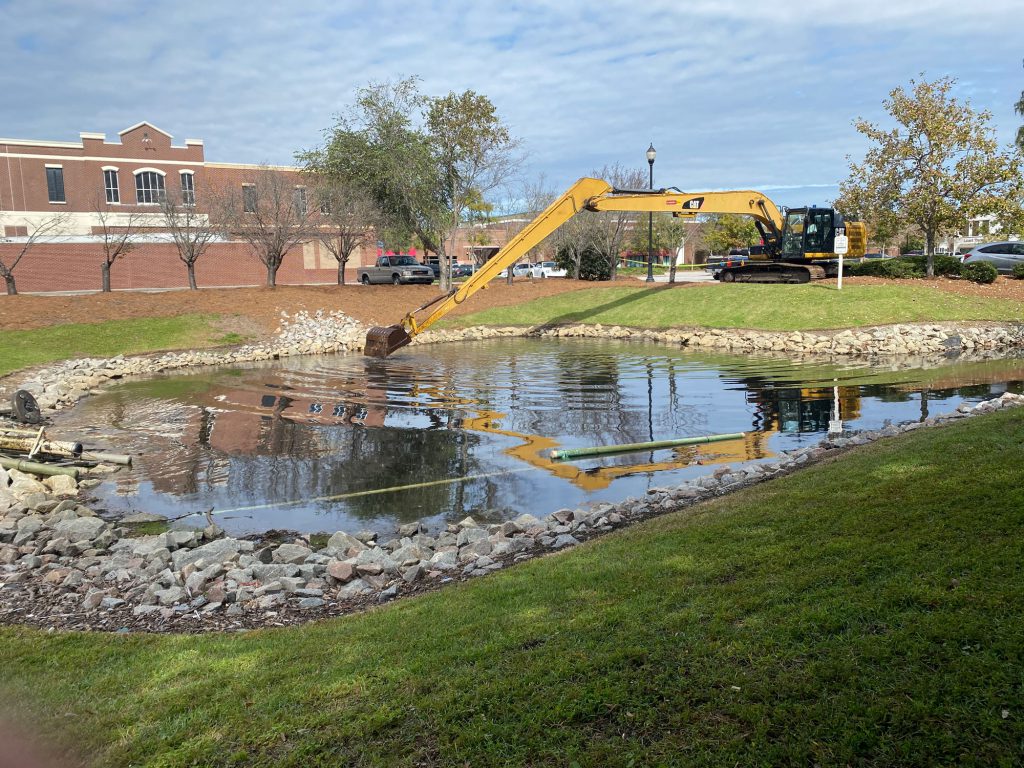
During mechanical dredging, a waterbody is completely drained to allow full visibility of the bottom. A long-reach excavator is used to scoop out excess materials, which are then removed from the site using semi-trucks and trailers.

hydraulic dredge - dredging - sediment removal - muck removal

Hydraulic Dredging

Hydraulic dredging does not require a waterbody to be fully drained. Instead, hydraulic dredges use a specialized tube to pump water and materials into a holding tank for filtration. The filtered water is then returned to the waterbody.

Though dredging is highly effective at resetting an aged waterbody, it is one of the largest expenses a community will ever face. Stakeholders should also be prepared to take swift and ongoing action to cultivate their new aquatic ecosystem once the project is complete. Without responsible management, they may see their water resource prematurely return to its prior condition.


Tags:
The Estoppel Fee Debate by Eric Glazer

The Estoppel Fee Debate by Eric Glazer

  • Posted: Jan 16, 2024
  • By:
  • Comments: Comments Off on The Estoppel Fee Debate by Eric Glazer

When a unit owner wants to sell their home, the buyer wants to make sure that the seller does not owe the association money. You see, if the buyer buys the property without making sure the condo, co-op or HOA isn’t owed any money, the new buyer will be stuck with the unpaid bill if there is one.  So, the new buyer wants to get what’s called an “estoppel certificate” from the association stating precisely what is owed to the association on that unit.   This will be paid at the time of closing and the buyer can now sleep well, knowing they are up to date with assessments owed to the association.

So the question is……..who gets paid to prepare this “estoppel letter” for the new buyer and how much does it cost?  Well, for condominiums, HOAs and co-ops, there is a current statute that addresses this.   Florida Statute 718.116, 719.108 and 720.30851 respectively.

The statutes state that the estoppel certificate must contain all of the following information and must be substantially in the following form:

1. Date of issuance:

2. Name(s) of the unit owner(s) as reflected in the books and records of the association:

3. Unit designation and address:

4. Parking or garage space number, as reflected in the books and records of the association:

5. Attorney’s name and contact information if the account is delinquent and has been turned over to an attorney for collection. No fee may be charged for this information.

6. Fee for the preparation and delivery of the estoppel certificate:

7. Name of the requestor:

8. Assessment information and other information:

ASSESSMENT INFORMATION:

a. The regular periodic assessment levied against the unit is $  per   (insert frequency of payment)  .

b. The regular periodic assessment is paid through   (insert date paid through)  .

c. The next installment of the regular periodic assessment is due   (insert due date)   in the amount of $ .

d. An itemized list of all assessments, special assessments, and other moneys owed on the date of issuance to the association by the unit owner for a specific unit is provided.

e. An itemized list of any additional assessments, special assessments, and other moneys that are scheduled to become due for each day after the date of issuance for the effective period of the estoppel certificate is provided. In calculating the amounts that are scheduled to become due, the association may assume that any delinquent amounts will remain delinquent during the effective period of the estoppel certificate.

OTHER INFORMATION:

f. Is there a capital contribution fee, resale fee, transfer fee, or other fee due?  (Yes)  (No). If yes, specify the type and the amount of the fee.

g. Is there any open violation of rule or regulation noticed to the unit owner in the association official records?  (Yes)  (No).

h. Do the rules and regulations of the association applicable to the unit require approval by the board of directors of the association for the transfer of the unit?  (Yes)  (No). If yes, has the board approved the transfer of the unit?  (Yes)  (No).

i. Is there a right of first refusal provided to the members or the association?  (Yes)  (No). If yes, have the members or the association exercised that right of first refusal?  (Yes)  (No).

j. Provide a list of, and contact information for, all other associations of which the unit is a member.

k. Provide contact information for all insurance maintained by the association.

l. Provide the signature of an officer or authorized agent of the association.

SO HOW MUCH CAN YOU CHARGE TO PREPARE AN ESTOPPEL LETTER?

An association or its authorized agent may charge a reasonable fee for the preparation and delivery of an estoppel certificate, which may not exceed $250, if, on the date the certificate is issued, no delinquent amounts are owed to the association for the applicable unit. If an estoppel certificate is requested on an expedited basis and delivered within 3 business days after the request, the association may charge an additional fee of $100. If a delinquent amount is owed to the association for the applicable unit, an additional fee for the estoppel certificate may not exceed $150.

So, as you can see, someone preparing an estoppel certificate can charge in some cases up to $500.00.  This fee is typically paid for by the seller of the unit or home.  Management companies and law firms both say ka-ching when they are asked to prepare an estoppel certificate.

Well, if that sounds unfair to you, it also sounds unfair to Florida Senator Jonathan Martin and Representative Persons Mulicka.  Each of them have now filed bills which would preclude associations from charging for estoppel letters whatsoever.  It has resulted in massive pushback from management companies and law firms alike, each of whom are the ones normally getting paid to prepare these estoppel certificates.

On the one hand, attorneys and management companies say that they deserve to get paid for preparing estoppel certificates because there are a lot of questions to answer and there is potential liability if they prepare it incorrectly. Moreover, they take the position that only the seller should pay for the estoppel certificate because only the seller is trying to sell their unit.  Why should that cost be put on every other owner in the community?

On the other hand, there is an argument that management companies are already paid to keep the ledgers of every owner.  It shouldn’t take more than a few minutes to let someone know what a unit owes.  Therefore, they shouldn’t receive an extra penny for preparing an estoppel certificate.

So which side is right?  I think there are good arguments on both sides and we can debate this forever.  You have to wonder though that if the fees that you’re allowed to charge were half of what they are now, would this ever have become a fight?  I don’t think so. I do think a compromise wouldn’t be bad here.

What do you guys think?

Written by Eric Glazer

A Road Map to Your Ideal Waterbody by SOLitude

A Road Map to Your Ideal Waterbody by SOLitude

  • Posted: Jan 16, 2024
  • By:
  • Comments: Comments Off on A Road Map to Your Ideal Waterbody by SOLitude

A Road Map to Your Ideal Waterbody

Navigating Your Lake Management Journey

As any lake owner or manager knows, maintaining a waterbody is hard work. At best, you may experience a few hiccups every now and then like small mats of algae or cloudiness. At worst, you may face toxic blooms of cyanobacteria, severe erosion issues, or flooding. Achieving the lake or pond of your dreams is not a linear process; it’s a journey. Whether you’re new to water management or well into your quest, it’s never too late to reevaluate your trajectory and make sure you’re taking the safest and most efficient route toward your waterbody goals.

Identify your goals and stakeholders

In order to achieve the goals you’ve set for your lake or pond, it’s important to visualize them. Maybe you desire a small backyard pond for swimming, fishing, and kayaking with friends and family. You may need a stormwater pond that efficiently collects rainwater while providing aesthetic beauty. Perhaps you oversee a large lake or drinking water reservoir that requires safe, clean water for the public. With the support of an experienced Aquatic Expert, HOA managers, property owners, municipal leadersgolf course superintendents, and other decision-makers can develop a detailed roadmap tailored to their unique needs and budget, as well as to the one-of-a-kind characteristics of their waterbodies.

testing-water-quality-in-lakes

Conduct lake water quality testing

One of the most important steps when navigating your journey is establishing baseline knowledge about your aquatic ecosystem. Professionals conduct visual surveys and advanced water quality testing to learn about the physical and chemical properties of an aquatic ecosystem. Parameters like dissolved oxygen (DO), nutrient levels, pH, and turbidity provide valuable context by allowing professionals to identify potential imbalances, predict future problems, and develop a timeline to implement short- and long-term management solutions.

Plan ahead to prolong your lake’s lifespan

In lake and pond management, every waterbody has a countdown. Over time, sediment, debris, animal waste, and other organic materials accumulate at the bottom of all lakes and ponds. As an ecosystem becomes more shallow, it loses its capacity to hold water, which can increase the risk of flooding during storms and severely damage shoreline areas. Eventually, dredging services will be needed to physically remove these materials and restore the waterbody to its original depth and volume. Though this is a natural occurrence, it can be expedited by human activities such as construction and urban development, agriculture, and recreation. Luckily, by planning ahead, stakeholders can cruise past these dead-ends, ensuring a smoother journey.

Proactive management helps you stay ahead of water quality issues

If dredging is a dead-end street on the roadmap towards the waterbody of your dreams, proactive management solutions are shortcuts. By implementing preventive measures and sustainable practices, you can sidestep the need for extensive restoration efforts, as well as smaller roadblocks like nuisance weeds and algae. Shoreline managementnutrient mitigation, biological bacteria, fountains and aeration, and ongoing water quality monitoring can help you cultivate a healthy, beautiful, functional waterbody – and enjoy it for as long as possible.

drone-technology-3

Elevate your pond management plan with new technologies

Furthermore, advanced technologies and solutions like professional dronesbathymetric mapping, and electrofishing can serve as navigational tools on your management journey. These technologies help stakeholders better understand depth, underwater features, and even fish populations, allowing them to use their time, attention, and resources more efficiently.

Achieve your ideal waterbody with help from experts

Lake and pond management is never smooth sailing. Water is in a constant state of change, impacted by weather conditions, wildlife, land use, and countless other factors. Navigating these complexities requires a proactive approach that incorporates as much knowledge and innovation as possible. With an experienced Aquatic Expert as your guide, you can enjoy each milestone on your journey while keeping your goals firmly on the horizon.