Become our Member : JOIN SFPMA TODAY   LogIn / Register: LOGIN/REGISTER

SFPMA Industry Articles | news, legal updates, events & education! 

Find Blog Articles for Florida’s Condo, HOA and the Management Industry. 

New Product: SuperHanger(TM) patented PVC Pipe Hangers for Garage Piping

New Product: SuperHanger(TM) patented PVC Pipe Hangers for Garage Piping

  • Posted: Mar 01, 2026
  • By:
  • Comments: Comments Off on New Product: SuperHanger(TM) patented PVC Pipe Hangers for Garage Piping

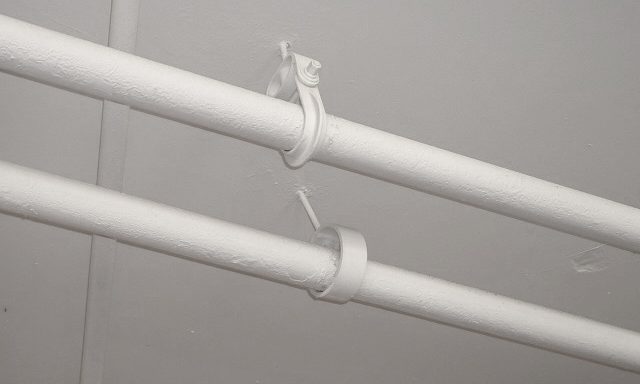
Lee Composites, Inc. has been supplying thousands of SuperHanger(TM) patented PVC Pipe Hanger Systems t0 Condominiums throughout Florida for over 27yrs now. It is by far the most popular pipe hanger system on the market, replacing rusted steel pipe hangers. Contact us now before problems occur.


THE PERFECT SOLUTION FOR SUPPORTING YOUR PLUMBING

Steel Rusts, PVC and Fiberglass Don’t. “There’s no other pipe hanger like it!” Lee Composites, Inc. introduces the PVC Super Hanger™ pipe hanger system. The Super Hanger™ pipe hanger is comprised of all nonmetallic, corrosion resistant materials and maintenance free properties.

The patented Super Hanger™ pipe hanger design allows for ease of installation on both new and used pipe, structural strength for pipe loads and sizes to support various pipe diameters. They come in multiple sizes and are ready for immediate availability.

Learn more about Lee Composites

Regards, Bob Lee- President
Lee Composites, Inc.
PO Box 130363
The Woodlands, TX 77393
281-782-2477


Budget preparation time is upon us! We strongly encourage, that every year around this time, association managers and Boards review and ensure that your capital reserve study is accurate and up-to-date.

Budget preparation time is upon us! We strongly encourage, that every year around this time, association managers and Boards review and ensure that your capital reserve study is accurate and up-to-date.

We strongly encourage, that every year around this time, association managers and Boards review and ensure that your capital reserve study is accurate and up-to-date.

This is one of the most important decisions a board will make for the future of their association. It is an easy and effective way to ensure your community’s capital replacement items are being properly funded with minimal impact on the individual homeowners. 
With the recent update to the Capital Reserve Study Standards, the impact of inflation and supply chain issues over the past few years (in some cases resulting in costs as much as 50% higher for some typical components), it is even more critical to have an updated reserve study to ensure the financial health of your community.
To stay on track for a healthy financial future, it is recommended that your Reserve Study be updated every three (3) years.
The Falcon Group Capital Reserves team consists of 6 CAI Certified Reserve Specialists (RS) as well as a Professional Reserve Analyst (PRA) designation awarded by the Association of Professional Analysts.

Contact our Reserve Specialists today for a new or updated reserve study!


Capital Reserve Study ( what is involved )

The primary purpose of a Reserve Study is to offer recommendations as to the amount of money a community, building or other organization should set aside on a yearly basis for the future replacement or major refurbishment of their commonly owned elements.
The Falcon Group believes that a properly funded capital reserve program is the right formula for keeping a community’s physical assets in prime condition while providing some key benefits to residents. We strongly recommend updating your Capital Reserve Study Every 3 years.
A regularly updated Reserve Study can provide the following benefits:

  • Maintaining and/or increasing property values by maintaining exterior appearances through timely repair or replacement of common elements.
  • Facilitating project efficiency and cost effectiveness, as well as, minimizing disruptions and unit owner inconvenience by allowing the association to secure contractors to complete an entire project during a finite and desired schedule.
  • Reducing the likelihood of member dissatisfaction associated with the passage of large or sudden assessments.

All of our Capital Reserve Studies are prepared under the direction of a Reserve Specialist (RS) and/or a Professional Reserve Analyst (PRA).
The Falcon Group has prepared over 3,500 Capital Reserve Studies. Each Capital Reserve Study we perform is a customized analysis, prepared in coordination with our Reserve Specialist (RS) and our client, and is based on a “real-world” methodology for each item in regards to:

  • Inspection

  • Evaluation for repair or replacement

  • Evaluation for anticipated “Useful Life”

  • Integrated into a repair or replacement plan and budget

Contact Us:  The Falcon Group

Tampa Bay
1211 1st Avenue, N.
Suite 106
St. Petersburg, FL 33705
P (813) 438-3568
West Palm Beach
5651 Corporate Way
Suite 4
West Palm Beach, FL 33407
P (561) 290-0504
Miami
15405 NW 7th Avenue
Miami, FL 33169
P (305) 663-1970


Tags: , , ,
Claim Your Brand-New Fountain or Aerator by SOLitude

Claim Your Brand-New Fountain or Aerator by SOLitude

Only 3 days Left to Enjoy Fountain & Aerator Savings

Want to boost your pond’s aesthetics and improve oxygen levels? Take advantage of our offer before it expires!

Get 10% OFF a new fountain, surface aerator, submersed aerator, or de-icer*! This discount applies to the new system, labor, and installation.

These savings won’t last long. Claim your new system by 2.27.26.


Loans and Borrowing Money – What Community Associations Need to Know

Loans and Borrowing Money – What Community Associations Need to Know

Loans and Borrowing Money – What Community Associations Need to Know

by Becker

There is a lot of confusion when it comes to obtaining a loan as a community association. This article is intended to help clear the confusion to obtain a loan.

Q: The board of directors of my condominium association has stated they are considering major restoration projects soon and have stated that they are considering a loan from a bank to fund part the projects. While nothing has been decided, the board has mentioned that considering a loan to pay for the work. Does the board have to get approval from the members before taking out a loan? (W.G., via e-mail)

A: As with many things in community associations, it depends. Chapter 718 of the Florida Statutes, the Florida Condominium Act, does not specifically require membership approval to authorize borrowing, not does it generally grant that authority to the board. The only instance where borrowing is addressed is in Section 718.1265, dealing with the emergency powers of an association. That part of the statute states a membership vote is not required to authorize the association to borrow money when dealing with certain types of catastrophic events.

Most condominium associations are also not for profit corporations charted under Chapter 617 of the Florida Statutes. Section 617.0302(7) of that law authorizes corporations to borrow money and many condominium documents vest all lawful authority in the board, except where the documents specifically require a vote of the owners. Accordingly, whether your association must have a membership vote to authorize borrowing money would be controlled your condominium documents. In my experience, there is no general rule, some documents require approval and some documents do not.

In addition to the question of whether the board has the authority to borrow money, with or without a membership vote, it would also be necessary to determine whether the association has the authority to levy special assessments without a membership vote. While the board may have the authority to borrow money without membership approval, the board may have to have membership approval to levy a special assessment. Most banks will require a special assessment as collateral for the loan.

When borrowing money for construction projects, there are a number of other important issues that must be reviewed. These include verifying that the money will be used for proper “common expenses,” most often verifying that the work planned is an association (and not unit owner) responsibility under the documents. It also needs to be verified that if any “material alterations” are involved, owner approval is obtained as may be necessary.

There are several technical legal issues that must be addressed with association loans. These include what kind of collateral the lender is requiring and whether an owner vote may be required for that, such as pledging reserves. Other issues involve the legalities and procedures to be considered if the association wants to give the owners the option to pay up front and not share in the interest expense of a loan.

It is important to involve the association’s attorney early in the process to anticipate these issues and assist with closing the loan and attend to other requirements, such as an “opinion of counsel” required by some lenders as a loan condition.

Q: Our association’s United States flag was badly damaged during Hurricane Ian. What is the proper etiquette for disposing of the flag in a respectful manner? (F.S., via e-mail)

A: Sections 8(j)-(k), Title 4 of the United States Flag Code states that the United States “Old Glory” flag “…represents a living country and is itself considered a living thing.” When it is of a condition no longer appropriate for display, it should be destroyed in a dignified way, preferably by burning.

Many county government offices and Veterans of Foreign Wars (“VFW”) posts, as well as police stations and some national retailer locations, collect tattered, torn, damaged or faded United States flags. Once collected, various community partners such as American Legion posts, VFW posts, the Girl Scouts, and the Boy Scouts hold flag retirement ceremonies consistent with The American Legion’s resolution passed in 1937.

Joseph E. Adams is a Board Certified Specialist in Condominium and Planned Development Law, and an Office Managing Shareholder with Becker & Poliakoff. Please send your community association legal questions to jadams@beckerlawyers.com. Past editions of the Q&A may be viewed at floridacondohoalawblog.com.


SFPMA’s Condo and HOA Guide for Budget Planning and RFP’s

SFPMA’s Condo and HOA Guide for Budget Planning and RFP’s

  • Posted: Feb 17, 2026
  • By:
  • Comments: Comments Off on SFPMA’s Condo and HOA Guide for Budget Planning and RFP’s

Guide for Budget Planning

Board membership can be a lot of fun socializing with neighbors and contributing ideas on how to improve the communities. But it also involves serious work with budgets, required by Florida Statutes (FS) and, generally, by the association’s by-laws for many the fun is over when its time to prepare the annual budget.

Budgets are typically approved on an annual basis during the months of October or November, but many smart boards start the budgeting process late in the summer months.

Some associations’ fiscal year does run with the annual calendar, so they should prepare their budget 4-5 months before the start of a new fiscal year. Regardless of when your fiscal year begins and ends, board members should begin the budget process by identifying operational needs and estimating expenses for the coming year.


“Who Is Responsible for Preparing the Budget?
The requirements for the preparation of the annual budget for condominium associations are set forth in Section 718.112 (2) (f) FS; and for homeowners’ associations, in Section 720.303 (6) FS.
Generally, the community association manager (CAM) is charged with the responsibility for preparing the preliminary draft of the budget and presenting it to the budget or finance committee for its review and approval. The budget committee, as appointed by the Board of Directors, and, ultimately, the Board itself, is responsible for the adoption of the association’s annual budget.”


A budget also helps to:

* Create proper reserve funds. Measure performance throughout the year.

* Determine the amount of fees to be assessed to each unit owner for the upcoming fiscal year.

Will homeowners be paying a little more, a little less, or about the same as last year? A well thought out budget supplies the answer.


-Association Budgeting Rules in Florida

Whether you serve on a condominium association or an HOA, Florida Statutes have a slew of legal requirements that affect the way budgets are presented and what they must contain. Longtime board members may be familiar with the state’s budgeting requirements under Statutes 718 and 720. If you’re a new board member, it helps to know what’s involved before diving in. Here’s a brief overview.

* All associations, whether a condominium or HOA, are required to prepare an annual budget.

* The budget must show the estimated revenues and expenses for the budget year.

* An estimated deficit or surplus for the end of the current year must be reported.


“Working Capital
As a generally accepted guideline, a community association should maintain its operating fund balance (“working capital”) at a minimum of two months’ maintenance assessments. If this guideline is not met, the Board should consider including a line item in the budget to increase working capital. However, if the working capital shortfall is significant, or if there is an accumulated deficit, a special assessment may be the more conservative alternative. The amount of the budget line item or special assessment should be determined after considering the current year’s expected results of operations.
If the current working capital is sufficient and the current year’s operations are projected to have an excess of revenues over expenses (“operating surplus”), the Board can take advantage of this situation by including line items for special projects or improvements in next year’s budget. Alternatively, that surplus can be applied as a credit to the following year’s assessments to the owners. There are generally income tax considerations in applying this credit and therefore, the Board should consult with the Association’s income tax advisor.”


-Preparing a Budget for your Condominium or HOA

The budgeting process really involves preparing two components: an operating and a reserve schedule. The objective is to determine what homeowners will be charged for maintaining the common areas.

* Operating budget ensures that all operational costs and expenses are identified. They assist in approximating expenses for the upcoming fiscal year.

* Reserve schedule determines the amounts needed to be set aside for capital expenditures and deferred maintenance.

Florida Statute regulations may be complex, but that doesn’t mean preparing a budget has to be complicated or overwhelming. In fact, once you understand the basics of calculating expenses, the process becomes clear-cut.

-Budgeting Tips & Considerations

Unlike a personal household budget where you figure out what you can spend based on your income, a condominium or HOA budget must begin by estimating costs first, which will then determine the amount an owner will be charged.

-Operating Component

1-Compile the current year’s year-to-date expenses. They will serve as the basis for the new budget year.

2-Analyze these expenses carefully and factor out any that are non- recurring, such as plumbing or storm-related emergencies.

3-Review your current contracts for escalation clauses and/or scheduled increases.

4-Request estimated costs for non-contractual expenses like general repairs and maintenance, utilities, and certain administrative expenses.

“Reserve Schedule

Reserve funds are used for two expenses: capital expenditures for common area components, such as roof replacement, pavement resurfacing, and elevator upgrades; and deferred maintenance that generally refers to interior and exterior painting. The funds for these big-ticket items are generally collected over years, not just in the year they’re expected to occur.

The condominium or HOA board may also have certain projects it wants to do that are not covered by reserves. This can include things like pool re-tiling, termite treatments, landscape improvements, and costs to maintain tennis, racquetball, or pickleball courts.

The projection of these fees must be as accurate as possible. Remember, condominiums and HOAs are not-for-profits so it’s important that they do not have a surplus; of course, you don’t want a deficit, either.

Budgeting is a big job, but if you break it down in these easy steps should take the stress away. Preparing an accurate budget keeps your condominium or HOA thriving financially now and in the years to come.”


“Reserves
Chapters 718 and 720 of the Florida Statutes both require the funding of reserves in the association’s annual budget (with specific waiver provisions for condominium and homeowners’ associations). The use of reserve funds is restricted for capital expenditures and deferred maintenance. A capital expenditure is the use of funds for the replacement or major repair of a common area component. Examples of capital expenditures are roof replacement, pavement resurfacing and elevator upgrades. The term “deferred maintenance” generally refers to interior and exterior painting. Reserves are included in the association’s budget so that funds are available for the eventual replacement of common area components and deferred maintenance. The alternative to funding reserves is the use of available operating funds or, more likely, the adoption of a special assessment. Sound financial management dictates that, concurrent with the adoption of a special assessment, a detailed budget should be established. Include a provision for bad debts commensurate with that of maintenance assessments.


-Financial stability including accounting, collections, and accounts payable services are the core to a Condo and homeowners association’s strength and future success.

Boards and their Property Management company work hand in hand providing a checks and balances system. where payables for buildings services are entered by the community manager, processed by the Payables/Accounting dept, reviewed by senior management. These are put in place for protections for all owners of the community.

Having a Management Company to aid Board Members is important. unlike self managed community associations, no one person or Board member has total control with the financial responsibility for

*Online payables processing
*Electronic signatures
*Accounts receivable collection process
*Effective internal controls
*Financial statement preparation
*Annual Budget preparation

This way the Management Company and Boards can work together on everything from The Communities:


“Here are some other guidelines to consider when preparing the Association’s budget:

*For contractual expenses, read the related contracts to identify any increases that are anticipated in the following year.

*Contact your insurance agent as early as possible to determine insurance premiums. If financing insurance, try to obtain favorable rates.

*Request estimated costs for non-contractual expenses such as general repairs and maintenance, certain administrative expenses, trash removal, and utilities.

*Include a reasonable amount for bad debt expense.

*Avoid a “Contingency” line item if possible.

*Look at revenue trends for fee-for-service charges to unit owners such as work orders, laundry, parking, etc. Be sure to consider possible increases.

*If loan repayments will be required, include the entire payment amount (i.e., principal and interest) in the budget.


There are other concepts to keep in mind in preparing the annual budget: Be realistic. It is generally difficult to keep maintenance assessments at last year’s levels. The role of an association’s treasurer or president is to run the association’s business. It is not to win a popularity contest. That role should be treated with as much, if not more, respect than the association’s officers’ own businesses.

The budgeting process doesn’t end with the adoption of the annual budget. Careful and routine monitoring of budget-to-actual results of operations is a vital part of the effective management of a community association.


Defination of budget Terms:

-Balance Sheet

One of the reports included in the Financial Reports presented to the Board of Directors is the Balance Sheet. The Balance Sheet is a statement of the book value of all of the assets and liabilities (including equity) of the association. It provides a “snapshot” of the association’s financial standing as of the end of that particular month.

-Collection Status Report

By far one of the most popular and most important reports is the aging report or the Collection Status Report. This report provides the Board with a listing of the owners that are past due. There are many variations of this report, however, the sample shown is the most concise. This report provides a glimpse of the names of those owners that are past due, the total amount past due, and at what stage in the collection process the account is in.

-Check Register and/or Accounting Software

A Check Register its a monthly report. This report is a list of all of the checks written by the association during a given period, typically each month. Among other information, it lists, the check number, the vendor’s name, the invoice number, brief description of the payment, and the check mount.

-Profit & Loss Report

The second page of the Financial Report summarizes the revenues, costs and expenses incurred during a specific period of time. The Income and Expense Report follows a general format that begins with an entry for Income and subtracts from Income the costs of running thebusiness, including operating expenses, insurance, contracted vendors, and repairs. The bottom line, literally and figuratively, is net income or loss.

Because we know Associations depend on their budget, our P&L reflects the Actual Expenses vs. the Budget Amount. This comparison is done for the current month as well as year-to-date. You are also provided with the variance (if any) between the actual expense and the budgeted amount.

-Monthly Ledger

The Monthly General Ledger is the main accounting record of a business which uses double-entry bookkeeping and is a summary of all of the transactions that occur in the company. It is built up by posting transactions recorded in the general journal. The Balance Sheet and the Income and Expense Report are both derived from the general ledger. The general ledger is where posting to the accounts occurs. Posting is the process of recording amounts as credits and debits in the pages of the general ledger. Because each bookkeeping entry debits one account and credits another account in an equal amount, the double-entry bookkeeping system will ensure that the general ledger will always be in balance.


In the end Board and Management Companies should upload these reports to the Secure Association website where Owners can view the financial records each year. This avoids Questioning and sometimes fighting by owners in the association regarding fees being paid with the new budgets.


Tags: , ,
Claim Your Discounted Fountain or Aerator! from Solitude Lake Management

Claim Your Discounted Fountain or Aerator! from Solitude Lake Management

When are Budgets due?

When are Budgets due?

  • Posted: Nov 12, 2025
  • By:
  • Comments: Comments Off on When are Budgets due?

Within 90 days after the end of the fiscal year, or annually on such date provided in the bylaws, the association must have prepared a financial report on the financial activities of the preceding fiscal year.

Within 21 days after the financial report is completed, but no later than 120 days after the end of the fiscal year, the board must provide each member with a copy of the financial report or, at a minimum, provide written notice that a copy of the financial report is available upon request, at no charge to the members.


Some things to consider:

  • Don’t delay – Start the process as early as possible so that you don’t miss items that could significantly impact your budget. Now is the perfect time to start preparations if your budget starts January 1.
  • It is a monotonous task, but a vital one. In this day and age, assessments will more than likely have to increase due to increases in insurance, utilities, and that never ending “wish list.” Have a budget plan. Look at the goals for the community. What does the Board want to achieve?
  • Review past budgets and the final year performance. If you overspent more years than not, obviously you need to make some changes.
  • Pet projects don’t always make the cut. Be realistic about what can be achieved.
  • Go over all contracts. You should have a spreadsheet of all contracts with expiration dates, whether they are auto renewed unless you send a cancellation notice, what is the cancellation timeline, does auto-renew have an increase and how much.
  • Ensure you are funding enough for your reserves.
  • Get a Reserve Study, or at least an updated Reserve Study to ensure you have accurate numbers.
  • Have a well-funded maintenance program. The disasters of the recent past is an indication of just how important it is to keep up even the most mundane maintenance. Proper maintenance may help delay some of the replacement items in your reserve study.


The financial report must consist of a complete set of financial statements prepared in accordance with generally accepted accounting principles. The level of financial reporting that must be prepared by the board is based on the total annual revenue (including reserves) of the association, as follows:


1. An association with total annual revenues of $150,000 or more, but less than $300,000, shall prepare compiled financial statements.

2. An association with total annual revenues of at least $300,000, but less than $500,000, shall prepare reviewed financial statements.

3. An association with total revenues of $500,000 or more shall prepare audited financial statements.

4. An association with total annual revenues of less than $150,000 shall prepare a report of cash receipts and expenditures.


Interestingly, if the board desires to raise the level of financial reporting, it may be increased without membership approval by board action alone, unless the governing documents provide otherwise. In addition, if the board is not inclined to approve a heightened level of reporting, but the members want to do so, then upon twenty (20%) percent of the parcel owners petitioning the board to increase the level of financial reporting from that required by Statute for that fiscal year, the board must notice and hold a membership meeting within thirty (30) days of receipt of the petition. To raise the level of financial reporting, a majority of members present at such meeting must cast their vote in favor of doing so.


However, lowering the reporting threshold is a different matter entirely because only the members can make that decision. To accomplish this, a majority of members present at a properly noticed membership meeting must cast their vote in favor of lowering the level of financial reporting. The meeting must take place prior to the end of the fiscal year in question.


Tags: ,
Tips for Budgeting in HOAS and Condominium Associations. by Campbell Property Management

Tips for Budgeting in HOAS and Condominium Associations. by Campbell Property Management

Tips for Budgeting in HOAS and Condominium Associations

by Campbell Property Management 

Creating a budget is one of the primary and most important functions that any community association board does during its tenure. The budget will serve as the guideline to determine the dollar amount owners are charged to live in their communities. There are differing obligations to consider when budgeting for a Homeowners Association (HOA) versus a condominium association. Today, we will discuss the differences and offer tips when creating your own community association budget.

Let’s start with HOAs.

HOA budgets are often a bit simpler than those for condominium associations. That is because HOA budgets normally do not require reserves. Reserves refer to funds set aside for future capital expenses and major repairs or replacements of common property or assets within the community. Unless members of the association have voted to create reserve accounts, or the original developer of the property put reserves in the HOA’s Declaration of Covenants, Conditions, and Restrictions (CC&R) – commonly referred to as simply the “declaration” – reserves are not mandatory for HOAs. However, if the HOA votes to put money away for future capital expenses, or defer line items (like maintenance), they have that option. Unlike condominium associations, HOAs are not limited or hamstrung by Florida’s Reserve Statutes, which require specific line items in the condo’s budget. For HOAs, the reserves are more like a savings account to use at the board’s discretion.

One of the misconceptions of the budgeting process is going into it with the intention of trying to hit a target assessment mark. Members may get in the mindset of trying to raise or lower assessments or reach a specific number, like deciding we want $400 a month assessments, then trying to figure out how to get there. Whether for HOAS or condominium associations, that’s really not how budgets are supposed to work.

Budgets are estimates of expected expenses for the upcoming year that are created in order to derive a necessary revenue stream. The idea is to put all of your expected expenses into a basket, itemize them through your budget, the sum of which is the necessary amount of revenue you have to generate. When you divide that amount by unit owners, that is what produces the amount of the community’s assessments, which are the monthly fees associated with living within that community.

Of course, budgets are guidelines – you’re not restricted or expected to spend every dollar on each line item. A budget is not a cap for how much you are able to spend on those items and it’s also not a restriction to only spend those specific items listed in the budget. Again, it’s an estimate and guideline so an association can collect the appropriate amount of money from its residents.

Ultimately, things may happen that were not taken into account at the time of the budgeting process. Sometimes more money is needed and other times less money is spent than what was budgeted. Both situations are certainly within the parameters of what is acceptable because this is an estimation and a guideline for best practices relative to budgets; it is not a hard and steadfast rule.

Regarding condominium associations

Florida’s Condominium and Cooperative Acts law requires associations to fund for reserves, which is the default that has existed for decades. Through next year, the board will retain the ability to call for a vote to waive or partially fund reserves. However, as of January 1, 2025, all structural integrity reserve items must be fully funded and can no longer be waived or partially funded (the well-intended purpose of this legislation is to prevent another Surfside tragedy).

With these tips in mind, we hope you have a good budget season. If ever you have any questions or concerns, please feel free to reach out to one of Sachs Sax Caplan’s experienced community association attorneys at 561-994-4499. We look forward to working with you.


Tags:
How To Seal Pavers For a High Gloss Wet Look | Brick, Driveway & Concrete Pavers

How To Seal Pavers For a High Gloss Wet Look | Brick, Driveway & Concrete Pavers

  • Posted: Oct 22, 2025
  • By:
  • Comments: Comments Off on How To Seal Pavers For a High Gloss Wet Look | Brick, Driveway & Concrete Pavers

A bit of gloss on your driveway gives it a beautiful, just-finished look that will last for a long time if done correctly. Click the link for our tips on how to seal brick and concrete driveways, and be sure to contact us today for all of your indoor or outdoor flooring needs!

Looking for a wet look, gloss appearance that brings out the colors in your pavers?  Do you want something that holds up to sun and weathering for 2 to 3 years – or more?
You’re in the right place.  To get the results above, it’s important to understand how to seal pavers… and why.  We’ve got your answers below.
 

Details below. Click to go there now.


It’s Easier Than You Think To Seal Your Pavers

 
After 18 years of dealing with the question of how to seal pavers the right way, my best recommendations are as follows:

  1. Spray apply rather than roller apply.
  2. Use water based sealers rather than solvent based.
  3. Use urethane sealers rather than acrylic sealers.

Let’s expand on these 3 guidelines a little further. (And here’s a quick video to show you what we mean.)


Spray Application vs Roller to Seal Pavers

While roller applying a sealer is easier than spraying, roller application does not work as well on pavers compared to something like concrete.
The biggest drawback when rolling sealer on brick pavers is that the roller can pick up the joint sand and roll it over the top of the brick paver surface.  This is especially true if the joints are wide. Furthermore, the amount of sealer that soaks into the sand joints is difficult to control when rolling.
 

How Much Sealer Do I Apply

Apply a flood coat to the paver surface including the joints. This method will apply the sealer very generously while allowing the sealer to soak into the sand joints as well.
As long as you apply the paver sealer on a windless day, the coverage can be generous and effortless.
If you really can’t get a pump up garden sprayer, opt for a sponge-type roller to apply the sealer. A nap roller is more likely to grab and trap your joint sand.


Water Based Sealer vs Solvent Based

Solvent based sealers are bad for the environment! Manufacturers are gradually moving away from these type products.
Regardless, solvent based sealers are more difficult to spray apply than water-based sealers, and they don’t really seal the joint sand, as well as the water based products.
The solvent based sealer tends to seal only the top surface of the sand compared to the water based, which soak down deeper into the sand.
 
From our lead chemist:
” While solvent-based sealers can produce a nice high gloss surface, they can also make the surface slippery if applied too thick
Also the gloss finish, typically burns off after 6 months of exposure to the sun. “
 
 
Water based acrylic sealers eliminate the issues with using solvents and are better at stabilizing joint sand to prevent sand loss.
However, it is important to use a high solids acrylic sealer or a urethane modified acrylic sealer, otherwise they fade and lose the glossy appearance after 6 months to a year.

Polyurethane vs Acrylic

Water based polyurethanes are a tougher sealer than acrylics and are more UV resistant and chemically resistant.
They don’t yellow, perform better outside and they are more resistant to chemicals oil, brake fluid, and chlorine.
The best water based polyurethanes are 2-part products (Part A and B requiring mixing). These 2-part polyurethanes when mixed together chemically cross link to form a paver sealer that is highly durable and long lasting when exposed to sunlight and/or freeze thaw.
A big plus is that they are much less sensitive to moisture. You can apply a 2-part polyurethane water based sealer as soon as you finish pressure washing. We call it “same day” sealing.
 
 
” The down side of using 2 part polyurethanes to seal pavers is that they are more expensive.  And once you have mixed them, you have to use them.  There is no shelf life or coming back the next day to seal pavers, with left over mixed product. 
Tags: