Become our Member : JOIN SFPMA TODAY   LogIn / Register: LOGIN/REGISTER

SFPMA Industry Articles | news, legal updates, events & education! 

Find Blog Articles for Florida’s Condo, HOA and the Management Industry. 

Guide to HOA Financial Statements

Guide to HOA Financial Statements

  • Posted: Oct 28, 2022
  • By:
  • Comments: Comments Off on Guide to HOA Financial Statements

HOA Financial Statements

Managing the finances of a community association is one of the most difficult, and most important, responsibilities of an HOA board of directors. Preparing detailed HOA Financial Statements on a regular basis serves a multitude of purposes from providing insight for financial planning, promoting transparency between the board and residents, as well as being a requirement by law in some instances. The frequency of preparation may vary depending on state laws, community bylaws, and the size of the association.

If you are having trouble preparing community financial statements, the professionals at CSM are standing by to answer all your questions. We have years of experience working with thousands of residents across the United States.


What is an HOA Financial Statement?

Simply put, an HOA Financial Statement is an official record that details all the financial activities of the community association. Specific details that must be included depends on state regulations and community bylaws, but there are some basic details that should be included regardless of size or location:

The most common mistake that people make when preparing HOA financial statements is not adding enough detail. Every detail that can be added, no matter how small, can provide a more thorough insight and lead to better decision making. When in doubt, include it.

It should also be put into an easy to read format. These documents will be available to everyone in the community, most of which do not have advanced accounting degrees. For an HOA financial statement to be effective, it needs to be prepared so that anyone can understand the content. Making it too complicated alienates people and hinders community relations.


How Often Do Financial Statements Need to be Prepared?

There is no standard frequency that HOA financial statements must be prepared. It will depend on state regulations, community goals, and the size of the community. Of course, the more frequently statements can be prepared, the more helpful they will be for the board of directors. Smaller HOAs with simpler budgets can prepare monthly without much problem. Larger associations with more complicated budgets may opt to prepare statements quarterly or annually.

No matter what decision is made regarding frequency, it must be maintained. Straying from the regular schedule only causes issues between the board members and homeowners. It leads to a feeling of distrust. When dealing with financial information, it is best to be open and honest in as much detail as is appropriate.

For smaller, self-managed associations, if there is trouble getting financial statements completed on time, it is relatively inexpensive to hire an accountant as needed to prepare balance sheets. This ensures that all the information will be completed in a timely manner without taking time out of community volunteer’s busy schedules. It also means that the statements have been professionally checked and relieves some of that stress from the board members as well.

There are also a multitude of services available from CSM to help homeowner’s associations get organized and prepare their own financial statements. With the professional support of an experienced team along with state-of-the-art technology, even the most inexperienced association members will be able to navigate the complicated waters that is HOA financial management with ease.


What is a Financial Statement Used For?

The obvious answer is that detailed HOA financial statements can be used by the community association board of directors to adjust budgets, dues, and allocate money for maintenance and projects. The more detailed the statement, the more effective the HOA.

It is a requirement for any sort of financial planning. For starters, if records are kept consistently, association directors can look back on previous financial years to identify patterns that could affect the current budget and adjust accordingly. It is also imperative to keep track of money owed. If detailed records are not kept, it can be near-impossible to keep track of delinquent dues or know how much money is available to budget for community maintenance and new projects.

In some states, it is a legal requirement for HOAs to maintain and submit regular financial statements. Even if it is not required in your state, it is a good idea to keep detailed records anyways as they will be extremely beneficial for all other aspects of homeowner’s association management.

Most importantly, having detailed financial statements readily available to all HOA members can promote transparency between the board and the community. If the homeowners can see what their money is going towards, they will be more agreeable and open with the board of directors. It promotes teamwork throughout the community.


Where Should the HOA Financial Statements Go?

As with most things regarding HOA financial statements, it depends on state laws and community bylaws. Generally, there are three places that they need to be turned in:

  1. The HOA Board of Directors – the board of directors should receive a full, unedited report. They will need all available financial details in order to make informed decisions and plans regarding community maintenance and future projects.
  2. Community Members – to foster an open and transparent relationship, homeowners should also receive copies of HOA financial statements. These statements, however, should be altered to exclude sensitive information such as delinquent accounts. There is a difference between being sensitive and being secretive. If it will not cause an issue between community members, it should be included in the documents sent to community members. All HOA financial statements should be available upon request.
  3. State Department – if a homeowner’s association is organized as non-profit, an annual report must be filed with the Secretary of State. Failure to do so could result in losing their “Good Standing” status. This may not be applicable to all HOAs.

The more accessible financial statements are, the better. Some community associations even opt to put their financial information on their website to allow homeowners to view it at any time. Of course, not all information needs to be publicly accessible, but everything that can be included should be included. Transparent financial processes help to promote teamwork and positive community relations between homeowners and association board members.


Who Should Prepare Financial Statements?

This answer depends on the size of the community. Smaller, self-managed associations may have an elected treasurer, financial officer, or president that is responsible for compiling financial documents. In such cases, it is a good idea to use a professional accountant to ensure that HOA financial statements are prepared correctly before releasing them to board and community members. Remember, just because someone was elected treasurer, does not necessarily mean they have accounting experience. It is always best to hire a professional. Large homeowner’s associations have more complex budgets and will usually have a management company, such as CSM, that handles all financial data.

If statements are self-prepared by an elected community member, make sure that there is a backup of all financial records. In the unfortunate event that something happens and the preparer is no longer able to maintain their responsibilities, it can be difficult for the next person to learn their accounting methods or sometimes even gain access to the records.

Whether an HOA is made up of ten units or ten thousand units, it could be beneficial to hire a management company to ensure that everything is being run as efficiently and effectively as possible. When looking into property management companies, it is important to look for a company with a strong financial background. If the finances are not well kept, the entire community association becomes ineffective. Hiring a company such as CSM to provide financial management assistance not only makes life easier for the board of directors but can also give community members peace of mind knowing that all finances are being managed accurately and efficiently.


The Importance of HOA Financial Statements

To make a great plan, it is important to have all the information possible. Reliable, consistent, and transparent financial statements not only help the HOA board of directors make well-informed decisions but also support community health by allowing all community residents and stakeholders to be a part of the team. Keeping members in the dark only promotes mistrust and working with inadequate or no financial information can lead to dwindling reserves for community upkeep and new projects.

Creating an effective HOA is as simple as choosing an accounting process that works for your team, keeping detailed records, and communicating openly and freely with the community about all financial information.


Tags: , ,
We are Valcourt Building Services, the premier provider for waterproofing, window cleaning, and restoration services.

We are Valcourt Building Services, the premier provider for waterproofing, window cleaning, and restoration services.

  • Posted: Oct 28, 2022
  • By:
  • Comments: Comments Off on We are Valcourt Building Services, the premier provider for waterproofing, window cleaning, and restoration services.

Valcourt Building Services

863-244-3495

We are Valcourt Building Services, the premier provider for waterproofing, window cleaning, and restoration services. With over 30 years of experience, we’ve performed tens of thousands of repairs and maintenance on the complete building envelope. So no matter what your building requires, we have the knowledge and expertise for all of your exterior maintenance needs.

Founded in 1986, we have grown from a single-operating company serving the Washington, D.C. area into one of the largest exterior maintenance companies in the nation. We maintain offices in Virginia, Maryland, New Jersey, Georgia, Florida, and Texas. Each of our offices has a strong local staff with decades of experience in the industry — and our corporate team backs them all with resources and best practices to ensure we’re operating at the highest level in every market.


The Leader in Building Envelope Solutions

If you have a commercial property in the Florida/Southeast US market, Valcourt is the premier provider for all your restoration needs. As a specialty contractor that has been waterproofing and restoring commercial building exteriors for over 30 years, we know the issues inside and out.

We specialize in servicing the complete building envelope with a full range of services, including facade restoration and repair, garage restoration and repair, plaza deck restoration and repair, and more.

President Paul Alliston leads a full-service team with departments dedicated to operations, safety, sales, administration, and customer service. Our team is composed of employees at all levels of our organization who are experts in the building restoration and waterproofing industries; from management to our field superintendents, many of whom have been with Valcourt for over 10 years.

So give us a call and experience firsthand why thousands of property managers and building owners choose Valcourt Building Services every year.


“We have been able to partner with Valcourt on exterior restoration and enhancement projects at multiple locations around the country. Their organization, professionalism, and communication has been spot on for each project. I especially appreciate their team approach to business and attention to detail. We’ve been able to work hand in hand seamlessly to provide an end product for facility owners that meets their goals of improving their facility image.”
 -John Ketenbrink, LMH Architecture

Antonio Posadas
863-244-3495
aposadas@valcourt.net
Valcourt Building Services
Business Development Manager
Florida Office: 941-747-7277

Tags:
Condo HOA Loans / Your Trusted Community Association Financial Resource

Condo HOA Loans / Your Trusted Community Association Financial Resource

  • Posted: Oct 17, 2022
  • By:
  • Comments: Comments Off on Condo HOA Loans / Your Trusted Community Association Financial Resource

Condo HOA Loans

Your Trusted Community Association Financial Resource


Don’t go it alone. Whether your Community requires Conventional or Private Lending, CondoHOALoans can assist you in obtaining the necessary funds for Projects, Reserves, or Cash Flow.

When your Community Association works with our Law Firm to facilitate and secure financing, your Community will also have the optional benefit of receiving 100% FREE Delinquent Account Collection Services.

Not sure if financing is right for your Association? Download the Association Funding Options Infographic and take our Free Financial Health Survey to find out.

Click on the Ad below and Download the pdf.


Tags: , ,
HOW TO KEEP MONTHLY ASSOCIATION MAINTENANCE FEES LOW

HOW TO KEEP MONTHLY ASSOCIATION MAINTENANCE FEES LOW

  • Posted: Sep 22, 2022
  • By:
  • Comments: Comments Off on HOW TO KEEP MONTHLY ASSOCIATION MAINTENANCE FEES LOW

HOW TO KEEP MONTHLY ASSOCIATION MAINTENANCE FEES LOW

by Enrolled Agent Steven J. Weil, Ph.D., EA, LCAM, Royale Management Services, Inc.

The answer to keeping association maintenance fees low is NOT to defer necessary maintenance or waiving reserves.  To keep postponing repairs is an act of sheer folly.  It is simply an artificial way to keep maintenance fees low that often backfires when the piper finally has to be paid by a special assessment.

The only thing owners hate more than a maintenance fee increase is a special assessment that becomes necessary because the budget does not adequately cover the ongoing operating and maintenance costs.

As a reminder, there are two parts to every budget: the operating budget and the reserve budget.

  • The operating budget should include all necessary regular and recurring expenses that are expected in the coming year, no matter how large or small, such as repairs, maintenance, up keep, payroll, utilities, supplies, insurance and administrative costs.
  • The reserves are designed to accumulate funds for replacement and renovation of major building systems and components that wear out over time. Statutes make it mandatory that reserve budgets include estimated expenditures for roof replacement, building painting and pavement resurfacing at a minimum.

What should go into a reserve budget?  Aside from what the law requires, a good reserve budget also covers other large capital items that will wear out and need to be replaced over the life of the association, such as elevators, windows, common area air conditioners, docks, generators, balconies, et al.  Other common area reserve items might include a pool upgrade, clubhouse renovation, landscaping and other amenities.

The tricky part of the budgeting process is to balance what is required with the often competing interests of those who want the lowest possible maintenance increase with those who are willing to pay more for better services, better amenities or other improvements.   The board is charged with the upkeep maintenance and operation of the association and amenities as provided for in the governing documents. Any change to what is provided for in the governing documents should be approved by an owner vote. This includes both increases and decreases in services and changes to facilities.

Projected estimates for the reserve budget should take into consideration the cost to replace each item, prorated over the years of its estimated life.

A common mistake in estimating this value is the failure to take into account the rise in replacement costs that occurs over time.  Cost estimates as well as remaining useful life should be evaluated annually. Reserve planning can be done with the assistance of association vendors, or a professional engineer could be hired to perform a Reserve Study.

Some of the costs of running an association can be managed.  Controllable expenses — those over which the board and or management have some control as to the amount and timing — include accounting, bank fees, repairs, supplies, office expense, labor costs, preventive maintenance, management, legal, landscaping and janitorial.

Over the years, however, non-controllable expenses have become the largest part of most association budgets.  They include utilities, contract services, electric, water, garbage, cable, loan payments, licenses, fees and insurance (property, liability, wind and Directors & Officers). Although boards and management work hard to keep these costs as low as possible, it is often difficult or even impossible to get competitive bids for such items as insurance. The costs of utilities and water are often controlled by monopolies or governments; and while conservation can help, it does not eliminate or substantially reduce these costs in the short run. Long term contracts may also lock in such things as elevator maintenance costs, cable TV, and other expenses.

In addition to the increases in these expenses, over the years as association property ages, the cost of maintaining it increases. While putting off maintenance may help cash flow and reduce expenses today, it also means that those expenses will be higher down the road.

Reserve funds cannot be used for purposes other than those intended without a majority vote of approval by the owners in advance. Thus, there is sometimes a reluctance to list in the reserve budget certain capital items that might be considered non-essential and could be postponed.  This can be a mistake, forcing a special assessment when these capital items need to be replaced.

It’s best to keep in mind that one good way to maintain property values is to ensure that the association has a reserve budget that covers necessary renovation and replacement of major components and assets and that the reserve budget is properly reviewed and funded each year.  Under Florida law, condominium associations are required to include a “fully funded” reserve schedule in the proposed budget and to fully fund reserves unless they are waived or reduced by a vote of the owners.


Tags: , ,
Webinar: Loans and Borrowing Money – What Community Associations Need to Know

Webinar: Loans and Borrowing Money – What Community Associations Need to Know

Webinar: Loans and Borrowing Money – What Community Associations Need to Know

WEDNESDAY, AUGUST 10, 2022 AT 10 AM-11AM

There is a lot of confusion when it comes to obtaining a loan as a community association. This webinar is intended to clear the confusion and provide you with the necessary tools to obtain a loan.
You will learn:
• What is and is not collateral for a community association loan
• What type of loan documents to avoid
• The borrowing process from beginning to end
• When to get your attorney involved
This program is not eligible for CEU credit or certificate of completion.
________________________________________
This is going to be presented on Zoom! Full live viewing instructions will be sent to all registrants.
________________________________________

REGISTER NOW:


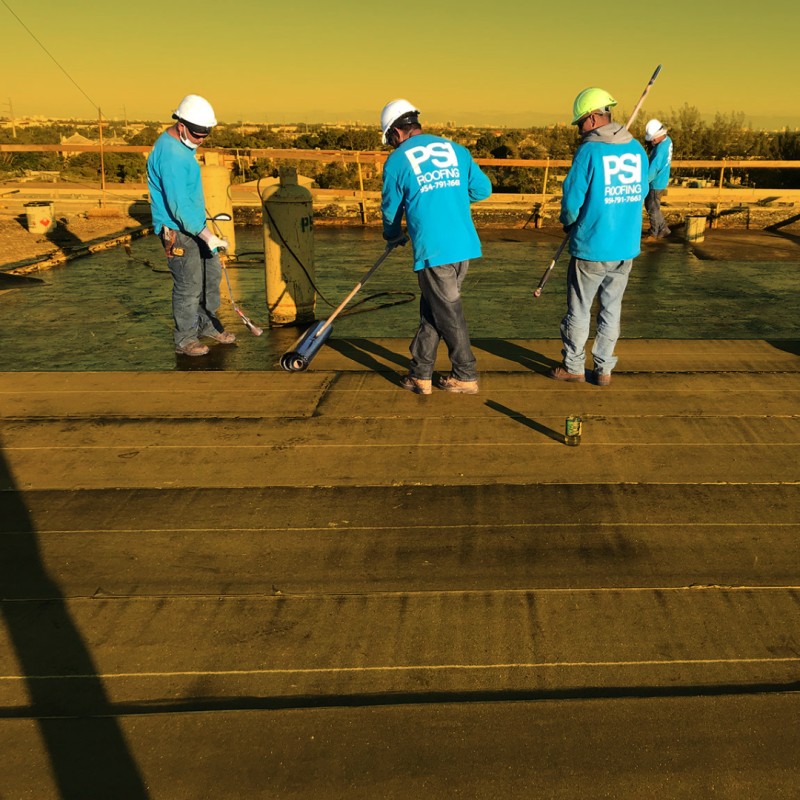
Commercial Roof Maintenance in South Florida by PSI Roofing

Commercial Roof Maintenance in South Florida by PSI Roofing

Commercial Roof Maintenance in South Florida

by PSI Roofing / Paulo Souza ,Poul Folkersen

Each year, millions of dollars are wasted on unnecessary roof replacement due to lack of ongoing maintenance.  90% of early roof failures are caused by lack of proper roof maintenance.  Small leaks can cause extensive damage to the interior of your building as well as the roof system itself and may not be detected for some time.  Regular maintenance can prevent unforeseen costs and extend the life of your roof by up to 30%.

The best way to extend the life of your roof is to have a roofing company perform regular roof inspections and maintenance.  All roofing manufacturers require regular inspections and maintenance to maintain coverage.  Regular inspections can also prevent costly problems from issues not covered by the manufacturer’s guarantee. Such as damage from vandalism, damage done to the roof by other contractors, or structural deterioration.  PSI Roofing provides roof maintenance in Miami, Fort Lauderdale and surrounding areas. We offer one, three and five year warranties on your new roof to take care of any outstanding problems not covered by the manufacturer.

Leak-Free Guarantee With Our Annual Roof Maintenance Program

right new commercial roof for your propertyWhen PSI Roofing performs your annual roof maintenance, we can lock in your cost and provide a watertight leak free guarantee. This guarantee will cover any repairs that are needed during the term of your maintenance program.

What Else Can PSI Roofing Do For You?

Our team will perform a roof inspection report and generate a survey report with preventative maintenance and the recommended scope of work which will greatly prolong the life of your roof.

The weather and harsh elements in the South Florida area will wear on your roof system.  PSI will provide solutions such as applying a reflective coating or re-graveling bare areas, which will protect your roof from additional deterioration and therefore extending the life of your roof.

CONTACT US FOR YOUR ROOF INSPECTION

Tags: , ,
WILL THE NEW LAWS BE DEVASTATING FINANCIALLY TO SOME FLORIDA RESIDENTS?

WILL THE NEW LAWS BE DEVASTATING FINANCIALLY TO SOME FLORIDA RESIDENTS?

  • Posted: Jul 14, 2022
  • By:
  • Comments: Comments Off on WILL THE NEW LAWS BE DEVASTATING FINANCIALLY TO SOME FLORIDA RESIDENTS?

WILL THE NEW LAWS BE DEVASTATING FINANCIALLY TO SOME FLORIDA RESIDENTS?

By Eric Glazer, Esq.

In a word — YES. Are all these new laws really necessary?  In a word –YES.  This is all happening due to a complete lack of foresight and planning by The Florida Legislature.  Mandatory Reserves and Mandatory Inspections should always have been the law.  I urged The Florida Legislature in May of 2018 to make reserves mandatory.  Instead they waited for a building to collapse and for 98 people to die before making these common sense laws.  Of course a building should require an inspection after 25 or 30 years.  Of course a building should be required to make necessary repairs to prevent a potential collapse.  Of course a building should be required to put away money each month for future repairs.  Of course that amount should be determined by a professional architect or engineer and not an unqualified board member who has a financial interest in the outcome of the reserve study. These laws should have been required thirty years ago, as building started to boom.  Instead however, The Florida Legislature always caved to the developer lobby in order to keep the cost of living in a condominium artificially cheap, and the sale of units flowing.  Now, because these laws were not in place thirty years ago, current condominium owners have a lot of catching up to do financially to pay for the sins of the past.


The days of a couple or a widower from up north retiring to a high rise condominium in Florida if their sole income is social security are done and over.  That cannot happen anymore.  They need to look for a condominium less than three stories in height that has some reserves put away.


If your condominium is at least 30 years old and is 6 stories or higher, has no fire sprinklers or  Engineered life safety system, has not yet undergone a Mandatory Phase One and Phase Two Inspection, has not made the repairs required by those inspections and has no reserves in the bank, you are now forced to either sell your condominium unit immediately or pay massive special assessments that you may not be able to afford, or even come close to affording it.


On the flip side, if your condominium is at least 30 years old and is 6 stories or higher, and already has fire sprinklers or  an Engineered life safety system, has already undergone a Mandatory Phase One and Phase Two Inspection, has already made the necessary repairs, and is fully funding reserves, you have little to nothing to worry about.  Your monthly assessments should remain where they are, give or take the increases in insurance that are simply astronomical.


Developers are waiting to pounce.  They are focusing their attention on those condominium at least 30 years old and are 6 stories or higher, but has no fire sprinklers or Engineered life safety system, has not yet undergone a Mandatory Phase One and Phase Two Inspection, and has not made the repairs that will be required by those inspections and has no reserves in the bank.  Developers will be approaching the Boards of these condominiums with offers to buy everyone’s unit for a certain price.  You will either consent to selling or have to pay the costs for all these inspections, repairs and funding of reserves.  For many there will be no choice at all.  They will have to sell and somehow find housing elsewhere.


Like everything else, the poor people or even the average workers who had saved up enough money for a down payment on their condo and proudly purchased their unit, they will get hit the hardest.  In reality, in upper class buildings, they were either putting reserve money aside all along, or worse comes to worse they can stroke a check for these increased costs.  They’re OK.


This will take years to sort out.  Some condos simply won’t be able to comply with the new laws and the owners will sell out to a developer.  Some condominiums will opt not to sell and pass massive special assessments and/or borrow the money from a bank.  Either way their expenses are going up.  Many associations will be foreclosing on many of their owners who can’t afford these special assessments.  I can tell you that even before these massive changes go into effect, foreclosures are already on the rise, simply due to nearly $6.00 per gallon of gasoline and out of control food prices.  These new laws will start what I believe will be a tremendous increase in foreclosures, perhaps as bad as 2007 and 2008.  Yet, all of it is necessary.  You can’t allow buildings not to get inspected, you can’t allow building not to get fixed, you can’t allow buildings not to have fire safety measures and you can’t allow buildings to deliberately waive a requirement to put funds away each month for future structural repairs.


The Band Aid was ripped off in one shot.  As a result, Florida condominiums and their owners will have some tough financial times ahead.  There will definitely be gentrification in some neighborhoods.  The look, feel and face of Florida will change going forward.  If only these measures were passed when these buildings were being built so people would not be forced out of their homes today.  There simply was no foresight and now the change won’t be smooth and gradual, but will be difficult and immediate.  And yet, there’s no other way to go.  A collapse like Champlain Towers can never happen again.


Tags:
Don’t Forget Qualifying Business Meals at Restaurants Are 100% Deductible This Year!

Don’t Forget Qualifying Business Meals at Restaurants Are 100% Deductible This Year!

  • Posted: Jul 14, 2022
  • By:
  • Comments: Comments Off on Don’t Forget Qualifying Business Meals at Restaurants Are 100% Deductible This Year!

Don’t Forget Qualifying Business Meals at Restaurants Are 100% Deductible This Year!

So, what is a qualifying meal and who can deduct it?
Business meals are only deductible by the business. This includes partnerships, corporations, S corporations and sole proprietorships.
The deduction for business meals is generally 50% of the actual expenditure however until the end of 2022 100% of the cost of meals consumed in a restaurant are deductible. Avoid getting your business lunch at Seven Eleven or the grocery store where they are only 50% deductible and be sure to use a restaurant.
To be deductible the meal’s cost must be paid for by the business, either directly or through a reimbursement. Business meals are NOT deductible by employees. If you receive a W2 and are not reimbursed unfortunately you are out of luck, as you are unable to deduct this amount from your return.
For a business meal to be deductible it must be:
(1) ordinary and necessary AND paid or incurred during the tax year;
(2) NOT lavish or extravagant under the circumstances;
(3) the taxpayer, or an employee of the taxpayer, must be present at the furnishing of the food or beverages;
(4) food and beverages are provided to someone with a business relationship to the taxpayer’s business, a current or potential business customer, client, consultant, or similar business contact; and
(5) must not include the cost of entertainment
The deduction also requires substantiation be maintained including, the amount spent, the time and place, the business purpose, and the business relationship of the individuals involved. It’s important to set up a detailed record-keeping procedures to keep track of each business meal and to justify its business connection.
Accountant
We can service clients by phone, through a zoom meeting, and in our office.
Tags: ,
The age of a CommunityAssociation opting not to fund reserves is coming to an end

The age of a CommunityAssociation opting not to fund reserves is coming to an end

  • Posted: May 30, 2022
  • By:
  • Comments: Comments Off on The age of a CommunityAssociation opting not to fund reserves is coming to an end

The age of a CommunityAssociation opting not to fund reserves is coming to an end, and some homeowners could be facing a steep rise in assessments. Becker Shareholder Howard Perl surveys the landscape and offers a few suggestions of how to prepare.

After the Surfside tragedy, everyone wanted to know how such a tragedy could happen and what steps could be taken to avoid similar incidents in the future. What caused the collapse? Could it have been avoided? Why were repairs not made? Why did local governments allow repairs to drag on? Why were repairs not made in a timely fashion? Unfortunately, none of these questions can be answered quickly, and proper answers will require years of study and analysis.

The above questions, and attempts to enact legislative reform to address some of these questions, were a hot topic for the Florida legislature this year. Several counties and the Florida Bar convened task forces in the aftermath of the Surfside tragedy. Primary among the suggested legislative changes for multifamily buildings were periodic engineering inspections, reserve studies, and reserve funding mandates. While all agreed generally in regard to these reforms, at the end of the day, the Senate and House could not agree on the reserve funding issue and, as a result, nothing passed. Currently Florida law can allow for owners to opt to fund less than required reserves, or no reserves. Most legislative proposals included mandatory reserve funding of one type or another. The sticking point was how quickly to implement such mandatory reserves, without the option of owners being able to waive such requirements. Whether to implement immediately, effective in 2022, or over the next three or five years, to allow a gradual implementation, is ultimately what led to nothing being passed. Rather than compromise, which seems to be a forgotten word in Tallahassee these days, legislators could not, or refused, to come to an agreement for the benefit of all condominium and cooperative residents in Florida.

These issues are certain to be re-examined next year. As such, your association should begin recognizing what is most likely coming down the pike and preparing the association and its residents now. Most likely the days are gone when owners will have an opportunity to fully waive reserves. I anticipate mandatory reserve funding of some type will be implemented. Whatever version is implemented, the result will be an increase in annual maintenance assessments. Depending on what is implemented and your association’s current reserve funding situation, some owners may be looking at a significant increase in your 2024 assessments (as the laws I am discussing would be passed in 2023, and most likely effective for the 2024 association budget).

The association should be anticipating and working on these items now. For example, some sort of reserve study requirement is most likely coming. Budget for one now. Get proposals now. Have the study done now. Once mandated by statute, demand will go up, availability will go down, and of course prices will go up. We are seeing exactly that scenario now in regard to structural engineers and 40/50-year recertifications.

In regard to reserve funding, take a good look at your reserve schedules. Get updated estimates of repair costs. Factor in inflation when projecting 10 and 20 year replacement items such as painting, roofing, etc. Any effort to increase your 2023 reserve balances will help lessen any blow of 2024 mandated reserves. Explain these issues to your residents now. Many associations are understandably involved with 40/50-year recertification requirements and other life-safety related issues. Obviously these issues need to be addressed immediately and on an expedited basis. But associations and their members should keep their eye on long-term remedial requirements as well. More oversight; more required inspections; more required repairs; and more required reserves. All of these are good things for 40–50-year-old buildings in a saltwater environment in Florida.

The outcome of the 2022 legislative session once again underscores the inherent problem when all community association ideas are placed in only one omnibus bill. Until our legislators acknowledge this problem and start using stand-alone bills for important proposals, there is always the risk that needed reforms will not pass.

Contact your legislators, tell them you welcome these types of reforms, but they need to be addressed as needed, not all under one take it or leave it omnibus bill. Work with your association leaders on the above discussed items. Don’t be surprised by increased annual assessments, special assessments, and other upcoming expenses. They are coming. Prepare now.


Howard Perl is a Shareholder in Becker’s Community Association practice and has been involved in all aspects of community association law, including transactional, collections, mediation, arbitration, construction defects and litigation. He is also Florida Bar Board Certified in Condominium & Planned Development Law.