INDUSTRIALDo you have questions about asphalt sealing in West Palm Beach?The best way to protect asphalt surfaces is to sealcoat asphalt parking lots. If you are looking for the most trustworthy Asphalt Sealcoating Palm Beach Gardens company look no further than Atlantic Southern Paving!Asphalt is durable and flexible, but it can also deteriorate.It is possible to double the lifespan of asphalt by applying asphalt sealcoating. This protects the asphalt from future damage.
Sealcoating asphalt in West Palm Beach homes is a great way to protect your property from oxidation and ultraviolet rays.Asphalt starts to deteriorate at a microscopic level as soon as it is installed.
The asphalt’s binders begin to harden when it is exposed to oxygen.The asphalt surface can crack and become brittle from the continued hardening.Rainwater, moisture, and oxygen can penetrate pavement surfaces even if they have the smallest cracks.
The asphalt subbase can be affected by water and moisture. This can cause it to weaken and lose its strength.Sealcoating is very helpful as it protects the surface against oxidation and fills surface voids.
How water damages asphalt
The asphalt sealcoating of parking lots and driving surfaces allows them to resist water and prevent it from contacting the asphalt surface.Water can seep through asphalt, particularly when it is heavy rain.
Water can cause sub-base to become softened if it collects.Soft subbases can cause potholes or expensive repairs.Sealcoating asphalt surfaces create a protective layer that repels water.Sealcoating asphalt surfaces can help you save significant money on future repairs.
Oil and Gas Spills
Parking lots and asphalt surfaces must withstand harmful car chemicals like oil and gas.Particularly vulnerable to chemicals from automobiles are parking spaces.
The asphalt can soften if it is contaminated with gasoline or automobile oil.Oil or gasoline can penetrate asphalt pavement and cause sub base to degrade.
Asphalt sealcoating is made up of additives that protect asphalt from chemicals used in automobiles.You can also fill surface voids to reduce the depth of oil and gas that can penetrate asphalt.
Professional Asphalt Sealcoating In West Palm Beach
It is important to find a reliable and experienced contractor to sealcoat your West Palm Beach property.Atlantic Southern Paving and Sealcoating provides asphalt maintenance and construction services for more than two decades.
Every job we do is completed with customer satisfaction in mind.Atlantic Southern Paving can be reached at 954-518 4315 to speak with an expert about sealing asphalt surfaces.Ask for a free estimate on sealing your property.
For most members of the condo community, the Property Manager is the face of the condo corporation or home owner’s association. They are responsible for day-to-day running of things– they look after the bank accounts, handle the checks, field correspondence, and interact with owners more frequently than the Board does.
Because of this, I find that people can be confused about the difference between the roles of the Property Manager and the Board of Directors.
Are you confused about who does what?
For most members of the condo community, the Property Manager is the face of the condo corporation or home owner’s association. They are responsible for day-to-day running of things– they look after the bank accounts, handle the checks, field correspondence, and interact with owners more frequently than the Board does.
Because of this, I find that people can be confused about the difference between the roles of the Property Manager and the Board of Directors.
Why can’t the property manager look after everything?
I’ve heard board members ask “Why can’t I just let my Property Manager look after everything?” and “Isn’t it their job to do this? I don’t have time to look after all of this stuff”. Owners also have trouble knowing who is responsible for what; when should they contact the Board and when should they contact the Property Manager?
In this post, I’ll answer these questions, and hopefully, the difference between the roles of the Property Manager and the Board of Directors will be clear by the end.
Understanding the different roles
To understand the different roles, I like to think of a condo like a coffee shop. The property management company is like the staff that keeps the shop running: baristas, managers, cleaners, etc.
They are the people that interact with everyone on a day-to-day basis and do everything to make sure that the coffee shop does everything a coffee shop should. While they have some flexibility to solve problems as they arise, they are not responsible for major decisions — financial or otherwise.
What does the board do?
The Board of Directors acts like the corporate executives at the head office. It’s up to them to set the prices, operating procedures, and make the decisions that shape the direction of the company. The success of the enterprise is their responsibility; the staff carry out their decisions.
It’s not the barista’s job to ensure the coffee shop is selling coffee for the optimal price or that the products are the best value. Similarly, the Property Manager isn’t responsible for making the best financial decisions for the condo corporation; they do not have a fiduciary responsibility.
What are difference between the roles of the Property Manager and the Board of Directors?
Property Management
Manages
Under contract to work as agent of condo corporation
Work within constraints defined by contact with the board
Provide options (e.g., quotes)
Implement decisions
Is not responsible for saving condo money
Board of Directors
Governs
Is a fiduciary to the condo corporation
Reviews options and renders decisions
Oversees the implementation of decisions
Seeks cost savings (asks Property Manager to help)
The condo board has the responsibility to make the choices that are in the best interest of the condo corporation. This is why the property management company can’t simply be left to look after everything.
As an entity, the condo Board of Directors is responsible for making all the critical decisions regarding the maintenance of the building/grounds, condo’s finances, and must uphold the Condo Act (provincial legislation), the declaration, bylaws, and rules. It is up to the board to make sure that all the relevant documents are accessible by the owners.
A good Property Manager is a tremendous asset for any condo corporation. They can simplify the job of the board, but they cannot assume the responsibility for that job.
[AdSense-A]
Pat Crosscombe, Founder & CEO https://boardspace.co/ Thanks Pat for a great article we republished on sfpma for our readers.
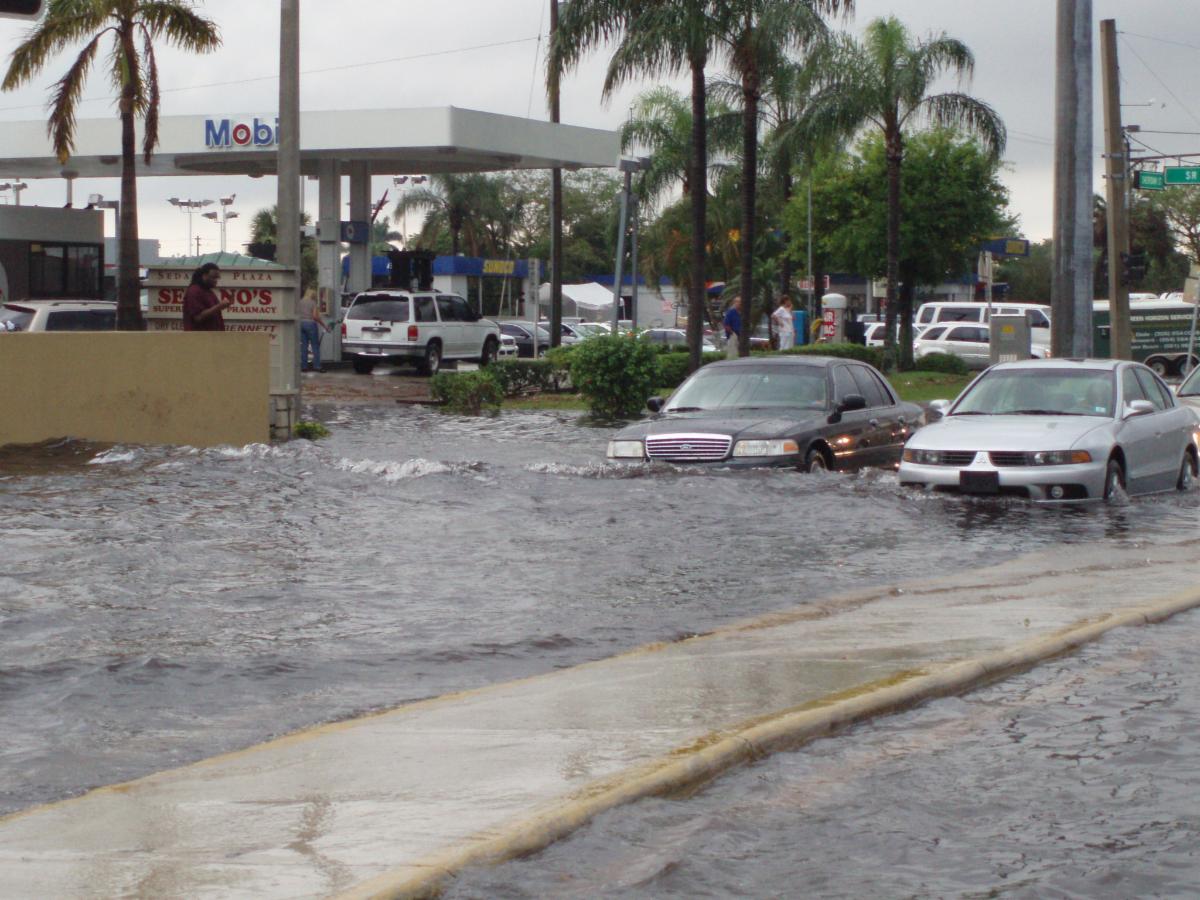
Comments: Comments Off on HOA Parking Lot Flooded over the weekend? Now is the time to give Allstate Resource Management a call!
HOA Parking Lot Flooded over the weekend?
Now is the time to give
Allstate Resource Management a call!
Our schedule is filling up fast for storm drain cleanings, the rain that occurred this past weekend was a preview of what this summer will look like for your HOA community.
Contact us to talk to a Stormwater Specialist today!
We recently published an article on how communities can speed up maintenance projects. In this article, we’ll look at how long some common maintenance jobs should take to complete.
HOAs have an obligation to maintain certain parts of the development. They must set aside a portion of the dues or fees collected from owners to pay for big and small maintenance projects. If the association fails to meet those obligations, it not only creates safety problems for members, but legal issues for the association as well.
If members feel that the board is not properly caring for the property, they can write official complaints, vote to remove board members, or even sue the HOA.
Maintenance must be taken seriously, but it is far easier to manage when you have a system or solution that enables you to organize components, schedule/assign work, and track tasks.
Defining maintenance obligations
The maintenance responsibilities of an association versus those assigned to individual owners depend primarily on whether the item or equipment is classified as part of a common area, exclusive use common area, or separate interest.
Common areas typically refer to shared spaces such as pools, sidewalks and roads. Exclusive use common areas are spaces or elements used by one or more, but fewer than all, of the owners. Separate interests are the separately owned lots belonging to members.
While some maintenance obligations are quite clear, others can be a little murky. This is especially true with exclusive common areas since they tend to be things like patios and windows. Roof maintenance may also be confusing; some HOAs cover roof repairs while others do not.
The association’s CC&Rs should detail maintenance obligations and define who is responsible for what. But if there is some uncertainty, boards are advised to refer to civil codes and/or consult with the HOA’s attorney.
Why timelines matter
There are several reasons why time matters when it comes to maintenance projects. The main one is so staff and management can plan for disruptions and costs. However, there are times when maintenance work will impact owners, and they will also need to know approximately how long the work will impact their day-to-day lives.
For example, if a parking lot is being repaved, owners will need to be informed of the work, they will need to move their vehicles before the work begins, and know how long they will have to find temporary parking.
Contractors can’t know for sure how long maintenance work will take to complete, but they should be able to provide an educated estimate. Tracking the time it takes for professionals to complete routine and unplanned maintenance is another good way to predict future repair timelines. Having this knowledge allows those responsible for setting up maintenance work to complete projects with more confidence (plus they’ll know if a vendor is taking too long to complete certain jobs).
How long should HOA repairs take?
There is no way to know for sure how long any maintenance project will take. Even a standard preventative maintenance job can become lengthy if a contractor discovers additional damage to an element. Other factors, including availability of materials, permit requirements, complexity of the project, size of the community, and weather will all impact the timeline of a project.
That being said, below are some estimates of how long common HOA maintenance work takes to complete.
To get a more accurate time estimate, speak with a contractor or repair expert. They will be able to look at the specific qualities of your community and provide you with a realistic timeline.
Pool repairs
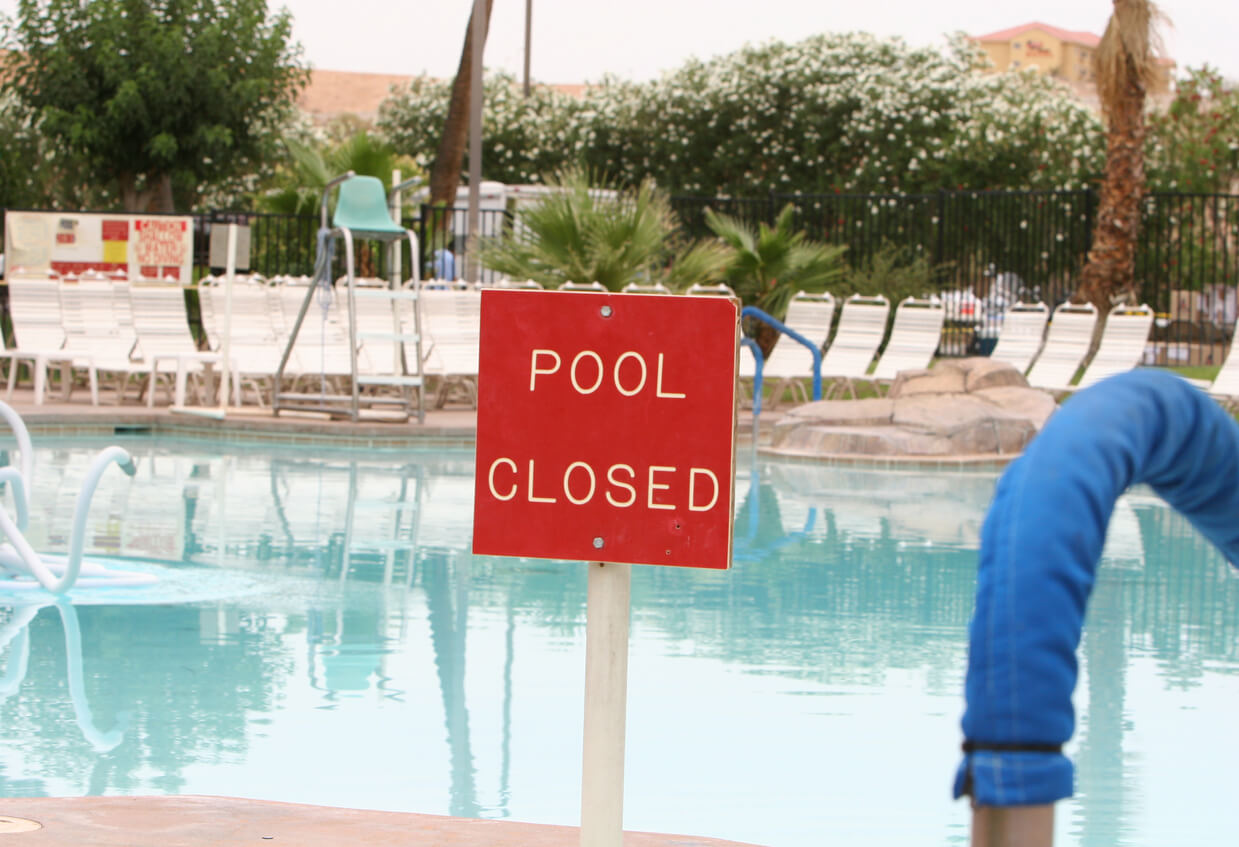
There are many different types of pool repairs. Some can be completed in a couple of hours while others will take several days.
A simple structural leak generally takes a day or two of work. Half a day is needed to complete the first step of a crack injection repair, and another half day is required to “staple” the cracks together and plaster the damaged area.
If your pool has a heater and the warming system breaks, the entire pool may be shut down for a week. The heater can be replaced in a day, but it could take longer. After the new pool heater is installed, it might be another three days before the pool is warm enough to use again.
Most plumbing leaks can be resolved in two days, but the time it takes to fix a pool leak from plumbing can vary according to the extent of the damage.
Pool resurfacing involves the removal and replacement of the top layer of the pool surface. This may be done to give the pool a clean fresh look, or to address several small cracks. In general, this renovation process takes one to three weeks.
Water/electricity lines
A water line is an underground pipe that transports water from a water source to a home’s or building’s service pipe. These pipes typically run beneath sidewalks and streets.
A water line pipe might crack, allowing water to spill out. This can cause many issues, including unsanitary water, higher water bills, low water pressure, and floods.
Due to the severity of this problem, a water main break needs immediate attention. Plumbing technicians will need to turn the water off while they repair the break. Once the pipe is in working order, they will flush it before reconnecting it to the plumbing system.
The good news is this type of repair only takes between four and eight hours.
If an electricity line goes out due to weather, it can generally be restored in a couple of hours. However, if an entire pole comes down, the outage could easily last a full day.
Roofs
In many cases, HOAs have delegated the responsibility of maintaining roofs to the individual owners. But if the association covers the costs of repairs, expect each home to take up 1-3 days of the contractors’ time. More complex designs and materials will add time to that estimate.
Gutters and downspouts
Routine maintenance of gutters and downspouts prevents more serious water damage from occurring. Like roofs, many HOAs have stated that owners are responsible for maintaining these items.
Minor gutter repairs can be completed in as little as one to two hours. Partial replacements can take two to four hours, and full replacements can take two to three days of work.
The timing is similar for downspout repairs and replacements.
Parking lots
Most HOAs can complete routine parking lot maintenance in two to three weeks, but timing will vary depending on the size of the lot and weather conditions.
Paving can take less than a week, but keep in mind that proper curing (letting the asphalt cool and settle) is an important part of the process as well. Depending on the size of the parking lot, thorough curing can take anywhere from one to two weeks.
General landscaping
While not a traditional repair, landscaping is a maintenance job that can be hard to plan for, at least the first couple of times. The size of the property, availability of materials, and weather conditions can greatly impact the time it takes to finish the job. Once you have found a landscaper that you like, you will become more familiar with the time it takes to do certain jobs.
From start to finish, most projects fall into the two- to three-week range, but cutting grass or trimming plans can take half a day.
Conclusion
HOAs have an obligation to maintain certain areas of the development. By scheduling routine maintenance, associations help prolong the useful life of elements and components, and keep the community safe and attractive too.
It’s important for staff, board members and management to have repair timelines so that they can budget for costs and time accordingly. While projects don’t always go according to plan, just having a guideline allows them to manage expectations more effectively.
ELECTIONS, INSURANCE, AND A SENSELESS DEATH
This season, more than any other of late, the issue of condominium election ballot verification reared up. The condominium election process is unique and very regulated. In addition to many other requirements, ballots are to be placed in an inner plain and unmarked envelope which is to be placed inside a larger envelope which must, as per Florida law, contain the unit owner’s name, address, unit number and signature. As part of the election process, this information is later verified against the associations’ membership records to ensure that only the unit owner, or the unit owner’s designated voter, cast their ballot. It is the plain inner envelope that guarantees anonymity.
Given the sheer volume of units in many condominium communities, which translates to the number of ballots that can be received, the process of tabulating the ballots can take hours. To speed things up, some condominium communities prefer to verify the outer envelope information in advance of the election ballot tabulation that takes place during the annual members’ meeting. That said, and what may come as a surprise to some, is that you cannot just start verifying the outer envelopes. If you do, then your entire election is subject to challenge. Tampering with the election materials creates an inescapable cloud over the entire election process from which there is no escape, but a new election. It is so simple to avoid, too.
Section 61B-23.0021, of the Florida Administrative Code, details the verification process as follows: “Any association desiring to verify outer envelope information in advance of the meeting may do so as provided herein. An impartial committee designated by the board may, at a meeting noticed in the manner required for the noticing of board meetings, which shall be open to all unit owners and which shall be held on the date of the election, proceed as follows. For purposes of this rule, “impartial” shall mean a committee whose members do not include any of the following or their spouses: 1) Current board members; 2) Officers; and 3) Candidates for the board. At the committee meeting, the signature and unit identification on the outer envelope shall be checked against the list of qualified voters. The voters shall be checked off on the list as having voted. Any exterior envelope not signed by the eligible voter shall be marked ‘Disregarded’ or with words of similar import, and any ballots contained therein shall not be counted.” Now you know how to have your cake and eat it, too. Just follow the simple procedures to verify the outer envelopes and you can be home in time for the 10:00 P.M. news.
Once you are elected to the board, make certain the directors’ and officers’ liability coverage is in place. In most instances, a board member’s duty is to exercise their reasonable business judgment. They can make decisions that later turn out great or bad, but so long as they acted reasonably under the circumstances, and without malicious intent, the association’s insurer typically stands by their coverage obligations. Noteworthy is that, as related to procurement of insurance, a condominium board member’s statutory duty as set out in s. 718.111(11), Fla. Stat, is one of “best efforts”. Casualties of all sorts can occur at any time. For example, just look to the recent tragedy that led to the death of Trayvon Martin.
Friends, family and clients are all asking, will George Zimmerman’s homeowners’ association be sued? Yes, most likely it will. That is one deep pocket not likely to be missed. We could also see intentional tort claims brought against the individual directors by the victim’s family. If such claims are victorious, then it’s the individual directors who are liable, not the association’s insurer. Under the circumstances, as reported thus far, a finding of individual board member liability is not unlikely.
The more difficult question to answer is whether the HOA will have liability for its actions or failures to act? Was the association, based on the acts of its boards (both past and present) negligent or grossly negligent (reckless disregard that rises to such a level so as to appear to be an almost willful violation of the safety of others)? If so, the insurers would likely fight to pay only their fractionalized share of the association’s blame. This is referred to as “contributory negligence” where each culpable party pays their share of the blame. You might also hear about some court activity where the plaintiffs try to force the association to suffer its judgment separate from the other defendants. Doing so could create opportunity for larger settlements and judgments. Think of it this way, would you rather receive just $1,000 from 10 people, or have 10 people each give you $1,000?
In many ways, suing a homeowners’ association is like suing a successful, well capitalized corporation. Without proper insurance coverage in place, a judgment against your association would also be your next special assessment. Make sure your association’s insurance professional is made aware of all activities taking place in your community, from watch committee activity to use of the clubhouse by private organizations. Crime and accidents occur everywhere, at any time, when you least expect it and without notice. Advance planning is your only defense.
Unfortunately, it looks as if we will still need to social distance when it’s time for our annual elections. So how do we do this practically?
In a condominium, it’s much easier than an HOA to run the election with social distancing because the procedures allow for mail-in ballots. The association must still have an in person “annual meeting” but it can be very small, with only a few people showing up while everyone else tunes in to watch live on their computer.
The votes can be counted by any volunteers in attendance, or the ballots can be forwarded to counsel for the association, who, with volunteers appointed by the board in advance, can count the ballots at the attorney’s office — and everyone can watch live on their computer. It really is no big deal.
It’s more complicated in an HOA however, because typically HOAs don’t follow the same election procedures that condos do. Ballots are not mailed in. People must vote in person, after nominations are taken from the floor. And, after nominations are taken from the floor, parcel owners are then given a ballot and asked to write in the names of the candidates of their choice. How can nominations be taken from the floor if people are afraid to go to “the floor?” How can we distribute paper ballots to people who are logged on by the computer? The truth is….we can’t.
So for HOAs who have real concerns that their election process will be tainted because it’s impossible to comply with the procedural election requirements of their bylaws, I have a suggestion. AMEND YOUR BYLAWS AND DO IT NOW. I always thought the HOA election process stinks and that the condo statute is far superior. Well, now is a perfect time to convince your community that if they want fair elections to occur in their community and that will allow them to vote from home during a pandemic, their docs need amending now.
As Eric mentions, amended the HOA By-laws now. It is much easier to amend the By-laws as opposed to the Declarations.
Comment -There is a BIG difference between a Condo and HOA. Two different laws, one association is regulated by the DBPR (Condo) and the other is a half baked regulation for only recalls and elections by the DBPR. HOAs are at the greatest risk. It allows elections to be held in accordance with the antiquated by-laws of the Governing Documents. There are over 10 different ways to hold an election because there are so many variables in the individual by-laws. It is hard enough to hold an HOA election because of quorum requirements. No wonder property owners ignore HOA annual meeting elections and board meetings. It was so simple pre-FS 720.
Our IT Team is adding the ability for members to write articles.
SFPMA has been asked “Can members write articles that can be published on our website” The answer is yes!
Write Articles, Upload them These will be set to the category you selected. We will use these and share them with our over 200,000+ subscribers and through other RSS web services we use for distribution in our industry. Start today sending articles. Let the industry know what you do? and new company news? Let us share them or you can click the social media sharing buttons and post these to your pages, Let others find these on your pages.
View our Blog Page: you will see Members Submit your Articles This is the form on the Front End that will allow you to write these and upload them.
We are still coding this and will have all features working properly, you can still send us articles via email, membership@sfpma.com
Thank You
SFPMA State of Florida Property Management Association.
SFPMA.COM
Comments: Comments Off on Learn about hiring a professional management company
Search management members working in, Residential, Commercial, Industrial, Single Family and Multi Family.
“We give investors and clients the information to make an informed decision about which property management company to use”
They learn about how hiring a professional management company helps them.
They find out what fees are associated with management.
They read and learn about maintenance issues and repairs for their property.
Other information including what questions to ask potential management companies. We know that with real estate comes non paying tenants, evictions fees, collecting rents, vacant units, inspections, contracts and leases, payment matters from tenants and your monthly money.
Join and we will give you a florida list of over 3000 member companies to start you with marketing.
learn what to look for in a Property Management company, the benefits, the services they provide, how they collect fees, how repairs are addressed, laws & licensing.
Read and learn what our members can do to help you with the management of your buildings. Managing properties can become quickly overwhelming, even for experienced investors. There is always something going on that requires attention and it takes very little time for things to get out of hand. Hiring a Property Manager can provide an opportunity to regain control and restore stability to both your properties and possibly life in general.
We understand the importance having income real estate to you and your family. We are here to help you with the selection process for hiring the right company for the management of your buildings. Your Property Manager will make critical decisions on your behalf making it extremely important that you do your homework during the hiring process.
Ultimately, your decision to hire or not hire a property management company should hinge on whether or not it is a good fit with your lifestyle, and makes sense financially. Individual investors will have to assess the opportunity cost of both options based on their unique circumstances.
Comments: Comments Off on Good leadership and governance for Florida Board Members by SFPMA
Good leadership and governance for Board Members
“Seven keys to a successful board meeting”
One of the fundamental challenges that far too many board members and boards have is that they don’t have a strong understanding of their roles and responsibilities.
It sounds basic, but one of the fundamental challenges that far too many board members and boards have is that they don’t have a strong understanding of their roles and responsibilities.
Boards, in general, do well with more fundamental board members understanding responsibilities — understanding the organization’s mission and providing financial oversight. Conversely, they struggle most with external responsibilities, including fundraising, advocacy, and community-building and outreach. This lack of understanding of what is — and is not — a part of the board’s essential roles can lead to a whole host of dysfunctions, such as micromanagement, rogue decision-making, lack of engagement, and more.
Since it’s impossible to do a job well if you don’t know what the job is, all boards must take the time to ensure that every board member fully understands what’s expected and needed of him or her, and then hold all members accountable when they get off track.
Duty of Care — Each board member has a legal responsibility to participate actively in making decisions on behalf of the organization and to exercise his or her best judgment while doing so.
Duty of Loyalty — Each board member must put the interests of the organization before their personal and professional interests when acting on behalf of the organization in a decision-making capacity. The organization’s needs come first.
Duty of Obedience — Board members bear the legal responsibility of ensuring that the organization complies with the applicable federal, state, and local laws and adheres to its mission.
Board meetings should be productive, efficient meetings where the board conducts business. Stop and think about that for a minute. Are your meetings productive and efficient? Does the board meet to conduct business or socialize? Are you getting the most out of your meetings?
We’ve put together seven keys to a successful board meeting. Following these suggestions can bring new life to your association and keep volunteers interested in helping.
1.- Board meetings should not last more than one hour. Start the meeting when it is scheduled to begin and get straight to business. If you collectively have the focus to get done in an hour you’ll be amazed with how much you can accomplish. If you have no time limit, the meeting will typically drag on and a lot of time will be wasted.
When time is wasted at a meeting then people are less likely to volunteer because they feel their time is wasted. One hour meetings have a major impact on volunteers. Associations that hold focused, one hour meetings have more people volunteer. It’s also important to note that those volunteers stay active the in the community for much longer. Length of your board meetings may seem like a trivial matter, but it really does have a large impact on how the volunteers of the association view the organization and, in turn, how they view their role.
2.- Make your meetings action oriented. Don’t just discuss issues, make decisions. Every item up for discussion should end in a vote to move forward in some way or table the issue with a clear understanding of why the item is being tabled and when it will be revisited. When taking action on an item make sure it is clear who will be responsible for getting that task completed. Ambiguity cripples a board.
3.- Board Meetings are for the board. They are not neighborhood meetings or social gatherings. The purpose of a board meeting is to conduct business, not see how many people you can get to attend. Some board members try to get as many people to attend as possible. This is missing the point. Homeowners are, of course, welcome to attend but it is not a membership meeting. The purpose of the board meeting is for the board to consider the affairs of the association, make business decisions, and then have a clear plan of action.
4.- Take time prior to the meeting to think about what you want to discuss. Inform the community manager of this one week prior to the meeting. This way your topics of discussion can be placed on the agenda which will allow the other board members and the community manager the opportunity to think about and/or research the item you want to talk about. When you don’t come prepared and spring things on the other board members or on the community manager this typically results in a lot of unnecessary discussion with additional research needed in order to make any kind of decision. Remember, be action oriented. By planning ahead you can make more decisions at the meeting instead of causing an item to be discussed twice and delayed for months.
5.- There are an odd number of board positions for a reason. You will not always see eye to eye. Don’t take it personal if the other members of the board disagree with you. This will occur and is healthy. While each board member should attempt to come to a consensus with the other members, you will not be able to achieve this each time. Countless hours are wasted by board members continuing to argue a point just to obtain “victory” on a certain issue or to avoid any vote that is not unanimous. This occurs because someone is taking it personal. If your view is not shared on an issue, take a vote, and move on. Do not hold a grudge. Recognize that you can disagree and still work well with each other.
6.- If you think you may have a conflict of interest do not vote on that issue. Let’s say a board member’s spouse is on a committee. If the board is making a decision on an issue related to that committee then the board member with the spouse on that committee should excuse him/herself.
7.- Most associations should hold quarterly meetings (unless your bylaws require more). Meeting more often than that becomes excessive and unnecessary. Remember you want to have focused, short, productive meetings. This keeps people interested in serving on the board and on committees. If the association is constantly meeting then people feel it is taking too much of their time and they will stop volunteering. It is important to note that you are required to comply with the minimum meeting requirement in your bylaws. Most association bylaws require no more than quarterly meetings, but check yours to be sure.
Comments: Comments Off on Playing The HOA – A Continuing Study in Audacity (Part II) by Axela Tech.
🏡✨ Calling all condo residents and property managers! 📣
Have you ever wondered how the fate of an entire community can change in the blink of an eye?
Chinese investors purchased properties in a condominium, sparking hope and excitement. However, the developer defaulted on agreements, pushing the property into financial turmoil. 📉💼
What made matters even more complex was that at least 75% of the units were owned by foreign investors residing in China, where they had no idea they owed any maintenance fees!
The delinquency rate became a looming problem for the entire community.






 In a condominium, it’s much easier than an HOA to run the election with social distancing because the procedures allow for mail-in ballots. The association must still have an in person “annual meeting” but it can be very small, with only a few people showing up while everyone else tunes in to watch live on their computer.

 SFPMA has been asked “Can members write articles that can be published on our website” The answer is yes!
 “We give investors and clients the information to make an informed decision about which property management company to use”
 It sounds basic, but one of the fundamental challenges that far too many board members and boards have is that they don’t have a strong understanding of their roles and responsibilities.