SFPMA

SFPMA Industry Articles | news, legal updates, events & education! 

Find Blog Articles for Florida’s Condo, HOA and the Management Industry. 

BORROWING TO BUY A CONDOMINIUM UNIT? Freddie Mac’s & Fannie Mae’s New Lending Requirements

BORROWING TO BUY A CONDOMINIUM UNIT? Freddie Mac’s & Fannie Mae’s New Lending Requirements

  • Posted: Mar 06, 2022
  • By:
  • Comments: Comments Off on BORROWING TO BUY A CONDOMINIUM UNIT? Freddie Mac’s & Fannie Mae’s New Lending Requirements

BORROWING TO BUY A CONDOMINIUM UNIT?

Freddie Mac’s & Fannie Mae’s New Lending Requirements

by KBR Legal / RembaumsAssociationRoundup

Buying a bundle of home loans to later sell on the secondary market can be risky business. A lot can go wrong in the process. For example, the economy could tank, causing massive defaults; or even worse, as occurred recently in the case of Champlain Towers South, the building could collapse—where not only did many residents die, but also insurance proceeds are unlikely to be sufficient to satisfy all of the outstanding mortgage debt. This reality has a ripple effect on the mortgage-backed security, ultimately causing financial harm to the investors buying the bundled mortgages.

    The Federal Home Loan Mortgage Corporation, commonly referred to as “Freddie Mac,” and the Federal National Mortgage Association, commonly referred to as “Fannie Mae,” both compete on the secondary mortgage market, which is the market for the sale of securities or bonds collateralized by the value of mortgage loans. In short, they both package mortgages into mortgage-backed securities for sale to investors on the secondary mortgage market. Both Fannie Mae and Freddie Mac have requirements which must be met before they will buy a mortgage from a local lender, which they appropriately refer to as the “seller.” The Fannie Mae and Freddie Mac requirements placed on the seller (meaning, the local lender) trickle down to and then must be met by the association. The association’s compliance with these requirements is then analyzed by the local lender and likely further analyzed by Fannie Mae or Freddie Mac as a part of its bundled loan purchase.

    The mortgages they purchase help ensure that home buyers and investors who purchase property have a steady and stable supply of mortgage money. They broaden the likelihood of funds being made available for housing by attracting new secondary mortgage market investors through offering packaged mortgage-backed securities and guaranteeing the timely payment of principal and interest on the underlying mortgages. This makes secondary mortgage markets more liquid and can help lower interest rates paid by the actual mortgage borrowers (i.e., the property purchasers). It is reported that at times, together they finance up to 90 percent of all residential mortgages. Without Freddie Mac and Fannie Mae buying mortgages from lenders, the lenders would not be in a position to continue to offer loans. They need the funds from the Freddie Mac or Fannie Mae purchase to have available funds to make new loans. The bottom line is that if you expect purchasers in your condominium to be able to obtain a loan, then ultimately your association will have to abide by their requirements, including their demand for information about your condominium building’s condition and the condominium association’s finances, which are set out in their similar questionnaires.

    Congress created Fannie Mae in 1938 to provide accessible funding and more affordable housing. Freddie Mac, alternatively, started in 1970 as a public enterprise to further expand the secondary mortgage market. While there are many similarities between Fannie Mae and Freddie Mac, there are some key distinctions. The significant difference between Freddie Mac and Fannie Mae is where they acquire their mortgages. Fannie Mae purchases mortgages from larger, commercial banks, while Freddie Mac buys them from much smaller banks. While Fannie Mae and Freddie Mac programs have some differences in lending requirements, these requirements also appear more similar than different in so far as they assure the lender they will buy the loan.

    As a result of the Champlain Towers South collapse, Fannie Mae and Freddie Mac have imposed new temporary, additional requirements for mortgages obtained for condominiums and cooperative residential units. These new additional requirements will make it harder for existing condominium unit owners to refinance and for new buyers of condominium units to obtain mortgages.

    On October 13, 2021, Fannie Mae issued Lender Letter LL-2021-14 entitled “Temporary Requirements for Condo and Co-op Projects,” resulting with a new questionnaire effective January 1, 2022. In so doing, Fannie Mae suspended flexibility that allowed a lender to obtain a reserve study in lieu of meeting the 10 percent budget reserve requirement. Simply put, this means that if an association does not reserve at least 10 percent of its total annual budget for reserves, then any lender working with Fannie Mae will not be in a position to issue a loan to anyone purchasing a unit in that association’s condominium because doing so would make that loan ineligible for purchase by Fannie Mae, which ultimately hurts the local lender because it will have less funds to loan.

    Moreover, Fannie Mae will no longer issue project eligibility waivers for significant deferred maintenance or for projects subject to large special assessments. In other words, if the condominium association is not contributing at least 10 percent of its annual budget into the reserves, then Fannie Mae will not buy the loan from the local lender, meaning that the local lender will most likely not issue the loan to the buyer. In addition, and as part of its 10 percent reserve requirement, Fannie Mae no longer allows a borrower to rely on a reserve contribution provided in a reserve study in lieu of meeting the requirement that 10 percent of the annual assessments be contributed to reserves. Therefore, Freddie Mac-backed loans will become even more important to purchasers of condominium units and the developers who build them.

    Then, on December 15, 2021, Freddie Mac issued Bulletin 2021–38 entitled “Temporary Condominium and Cooperative Project Requirements and Topic 5600 Reorganization,” effective February 28, 2022 (the “Bulletin”). While Freddie Mac has strict requirements, too, it is not strictly requiring that 10 percent of the association’s budget be allocated to the association’s reserves.  The Bulletin begins with the following statement of fact:

In the aftermath of the collapse of the Champlain Towers South in Surfside, Florida, the risks of residential buildings with aging infrastructure and in need of Critical Repairs have been brought to the forefront of discussion throughout the nation.

    Regarding reserves, local lenders may continue to rely on a working capital fund for new condominium projects or a reserve study for both established and new condominium projects when the project’s budget provides less than 10 percent replacement reserves. In other words, as so succinctly explained by a regular reader of Rembaum’s Association Roundup, Barry Subkow, Esq.,

Unlike Fannie Mae, if the contribution to reserves is less than 10% of the total annual assessments (e.g., 8%) and is based on the reserve contribution amount that is provided in a reserve study, Freddie Mac will allow the loan.

    These newest Freddie Mac temporary requirements apply to all mortgages secured by units in projects with five or more attached units and are in addition to, and do not supersede, any of the other existing current applicable requirements. As such, there are terms which every board member and manager should become familiar with as they are needed to complete the required questionnaires. For example, a loan given by a local lender to a buyer for a project in need of “critical repairs” (as defined below) is not eligible for sale to Freddie Mac. As a result, the local lender will not be inclined to make the loan if a governmental program entity, such as Freddie Mac, is not willing to buy the loan.

    Because Freddie Mac secured mortgages are likely to become even more important in today’s economy, there are four terms with which every board member and manager should be familiar:

  • Critical repairs
  • Material deficiencies
  • Significant deferred maintenance
  • Routine repairs and maintenance

    The term “critical repairs” refers to repairs and replacements that significantly impact the safety, soundness, structural integrity, or habitability of the project’s building(s) and/or that impact unit values, financial viability, or marketability of the project. These repairs and replacements include the following:

  • All life safety hazards
  • Violations of federal, state, or local law, ordinance, or code relating to zoning, subdivision and use, building, housing accessibility, health matters, or fire safety
  • Material deficiencies (see below for definition)
  • Significant deferred maintenance (see below for definition)

    The term “material deficiencies” is defined as unresolved problems that cannot reasonably be addressed by normal operation or routine maintenance and which include the following:

  • Deficiencies which, if left uncorrected, have the potential to result in or contribute to critical element or system failure within one year
  • Deficiencies that will likely result in a significant escalation of remedial cost related to any material building components that are approaching, have reached, or have exceeded their typical expected useful life or whose remaining useful life should not be relied upon in view of actual or effective age, abuse, excessive wear and tear, poor maintenance, and/or exposure to the elements
  • Any mold, water intrusions, or leaks that are potentially damaging to the project’s building(s)

    The term “significant deferred maintenance” is defined as the postponement of normal maintenance, which cannot reasonably be resolved by normal operations or routine maintenance, and which may result in any of the following:

  • Advanced physical deterioration
  • Lack of full operation or efficiency
  • Increased operating costs
  • Decline in property value

    The term “routine repairs and maintenance” is defined as repairs and maintenance that are expected to be completed by the project in the normal course of business and are nominal in cost. These repairs are not considered to be critical and include the following types of work:

  • Often preventive in nature
  • Accomplished within the project’s normal operating budget
  • Typically completed by onsite staff
  • Focused on keeping the project fully functioning and serviceable
  • Minor deficiencies with a cost of $3,000 or less per repair item that do not warrant immediate attention but that require repairs or replacements that should be undertaken within the next 12 months
  • Scheduled repairs and maintenance that are fully funded, may have a cost greater than $3,000, and will be undertaken within the next 12 months

    Any documentation used by the local lender to determine the eligibility of projects in need of critical repairs must be retained and provided to Freddie Mac upon request. Violations of state or local law, ordinance, or code, as referenced in the critical repairs definition, include failure by the association to schedule an inspection required by the applicable jurisdiction and any directive from a regulatory authority or inspection agency to make critical repairs. Projects in need of critical repairs remain ineligible until the required repairs and/or inspection report have been completed and documented. Sellers of the proposed loan (i.e., the local lender) must review an engineer’s report, or substantially similar document, to determine that the repairs resolved the building’s safety, soundness, structural integrity, or habitability concerns. Acceptable sources of documentation to determine if a project is in need of critical repairs may include but are not limited to the following:

  • Board meeting minutes
  • Engineer’s reports
  • Reserve studies
  • List of necessary repairs
  • Other substantially similar documentation

    The Freddie Mac restrictions on the purchase of loans from lenders does not apply to the following:

  • Routine repairs and maintenance, (as defined above) or
  • Damage or deferred maintenance to one or a few units in the project, provided that there is no impact to the overall safety, soundness, structural integrity, or habitability of the improvements

    When determining if a repair is a routine repair or maintenance, Freddie Mac reminds the local lender that its condominium project budget requirements include determining that appropriate assessments are established to manage the project and that there are appropriate allocations for line items pertinent to the type and status of the condominium project. Sellers (meaning, the local lender) should evaluate the line items on the budget, especially those for repairs and maintenance, and the amounts associated with those line items as part of the seller’s project review process.

    Regarding any current special assessment, even if paid in full for the subject unit, such special assessment must be reviewed to determine eligibility. This includes any special assessment that the board approved and, if required, owners approved, but the board has not initiated collection yet (e.g., a planned special assessment). The local lender must determine the following:

  • The reason for the special assessment
  • The total amount assessed
  • For current special assessments, that the total amount is an appropriate allocation or, for planned special assessments, there is adequate cash flow to fund the reason for the special assessment, and
  • For current special assessments, that the amount budgeted to be collected year-to-date has been collected

    To determine that the amount budgeted to be collected year-to-date (YTD) has been collected, the following criteria apply:

  • The seller must review an income statement or a substantially similar document which has YTD budgeted and actual amounts for the special assessment,
  • The document should be dated within 90 days of the project review date, and
  • Any shortfall between the budgeted and actual YTD amounts for the special assessment must not be more than five percent.

    Any documentation used to determine the eligibility of the special assessment, such as the income statement referenced above, must be retained by the local lender and provided to Freddie Mac upon request. In addition, special assessments with more than 10 monthly payments remaining must be included in the calculation of the monthly housing expense-to-income ratio and must be documented.

If a seller (the local lender) relies on a reserve study, then the seller must ensure the reserve study meets certain requirements, which include, but are not limited to the following:

  • A reserve study’s financial analysis must validate that the project has appropriately allocated the recommended reserve funds to provide the condominium project with sufficient financial protection comparable to Freddie Mac’s standard budget requirements for replacement reserves. (Note—This requirement must be discussed and is required as a part of any professional’s reserve report.)
  • The reserve study’s annual reserve funding plan, which details total costs identified for replacement components, must meet or exceed the study’s recommendation and conclusion.
  • The most current reserve study (or update) must be dated within 36 months of the seller’s determination that a condominium project is eligible.
  • The reserve study must be prepared by an independent expert skilled in performing such studies (such as a reserve study professional, a construction engineer, a certified public accountant who specializes in reserve studies, or any professional with demonstrated experience and knowledge in completing reserve studies).

    Freddie Mac advises its sellers (the local lender) to evaluate the reserve study’s financial analysis. Sellers should compare, for the current fiscal year, the estimated beginning of the year (BOY) reserve fund balance in the reserve study to the actual BOY reserve fund balance. The reserve study’s recommended reserve allocation for the current fiscal year correlates to the project starting the year with that estimated reserve fund balance. If the project started the year with significantly less than what was estimated, then the project has likely failed to appropriately allocate the recommended reserve funds to provide the condominium project with sufficient financial protection.

    If your association is not Freddie Mac eligible under these terms, then a local lender can submit a project waiver request (PWR), which, however, has many other strict requirements that are not further discussed herein.

The Freddie Mac Bulletin can be found at:

https://guide.freddiemac.com/app/guide/bulletin/2021-38

The Fannie Mae Bulletin can be found at:

https://singlefamily.fanniemae.com/media/29411/display

    Each association will need to coordinate completion of the Freddie Mac and Fannie Mae questionnaires with its board members, manager, and, importantly, the association’s attorney. Practically speaking, the questionnaires will need to be updated as the scenario at your association changes. Just because an association is not eligible this year does not mean circumstances will not change leading to a later acceptance. As to the costs associated with the completion of the questionnaires (and while arguments may exist for the buyer who caused the need for the completion of the questionnaire to pay for it), since the questionnaire benefits the entire association by providing for a viable market for all new purchasers to acquire loans to purchase a unit, the expense should be deemed a common expense shared by all members of the association.

    Be sure to reach out to your association’s attorney to answer any questions you may have regarding Fannie Mae and Freddie Mac questionnaires and their local lender requirements because, remember, if Fannie Mae or Freddie Mac will not buy the loan from the local lender, the lender is not likely to make the loan.

Reprinted with permission from KBR Legal members of SFPMA.


Tags: ,
SFPMA: The reversal of wearing Masks. This is great news for many, now you do not have to put on the masks if you dont wish to.

SFPMA: The reversal of wearing Masks. This is great news for many, now you do not have to put on the masks if you dont wish to.

  • Posted: Mar 06, 2022
  • By:
  • Comments: Comments Off on SFPMA: The reversal of wearing Masks. This is great news for many, now you do not have to put on the masks if you dont wish to.

SFPMA has been monitoring the COVID-19 & Omicron and its impact on our industry. Mask Mandates are Changing!

We are encouraging all members, Property Managers, Board Members for Condo and HOA’s and the industry in general to follow:

We understand that everyone has questions:

It is important to recognize we are not health care professionals. We have been looking to the experts. The CDC and other qualified health officials should continue to be the primary source of current information and guidance. Were offering general, precautionary guidance from officials and adding some common-sense guidelines for our industry.

Mask Mandates are changing!

Many States have already set as requirements for businesses, schools and Offices all over the US. The reversal of wearing Masks. This is great news for many, now you do not have to put on the masks if you dont wish to. As we go forward some that are at risk still will protect themselves, while others wont put them on. Dont get mad at them or start a problem…. You dont know what they are doing in Their Live! they might have a lower immune system in their bodies? they might take the stand that masks dont work? they even may believe in the Science or lack of?

Every person has the right to keep wearing a mask or not! so work with your group, community and management to find a solution you can adapt to keep everyone in your buildings safe. this could mean, in the common areas, with visitors and guests inside and outside your buildings. its best to have an open discussion with a group. find out what they think? and put in place rules to keep everyone safe.

Thank You, Be Safe. SFPMA

We know it’s a balancing act for community association leaders— and the desire to keep residents and guests safe as the face mask debate continues— even for the fully vaccinated. ( Part of this article copied from: Covid Masks) We are all working together for the safety for all.

As some local jurisdictions and/or states lift and others reinforce mask mandates, what does this mean for homeowners associations and condominium communities with shared spaces including—fitness centers, clubhouses, lobby areas, and mailrooms? We contacted CAI members, practicing common-interest law to share an update on face masks in common areas. From the outset of the pandemic, Edmund Allcock, a partner with Marcus, Errico, Emmer & Brooks in Braintree, Mass., and a fellow in CAI’s College of Community Association Lawyers (CCAL), encouraged community associations to follow recommendations from the Centers for Disease Control and Prevention, as well as state and local guidelines, to mitigate the spread of COVID-19.

“At the beginning of the pandemic, we recommended closure of (common areas),” says Allcock. “Since the development of the vaccine, everything seems to have reopened, so I do not see why the clubhouse, or the gym should be any different.”

In Washington, application of state and local health mandates to community associations have been inconsistent, notes Anthony L. Rafel, managing partner at Rafel Law Group in Seattle, and a CCAL fellow. “The governor’s proclamations and the state secretary of health’s orders requiring masks in indoor congregate spaces make no exception for community associations,” he explains. “We’ve advised our community association clients that the requirements are applicable to common areas.”

Meanwhile, the California Department of Public Health has clarified that “indoor public settings” applies to board and commission meetings, but there is some disagreement as to whether community associations have to follow the state’s mask mandate, says Nathan R. McGuire, managing partner at Adams Stirling in Northern California, and a CCAL fellow. McGuire notes that his firm is advising that community associations are not public. Therefore, the guidance does not technically apply to them.

When it comes to guidelines community associations should follow to minimize the spread of COVID-19, Rafel says to lean on the side of greater protection for residents and guests. “Masks should be worn in lobbies, hallways, gyms, clubhouses, and meeting spaces if required or recommended by federal, state, or local health officials,” he says.

McGuire also believes masks should be required in indoor common areas to mitigate the spread of the disease. “Another option is to require only those who are unvaccinated to mask indoors and allow them to self-attest to their vaccination status. Meaning that, if someone enters the indoor setting without a mask, the resident or guest is self-attesting that they are vaccinated,” he notes.

Find out more on our Industry Web Pages for Condo, HOA and Property Management.

Tags: , , ,
Think Rules and Regulations Do Not Need To Be Recorded? Think Again!! by KBRLegal.com

Think Rules and Regulations Do Not Need To Be Recorded? Think Again!! by KBRLegal.com

  • Posted: Mar 02, 2022
  • By:
  • Comments: Comments Off on Think Rules and Regulations Do Not Need To Be Recorded? Think Again!! by KBRLegal.com

Think Rules and Regulations Do Not Need To Be Recorded? Think Again!! – by KbrLegal.com

Many Floridians live within a community operated by an association of some kind, be it a community of single-family homes under the jurisdiction of a homeowner’s or property owner’s association, or a condominium building maintained by a condominium association. These owners should be well-aware that many aspects of life within these communities are subject to restrictions outlined in a set of governing documents, which include a declaration, articles of incorporation, bylaws, and rules and regulations. While the declaration, articles of incorporation, and bylaws are typically recorded among the public records of the county in which the community is located, the rules and regulations are typically not recorded.


Because rules and regulations are usually amendable by the approval of the board of directors only (as opposed to the additional approval of the membership), allowing rules and regulations to be unrecorded provides the board of directors with the flexibility to amend the rules and regulations as the need arises without the added expense and time required to record these rule amendments among the county’s official records. However, this option has changed for homeowner’s associations as a result of recent legislative changes which took effect on July 1, 2018.


How has this changed? Pursuant to new provisions set out in Section 720.306(1)(e) of F.S., “[a]n amendment to a governing document is effective when recorded in the public records of the county in which the community is located.” While this has certainly always been the case for a declaration, articles of incorporation, and bylaws, this is new as to rules and regulations of a homeowner’s association because they were added to the definition of the term “governing documents” as set out in Section 720.301(8), F.S. when the Statute was amended in 2015, effective on July 1st of that year.

Due to the fact that many homeowner’s associations have not recorded their rules and regulations in the public records of the county, consideration should be given to record the all of the rules and regulations, particularly if there are plans to amend them. Failing to record the rules and regulations prior to (or at the same time as) recording an amendment will possibly create what is termed a “wild” amendment, which is not connected in the public records to the document it is trying to amend. Additionally, if an amendment to the rules and regulations must be recorded in order to be effective, it is logical to conclude that the initial rules and regulations must also be recorded in order to be effective. Under Section 720.303 F.S., all governing documents are required to be recorded in the public records. Therefore, a homeowner’s association should record its rules and regulations in the public records in order to avoid this possible claim against the legal effectiveness of the rules when it becomes necessary for the association to enforce its rules against an owner.

As with any other amendment to a homeowner’s association’s governing documents, within thirty (30) days after recording an amendment to the governing documents, the homeowner’s association must provide either a copy of the recorded amendment to the members or, if a copy of the amendment was provided to the members before they approved it (for those communities with owner approval requirements for rules) and the amendment was not changed before the vote, a notice providing that the amendment was adopted, identifying the official book and page number or instrument number of the recorded amendment, and that a copy of the amendment is available at no charge to the member upon written request to the association.


While the consequences of this new legislation may have been unintended, it is the law until amended otherwise or an appellate court makes a contrary ruling. Although this will likely result in some minor additional costs to homeowner’s associations, this is a good opportunity for a board of directors to examine their existing rules and regulations and update them prior to recording them among the public records.


[AdSense-C]


Board members of an association subject to Chapter 720, Florida Statutes, should discuss the implications created by this recent legislative change with their association’s lawyer. It is recommended that you have experienced association counsel review any existing rules and regulations prior to recording them to ensure that they are enforceable and do not unnecessarily expose the association to liability (e.g., Fair Housing violations). As to any proposed rules not yet adopted the same holds true. Experienced association counsel should review them to both ensure enforceability and to steer clear of unintended negative consequences.


Jeffrey Rembaum, Esq. of Kaye, Bender, Rembaum attorneys at law, legal practice consists of representation of condominium, homeowner, commercial and mobile home park associations, as well as exclusive country club communities and the developers who build them. He is a regular columnist for The Condo News, a biweekly publication and was inducted into the 2012, 2013 & 2014 Florida Super Lawyers. He can be reached at 561-241-4462.

Re Published with Permission: JR / KBR Legal


Tags: , , ,
Difference Between a (Licensed) Community Association Manager and a Property Manager?

Difference Between a (Licensed) Community Association Manager and a Property Manager?

  • Posted: Feb 24, 2022
  • By:
  • Comments: Comments Off on Difference Between a (Licensed) Community Association Manager and a Property Manager?

Difference Between a (Licensed) Community Association Manager and a Property Manager?

The roles, responsibilities, and differences between these two jobs Key takeaways:

Find Property Managers

The terms property manager and community association manager are sometimes used interchangeably, but there are important differences.
Each job has its own responsibilities and functions. Property managers primarily work with tenants and oversee individual apartment units or homes.

A property manager’s typical responsibilities include collecting rent, showing vacant units to prospective tenants, and handling maintenance and repairs for individual apartments or homes.
Community association managers typically work with the board of directors of an HOA or COA.

A community association manager’s usual duties include preparing budgets, collecting bids from vendors, and overseeing repairs and maintenance of amenity spaces or common areas.
A property manager deals with the day-to-day operations of a property or an association, whereas a community association manager is more likely to be involved in large-scale or big-picture projects that affect the community as a whole.

It is important to know the differences between a property manager and a community association manager to hire the right professional for the task and contact the right person with your question or concern.
You may have heard the terms property manager and community association manager used interchangeably. While the two job titles have similarities, there are also key differences between them. If you’re a real estate or property management professional – or a vendor who serves these industries – it is important to understand that property managers and community association managers have different responsibilities and job functions. We will outline them below.


Property managers
A property manager is typically the liaison between tenants or homeowners and an HOA (homeowner’s association). They are responsible for individual units in an apartment, condo, or homes in a neighborhood or community.

Property managers oversee the physical property itself and generally respond to tenant inquiries about their particular unit. They are usually the ones who manage leases, collect rent or Condo/HOA payments, handle maintenance and repairs for units or homes, and address tenant complaints and concerns.

The core responsibilities of a property manager include:

Rent or HOA payment collection
Repair management and maintenance for each unit or home
Vacant unit showings to prospective tenants
Responding to tenant complaints
Inspecting units after tenants move out
Handling an eviction process
Community association managers
Community Association Managers (CAMs) are usually in charge of budgets, record-keeping, and managing community spaces such as a clubhouse, pool, or community landscape features. They’re involved in all aspects of running the HOA (if there is one) or the community and thus have extensive knowledge of HOA governing rules and local applicable laws.

LCAMs

Are usually hired by the board of directors of a homeowner’s association (HOA) or condo owner’s association (COA). They may plan community activities and help enforce community rules. A CAM’s exact duties are likely to vary slightly depending on the hiring association, but broadly speaking, they’re in charge of big-picture tasks and responsibilities.

The Core responsibilities of a CAM include:

Supervision of community maintenance, such as common areas, pool cleaning, landscaping, etc.
Creation and overseeing of budgets.
Site inspections.
Negotiation of contracts for common property repairs or enhancements.
Assisting the board in selecting vendors; collection and presentation of bids for projects.

The key differences

Both property managers and CAMs might handle tasks such as pool maintenance or trash collection, but in general the former takes on the responsibilities of a landlord while the latter oversees larger-scale projects and activities that have implications for the entire community. You can think of property managers as dealing primarily with individual tenant needs and CAMs as handling the needs of the entire building, neighborhood, or association.

Most states require property managers to obtain a real estate license, but this isn’t the case for CAMs. They may or may not have a real estate license, but they should be well-versed in local housing laws and know the rules of the owner’s association that hired them. It is important to properly vet prospective candidates whether you’re seeking a property manager or a CAM.

Why the differences matter
It is important to know the differences between a LCAM and a property manager so that you can hire the right professional for the tasks at hand. From a tenant, unit owner, or vendor perspective, knowing the differences between these two roles can help you determine which person to address with a specific questions or problem.


Start a Career as a Licensed Property Manager, Get Licensed!

Do you want to become a Property Manager? SFPMA and our Education Partners Provide State Approved – Online and In classroom courses for Licensing, Educational and instructive information through the association. Find out more about Licensing & Advancement Courses for the property management industry. Get your License Today!    Become a Licensed Property Manager 

Tags: , ,
Run a better building. helping property managers provide a superior experience to residents. / BuildingLink

Run a better building. helping property managers provide a superior experience to residents. / BuildingLink

  • Posted: Feb 06, 2022
  • By:
  • Comments: Comments Off on Run a better building. helping property managers provide a superior experience to residents. / BuildingLink

Run your building better. Are you using buildinglink?

Have it all or choose the features that suit your building.

[one_fourth]Package Tracking

Package Tracking

[/one_fourth] [one_fourth]

Key Tracking

[/one_fourth] [one_fourth]

Maintenance & Work Orders

[/one_fourth] [one_fourth_last]

Visitor Permissions

[/one_fourth_last]

[one_fourth]

Resident Profiles

[/one_fourth] [one_fourth]

Document Library

[/one_fourth] [one_fourth]

Amenity Reservations

[/one_fourth] [one_fourth_last]

Parking & Vehicle Management

[/one_fourth_last]

[one_fourth]

Asset & Inventory Tracking

[/one_fourth] [one_fourth]

Automatic Notifications

[/one_fourth] [one_fourth]

Management Analytics

[/one_fourth] [one_fourth_last]

Resident Portal & App

[/one_fourth_last]

[one_third]

3rd-Party Software Integration

[/one_third] [one_third]

Employee Attendance

[/one_third] [one_third_last]

Specialized Hardware

[/one_third_last]

Let’s talk

BuildingLink can help you save time, run better, and keep residents happy and safe.

Let us show you how. Ask for Richard Worth SFPMA’s Contact.

Keep everyone engaged and informed.

A branded web portal and mobile app make it easy for residents to:

  • Request maintenance
  • Book amenities
  • Track packages
  • List Guests
  • Interact with neighbors
  • Access benefits from local vendors

The system automatically notifies residents, board members, and staff, based on their role and notification preferences. In case of an emergency, management has the power to broadcast announcements using voice, text, and email.

Read more about our resident experience and messaging tools.

Keep track of packages, valuables, and guests.

Maintain a detailed record of anyone and anything that passes through your building. Let residents register guests, set special permissions, and receive real time updates on pickups and deliveries.

BuildingLink’s hardware integrations allow you to scan incoming packages and collect signatures, and the patented KeyLink system lets you share apartment keys with safety and ease.

Read more about our hardware integrationspackage module, and KeyLink by BuildingLink.

Streamline maintenance and operations.

BuildingLink works like magic to save your employees time, delight your residents, and give you the insights on your building that you need to tackle issues and avoid costly mistakes. Our central dashboard lets you track, search, and monitor everything that matters:

  • Service tickets
  • Inventory levels
  • Employee performance
  • Legal documents
  • The latest shift
  • Your resident’s preferences and requests.
  • And even more management tools!

Read more about management tools.

Tags: , ,
Fishy Legal Tactics HOA Attorneys Have Used for Collections by Mitch Drimmer

Fishy Legal Tactics HOA Attorneys Have Used for Collections by Mitch Drimmer

  • Posted: Feb 05, 2022
  • By:
  • Comments: Comments Off on Fishy Legal Tactics HOA Attorneys Have Used for Collections by Mitch Drimmer

Fishy Legal Tactics HOA Attorneys Have Used for Collections

Mitch Drimmer  / Axela Tech


Thinking outside the box can be great, especially in the homeowners association and condo association industry. It’s what makes our signature collections process here at Axela so successful.

But out-of-the-box thinking can be used against you, too. Attorneys are always looking for new ways to make the most money, even HOA attorneys. Time and again we’ve seen the tricks they use claiming to try to collect for your association, but really they’re just lining their own pockets. So often, using an HOA attorney ends with the association losing the money owed to them, and having to pay on top of that to cover lengthy legal efforts that didn’t succeed anyway.

Every time we hear stories about the crazy lengths some lawyers will go to when collecting for HOAs or condos, we start to think maybe the box is there for a reason.

Unjust Enrichment Someone Expense Someone Else

Unjust Enrichment

A while back we talked about a community in a sticky collections situation. One of their unit owners had passed away, leaving a mortgage-free title to an heir. But, it came with a $13,000 tax certificate (which had been sold to an investor) and $17,000 owed to the association, as well as a tax-deed sale that had already been set. The perfect storm for the association to lose out on a hefty chunk of change. Now Axela was able to draft a clever plan to avoid that and had to act quickly to make it work, but if we hadn’t been called in, here’s what would have happened:

The HOA’s attorney wanted to let the unit go to the tax-deed sale and then file a suit for something called “unjust enrichment.” This is a claim basically stating that someone (in this instance, the investor who’d purchased the tax certificate) was paid at the expense of someone else (the association).

This is a risky play for a lot of reasons: first, if the tax sale goes through, the money owed to the association is ‘wiped out,’ meaning there is no chance of recovering money from the sale or from the owner after the fact. Additionally, if the judge found that the investor was not unjustly enriched (which is the likely outcome) their tax lien would have been rightly prioritized over association fees.

So the idea of unjust enrichment was a wild reach that was almost certainly going to be unsuccessful in recovering for the association. But it would have been a definite way to tack on a ton of hours in legal fees for the attorney, wouldn’t it?

Fishy Lawsuits Questionable HOA Attorneys

Sneaking In New Rules

Fishy lawsuits aren’t the only questionable trick attorneys have up their sleeves. One client we worked with had an attorney attempt to completely ignore state statutes by advising the Board to modify the community’s governing documents to contradict state laws. This was complicated and unethical for several reasons, like the fact that governing documents don’t overrule state statutes (something an HOA attorney would be WELL aware of!) so the attorney’s time and counsel which they charged the association for were totally unnecessary.

To add insult to injury, these changes were made to try to force the bank to take responsibility for debt owed to the association, creating a lengthy legal battle as part of this ridiculous plan. Again, we’re seeing a trend of attorneys being paid but the association not recovering their lost income – in fact, the community often winds up owing the attorney more for their efforts and having to write off the bad debt from the delinquent assessments. Talk about throwing good money after bad!

Attorneys Being paid associations not recovering

Just Because it’s Legal Doesn’t Make it Ethical

Clearly, all HOA attorneys are not the same, and we hope that your community association’s attorney is an upstanding and ethical partner for your community. You need your attorney to be available to advise you on decisions the Board makes to help prevent future lawsuits and to deal with any that do come.

But your attorney is just one of the tools in your community association’s toolbox. Just as you wouldn’t use your HOA attorney (and pay their high fees) to perform management tasks, you also shouldn’t be hiring your attorney to perform collections. The attorney’s only recourse is to take the issue to the courts. That means pursuing foreclosure, or, if that’s not likely to be successful, trying some legal scheme like these that will get the attorney paid for their time, but is unlikely to end with money in the association’s pocket.

The Attorney's Recourse To The Courts

Treating People Like People

Thinking outside the box can be great, but the more we hear about the crazy legal hoops attorneys find to jump through that only seem to take advantage of the association, the more we think that they need the box.

There’s at least one ethical, merit-based way that has a 95% success rate when it comes to collecting debts owed to associations: Axela. Our proprietary technology and process empowers defaulted homeowners to set up payment plans they can actually pay off, rather than harassing them for lump sums of money they’ll never be able to repay, or putting them out of their home in a foreclosure.

Tags: ,
The New York Times was doing a story about the incredible number of condominiums in Miami and how fast they were all built read it here!

The New York Times was doing a story about the incredible number of condominiums in Miami and how fast they were all built read it here!

  • Posted: Jan 31, 2022
  • By:
  • Comments: Comments Off on The New York Times was doing a story about the incredible number of condominiums in Miami and how fast they were all built read it here!

HOW IN THE WORLD DID WE  GET HERE?

By Eric Glazer, Esq.

So, I get a call a few weeks ago from a reporter at The New York Times.  He was doing a story about the incredible number of condominiums in Miami and how fast they were all built.  How the entire skyline on the coast changed dramatically in the past 40 years or so and if it’s possible that The Champlain Towers in Miami was just a freak occurrence, or something that we need to start thinking about regarding all condominiums that were rushed through and given the green light.  Is it possible for other similarly situated buildings to start falling down?

The story is somewhat startling but not surprising.  It’s a story about greed, out of control construction, tampering with Mother Nature, little to no inspections, rushed through permits,  law firms and politicians helping developers  and The Florida Legislature turning a blind eye towards all of it.

If you’re living in a building in Miami, this is a must read.  If you don’t live in Miami, but are concerned about whether or not your building was built properly, it’s a must read as well.  Besides myself, there are politicians, builders, developers and other experts that tell their side of the story in detail.  Some of it is shocking.

Because so many turned their backs years ago, no wonder the story is called THE TICKING CLOCK OF MIAMI’S CONDO EMPIRE.  You should also know that coincidentally, Robert Lisman, who is the resident from Champlain Towers East, is the producer of our Condo Craze You Tube channel.  It’s a long article but again, it’s a must read.  To read it, click the Towers and the Ticking Clock below:

The Towers and the Ticking Clock


Tags:
How to Manage Littoral Zones in Florida by SOLitude

How to Manage Littoral Zones in Florida by SOLitude

  • Posted: Jan 30, 2022
  • By:
  • Comments: Comments Off on How to Manage Littoral Zones in Florida by SOLitude

How to Manage Littoral Zones in Florida

Littoral Zones in Florida Waterbodies

Florida is famous for its beautiful wetlands, but these natural treasures are threatened by hundreds of different factors, from the composition of bottom sediments to features in the surrounding landscape. The space where these environments meet provides valuable insight about the health and diversity of an aquatic ecosystem. This unique area is called the littoral zone.

What Is a Littoral Zone?

The littoral zone is the down-sloping shelf of a pond or lake. This is the area that stretches from the high-water mark to the shore and into the area where sunlight penetrates through to the sediments at the bottom of a waterbody. Although the exact definition of littoral zone can change depending on the waterbody, it is generally considered the shallow area close to the shore in both saltwater and freshwater environments.

When healthy, the littoral zone looks like a miniature wetland. The beneficial plants that grow here often feature purple, white, yellow, or blue flowers that usually bloom all year long in Florida’s climates. These plants may include Golden Canna, Pickerelweed, Southern Blue Flag Iris, Fragrant Water Lily, and Florida Swamp-Lily.

Importance of a Littoral Zone

The littoral zone or littoral shelf supports a large number of native plants and aquatic life. Because Florida’s aquatic species are so diverse, some plants can survive partially or completely submerged while others do just fine floating on the water’s surface. Waterbodies that support a wide variety of native plant species tend to provide more nutrients to the native wildlife that are key to maintaining cover and habitat. In addition to supplying food to ponds and lake fish, local plants help maintain balanced levels of oxygen and other key elements.

Benefits of a Littoral Zone

In addition to protecting the health of lakes or ponds, the littoral zone can enhance the aesthetic appeal of any Florida waterbody. When filled with thriving plants and wildlife, a well-tended littoral zone adds value to the shoreline and even the surrounding property.

A littoral zone helps improve water quality by fostering beneficial species that consume the excess nutrients that contribute to nuisance algae and invasive aquatic weed growth. Additionally, when located near a flow structure, the littoral shelf helps filter out the minerals and nutrients in water before it leaves the lake or pond. This improved water quality has the added benefit of keeping mosquitos at bay and reducing foul odors exuding from the water.

Littoral shelves also help maintain the shoreline and prevent erosion. The native plant roots hold the soil and make the banks more stable and durable, which in turn helps reduce the need for extensive restoration or dredging projects in the future.

Littoral Zone Maintenance

Because the littoral zone transitions from dry land to the aquatic environment, it responds to natural and human influences and activities in the land ecosystem as well as the aquatic one. And because it is important for many industrial and recreational purposes, the littoral shelf is often drastically affected by human activities that amplify algal and weed growth, nutrient loading, overgrowth of invasive species as well as cause acidification and fluctuations in the water level. This underscores the importance of the littoral zone and littoral shelf maintenance for the health of lakes and ponds.

Establish A SOL Pro Plan for A Balanced, Healthy Waterbody

When properly established and managed, the littoral zone is less likely to require herbicide or algaecide applications. Recurring proactive management strategies such as nutrient remediation, biological bacteria applications, water quality testingaerationOxygen Saturation Technology (OST), and other sustainable solutions can have a lasting positive impact in Florida’s delicate aquatic environments. A SOL Pro Annual Management program will help any property owner prolong the balance and beauty of their lake or pond’s littoral zone.


Tags: ,
Are Algal Blooms Harmful to Humans? by SOLitude

Are Algal Blooms Harmful to Humans? by SOLitude

  • Posted: Jan 26, 2022
  • By:
  • Comments: Comments Off on Are Algal Blooms Harmful to Humans? by SOLitude

Are Algal Blooms Harmful to Humans?

by SOLitude Lake Management


Are Lake & Pond Algal Blooms Harmful to Humans?

During the summer, we all look forward to recreational activities on local lakes and ponds; however, sometimes our plans are canceled due to unsightly, smelly, harmful algal blooms. Knowing a little about how HABs form can help us understand their health effects, ways to identify them, and strategies to prevent them.

How Do Harmful Algal Blooms Form in a Lake?

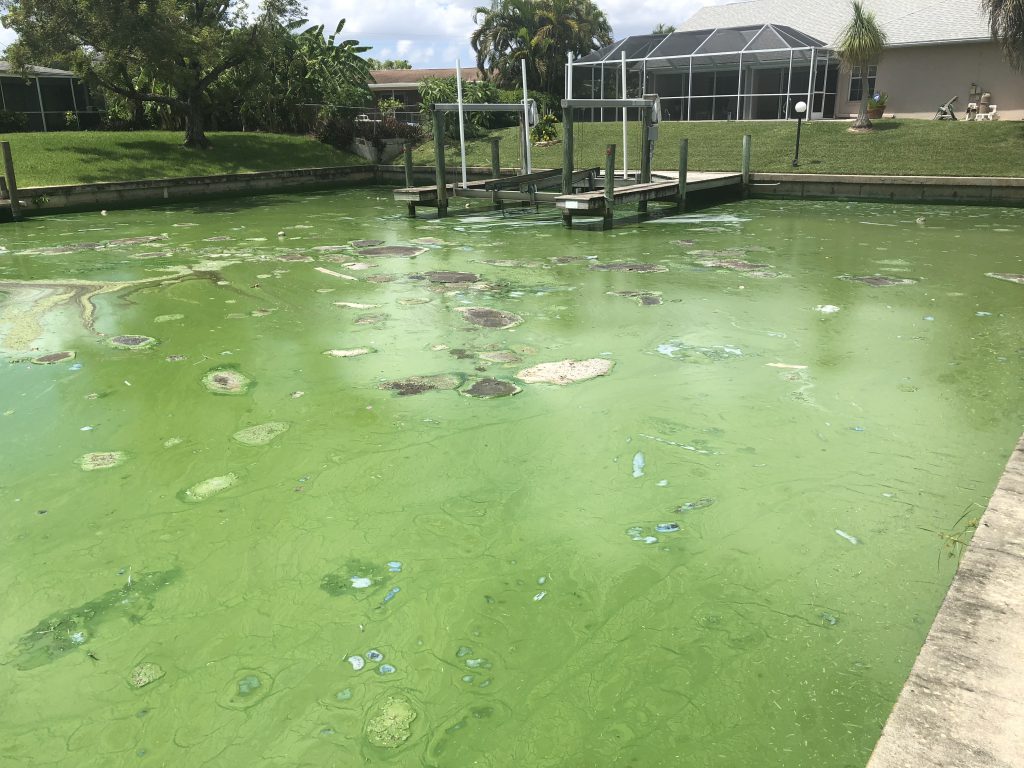
Algae are a natural feature in many aquatic ecosystems. Most lakes have some algae growth on a regular basis, especially during the warm summer months, but it is crucial to stay on top of the algae development since blooms can happen quickly – before you know it, there are ugly floating mats on the lake’s surface. Likewise, certain species like cyanobacteria (also referred to as blue-green algae) can create concerning conditions by releasing dangerous toxins into the water.

Here are some signs that a bloom may be harmful:

  • Visible pond scum on the lake’s surface
  • Various colors such as reddish-brown, blue-green, or pea soup color
  • Often looks like paint floating on the water

Toxicity of Blue-Green Algae

Each bloom’s toxicity can vary and it’s hard to predict how dangerous a bloom will be as its toxicity changes daily. If the lake on your property looks like it may be developing dangerous levels of algae growth, take immediate steps. Not all blooms are toxic, and the only way to be sure that a bloom may become toxic is through laboratory testing. However, it can take a few days to collect and test samples, and by then, it may be too late.

Why Do Lakes Have Algal Blooms?

Most often, harmful and toxic algal blooms occur because a lake or pond is not healthy. The lake may have an excess nutrient load due to the presence of too much phosphorus and nitrogen. When there are too many of these nutrients in the lake water, algae can overgrow or bloom.

A waterbody’s health can change year over year, depending on the weather and other factors in its surrounding environment. This is why a lake that was seemingly healthy suddenly experiences a bloom. This doesn’t necessarily mean the lake is destined for poor health, but it does indicate that there are imbalances that must be addressed.

Conditions that may change lake health and cause a harmful algal bloom include:

  • Changing weather and climate—longer dry spells can lead to more algal blooms.
  • Excess nutrients in sediment—nutrients are absorbed by the lake’s sediment but are sometimes released due to a variety of conditions that are difficult to predict
  • Development around a lake—if the lake or pond area is developed and the vegetation removed, there can be more pollution in the waterbody due to runoff
  • Water flow changes—if the water flow is no longer adequate, it may become stagnant and the temperature may rise, creating conditions that are favorable for algae blooms

What Are the Effects of Harmful Algal Blooms?

The toxins produced by harmful algal blooms can cause serious health impacts to pets, people, wildlife, and livestock. These health effects can range from skin irritation and rashes, gastrointestinal illnesses, neurological problems, and even death.


Strategies to Manage Harmful Algal Blooms

Once algae have overgrown enough to cause a large bloom, management can be challenging. Prevention is the best way to ensure harmful algal blooms don’t occur. Association boards and community managers can help prevent or minimize the risk of harmful algal blooms by taking the following steps:

  • Ensure there is plenty of water movement and dissolved oxygen by installing fountains and submersed aerators.
  • Pick up and properly dispose of pet waste, which is a common source of excess bacteria and nutrients.
  • Implement landscaping strategies such as xeriscaping that help improve groundwater filtration before the water enters the lake.
  • Replace manicured lawns or cement banking around the lake with native plants for additional filtration and shoreline stabilization. Allow native deep-rooted plants to grow close to the water’s edge.
  • Promptly remove grass clippings and leaves to prevent their decomposition in and around lakes and ponds.
  • Reduce nutrient-rich runoff by using phosphorus-free fertilizers and detergents.
  • Stock fish, such as triploid grass carp, that feed on algae and nuisance aquatic plants. Triploid grass carp are not legal in all states. Make sure to check your state regulations before stocking.

Maintaining Balanced Water Quality

To eliminate algae, the best course of action is to contact a freshwater management professional who can monitor and maintain balanced water quality and advise and apply appropriate management solutions. These professionals will ensure that the lake or pond’s water is clean and healthy and that the levels of algae remain at beneficial, manageable levels.

DOWNLOAD A FREE TOXIC ALGAE GUIDE


Tags: ,
BuildingLink – Forward Focus: Re-engineering for the next 20 years by Richard Worth Regional Sales Director – Florida

BuildingLink – Forward Focus: Re-engineering for the next 20 years by Richard Worth Regional Sales Director – Florida

  • Posted: Jan 25, 2022
  • By:
  • Comments: Comments Off on BuildingLink – Forward Focus: Re-engineering for the next 20 years by Richard Worth Regional Sales Director – Florida

BuildingLink – Forward Focus: Re-engineering for the next 20 years

by BuildingLink


The “What” and “Why” behind the changes BuildingLink is making.

BuildingLink has been hard at work – making our groundbreaking management system even better! The BuildingLink architecture we launched 20 years ago has withstood well the test of time – as evidenced by our amazing 5,800 property customer base. We know it is time to revisit and re-engineer what we had built, to make our management platform even more amazing. What are we currently working on?


We started with these core modules – Maintenance & Repairs, Amenity Reservations, Unit Overview, and Announcements – and have nearly completed rearchitecting their entire back end and front-end with these goals in mind:

·  Creating a state-of-the-art, eye-pleasing design.

·   Enhancing BuildingLink’s navigation experience by switching to a new single-page application (SPA) approach using Vue.js (instead of server-based page rendering) with dynamic drill-downs, pop-ups, and mouse-overs.

·   Implementing a super-secure back-end data layer built on API calls (technology that protects, limits, and speeds up access to your data).

·   Modularizing the code functionality to make it more predictable, reusable, and expandable by our developer team.

·   Preparing our site to support the latest and greatest in scalable, resilient technology – the stuff developers are excited to work with!

·   Moving to an entirely new and more “muscular” data center with better and faster servers and lots more internet connections. (Now Complete)

We hope you like what you have been seeing – we’re designing the changes by asking, managers, board members and BuildingLink fans to participate in our evolution through continuous user feedback.

We’ve already implemented more than 30 awesome suggestions from our valued BuildingLink users (THANK YOU!).


Rest assured that we take every bit of feedback to heart. We are working on the most important things first, the best way to influence the changes you would like to see is to please share with us your feedback
Call or email our Florida Sales Director

Thank you
Richard Worth
Regional Sales Director – Florida
407-529-6063
Richard@BuildingLink.com


Tags: