SFPMA

SFPMA Industry Articles | news, legal updates, events & education! 

Find Blog Articles for Florida’s Condo, HOA and the Management Industry. 

Legislative Changes on the Horizon by Becker

Legislative Changes on the Horizon by Becker

  • Posted: Jul 14, 2021
  • By:
  • Comments: Comments Off on Legislative Changes on the Horizon by Becker

The tragic Champlain Towers South collapse has resulted in an outpouring of support worldwide, while also raising safety concerns among those who reside in community associations in Florida.

Becker’s Community Association Law team hears from clients daily seeking advice on how to assess the structural integrity of their building. The firm has always advised that individual building evaluations can only be addressed with the involvement of a qualified engineer. Separately, clients request guidance on legal steps to help their association more easily navigate these complicated issues. It is apparent that additional resources are needed to help safeguard the significant percentage of Floridians living in communities.

For this reason, the Florida Bar has appointed the Condominium Law and Policy Life Safety Task Force. This group will serve as a resource to the Governor and Legislature as they review all aspects of Florida condominium law, development, association operations, and maintenance to determine and recommend if legislative and or regulatory changes should be enacted. The task force consists of eight members, including Becker Shareholder Joseph E. Adams. Joe currently serves as the Co-Chair of the Florida Bar’s Condominium and Planned Development Committee, and is a former Chair of the Florida Condominium Council appointed by the Florida Legislature.

The Condominium Law and Policy Life Safety Task Force will discuss possible initiatives such as more frequent and statewide mandatory structural certifications, reserve funding mandates, removing hurdles to a board’s ability to assess and borrow for necessary repairs, as well as exploring the feasibility of a government-backed low interest loan program.

Becker’s Community Association Law Team will continue to monitor these developments as they evolve and will share with you as soon as information becomes available.


Donna DiMaggio BergerJoseph E. AdamsKenneth S. Direktor | 07.09.2021
Perspective Type – Client Advisory


Selective Enforcement: A Grossly Misunderstood Concept in the entire body of community association law.

Selective Enforcement: A Grossly Misunderstood Concept in the entire body of community association law.

  • Posted: Jul 14, 2021
  • By:
  • Comments: Comments Off on Selective Enforcement: A Grossly Misunderstood Concept in the entire body of community association law.

Selective Enforcement: A Grossly Misunderstood Concept in the entire body of community association law.

by https://kbrlegal.com/

Without exception, the affirmative defense of “selective enforcement” is one of the most misunderstood concepts in the entire body of community association law. How often have you heard something like this: “The board has not enforced the fence height limitation, so it cannot enforce any other architectural rules”? Simply put, nothing could be further from the truth.

When a community association seeks to enforce its covenants and/or its board adopted rules and regulations, an owner can, under the right circumstances, assert an affirmative defense such as the affirmative defense of selective enforcement. An affirmative defense is a “yes I did it, but so what” type of defense. In civil lawsuits, affirmative defenses include the statute of limitations, the statute of fraudswaiver, and more. However, it’s just not as simple as that. For example, a fence height limitation is a very different restriction than a required set back. Under most if not all circumstances, the failure to enforce a  fence height requirement is very different from the failure to enforce a setback requirement. Ordinarily, the affirmative defense of selective enforcement will only apply if the violation or circumstances are comparable, such that one could reasonably rely upon the non-enforcement of a particular covenant, restriction, or rule with respect to their own conduct or action.

In the seminal case of Chattel Shipping and Investment Inc. v. Brickell Place Condominium Association Inc., 481 So.2d 29 (FLA. 3rd DCA 1986), 45 owners had improperly enclosed their balconies. Thereafter, the association informed all of the owners that it would thereafter take “no action with respect to existing enclosed balconies, but prohibit future balcony constructions and enforce the enclosure prohibition.” As you might have already predicted, nevertheless, thereafter an owner of a unit, Chattel Shipping, enclosed their unit; and the association secured a mandatory injunction in the trial court requiring the removal of the balcony enclosure erected without permission. The owner appealed. In the end, the appellate court disagreed with the owner who argued that the association decision to enforce the “no enclosure” requirement only on a prospective basis was both selective enforcement and arbitrary. The court held that the adoption and implementation of a uniform policy under which, for obvious reasons of practicality and economy, a given building restriction will be enforced only prospectively cannot be deemed “selective and arbitrary.”

In Laguna Tropical, A Condominium Association Inc. v. Barnave, 208 So. 3d 1262, (Fla. 3d DCA 2017), the court again used the purpose of the restriction in its determination of whether the association engaged in selective enforcement. In Laguna Tropical, a rule prohibited floor covering other than carpeting unless expressly permitted by the association. Additionally, the rule provided that owners must place padding between the flooring and the concrete slab so that the flooring would be adequately soundproof. In this case, an owner installed laminate flooring on her second floor unit and the neighbor below complained that the noise disturbed his occupancy. As a result of the complaint, the association demanded that the owner remove the laminate flooring. However, the owner argued selective enforcement because the association only enforced the carpeting restriction against the eleven exclusively upstairs units in the condominium. The court noted that the remaining units in the condominium were either downstairs units only, or were configured to include both first-floor and second-floor residential space within the same unit.

Again, the court looked to the purpose of the prohibition on floor coverings other than carpet and found that the prohibition was plainly intended to avoid noise complaints. Therefore, no selective enforcement was proven because no complaints were shown to have arisen regarding any units except the eleven exclusively upstairs units.

What about cats and dogs? In another case, Prisco v. Forest Villas Condominium Apartments Inc., 847 So. 2d 1012 (Fla. 4th DCA 2003), the Fourth District Court of Appeals heard an appeal alleging selective enforcement regarding the association’s pet restrictions. The association had a pet restriction which stated that other than fish and birds, “no pets whatsoever” shall be allowed. In this case, the association had allowed an owner to keep a cat in her unit, but refused to allow another owner to keep a dog. The association argued that there was a distinction between the dog and the cat. However, on appeal, the court found that the restriction was clear and unambiguous that all pets other than fish and birds were prohibited. Therefore, the court reasoned that the facts which make dogs different from cats did not matter because the clear purpose of the restriction was to prohibit all types of pets except fish and birds. In other words, the court held that the plain and obvious purpose of a restriction should govern any interpretation of whether the association engaged in selective enforcement.

If an association has a “no pets” rule and allows cats, must it allow dogs, too? There is a long line of arbitration cases that have distinguished dogs from cats and other pets for purposes of selective enforcement. For example, in Beachplace Association Inc. v. Hurwitz, Case no. 02-5940, a Department of Business and Professional Regulation Division of Florida Condominium Arbitration case, the arbitrator found, in response to an owner’s selective enforcement defense raised in response to the association’s demand for removal of a dog, that even though cats were allowed, that comparison of dogs to cats was not a comparative, like kind situation. Further the arbitrator found that cats and dogs had significant distinctions such as barking versus meowing, and therefore the owner’s attempted use of the selective enforcement argument failed.

But, in Hallmark of Hollywood Condominium Association Inc. v. Andrews, Case 2003-09-2380, another Department of Business and Professional Regulation Division of Florida Condominium Arbitration case, the learned arbitrator James Earl decided that because the association has a full blown “no pets of any kind”  requirement and since cats were allowed, then dogs must be allowed, too. In other words, the defendant owner’s waiver defense worked. But, the arbitrator wisely noted in a footnote as follows: “The undersigned notes that there is a long line of arbitration cases that have distinguished dogs from cats and other pets for purposes of selective enforcement. However, the fourth district court of appeal has ruled that where the condominium documents contain particular language prohibiting all pets, any dissimilarity between dogs and cats is irrelevant and both must be considered. See Prisco.” The distinction between the two arbitration cases could be explained because of timing in that the 4th DCA’s decision in Prisco was not yet published when Hurwitz was decided.

From these important cases, it can be gleaned that

(i) even if an association has ignored a particular rule or covenant, that by giving written notice to the entire community that it will be enforced prospectively, the rule or covenant can be reinvigorated and becomes fully enforceable once again (though of course, prior non-conforming situations may have to be grandfathered depending on the situation),

(ii) if an association or an owner is seeking an estoppel affirmative defense, they must be sure all of the necessary elements are pled,

(iii) at times a court will look to the purpose of the rule itself where it makes sense to do so, and

(iv) dogs and cats are different, but they are both considered “pets.”

Remember to always discuss the complexities of re-enforcement of covenants and rules and regulations that were not enforced for some time with your association’s legal counsel in an effort to mitigate negative outcomes. The process (commonly referred to as “republication”) can restore the viability of a covenant or rule that may have been waived due to the lack of uniform and timely enforcement.


JOIN US FOR A DOUBLE WEBINAR ON JULY 28TH, 2021.

JOIN US FOR A DOUBLE WEBINAR ON JULY 28TH, 2021.

  • Posted: Jul 14, 2021
  • By:
  • Comments: Comments Off on JOIN US FOR A DOUBLE WEBINAR ON JULY 28TH, 2021.

JOIN US FOR A DOUBLE WEBINAR ON JULY 28TH, 2021.

GREGG WALLICK WILL BE TEACHING ROOFING 101 AND WILL BE POINTING OUT DANGER SIGNS IN YOUR ROOF AND ANSWERING ALL OF YOUR QUESTIONS.

ATTORNEY ERIC GLAZER KNOWS THAT ASSOCIATIONS ARE MORE EAGER THAN EVER TO BEGIN MAKING REPAIRS, BUT WILL TEACH THE IMPORTANCE OF CONTRACT REVIEW BEFORE SIGNING ON THE DOTTED LINE.

TO REGISTER FOR THIS ON-LINE WEBINAR: CLICK HERE

If a 2008 Florida law that required condos to plan for repairs had still been in place, “this never would have happened,” said the legislator who sponsored the law.

If a 2008 Florida law that required condos to plan for repairs had still been in place, “this never would have happened,” said the legislator who sponsored the law.

  • Posted: Jul 08, 2021
  • By:
  • Comments: Comments Off on If a 2008 Florida law that required condos to plan for repairs had still been in place, “this never would have happened,” said the legislator who sponsored the law.

If a 2008 Florida law that required condos to plan for repairs had still been in place, “this never would have happened,” said the legislator who sponsored the law.


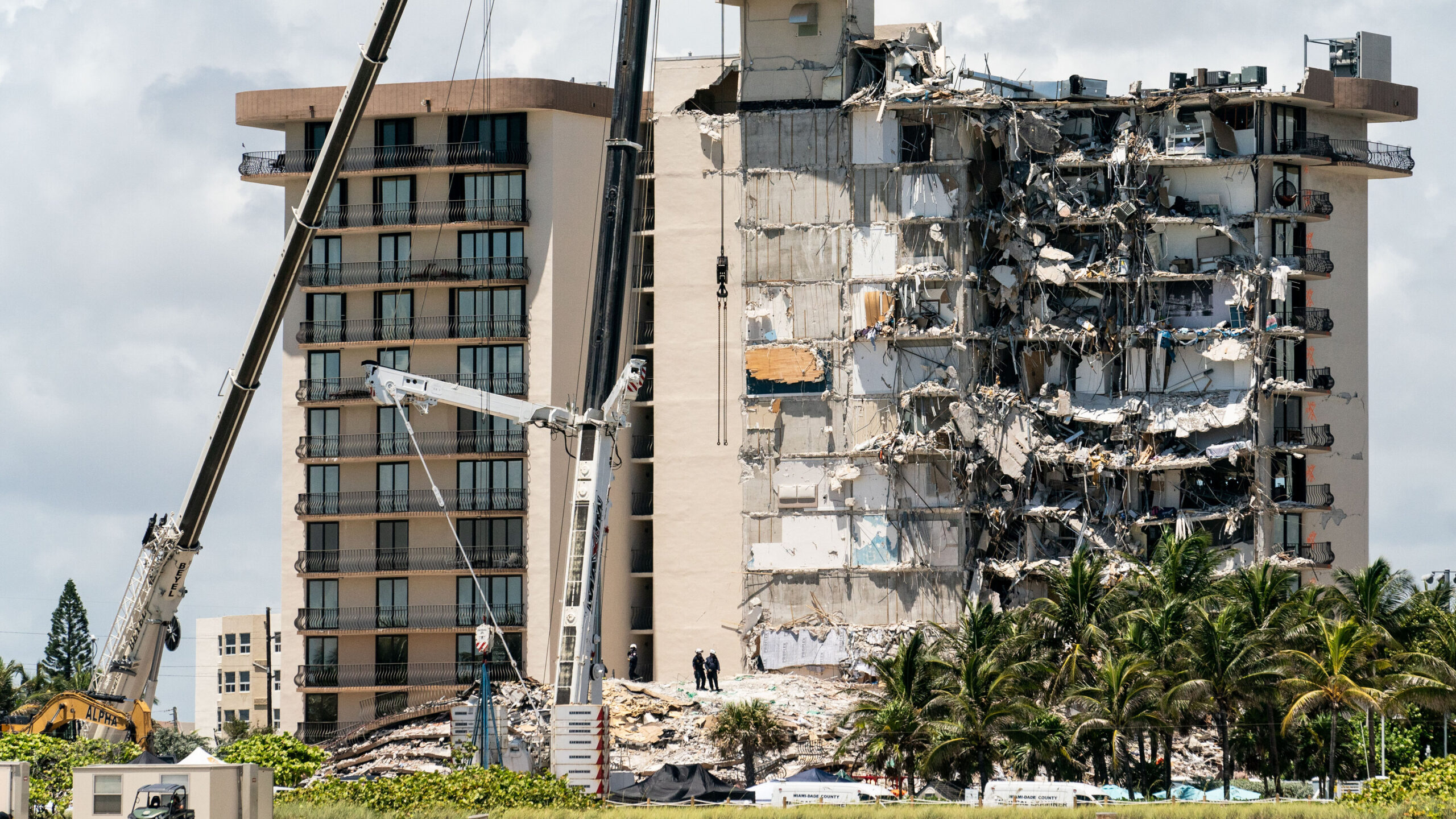
SURFSIDE, Fla. — Late last year, after years of delays and disputes, the Champlain Towers South Condominium Association began a desperate search for $16.2 million to fix major structural damage that was slowly threatening the Surfside high-rise — and that may have contributed to the building’s partial collapse June 24.

The obvious place to look was the building’s reserve fund — extra money socked away to cover the cost of future repairs. But the account held just $777,000, according to condo board documents — nowhere near enough to soften the blow.

The collapse, which killed at least 64 people and left 76 others missing, occurred before the condo board could collect the needed money from residents and begin repairs. The cause of the collapse is unknown, and investigators, experts and advocates are trying to determine whether the uncompleted repairs played a role, whether the board could have seen the problem coming earlier — and whether a Florida law regulating condo repairs that was repealed a decade ago could have made a difference.


One way to keep track of needed repairs is a “reserve study,” in which condo boards bring in experts like engineers or certified specialists every few years to inspect buildings and estimate how much the boards should collect from residents to prepare for future fixes. The building’s financial documents, obtained by NBC News and NBC 6 South Florida, show that Champlain Towers South had not done a professional reserve study since at least 2016. That decision was legal, but it meant that planning was left to the board, a shifting group of volunteers with little training in building maintenance.

“If the owners would have had a reserve study, if the board was proactive and had funded its reserves, this never would have happened,” said Julio Robaina, a former Republican state legislator.

Robaina sponsored a 2008 law requiring condo associations to hire engineers or architects to submit reports every five years about how much it would cost to keep up with repairs.

The law lasted just two years before it was repealed in 2010, after Robaina left office. Robaina blamed pushback from real estate lawyers and property managers, who he said claimed that the law was too burdensome for condo owners. The legislator who sponsored the repeal, former state Rep. Gary Aubuchon, a Republican real estate broker and homebuilder, did not reply to messages seeking comment.


The repeal left Florida’s condo residents less protected than those in nine states that legally require reserve studies, according to the Community Associations Institute, a nonprofit organization that advocates for condo associations. Thirty-one other states, including Florida, regulate reserves in some way — although Florida is one of three states with loopholes that enable owners to opt out of requirements, the nonprofit said. Ten states have no regulations about reserves at all.

“One of the steps that should be taken by a building, especially an aging building, is having adequate funds available so that when you have to face significant cost challenges there’s an appropriate amount of money available,” said Gary Mars, a South Florida lawyer who represents condo associations.

survey last year by the Community Associations Institute found that most homeowners associations are hesitant to increase residents’ fees, anticipating opposition, and therefore fail to plan for long-term infrastructure fixes.

“In postponing inspections, reserve studies, and — ultimately — complete repairs or renovations, boards often end up facing an exponentially more comprehensive and expensive project in the long run,” the report said.


Maxwell Marcucci, a spokesman for the Champlain Towers South Condominium Association, declined to comment on reserve studies. In a previous statement to NBC News, he said the condo board was doing its best to ensure the building was safe. “They are not engineers and not building safety experts,” Marcucci said. “They hired experts, trusted experts, and at no point did the experts indicate that there was a threat of imminent collapse.”

The lack of a professional reserve study is a departure from what many experts say is best practice for condominiums, particularly older ones on the coast — like Champlain Towers South, built in 1981 — that have been exposed for decades to corrosive salt and water.

Robaina, who co-owns a property management company, said maintaining healthy reserves “is the single most important action that a condominium board needs to take.”

Florida law requires condo boards to maintain reserves for repairs over $10,000, but it does not say exactly how much to set aside. That means condo boards have some flexibility in avoiding saving for repairs that do not need to be made right away.

In addition, the law allows condo buildings to waive the reserve requirement altogether. Once it has passed its annual budget, a condo board can give residents the opportunity to opt out of collecting reserves by a vote of a majority of unit owners. The votes are common in Florida condo buildings, condo lawyers say.

That is what it appears Champlain Towers South did, lawyers and reserve experts said.

The experts pointed to the board’s reliance on special assessments — additional fees on top of residents’ normal monthly payments — to fund needed repairs. The board imposed a $1 million special assessment in 2016 for hallway renovations and a $350,000 special assessment in 2019 for work on a generator, a fuel pump and a fuel tank. Such lump-sum levies are indicative of a building whose owners have decided not to set aside enough reserves through regular monthly fees, choosing instead to wait until a big-ticket repair is needed to ask residents to pay for it, experts said. Many associations make that choice by repeatedly voting to waive or reduce the funding of their reserves.

“I can’t help but think that the building did that for years and years, which is why there was not enough funds available,” said Matthew Kuisle, Southeast regional director for Reserve Advisors, which prepares reserve studies. “Why would they do that? So they have lower fees. But in the long run, the fees are a small price to pay.”

The shortcomings of that approach started to become clear in 2018, when the board began inspecting the building before a checkup mandated by Miami-Dade County for buildings that reach 40 years old. In an October 2018 report, engineer Frank Morabito alerted the board to “major structural damage” to concrete slabs underneath the building’s pool deck and its entrance drive. He blamed a “major error” in the building’s construction and years of corrosion. He estimated the cost of repairs at $9 million.

Reeling from sticker shock, the board invited a Surfside building official to its November 2018 meeting. The official told the board that the building was “in very good shape,” according to minutes of the meeting. Some residents have said that led them to believe the situation was not dire.

Even so, the board began trying to find a way to repair the damage — and to pay for it.

Disagreements over the costs frustrated board members. Five members quit over two weeks in fall 2019. The condo association has had four presidents since 2018.


By late last year, the board had accepted that there was no safe way forward without doing the massive reconstruction Morabito recommended, along with repairs to a deteriorating roof. Morabito began preliminary work and found that the damage discovered in 2018 had gotten worse. The bill rose to more than $16 million.

The board scrambled for money. It found $707,000 left over from the previous special assessments and $777,000 more in reserves. But a quarter of the reserves were designated for insurance deductibles, leaving $556,000. The board chose not to tap the reserves just in case there was another emergency. That meant the building was short by $15.5 million, which the board voted in April to raise through a special assessment. The cost to residents would be $80,000 to $360,000 per unit.

“A lot of this work could have been done or planned for in years gone by. But this is where we are now,” board President Jean Wodnicki wrote to residents before the vote.

By last month, the board had started work on the roof, and it put other repairs out for bid. Responses were due July 7. Two weeks before the deadline, the building partly collapsed.

The board’s nearly three-year struggle to start work on the concrete replacement project has loomed over the catastrophe’s aftermath. Investigators have not determined what caused the failure; the deteriorating supports are among the possibilities.

Experts say the extent of disrepair documented in the 2018 report raises questions about how the damage went unnoticed previously.

“I read the report, and I wondered how long the building looked that way,” said Robert Nordlund, founder and CEO of Association Reserves, a reserve study firm based in California. “Did it look that way in 1998? 2008? Because clearly there was some significant deterioration in that 2018 report.”


Documents reviewed by NBC News and NBC 6 South Florida, including audits, budgets, financial statements and board meeting minutes, do not indicate when the structural issues noted by Morabito started, though the board did pay to replace leaking pipes in the building’s parking garage in 2016. But the documents do show that the board did not perform professional reserve studies and instead relied on board members to determine how much to set aside for repairs. In 2016, an accountant performing a year-end audit noted that “an independent study has not been conducted to determine the adequacy of the current funding” and that “the estimates for future replacement costs are based upon estimates provided by the budget committee.”

Audits conducted by the same accountant in 2017, 2018 and 2019 included the same language. Last year, a different accountant provided a similar disclaimer.

Mars, the lawyer who represents condo associations, said he believes that the note was “the CPA saying, ‘We don’t have any official documentation to rely on.'”

The accountants who conducted the audits did not respond to messages seeking comment.


Jeffrey Rembaum, another lawyer for condo associations, pointed to figures in the audits that showed that from 2016 to 2020, the board did not update the amount of money needed to replace balconies and concrete. Each year, the board estimated needing $320,000 for the work, even after Morabito’s report found that much more extensive and costly repairs were needed.

“We know the building had millions in concrete repairs on the horizon,” Rembaum said. “So how did it come up with $320,000 for their current needs? If they’d had a reserve study and an engineer looked at what they had, they would have come up with a higher number. That suggests the board wasn’t regularly updating it.”

He added: “This is the effect of the Florida Legislature not requiring a reserve study by qualified people.”

More than a decade since his short-lived law on reserve studies was repealed, Robaina said he hopes lawmakers will change course and reimpose the mandate.

“This is a window of opportunity,” he said, “and unfortunately it took a tragedy that could have been prevented.”

Jon Schuppe reported from New York; Phil Prazan reported from Surfside, Florida

By Jon Schuppe and Phil Prazan, NBC 6 South Florida


Tags: ,
Is It Time To Amend Your Condominium Declaration? by Becker

Is It Time To Amend Your Condominium Declaration? by Becker

Is It Time To Amend Your Condominium Declaration?

BY   / Becker


Does your Declaration of Condominium still refer to Chapter 711 as the Florida Condominium Act? Well, maybe it is not that old, but perhaps it has been a decade since it has been revised. If that is the case, then it may be time to amend the governing documents to ensure that they include the most recent amendments to the Condominium Act and address changes in your community’s needs which have developed over time.

Section 718.110(1)(a), Florida Statute, provides that if a declaration fails to provide a method of amending the document, it may be amended, as to most matters, if the amendment is approved by owners of not less than two-thirds (2/3rd) of the units. There are two major exceptions, however. First, changing any appurtenances to the unit or changing an owner’s percentage share in the common expenses requires the approval of all owners and all lienholders, unless the original declaration provides otherwise. Second, an association cannot amend a declaration to create timeshares without the approval of the all owners and all lienholders, unless the original declaration provides otherwise.

Now that you know the basics of an amendment, lets discuss “why” in terms of a growing issue in Florida (i.e., short term rentals). If the goal is to amend the declaration to address the onslaught of short term rentals popping up with more and more frequency in condominiums, Section 718.110(13) must be considered. This statute provides that any amendment prohibiting owners from renting their units, altering the duration of the rental term, or limiting the number of times owners are entitled to rent will only apply to owners who agree to the amendment and to owners who purchase their unit after the effective date of the amendment. The amendment however limited it seems now, may be prudent today nonetheless. Why? Because it may take a bit for the new restrictions to apply to all owners and those short term rental investors while gaining momentum are still in the minority.

Amendments should not be taken lightly. If an amendment is done incorrectly, it will be deemed void or invalid. Once you have ideas as to what your Association needs in light of what the governing documents provide, it is important to meet with the Association’s attorney to discuss these. The attorney can then advise of those changes which would be permitted and craft language aimed at meeting the Association’s needs harmonizing those with the Condominium Act.


Robyn M. Severs

Shareholder / Orlando
904.423.5372
RSEVERS@beckerlawyers.com


Tags: , ,
New Requirements for Collection of Delinquent Assessments

New Requirements for Collection of Delinquent Assessments

  • Posted: Jul 07, 2021
  • By:
  • Comments: Comments Off on New Requirements for Collection of Delinquent Assessments

New Requirements for Collection of Delinquent Assessments

Robert Kaye, Managing member of Kaye Bender Rembaum, recently wrote an informative and telling article explaining the new collection procedures mandated to be in effect July 1, as a result of  the 2021 legislation. Every board member, manager, and developer needs to be aware of these important changes.

———————————–

The Florida Legislature has revised the procedures for collecting delinquent assessments, which add additional steps and delays for the owner to pay before legal action can commence and/or attorney’s fees can be recovered. Senate Bill 56 has revised Sections 718.116 and 718.121 for condominiums; 719.108 for cooperatives; and, Section 720.3085 for homeowners’ associations. With these changes, the collection procedures for all of these types of communities will be substantially the same. The new laws are effective July 1, 2021.
Initially, the new provisions have revised the time for the notices sent by the association attorney for condominiums and cooperatives to 45 days for both the pre-lien first letter and the post-lien notice of intent to foreclose. (Homeowners’ associations were already at 45 days).

The most important and significant addition to this statutory change is the addition of a new notice requirement by associations before they may refer a matter to the association attorney for collection and recover the attorney’s fees involved. This written notice is required to be mailed by first class mail to the address of the owner on file with the association. If the address on file is not the unit or parcel address, a copy must be sent there as well. The association is also required to keep in its records a sworn affidavit attesting to the mailing. The new statute contains a form for that notice which is required to be substantially followed.

As the respective statutory provisions now indicate, associations must incur a minimum of 120 days of collection efforts before a foreclosure action can begin, with a total of three (3) separate required statutory notices. This includes the: (i) initial 30 day notice of the intent to refer the matter to the association attorney (for which no attorney’s fees can be charged to the owner); (ii) 45 days for the pre-lien notice period; and, (iii) 45 days for the pre-foreclosure lien period. As such, in order to best protect the interests of the association, it is recommended that the first 30-day notice be sent at the earliest possible date in the association collection process. This will typically be when the governing documents indicate the assessment to be “late”. Careful review of the governing documents by legal counsel should be undertaken to determine whether there is a specific “grace period” indicated in the documents before the assessment is considered late. Once that determination is made, the board should adopt a formal collection policy that incorporates these new statutory requirements, which will also need to be mailed to all owners. A new provision has also been added that begins with “If an association sends out an invoice for assessments. . .” to unit or parcel owners, such notice is to be sent by first class mail or electronic transmission (email) to the respective addresses for the owners that are in the association official records.

Moreover, if the association wishes to change the method of delivery of an invoice, the new Statute creates specific steps that must be followed precisely in order for the change to be effective. Specifically, a written notice must be delivered to the owner not less than 30 days before the change of delivery method will be implemented. The notice must be sent by first class mail to the address on file with the association. If the address on file is not the unit or parcel address, a copy must be sent there as well. In addition to the notice requirement, the owner must “affirmatively acknowledge” his or her understanding of the new delivery method. The written acknowledgment can be sent electronically or by mail, and must be maintained in the Official Records (although it is not available for inspection by other owners). However, without this acknowledgment, the association may not change the method of delivery. The Statute does not presently include a time frame for the owner to provide that acknowledgment or offer any remedy to the association if none is forthcoming. This can be particularly daunting or problematic when the association changes management companies, when the new company’s procedures differ from the prior company.Before the association attorney can commence any collection work for an association, it will be necessary for the association to provide all of the backup documentation of the compliance with each of these new statutory requirements, as well as the information previously required (such as a current account ledger). If any of the documentation is missing with the initial turnover information, there will be delays in the collection process, which can be detrimental to the association operation. It is therefore imperative that these new procedures are fully integrated into the association operation without delay. We recommend that you contact your Association counsel with any questions on the new procedural requirements to ensure compliance.

Jeffrey Rembaum’s, Esq. of Kaye, Bender, Rembaum attorneys at law, legal practice consists of representation of condominium, homeowner, commercial and mobile home park associations, as well as exclusive country club communities and the developers who build them. Mr. Rembaum is a Certified Specialist in Condominium and Planned Development Law. He is the creator of ‘Rembaum’s Association Roundup’, an e-magazine devoted to the education of community association board members, managers, developers and anyone involved with Florida’s community associations.  His column appears monthly in the Florida Community Association Journal. Every year since 2012, Mr. Rembaum has been selected to the Florida Super Lawyers list and was also named Legal Elite by Florida Trends Magazine. He can be reached at 561-241-4462.


Tags: , ,
LET’S NOT FOCUS ON BLAME – AND FOCUS ON CHANGE INSTEAD  By Eric Glazer, Esq.

LET’S NOT FOCUS ON BLAME – AND FOCUS ON CHANGE INSTEAD By Eric Glazer, Esq.

  • Posted: Jul 05, 2021
  • By:
  • Comments: Comments Off on LET’S NOT FOCUS ON BLAME – AND FOCUS ON CHANGE INSTEAD By Eric Glazer, Esq.

LET’S NOT FOCUS ON BLAME – AND FOCUS ON CHANGE INSTEAD

By Eric Glazer, Esq.

Published July 7, 2021


As they say…hindsight is 20/20. The tragedy in Surfside rips your guts out. I had to go there and see it for myself. I did. I then walked over to the memorial and saw pictures of the victims, including little kids, entire families and you wonder how anything like this could have possibly happened. Immediately you want to blame someone. You want justice. You want someone to pay for what happened here. It’s only natural to feel that way. But we need to try to calm down and think this out rationally.

It all starts with the fact that there has NEVER been a building collapse like this that anyone is aware of, not only in Florida, but anywhere in the entire country. Think about that. This has never happened before. There is no precedence for this disaster. Did the Board members have engineering reports warning them that the concrete would deteriorate exponentially if not replaced? Yes they did. Were they told the building would collapse if they don’t immediately fix it? No, they weren’t. In fact, it appears that the Chief Building Official in Surfside actually attended a board meeting and told the community that the building was fine and not in any danger.

The Board no doubt figured that this massive project needs an intense amount of planning. The association needs to apply for a loan. The board needs to prepare for a special assessment. Engineers need to prepare a bid package. The right contractor has to be chosen. This does not happen overnight and it appears that the Board accomplished almost all of these things. Those of you who live in condominiums also know that those board members must have also been fighting intense pressure from many unit owners not to pass a $15,000,000.00 special assessment in the middle of the COVID pandemic no less! While I’m sure the Board members knew that the more time it takes, the more damage would occur and additional repairs would be needed, none of them thought for a moment that delay would result in the collapse of the building. If they did, some of them wouldn’t have been there when the building collapsed. Had the Board members been told by professionals that this building could collapse, then I would change my tune. But there is no evidence that they were told.

Going forward, rest assured that from now on when an engineer inspects a condominium building and observes concrete spalling, the report will indicate that the building may collapse if not repaired promptly. There is nothing to lose by placing that in a report from now on, but perhaps a lot to lose if you fail to place that in a report.

We tend to forget that the average Joe or Sally on a Board of Directors is not an engineer, general contractor or condominium or construction attorney. Many of them have no experience whatsoever in how buildings are constructed and maintained. All they can do is rely on what their experts are telling them. I don’t see any experts telling this board at the Champlain Towers South that this building may collapse. How then can they be expected to know that it would?

Again, this tragedy provokes an automatic impulse in all of us that somebody must be held accountable here. Somebody must pay. Some have even called for criminal prosecution of the Board. As many of you know, being a board member is a thankless job. On your best day, you are harassed, yelled and cursed at, and always second guessed. It’s hard enough to get volunteers to serve on the Board. If you are going to hold directors individually or criminally liable when accidents happen, even tragic accidents, that have never before happened anywhere in any building you are headed down a very dangerous path where it would not make sense for anyone to take the thankless board member position out of fear of losing their money or even their liberty. You would have to be nuts to volunteer.

So while we all want some justice here and some answers, I urge everyone to take the focus off of the Board for a moment. They are too easy a target and should not be made the scapegoat here. Maybe we need to ask why buildings on the ocean don’t have to pass an annual inspection every year by the county or municipality. Maybe we need to ask if there should be stricter scrutiny of buildings built before massive changes to the South Florida Building Code were made after Hurricane Andrew, like the Champlain Towers South. Maybe we need to ask why municipalities are now asking their Building Departments to inspect tall buildings, but never required it previously. Maybe we need to find out why the elevators have to pass an annual inspection but not the structure of the building itself. Maybe we need to find out why the first time a building gets inspected is at the 40 year recertification requirement and why that is only a requirement in Miami-Dade and Broward Counties. If you want to find someone or something to blame for this catastrophe, this is where I would start.


Tags: , ,
Becker is proud to announce that the firm has signed The Diversity in Government Relations Coalition Industry Pledge.

Becker is proud to announce that the firm has signed The Diversity in Government Relations Coalition Industry Pledge.

  • Posted: Jul 03, 2021
  • By:
  • Comments: Comments Off on Becker is proud to announce that the firm has signed The Diversity in Government Relations Coalition Industry Pledge.

Becker is proud to announce that the firm has signed The Diversity in Government Relations Coalition Industry Pledge.


The DGR Coalition aspires to foster and strengthen diversity, equity, and inclusion among entities that influence local, state, and federal policy through data collection, strategic communications, and stakeholder engagement. This pledge is part of its greater non-partisan efforts to “put forth evidence-based best practices that govern our actions…throughout the field.”

The Diversity in Government Relations Coalition Industry Pledge, a first-of-its-kind in the government relations industry, reads:

“We commit to increasing understanding of diversity, equity, and inclusion (DEI) and its impact on the government relations field; intentionally addressing the gaps in diverse representation of our staff and our leadership teams that influence local, state, federal and international policy; and exploring the unintended consequences that result from policy and advocacy that lack diverse representation, voice, and perspective.”

“Becker is delighted to align ourselves with the Coalition’s goal of creating an equitable, inclusive future,” said Omar Franco, leader of the firm’s Federal Lobbying practice and the firm’s designee to sign the pledge. “The firm and, in particular, its Government Law & Lobbying team have long understood the importance of having all voices represented in our ranks; signing this pledge is yet another way we can be a proactive part of the conversation.”

Becker is also a member of the Law Firm Antiracism Alliance (LFAA), a partnership of over 285 law firms committed to racial equality. The LFAA’s mission is to collaborate with racial justice legal service organizations and law firms’ pro bono teams to confront the root cause of racism.

For further samples of Becker’s commitment to diversity and inclusion, please view the perspectives below:

Becker’s Government Law & Lobbying practice counts its racial, ethnic, gender and political diversity as an integral part of its formula for success. The team believes its diversity provides clients with the distinct advantage of collaborating with an array of state and federal legislators and local government officials from both sides of the aisle, as well as the various caucuses. To learn more about the Government Law & Lobbying practice, please click here.

For more information about the DGR Coalition and how to participate in its Industry Pledge, please click here.


Tags:
Do Boating Accident Cases Differ From Car Accident Cases? Yes and No

Do Boating Accident Cases Differ From Car Accident Cases? Yes and No

  • Posted: Jun 29, 2021
  • By:
  • Comments: Comments Off on Do Boating Accident Cases Differ From Car Accident Cases? Yes and No

Do Boating Accident Cases Differ From Car Accident Cases? Yes and No

Victims of both car and boating accidents often suffer severe injuries caused by the negligence of others and may be entitled to compensation if they can demonstrate how another person’s lack of responsibility caused their injuries.
Often, boating and car accident cases can be different and victims need to understand what makes their case unique. Work with an accident lawyer experienced in representing victims of BOTH.
Boating Accidents May Involve Maritime Law
Car accident cases are handled under state personal injury laws. Boating accidents may involve Florida laws or federal maritime laws, or both. These laws can apply to injuries occurring in interstate navigable waters, so any boating accident on a body of water, not landlocked within a single state could potentially be covered by maritime laws.
Some courts, however, only apply maritime law in certain types of cases.
Is this confusing? Absolutely.
Maritime laws can affect a victim’s ability to recover compensation., It is a good idea if injured in a boating accident to consult an attorney who understands how to argue for and against the application of maritime law.
Boating accident victims should consult a lawyer who knows how to succeed in both!.
Experience is Key
If you were injured in an accident that may have been caused by another person’s failure to act responsibly, contact our lawyers today for a free consultation.

Maus Law Firm

954-784-6310

Mr. Maus is a Florida native practicing law in South Florida since 1993. He currently limits his practice to the areas of insurance related claims – personal injury and homeowner property damage claims and commercial litigation. Mr. Maus has tried over 60 jury trials to verdict and has litigated claims throughout Florida.

A TRAGEDY WITH MORE QUESTIONS THAN ANSWERS  By Eric Glazer, Esq.

A TRAGEDY WITH MORE QUESTIONS THAN ANSWERS By Eric Glazer, Esq.

  • Posted: Jun 29, 2021
  • By:
  • Comments: Comments Off on A TRAGEDY WITH MORE QUESTIONS THAN ANSWERS By Eric Glazer, Esq.

A TRAGEDY WITH MORE QUESTIONS THAN ANSWERS

By Eric Glazer, Esq.

Published June 28, 2021

 I was lucky enough to be on vacation the past two weeks.  On my last day, I woke up to the tragedy that was unfolding in Dade County as the Champlain Towers South Condominium came crashing down in Surfside.  There are still over 150 people missing or unaccounted for.  Before commenting on this devastation that will no doubt change the way Boards and counties and municipalities inspect condominiums going forward, let’s start by feeling terrible for the victims and families of this tragedy.  My heart truly goes out to them.

I’ve seen a lot of strange things happen in my legal career.  I’ve seen owners spray their unit with ammunition from an AK-47.  I’ve seen unit owners throw contents of an entire apartment over their 20 story balcony from roid rage, I’ve seen owners store dangerous toxic chemicals in their unit.  But, you know what I have never seen………..a building like the Champlain Towers simply collapse.  Sorry, I’ve never seen that before.  We have all seen buildings that collapsed after a terrorist attack and buildings that were destroyed by a hurricane.  But I don’t believe we have seen anything quite like what happened here.

So…….what the hell really happened?

Apparently, an Engineer gave the Board of Directors a report in October of 2018 that found “failed waterproofing is causing major damage to the concrete slab.  Failure to replace the waterproofing in the near future will cause the extent of the concrete deterioration to expand exponentially.”  The engineer recommended a very expensive but necessary process to correct this.  In the garage, there was evidence of cracking and spalling in the concrete columns, beams and walls —- with exposed rebar.  “Most of the concrete needs to be repaired in a timely fashion.  Clearly, the Board knew about structural defects that needed repair.  The question is, did those necessary repairs go unanswered and if so, was that the cause of this tragedy.  I am not blaming anyone for anything.  However, the lawyer in me tells me that buildings don’t just simply fall down without any warning signs whatsoever.  .  But here is what I want to know and see:

  1. Has the City or County previously notified the condominium about any structural defects?  If so when and how?
  2. Has any contractor or engineer notified the condominium about any structural defects?  If so, when and how?
  3. Has any engineer or contractor inspected the property or performed repairs on the property that could have caused damage that led to this disaster?
  4. Has any unit owner or the association made any material alterations to the property by removing any structural walls?
  5. Was the Board ever made aware that the structure of the building needed repair?  If so, when and how?
  6. Was the board aware that balconies were spalling and rebar was rusting?  If so, what did they know and when did they know it?
  7. Has the insurance carrier performed any inspections of the property and if so, when and what were the results?
  8. Has the County required a 40 year certification regarding the structural and electrical components of the building?  If so, what were the results?
  9. Was a reserve study performed on the condominium?  When?  What were the results?
  10. What bid packages were sent to contractors?  When were bids received?
  11. What follow-up was done by the association with the engineer of the 2018 report?
  12. What was discussed at Board meetings regarding the need for repairs to the structure?
  13. Were any owners complaining about damage in their unit or parking spots?

The results of reviewing these documents are crucial for several reasons and may lead to a need to review additional documentation.

In addition to their unit, many people at Champlain Towers South lost every piece of personal property they owned.  They lost all of their furniture, appliances, electronics, clothing, jewelry etc… If they did not have an HO-6 insurance policy, the only way they can get reimbursed for their loss is by proving negligence against the association.  The above documents will be crucial in knowing whether or not there was or was not negligence here. If there was, owners can sue the association for damages .  If there wasn’t, the owners suffered a total loss without a chance for recovering damages for their personal property.  And by the way…….just because the building exploded and people died does not relieve any of these owners from having to continue to pay their mortgages while now having to find a new home.  It is a tragedy on many levels.

As many of you know, in both Miami-Dade and Broward County, condominiums are required to undergo a 40 certification process whereby an engineer must attest that the building is structurally safe and electrically safe.  If you can believe it, it appears that the Carlisle was in its 40th year.  Apparently, there was a demand for certification by the county.

It would not surprise me if we see a change going forward, reducing the 40 year certification to 30 years or even less.  I think engineers are about to be busy.  I don’t think anyone in condominium buildings will ever turn a blind eye to cracks in the concrete that is so often done.

I pray for the families that have suffered a loss and/or still don’t know for sure if a loved one is among the rubble.  I also pray that the Boards of Directors of every condominium understand the immense power they have to potentially save lives by making sure the property is always safe and sound.  Too many times you hear about not being able to afford necessary repairs.  Too many times the can is kicked down the road.  The reserves are waived for the umpteenth year again and again and again.  I’m not saying that this definitely happened here at the Champlain Towers.  I am saying what I said at the top:  buildings just don’t fall down.  But every board everywhere has the solemn obligation to make sure something like this never happens again.