SFPMA

SFPMA Industry Articles | news, legal updates, events & education! 

Find Blog Articles for Florida’s Condo, HOA and the Management Industry. 

Preparing for Extreme Heat: The New Natural Disaster by Donna DiMaggio Berger of Becker

Preparing for Extreme Heat: The New Natural Disaster by Donna DiMaggio Berger of Becker

  • Posted: Jun 07, 2026
  • By:
  • Comments: Comments Off on Preparing for Extreme Heat: The New Natural Disaster by Donna DiMaggio Berger of Becker

Preparing for Extreme Heat this Summer: The New Natural Disaster

by Donna DiMaggio Berger / Becker

The word “hot” has many connotations: it can reveal anger when you say someone is “hot around the collar”; it can invoke personal appeal or desirability “he’s so hot”; it can refer to a disorganized person or situation, hence the description as “a hot mess”; and can also be used to describe an emotional issue or topic as a “hot button”. However, since the earliest of times, the word hot has been used to describe the temperature and we’ve been hearing this word a lot lately in many parts of the US given the ongoing heat waves. More than 61,000 people died because of the heat waves that swept the European continent. We won’t know for some time how many US fatalities have occurred due to our extreme heat during the summer.

Extreme heat can cause dehydration, heat exhaustion, exacerbation of existing medical and mental health conditions, respiratory distress, and heatstroke. Dehydration can cause dizziness, fatigue, and muscle weakness. Heat exhaustion may result in heavy sweating, nausea, headache, rapid heartbeat, faintness, and muscle cramps. Extreme heat can more greatly affect people with underlying respiratory, cardiovascular and kidney disorders with extreme heat being tied to an increased risk of heart attacks or other cardiovascular events. Heatwaves have also been linked to diminished air quality in urban areas which can worsen respiratory conditions such as asthma. Lastly, extreme heat can impact mental well-being, leading to irritability, mood swings and difficulty concentrating, all of which can make communal living more stressful.

Dealing with extreme heat events in a multifamily building, especially for those on fixed incomes, can be challenging. What should your association board and management team be doing in response to an extreme heat event? Certainly, including preparation for heat waves into your emergency disaster plan is recommended. The following are some items you may wish to consider:

  • If your association has employees, work with counsel to review your employee guidebook particularly for employees whose work requires them to be outdoors. For those employees, you will want to be sure that they have access to plenty of water throughout the day to stay hydrated and replace fluids lost through perspiration. If those employees are required to wear a certain uniform that is not well suited to an extreme heat event, you should consider an alternate uniform for extreme heat event. You may also want to be confirm that your outside vendors who provide services outdoors have provided adequate water and protection from the sun for their workers.
  • Create shade around the building by using umbrellas, awnings, or strategically placed vegetation to reduce the impact of direct sunlight. Bear in mind that some of these shade additions may require advance membership approval.
  • Revisit any architectural control guidelines you have in place which may restrict or prohibit the use of fans on patios, balconies and lanais. Fans are used to circulate air and can create a cooling effect. Consider how curtains, blinds and blackout shades may reduce the temperature inside units particularly if a unit owner is not running the AC at reasonable temperatures. Allow people to close their blinds and/or their hurricane shutters during the day to block out direct
    sunlight and prevent heat from entering the living space.
  • Consider limiting daytime hours of play for outdoor tennis and pickleball courts as well as any other outdoor recreational areas when temperatures are soaring. Installing thermometers on the common areas may also help remind your residents about climbing temperatures.
  • Consider purchasing a whole building generator if you don’t already have one. In the event that increased electric demands during a heat wave cause a blackout or brownout that generator may save lives in your building. Naturally, a generator will also help in the aftermath of a windstorm which knocks out electricity.
  • Check in with your residents who may be living alone and dealing with physical or mental health challenges as well as economic burdens. These residents may not be running their A/C as often or at a
    temperature that is needed for their wellbeing. This is also the time to confirm that you have emergency contacts for your residents.
  • Reach out to local community organizations, social services, or government agencies that provide assistance during extreme weather events. They may offer cooling centers, fan distribution programs, or other resources for your residents.

The strategies your board and management team use in response to an extreme heat event depends, in large part, on your building’s location and infrastructure as well as the available monetary and personnel resources. However, there are some basic steps all associations can take to educate their residents about the dangers of extreme heat. The phrase, “we’re having a heat wave” doesn’t have to spell disaster in a well-prepared community.

For additional information please listen to my podcast conversation with Jane Gilbert, Miami-Dade’s Chief Heat Officer which can be found here.


 Donna DiMaggio Berger is a Shareholder with the Becker law firm, is Board-certified, is a Fellow with the College of Community Association Lawyers (CCAL) and is a keynote speaker and the host of the popular Take It To The Board podcast on association issues.

Donna DiMaggio Berger is a Shareholder in Becker’s Community Association Practice in Ft. Lauderdale, Florida. She is a member of the College of Community Association Lawyers (CCAL), a prestigious national organization that acknowledges community association attorneys who have distinguished themselves through contributions to the evolution or practice of community association law and who have committed themselves to high standards of professional and ethical conduct in the practice of community association law. She is also one of only 190 attorneys statewide who is a Board Certified Specialist in Condominium and Planned Development Law.

As Founder and Executive Director of Becker’s Community Association Leadership Lobby (CALL), Ms. DiMaggio Berger has led various community association advocacy initiatives, working with legislators and other public policymakers on behalf of those who live, serve, and work in common interest ownership communities. She has testified before the Florida Legislature regarding community association law and frequently appears on radio talk shows and in print media discussing these issues.

Tags: , , ,
Architectural Committees Formal Procedures, Published Standards, and Self Help by REMBAUM’S ASSOCIATION ROUNDUP

Architectural Committees Formal Procedures, Published Standards, and Self Help by REMBAUM’S ASSOCIATION ROUNDUP

  • Posted: Apr 29, 2026
  • By:
  • Comments: Comments Off on Architectural Committees Formal Procedures, Published Standards, and Self Help by REMBAUM’S ASSOCIATION ROUNDUP

Architectural Committees Formal Procedures, Published Standards, and Self Help

by REMBAUM’S ASSOCIATION ROUNDUP

Formal Procedures

There are strict legal requirements that a homeowners’ association’s (HOA) architectural review committee (ARC) must follow, most especially if the ARC intends to deny an owner’s request. As this author has witnessed countless times, it is likely that many ARCs do not conduct their activities in conformity with Florida law such that an ARC denial may not withstand judicial scrutiny. If these legal requirements are not followed, and the ARC denies the owner’s architectural request, then it would be quite easy for the owner to challenge the ARC’s decision and prevail. Upon prevailing, the owner would be entitled to their prevailing party attorney’s fees and costs, as well. It is so easy to avoid this outcome, yet so few associations take the time to do it right.

Pursuant to §720.303(2), Florida Statutes, a meeting of the ARC is required to be open and noticed in the same manner as a meeting of the association’s board of directors. Notice of the ARC meeting must be posted in a conspicuous place in the community at least 48 hours in advance of the meeting, and the meeting must be open for all members to attend. Further, pursuant to §720.303(2)(c)(3), Florida Statutes, members of the ARC are not permitted to vote by proxy or secret ballot. Also, bare bone minutes should be taken to create a record of ARC decisions—especially denials.

We often hear from many HOAs that the ARC does not meet openly and does not notice their meetings. This leaves decisions made by the ARC vulnerable to challenge. If the ARC denies an application but fails to do so at a properly noticed board meeting, the owner can challenge the denial, claiming that it is not valid because the ARC did not follow proper procedure. In such cases, the ARC’s denial of an application is not valid because the ARC failed to comply with the procedural requirements for the meeting even if an application violates the declaration or other association-adopted architectural standards. However, by complying with the provisions of Chapter 720, Florida Statutes, your HOA can work to avoid this debacle.


[AdSense-A]


Published Standards

Often a top priority for an HOA is ensuring that homes in the community maintain a harmonious architectural scheme in conformity with community standards and guidelines, and because the ARC is at the frontline of owners’ alterations and improvements to their homes, it is instrumental in ensuring that the community standards and guidelines are met. Pursuant to §720.3035(1), Florida Statutes, an HOA, or the ARC, “has the authority to review and approve plans and specifications only to the extent that the authority is specifically stated or reasonably inferred as to location, size, type, or appearance in the declaration or other published guidelines and standards.” But not every owner request is typically addressed in the declaration or other published guidelines and standards. If not, then the association may not be in a good position for proper denial. Therefore, the ARC is only as effective as the objective guidelines and standards (set forth in the declaration and other published guidelines and standards) are inclusive. So, what is the association to do when the ARC receives an owner’s application for an alteration to the home, but the association does not have any architectural guidelines or standards regulating the requested alteration?

While not court tested yet, a possible solution for this conundrum is to include a “catch-all” provision in the declaration to proactively address those ARC applications where a member may request a modification that is not directly addressed by the governing documents. Such a “catch-all” provision stands for the proposition that, if such a request is made, then the existing state of the community is the applicable standard by which the ARC application is to be judged. For example, imagine if an owner applies to the ARC to paint the owner’s house pink. If there are no architectural guidelines or standards that address what color a house must be, and there are no pink houses in the community, then the existing state of the community may provide a lawful basis for the ARC to deny the request because there are no existing pink houses in the community.

The Trouble With Self-Help Provisions

What if an owner refuses to maintain the owner’s property, such as pressure washing a dirty roof, despite the HOA sending demand letters, levying a fine, and perhaps even suspending the owner’s right to use the HOA’s recreational facilities? What is the HOA’s next step? Is it time to file a lawsuit to compel compliance? Well, Chapter 718 (governing condominiums), Chapter 719 (governing cooperatives), and Chapter 720 (governing HOAs) of the Florida Statutes authorize the association to bring an action at law or in equity to enforce the provisions of the declaration against the owner. Additionally, many declarations contain “self-help” language that authorizes the association to cure a violation on behalf of the owner and even, at times, assess the owner for the costs of doing so. These “self-help” provisions generally contain permissive language, meaning the association, may, but is not obligated to, cure the violation. Sadly, in this instance the word “may” means “shall,” and to find out why, read on.

There is a general legal principal that, if a claimant has a remedy at law (e.g., the ability to recover money damages under a contract), then it lacks the legal basis to pursue a remedy in equity (e.g., an action for injunctive relief). Remember, too, that an association’s declaration is a contract. In the context of an association, the legal remedy would be exercising the “self-help” authority granted in the declaration. An equitable remedy would be bringing an action seeking an injunction to compel an owner to take action to comply with the declaration. Generally, a court will only award an equitable remedy when the legal remedy is unavailable, insufficient, or inadequate.

Assume that the association’s declaration contains both the permissive “self-help” remedy and the right to seek an injunction from the court. Accordingly, it would appear the association has a decision to make—go to court to seek the injunction or enter onto the owner’s property, cure the violation, and assess the costs of same to the owner. However, recent Florida case law affirmed a complication to what should be a simple decision. In two cases decided ten years apart, Alorda v. Sutton Place Homeowners Association, Inc., 82 So.3d 1077 (Fla. 2nd DCA 2012) and Mauriello v. Property Owners Association of Lake Parker Estates, Inc., 337 So.3d 484 (Fla. 2nd DCA 2022), Florida’s Second District Court of Appeal decided that an association did not have the right to seek an injunction to compel an owner to comply with the declaration if the declaration provided the association the authority, but not the obligation, to engage in “self-help” to remedy the violation. Expressed simply, this is because the legal contractually based “self-help” remedy must be employed before one can rely upon equitable remedy of an injunction. Therefore, even though the declaration provided for an optional remedy of “self-help,” it must be used before seeking the equitable remedy of an injunction.

In Alorda, the owners failed to provide the association with proof of insurance required by the declaration. Although the declaration allowed the association to obtain the required insurance, the association filed a complaint against the owners seeking injunctive relief, asking the court to enter a permanent mandatory injunction requiring the owners to obtain the requested insurance. The owners successfully argued that even though they violated the declaration, the equitable remedy of an injunction was not available because the association already had an adequate legal remedy—the “self-help” option of purchasing the required insurance and assessing them for same. The Court agreed.

In Mauriello, the declaration contained similar language as in Alorda but involved the issue of the owners failing to keep their lawn and landscaping in good condition as required by the declaration. The association filed a complaint seeking a mandatory injunction ordering the owners to keep their lawn and landscaping in a neat condition. However, the facts were complicated by the sale of the home in the middle of the suit when the new owners voluntarily brought the home into compliance with the declaration. The parties continued to fight over who was entitled to prevailing party attorney’s fees with the association arguing it was entitled to same because the voluntary compliance was only obtained after the association was forced to commence legal action. The owners, citing Alorda, argued that the complaint should have been dismissed at the onset because the association sought an equitable remedy (injunction) when a legal remedy was already available—the exercise of its “self-help” authority. The Court considered the award of attorney’s fees after the dismissal of the association’s action for an injunction. Ultimately, the Court held that the owners were the prevailing party as the association could not seek the injunction because it already had an adequate remedy at law.

Accordingly, if your association’s declaration contains a “self-help” provision, and your association desires to seek an injunction against an owner rather than pursue “self-help,” the board should discuss the issue in greater detail with the association’s legal counsel prior to proceeding. Also, remember that if the association wants to enforce architectural standards, then they must be published to the membership; and always remember to notice ARC meetings and take minutes.

[AdSense-C]


Tags: , , ,
Sales for Members: Advertising in our Magazine/ the News Blast or our website.

Sales for Members: Advertising in our Magazine/ the News Blast or our website.

  • Posted: Apr 29, 2026
  • By:
  • Comments: Comments Off on Sales for Members: Advertising in our Magazine/ the News Blast or our website.

Take advantage of our Advertising Sale Today.

We have Advertising in our magazine and in the News Blast Avail for 2026

  • News blast: Your company will show as a sponsor for the full year, we publish over 3 blasts per week, M,W,F
  • We also have a special Engineering every Thursday on that your logo is on that page with a link to our Directory,
  • ( only 2 spaces left  @ 350.00 for the year )


  • Magazine Advertising Sponsorship’s, Full Pages, Half Pages and quarter page Ads,. This sale is buy 3 months we match it with the same amount of months. (buy 3 months get 3 months free)


ADVERTISING SALES

1-  We are running this sale for all members become a featured sponsor of our Email News Blast

  • We publish our Email Blast filled with News, Articles, Member Information, This is sent 3 days every week. Mon, Wed and Friday at 9am
  • Your company has a 300px by 300px logo picture linked to your website
  • Be seen as supporting sfpma for the year.  52weeks @3x every week

Special Price of 400.00 for the entire year


2- Take out Advertising in our Publication – FLORIDA RISING MAGAZINE

  • Take out half and full pages in our magazine 3 months get 3 months Free.
  • take advantage of this special pricing
  • See our Advertising FLAT Rates:  Special Pricing

*You can write articles every month we will publish. Each month we have the ability to publish member companies articles, promotions used to educate readers on what you do and how you can help. (min 3 months)

Call us today and lock your Spaces or Fill out the Form We will call you!


We publish by the 15th of each month. or once all artwork is in.

Florida Rising Magazine.


    Main Contact Form SFPMA

    Your Name (required)

    Your Email (required)

    Phone: We will call you back (required)

    Your Website URL

    Subject

    Your Message


    Tags: ,
    Property Management Legal Forms: forms are always needed for proper operation.

    Property Management Legal Forms: forms are always needed for proper operation.

    • Posted: Apr 22, 2026
    • By:
    • Comments: Comments Off on Property Management Legal Forms: forms are always needed for proper operation.

    Property Management Legal Forms

    As you become a CAM Manager and start your business or have a Property Management Business that is established, forms are always needed for proper operation.


    We offer Subscriptions – Where for a small fee you can download and get access to EVERY FORM YOU WILL NEED FROM THOUSANDS OF FORMS


    [button link=”https://sfpma.com/property-managers-legal-forms/” size=”large” target=”” icon=”” color=”orange” lightbox=””]View the Property Management Forms[/button]


    PMLegalForms.com – Property Management, Eviction, Notices to Tenants and Owners, Letters, and many other Legal Documents can be found, View from over 85,000+ Legal Forms simply find and download!  

    With our New Subscription Plans you can subscribe and get access to all of our Forms at any time!  We now have Forms for every State in the US. You can buy just the single form you need or Subscribe and get access to all of the Forms for one low price!


    Just some of the essential forms to assist Property Managers with: leasing your premises, complying with legal requirements, and keeping relations with your tenants amicable. Forms include the 1. Landlord Tenant Closing Statement to Reconcile Security Deposit, 2. Residential Rental Lease Application, 3. Residential Rental Lease Agreement, 4. Commercial Building or Space Lease, 5. Security Deposit Agreement and other forms.


    Tags: , ,
    COMMUNITY ASSOCIATION WEBSITES  By Eric Glazer, Esq.

    COMMUNITY ASSOCIATION WEBSITES By Eric Glazer, Esq.

    COMMUNITY ASSOCIATION WEBSITES

    By Eric Glazer, Esq.

    As you all know by now, Florida condominiums having 150 or more units must have a website that only owners can access and which posts the official records of the association.  Here’s a little background as to how the law was passed.  When originally drafted, the law was only to apply to condominiums with 500 or more units.  That was ridiculous.  So, I flew up to Tallahassee and met with the then Speaker of the House and informed him that the law was a fake, inasmuch as less than one percent of all condominiums in the state contained 500 or more units.  I suggested 50 units.  The compromise was 150.

    I never heard one person tell me this was a bad law.  In fact, it’s a great law.  It’s about transparency.  It takes the burden off of managers having to respond to requests for records.  It prevents lawsuits or arbitrations, as long as the website is kept up to date.

    Just because the law requires condominiums of 150 units or more to have a website does not mean that condominiums of less than 150 units cannot have a website.  In fact, in this attorney’s opinion, if your condominium contains 50 units or more, you can and should have a website for the same reason that condominiums with 150 units should.

    Think about how large some HOAs are.  Many contain well in excess of 500 homes and are sprawling mini cities.  You would think that those communities should be required to post their records on an official website as well.  But no.  HOAs are not required to have a website.  There is simply a hands off approach when it comes to HOAS.

    Again, just because the law requires condominiums of 150 units or more to have a website does not mean that HOAs cannot have a website.  In fact, in this attorney’s opinion, if your HOA contains 50 homes or more, you can and should have a website for the same reason that condominiums with 150 units should.

    This is one law the legislature should amend.  All communities, both condos, co-ops and HOAs with 50 or more units or homes should be required to have a community association website where the official records and notices of meetings are posted.  Bottom line…….it will make the residents less suspicious and happier.


    Community associations, whether condominiums, co-ops, or HOAs, are responsible for providing transparency to their owners. One way to achieve this is through a community association website. In Florida, the state recognizes the importance of transparency in community associations and requires condominiums with 150 or more units to have an owners-only website that posts official records. However, this requirement should extend beyond just large condominiums.

    Community associations of all sizes should consider having their website to give owners transparency. Even if a community does not meet the state-mandated requirement, having a website is still a good idea.

    A website can provide owners with easy access to official records, notices of meetings, and other important information. It can also help reduce the burden on managers to respond to document requests. Additionally, it can prevent lawsuits or arbitrations if the website is kept up-to-date. It’s about more than just meeting legal requirements. It’s about providing owners with a sense of transparency and openness. This can build trust between the board, management, and owners and foster a happier community.

    However, it’s important to note that the community association website should be more comprehensive than just the required information. It should also include commonly asked questions, how to apply to the association, how to pay fees, and other relevant information owners may need. This will help to make the website more user-friendly and informative for owners.

    In conclusion, having a community association website is essential for transparency, no matter the size of the community. It can build trust and create a more positive living experience for all owners. The state of Florida has recognized the importance of transparency in condominiums, and it is time for all community associations to follow suit by establishing their websites with informative content.


    I guess the Florida Legislature thought they did a great job to assure transparency in condominiums when they enacted bills in 2017 and 2018 [FS 718.111(12)(g)], that required condominium associations with more than 150 units to operate a website featuring all so-called “public documents”.

    They would have done a great job — the bills were actually well intended – if there would be as well some sort of enforcement.

    In the real world we are seeing lots of totally incomplete websites, only showing what board members and CAMs want the owners to see – and otherwise it’s business as usual.

    The fights over record requests are keeping arbitrators and courts busy – and the attorneys are still smiling at their bank account statements.

    If the legislators thought that they finally found a solution to end litigation about association records they were dead wrong.

    Everybody knows that laws without enforcement are pretty useless and all these laws created each year are only laws for the rich, meaning the folks who have enough money to hire attorneys and fight for their rights, given to them by these kinds of laws, in district and appeals courts.

    Wouldn’t that mean that all these laws, created year for year adding to the community association statutes, are only LAWS FOR THE  RICH?

    Every other owner who might dare to mention at a board meeting that the board is violating statutes can still be told by the association attorney: “Sit down and shut up. You don’t have the money to sue the association!”


    Read more industry articles on Florida HOA & Condo Blog – 


    Tags: , ,
    HUD to Strengthen Landlords’ Rights in Service Animal

    HUD to Strengthen Landlords’ Rights in Service Animal

    • Posted: Apr 22, 2026
    • By:
    • Comments: Comments Off on HUD to Strengthen Landlords’ Rights in Service Animal

    HUD to Strengthen Landlords’ Rights with Service Animals

    Landlords and property managers are entitled to “reliable verification” of a tenant’s need for a service animal and can require proof beyond an online certification, a Department of Housing and Urban Development official said Tuesday at the REALTORS® Legislative Meetings & Trade Expo in Washington, D.C.

    Lynn Grosso, director of HUD’s Fair Housing and Equal Opportunity Enforcement Office, told the Land Use, Property Rights & Environment Committee that a predatory cottage industry has developed for assistance animal certifications. Consumers are being misled to believe that an online verification letter—often provided by unlicensed medical professionals at a cost of a few hundred dollars—guarantees them the right to have an animal in multifamily housing regardless of pet policy, she added.
    “HUD does not recognize these pay-to-play certifications as reliable,” Grosso said. “You should not feel held hostage by a policy where tenants don’t have to demonstrate in a reliable manner a legitimate need for the assistance of an animal.”

    Grosso said HUD is developing new guidance that will address for the first time what “reliable verification” means as it pertains to tenants’ service animal requests. It’s not clear when the guidance, which is currently under federal review, will be released.

    But Grosso offered some clarity to the committee Tuesday on the substance of the guidance. While landlords and property managers are legally prohibited from inquiring about the nature or severity of a tenant’s disability, they can express concern about the reliability of a service animal certification letter and provide steps for the tenant to take for further verification. This may include asking the tenant to provide additional documentation from their medical provider. The most reliable form of verification is a letter from a medical provider who has a history of treating the tenant, and the letter should name the tenant’s disability and the animal most qualified to assist him or her, Grosso said. “It’s best to have a policy on this issue rather than doing it on an ad hoc basis,” she added.

    However, if you can “readily observe” that a tenant has a disability and an animal that provides a service, it’s wise not to push the issue of additional verification, Grosso said. She added that HUD’s forthcoming guidance also will address exotic animals such as alligators and the number of animals each individual tenant can request in their unit.

    It’s important not to trivialize the issue of service animals because of abuses of the law, Grosso said. “Very often, there is some nefarious attribution to people who request assistance animals,” she said. “But many times, there are people with significant disabilities who legitimately need the assistance of a service animal. They bear the burden of the effects of service animal abuses.”


    Tags: , ,
    HB 657: The End of HOA Mediation? What This Means for Your Wallet

    HB 657: The End of HOA Mediation? What This Means for Your Wallet

    • Posted: Mar 01, 2026
    • By:
    • Comments: Comments Off on HB 657: The End of HOA Mediation? What This Means for Your Wallet

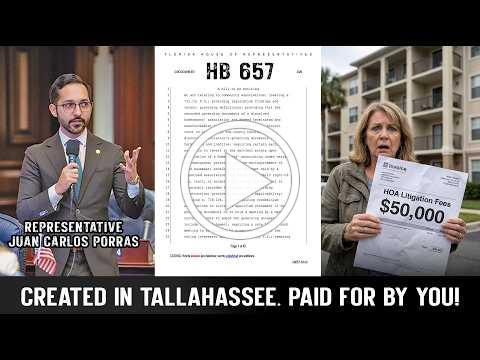
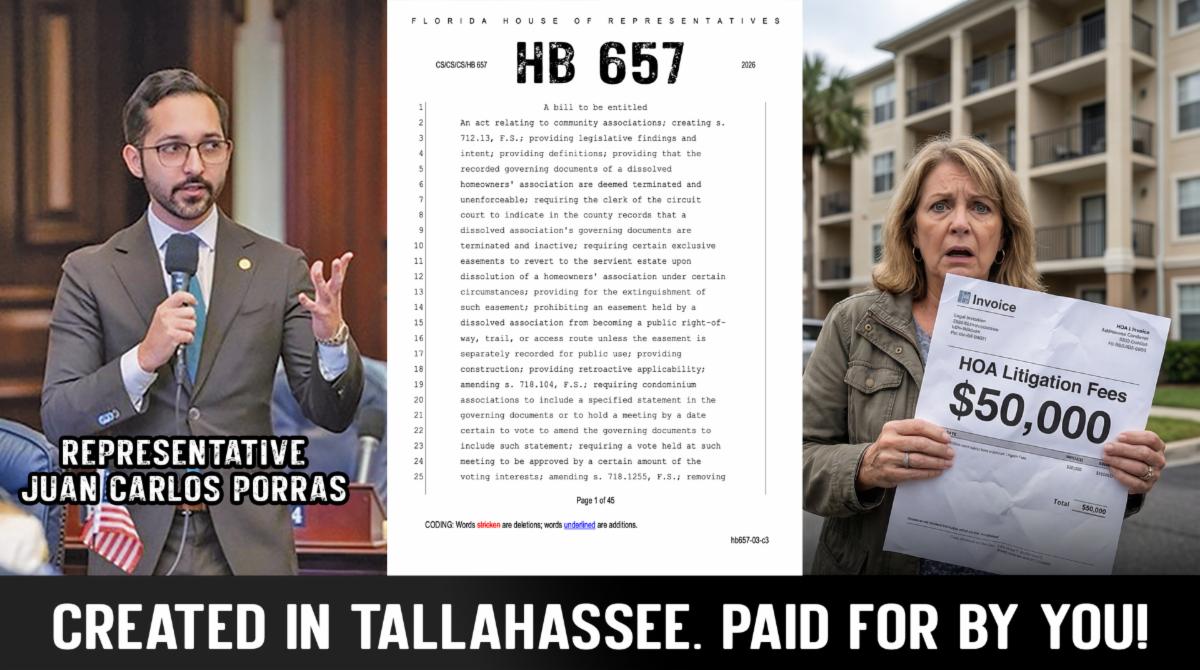
    New episode of Condo Craze and HOAs watch now! click on pic below

    HB 657: The End of HOA Mediation? What This Means for Your Wallet

    click on pic below

    Call us live at 717-GLAZER8 (717-452-9378) or leave your questions in the chat. Don’t miss this important discussion!

    For decades, Florida required mediation before most HOA disputes went to court. It was designed to reduce lawsuits and control legal costs for homeowners.

    HB 657 could change that.

    If mediation is removed and disputes start in court, what happens next? More lawyers? More fees? More assessments?

    We break down the bill, and what this could mean for condo and HOA owners across Florida.


    HB 657 Will Hit HOA Owners Where It Hurts

    HB 657 Will Hit HOA Owners Where It Hurts

    • Posted: Feb 24, 2026
    • By:
    • Comments: Comments Off on HB 657 Will Hit HOA Owners Where It Hurts

    HB 657 proposes eliminating structured pre-suit mediation for HOA disputes and pushing owners straight into court.

    That may sound procedural. It’s not. For decades, mediation has helped reduce lawsuits, legal fees, and financial exposure for homeowners. 

    HB 657 changes that framework.

    *If this bill passes, litigation becomes the starting point, not the last resort.

    *Who pays when disputes go straight to court?

    *Florida homeowners.

    Read the full breakdown and decide for yourself.

    If you believe HB 657 moves Florida in the wrong direction and could increase legal costs for homeowners, now is the time to speak up.

    Legislators need to hear directly from the people who would be affected.

    You can contact Representative Juan Porras here:

    https://www.flhouse.gov/Sections/Representatives/contactmember.aspx?MemberId=4898

    Be respectful. Be clear. Ask how eliminating structured mediation will protect homeowners from higher legal fees and increased litigation.

    If you’re concerned about your pocketbook, don’t assume someone else will speak for you.


    “FIDUCIARY DUTY: What it Means to Your Community Association” by KBR Legal

    “FIDUCIARY DUTY: What it Means to Your Community Association” by KBR Legal

    We have all read about Board Members Stealing or misusing association funds, but what happens when that duty is breached?

    REMBAUM’S ASSOCIATION ROUNDUP | The Community Association Legal News You Can Use


    What duty does a community association board member owe to their association?

    What happens if that duty is breached? During the legislative session, legislation was proposed that would have made directors criminally liable for failure to timely respond to official record requests, among other provisions. The legislation in House Bill 919 was proposed by Representative Porras in response to the alleged $3.4 million dollar embezzlement scheme that took place at the Hammocks Community Association, located in Miami-Dade County. Parts of this proposed bill were well-intentioned; however, several provisions were commonly viewed as too broad and expansive.

    Case:  November 15, 2022, the Miami-Dade State Attorney’s Office announced charges related to the Hammocks’ criminal case, including racketeering, organized scheme to defraud, money laundering, grand theft, and fabricating physical evidence against five board members. These board members have been accused of the following:

    i) running a scheme in which they used HOA checks and HOA credit cards from 55 bank accounts to pay for “no-show” work by shell companies or vendors, who would funnel money back to the directors for their personal use;

    ii) withholding official records from members; and,

    iii) failure to hold valid elections, among other bad acts.

    If found guilty these board members overtly breached their fiduciary duty to their association.

    During the 2023 legislative session, House Bill 919 initially contained significant criminal penalties to punish board members who failed to provide official records when they otherwise should have, criminal penalties for kickbacks, and criminal penalties for improper election interference, among other provisions. Such laws, while well intended, went overboard as evidenced by the creation of criminal penalties for failure to provide official records, as such severe criminal penalties for operational matters would likely only deter good people from running for the board. Recognizing this potential issue, parts of HB 919 were tempered a bit prior to it becoming law. That said, in the opinion of this author, new laws with new criminal penalties are not the answer. Bad people do bad things, and no amount of laws will likely significantly change that. So, what is the answer?

    One answer is to shore up the educational and certification requirements for board members. At present, there are two ways to be certified as a board member. One method is to take a State-approved class, which provides an overview of the voluminous information board members need to know in order to perform their duties. The other method is to sign a piece of paper that the board member has read the governing documents, will abide by them, and will faithfully discharge their duties. This second method should be eliminated as there is no method to confirm compliance, and this method does not have any educational component. In addition, continuing education requirements should be required for any board member serving consecutive years.

    During a board certification class, time should be spent discussing the term “fiduciary duty.” While the term is repeatedly used in Chapters 718 and 720 of the Florida Statutes, it is not expressly defined in these statutes. Section 718.111, Florida Statutes, makes reference to Section 617.0830, Florida Statutes, which provides for general standards for directors of not-for-profit corporations, such as community associations.

    Section 617.0830, Florida Statutes, provides the following:

        1. A director shall discharge his or her duties as a director, including his or her duties as a member of a committee i) in good faith; ii) with the care an ordinarily prudent person in a like position would exercise under similar circumstances; and iii) in a manner he or she reasonably believes to be in the best interests of the corporation.
        2. In discharging his or her duties, a director may rely on information, opinions, reports, or statements, including financial statements and other financial data, if prepared or presented by: i) One or more officers or employees of the corporation whom the director reasonably believes to be reliable and competent in the matters presented; ii) legal counsel, public accountants, or other persons as to matters the director reasonably believes are within the persons’ professional or expert competence; or iii) a committee of the board of directors of which he or she is not a member if the director reasonably believes the committee merits confidence.
        3. A director is not acting in good faith if he or she has knowledge concerning the matter in question that makes reliance otherwise permitted by subsection (2) unwarranted.
        4. A director is not liable for any action taken as a director, or any failure to take any action, if he or she performed the duties of his or her office in compliance with this section.

    Still, though, there is no express definition of the term “fiduciary duty.” The purpose of studying fiduciary relationships is to identify the areas where it exists and gain an insight into the duties of a fiduciary. After all, every board member is a fiduciary for their community association. Common definitions of the term “fiduciary” include:

        • A fiduciary relationship is a relation between two parties wherein one party (fiduciary) has the duty to act in the best interest of the other party (beneficiary or principal).
        • A fiduciary is a person who holds a legal or ethical relationship of trust with one or more other parties. Typically, a fiduciary prudently takes care of money or other assets for another person.
        • A fiduciary duty is a relationship in which one party places special trust, confidence, and reliance in and is influenced by another who has a fiduciary duty to act for the benefit of the party.
        • Most importantly, and germane to this discussion, a fiduciary is a person or organization that acts on behalf of another person or persons, putting their clients’ interests ahead of their own, with a duty to preserve good faith and trust.

    In other words, a good community association board member puts the interest of their association above their own personal interests. Thus, while we may not be able to stop bad people from doing bad things, through continuing education we can help good people do better.

    To recap, there are three things that can be readily accomplished that would make a positive difference for Florida’s community associations.

        1. Remove the ability of a board member to be “certified” by signature alone.
        2. Require continuing education for board members serving continuous years.
        3. Amend Florida Statutes, Chapters 718 and 720, to include express definitions of fiduciary duty so that it is made patently clear that every board member must put their community association above and ahead of their own personal interests.


    Tags: ,