Find Blog Articles for Florida’s Condo, HOA and the Management Industry.
The age of a CommunityAssociation opting not to fund reserves is coming to an end, and some homeowners could be facing a steep rise in assessments. Becker Shareholder Howard Perl surveys the landscape and offers a few suggestions of how to prepare.
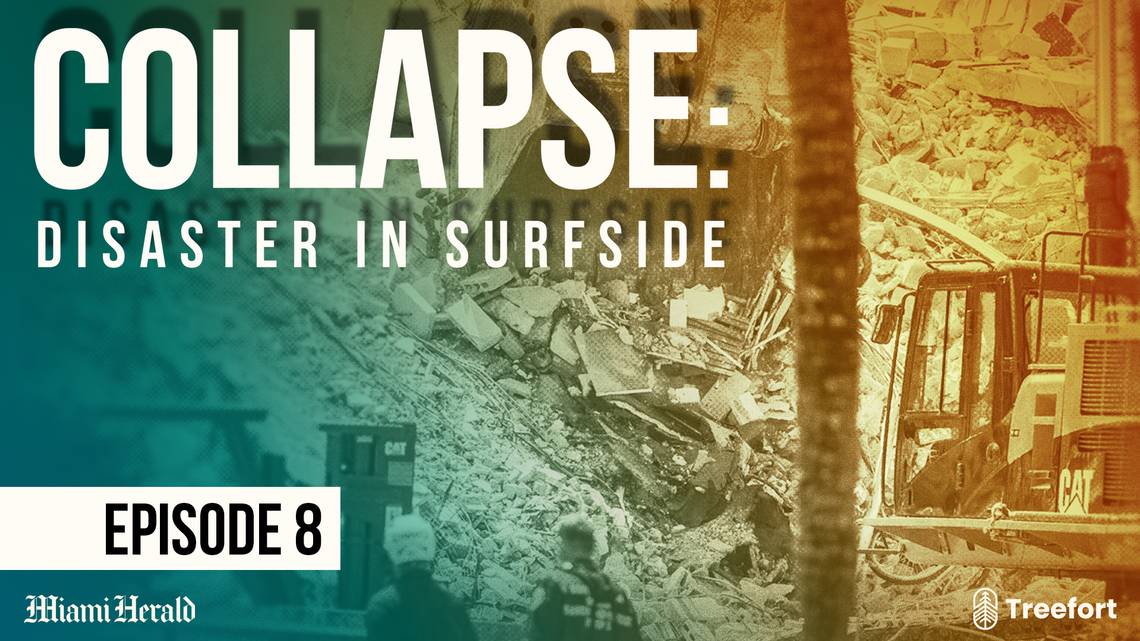
After the Surfside tragedy, everyone wanted to know how such a tragedy could happen and what steps could be taken to avoid similar incidents in the future. What caused the collapse? Could it have been avoided? Why were repairs not made? Why did local governments allow repairs to drag on? Why were repairs not made in a timely fashion? Unfortunately, none of these questions can be answered quickly, and proper answers will require years of study and analysis.
The above questions, and attempts to enact legislative reform to address some of these questions, were a hot topic for the Florida legislature this year. Several counties and the Florida Bar convened task forces in the aftermath of the Surfside tragedy. Primary among the suggested legislative changes for multifamily buildings were periodic engineering inspections, reserve studies, and reserve funding mandates. While all agreed generally in regard to these reforms, at the end of the day, the Senate and House could not agree on the reserve funding issue and, as a result, nothing passed. Currently Florida law can allow for owners to opt to fund less than required reserves, or no reserves. Most legislative proposals included mandatory reserve funding of one type or another. The sticking point was how quickly to implement such mandatory reserves, without the option of owners being able to waive such requirements. Whether to implement immediately, effective in 2022, or over the next three or five years, to allow a gradual implementation, is ultimately what led to nothing being passed. Rather than compromise, which seems to be a forgotten word in Tallahassee these days, legislators could not, or refused, to come to an agreement for the benefit of all condominium and cooperative residents in Florida.
These issues are certain to be re-examined next year. As such, your association should begin recognizing what is most likely coming down the pike and preparing the association and its residents now. Most likely the days are gone when owners will have an opportunity to fully waive reserves. I anticipate mandatory reserve funding of some type will be implemented. Whatever version is implemented, the result will be an increase in annual maintenance assessments. Depending on what is implemented and your association’s current reserve funding situation, some owners may be looking at a significant increase in your 2024 assessments (as the laws I am discussing would be passed in 2023, and most likely effective for the 2024 association budget).
The association should be anticipating and working on these items now. For example, some sort of reserve study requirement is most likely coming. Budget for one now. Get proposals now. Have the study done now. Once mandated by statute, demand will go up, availability will go down, and of course prices will go up. We are seeing exactly that scenario now in regard to structural engineers and 40/50-year recertifications.
In regard to reserve funding, take a good look at your reserve schedules. Get updated estimates of repair costs. Factor in inflation when projecting 10 and 20 year replacement items such as painting, roofing, etc. Any effort to increase your 2023 reserve balances will help lessen any blow of 2024 mandated reserves. Explain these issues to your residents now. Many associations are understandably involved with 40/50-year recertification requirements and other life-safety related issues. Obviously these issues need to be addressed immediately and on an expedited basis. But associations and their members should keep their eye on long-term remedial requirements as well. More oversight; more required inspections; more required repairs; and more required reserves. All of these are good things for 40–50-year-old buildings in a saltwater environment in Florida.
The outcome of the 2022 legislative session once again underscores the inherent problem when all community association ideas are placed in only one omnibus bill. Until our legislators acknowledge this problem and start using stand-alone bills for important proposals, there is always the risk that needed reforms will not pass.
Contact your legislators, tell them you welcome these types of reforms, but they need to be addressed as needed, not all under one take it or leave it omnibus bill. Work with your association leaders on the above discussed items. Don’t be surprised by increased annual assessments, special assessments, and other upcoming expenses. They are coming. Prepare now.
Howard Perl is a Shareholder in Becker’s Community Association practice and has been involved in all aspects of community association law, including transactional, collections, mediation, arbitration, construction defects and litigation. He is also Florida Bar Board Certified in Condominium & Planned Development Law.
A bill has been sent to Florida’s governor that would require statewide recertification of condominiums over three stories tall, in response to the Surfside building collapse that killed 98 people
TALLAHASSEE, Fla. — Florida would require statewide recertification of condominiums over three stories tall under a bill sent Wednesday to Republican Gov. Ron DeSantis by lawmakers, their legislation a response to the Surfside building collapse that killed 98 people.
The House unanimously passed the bill during a special session originally called to address skyrocketing property insurance rates. The condominium safety bill was added to the agenda Tuesday after an agreement was reached between the House and Senate.
Recertification would be required after 30 years, or 25 years if the building is within 3 miles (5 kilometers) of the coast, and every 10 years thereafter. The Champlain Towers South was 40 years old and was going through the 40-year-recertification process required by Miami-Dade County when it collapsed last June.
At the time, Miami-Dade and Broward counties were the only two of the state’s 67 that had condominium recertification programs.
“We have actually made positive change knowing that condominiums will be safer moving forward,” said Republican Rep. Daniel Perez.
The bill would require that condominium associations have sufficient reserves to pay for major repairs and conduct a study of the reserves every decade. It would also require condominium associations to provide inspection reports to owners, and if structural repairs are needed, work must begin within a year of the report.
Similar legislation failed during the regular session that ended in March.
The condominium measure was attached to a bill that would forbid insurers from automatically denying coverage because of a roof’s age if the roof is less than 15 years old. Homeowners with roofs 15 years or older would be allowed to get an inspection before insurers deny them coverage.
While some Democratic lawmakers complained that the special session on insurance didn’t go far enough to help relieve homeowners, they did praise the addition of the condominium safety legislation.
“This bill makes this trip worth it, at least for me,” said Democratic Rep. Michael Grieco, whose district borders Surfside. “I know folks who lost people in that building.”
The House sent the bill to Republican Gov. Ron DeSantis on Wednesday.
The House unanimously passed the legislation during a special session on skyrocketing property insurance rates.
Recertification would be required after 30 years — or 25 years if the building is within three miles of the coast — and every 10 years thereafter.
Nearly a year after the catastrophic collapse of Champlain Towers South in Surfside, Florida lawmakers on Wednesday gave final approval to legislation that will require condominium association boards to set aside money in reserves to cover future repairs starting in 2025. Current law allows them to waive the requirement.
“They are allowed to do that, and most of them are doing that today. They’re doing that because they are kicking the can down the road and not wanting the cost,” said state Rep. Danny Perez, R-Miami. “So moving forward, the structural integrity of a condominium will be reserved, they will be maintained, and they will be kept up to par so that future condominiums never have to worry about another Surfside taking place.”
The measure, which was approved by the House on a 110-0 vote and now heads to Gov. Ron DeSantis, would also require condo boards to conduct reserve studies every decade to make sure they have the resources to finance needed structural repairs. The proposal would also open up condo board members — many of them volunteers — to lawsuits if they ignore inspection requirements.
At play in Florida will be how to mandate reserves and maintenance to prevent tragedy and prepare associations who will need to make decisions that will likely cost homeowners more money.
“The compliance timeline is a few years away to afford an opportunity to smoothly transition,” the Senate sponsor of the bill, Sen. Jennifer Bradley, R-Fleming Island, said. “Additionally, the Legislature will remain engaged as condos and associations work to implement these changes.”
Bradley said she knows the changes to the state’s condo law will be a disruption to the status quo for many condos, but she says, “the safety of Floridians must come first.”
“The creation of a first-of-its-kind statewide system of milestone inspections for our aging condos and providing transparency and disclosure to local officials, unit owners, and renters are significant measures that will save lives,” Bradley said.
There would be two phases to inspections. If a visual inspection by a licensed architect or engineer authorized to practice in Florida reveals no signs of substantial structural deterioration, no further action is necessary until the next required inspection. If structural deterioration is detected, a second phase of testing is required to determine whether the building is structurally sound.
The changes to the state’s condo laws emerged on Tuesday afternoon during a special session that Gov. Ron DeSantis called to address Florida’s failing property insurance market. The deal came after months of negotiations between lawmakers.
On Wednesday, Perez said the reserves provision was “the most important” part of the bill. House Speaker Chris Sprowls, R-Palm Harbor, thanked him for standing his ground, telling him that “people in the state of Florida are safer because of your efforts.”
Governor DeSantis signed SB 518 into law May 18. The bill further amends Section 163.045, F.S. to provide that a local government may not require a notice, application, approval, permit, fee, or mitigation for the pruning, trimming, or removal of a tree on a residential property if the property owner has documentation from an arborist or landscape architect that the tree poses an unacceptable risk. The earlier version of this statute required the tree to present a danger to persons or property.
This new law, which takes effect on July 1, states that a tree poses an unacceptable risk if removal is the only means of practically mitigating its risk below moderate, as determined by the tree risk assessment procedures outlined in Best Management Practices – Tree Risk Assessment, Second Edition (2017).
So what does this mean for your community association?
This law does not mean that owners in your community may remove trees in violation of your architectural and other requirements although some may wish to interpret the new law in that manner. This new (untested) law seems to apply to local government requirements and not to association requirements. This new law also does not automatically mean that your association may remove “dangerous” trees from common areas without obtaining the proper approval under your documents, the statute, and local ordinance.
The wording of this new law certainly could have been clearer in terms of tree removal inside mandatory community associations. Please be sure to work with your Becker attorney when the issue of tree removal and this new law arises to be sure that you are properly interpreting and applying the law.
Jim DeFede’s guest for Sunday’s show was Eric Glazer, one of the state’s leading condo attorneys who has been pushing for years to make condos safer.
Glazer has been warning about a tragedy like the one in Surfside.
The two discussed, among other things, why the legislature failed to pass anything during its session.
Glazer also said why he believes Gov. Ron DeSantis has refused to do anything to make condos safer nearly a year after the deadly building collapse.
I like to re-publish this article every few years because it is so important. As we get closer to summer we are simultaneously getting closer to lots and lots of empty condominium units because many owners are returning up north for a few months. Just because you leave your Florida condominium for a few months however does not mean that your responsibility to maintain your unit stops once you hit the Georgia border.
Every declaration of condominium has a general clause that requires the owner of the unit to maintain his or her unit in good condition. In fact, arbitration decisions have held that “where an owner does not reside in the unit, it is incumbent on the owner to routinely and periodically examine and inspect the unit to ensure the absence of leaks and conditions that would otherwise lead to damage to the building and its occupants. In recognition of the fact that where multiple owners occupy a single building, a problem that develops in one unit may well affect other units and the common element components of the building.” See: Los Prados Condominium Association v. Lemley Case No. 03-6092; May 25, 2004, Arbitrator, Scheuerman.
So, if you’re headed up north for a few months, and you know that a friendly neighbor is going to remain in Florida, make sure to leave that neighbor a key to your unit and ask him or her to check the place every now and then. And…..if your association governing documents require that you leave the association with a key, you BETTER DO THAT! There is virtually no excuse for failing to do so, but that’s for another column. If you don’t leave a key, remember that the law provides:
(5) RIGHT OF ACCESS TO UNITS.—
(a) The association has the irrevocable right of access to each unit during reasonable hours, when necessary for the maintenance, repair, or replacement of any common elements or of any portion of a unit to be maintained by the association pursuant to the declaration or as necessary to prevent damage to the common elements or to a unit.
If the association thinks a leak is coming from your unit, if they don’t have a key, they’re using a locksmith and/or breaking your lock or door to get in. And, they’re entitled to do it, if they have no other reasonable means to get in. And…….. it’s the unit owner who is going to pay for the lock and door repair if there really was a leak. Bottom line…be smart….plan ahead and make sure that when Florida gets in your rear view mirror this year, someone is still left behind watching your unit.
Q: How can a homeowners’ association regulate owners renting out their houses to short term guests? If the association were to enforce with a penalty, how can it collect on it? (E.H., via e-mail)
A: The place to start is knowing what your governing documents and local laws say about the subject. For example, some municipalities limit rentals in residential areas to a 30-day minimum, so violations could be reported to the local code enforcement agency.
Most documents limit the use of homes to “residential use.” These provisions have been extensively litigated in courts across the country and there is not a bright line test defining what activities constitute residential or commercial uses. However, courts have generally been reluctant to apply a residential use provision as a restriction on short-term rentals, and there is at least one appellate court decision in Florida to that effect.
Therefore, the most effective way to address rental restrictions is a specific provision in your declaration of covenants setting forth permissible and impermissible rental durations. Many declarations contain such a provision, while some do not. If your declaration does not contain a rental limitation, it would have to be amended in the manner set forth in the declaration. Most declarations require some level of super-majority approval for amendment, two-thirds and 75% being the most common standards. Some declarations require the vote be calculated based on all eligible voters, and some provide that the calculation is based on those who vote at a duly noticed meeting at which a quorum is established.
You should also be aware that the Florida Homeowners’ Association Act was amended in 2021 to limit the ability of homeowners’ associations to amend rental rights. The retroactive application of that statute to pre-existing associations is a complicated and open legal question. The new law provides that amendments limiting the duration or frequency of permissible rentals is only applicable to those owners who vote in favor of the amendment, those who vote against the amendment or don’t vote are “grandfathered,” but the amendment would be binding on their successors in title.
Importantly, Section 720.306(1)(h) of the Florida Homeowners’ Association Act does permit amendments that prohibit rentals for a term of less than six months or prohibit rentals of less than three times during a calendar year to be applied to all parcel owners if the declaration is properly amended, whether an owner voted in favor of the amendment or not.
Once you have determined what the actual rule is, the next question is how you enforce it. As stated above, if the rental violates local ordinances, referring the matter to code enforcement may be an effective and inexpensive way to seek redress.
Fining and suspension of common area use rights are one avenue, but probably not the most effective for this kind of violation. Many homeowners’ associations do not have the level of amenities where suspension of the right to use them deters violations. Fines are capped at one thousand dollars in the aggregate for ongoing violations, unless the governing documents permit a higher amount. There is also a somewhat detailed notice and hearing process that must be followed to impose a fine or suspension. If a fine is properly levied, it can be a lien upon the home if it is for one thousand dollars or more and the language of your documents may also come into play. Otherwise, the venue to collect a fine is small claims court, and the prevailing party in a suit to collect a fine is entitled to recover their attorneys’ fees from the losing party.
The better approach for this type of violation is direct legal action by the association against the owner seeking a court order (injunction) to enforce the rule against short term rentals. Well-written documents may give you additional leverage in a court action. Generally speaking, the winning party can collect their legal fees from the losing party. The association’s lawyer should be brought into the picture early in the process, so he or she can advise what pre-suit steps may be necessary to protect your ability to enforce the restriction.
Joseph E. Adams is a Board Certified Specialist in Condominium and Planned Development Law, and an Office Managing Shareholder with Becker & Poliakoff. Please send your community association legal questions to jadams@beckerlawyers.com. Past editions of the Q&A may be viewed at floridacondohoalawblog.com.

Kaye Bender Rembaum is a full service commercial law firm dedicated to the representation of community associations throughout Florida. Under the direction of attorneys Robert L. Kaye, Esq., Michael S. Bender, Esq., and Jeffrey A. Rembaum, Esq. Kaye Bender Rembaum provides its clients with an unparalleled level of personalized and professional service regardless of their size and takes into account their individual needs and financial concerns. They have offices in Pompano Beach, Palm Beach Gardens and Tampa, and in Miami-Dade by appointment.
The associates of Kaye Bender Rembaum establish relationships with clients to understand their needs and goals. Kaye Bender Rembaum assists clients in all matters of Association representation including, but not limited to, collection of assessments, contract negotiation, covenant review and amendment, covenant enforcement and construction defect claims. Kaye Bender Rembaum also keeps clients up-to-date on new developments in the law and how they personally affect them. The firm provides prompt, effective, high quality, cost-efficient and understandable legal advice and services to a diverse client base. Associates strive to help clients operate and administer their communities better and to educate them on their responsibilities and duties under Florida law and their governing community documents. Robert Kaye, Michael Bender and Jeffrey Rembaum are industry leaders who are often sought out by public policy makers and the media for advice and commentary on community association law.
The information you obtain at this site is not, nor is it intended to be, legal advice. You should consult an attorney for individual advice regarding your own situation. Thank you for your interest in Kaye Bender Rembaum.