
Top 5 Rules for Pond Management By SOLitude Lake Management
|

Tags: Condo and HOA Common Area Issues, Lake Management Articles, Management News

Find Blog Articles for Florida’s Condo, HOA and the Management Industry.
|
Tags: Condo and HOA Common Area Issues, Lake Management Articles, Management News
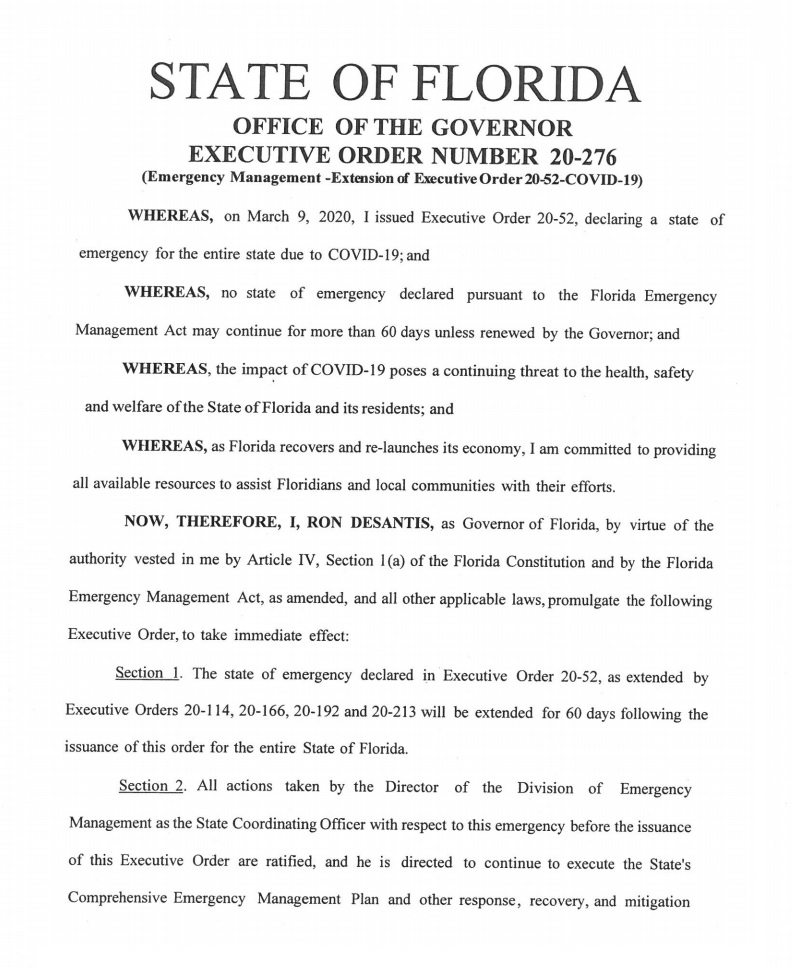
Below are images of the order. Please click on either image to download the Order


Tags: Condo and HOA, Law and Legal, Management News

Outgoing board members to return all official records … to the incoming board.
Now as benign as this may seem it speaks to a greater problem and that issue is: Where are all the association’s records? Why did the legislature have to go out of its way to create a specific law to obligate a proper transition from one board to the other? There must be a problem here.
The problem is that community associations have a lot of records and it goes beyond what a board of directors has control of because managers and management companies also have control of essential documents that very often go missing. Let’s take a few examples to demonstrate the problem.
A big wind comes and knocks off a couple of roofs in your association, it happens all the time. Well, the first thing that the insurance company wants are the maintenance records roofs going back seven years before they pay for the claim. No records…claim denied and its lawyer time. Another good one relating to community association collections, is that the board has decided to foreclose on Mister Delequaint for non-payment of assessments for the past five years. Mr. Delequaint arrives in court and his lawyer asks the association’s attorney to provide the proof of mailing for the budgets for said five years and they are nowhere to be found. As a matter of fact even the budgets are stone cold lost.
The judge can very well possibly rule in favor of Mr. Delequaint (no association foreclosure) and even award him prevailing attorney fees. All these maladies could have been avoided if the association had a document retention policy and followed the protocol.
Let’s face the facts and understand that community associations are volatile environments and calling them dynamic is kind. Boards of Directors change, emotions run high, management companies are dismissed frequently, as are attorneys, vendors and whoever else gets an opportunity to work for an association. In the middle of all of this mess records, contracts, ledgers, insurance policies, minutes, proof of mailings, warranties, governing documents, proof of meeting notices, notes and everything else that can be put on paper fall into a deep dark abyss never to be found again. Sometimes by accident and often by design by disgruntled board members, dismissed employees (managers), or untrained office staff who may feel that the round file is for everything that is over a year old.
So now that the problem has been identified what is the solution? First as mentioned above, the board of directors must establish a record keeping policy and protocol (vote on it and put it in the minutes). Don’t lose those minutes and approve them at the next meeting. Said policy should identify all the records that an association must keep and for how long. This is easy because it’s all in the statutes (for Florida condos 718.111 and Florida HOAs 720.305) and I doubt that any state does not address this issue.
The next thing is:
HOW can an association keep these records from disappearing never to be found again? There are many ways to go about this and technology may have the answer. Although it might seem to be expensive it is possible that all documents be kept electronically and not just on paper.
Have them scanned and put them away on a remote server. This technology also gives an association a backup just in case that big wind comes and blows away your office or the management office.
Once again referring to Florida condo statutes 718.111(12)(b) it is crystal clear that documents can be maintained in digital format. In Florida HOA statutes 720.303(5) the legality of keeping records in digital form is not so clear but it is still a prudent idea. No matter what your board comes up with you should be able to easily get your hands on the minutes of a meeting from five years ago or all the maintenance records for the roofs. Try it and if you cannot put your eyes on them it proves that your community association has a problem that needs to be fixed right away.
Find the right companies to help you with Digital Record Keeping, Websites and Accounting.
Tags: Board of Directors, Condo & HOA Accounting, Condo & HOA Elections


Debates are great – and can be very helpful to voters to decide which candidate they should vote for – as long as it is a real debate and not dictatorial monologues of a so-called moderator.
I am not sure how debates could create fairer elections in homeowners’ associations. The election process as written in the HOA Act gives sitting board members more or less “carte blanche” to do whatever they want – and whatever will keep them in power.
How fair can an election be if some candidates are getting endorsed by sitting board members using the official e-mail list of the association, while other candidates are being refused access to this e-mail list and are being told by association attorney and CAM that they are not getting access and that they don’t have enough money to sue for it.
Instead of having debates and/or “Meet the Candidates” meetings, we should first see that the election process in HOAs (FS 720.306) is changed to stop cheating and ballot-harvesting for specific candidates preferred by sitting board members. A common trick: This proxy is just to create the necessary quorum – but in reality it’s a valid general proxy.
Too many owners are plainly ignorant when it comes to understand the whole association system, and fall for simple tricks.
That’s why I always say that ALL OWNERS should attend board member certification seminars, not just board members.
Owners, who are being promised “EASY LIVING” in community associations, have to understand that this promise was just a sales-gimmick to get their signature on the dotted line. Reality is very different: A BAD BOARD can quickly ruin the private finances of any family.
 Jan Bergemann is president of Cyber Citizens For Justice, Florida ‘s largest state-wide property owners’ advocacy group. CCFJ works on legislation to help owners living in community associations. He moved to Florida in 1995 – hoping to retire. He moved into a HOA, where the developer cheated the homeowners and used the association dues for his own purposes. End of retirement!
[AdSense-B]
Tags: Condo and HOA Elections, Management News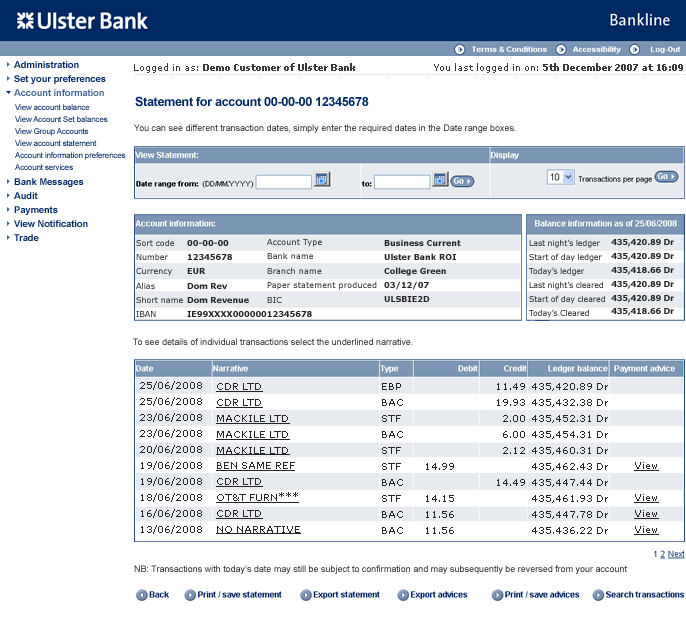
 HOA bank statements are just as they sound: a statement from the bank showing all deposits and withdraws from each association account over a certain period of time. The most effective way to prevent fraud within your community association is to keep a close eye on bank statements. Most associations have at least two accounts: an operating account for regular costs of running a community association and a reserve account for setting aside funds for future projects.
Reviewing bank statements on a regular basis is important because it is one of the few financial documents that is not prepared by the association board of directors or HOA management company. Comparing bank statements with association financial statements is a good way for other HOA members to check the accuracy of financial statements prepared by the manager and/or treasurer.
What is Included in an Condo &HOA Bank Statement
A proper bank statement should include a timeline of all deposits and withdraws into and out of association accounts. Each account should have its own statement. It is important to carefully review every transaction to prevent potential fraud. One of the most common ways fraud is committed is by “borrowing” money from a long-term reserve fund and returning the money after a time; essentially taking out a loan using association funds. This is common because of how hard it is to track. If all funds are accounted for in the long run, nobody would know unless they inspect each individual transaction.
Who Should Review Bank Statements
Only a few people have access to association funds. Usually, it is just the president, treasurer, and/or your property management company if you choose to use one. This leaves a lot of power in the hands of a few. If left unchecked, it could be an opportunity for fraud. It is important that all bank statements be sent to someone other than the member(s) who have the ability to write checks. That way, they can act as an impartial inspector to make sure that nothing is missing within the HOA accounts.
How Often Should Bank Statements Be Checked
Bank statements should be included with all other financial statements prepared at the interval as determined by your HOA whether it be monthly, quarterly, or annually. Ideally, bank statements should be checked as frequently as possible. Some banks offer online banking services that allow for 24/7 access to association account statements.
Need More Information
Financial management can be one of the toughest aspects of operating a successful HOA. If you are having trouble with reviewing financial documents such as HOA Bank Statements, contact the professionals at CSM. We have years of experience working with homeowner’s associations from all over the United States. Using state-of-the-art technology, we can provide financial management assistance while still allowing association directors to remain independent.
[AdSense-A]
Tags: Accounting Articles, Condo and HOA, Condo and HOA Budgets, Management News
Almost every day, I get this question from customers calling our office. Even though the customers’ environments vary, my responses are usually similar. My advice is usually something like this.
With the cleaning method, obviously you need to get the mold and mildew, food contaminants or water spills off the surface. This can be done by sweeping or mopping to minimize the “slippery when wet” conditions. However, this is not always possible. This is when you need to look at the second option of using surface treatments.
Applying treatments on the surface of the paver should change its characteristics to manage water and other slip-causing agents more effectively. The result being that when you walk or run on the surface – rather than aquaplaning – you have adequate traction to be safe.
The third option is to use sealers. And there are 2 basics types you need to be aware of:
If you choose to work with a Topical sealer, use one that contains an anti-slip additive that increases the friction on the surface. This will make it much harder for you to slip when moving across the surface. Otherwise, you can use a Penetrating sealer that soaks into the pavers’ pores and does not leave the surface slick or in a slippery condition.
Paver sealer products can be slippery if applied too thick, leaving behind a slick film on the surface. Avoid this situation by using thin mil sealers that penetrate deep into the surface and leave a very thin film on the surface.
You can also use additives in the sealer itself to increase the friction on the surface. Again, you can always use a penetrating sealer that will soak into the sub-surface, without leaving a slippery film behind.
We can scientifically measure how slippery a paver or tile surface is. Watch this video to see how we do this on a customer’s pool deck pavers – before and after – they use our pro-grade products.

It’s all about finding the right anti-slip product for the floor surface you are walking on.
As always, if you have any questions about which product is the best for your unique situation, call us at: 754-253-3401
View our Membership Page on sfpma members directory
[AdSense-B]
Tags: Flooring Cleaning & Protecting, Maintenance & Service Articles, Management News, Members Articles
As you may already know, my daughter Madison is a blood cancer survivor.

You can make a secure online donation by clicking on the link below:
Team fundraising page https://pages.lls.org/ltn/ncfl/Orlando20/cohenlawgroup

By Eric Glazer, Esq.
 Talk about beating a dead horse. I have been asked over and over and over again, by unit owners all across the state if:
-They are entitled to a refund at the end of the year or;
-They can currently withhold portions of their monthly assessment,
because the pool, restaurant, club, spa, gym, card room, library or any other common facility has been closed during the Coronavirus pandemic.
The simple answer is NO. And it is driving a lot of people crazy. As you know, the budget for 2020 was probably passed in October or November of 2019. The budget included the anticipated 2020 expenses including insurance that covered the pool, restaurant, club, spa, gym, card room, library or any other common facility. The budget covered the maintenance of the pool that was never discontinued. The budget covered maintenance of the property, landscaping, director and officer insurance, management fees, accounting fees, legal fees, fees payable to the DBRP (if you’re a condo), security, reserve accounts, repayment of bank loans in some circumstances, office supplies, major and minor repairs and so on and so on and so on.
NONE OF THESE EXPENSES CEASED DURING THE CORONAVIRUS SHUTDOWN. For all intents and purposes, the expenses of the association stayed the same in 2020, and in some cases actually went up, where the association decided to hire extra cleaning staff during the crisis to help keep the property spic and span.
So…..for those of you who have threatened to withhold your assessments. Please don’t. Trust me on this…..instead of owing $300.00 you will quickly owe $3,000.00 or more. Hopefully, we are turning the corner, our facilities will soon be opened and we can all meet again, sit in the theater again, play cards, exercise and swim together. In the meantime, wishing you and your families only the best of health.
[AdSense-C]
Tags: Condo and HOA Common Area Issues, Management News Commercial Fitness Products, a Florida based organization, has been serving the fitness needs of our customers nationwide for over 27 years. Our primary focus is Multi-Housing & Hospitality, as such, we stay current on the latest industry trends, and are able to share ideas on how we may equip or improve any community fitness center. We provide more than just equipment…our goal is to delight your residents & guests by providing them an exceptional fitness environment.
CFP’s team of experienced professionals are eager to assist you with prompt & courteous customer service. If you have any plans to add, change or upgrade your fitness amenity, we welcome the opportunity to work hard to earn your business.
 LE OF FITNESS SAFETY PARTITIONS
 Place between fitness equipment to keep users safe and comfortable while exercising. Shield against airborne contaminants Help maximize equipment usage Easy to clean and sanitize Quickly install, place and move Minimally intrusive design Complies with OSHA guidelines Vinyl Screen rolls up for easy, space saving storage
Tags: Condo and HOA Common Area Issues, Fitness Rooms Articles, Florida Rising Magazine, Maintenance & Service Articles

Q: I went on a walk in my community and saw at least 8 homes flying either Trump or Biden flags. Is it legal to fly a political flag on a home located in a homeowners association? I.B.
A: Sections 720.304(2)(a) and 720.3075(3) of the Florida Homeowners Association Act specifically permit the flying of the US flag and other types of governmental flags, including flags of the various military branches. These statutes do not address other types of flags, such as political flags.
The governing documents for some communities prohibit owners from flying non-exempt flags, such as political flags or flags with sports team logos. There is an open and rather complicated legal issue as to whether it is an infringement of a homeowner’s First Amendment free speech rights to restrict political speech.
The First Amendment only applies by its terms to Congress, and, by virtue of the Fourteenth Amendment to the Constitution, to the states and their local governments. In legal jargon, “state action” is required before constitutional rights come into play. There are several Florida cases which have held that a community association is not a state actor.
Your association’s attorney should be able to determine if these political flags are indeed regulated by the governing documents, and if so, guide you through the constitutional law analysis that is part of deciding your options.
Q: Your February 2020 column addresses the cap on transfer fees for condominium associations. Is there a similar cap for homeowners associations? D.P.
A: No. My February 2020 column referenced Section 718.112(2)(i) of the Florida Condominium Act, which states that no charge shall be made by a condominium association in connection with the sale, mortgage, lease, sublease, or other transfer of a unit unless the association is required to approve such transfer and unless a fee for such approval is provided for in the declaration, articles, or bylaws. Any such fee (in the condominium association context) may be preset but may not exceed $100 per applicant other than husband/wife or parent/dependent child, who are considered one applicant. There is no similar provision found in Chapter 720 of the Florida Statutes, the Florida Homeowners Association Act.
Q: I am considering purchasing a home in a community with a homeowners association, but I have been told that there is a “capital contribution” fee of $1,500 charged to all purchasers. Is such a fee legal? T.F.
A: Sometimes referred to as a “flip tax”, these charges are not uncommon in the homeowner association context. There is neither authority for nor prohibition on this type of fee in the law applicable to homeowners’ associations (the condominium law does address this issue). If the authority to charge the capital contribution fee is contained in the appropriate governing documents, the prevailing view in the legal community is that such charges are legally valid.
[AdSense-B]
Tags: Condo and HOA Elections, Condo and HOA Laws, Management News, Members Articles