SFPMA

SFPMA Industry Articles | news, legal updates, events & education! 

Find Blog Articles for Florida’s Condo, HOA and the Management Industry. 

Why Money Judgments Don’t Work for Assessment – by Mitch Drimmer

Why Money Judgments Don’t Work for Assessment – by Mitch Drimmer

Why Money Judgments Don’t Work for Assessment

Money judgments are not an effective way for an HOA to collect delinquencies. It’s often more effective for an HOA to work with delinquent homeowners to find a resolution that is mutually beneficial. This may involve setting up a payment plan or finding alternative ways to resolve the delinquency.

Foreclosure is a legal process in which an HOA takes possession of a delinquent owner’s property. The HOA then sells it to recover the money owed. While foreclosure should be a last resort for collecting past-due assessments, pursuing a foreclosure may be a better option than seeking a money judgment. Here’s why:

  1. Why get a judgment on a secured debt? The property is the collateral. Why get a money judgment and then go to court again to get a writ to collect?
  1. Recovery: Ever try to garnish wages or repossess assets to collect on a judgment? It’s not easy. People can, and often do, evade efforts to collect. You already have the best collateral for the debt – the property itself.
  2. Difficulty in enforcing judgments: Obtaining a judgment is only the first step in the collection process. The HOA must then take steps to enforce the judgment, which can be time-consuming and costly. This may involve garnishing wages, levying bank accounts, or seizing assets. When it comes to collecting you are on your own.
  3. Limited recovery: Even if a judgment is obtained, there’s no guarantee that the delinquent homeowner will be able to pay the amount owed. If the homeowner is unable to pay, the HOA may not be able to recover the full amount of the judgment.  The money spent to get the judgment was wasted. Negative impact on community: Pursuing a judgment against a delinquent homeowner may create tension and conflict within the community. This can be more difficult in a small community where residents may have close personal relationships. If the community has an ongoing wage garnishment on a resident, the animosity may drag on for years.

The overwhelming majority of the time, owners facing foreclosure pay before a sale occurs.  Foreclosure is the end of the road for the owner, and they almost always find the money to pay to stay in their homes. Starting a foreclosure does not mean the sale will occur, and from our experience, it seldom does.

Want some more reasons why foreclosure, while still a last resort, is better than a judgment?

  1. Stronger legal remedy: A foreclosure is a stronger legal remedy than a money judgment because it allows the HOA to take possession of the property and sell it to recover the unpaid assessments. A money judgment is a court order requiring the homeowner to pay the amount owed, but the HOA must still take extra steps to enforce the judgment and collect the funds.
  2. Quicker resolution: Foreclosure can be a quicker process than seeking a money judgment. It’s unusual for the foreclosure process to take more than a year, and in some states, that time is less than half. In contrast, obtaining a money judgment can be a lengthy process that may involve multiple court hearings and appeals.
  3. Higher recovery rate: Foreclosure is better for the HOA because the sale of the property can often cover the unpaid assessments, legal fees, and other costs associated with the foreclosure process. With a money judgment, the HOA may not be able to recover the full amount owed, and this is guaranteed if the homeowner is unable to pay.
  4. It’s a deterrent: Foreclosure may deter others in the community from defaulting on their assessments. This can help to keep the HOA financially stable and protect the value of the community.

Delinquencies are often settled when a new buyer purchases the property under “joint and several liability” doctrines. If you have eviscerated an amount of the debt and turned it into a personal obligation, it’s more difficult to collect when the property sells. The association has a judgment but must still work to collect on it even if the owner sells the property, when it could have been paid in full at the time of the sale.

During the real estate meltdown of 2008, associations foreclosed and took title to units that were underwater because everything was underwater. Then, they would refurbish and rent the units. The banks were not foreclosing, the units were underwater, and the associations had no choice if they wanted to be proactive. But times have changed, and there’s a record amount of equity in the housing market. The chances that the association will ever take title in these times of high property value and opt to rent the property are incredibly slim.

If you go after somebody with a money judgment, they will evade you until they cannot. It can take years before you get to cash in, if ever. This is not about revenge; it’s about cash flow. When an HOA goes after a delinquent owner, you can be sure that the debtor would be more motivated to pay with a foreclosure over their head than a money judgment. A foreclosure is hard to get out of, if the HOA does it right. They may be able to circumvent or have exemptions not to pay a judgment.

It’s important to note that foreclosure is a last resort for collecting assessments. Before foreclosing, the HOA should work with a specialized and licensed collections solution like Axela-Technologies. Our services include client outreach, respectful phone calls, emails, mailed letters and notices, bank notifications, credit bureau reporting, and other legal and fair methods to collect. For a no obligation collections analysis, please Click Here and let us show you “How the Future Collects.”
 

Tags: ,
Aruba Permit Services helping you with Building Permits and Code Violations at your Buildings.

Aruba Permit Services helping you with Building Permits and Code Violations at your Buildings.

Aruba Permit Services helping you with Building Permits and Code Violations at your Buildings.

As repairs come up due to Florida Storms or Projects at your Properties, You need to make sure your permits are handled by a Trusted Company.

Permits will be pulled for the repairs. All work will be followed up by the engineer to assure compliance. Aruba Permit Services is licensed and insured.


Aruba Construction who has been a Certified General Contractor since 1990 and has qualified Engineers available to handle inspections of any size building.

These inspections are for the conditions of the building that include:

·         Masonry Walls (concrete condition, exposed rebar, spalling)

·         Floors and Roof Systems (drains, scuppers, supports for A/C)

·         Steel Framing (corrosion, fireproofing)

·         Concrete Framing (cracks, exposed rebar)

·         Windows (general condition, seals, anchorage)

·         Wood Framing (connector condition, rotting, bearing deficiencies)

·         Exterior Finishes (stucco, soffit, veneer deficiencies)

·         Electrical (panels, wiring, breakers)


Phone: (954) 786-7292
Email: 
info@aruba-services.com
Address: 1413 S. Powerline Road, Pompano Beach, FL 33069

Industry Members of SFPMA < View our membership page


Tags: , , ,
New Module: Inspections and Checklists by BuildingLink

New Module: Inspections and Checklists by BuildingLink

  • Posted: Feb 27, 2023
  • By:
  • Comments: Comments Off on New Module: Inspections and Checklists by BuildingLink

New Module: Inspections and Checklists

by BuildingLink

We can’t think of a better time than the current environment to be introducing to you our newly released Inspections and Checklists Module! Whether you want to document all of the new practices in place because of COVID-19, or to lock down your existing routines for property inspections, employee daily task lists, or monthly/yearly PM (preventative maintenance), there is a new way to do it all:

Make A Checklist Out Of It!

The new Inspections and Checklists Module will help bring consistency and excellence to your daily routines. Your property managers can build checklists of any kind and length – and your staff can document existing conditions or completed tasks conveniently in the field, using the same BuildingLink GEO mobile app they already know and use every day!

This is a very feature-rich module! Be sure to read the below ‘Q & A’ to learn more about automated inspections via the built-in scheduler, or easily creating work orders during an inspection – and lots of other useful shortcuts and features!

We’ve released the initial version of our Inspections and Checklists module to most of our buildings, and are eager to hear your feedback! Managers can access the module under the “Maintenance” section of the left-hand navigation in BuildingLink. If you’re not seeing it, and want it released for your building, email us at support@buildinglink.com, or call 212-501-7117.


You’ve got questions? We’ve got answers!

Q: What types of checklists have buildings been creating so far?A: We are seeing lots of diversity here! For example:

  • Daily/weekly/monthly task lists
  • Lobby, common areas, and grounds walk-throughs
  • Move-in/move-out, in-unit inspections
  • Mechanical room and rooftop inspections and PM
  • Start-of-shift checklists
  • Amenities opening checklists (i.e. fitness center, pool)

Q: Is there a limit to the number of checklists, or number of items on a checklist, that can be created?

A: No, there is no limit! In addition, if you want to make multiple versions of a checklist with small changes (to reflect different apartment layouts or daily/monthly/yearly routines), there is a convenient “Clone a Checklist” function that you can use and modify, to save you time!

Q: What types of inputs are possible for each checklist item?

A: Obviously, a checkbox is added for you, and a textbox for comments from the person conducting the inspection. Finally – and most importantly – the ability to upload one or more photos that document the condition or space being checked.

Q: Is there a library of pre-built checklists that BuildingLink is making available?

A: There are currently three pre-built inspections checklists that a building can use or modify. More will be added in the coming weeks! Topics of pre-built checklists: Facility Exterior, Fire Prevention Checklist, Inspection Plan.

Q: Is there a “Scheduler” or “Assigner” function for inspection checklists that need to be performed on fixed intervals?

A: Yes! The module allows for the scheduling of checklists recurring at fixed intervals, or by specific employees. Any scheduled checklists not assigned to a specific employee, can be completed by any staff member.

Q: Can staff complete checklists “on the fly”, that have not been scheduled?

A: Sure! Any existing checklist can be selected and completed by your staff at any time – even if unscheduled.

Q: What if staff discovers items needing work or repair while completing an inspection? How can they flag it for further attention?

A: Glad you asked! From the in-progress checklist page, your staff can effortlessly generate a maintenance request for any checklist item – which flows directly into BuildingLink’s Maintenance Request Module! It is a one-step integration that allows staff to fluidly complete their assigned inspections and checklists, while still queuing up additional work to be done.

Q: How does management know when a checklist is completed (or not completed)?

A: Managers are notified by email once a checklist is completed and, from their Inspections Dashboard within BuildingLink, they can review the results, export to PDF, or print! On the inspections dashboard, managers can also see scheduled inspections that are overdue.

Q: I have more questions about this module. How can I learn more about it?

A: Visit our help section for more information about the Inspections and Checklists Module!

For more info, contact us at support@buildinglink.com, or give us a call at (212) 501-7117.

BuildingLink

407-529-6063

BuildingLink is currently used in over 5,000 properties in the U.S. and worldwide, offering efficient management, seamless communication, and an enhanced living experience for residents.

BuildingLink is the gold standard for property managers looking to upgrade the experience of managing, working and living in a luxury residence, our clients can be found near and far – in New York, Boston, Miami, Dallas, and San Francisco, but also in Toronto, Melbourne, Tokyo and Singapore.


Streamline maintenance and operations.

BuildingLink works like magic to save your employees time, delight your residents, and give you the insights on your building that you need to tackle issues and avoid costly mistakes. Our central dashboard lets you track, search, and monitor everything that matters:

  • Service tickets
  • Inventory levels
  • Employee performance
  • Legal documents
  • The latest shift
  • Your resident’s preferences and requests.
  • And even more management tools!


Tags: , , ,
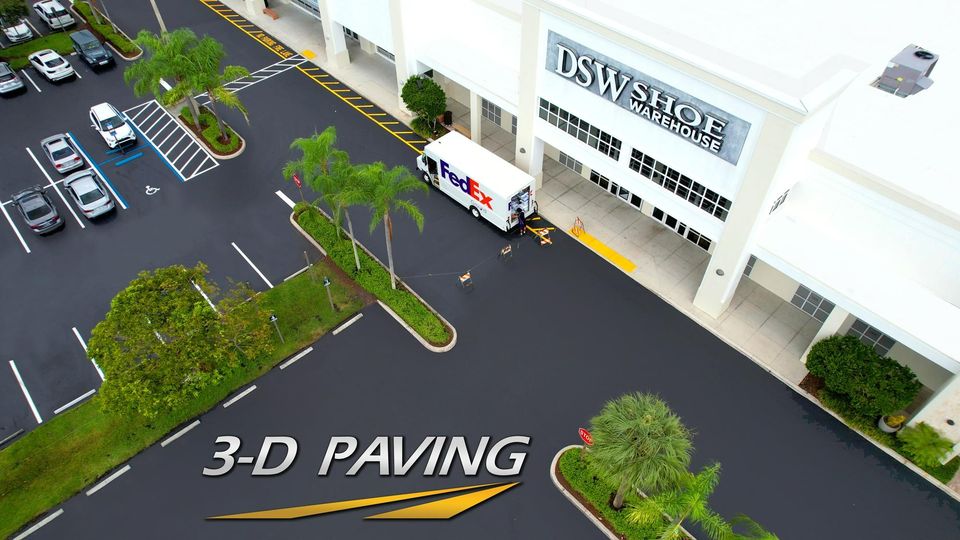
Complete Parking Lot Maintenance, Care, Repair and restoration. 3-D Paving is South Florida’s top parking lot services contractor.

Complete Parking Lot Maintenance, Care, Repair and restoration. 3-D Paving is South Florida’s top parking lot services contractor.

  • Posted: Feb 27, 2023
  • By:
  • Comments: 0

Complete Parking Lot Maintenance, Care, Repair and restoration. 3-D Paving is South Florida’s top parking lot services contractor.

No matter how big your commercial job, 3-D Paving & Sealcoating in Coral Springs, FL has you covered.
Want us to take a look at your parking lot project? Get a FREE quote and consultation today.
Call toll free 1-855-735-ROAD (7623)

Visit us –> https://linktr.ee/3dpaving


Expertise in Commercial Asphalt Paving Services from 3-D Paving in Coral Springs, FL

Voted 2022s best & most trusted commercial asphalt paving contractor in Broward County, Lee County, Charlotte County, Martin County, St. Lucie County and Palm Beach County. We offer a myriad of Asphalt and Concrete Paving Services, Sealcoating and Concrete Construction Services like sidewalks, paths, ramps, slabs, curbs, gutters and so much more. New building project? Let our skilled site development team assist you in all of your project’s needs. Need ADA compliance help? Our expert team can assist you in every step of the process. Contact us today!


Tags: , ,
HOA Architectural Committees Required Statutory Procedures Requirement For Published Standards Required Self Help

HOA Architectural Committees Required Statutory Procedures Requirement For Published Standards Required Self Help

HOA Architectural Committees

Required Statutory Procedures, Requirement For Published Standards and Required Self Help.


REQUIREMENT OF FORMAL PROCEDURES

There are strict legal requirements that a homeowners’ association’s (HOA) architectural review committee (ARC) must follow, most especially if the ARC intends to deny an owner’s request. As this author has witnessed countless times, it is likely that many ARCs do not conduct their activities in conformity with Florida law such that an ARC denial may not withstand judicial scrutiny. If these legal requirements are not followed, and the ARC denies the owner’s architectural request, then it would be quite easy for the owner to challenge the ARC’s decision and prevail. Upon prevailing, the owner would be entitled to their prevailing party attorney’s fees and costs, as well. It is so easy to avoid this outcome, yet so few associations take the time to do it right.

Pursuant to §720.303(2), Florida Statutes, a meeting of the ARC is required to be open and noticed in the same manner as a meeting of the association’s board of directors. Notice of the ARC meeting must be posted in a conspicuous place in the community at least 48 hours in advance of the meeting, and the meeting must be open for all members to attend. Further, pursuant to §720.303(2)(c)(3), Florida Statutes, members of the ARC are not permitted to vote by proxy or secret ballot. Also, bare bone minutes should be taken to create a record of ARC decisions—especially denials.

We often hear from many HOAs that the ARC does not meet openly and does not notice their meetings. This leaves decisions made by the ARC vulnerable to challenge. If the ARC denies an application but fails to do so at a properly noticed board meeting, the owner can challenge the denial, claiming that it is not valid because the ARC did not follow proper procedure. In such cases, the ARC’s denial of an application is not valid because the ARC failed to comply with the procedural requirements for the meeting even if an application violates the declaration or other association-adopted architectural standards. However, by complying with the provisions of Chapter 720, Florida Statutes, your HOA can work to avoid this debacle.

PUBLISHED STANDARDS

Often a top priority for an HOA is ensuring that homes in the community maintain a harmonious architectural scheme in conformity with community standards and guidelines, and because the ARC is at the frontline of owners’ alterations and improvements to their homes, it is instrumental in ensuring that the community standards and guidelines are met. Pursuant to §720.3035(1), Florida Statutes, an HOA, or the ARC, “has the authority to review and approve plans and specifications only to the extent that the authority is specifically stated or reasonably inferred as to location, size, type, or appearance in the declaration or other published guidelines and standards.” But not every owner request is typically addressed in the declaration or other published guidelines and standards. If not, then the association may not be in a good position for proper denial. Therefore, the ARC is only as effective as the objective guidelines and standards (set forth in the declaration and other published guidelines and standards) are inclusive. So, what is the association to do when the ARC receives an owner’s application for an alteration to the home, but the association does not have any architectural guidelines or standards regulating the requested alteration?

While not court tested yet, a possible solution for this conundrum is to include a “catch-all” provision in the declaration to proactively address those ARC applications where a member may request a modification that is not directly addressed by the governing documents. Such a “catch-all” provision stands for the proposition that, if such a request is made, then the existing state of the community is the applicable standard by which the ARC application is to be judged. For example, imagine if an owner applies to the ARC to paint the owner’s house pink. If there are no architectural guidelines or standards that address what color a house must be, and there are no pink houses in the community, then the existing state of the community may provide a lawful basis for the ARC to deny the request because there are no existing pink houses in the community.


THE TROUBLE WITH SELF-HELP PROVISIONS

What if an owner refuses to maintain the owner’s property, such as pressure washing a dirty roof, despite the HOA sending demand letters, levying a fine, and perhaps even suspending the owner’s right to use the HOA’s recreational facilities? What is the HOA’s next step? Is it time to file a lawsuit to compel compliance? Well, Chapter 718 (governing condominiums), Chapter 719 (governing cooperatives), and Chapter 720 (governing HOAs) of the Florida Statutes authorize the association to bring an action at law or in equity to enforce the provisions of the declaration against the owner. Additionally, many declarations contain “self-help” language that authorizes the association to cure a violation on behalf of the owner and even, at times, assess the owner for the costs of doing so. These “self-help” provisions generally contain permissive language, meaning the association, may, but is not obligated to, cure the violation. Sadly, in this instance the word “may” means “shall,” and to find out why, read on.

There is a general legal principal that, if a claimant has a remedy at law (e.g., the ability to recover money damages under a contract), then it lacks the legal basis to pursue a remedy in equity (e.g., an action for injunctive relief). Remember, too, that an association’s declaration is a contract. In the context of an association, the legal remedy would be exercising the “self-help” authority granted in the declaration. An equitable remedy would be bringing an action seeking an injunction to compel an owner to take action to comply with the declaration. Generally, a court will only award an equitable remedy when the legal remedy is unavailable, insufficient, or inadequate.

Assume that the association’s declaration contains both the permissive “self-help” remedy and the right to seek an injunction from the court. Accordingly, it would appear the association has a decision to make—go to court to seek the injunction or enter onto the owner’s property, cure the violation, and assess the costs of same to the owner. However, recent Florida case law affirmed a complication to what should be a simple decision. In two cases decided ten years apart, Alorda v. Sutton Place Homeowners Association, Inc., 82 So.3d 1077 (Fla. 2nd DCA 2012) and Mauriello v. Property Owners Association of Lake Parker Estates, Inc., 337 So.3d 484 (Fla. 2nd DCA 2022), Florida’s Second District Court of Appeal decided that an association did not have the right to seek an injunction to compel an owner to comply with the declaration if the declaration provided the association the authority, but not the obligation, to engage in “self-help” to remedy the violation. Expressed simply, this is because the legal contractually based “self-help” remedy must be employed before one can rely upon equitable remedy of an injunction. Therefore, even though the declaration provided for an optional remedy of “self-help,” it must be used before seeking the equitable remedy of an injunction.

In Alorda, the owners failed to provide the association with proof of insurance required by the declaration. Although the declaration allowed the association to obtain the required insurance, the association filed a complaint against the owners seeking injunctive relief, asking the court to enter a permanent mandatory injunction requiring the owners to obtain the requested insurance. The owners successfully argued that even though they violated the declaration, the equitable remedy of an injunction was not available because the association already had an adequate legal remedy—the “self-help” option of purchasing the required insurance and assessing them for same. The Court agreed.

In Mauriello, the declaration contained similar language as in Alorda but involved the issue of the owners failing to keep their lawn and landscaping in good condition as required by the declaration. The association filed a complaint seeking a mandatory injunction ordering the owners to keep their lawn and landscaping in a neat condition. However, the facts were complicated by the sale of the home in the middle of the suit when the new owners voluntarily brought the home into compliance with the declaration. The parties continued to fight over who was entitled to prevailing party attorney’s fees with the association arguing it was entitled to same because the voluntary compliance was only obtained after the association was forced to commence legal action. The owners, citing Alorda, argued that the complaint should have been dismissed at the onset because the association sought an equitable remedy (injunction) when a legal remedy was already available—the exercise of its “self-help” authority. The Court considered the award of attorney’s fees after the dismissal of the association’s action for an injunction. Ultimately, the Court held that the owners were the prevailing party as the association could not seek the injunction because it already had an adequate remedy at law.

Accordingly, if your association’s declaration contains a “self-help” provision, and your association desires to seek an injunction against an owner rather than pursue “self-help,” the board should discuss the issue in greater detail with the association’s legal counsel prior to proceeding. Also, remember that if the association wants to enforce architectural standards, then they must be published to the membership; and always remember to notice ARC meetings and take minutes.

[AdSense-A]

Tags: , ,
RECOGNITION OF PRESIDENTS?  By Jan Bergemann on Condo and HOA Blog

RECOGNITION OF PRESIDENTS? By Jan Bergemann on Condo and HOA Blog

RECOGNITION OF PRESIDENTS?

By Jan Bergemann on Condo HOA Blog


I know that there are many good presidents who are working hard for the good of the community, keep open books and openly communicate with the members of the association.

But then there are lots of presidents, drunk with power and full of themselves. You wouldn’t believe the many ugly stories I’m hearing daily about presidents behaving like Joseph Stalin, Adolf Hitler or Fidel Castro. With the help of greedy attorneys and community association managers they create dictatorships that make living in community associations a living nightmare. They are even willing to ignore arbitration and court rulings and continue their evil doings even after being officially removed by elections or recalls. They are even willing to waste the association’s money on ridiculous appeals court filings.


The real reason why this can even happen in a so-called “civilized” country like the USA: The unwillingness of our government to enforce the many laws legislators create every year.

Many of these laws turn out to be just a waste of paper because too many of the so-called “specialized” community association attorneys are willing to help these dictatorial presidents to circumvent these laws, telling owners, who stand up at meetings to challenge actions of the board that violate the laws, to “sit down and shut up since they don’t have the money to sue the board anyway”!

Living in a community association isn’t something you can just enjoy by not participating, willing to ignore to happenings in the neighborhood until it’s too late. Apathy of owners allows these dictatorships to be created in the first place. Don’t let apathy destroy your community.

REMEMBER: EVEN THE BEST COMMUNITY IS ONLY ONE ELECTION AWAY FROM DICTATORSHIP.


Jan Bergemann

Jan Bergemann is president of Cyber Citizens For Justice, Florida ‘s largest state-wide property owners’ advocacy group. CCFJ works on legislation to help owners living in community  associations. He moved to Florida in 1995 – hoping to retire. He moved into a HOA, where the developer cheated the homeowners and used the association dues for his own purposes. End of retirement!

[AdSense-A]

Tags: , , ,
FOUR STEPS TO A BETTER COMMUNITY  By Rafael Aquino

FOUR STEPS TO A BETTER COMMUNITY By Rafael Aquino

FOUR STEPS TO A BETTER COMMUNITY

By Rafael Aquino

Community associations often face challenges and issues requiring prompt attention and resolution. Whether it’s handling maintenance and repair needs, managing common areas, or addressing resident concerns, community associations need to work with the right partners to ensure that matters are resolved promptly and effectively.

Here are a few reasons why Florida community associations need to work with the right partners:

  1. Ensuring Quality Work

One of the most important reasons to work with the right partners is to ensure that the work performed is high quality. Whether hiring a landscaper or a maintenance technician, working with reliable and experienced professionals will help ensure that the work is done properly and to the association’s satisfaction.

  1. Saving Time and Money

Another reason to work with the right partners is to save time and money. By working with partners with a proven track record of delivering quality work, community associations can avoid hiring additional contractors or redoing work incorrectly done the first time. This can save the association time and money in the long run.

  1. Minimizing Risk and Liability

Working with the right partners can minimize risk and liability. This is especially important for community associations, as they maintain and manage common areas that all residents use. By working with licensed, insured, and experienced partners, associations can minimize the risk of accidents, injuries, and other liabilities arising from improper maintenance or repairs.

  1. Improving Communication

Working with the right partners can also help to improve Communication within the community. When community associations work with reliable partners, residents can be assured that their concerns and needs are being addressed in a timely and effective manner. This can improve resident satisfaction and create a more harmonious community.

In conclusion, working with the right partners is essential for Florida community associations to ensure that their needs and the needs of their residents are met. By providing quality work, saving time and money, minimizing risk and liability, and improving Communication, community associations can create a safe, attractive, and enjoyable community for all residents. So, it’s important to take the time to research and choose the right partners to work with for the success of the community.

As the Co-Founder and CEO of Affinity Management Services, Rafael P. Aquino leads his team to redefine excellence. They serve community associations efficiently and effectively with dedication and passion.

[AdSense-A]


Tags: , ,
Is Your HOA or Condo Board Doing A Good Job?

Is Your HOA or Condo Board Doing A Good Job?

Is Your HOA or Condo Board Doing A Good Job?

How Can You Tell If Your Board is Doing a Good Job?

There’s a lot of talk in the media and online about bad Boards of Directors, including our recent article on how to tell if your Board is stealing from the association. But how do you tell if the Board of your Condo or HOA is doing a good job? Not all Boards are bad, right?

The truth is, most Board members are honest people that meant well when they campaigned for election and mean well when they attend and vote in each meeting. They have reasons for making the unpopular decision that the residents complain about. Oftentimes those reasons are valid and the unpopular decision was actually the lesser of two evils. But, how do you know for sure?

What Makes a Board of Directors “Good”?

To find out what HOA managers and management company executives thought was the ultimate sign of a good Board, we conducted a survey on LinkedIn. The survey responses were almost tied. It turns out, there isn’t one ultimate sign. Instead of one thing that makes your Board great, there’s a list of things that make your Board of Directors successful… or not.

Financial Responsibility

The most popular survey response with 33% of the vote, having a well-funded budget and reserves is a hallmark of a good Board. But other factors go into good financial management as well. A good Board is honest when spending HOA funds and uses them for the good of the community. They communicate with the membership about the reasons for budget increases, how they are using the money collected, and what the process is for paying vendors and for dealing with homeowners who aren’t paying on time. Big projects are well-researched and planned to limit unexpected expenses that make special assessments more likely. Speaking of special assessments, good boards know that regular dues increases that keep up with inflation are a better way to fund projects than special assessments.

Proactive Maintenance of Facilities

Coming in at 29% of the vote is proactive maintenance of the facilities. This means little to no deferred maintenance in the community. All buildings, parks, equipment, etc. are inspected often. Preventative maintenance is completed because the Board knows it will save money in the long run. When something needs repair or replacing, it’s completed as soon as possible, because the longer it waits, the more it costs. What good does it do to have a well-funded budget if money is never spent on maintaining the physical assets of the community?

Productive, Peaceful Meetings

Tied with maintenance at 29%, some managers and executives felt that the number one sign of a good board is how it feels to attend their meetings. Good Boards can disagree without slipping into childish or inappropriate behavior. They read the packets and reports that management provides them before the meeting and show up prepared to vote. Members feel comfortable attending meetings, and because the Board sets a good example of how to behave, most of the members follow it.

Good Boards Set Goals

Another sign of a good Board is goal setting. It’s hard to steer a ship if you don’t know where it’s headed. A Board that plans ahead and sets goals for the direction the community should head in is a Board that has a better chance of getting there. A Board that doesn’t plan is going to find itself spinning around in circles.

Fair Collections

People might not like to talk about it because it can be emotionally uncomfortable, but to be good at their job the Board must do something about owners that don’t pay their dues. It’s not fair to the owners that do pay to have to carry the burden of those that don’t. But a good Board is not overly aggressive when it comes to collections. They make sure that the collection solution they use is fair, not predatory, and advocates for the association to collect every possible penny.

The Good Board Checklist

Do you want to grade the Board of Directors for your community to see how good or bad of a job they’re doing? Using the following checklist, give your Board 5 points for every answer that you checked “yes”.

  • Increases to assessments are small and regular
  • The budget, reserve study, annual review, and other financial reports are accessible to the members for review
  • Reserve funding levels are above 80%
  • Special assessments are rare
  • The final cost for projects is usually in line with the projected cost
  • Components are inspected often and repaired as needed
  • When components fail, they are replaced and not abandoned or removed
  • The Board behaves like professionals at meetings even when they disagree
  • Meetings are business-oriented and not popularity contests or social hours
  • Members are welcome and feel comfortable attending meetings
  • A goal-setting discussion happens at least once a year
  • Experts are consulted and their advice is considered when making decisions
  • The number of owners that are late on their dues is less than 10%
  • Collection practices are fair and judgments and foreclosures are a last resort
  • The Board uses a professional collection solution instead of doing it themselves

Now, add up those scores and see how the Board did. A great score is 60-75, a good score is 45-60, an average score is 30-45, a Board that scores 15-30 needs improvement, and if the Board scored less than 15 points you might be in trouble.

Even good Boards of Directors sometimes find that their collections could be improved. Contact us today to find out why Axela Technologies is a better collection solution than your attorney, and learn more about our options for helping you recover late payments from delinquent  owners.


By, Dee A. Rowe, Guest Writer

Tags: ,
Beachfront is thrilled to be working with The Bridges, a luxe Delray Beach community surrounded by 299 acres of sparkling lakes, pristine landscapes, and cascading waterfalls.

Beachfront is thrilled to be working with The Bridges, a luxe Delray Beach community surrounded by 299 acres of sparkling lakes, pristine landscapes, and cascading waterfalls.

Beachfront is thrilled to be working with The Bridges, on all of their Painting needs, its a luxe Delray Beach community surrounded by 299 acres of sparkling lakes, pristine landscapes, and cascading waterfalls.

After completing a clubhouse refresh, we’re now offering homeowners a special group rate for exterior painting for its 590 single-family residences. Residents who wish to have their homes painted, or who would like more information about the project, can contact Jim Wolff,

Business Development Manager, at jim.wolff@beachfrontpainting.net or 772.789.7915.

Our team is honored to have been selected to help maintain the beauty and luxury expected at The Bridges. We have a lot of painting ahead of us. Stay tuned for “after” reveals in the coming months

Our Services:

 From single-family homes to shopping centers to high-rise condos, Beachfront combines quality workmanship with competitive pricing to give each client a meticulous paint job that lasts. Preparation is critical to our success and includes pressure washing, priming, and patching as needed.

Waterproofing

 At Beachfront, we make sure buildings are watertight. Our mastery of vertical and horizontal waterproofing extends to glazing and sealants, expansion joints and waterproof deck coatings.

Roofing

Through Beachfront Roofing, Inc, we repair, re-cover, and replace flat and sloped roofs no matter the material—metal, tile or shingle. We’re licensed applicators of Truco, Sika, PM, Karnak, Uniflex, Tropical, Henry and Gaco coatings. Our goal? To extend the useful life of your assets.

Restoration

We’re experts in concrete restoration and can quickly address issues like cracking, spalling and buckling. Whether surface repair or intricate strengthening project, clients count on us to keep their structures safe and sound.

Sealants

Beachfront specializes in sealant replacement and repair. Sealants are integral to the waterproofing process, serving as a water barrier in all types of exterior applications. We perform all of our sealant projects with precision using only the finest products available.

Pressure Cleaning

Regular pressure cleaning helps protect homes, hardscaping, decks and fences from damage and deterioration. Our low-pressure cleaning devices rid clients’ properties of dirt, oil, grease, algae, mold, rust and staining.


  Contact Us at

561.557.8534
info@beachfrontpainting.net

5840 Corporate Way, Suite 102
West Palm Beach, Florida 33407

[AdSense-B]
Tags: ,
Here at Commercial Fitness Products, our new medical and fitness products were designed to do just that!

Here at Commercial Fitness Products, our new medical and fitness products were designed to do just that!

Here at CFP, we feel passionately about restoring active lifestyles and able bodies with simple movement and strength training – and our new medical products were designed to do just that!


With thoughtful features that give therapists more control and opportunity to get their patients on the road to recovery, our equipment is easily integrated into client progression programs to get them back to living an injury-free life! Commercial Fitness Products has been a leading supplier of commercial fitness equipment for over 30 years. We have developed a high level of expertise in equipping all types of facilities. We pride ourselves on being able to serve large scale fitness facilities looking for top of the line commercial equipment, as well as smaller facilities looking for stay within budget and work with limited spaces.

Our years of work with various brand-name equipment manufacturers have helped us to build solid business relationships and connections for all types of product…resulting in lower costs for our customers. We are able to access a wide variety of equipment for the best prices, and we pass those benefits on to you.

Along with great prices, we place Customer Service at the top of our company’s priority list. Our staff is courteous, accessible, and qualified. Our goal is to exceed your expectations…before, during and after the sale. We know you are going to have a good experience in working with us…along with receiving quality equipment at a great price. We offer services that we feel are just part of the total package:

  • We provide facility design services to assist you in creating an organized, functional and aesthetically pleasing arrangement of your equipment that maximizes your space and facilitates an optimal fitness environment.
  • We offer in-service demonstrations for your staff so that they can learn how to correctly use each piece of equipment as well as derive the most benefit through proper form and operation. We emphasize safety measures that prevent unnecessary injuries or equipment malfunction.
  • We provide Preventative Maintenance Plans to keep your equipment running smoothly and reduce downtime.
  • We provide full service repairs for all types of equipment including parts and labor.
  • We offer professional Delivery & Assembly and moving services. Delivering large fitness equipment requires specialized knowledge and tools to prevent injury and maintain the integrity of the equipment.
  • We offer financing through local Leasing companies experienced in the fitness equipment industry.

Whether you’re looking for top of the line commercial equipment, lighter commercial-grade equipment, or something unique and innovative, we have it all. Take a look at our online commercial equipment section or call us today!

Commercial Fitness Products

5034 N. Hiatus Road
Sunrise, Florida 33351

(954)-747-5128


One of our recent Installs and Design.


We are grateful to have worked with D.R. Horton Homes on Promenade Estates on Palmer Ranch!

Reach out to us for all of your Fitness Rooms in Condo’s and HOA’s in Florida.

Tags: