SFPMA

SFPMA Industry Articles | news, legal updates, events & education! 

Find Blog Articles for Florida’s Condo, HOA and the Management Industry. 

One thing has become clear since the fall of the Champlain Towers South condo: many condos are falling apart, often because owners don’t want to spend the money to maintain them. Soon, they might have no choice but to pay.

One thing has become clear since the fall of the Champlain Towers South condo: many condos are falling apart, often because owners don’t want to spend the money to maintain them. Soon, they might have no choice but to pay.

  • Posted: Jul 16, 2024
  • By:
  • Comments: Comments Off on One thing has become clear since the fall of the Champlain Towers South condo: many condos are falling apart, often because owners don’t want to spend the money to maintain them. Soon, they might have no choice but to pay.

A Broward task force will likely ask the state to boost inspections and change funding of reserves. But any new rules will face regulatory and political hurdles.

Broward County task force agreed, informally, to recommend a change in state law that would make it harder for condos to waive the proper funding of reserves and to require more frequent inspections for coastal condos. The changes, if adopted by the state, could make condo living more expensive, but safer.

“It’s going to hurt in the beginning, but that’s where we have to get,” insurance expert Paul Handerhan, president of the Federal Association for Insurance Reform (FAIR), told the committee Monday, echoing many of their own opinions. “… There’s no way to get out of this without paying.”

Monday’s was the second of three meetings for the Broward County Condominium Structural Issues Committee, set up by Mayor Steve Geller to quickly offer recommendations to the Florida Legislature, whose committee meetings begin next month.

The Florida Bar and the Community Associations Institute trade group also are studying issues arising from the June 24 condo collapse in Surfside, and will offer recommendations to the governor and Legislature.

All are focused on just a few topics, including the issues of reserves and inspections.

Currently, reserves can be waived by majority vote of those present at a condo meeting. And the first major inspection is not required in Broward until a building turns 40.

“We’re here to try to come up with creative ways to make buildings safe. What Surfside has done is made city officials, building officials, condo residents, everybody aware of the widespread lack of maintenance in older condos,” said Hollywood Commissioner Caryl Shuham, who has a degree in civil engineering and is an attorney.

She recommended, and the committee conceptually agreed, that condos should have to present a reserve study to unit owners and secure a super-majority vote to waive full funding of reserves. She also suggested reserves not be waived unless an engineer has inspected the building and issued a report.

The potential cost to condo owners is not lost on state, county and city officials or the civic and industry leaders huddling on the issue. While some million-dollar condo owners might have no trouble forking over extra money, many unit owners are not in that category. Even the inspections are costly, one condo representative said. Unit owners could be forced out and condo sales could be stifled, some said.

“In certain cases, you could be mandating the death of a building,” said Fred Nesbitt, president of the Galt Ocean Mile condo association in Fort Lauderdale, which opposes reserve mandates. “I think we should still give owners choice.”

Geller said condos that don’t properly save for repairs face sticker shock with giant special assessments. By the time a major problem is found, he said, it’s too late to start paying into reserves.

“You can’t insure a burning building, and you can’t start reserving for an emergency that has already arrived,” he said.

The cause of the Champlain collapse remains unknown but is under investigation. Because there was evidence of poor maintenance and crumbling, cracking concrete at the Champlain, there has been a sharp focus on how government can ensure that condos are kept in good repair.

“It’s terrifying to me that we’re in this place,” said state Sen. Lauren Book, one of four state legislators on the county committee. Book complained that there’s no one keeping track of individual condos – where they stand with insurance, reserves and repairs.

The committee also debated whether more frequent inspections are needed. Broward is one of two counties in Florida – the other being Miami-Dade – that requires buildings to be inspected for electrical and structural safety at age 40 and every 10 years subsequently.

Dr. Jennifer Jurado, Broward County’s climate change sustainability director, said the striking increase in sea level here – more than a foot over 20 years – could increase deterioration of concrete in buildings along the coast. She also cited temperate change and flood levels in saying that inspections should begin earlier, at 25 or 30 years.

But Dan Lavrich, a structural engineer and chairman of the Broward County Board of Rules and Appeals, which oversees application of the building code, questioned the need. Any change in the inspection program would have to be approved by Rules and Appeals, and the Florida Building Commission.

“The rest of the state has no program at all,” he said of the 40-year safety program, “and they don’t have any problems.”

The Broward committee will hold what it expects to be its final meeting next week, on Aug. 30, where formal recommendations will be voted on.

Reposted via: https://www.floridarealtors.org/news-media/news-articles/2021/08/condo-law-changes-likely-after-surfside-its-complicated


Tags: , , , ,
The Corporate Transparency Act and Your HOA/Condo.

The Corporate Transparency Act and Your HOA/Condo.

  • Posted: Jul 16, 2024
  • By:
  • Comments: Comments Off on The Corporate Transparency Act and Your HOA/Condo.

By: Mitchell Drimmer, CAM

President, Axela Technologies

Starting next year, Community Associations (HOAs & Condos) in the U.S. will have to follow new rules. These rules are part of something called the Corporate Transparency Act (CTA). The CTA requires most Community Associations (HOAs & Condos) to share information about the people who own or control the association. This is called a beneficial ownership report. While some non-profit groups are exempt from this rule, most Community Associations (HOAs & Condos) are not.

Community Associations (HOAs & Condos) are groups that take care of neighborhoods. There is a lot of money flowing in and out of these associations and many boards of directors and even their management companies are not quite ready for this process. There are a lot of Community Associations (HOAs & Condos) in the U.S., more than 355,000 of them. They serve around 74 million people which is about 24% of the population of the United States.  Community Associations (HOAs & Condos) are not exempt as they may be the perfect place to engage in money laundering for the purposes of fraud (unjust enrichment), and terrorism. The CTA was specifically established to make money laundering more difficult.

The new rule says that Community Associations (HOAs & Condos) need to provide specific information about the people who own or control the association. This includes their names, addresses, and other details. This information will be collected by a government agency called FinCEN. The goal is to make sure this information is not available to the public, but it can be used by law enforcement. There remain some questions regarding owner access to association records but as we all know Federal law overrides State laws and an association’s by-laws.

Most Community Associations (HOAs & Condos) need to report. They are considered “reporting companies” under the CTA. This means they must file the beneficial ownership report. There are some exemptions, but most Community Associations (HOAs & Condos) won’t qualify for these exemptions. This will add costs to the management of community associations and naturally will be passed through to the owners making life more expensive for community associations. Adding this to structural inspections, increased insurance premiums, and rising costs, this is not good news.

Community Associations (HOAs & Condos) need to figure out who their beneficial owners are. These are people who have control over important decisions in the HOA. It could be board members or others who influence how the HOA operates. Community Associations (HOAs & Condos) need to collect specific information about these people and report it to FinCEN. They also need to update this information if anything changes. The Board of Directors will now be scrutinized more than ever before, making it even more difficult to enjoin volunteers to run for board positions.

The new rule starts on January 1, 2024.

Existing Community Associations (HOAs & Condos) have until January 1, 2025, to file their first report.

Community Associations (HOAs & Condos) formed after this date must file within 30 days of their formation.

Community Associations (HOAs & Condos) need to understand these new rules and make sure they follow them. It’s important to collect the right information and report it on time. If they need help, they can talk to community association specialists who have studied this matter. These rules are meant to increase transparency and prevent fraud, so following them is essential.

Tags:
Top 10 Common Property Code Violations: Are You in the Clear?

Top 10 Common Property Code Violations: Are You in the Clear?

Owning property comes with responsibilities, including staying up to date with property codes. Check out our latest blog post to learn about the top 10 common property code violations and how to avoid them!
🔹 Overgrown lawns
🔹 Improper waste disposal
🔹 Unpermitted construction
🔹 And more!
Stay informed and keep your property in compliance.
Need help with compliance or any property concerns? Contact us today:
📞 954-786-7292
📧 info@aruba-services.com
The Florida Legislature has been hard at work trying to address water quality issues throughout the state.

The Florida Legislature has been hard at work trying to address water quality issues throughout the state.

Some of those issues start with failing septic systems.

To help solve the problem, lawmakers passed new septic system requirements in Florida. Take a look below to get up to speed on these new requirements and their deadlines.

A septic system, also known as an onsite wastewater treatment system (OWTS), is a system that treats wastewater from a home and allows it to be absorbed by the soil without causing contamination or odor. It typically consists of a septic tank and a drainfield:
  • Septic tank
    A watertight, underground chamber that holds wastewater long enough for solids to settle and grease and oil to float. The tank is usually made of concrete, fiberglass, or polyethylene and has compartments and a T-shaped outlet to prevent sludge and scum from leaving.
  • Drainfield
    A shallow, covered excavation in unsaturated soil where bacteria break down wastewater pollutants. The treated effluent then returns to the property’s soil and groundwater

Tags:
By now, you likely have heard that House Bill 1021 was signed into law by the Governor on June 14, 2024.

By now, you likely have heard that House Bill 1021 was signed into law by the Governor on June 14, 2024.

This new law impacts condominium associations governed under Chapter 718 of the Florida Statutes and for the most part has an effective date of July 1, 2024 (one Section is effective January 2026).

There have been several local (and even national) news stories focusing on various aspects of these wide-ranging changes, which are intended to strengthen what is perceived as a lack of oversight of board members and other stakeholders in the operation of condominium associations….

Read the full article on our website:

Thank You to our Legal Member and Sponsor.

Reach any office: 800-974-0680
Top Erosion Control Solutions for Lakes & Ponds by SOLitude Lake Management

Top Erosion Control Solutions for Lakes & Ponds by SOLitude Lake Management

  • Posted: Jul 07, 2024
  • By:
  • Comments: Comments Off on Top Erosion Control Solutions for Lakes & Ponds by SOLitude Lake Management

Top Erosion Control Solutions for Lakes & Ponds

by SOLitude Lake Management

Last week, our industry experts convened to talk about common pain points stakeholders experience around their lake and pond shorelines. During our first webinar viewers learned about top solutions for chronic erosion and effective preventative maintenance tools that can be customized for every property.

Viewers also got answers to dozens of questions during a dedicated Q&A following the presentation. These recorded videos will be available to you at all times so you can refresh your memory or catch up on the latest information. We are thankful for our loyal clients and followers and are honored to help you empower yourself with the knowledge needed to prioritize your waterbody!  Direct link to the webinar page


Tags: , , ,
Condominium Legislative Spotlight-House Bill 1021

Condominium Legislative Spotlight-House Bill 1021

By now, you likely have heard that House Bill 1021 was signed into law by the Governor on June 14, 2024. This new law impacts condominium associations governed under Chapter 718 of the Florida Statutes and for the most part has an effective date of July 1, 2024 (one Section is effective January 2026). There have been several local (and even national) news stories focusing on various aspects of these wide-ranging changes, which are intended to strengthen what is perceived as a lack of oversight of board members and other stakeholders in the operation of condominium associations. If you have not done so already, we encourage you to review our comprehensive update that includes all of the 2024 relevant legislative changes impacting both condominium and homeowners’ associations (which can be found HERE).

As these new changes can be overwhelming to digest all at once, for this article, we will focus on a few key new items that will directly impact your day-to-day operations:

(A) Official Records:

(i) Website: Currently, only an association managing a condominium of 150 or more units must post copies of its official records on its website. With the new changes, by January 1, 2026, any association managing a condominium of 25 or more units must have a website with its records posted and available for unit owner review.  Further, in response to a record request, an association may direct the requesting party to its website (rather than having to schedule a physical inspection appointment).

(ii) Organization and Checklist:  The Official Records must be maintained in an “organized” manner, and in the event any of the records are lost, destroyed, or otherwise unavailable, the association will have a “good faith obligation” to obtain and recover the records as soon as reasonably possible. Further, in response to a record inspection request, the association must provide a “checklist”, which identifies the records that were provided and the records that were not made available (the “checklist” is an Official Record itself and must be maintained for 7 years).

(iii) Emails:  The law clarifies that owner email addresses are NOT part of the official records that are open for inspection by the owners unless: (i) the subject owner has consented to receiving notices of association meetings via email; or (ii) the subject owner has expressly indicated that his or her email address can be shared with other owners.

*Key Takeaway:  The new laws include increased penalties (including potential criminal charges for board members or managers who knowingly, willfully, and repeatedly violate the record inspection requirements, or who intentionally defaces or destroys financial/accounting records), so it is extremely important for your board to review its official record practices and procedures to avoid potential sanctions.  As a reminder, the law allows a board to adopt reasonable rules regarding the frequency, time, location, notice, and manner of record inspections and copying. Accordingly, we recommend contacting your association counsel to discuss these new requirements, and to consider reviewing (or modifying) your current record inspection rules.

(B)  Board Meetings/Board Education:

(i)  Frequency and Content of Board Meeting Notice/Agenda: The board must now hold a meeting at least once each quarter during the calendar year. Further, at least four (4) times each year, the agenda for the board meeting must include the opportunity for owners to ask questions of the board, including the right to ask questions relating to the status of construction/repair projects and the revenues/expenditures of the association. Also, if the board meeting has an agenda item regarding the approval of a contract for goods or services, a copy of the contract must be included with the notice.

*Key Takeaway: While the law does not expressly require the board to provide a substantive answer to these owner questions, be sure that the notice of your board meetings (at least 4 times a year) contains an agenda item for “owner questions” or words of similar effect.

(ii)  Continuing Education for the Board:  Board Members are now required to satisfactorily complete at least four (4) hours of State-approved “new board member” education curriculum (check our website at kbrlegal.com for upcoming approved classes) that include instruction on a host of important topics, including milestone inspections, structural integrity reserve studies, elections, and financial literacy and transparency.  The educational certificate must be submitted within 1 year before or within 90 days after election or appointment to the Board, and is valid for 7-years (and does not need to be resubmitted as long as the directors serves without interruption during the 7-year period).  Any Board Member elected or appointed prior to July 1, 2024 will have unitl July 1, 2025 to comply with this 4-hour education requirement.

Additionally, within one year after submitting the 4-hour educational certificate (and annually thereafter), all Board Members must complete one (1) hour of continuing education by a State-approved provider that addresses legislative changes from the past year. This is in addition to the “new board member” educational requirement.

*Key Takeaway: Simply signing a statement that you have read the governing documents and will work to uphold them to the best of your ability, in and of itself, is no longer sufficient to comply with the Board Member certification requirement.  It is clear that the new changes are aimed at ensuring that Board Members cannot “bury their heads in the sand” regarding the legal requirements of operating condominiums and will be proactive in ensuring awareness of the requirements of serving their communities.

C. Prohibition on Board Members “Retaliating” against Owners

The new changes expressly prohibit associations from “retaliating” against an owner, who, in good faith, does any of the following actions:

(i) filed a complaint with a governmental agency against the association;
(ii) organized, encourages, or participated in a unit owner’s organization;
(iii) exercised his or her rights under the Florida Statutes (for instance, by submitting a record inspection request or submitting questions via certified mail to the association); and/or,
(iv) made public statements critical of the operation or management of the association.

Further, associations may not expend association funds to bring a lawsuit for defamation against an owner or any other claim against an owner based on the conduct described in paragraphs “(i)-(iv)” above.

*Key Takeaway:  There is no doubt that every community, from time to time, has to deal with at least one difficult owner.  However, the law makes clear that public criticism from owners is “part of the job” of serving on the Board, and an owner expressing his or her opinion (even in a not-so-nice fashion) on operational issues is not a valid basis for the Board to pursue enforcement action with the common funds of the association.  As such, prior to considering sending a “cease and desist” demand letter (or other enforcement measures) to an owner regarding his or her public comments or criticism, it is suggested to review the situation with legal counsel to evaluate the most appropriate option to pursue.

As noted, the topics discussed here are only a small part of the larger changes contained in the new laws for 2024 and beyond. In the coming weeks and months, we will offer additional information regarding other such changes in future editions of Legal Morsels. In the interim, should you have any questions regarding these or any other changes, feel welcome to check with your association attorney.

Kaye Bender Rembaum
Reach any office: 800-974-0680


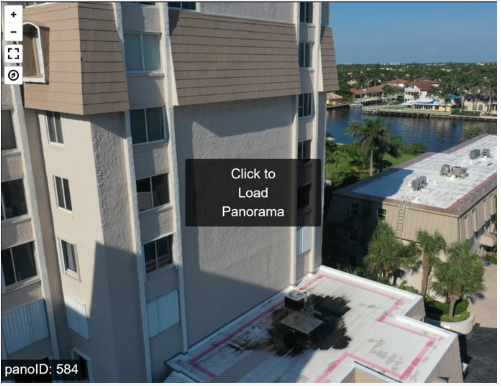
Does your building’s exterior need a facelift? Our team of experts specializes in building maintenance and exterior services, from high-rise window cleaning to garage restoration.

Does your building’s exterior need a facelift? Our team of experts specializes in building maintenance and exterior services, from high-rise window cleaning to garage restoration.

Does your building’s exterior need a facelift?

Well it now the Building Inspection! and Your Condo needs this NOW!

Our team of experts specializes in building maintenance and exterior services, from high-rise window cleaning to garage restoration.

Don’t miss out on this opportunity to revamp your building’s look and enjoy a delicious meal on us!

Contact us today to schedule your estimate.

Our Expertise

Our 20+ years expertise in this industry guarantees our work will exceed your expectations.

HIGH-RISE WINDOW CLEANING

FALL PROTECTION

CONCRETE REPAIR & RESTORATION

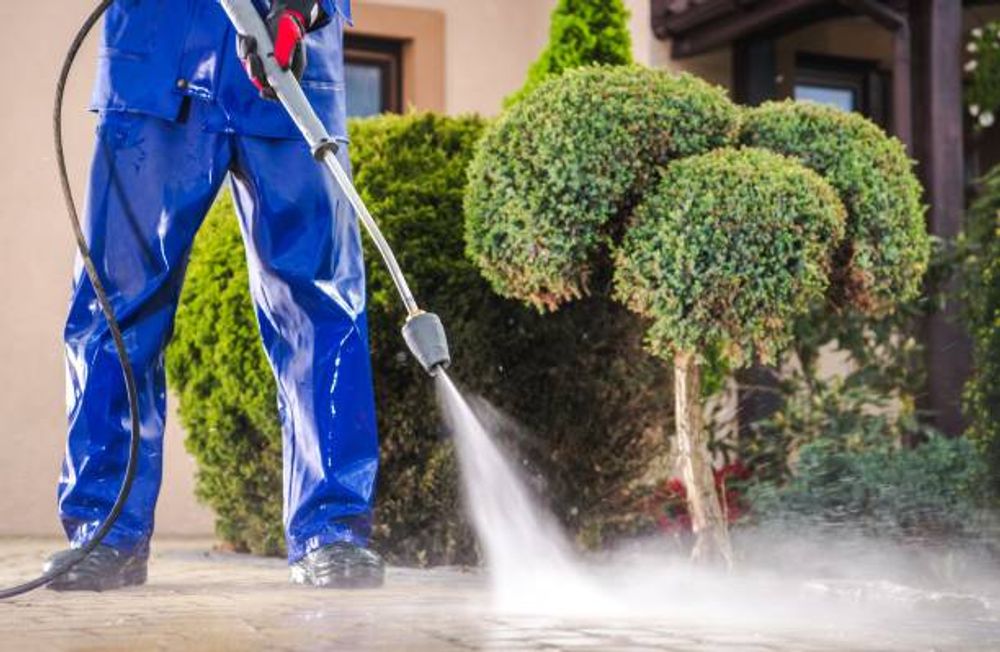
POWER WASHING & WATERPROOFING

GLASS WINDOW REPLACEMENT

FISP SAFETY INSPECTIONS


Why Choose Thompson

Our core values lies in exceeding expectations for our clients, with a focus on accurate quotes, quality work, and the overall positive customer experience. 

Our Expertise

Our 10+ years expertise in this industry guarantees our work will exceed your expectations.

Accurate Quotes

We meet with your team for a quick walkthrough to determine options available within your budget.

Customer Care

We are confident that our customer experience will always be top-notch.

Contact Us:

LET’S CHAT!   (732) 997-8138


Tags: , , ,
Secured Technologies: Security of your property or needing a trusted partner to help you build a state of the art Access Control Solution.

Secured Technologies: Security of your property or needing a trusted partner to help you build a state of the art Access Control Solution.

  • Posted: May 20, 2024
  • By:
  • Comments: Comments Off on Secured Technologies: Security of your property or needing a trusted partner to help you build a state of the art Access Control Solution.

Secured Technologies Inc.

305-893-1269

Whether you are adding some final touches to the security of your property or needing a trusted partner to help you build a state of the art Access Control solution, CCTV and fire or intruder alarm system, Secured Technologies has a wide range of options to help you.

Covering a range of security services, from small restoration and maintenance jobs to providing full blown biometric no-touch access control complete with Facial Recognition and world class CCTV, Secured Technologies is your partner in securing your building.

We offer state-of-the-art access control systems, alarm systems, intruder detection systems, CCTV, IT, integration, installation, support and maintenance services. We are a licensed and insured security service provider in the state of Florida.

Our Company’s in-house design specialist incorporates modern

High-Rise Design Technologies for Condominium, Hotel, Apartments,

Hospitals and Corporate Office towers. Secured Technologies is

responsible for some of the most secured Condominium Towers

throughout South Florida.


Secured Technologies Inc.

Ross Logan

Director of Operations

305-893-1269

687 NE 124th Street, North Miami, FL 33161

http://www.secured-technologies.com

Tags: , ,