Become our Member : JOIN SFPMA TODAY   LogIn / Register: LOGIN/REGISTER

SFPMA Industry Articles | news, legal updates, events & education! 

Find Blog Articles for Florida’s Condo, HOA and the Management Industry. 

There are a lot more reasons to own a golf car, than just golf!

There are a lot more reasons to own a golf car, than just golf!

  • Posted: Feb 10, 2020
  • By:
  • Comments: Comments Off on There are a lot more reasons to own a golf car, than just golf!

Have you been going back and forth on whether you should buy a golf car? There are a lot more reasons to own one than just golf. Add a few of these reasons to your pro list!

  1. Getting around the neighborhood – Is your child’s bus stop not around the corner? Use the golf car to take them to and from. Plus add on an enclosure to keep everyone dry on those rainy mornings! Do you have a large neighborhood? Decorate your car for Halloween and take it around trick or treating! Plus use the car to get to the neighborhood clubhouse or pool. Maybe even up to the corner store.

2. Large Property – Do you love to garden but hate lugging the bags of soil or plant food out to your garden? There are utility cars such as the Yamaha Umax built just for that! If you have animals it is also great to carry food and supplies out to their enclosures. With a utility bed and easy unlock for dumping this utility car has it all!

3. Recreation – Do you love to go camping or fishing? A golf car is a great outdoors vehicle. There are even ones built for this such as the Yamaha UMAX Rally 2+2. This allows you to drive through any terrain while getting around your campsite or fishing spot.

4. Affordability – Golf cars are an affordable option compared to a car. An electric vehicle can be way more than the average budget allows but an electric golf car can be as low as $3,000 used. Golf cars come in both gas and electric and offer the flexibility of low gas consumption.

5. Work Vehicles – Do you own a company that could use the flexibility of a golf car? Do you work for an apartment or condo association where maintenance equipment needs to be transported? Does your work complex spread a large distance and having a golf cart to go between departments would save time and therefore money? All of these are great reasons for businesses to use golf cars!

6. Storage – Golf cars take up so little space you can easily store them in the garage or a storage shed. You can even keep them on a patio if needed. They are also easy to transport due to their size. A 5′ x 7′ trailer will easily transport one wherever you need it.

Last but not least golf cars are fun! You can customize them for what you want and need. Including decorating them for parades and holidays!

If you’re in the market and have any questions please contact us. We sell new and used Yamaha products to view our current inventory please visit our website. If there is anything you like but do not currently see it in our stock feel free to reach out and we can get you a quote!

The Golf Car Connection

  954-946-8008

Looking for a new or used Golf Cart? Look no further! Golf Car Connection makes it easy to find new and used golf cars for sale.


Tags: ,
HonestESA INITIATIVE STARTS NOW!

HonestESA INITIATIVE STARTS NOW!

  • Posted: Feb 04, 2020
  • By:
  • Comments: Comments Off on HonestESA INITIATIVE STARTS NOW!

HonestESA INITIATIVE STARTS NOW!

As previously reported by CALL, two bills are making their way through committee in the Florida House and Senate. House Bill 209, sponsored by Representative Killebrew and Senate Bill 1084 sponsored by Senator Diaz, aim to protect disabled Floridians and curb some abuses related to emotional support animals (“ESAs”). Growing frustration over perceived illegitimate ESA requests unites Florida community associations. Fraudulent ESA requests harm not only community associations by forcing them to spend limited resources and precious time evaluating sometimes blatantly fraudulent documentation but also harm persons with a legitimate disability-related need for an ESA. Click here to read the bills.
 
 
Tags: ,
A PROPOSED AMENDMENT TO THE LAW THAT HAS DANGER WRITTEN ALL OVER IT

A PROPOSED AMENDMENT TO THE LAW THAT HAS DANGER WRITTEN ALL OVER IT

  • Posted: Feb 03, 2020
  • By:
  • Comments: Comments Off on A PROPOSED AMENDMENT TO THE LAW THAT HAS DANGER WRITTEN ALL OVER IT

Until now, you couldn’t sue an association for a violation of these rights inasmuch as the action by the association did not constitute “state action.”  This new statute changes all that if it passes and will open a Pandora’s box and flood of litigation between associations and their owners.

By Eric Glazer, Esq. 

Published February 3, 2020

Two weeks ago, I wrote to you about House Bill 623 that is making its way through The Florida Legislature.  Another change to the law currently included in the bill is the following language:

718.112 Bylaws.—

(1) GENERALLY.—

(c) Any provision of the declaration, the association bylaws, or reasonable rules or regulations of the association which diminish or infringe upon any right protected under the Fourteenth Amendment to the United States Constitution or Art. I of the State Constitution is void and unenforceable without further action of the association. The association may record a notice in the public records of the county in which the condominium is located evidencing its intention to not enforce such provision. The failure of the association to record a notice in the public record may not be the basis for liability or evidence of discrimination or a discriminatory intention.

To simplify, the 14th Amendment made The Bill of Rights (The first ten amendments to the Constitution) applicable to the states.  So this law basically says no provision of your governing documents can infringe upon the rights you have under the Bill of Rights.  All of you know several of these rights such as the right to free speech, freedom of assembly, and freedom of religion.

There is plenty of law out there that says when you move into an association, you may give up some of the rights you may ordinarily have in your private home. You do this by agreeing to be bound by the governing documents.   For example, courts have upheld the rights of Florida associations to prevent the use of the common elements for religious purposes, allowed associations to impose reasonable restrictions on speech through time limitations at meetings, impose restrictions on placement of political signs on the property or even placement of religious symbols in excess of certain sizes on your windows and doors.

The adoption of this proposed amendment by The Florida Legislature may throw all of these restrictions into doubt, including another one I haven’t mentioned yet.  The Second Amendment is the right to bear arms.  Inasmuch as Florida law allows associations to prohibit alcohol use on the common elements and prohibit religious ceremonies on the common elements I always opined that the association had the right to ban weapons on the common elements via a rule. If this proposed amendment passes, no way would an association be allowed to ban guns from the common areas.

I have serious concerns that if this amendment passes, associations will potentially be embroiled in case after case, where the association attempted to impose all of the reasonable restrictions mentioned above, and unit owners taking the position that the association is prohibited from doing so because it violates their constitutional rights.  Until now, you couldn’t sue an association for a violation of these rights inasmuch as the action by the association did not constitute “state action.”  This new statute changes all that if it passes and will open a Pandora’s box and flood of litigation between associations and their owners.

If you are a believer that associations are notorious for not providing their owners with rights guaranteed by the U.S. Constitution, this new proposed law may not bother you.  If on the other hand you believe that the association should still be able to impose reasonable restrictions in order for all of us to live in harmony with each other, this new law should bother you.  A LOT.


Tags: ,
Today We signed a Contract to produce and manage: The FLORIDA RISING MAGAZINE with F & C

Today We signed a Contract to produce and manage: The FLORIDA RISING MAGAZINE with F & C

  • Posted: Jan 21, 2020
  • By:
  • Comments: Comments Off on Today We signed a Contract to produce and manage: The FLORIDA RISING MAGAZINE with F & C

NEWS: Today We signed a Contract to produce and manage: The FLORIDA RISING MAGAZINE with F & C (Effency Publishing)

Stop and Take a Look when you see the FLORIDA RISING MAGAZINE IN A FEW DAYS.

We are the new marketing company for the magazine, Today We signed a Contract to produce and manage: The FLORIDA RISING MAGAZINE – Is one of 18 magazines we publish for other companies and some associations.

FRM has over 118,000 Emails in their Database and over 47,300.00 Paid Subscriptions to date. We will send this publication all over Florida and it even gets sent to property condo owners living up in the northern states.

Thank You for reading the FRM sponsored by THE STATE OF FLORIDA PROPERTY MANAGEMENT ASSOCIATION

The Publishing will still be handled by SFPMA, Noting will change. Only Graphic Design and Promotions will be at a different level.

We wish to take our publication to the next level so bringing in your agency will be a great help to our Members, Advertisers and our Industry. ~Frank J Mari / Executive Director

Tags: ,
Five tips for new HOA board members

Five tips for new HOA board members

  • Posted: Jan 16, 2020
  • By:
  • Comments: Comments Off on Five tips for new HOA board members

Five tips for new HOA board members, From our friends at Vesta Property Services.

Welcome to the board! Being a new HOA board member, you are going to be wearing many different hats and stepping into a few challenging roles to help make sure your HOA is running smoothly. Now that you’ve been elected, the big question is…What’s next?

For many newly elected board members it is their first time in the position, presenting a pretty steep learning curve. Lucky for you, Vesta has a few tips to get you more comfortable in your new position.

Just follow these board member basics and you’ll have all the tools you need to become the best board member you can be! 

1. Understand your role

While you volunteered for this position, you also should realize that it is not to be taken lightly. The board is responsible for the management of all aspects of the association. You are a key element in ensuring that your association continues to operate and that all of the residents are happy with the HOA they chose to live in. Vesta has an article on understanding the roles of the HOA board that you can read here.

The best way to quickly learn how your association achieves these goals is to read your association covenants, by-laws and other governing documents. Don’t be afraid to ask veteran board members about their responsibilities and the minutia of the job. Often experience is the best teacher, so talking to seasoned board members is a great way to figure out what to do and more importantly, what not to do.


2. Team up with a great property management company that you can trust

If your board works with a property management company that you trust to do right by your community, you can use them as a resource to help you ease into your new role! Working effectively with your management company is a great way to make sure you’re getting everything you can out of what they offer.

Having a close relationship with your HOA’s CAM will open doors for you and the rest of your board that will lead to efficient and effective methods of management. As a part of their services, your CAM should be providing you and your residents with clear communication in enforcing your association’s policies and assisting with your budget, financials and even managing your vendors!

3. Participate

If you want your board to be effective, all board members should be participating, both during and between meetings. Make sure you’re going to every meeting you can, volunteering for projects and taking an active role in the management of your community.

Everyone on the board should be doing whatever they can to make every meeting count. When a meeting is run poorly, more issues are created than solved. While making sure your meetings are productive can be a tall order, it can really be as simple as following procedure, reading the agenda, keeping accurate minutes and reviewing what was discussed at the end of the meeting.

You can find some tips about leading productive board meetings here.

4. Communicate

Many of your neighbors will probably agree that communication between the board and community is vital to the success of a community. Transparency is necessary if you want to maintain a positive relationship between your board and your neighbors. Make sure you keep your community informed about issues, ideas and changes that are going on in the community you both live in.

5. Take advantage of the Community Associations Institute 

In their own words, CAI is an international membership organization dedicated to building better communities. CAI serves community associations by providing guidance through seminars, workshops, conferences and education programs for community managers and other industry professionals.

CAI offers many educational services including online training and in-person workshops that you can attend. Many property management companies also host board certification classes that you can attend

Volunteering for your community is rewarding and challenging; it’s important to take some time now to learn about your role as a board member and how to best serve your association. Following these guidelines is a great way to ensure your transition is smooth and that you enjoy your time on the HOA board!


Tags: , , ,
The Internet of things

The Internet of things

The telecommunications industry says the upgrades are needed by 2020 to meet the demand for faster internet speeds, smart cities, driverless vehicles, instantaneous 3D downloads, the “Internet of things” where machines talk to machines, and more.

The battle between infrastructure needed for fast digital service and property rights may soon come to communities across Palm Beach County. Right now, it’s playing out in Tallahassee courtesy of legislation before lawmakers.

“It’s a ticket for multi-billion dollar wireless communication companies to come into a city and do as they please in city right of ways,” said Riviera Beach Councilwoman Dawn Pardo.

The brewing fight is over technological advances. First there was 1G wireless technology, for “first generation,” and as telecommunications technology evolved, 2G, 3G, 4G and 4G LTE came to be. Now 5G, a fifth generation network technology allowing greater connectivity at higher speeds for many more devices, is on its way.

To place the infrastructure needed for 5G service, a proposal pending in the Florida Legislature would limit state and local control of public rights-of-way where the 5G equipment is being installed.


SFPMA feels that with the proposal in the Florida Legislature with some changes is what we need to advance this to all of our Florida communities, this upgrade is for reliability “If you are stranded in an heavy traffic area or one that has many customers using services at one time it slows down and this brings problems” Can you get through in an emergency? We have members right now that offer Building Owners the ability to place towers, on rooftops and other locations with need to advance the networks. Many of our building members can make money each month by the placement of these on the properties and in the communities they own and manage. 

Senate Bill 596 sponsored by Sen. Travis Hutson, R-Palm Coast, and House Bill 687, sponsored by Rep. Mike La Rosa, R-St. Cloud, would create the Advanced Wireless Infrastructure Deployment Act and prohibit the Florida Department of Transportation and local governmental entities from prohibiting, regulating or charging for collocation of small wireless facilities in public rights-of-way.

Municipalities say the bill is one-sided, would take away their ability to control where 5G equipment is installed and totally favors telecommunications giants such as AT &T, Verizon and Sprint. The companies want the right to install their equipment on utility poles, light posts, signs and traffic arms in rights-of-way.

Pardo was one of about a dozen officials from cities and counties across Florida, including Miami, Fort Lauderdale and St. Petersburg, who spoke against the bill before the Senate Committee on Communications, Energy and Public Utilities in Tallahassee on March 7.

Pardo told the committee the bill would eliminate residents having a say in the location of 5G facilities.

Currently, Riviera Beach requires “stealth designs” that are unobtrusive, and has other rules as well. The city doesn’t allow the equipment within residential communities.

“We have a couple of these wireless companies proposing to put towers in residential communities without any input from the public. This is unacceptable. This bill allows companies to put as many towers as they want,” Pardo said.

The proliferation of poles and equipment on rights-of-way would jeopardize public safety, entice kids to climb up the poles and create more debris when a hurricane hits, Pardo said.

Riviera Beach has spent a “couple million dollars” to bury utility lines, Pardo said, adding, “Then the next thing you know, we have these 100-foot poles in the middle of the sidewalk.”

Both bills have passed their first round in the Senate Committee on Communications, Energy and Public Utilities and the House Subcommittee on Energy & Utilities.

While the bills deal only with “small cells,” the suitcase-size to small refrigerator-size building blocks of the 5G system, some companies are also submitting applications for poles as high as 120 feet.

The telecommunications industry says the upgrades are needed by 2020 to meet the demand for faster internet speeds, smart cities, driverless vehicles, instantaneous 3D downloads, the “Internet of things” where machines talk to machines, and more.

Houston-based Crown Castle, the nation’s largest provider of wireless infrastructure, sought to install 50 to 60 poles all over Riviera Beach, but in September 2016 the city passed an ordinance regulating them. The equipment boxes must be grouped together in a single location and spaced a minimum of 2,000 feet from each other unless technical documentation is provided by the applicant and approved by the city management. If more than six poles are to be located within one linear mile of a city block, the manager must notify the council.

Crown Castle installed four poles prior to the regulations. Mobility had planned to install numerous 120-foot poles, but Riviera Beach’s ordinance does not allow the poles to be over 35 feet. That’s got municipal leaders worried.

Eric Poole, deputy director of public policy at the Florida Counties Association, spoke about SB 596 before the committee. The committee passed the bill on preliminary reading.

“This bill is a one-way street. It says the telecommunications industry can come into any county and city and require us to give them a permit to co-locate one of their small cell packages on any of our utility poles, light posts, signs or traffic arm signals. We can’t tell them no,” Poole said.

Poole said he first became aware of the 5G issue about 10 months ago when a wireless infrastructure provider submitted an application in a Florida county he did not mention by name, and said it had the right to use the right-of-way. In the past, such installations were typically done on private property, not on public rights-of-way.

The proposal states that if the local government doesn’t approve or deny the telecommunication company’s application within 60 days, approval is automatic. The maximum fee the companies can be charged for use of each right-of-way is $15.

Some local governments have declared moratoriums while they work with the industry, Poole said. He said his organization doesn’t want to stop smart schools, economic development and other advancements, but that the industry needs to respect home rule authority.

Advocates for the bill included representatives of AT&T, Sprint, Verizon, T-Mobile and other companies, as well as their trade groups.

Bethanne Cooley, legislative affairs director of CTIA, the trade association for the wireless communications industry, said networks need to be updated today to be ready for the next generation of wireless networks.

The fifth generation, 5G, will connect 100 times as many devices and be up to 100 times faster. It could create up to 3 million jobs nationwide over the next seven years, Cooley said.

A January report by the Florida Association of County Attorneys Cell Tower Right-of-Way Task Force states that numerous counties and cities in Florida have been confronted with applications from private companies wanting to place cellular telecommunications towers and small cells in the public right-of-way.

The companies are seeking to classify these cellular towers as tall as 120 feet as “utility” poles, but they are not, the report states.

The Telecommunications Act of 1996 and the Florida Statutes do not support a right of telecommunication firms to force local government to allow placement of cellular communication facilities in the local government’s own right-of-way, the report concludes.

Reposted by: SFPMA for the advancement of our communities. original published by; The Palm Beach Post (West Palm Beach, Fla.) Distributed by Tribune Content Agency, LLC.


Tags: , ,
Association Foreclosures Are Obsolete

Association Foreclosures Are Obsolete

  • Posted: Jan 10, 2020
  • By:
  • Comments: Comments Off on Association Foreclosures Are Obsolete

Association Foreclosures Are Obsolete

The Foreclosure Process and How HOAs Recover Money

In a condo or HOA the normal method to collect delinquent maintenance fees is to send an owner to the attorney. The attorney will then move the process through the courts. This means foreclosure for delinquent maintenance fees. The object is to foreclose and take “intervening title” on properties.

It’s “intervening title” because in most cases the unit still has a mortgage. Soon enough the lender is coming for their collateral. The association can hold title but they cannot sell the unit as it may have a debt attached to it. With luck the association can get this title without too much expense and rent out the unit. That is the only way the association can recover money if somebody does not bid the unit when it goes for sale.

The association foreclosure worked in the past but now it is becoming obsolete.

The rental revenue may cover losses for maintenance fees. It may also cover the rehabilitation of the unit, commissions and marketing of the unit to a renter. There are also the legal costs & fees that the association spent to get the title.

With luck the association can hold on to this unit long enough to recover their money. Its a hard way to recover delinquent maintenance fees. It is also an obsolete maneuver to foreclose to recover money.

This is how it has always been, especially during the real estate meltdown of the last decade. Now, the times they are a changing.


New Law Proposed in FL Removes Ability for Associations to Collect Rents

In Florida, an amendment to Florida Statute § 697.07 has been proposed. This new law will entitle banks to step in and take those rents. In essence this completely neutralizes the benefit of foreclosure for community associations.

Delinquent maintenance fees, legal costs, late fees, late interest will remain a loss. Only the lender will benefit when an association forecloses. In other words there will be no good reason for a community association to foreclose on a unit. They will not be able to monetize it should they prevail in court.

These are not isolated events but a trend. Banks may be slow learners but they will always make decisions that will benefit their bottom line in the end.


New Law Proposed in SC Removes Foreclosure as an Option for HOAs

In South Carolina a bill pre-filed this month would prohibit HOAs from foreclosing at all. This bill would strip this power from associations. “Real property used as a primary residence may not be sold if the action was instituted by a homeowners association attempting to collect unpaid dues, fee, or fines”, the proposed bill states.

These are not isolated events but a trend. Banks may be slow learners but they will always make decisions that will benefit their bottom line in the end.

Association foreclosures are likely to become less common nationwide. This is a good thing! Community associations and their attorneys have long abused this power. Small debts get inflated with legal fees, and the case gets moved to foreclosure. Ultimately this does little to benefit the association.

Eliminating foreclosures will limit community association’s power to collect delinquent assessments. Fortunately, there are other alternatives to recovering delinquent maintenance fees.


The Real Estate Meltdown is Over, But We’re Acting Like It’s Still Going On

People are fallible and don’t always manage their financial affairs well. Such people need a wake up call, NOT their home confiscated.

In 2009, during the height of the real estate meltdown, many properties did not have equity. Originally purchased by “Flippers and investors,” many were simply abandoned. Banks were stalling foreclosure and these properties were sitting there rotting. In those times it made good sense for the association to rush to the courthouse and foreclose on delinquent units.

Today most homes have equity and are appreciating in value. It’s unlikely the current owners would let the property be taken from them if they can avoid it. If equity outweighs the debt it would be foolish to lose a property. Most units delinquent in their maintenance payments will pay without legal intervention.


A Viable Alternative to Foreclosure Is Available for Smart Community Associations

Eliminating foreclosures will limit community association’s power to collect delinquent assessments. Fortunately, there are other alternatives to recovering delinquent maintenance fees.

Retaining a collection agency that specializes in community association debt is becoming an increasingly popular option.

Many collection agencies work on a contingency basis, while Lawyers get paid regardless of the outcome of the cases they take. This means collection agencies are much more motivated to seek a timely resolution.


Less Negative Impact on Community Members

Strategies employed by debt collectors have a much lower impact on your community. With a strategy of engagement and education, these agencies are looking to resolve issues and improve communications within the community. This is done with the use of proper notifications, outbound calls, credit bureau reporting, letters sent to mortgage holders, placing of liens, and other techniques.

Frankly, association foreclosure on delinquent owners is obsolete. Even without the change in the laws this method to collect on delinquencies needs to be reconsidered.

It’s time for management companies and boards of directors to think how the future collects and engage specialized collection companies to collect delinquent condo and HOA debts.


Tags: ,
Axela Technologies Welcomes New President of Business Development After 600% Growth in 2019…

Axela Technologies Welcomes New President of Business Development After 600% Growth in 2019…

  • Posted: Jan 10, 2020
  • By:
  • Comments: Comments Off on Axela Technologies Welcomes New President of Business Development After 600% Growth in 2019…

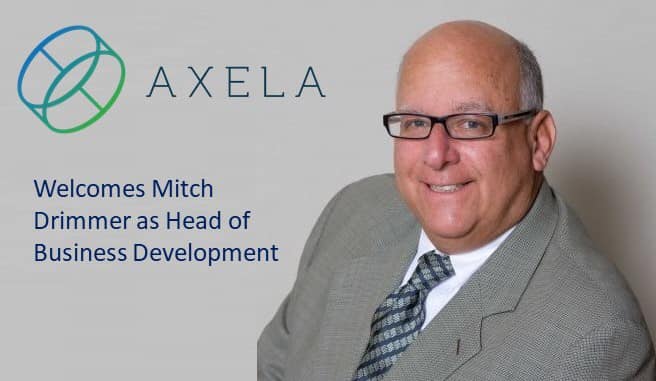
Axela Technologies Inc, a specialized collections company servicing Community Associations, announced today the promotion of longtime industry expert Mitch Drimmer to President of Business Development. The appointment comes as the company exceeded 600% growth in 2019 under Drimmer’s leadership.

Axela Technologies, a specialized collections firm servicing the community association industry, has promoted Mitchell Drimmer to President of Business Development. This promotion was precipitated by strong growth in Axela’s collections division in 2019. In his new role, Drimmer will spearhead the formation of a national sales team as the company continues to enter new markets.

In his prior role as VP of Business Development, Drimmer worked with community associations and their management companies to introduce innovative strategies to collect delinquent maintenance fees. Under Drimmer’s watch in 2019, the company expanded operations, and grew its’ client base by over 600%. He has traveled nationwide, speaking at industry events and educating community association managers about the most effective ways to address the ever-present issue of delinquencies, solidifying his position as a thought-leader within the industry.

“Mitch has done a fantastic job getting the word out that there is a new and better way to recover delinquent fees,” says Martin Urruela, CEO of Axela. “He is committed to helping community associations and their managers adopt new technologies to better run their communities and businesses. Above all, Mitch is a fantastic communicator and teacher, and cares deeply about the success and well-being of the communities that we serve”.

Axela believes that legal action and foreclosure should be the measure of last resort when addressing association delinquencies. Through proprietary technologies that automate and streamline the process, Axela customers can escalate a unit to collections easier than ever to start seeing results immediately.

“In the United States, we have over 73 million people living in associations paying almost $100bn in annual assessments. A large percentage of which goes uncollected due to simple process inefficiencies,” states Drimmer. “Our mission at Axela is to ease the burden on managers and boards with the best collection solutions available in the market. It works; as evidenced by the fact that less than 5% of our collection files move to foreclosure. And did I mention we’ve never lost a customer?” quips Drimmer.

Drimmer has worked for Axela Technologies since early 2018, joining the company as the first business development executive. He earned a Bachelor of Arts in History from Hunter College in New York City, and has worked in the community association collections space since 2007.


Tags: , , ,