
Become our Member : JOIN SFPMA TODAY   LogIn / Register: LOGIN/REGISTER

SFPMA Industry Articles | news, legal updates, events & education! 

Find Blog Articles for Florida’s Condo, HOA and the Management Industry. 

6 Community Association Management Trends to Watch in 2023

6 Community Association Management Trends to Watch in 2023

  • Posted: Aug 09, 2023
  • By:
  • Comments: Comments Off on 6 Community Association Management Trends to Watch in 2023

Interesting research on the community association industry. Especially, given that seventy-eight percent of new homes for sale are located in community associations. There are 358,000 associations across the country, and it’s estimated that 5,000 more will be formed in 2023. Here presented are six trends that CAMs and boards are likely to see, including the absence of new board members. However, I think it is less to do with apathy than before Surfside and more to do with risk associated with a voluntary, unpaid, thankless job.


As part of our cross communications with other groups we are posting this for our industry – SFPMA


Wondering what 2023 holds for the community association management industry?

We were, too. That’s why Buildium asked 240 community association managers and board members about the challenges and opportunities they foresee for the industry this year.

They told us the community association sector is more popular than ever among developers, residents, and management companies—but there are several key challenges that community association managers and leaders need to address head-on, so they continue to thrive.

From shortages of team members, vendors, and volunteers to increasing competition among management firms, here are the six trends community association management companies should be aware of in 2023.


1. Staffing is a top priority as the labor shortage continues to strain teams’ resources.

Smaller community association management companies are competing with larger companies and developers for full-time team members and high-quality contractors, leading to higher staffing costs and smaller teams.

According to Buildium’s research, this is a leading challenge for the 85% of companies that plan to expand their portfolios throughout 2023 and 2024, prompting community association management companies to name staffing as their second-highest priority for the coming year.


2. Efficiency is a primary area of focus as teams search for ways to do more with less. 

Technology is the X factor that allows community association management teams to take on more clients, even as their teams remain smaller than in the past. Streamlining processes like payments, communications, and accounting frees up time for the most impactful areas of the business, such as customer service and business development.

More than half of community association management companies told Buildium that leveraging technology to drive efficiency is a key aspect of their revenue generation strategy for 2023.


3. Competition for clients highlights the importance of high-quality customer service.

The Foundation for Community Association Research estimates there are 8,000 to 9,000 community association management companies in the U.S. In certain areas, smaller companies feel they’re being edged out by larger firms that can charge less for their service due to economies of scale.

Association board members told us they can feel the difference between customer service that’s personalized to their needs, and service that’s one-size-fits-all. This is where smaller companies have a competitive edge.


4. New development means new potential clients for community association managers.

Seventy-eight percent of new homes for sale are located in community associations. There are 358,000 associations across the country, and it’s estimated that 5,000 more will be formed in 2023.

This creates new opportunities for 88% of community association management companies that plan to recruit new clients over the next two years, with growth named as companies’ third-highest priority for 2023, according to Buildium’s survey.


5. Profitability is a challenge as companies balance the pressure to increase prices with the need to stay competitive.

Inflation has increased the cost of running associations across the board, from materials and labor (on the management side) to insurance and taxes (on the association side). Association boards are feeling the strain of pulling together sufficient reserves and funding for capital projects without raising dues or requiring special assessments.

Association management companies are under pressure to keep prices low to stay competitive—but 70% of companies feel it’s necessary to raise prices to cover their costs in 2023 and 2024. Our research found 43% of companies plan to expand the services they provide, potentially opening new revenue streams.


6. Community associations are struggling to recruit engaged, knowledgeable board members.

According to Buildium’s research, 38% of association board members said finding the people and resources necessary to keep their community running as a primary source of stress in 2023.

Current board members—80% of whom are 60 and older—feel frustrated with the lack of participation from newer homeowners; and boards that experience frequent turnover struggle to find members who have the knowledge to make important decisions for the community.

Overall, association boards and management companies feel more involvement in the community from homeowners is needed, in addition to greater awareness of their responsibilities as residents of an association.

These are some of the challenges and opportunities that association managers and leaders will face in 2023. For a deeper dive into 2023 community association management trends, download our 13-page report, which shares additional data and quotes from real community association management professionals and board members. Download your free copy now.

Tags: , ,
Simplify Your Accounts Receivable with These Proven Tips! by Condo Control

Simplify Your Accounts Receivable with These Proven Tips! by Condo Control

  • Posted: Aug 09, 2023
  • By:
  • Comments: Comments Off on Simplify Your Accounts Receivable with These Proven Tips! by Condo Control

We help condominiums and HOAs establish better processes so that they can operate more efficiently and effectively.

Simplify Your Accounts Receivable with These Proven Tips!

Struggling with managing accounts receivable in your condo or HOA? We’ve got you covered! Discover effective strategies to streamline your financial processes and ensure timely payments.
We’ve seen it for ourselves. We harnessed the best of technology to create software that streamlines and automates almost every aspect of community operations.
…………………………………………

There would be no Condo Control without Brian Bosscher. Brian had no professional property management experience, but he did understand the frustrations that plague condo communities after purchasing a unit in 2006. Looking to help improve operations, Brian joined his building’s finance committee immediately. He started volunteering on the Board of Directors as Treasurer the following year, and then became the Board President.

It was through volunteering that he learned about the challenges and roadblocks that property managers encounter on a day-to-day basis, and witnessed the inefficiencies that prevented them from reaching their goals. It was this experience that inspired Brian to build a long-term solution, and Condo Control was born.


How to simplify accounts receivable for your condo/HOA

When residents pay their fees or fines, these payments are documented under accounts receivable (AR). Vendor credits are also logged under AR. This element of accounting tracks the money coming into the corporation or association.

But like most things related to community finances, it’s much easier to talk about accounts receivable than manage them. Collecting payments is always a challenge because they come in at different times, and in different formats. Documenting this information is equally tedious and time consuming.

While we can’t eliminate this responsibility for you, we can suggest some ways to simplify the AR workflow for you and your team.

Table of contents

Regulate billing practices

Without structure, rules, or established expectations, anything goes. But spontaneity isn’t exactly ideal when you’re trying to get money from 200 owners. That’s why it is so important to implement consistent billing practices. Not only does this create a routine for you and/or your staff, but residents aren’t left wondering when they might receive their invoices or how they should make payments.

By creating a sustainable AR workflow, condos and HOAs will find that late payments become less common. By sending billing statements in the same format, at the same time each month, your residents become familiar with a routine. As a result, they’ll become more accustomed to making payments the same way at the same time.

Use electronic billing and online payments

Online banking has become almost ubiquitous in North America. Mobile apps make this option accessible to all age demographics, and the convenience cannot be overstated. So doesn’t it make good sense to offer online payment options to residents?

Not only does it make the payment process far easier for the people who live in the community, but it creates less work for you.

Teams that are still documenting accounts receivable payments manually are more prone to making mistakes. Between writing down payments, updating balances, and creating receipts, it’s understandable why someone might forget to fill in a field or add an extra “0.”

But even a small mistake can lead to bigger problems, and can even create conflict between residents and staff. Furthermore, time is wasted when someone has to go back and review the numbers.

Then there’s the issue of storing and locating physical records. Paper can easily be misplaced or lost, and aside from the obvious problems associated with losing documents, missing information can lead to costly compliance violations.

Electronic billing and online payments reduce manual data entry work for staff, and create records automatically. If you decide to use a cloud-based system, you’ll have the ability to access records from any computer. That way, you aren’t tied to the office.

It’s important to note that not every resident will want to make online payments. Your condo or HOA could install a secure lockbox so that you don’t have to arrange a meeting with these individuals to receive a payment on time.

Set up automations

With a digital AR system, you can also create automations to bypass some of the most tedious AR tasks. This typically includes email automation (late payment reminders, confirmation of payment) as well as sending out invoices.

Remove “information silos”

A cloud-based AR system ensures that anyone who needs access to accounts receivable information can get it, no matter where they are working from. Conversely, when team members have to wait for information because it is siloed off, it slows down the entire process.

Follow the process when collecting late payments

Inevitably, there will be residents who are consistently late with payments, or who avoid them altogether. Instead of having to figure out what to do next each time this happens, follow the condo or HOA’s rules/ procedures laid out in the governing documents.

Make sure all actions are in accordance with local laws. For example, you are probably required to give residents written notices and a reasonable amount of time to pay fees before more severe actions are taken.

Corporations/associations do have the power to pursue residents for unpaid fees, and to recover any legal expenses incurred while trying to collect money owed from delinquent owners.

These are some of the actions that communities are permitted to take while trying to secure outstanding fees:

  • Send the resident a notice of arrears
  • Apply interest to outstanding arrears after a certain amount of time has passed
  • Revoke the owner’s right to vote
  • Revoke a resident’s access to shared facilities
  • Contact collections
  • Contact legal counsel
  • File a Notice of Lien
  • Register lien

Conclusion

Accounts receivable is an ongoing responsibility that requires a great deal of time and resources. The less you and your team have to do by hand, the happier you’ll be.

It is recommended that condos and HOAs look into AR software to simplify and speed up workflows. The money you invest in this solution will be less than the costs associated with conducting this process manually. Not only can it help keep processes more consistent, but you will probably find that you make fewer errors.

Your time is valuable; spend it wisely.


Tags: , ,
Having an Enrolled Agent (EA) can benefit you in several ways, especially when it comes to your tax-related matters.

Having an Enrolled Agent (EA) can benefit you in several ways, especially when it comes to your tax-related matters.

  • Posted: Aug 01, 2023
  • By:
  • Comments: Comments Off on Having an Enrolled Agent (EA) can benefit you in several ways, especially when it comes to your tax-related matters.

Having an Enrolled Agent (EA) can benefit you in several ways, especially when it comes to your tax-related matters.

What can an Enrolled Agent Do for You?
Here are some of the key benefits of working with an Enrolled Agent:
*Tax Expertise: Enrolled Agents are licensed by the IRS and have expertise in all areas of taxation. They can help you with tax planning, tax preparation, and tax resolution.
.
*Representation: If you are facing an audit or other tax-related issue, an Enrolled Agent can represent you before the IRS. They can help you understand your rights and responsibilities and work to resolve the issue in the most favorable way possible.
.
*Communication: Enrolled Agents are skilled at communicating complex tax issues in a way that is easy to understand. They can help you navigate the often-confusing world of taxation and provide you with guidance and advice as needed.
Savings: Working with an Enrolled Agent can help you save money by identifying deductions and credits that you may have overlooked. They can also help you avoid penalties and interest by ensuring that your taxes are filed accurately and on time.
.
*Convenience: Enrolled Agents can work with you remotely or in person, depending on your needs. They can also provide you with ongoing support throughout the year, not just during tax season.
.
Having an Enrolled Agent on your team can provide you with peace of mind and confidence in knowing that your tax-related matters are being handled by a licensed and experienced professional.

RMS AccountingAll of the tax professionals at RMS Accounting are Enrolled Agents with over 75 years of combined experience helping taxpayers resolve tax problems and to pay the lowest tax allowed by law.

Want to talk to one of your tax professionals just give us a call at 800-382-1040.
Let’s illuminate our planet with the power of energy efficiency, one lightbulb at a time. Together, we can make a meaningful difference.

Let’s illuminate our planet with the power of energy efficiency, one lightbulb at a time. Together, we can make a meaningful difference.

  • Posted: Aug 01, 2023
  • By:
  • Comments: Comments Off on Let’s illuminate our planet with the power of energy efficiency, one lightbulb at a time. Together, we can make a meaningful difference.

Lighting of Tomorrow is commited to providing our clients energy saving lighting solutions. We provide a complete service, so we can continue “lighting the way for a sustainable tomorrow”

Join us in making a simple yet impactful change for a brighter, greener future: switching to energy-efficient lightbulbs!

By embracing this small but significant action, we can collectively contribute to reducing our carbon footprint and preserving the environment. Energy-efficient lightbulbs, such as LED or CFL bulbs, consume significantly less electricity than traditional incandescent bulbs, translating into lower energy bills and savings in the long run. Not only will you be helping to combat climate change, but you’ll also enjoy longer-lasting bulbs that require less frequent replacement.

Let’s illuminate our planet with the power of energy efficiency, one lightbulb at a time. Together, we can make a meaningful difference.

Contact Us

1076 NW 53rd St, Fort Lauderdale, FL 33309

954.626.0267

info@lightingot.com


Lighting of Tomorrow is commited to providing our clients energy saving lighting solutions. We provide a complete service, so we can continue “lighting the way for a sustainable tomorrow”


Tags: , , , ,
MAKE SURE YOUR DOCS DON’T COST YOU MONEY  By Eric Glazer, Esq.

MAKE SURE YOUR DOCS DON’T COST YOU MONEY By Eric Glazer, Esq.

MAKE SURE YOUR DOCS DON’T COST YOU MONEY

By Eric Glazer, Esq.

Let’s start with what some of you already know……..foreclosures are on the rise.  Incredibly, this is happening before huge special assessments are kicking in for many of you and before mandatory reserves go into effect.  If foreclosures are already on the rise, what’s going to happen when special assessments and reserves take hold of most communities?

If a bank forecloses on either a home in an HOA or on a unit in a condominium, the association is likely to take a huge financial hit if that home or unit is also delinquent to the association.  When a bank forecloses on a property, most of the time that bank winds up becoming the owner of that property because nobody bids against the bank at a foreclosure sale.  For example, if an owner fails to pay the mortgage, the bank eventually forecloses and gets a final judgment against the owner for the amount of the delinquency plus interest and attorney’s fees.  The judge sets an auction date.  At the auction, the bank usually bids the amount of their final judgment, there are no other bids and the bank winds up owning the property.

Now that the bank owns the property, do they have to pay all of the assessments that are owed to the association on that home or condominium unit?  Not even close.  The law states that the bank would only have to pay the lesser of:

  • One year of assessments or;
  • One percent of the original mortgage debt;

So, let’s say the bank is foreclosing on a $300,000.00 mortgage.  One percent of that mortgage is $3,000.00.  Let’s say the assessments are $600.00 per month.  One year of assessments is $7,200.00.  Therefore, at most the bank is responsible for $3,000.00 and not $7,200.00 and this is even if the prior owner has not paid for several years.  There can be $15,000.00 in delinquent assessments owed on the unit —the bank would still only have to pay $3,000.00 at most.

Here’s where the association can really get stung.  If the governing documents let the bank off the hook and state that the bank does not have to pay anything if they wind up foreclosing and owning the property.  Even though the law would require the bank to pay $3,000.00 in the above example, the association’s governing documents may allow the bank to pay zero!  SO……………MAKE SURE YOUR GOVERNING DOCUMENTS DO NOT CONTAIN SUCH A PROVISION AND IF THEY DO – AMEND IT IMMEDIATELY BEFORE FORECLOSURES IN YOUR COMMUNITY POSSIBLY BECOME ROUTINE!  DON’T LET THE BANKS OFF THE HOOK!

Next week we’ll talk about what happens when a third party buys the property at a foreclosure sale and not the bank.  You definitely will want to find out the good and the potential for disaster.


You can read more articles from Eric Glazer on his Blog. 


Tags: , ,
Florida Insurance Journal Report:  Claims Litigation Not Named as Major Factor in Florida Insolvencies

Florida Insurance Journal Report: Claims Litigation Not Named as Major Factor in Florida Insolvencies

  • Posted: Jul 28, 2023
  • By:
  • Comments: Comments Off on Florida Insurance Journal Report: Claims Litigation Not Named as Major Factor in Florida Insolvencies

Head Scratcher? Claims Litigation Not Named as Major Factor in Florida Insolvencies


Despite years of complaints from Florida property insurers and some lawmakers that out-of-control claims litigation was destroying the industry, recent regulators’ reports about the reasons for insolvencies make little mention of the “L-word.”

The omission has prompted some head scratching and new questions by policyholder representatives.

“That’s ridiculous,” said Gina Clausen Lozier, a south Florida plaintiffs’ attorney. “You’d think with all the concerns about litigation in the last few years that would be number one on the list.”

The Florida Department of Financial Services’ Division of Rehabilitation and Liquidation posted its 2022 Annual Report in April. It recently caught the eye of advocates for homeowners, policyholders that have seen premiums spike in Florida while at least 10 insurers have become insolvent since early 2021. The R&L report’s page 7 lists “factors contributing to insolvency,” including:

  • Inadequate capitalization or asset deterioration
  • Improper management
  • Insufficient claim reserves
  • Rapid premium growth
  • Inappropriate transactions with affiliates or subsidiaries
  • Inadequate premium rates
  • Natural disasters or catastrophic losses
  • Change in business conditions
  • Reinsurance market issues.

Claims litigation, which industry supporters have often called the number-one reason for insurers’ financial troubles in Florida, and which led to major legislative reforms in the last five years, is not mentioned directly in the report. That suggests that insurance company leadership and corporate structure, not trial lawyers, are more to blame for mismanaging operations and failing to maintain adequate reserves, said Doug Quinn, executive director of the American Policyholder Association, a national, non-profit group that advocates for investigations into insurers’ claims practices.

“All of the finger-pointing and scapegoating at consumer fraud, excess litigation, and roofing scams are just to divert attention away from what’s really going on behind the scenes,” Quinn said. “There’s a lot of finger-pointing at outside parties, but failing at business is an inside job.”

A Department of Financial Services official, responding to questions from Insurance Journal, said claims litigation is a factor behind the factors listed in the report. The R&L annual report examined insolvencies from 2017 through 2022, including the liquidations of St. Johns Insurance Co., Avatar Property and Casualty Insurance, and Southern Fidelity Insurance, said Devin Galetta, communications director for Florida’s chief financial officer, Jimmy Patronis.

“While the words ‘claims litigation’ do not appear on that particular page, the reality is that during the period covered by these reports, 79% of the nation’s homeowners insurance lawsuits were filed in Florida while the state only accounted for 9% of the nation’s homeowner’s insurance claims,” he said in an email, citing an oft-quoted statistic compiled by the Florida Office of Insurance Regulation, based on data from the National Association of Insurance Commissioners.

“‘Claims litigation’ is a driving factor for many of the listed insolvency factors, including asset deterioration, insufficient claims reserves, inadequate premium rates, reinsurance market issues and changing business conditions,” Galetta said.

He added that litigation is not the only force behind recent insolvencies. “But it is a throughput that causes a wide variety of disruptions to the insurance market as initial estimates of a storm’s cost continue to increase for months or years after a storm makes landfall, due to litigation costs.”

Other factors include sharply rising reinsurance prices and inadequate premium levels, which are included in the report.

The spike in reinsurance rates in the last three years reflects excessive claims litigation as much as anything, said Kevin Comerer, a consultant and registered lobbyist with Rubin, Turnbull & Associates, in Tallahassee. He was previously legislative director for a major Florida property insurer. Comerer noted that reinsurers have pulled back from the Florida market and have raised prices in large part because litigation soared between 2018 and 2023.

“You were seeing losses in year two and three that were equal to or greater than year one after a hurricane, and that was all because of an explosion of roof claims and lawsuits,” he said.

The R&L annual report isn’t the only regulatory document that doesn’t emphasize litigation as a driving force.

The division is required by state law to produce port-mortem reports each time an insurer is deemed insolvent. The division’s website lists insolvency reports only through 2019, but Galetta provided initial reports for four insurers that went out of business in 2022 and 2023: United Property and Casualty Insurance Co.; FedNat Insurance; Weston P&C; and Southern Fidelity.

In two of those reports, for FedNat and for Weston, claims lawsuits, litigation and attorneys fees were not listed.

“Despite significant capital infusions in 2020 and 2021, FNIC’s surplus as regarding to policyholders continued to decline,” the 7-page FedNat report notes. “Additional factors included poor operational results, limited access to additional capital, and a jeopardized financial stability rating.”

For Weston, the division said weather events played a significant role.

“The company had insufficient assets or reinsurance to pay potential claims to policyholders during the 2022-2023 Atlantic Hurricane season,” the report said. “Despite actions taken by Weston to improve its financial condition, including a Capital Management Plan and Risk Based Capital Plan, Weston’s surplus as regards policyholders continued to deteriorate and ultimately led to the company’s referral for delinquency proceedings.”

For United and Southern Fidelity’s delinquency proceedings, lawsuits were named as one contributor.

“UPCIC’s losses over multiple years affected its surplus,” the United report noted. “The large percentage of litigated claims drove up its costs. The $140 million reserve deficiency related to Hurricane Ian in September 2022 resulted in the company’s referral to the Department for delinquency proceedings.”

Florida insurance defense attorneys, carrier executives, industry lobbyists and prominent legislators in recent years have also pointed to assignment-of-benefits agreements as a major problem, leading to wildly inflated roof and water-damage claims and unnecessary litigation. The Florida Legislature in 2019 approved measures to limit AOBs. In 2022, lawmakers barred one-way attorney fees in AOB litigation, then outlawed AOBs altogether.

Only the Southern Fidelity insolvency report lists AOBs as a factor.

“Litigated claims related to Assignment of Benefits claims drove up costs in 2014-2015,” the report reads. “Losses from Hurricane Ida in 2021 are projected to exceed the top of the company’s catastrophe reinsurance tower. Ultimately, Southern Fidelity’s failure to secure a reinsurance program for the 2022 hurricane season and the late development of reserves for Louisiana claims exhausted the remaining surplus which resulted in the company’s referral for delinquency proceedings.”

Quinn and others have maintained that litigation has played a smaller role in financial losses than industry leaders have said, and intricate corporate structure and “profit shifting” are more to blame. At the May 2022 Florida special session on insurance reform, several Democratic lawmakers, including then-state Sen. Gary Farmer, D-Broward County, said that a number of companies had diverted profits to managing general agencies, leaving the actual insurance companies with inadequate reserves.

Quinn suggested the DFS reports bear that out with their references to “inappropriate transactions with affiliates or subsidiaries.”

“Properly managed and reserved companies do not go under,” Quinn said.

Industry advocates have strongly disagreed, noting that most insurers would not deliberately bleed themselves dry. Instead, they have argued, under the perfect storm of Florida statutes and court decisions that evolved over the last two decades, claims lawsuits and fraudulent roof claims became a cottage industry that exploded as some plaintiffs’ attorneys took advantage of prevailing-attorney fees and fee multipliers.


Thank You to the Cohen Law Group for sending us this article.

At Cohen Law Group, It’s About Justice!

“It’s About Justice” is more than a slogan. It is our firm’s mantra. The motto was developed by our founder, Harvey V. Cohen. We are aggressive, zealous advocates for our clients’ rights. Our commitment to our clients is evident by our prompt reply to all phone calls and our 24 hour availability through our phone answering service.

Effective legal representation requires experience and dedication to protect the rights of those who have entrusted us with their legal options and rights. Cohen Law Group has successfully represented many Florida residents throughout the years in various legal matters.


Tags: ,
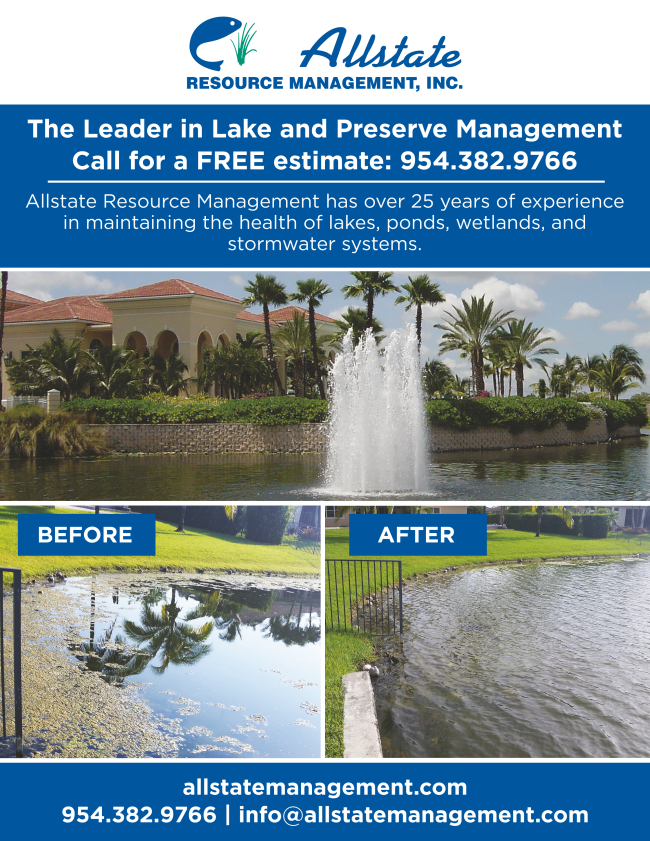
View our Informative articles on care for your water bodies, Lakes in our Resource Section. by Allstate Resource Management

View our Informative articles on care for your water bodies, Lakes in our Resource Section. by Allstate Resource Management

  • Posted: Jul 27, 2023
  • By:
  • Comments: Comments Off on View our Informative articles on care for your water bodies, Lakes in our Resource Section. by Allstate Resource Management

View our Informative articles on care for your water bodies, Lakes in our Resource Section. by Allstate Resource Management


One of the most challenging aspects of lake maintenance is communicating the management program to the clients. A homeowner that sees a lake from a purely aesthetic point of view has a vastly different understanding than an applicator that is actively managing it.

We have the ability to help you educate your homeowners about their lakes and what we do. When you have questions about how your lake is being cared for, our experienced applicators are available to provide you with the answers you need. Feel free to print any of our “Understanding Your Lake” articles in this resource section.

If you would like us to supply articles for your HOA newsletters regarding waterway issues, please give us a call. We are also available for consultation presentations to HOA’s. We are a DBPR approved provider of CEU credits for CAM s and are available to supply your property management company with accredited courses.


Tags:
NEW LAW MAKES IT CLEAR THE ASSOCIATION MUST MAKE THE REPAIRS. BUT SUPPOSE MONEY IS TIGHT AND THE DOCS ARE RESTRICTIVE?

NEW LAW MAKES IT CLEAR THE ASSOCIATION MUST MAKE THE REPAIRS. BUT SUPPOSE MONEY IS TIGHT AND THE DOCS ARE RESTRICTIVE?

  • Posted: Jul 27, 2023
  • By:
  • Comments: Comments Off on NEW LAW MAKES IT CLEAR THE ASSOCIATION MUST MAKE THE REPAIRS. BUT SUPPOSE MONEY IS TIGHT AND THE DOCS ARE RESTRICTIVE?

NEW LAW MAKES IT CLEAR THE ASSOCIATION MUST MAKE THE REPAIRS. BUT SUPPOSE MONEY IS TIGHT AND THE DOCS ARE RESTRICTIVE?

NEW CONDO LAW MAKES IT CLEAR THAT THE CONDO MUST MAKE THE REPAIR

By Eric Glazer, Esq.

I get so many calls and e-mails each week about whether the condominium or the unit owner is responsible to fix something that’s broken.  Florida Statute 718.113 was recently amended and here’s what it says:


(1)   Maintenance of the common elements is the responsibility of the association, except for any maintenance responsibility for limited common elements assigned to the unit owner by the declaration. The association shall provide for the maintenance, repair, and replacement of the condominium property for which it bears responsibility pursuant to the declaration of condominium.


That kind of clarifies it, doesn’t it?  The association shall provide for the maintenance, repair, and replacement of the condominium property for which it bears responsibility pursuant to the declaration of condominium.  Notice the word shall is used.  In simple terms, shall means must.  So there is no argument……if the declaration says the association is responsible, the association must repair it.

But suppose the association does not have money to make the repair?  Now what?  The association can certainly special assess right?  But suppose the docs place a limit on the amount of the special assessment or require a unit owner vote to approve a special assessment and the unit owners won’t vote in favor of it?  Now what can you do?

Of course you may be able to borrow money.  Florida’s not for profit statute allows condominiums to borrow money.  So, the condo is in the clear right?  Not so fast.  Suppose the condo docs require a vote of the owners in order for the condo to borrow money and the owners won’t vote in favor of a loan?


How can the condominium make the repairs it is required by law to make if it can’t assess or borrow?

So here is this attorney’s opinion.  I don’t care about any language in a declaration that prevents an association from passing an assessment in order to make mandatory repairs.  The board can and must pass the assessment in order to comply with their statutory obligation to repair and maintain the common property.

On the other hand, if the governing documents do not prevent an association from borrowing money, the association certainly can.  However……if the governing documents will not allow the association to borrow money unless a certain number of the owners approve, the association cannot borrow unless the owners vote to approve.  No bank will approve a loan if the governing documents require the owners to vote in order to borrow, and the vote has not been obtained.  Get legal advice if you need money and you feel tied up by your docs.


Tags: ,
Explore the three eco-friendly solutions that remove excess nutrients from lakes and ponds to promote a healthy aquatic environment.

Explore the three eco-friendly solutions that remove excess nutrients from lakes and ponds to promote a healthy aquatic environment.

Explore the three eco-friendly solutions that remove excess nutrients from lakes and ponds to promote a healthy aquatic environment.

If algae and weeds are infesting your water, it could be due to high nutrient levels. You deserve an aquatic paradise, not an eyesore.


EXPLORE NUTRIENT REMEDIATION SOLUTIONS
Tags: