Become our Member : JOIN SFPMA TODAY   LogIn / Register: LOGIN/REGISTER

SFPMA Industry Articles | news, legal updates, events & education! 

Find Blog Articles for Florida’s Condo, HOA and the Management Industry. 

Property damage claims encompass more than just the obvious cases. From water damage to fire damage and beyond,

Property damage claims encompass more than just the obvious cases. From water damage to fire damage and beyond,

  • Posted: Aug 06, 2024
  • By:
  • Comments: Comments Off on Property damage claims encompass more than just the obvious cases. From water damage to fire damage and beyond,

“Types of Property Damage Claims: Beyond the Obvious”

Property damage claims encompass more than just the obvious cases. From water damage to fire damage and beyond, we handle a wide range of property damage claims. If your property has been damaged, contact Maus Law Firm to discuss your options and seek the compensation you deserve.

WHY MAUS LAW FIRM?


Direct Contact with Experienced Attorneys

When you hire us, you speak one on one with our skilled Fort Lauderdale personal injury attorneys or property damage lawyers. We have decades of combined experience between us, and we make sure our clients understand their claim and the legal process.


We Accommodate Our Clients

No two clients are the same. Maus Law Firm wants to assist all of the clients who need our services, so we offer 24/7 phone service, free estimates, Spanish-speaking staff members, house calls, after hours appointments and more.


Results That Speak for Themselves

Our Fort Lauderdale injury lawyers handled thousands of accident and property damage claims and received settlements over $1 million. Our happy clients have left us wonderful reviews, and we strive for the best legal outcome for each case we represent.

Call For a Free Consultation   (855) 999-5297

Tags: , , ,
Preparing Stormwater Ponds for Hurricanes

Preparing Stormwater Ponds for Hurricanes

4 Hurricane Preparedness Tips for Your Stormwater Pond

According to the National Oceanic and Atmospheric Administration (NOAA), approximately 40% of the American population lives within coastal areas, despite the fact that they only make up 10% of the country’s total landmass. As anyone who lives on the coast can tell you, populations have continued to increase in recent years. It is unsurprising then that a large concern of many homeowners in these areas is the threat of hurricanes and the associated damage.

Most people in coastal areas typically live on or near man-made stormwater systems, which use inlet and outlet structures, forebays, safety benches, and other specialized components to collect runoff during storms. However, these sites can become a concern any time a hurricane approaches due to the increased risk of equipment damage and catastrophic flooding. The water in stormwater ponds is likely to rise much higher than normal during these events, so it’s important that community associations, municipalities, and private property owners take steps to ensure their waterbodies are in proper working condition during hurricane season.


pond maintenance stormwater pond management regulatory compliance

1. Remove Debris

Yard debris should be removed from around the site and streets should be cleaned of trash, since this will be flushed into the ponds via storm drains. Even a single plastic bag or soda bottle could effectively block a control structure and keep water from flowing off-site. Installing debris guards on control structures can be an effective preventative method, as well as the periodic flushing of trash from street drains.


Midwest-scaled-lake-and-pond-management-maintenance-and-installation-meet-the-midwest-team

2. Secure Equipment

Many lakes and ponds have fish feedersfountainssubmersed aeration systems, and other electrically run equipment. Unless it is absolutely necessary (like a pump), it is important to shut off and even remove this equipment from the premises. This minimizes the chance of damage to the equipment during a storm, especially if there are any electrical fluctuations. Another option is to install an anemometer to your fountain control box, which will shut off fountain power if wind speeds rise to dangerous levels.


Submersed aerators

3. Introduce Aeration

A common phenomenon, both during and after a hurricane, is a fish kill. These events are often caused by the introduction of brackish (high salinity) water or an increase in turbidity (when large amounts of sediment are washed into a waterway). Many freshwater fish species near the coast can tolerate slight changes in water quality if they become acclimated to it, but rapid changes can lead to suffocation.

Fish kills can also be caused by stratification. This means the water is separated by distinct layers of temperatures and dissolved oxygen (DO) levels. The merging of these layers during hazardous storms can cause a fish kill – sometimes within a few hours or days. If it does occur during the storm, once it’s safe to do so it is important to remove as much of the dead fish as possible to prevent poor odors, decay, and the subsequent nutrient pollution that fuels nuisance plant and algae growth. But, if a fish kill has not yet occurred, it may be possible to reverse some of the negative impacts of the storm. Introducing a fountain or a submersed aeration system can help rebalance the water column by gradually circulating and increasing DO. Better yet, Oxygen Saturation Technology can be utilized to rapidly restore DO in the specific water layers that need it without creating thermal stratification.


stormwater inspection lake and pond management - john phelps DE - community hoa - 7

4. Meet with a Professional

One of the best proactive strategies is a professional stormwater inspection. During these inspections, aquatic management professionals can identify shoreline erosion, clogging or damage to concrete inlets and outlets, problematic invasive species infestations, and any other problems within the infrastructure that may lead to complications during high-water events. Sometimes this inspection can lead to recommendations such as flushing storm drains, repairing cracking hardscape, or clearing vegetation within the wetlands behind outflow structures to facilitate the flow of water from a pond.


Prep Your Stormwater Pond Ahead of the Next Hurricane

Hurricanes are stressful events, even without having to worry about stormwater ponds in your coastal community. Understanding the potential areas of concern and creating an action plan ahead of time can help alleviate this stress. A few precautionary measures will help prepare your freshwater systems and will help minimize the chance of flooding, infrastructure damage, and fish kills during this dangerous yet inevitable weather event.

Contact Us

Tags:
Solutions for Your Commercial Roofing Needs by TLC Construction Industries, Corp

Solutions for Your Commercial Roofing Needs by TLC Construction Industries, Corp

  • Posted: Jul 25, 2024
  • By:
  • Comments: Comments Off on Solutions for Your Commercial Roofing Needs by TLC Construction Industries, Corp

Let us help you with your roofing construction projects. Contact our team today to talk with one of our roofing experts. (941) 735-3935

Your Commercial Roofing Specialists

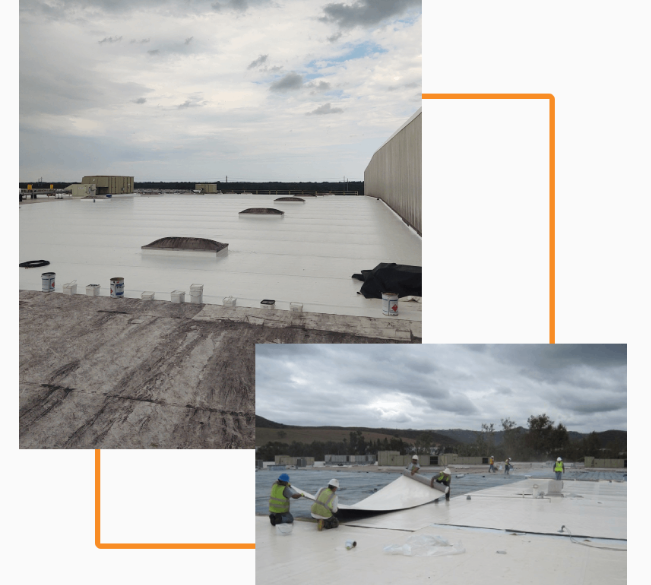
At TLC Construction Industries, Corp., we provide turnkey solutions for all your roofing needs. Our goal is to provide the highest level of quality and service at a fair cost. Established in 2022 with a goal to provide property owners with professional roofing solutions.

Our team is located in North Port, Florida, offering our services to clients on the East Coast and the rest of the United States.

What We Offer

  • Roof Condition Assessments
  • Roof Maintenance
  • New Roof Installations
  • Reroofing Services
  • Waterproofing
  • Restoration Services
  • Parking Garage Inspections/Waterproofing/Repair
  • Infrared Surveys


Tags: , ,
GET READY FOR HURRICANE SEASON WITH OUR NEWEST MEMBER – Claremont Property Co

GET READY FOR HURRICANE SEASON WITH OUR NEWEST MEMBER – Claremont Property Co

  • Posted: Jul 24, 2024
  • By:
  • Comments: 0

Claremont Property Co. recently opened its new office in Bonita Springs, Florida, and it is helping rebuild our beautiful West Coast after Hurricane Ian. They joined SFPMA to offer their services to Boards and Managers all over Florida. View their website, learn more about the services they offer!

They started in 1995 and are headquartered in Houston, Texas. They have additional offices in Dallas, Texas, Wilmington, North Carolina, Charleston and Myrtle Beach, South Carolina, Fort Lauderdale, Destin, and Panama City, Florida, and Mobile and Orange Beach, Alabama.

They can service your property needs just about anywhere your property is located.

Whether your property has been impacted by a loss from fire, water, hail, wind or you simply need improvements to your property, their many years of experience allows them to provide you with the complete spectrum of remediation, roofing, and general contracting services.

Their list of services include:

·    Claims Advocacy

·    Emergency Services

·    Remediation Services

·    Restoration Services

·    Roofing Services

·    Pre-Loss Services

Their management team has decades of collective practice managing large scale commercial, multi-family, and hospitality projects from the design stages through completion. They have helped their clients settle millions of dollars in insurance claims and completed tens of thousands of square feet of demolition, mitigation, restoration, and roofing projects along the way.

For more information, please visit their website at www.cpc-tx.com or contact Diana Kato, Business Developer, Email: Diana@cpc-tx.com    Cell: 954-832-4573.


SFPMA.com

SFPMA works throughout the State of Florida, we are a multi-member organization for the Condo, HOA and Property Management industry. Through knowledge based Articles, Events and our Members Directory, Clients find the right information to make an informed decisions for their Florida properties.


Tags: , , ,
Hurricane Preparedness Kit: Your Family’s Lifesaver – Share this essential hurricane preparedness kit checklist with your loved ones. Let’s stay safe together! 

Hurricane Preparedness Kit: Your Family’s Lifesaver – Share this essential hurricane preparedness kit checklist with your loved ones. Let’s stay safe together! 

  • Posted: Jul 24, 2024
  • By:
  • Comments: Comments Off on Hurricane Preparedness Kit: Your Family’s Lifesaver – Share this essential hurricane preparedness kit checklist with your loved ones. Let’s stay safe together! 

Hurricane Preparedness Kit: Your Family’s Lifesaver

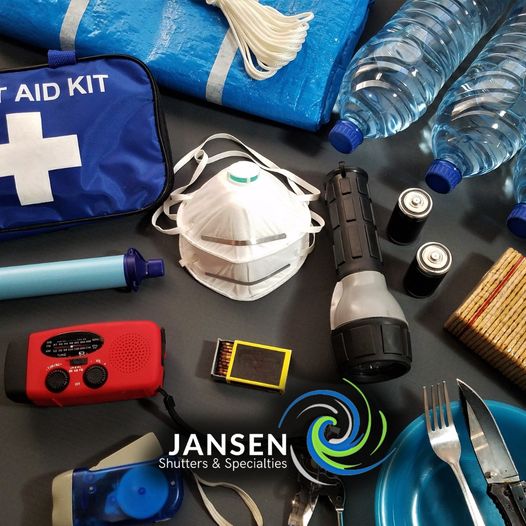
Hurricane season is here and being prepared can make all the difference. Share this essential hurricane preparedness kit checklist with your loved ones. Let’s stay safe together!

What to Include:
1. Water: At least one gallon per person per day for three days.
2. Non-Perishable Food: Canned goods, energy bars, and ready-to-eat meals.
3. Flashlights: Make sure you have extra batteries too.
4. First Aid Kit: Bandages, antiseptic wipes, and necessary medications.
5. Battery-Powered Radio: Stay informed with weather updates.
6. Important Documents: Keep copies of IDs, insurance, and medical records.
7. Multi-Tool Kit: Handy for various needs.
8. Personal Hygiene Items: Toothbrush, toothpaste, soap, and sanitizer.
9. Cash: In case ATMs and cards are inaccessible.
10. Blankets and Clothing: Stay warm and dry.
11. Phone Charger: Portable chargers can be a lifesaver.
Remember, preparedness is the key to safety. Share this post to help others get ready for hurricane season! 🌀
📞 (941) 484-4700
Tags: , ,
A Guide to Sending the New Notice of Late Assessment  By: K. Joy Mattingly, Esq.

A Guide to Sending the New Notice of Late Assessment By: K. Joy Mattingly, Esq.

  • Posted: Jul 16, 2024
  • By:
  • Comments: Comments Off on A Guide to Sending the New Notice of Late Assessment By: K. Joy Mattingly, Esq.

A Guide to Sending the New Notice of Late Assessment

By: K. Joy Mattingly, Esq.

As of July,  associations are required to send delinquent owners a Notice of Late Assessments, giving the owners 30 days to bring the account current prior to turning the account over to the association’s legal counsel for collections.

Failure to provide the delinquent owner with this 30-day notice will preclude the association from recovering legal fees related to past due assessments, i.e., any fees incurred in a subsequent collection/foreclosure action.

The notice must be sent via first class United States mail to the owner’s last address as reflected in the association’s official records, and if the last address is not the property address, the notice must also be sent to the property address by first class United States mail. The notice is deemed delivered upon mailing and a rebuttable presumption that the notice was mailed as required can be established by a sworn affidavit executed by a board member, officer or agent of the association, or by a licensed manager.

A form for the 30-day notice, titled “Notice of Late Assessment” can be found in §§718.121, 719.108 and 720.3085, Fla. Stat.

While the statutory instructions for the Notice of Late Assessment may appear to be straight-forward and easy to follow, there are several ways that the process can go awry. These missteps can result in an association having to send out a new Notice of Late Assessment, further delaying the collections and foreclosure process and adding to the association’s workload and frustration. But fear not! An association can avoid pitfalls in the process by incorporating the following best practices when drafting and sending the Notice of Late Assessment.

First, when detailing the delinquency in the Notice, the assessments, interest and late fees owed should be broken out rather than listed as a lump sum.

If there are other amounts owed, such as fines, these should be listed separately from the monthly or quarterly assessments. Late fees (if applicable) and interest should be listed below the monthly or quarterly assessments and the annual rate of interest should be detailed as well.

Second, when sending the Notice of Late Assessment, the association should check the county property appraiser’s website and the current deed for additional mailing addresses for the owner. While the statute requires the association to send the notice to the property address and the last address “as reflected in the association’s records”, there is always the possibility that the association’s records have not been properly updated or maintained to include additional addresses. Taking a few minutes to conduct this search at the beginning of the process can eliminate the possibility of an owner subsequently arguing that the association failed to send the notice to a relevant address. If the owner is successful in this argument, the association will be precluded from collecting the subsequent legal fees incurred in the collections/foreclosure process.

Third, the association should keep a copy of each Notice of Late Assessment sent to an owner as part of the association’s records. This will enable the association to provide the copy in support of the association’s sworn affidavit that the notice was mailed to the owner, should the owner subsequently dispute that the notice was provided.

In addition to following the best practices detailed above, the association should consult with its legal counsel to confirm that the association’s collections policy, practices and procedures are in conformance with the applicable statutory requirements.


Tags: ,
When unit owners refuse to pay their assessments, it puts everyone in a bind, condominium assessment liens might be one way?

When unit owners refuse to pay their assessments, it puts everyone in a bind, condominium assessment liens might be one way?

  • Posted: Jul 16, 2024
  • By:
  • Comments: Comments Off on When unit owners refuse to pay their assessments, it puts everyone in a bind, condominium assessment liens might be one way?

Florida Condominium Associations and Homeowners Association Boards have many challenges in managing the needs of their communities. As a result, when unit owners refuse to pay their assessments, it puts everyone in a bind. Fortunately, there is a key tool that you may use in Florida to compel payment of the monies due: a condominium assessment lien.

Collecting Assessment Revenue Through A Condominium Assessment Lien
There are steps that must be taken in order for a condominium association lien to be properly filed. This is a brief summary of the steps:


*A condominium association’s governing documents in conjunction with Section 718.116, Florida Statutes, are the genesis of the condominium association’s authority to impose and perfect assessment liens against individually owned units within the community.


Delinquency Notice

This is not a requirement but good collection practices dictate that the association attempt collection efforts prior to engaging a law firm. Sometimes the unit owner may have just forgotten to place the payment in the mail. These delinquency notices can help remind the unit owner of their payment obligation.


Notice of Intent to Lien

The first statutorily required step is to send a formal letter from the law firm announcing the association’s intent to place a lien on the unit for the failure to pay. The letter has very specific requirements and should be sent from the association’s attorney. If a condominium, the association must wait 30 days from the date of this letter to record its lien. The time frame for a Homeowners Association is 45 days.


Claim of Lien

This is the actual document that gets recorded in the public records and encumbers the unit. It must have the Unit legal description, the owners name and a description of the delinquency. There is a form in the statute and Florida law requires that this lien be created and recorded by the association attorney.


Notice of Intent to Foreclose

After the lien is recorded, another notice must go to the unit owner announcing the intention to take the unit by legal process. The association must also wait an additional 30 days after this notice is sent. 45 days for HOAs.


Foreclosure Action

This is the lawsuit that will take the unit. A Lis Pendens is recorded when the lawsuit is filed to provide public notice of the legal action on the lien. Most lien foreclosure actions result in either settlement of the claim of taking of the unit. Defenses to lien foreclose actions are tough to prove and seldom release the unit owner from the obligation to pay the assessment.


Time Is not on your side, dont delay if this is the action you are taking?

It is imperative that all these steps are followed to the tee or the lien may be dismissed outright. In addition to these steps, Florida condominium associations can take additional steps such as suspending unit owner common element or amenity rights. This is done by alerting the unit owner of the delinquency and then if amount is greater than $1,000 and 90 days the Board may consider the suspension of voting rights at a board meeting. The unit owner will then receive notice of the suspension after the vote has occurred.


Florida Condominium Associations

Under Florida State Law, only an attorney may draft a condominium assessment lien, because it contains a legal statement. Once the lien is filed, there is a one year timeline for Florida condominium associations to file suit. If the Association misses that deadline, the whole lien process will have to be redone. Therefore, it is paramount that the steps are followed properly, and in a timely fashion, or you may forfeit what is due to the community.

Remember to contact your Attny, Ask them for the best options for your communities!


Tags: , ,

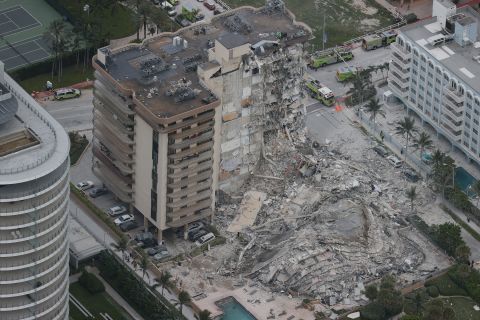
One thing has become clear since the fall of the Champlain Towers South condo: many condos are falling apart, often because owners don’t want to spend the money to maintain them. Soon, they might have no choice but to pay.

One thing has become clear since the fall of the Champlain Towers South condo: many condos are falling apart, often because owners don’t want to spend the money to maintain them. Soon, they might have no choice but to pay.

  • Posted: Jul 16, 2024
  • By:
  • Comments: Comments Off on One thing has become clear since the fall of the Champlain Towers South condo: many condos are falling apart, often because owners don’t want to spend the money to maintain them. Soon, they might have no choice but to pay.

A Broward task force will likely ask the state to boost inspections and change funding of reserves. But any new rules will face regulatory and political hurdles.

Broward County task force agreed, informally, to recommend a change in state law that would make it harder for condos to waive the proper funding of reserves and to require more frequent inspections for coastal condos. The changes, if adopted by the state, could make condo living more expensive, but safer.

“It’s going to hurt in the beginning, but that’s where we have to get,” insurance expert Paul Handerhan, president of the Federal Association for Insurance Reform (FAIR), told the committee Monday, echoing many of their own opinions. “… There’s no way to get out of this without paying.”

Monday’s was the second of three meetings for the Broward County Condominium Structural Issues Committee, set up by Mayor Steve Geller to quickly offer recommendations to the Florida Legislature, whose committee meetings begin next month.

The Florida Bar and the Community Associations Institute trade group also are studying issues arising from the June 24 condo collapse in Surfside, and will offer recommendations to the governor and Legislature.

All are focused on just a few topics, including the issues of reserves and inspections.

Currently, reserves can be waived by majority vote of those present at a condo meeting. And the first major inspection is not required in Broward until a building turns 40.

“We’re here to try to come up with creative ways to make buildings safe. What Surfside has done is made city officials, building officials, condo residents, everybody aware of the widespread lack of maintenance in older condos,” said Hollywood Commissioner Caryl Shuham, who has a degree in civil engineering and is an attorney.

She recommended, and the committee conceptually agreed, that condos should have to present a reserve study to unit owners and secure a super-majority vote to waive full funding of reserves. She also suggested reserves not be waived unless an engineer has inspected the building and issued a report.

The potential cost to condo owners is not lost on state, county and city officials or the civic and industry leaders huddling on the issue. While some million-dollar condo owners might have no trouble forking over extra money, many unit owners are not in that category. Even the inspections are costly, one condo representative said. Unit owners could be forced out and condo sales could be stifled, some said.

“In certain cases, you could be mandating the death of a building,” said Fred Nesbitt, president of the Galt Ocean Mile condo association in Fort Lauderdale, which opposes reserve mandates. “I think we should still give owners choice.”

Geller said condos that don’t properly save for repairs face sticker shock with giant special assessments. By the time a major problem is found, he said, it’s too late to start paying into reserves.

“You can’t insure a burning building, and you can’t start reserving for an emergency that has already arrived,” he said.

The cause of the Champlain collapse remains unknown but is under investigation. Because there was evidence of poor maintenance and crumbling, cracking concrete at the Champlain, there has been a sharp focus on how government can ensure that condos are kept in good repair.

“It’s terrifying to me that we’re in this place,” said state Sen. Lauren Book, one of four state legislators on the county committee. Book complained that there’s no one keeping track of individual condos – where they stand with insurance, reserves and repairs.

The committee also debated whether more frequent inspections are needed. Broward is one of two counties in Florida – the other being Miami-Dade – that requires buildings to be inspected for electrical and structural safety at age 40 and every 10 years subsequently.

Dr. Jennifer Jurado, Broward County’s climate change sustainability director, said the striking increase in sea level here – more than a foot over 20 years – could increase deterioration of concrete in buildings along the coast. She also cited temperate change and flood levels in saying that inspections should begin earlier, at 25 or 30 years.

But Dan Lavrich, a structural engineer and chairman of the Broward County Board of Rules and Appeals, which oversees application of the building code, questioned the need. Any change in the inspection program would have to be approved by Rules and Appeals, and the Florida Building Commission.

“The rest of the state has no program at all,” he said of the 40-year safety program, “and they don’t have any problems.”

The Broward committee will hold what it expects to be its final meeting next week, on Aug. 30, where formal recommendations will be voted on.

Reposted via: https://www.floridarealtors.org/news-media/news-articles/2021/08/condo-law-changes-likely-after-surfside-its-complicated


Tags: , , , ,
The Corporate Transparency Act and Your HOA/Condo.

The Corporate Transparency Act and Your HOA/Condo.

  • Posted: Jul 16, 2024
  • By:
  • Comments: Comments Off on The Corporate Transparency Act and Your HOA/Condo.

By: Mitchell Drimmer, CAM

President, Axela Technologies

Starting next year, Community Associations (HOAs & Condos) in the U.S. will have to follow new rules. These rules are part of something called the Corporate Transparency Act (CTA). The CTA requires most Community Associations (HOAs & Condos) to share information about the people who own or control the association. This is called a beneficial ownership report. While some non-profit groups are exempt from this rule, most Community Associations (HOAs & Condos) are not.

Community Associations (HOAs & Condos) are groups that take care of neighborhoods. There is a lot of money flowing in and out of these associations and many boards of directors and even their management companies are not quite ready for this process. There are a lot of Community Associations (HOAs & Condos) in the U.S., more than 355,000 of them. They serve around 74 million people which is about 24% of the population of the United States.  Community Associations (HOAs & Condos) are not exempt as they may be the perfect place to engage in money laundering for the purposes of fraud (unjust enrichment), and terrorism. The CTA was specifically established to make money laundering more difficult.

The new rule says that Community Associations (HOAs & Condos) need to provide specific information about the people who own or control the association. This includes their names, addresses, and other details. This information will be collected by a government agency called FinCEN. The goal is to make sure this information is not available to the public, but it can be used by law enforcement. There remain some questions regarding owner access to association records but as we all know Federal law overrides State laws and an association’s by-laws.

Most Community Associations (HOAs & Condos) need to report. They are considered “reporting companies” under the CTA. This means they must file the beneficial ownership report. There are some exemptions, but most Community Associations (HOAs & Condos) won’t qualify for these exemptions. This will add costs to the management of community associations and naturally will be passed through to the owners making life more expensive for community associations. Adding this to structural inspections, increased insurance premiums, and rising costs, this is not good news.

Community Associations (HOAs & Condos) need to figure out who their beneficial owners are. These are people who have control over important decisions in the HOA. It could be board members or others who influence how the HOA operates. Community Associations (HOAs & Condos) need to collect specific information about these people and report it to FinCEN. They also need to update this information if anything changes. The Board of Directors will now be scrutinized more than ever before, making it even more difficult to enjoin volunteers to run for board positions.

The new rule starts on January 1, 2024.

Existing Community Associations (HOAs & Condos) have until January 1, 2025, to file their first report.

Community Associations (HOAs & Condos) formed after this date must file within 30 days of their formation.

Community Associations (HOAs & Condos) need to understand these new rules and make sure they follow them. It’s important to collect the right information and report it on time. If they need help, they can talk to community association specialists who have studied this matter. These rules are meant to increase transparency and prevent fraud, so following them is essential.

Tags: