Become our Member : JOIN SFPMA TODAY   LogIn / Register: LOGIN/REGISTER

SFPMA Industry Articles | news, legal updates, events & education! 

Find Blog Articles for Florida’s Condo, HOA and the Management Industry. 

Sales for Members: Advertising in our Magazine/ the News Blast or our website.

Sales for Members: Advertising in our Magazine/ the News Blast or our website.

  • Posted: Feb 24, 2026
  • By:
  • Comments: Comments Off on Sales for Members: Advertising in our Magazine/ the News Blast or our website.

Take advantage of our Advertising Sale Today.

We have Advertising in our magazine and in the News Blast Avail for 2026

  • News blast: Your company will show as a sponsor for the full year, we publish over 3 blasts per week, M,W,F
  • We also have a special Engineering every Thursday on that your logo is on that page with a link to our Directory,
  • ( only 10 spaces @ 400.00 for the year )


  • Magazine Advertising Sponsorship’s, Full Pages, Half Pages and quarter page Ads,. This sale is buy 3 months we match it with the same amount of months. (buy 3 months get 3 months free)


ADVERTISING SALES

1-  We are running this sale for all members become a featured sponsor of our Email News Blast

  • We publish our Email Blast filled with News, Articles, Member Information, This is sent 3 days every week. Mon, Wed and Friday at 9am
  • Your company has a 300px by 300px logo picture linked to your website
  • Be seen as supporting sfpma for the year.  52weeks @3x every week

Special Price of 400.00 for the entire year

This is limited there are only 10 spots ( 6 remaining ) Act now. we are getting ready for 2026


2- Take out Advertising in our Publication – FLORIDA RISING MAGAZINE

  • Take out half and full pages in our magazine 3 months get 3 months Free.
  • take advantage of this special pricing
  • See our Advertising FLAT Rates:  Special Pricing

    Quarter Page: (300.00/mo)  -3 months (600.00)

    Half Page: (400.00/mo) -3 months (800.00)

    Full Page: (600.00/mo) -3 months (1200,00)

*You can write articles every month we will publish. Each month we have the ability to publish member companies articles, promotions used to educate readers on what you do and how you can help. (min 3 months)

Call us today and lock your Spaces or Fill out the Form We will call you!


    Main Contact Form SFPMA

    Your Name (required)

    Your Email (required)

    Phone: We will call you back (required)

    Your Website URL

    Subject

    Your Message


    Tags: ,
    Condo HOA Expos Florida Dates – You Will Find – Top Companies working together in our Industry! Sign up for Networking and Educational Events!

    Condo HOA Expos Florida Dates – You Will Find – Top Companies working together in our Industry! Sign up for Networking and Educational Events!

    • Posted: Feb 24, 2026
    • By:
    • Comments: Comments Off on Condo HOA Expos Florida Dates – You Will Find – Top Companies working together in our Industry! Sign up for Networking and Educational Events!

    Condo HOA Expos Florida Dates – You Will Find – Top Companies working together in our Industry!
    Sign up for Networking and Educational Events!


    Get face-time with industry experts, browse the latest products and services and learn how to save thousands of the management and maintenance of your condo or HOA.

    Registration is FREE for association managers, board members. Don’t delay!


    COME MEET HUNDRED’S of CONDOMINIUM AND HOA VENDORS AND TAKE CONDO AND HOA EDUCATIONAL CLASSES AND SEMINARS ALL DAY LONG


    Our Partnership from the very first Expo to the present shows with L&L Management has been nothing less then spectacular. Every year the Condo and HOA Expos give’s our members an opportunity to meet and greet the thousands of Board Members, Managers and Industry Professionals who show up to learn about the changes & advancements in our industry.

    On the educational side, the events are a great way to provide Seminars and Board Member Courses to a large group gathered together at one time,  Thanks L&L’s Show Manager Nick Vedder our partner for many years of the Expos.


    April 16, 2026
    AT THE BROWARD COUNTY Convention Center.

    Seminars: 8:30 am – 5:00 pm
    Exhibits: 10:30 am – 3:00 pm

    REGISTER HERE


    Palm Beach Condo & HOA Expo
    April 21, 2026
    AT THE PALM BEACH CONVENTION CENTER.


    Tampa Bay Condo & HOA Expo
    April 10, 2026
    AT THE TAMPA BAY CONVENTION CENTER.

    Seminars: 8:30 am – 5 pm
    Exhibits: 10:30 am – 3:00 pm 


    ORLANDO CONDO & HOA EXPO

    Orange County Convention Center-West Bldg
    9800 International Drive, Orlando,
    Orlando, FL 32819

    April 28, 2026

    Seminars 8:30 am – 5 pm
    Exhibits 10:30 am – 3 pm

    REGISTER HERE


    Naples Condo & HOA Expo & Seminars

    New Hope Event Center
    7675 Davis Blvd. Naples, FL 34104

    April 17, 2026

    Seminars 9:00 am – 4:45 pm

    Exhibits 10:30 am – 3:00 pm

    Register Here


    BRADENTON AREA Condo & HOA Expo

    Property Management Expo & Seminars
    Bradenton Area Convention Center

    No show date set yet.

    Seminars: 8:30 am – 5:00 pm
    Exhibits: 10:30 am – 3:00 pm

    Register Here


    If you wish to take part in an upcoming expo, you can always go to the shows websites and fill out the forms, or contact L&L directly for dates, times, prices and venues. 

    Since its start the State of Florida Property Management  association has been working with Nick to bring the top Companies in front of Managers and Board Members. 


    Nick Vedder
    Show Manager
    Office: 800-374-6463 x114
    CONDO & HOA EXPO

    www.mbcondohoaexpo.com
    www.pbcondohoaexpo.com
    www.browardcondohoaexpo.com
    www.naplescondohoaexpo.com
    www.bradentoncondoexpo.com
    www.orlandocondohoaexpo.com
    www.tampabaycondohoaexpo.com


    Tags: ,
    “RIMKUS” IS A WORLDWIDE LEADER IN ENGINEERING, CONSTRUCTION MANAGEMENT AND CONSULTING AND SO MUCH MORE.

    “RIMKUS” IS A WORLDWIDE LEADER IN ENGINEERING, CONSTRUCTION MANAGEMENT AND CONSULTING AND SO MUCH MORE.

    “RIMKUS” ENGINEERING, CONSTRUCTION MANAGEMENT, CONSULTING AND SO MUCH MORE…

    FOR THOSE OF YOU WHO NEED ANY ASSISTANCE WITH YOUR 30, 40 OR 50 YEAR INSPECTIONS, CALCULATING AND PREPARING YOUR NEW RESERVE STUDIES OR NEED REPAIRS TO YOUR CONDOMINIUM PROPERTY — WATCH THEIR ONE MINUTE VIDEO.


    Building Envelope Assessments

     The Rimkus Architecture, Engineering, and Construction (AEC) Building Envelope Services team can provide a complete assessment of a structure’s building envelope (façades, roofs, windows, balconies, walkways, parking areas, etc.) describing the condition of such and all items in need of repair. A recommended timeline and a projected construction cost will also be provided to assist the owner in projecting future budgets.For a full survey of all building components, Rimkus can increase the scope of the survey and provide a full Property Condition Assessment (P.C.A.) including mechanical, electrical and plumbing systems, elevators, and interiors.Building Envelope Assessments and PCAs are typically provided with 5- or 10-year projections; however, they may be customized to the client’s needs. These reports can be utilized as a tool to help create capital expenditure budgets and establish maintenance schedules.

    Maximizing the value and life cycle of a building requires continuously maintaining performance and improving energy efficiency. Our building envelope services include:

    • Façade Inspections
    • Façade Restoration
    • Building Envelope Assessments
    • Roof Consulting
    • Waterproofing and Weatherproofing Assessments and Design
    • Historic Preservation
    • Pavement Engineering

    RIMKUS

    http://www.rimkus.com

    AECAssignments@rimkus.com

    800-580-3228


    Tags: , , , ,
    SFPMA’s Condo and HOA Guide for Budget Planning and RFP’s

    SFPMA’s Condo and HOA Guide for Budget Planning and RFP’s

    • Posted: Feb 17, 2026
    • By:
    • Comments: Comments Off on SFPMA’s Condo and HOA Guide for Budget Planning and RFP’s

    Guide for Budget Planning

    Board membership can be a lot of fun socializing with neighbors and contributing ideas on how to improve the communities. But it also involves serious work with budgets, required by Florida Statutes (FS) and, generally, by the association’s by-laws for many the fun is over when its time to prepare the annual budget.

    Budgets are typically approved on an annual basis during the months of October or November, but many smart boards start the budgeting process late in the summer months.

    Some associations’ fiscal year does run with the annual calendar, so they should prepare their budget 4-5 months before the start of a new fiscal year. Regardless of when your fiscal year begins and ends, board members should begin the budget process by identifying operational needs and estimating expenses for the coming year.


    “Who Is Responsible for Preparing the Budget?
    The requirements for the preparation of the annual budget for condominium associations are set forth in Section 718.112 (2) (f) FS; and for homeowners’ associations, in Section 720.303 (6) FS.
    Generally, the community association manager (CAM) is charged with the responsibility for preparing the preliminary draft of the budget and presenting it to the budget or finance committee for its review and approval. The budget committee, as appointed by the Board of Directors, and, ultimately, the Board itself, is responsible for the adoption of the association’s annual budget.”


    A budget also helps to:

    * Create proper reserve funds. Measure performance throughout the year.

    * Determine the amount of fees to be assessed to each unit owner for the upcoming fiscal year.

    Will homeowners be paying a little more, a little less, or about the same as last year? A well thought out budget supplies the answer.


    -Association Budgeting Rules in Florida

    Whether you serve on a condominium association or an HOA, Florida Statutes have a slew of legal requirements that affect the way budgets are presented and what they must contain. Longtime board members may be familiar with the state’s budgeting requirements under Statutes 718 and 720. If you’re a new board member, it helps to know what’s involved before diving in. Here’s a brief overview.

    * All associations, whether a condominium or HOA, are required to prepare an annual budget.

    * The budget must show the estimated revenues and expenses for the budget year.

    * An estimated deficit or surplus for the end of the current year must be reported.


    “Working Capital
    As a generally accepted guideline, a community association should maintain its operating fund balance (“working capital”) at a minimum of two months’ maintenance assessments. If this guideline is not met, the Board should consider including a line item in the budget to increase working capital. However, if the working capital shortfall is significant, or if there is an accumulated deficit, a special assessment may be the more conservative alternative. The amount of the budget line item or special assessment should be determined after considering the current year’s expected results of operations.
    If the current working capital is sufficient and the current year’s operations are projected to have an excess of revenues over expenses (“operating surplus”), the Board can take advantage of this situation by including line items for special projects or improvements in next year’s budget. Alternatively, that surplus can be applied as a credit to the following year’s assessments to the owners. There are generally income tax considerations in applying this credit and therefore, the Board should consult with the Association’s income tax advisor.”


    -Preparing a Budget for your Condominium or HOA

    The budgeting process really involves preparing two components: an operating and a reserve schedule. The objective is to determine what homeowners will be charged for maintaining the common areas.

    * Operating budget ensures that all operational costs and expenses are identified. They assist in approximating expenses for the upcoming fiscal year.

    * Reserve schedule determines the amounts needed to be set aside for capital expenditures and deferred maintenance.

    Florida Statute regulations may be complex, but that doesn’t mean preparing a budget has to be complicated or overwhelming. In fact, once you understand the basics of calculating expenses, the process becomes clear-cut.

    -Budgeting Tips & Considerations

    Unlike a personal household budget where you figure out what you can spend based on your income, a condominium or HOA budget must begin by estimating costs first, which will then determine the amount an owner will be charged.

    -Operating Component

    1-Compile the current year’s year-to-date expenses. They will serve as the basis for the new budget year.

    2-Analyze these expenses carefully and factor out any that are non- recurring, such as plumbing or storm-related emergencies.

    3-Review your current contracts for escalation clauses and/or scheduled increases.

    4-Request estimated costs for non-contractual expenses like general repairs and maintenance, utilities, and certain administrative expenses.

    “Reserve Schedule

    Reserve funds are used for two expenses: capital expenditures for common area components, such as roof replacement, pavement resurfacing, and elevator upgrades; and deferred maintenance that generally refers to interior and exterior painting. The funds for these big-ticket items are generally collected over years, not just in the year they’re expected to occur.

    The condominium or HOA board may also have certain projects it wants to do that are not covered by reserves. This can include things like pool re-tiling, termite treatments, landscape improvements, and costs to maintain tennis, racquetball, or pickleball courts.

    The projection of these fees must be as accurate as possible. Remember, condominiums and HOAs are not-for-profits so it’s important that they do not have a surplus; of course, you don’t want a deficit, either.

    Budgeting is a big job, but if you break it down in these easy steps should take the stress away. Preparing an accurate budget keeps your condominium or HOA thriving financially now and in the years to come.”


    “Reserves
    Chapters 718 and 720 of the Florida Statutes both require the funding of reserves in the association’s annual budget (with specific waiver provisions for condominium and homeowners’ associations). The use of reserve funds is restricted for capital expenditures and deferred maintenance. A capital expenditure is the use of funds for the replacement or major repair of a common area component. Examples of capital expenditures are roof replacement, pavement resurfacing and elevator upgrades. The term “deferred maintenance” generally refers to interior and exterior painting. Reserves are included in the association’s budget so that funds are available for the eventual replacement of common area components and deferred maintenance. The alternative to funding reserves is the use of available operating funds or, more likely, the adoption of a special assessment. Sound financial management dictates that, concurrent with the adoption of a special assessment, a detailed budget should be established. Include a provision for bad debts commensurate with that of maintenance assessments.


    -Financial stability including accounting, collections, and accounts payable services are the core to a Condo and homeowners association’s strength and future success.

    Boards and their Property Management company work hand in hand providing a checks and balances system. where payables for buildings services are entered by the community manager, processed by the Payables/Accounting dept, reviewed by senior management. These are put in place for protections for all owners of the community.

    Having a Management Company to aid Board Members is important. unlike self managed community associations, no one person or Board member has total control with the financial responsibility for

    *Online payables processing
    *Electronic signatures
    *Accounts receivable collection process
    *Effective internal controls
    *Financial statement preparation
    *Annual Budget preparation

    This way the Management Company and Boards can work together on everything from The Communities:


    “Here are some other guidelines to consider when preparing the Association’s budget:

    *For contractual expenses, read the related contracts to identify any increases that are anticipated in the following year.

    *Contact your insurance agent as early as possible to determine insurance premiums. If financing insurance, try to obtain favorable rates.

    *Request estimated costs for non-contractual expenses such as general repairs and maintenance, certain administrative expenses, trash removal, and utilities.

    *Include a reasonable amount for bad debt expense.

    *Avoid a “Contingency” line item if possible.

    *Look at revenue trends for fee-for-service charges to unit owners such as work orders, laundry, parking, etc. Be sure to consider possible increases.

    *If loan repayments will be required, include the entire payment amount (i.e., principal and interest) in the budget.


    There are other concepts to keep in mind in preparing the annual budget: Be realistic. It is generally difficult to keep maintenance assessments at last year’s levels. The role of an association’s treasurer or president is to run the association’s business. It is not to win a popularity contest. That role should be treated with as much, if not more, respect than the association’s officers’ own businesses.

    The budgeting process doesn’t end with the adoption of the annual budget. Careful and routine monitoring of budget-to-actual results of operations is a vital part of the effective management of a community association.


    Defination of budget Terms:

    -Balance Sheet

    One of the reports included in the Financial Reports presented to the Board of Directors is the Balance Sheet. The Balance Sheet is a statement of the book value of all of the assets and liabilities (including equity) of the association. It provides a “snapshot” of the association’s financial standing as of the end of that particular month.

    -Collection Status Report

    By far one of the most popular and most important reports is the aging report or the Collection Status Report. This report provides the Board with a listing of the owners that are past due. There are many variations of this report, however, the sample shown is the most concise. This report provides a glimpse of the names of those owners that are past due, the total amount past due, and at what stage in the collection process the account is in.

    -Check Register and/or Accounting Software

    A Check Register its a monthly report. This report is a list of all of the checks written by the association during a given period, typically each month. Among other information, it lists, the check number, the vendor’s name, the invoice number, brief description of the payment, and the check mount.

    -Profit & Loss Report

    The second page of the Financial Report summarizes the revenues, costs and expenses incurred during a specific period of time. The Income and Expense Report follows a general format that begins with an entry for Income and subtracts from Income the costs of running thebusiness, including operating expenses, insurance, contracted vendors, and repairs. The bottom line, literally and figuratively, is net income or loss.

    Because we know Associations depend on their budget, our P&L reflects the Actual Expenses vs. the Budget Amount. This comparison is done for the current month as well as year-to-date. You are also provided with the variance (if any) between the actual expense and the budgeted amount.

    -Monthly Ledger

    The Monthly General Ledger is the main accounting record of a business which uses double-entry bookkeeping and is a summary of all of the transactions that occur in the company. It is built up by posting transactions recorded in the general journal. The Balance Sheet and the Income and Expense Report are both derived from the general ledger. The general ledger is where posting to the accounts occurs. Posting is the process of recording amounts as credits and debits in the pages of the general ledger. Because each bookkeeping entry debits one account and credits another account in an equal amount, the double-entry bookkeeping system will ensure that the general ledger will always be in balance.


    In the end Board and Management Companies should upload these reports to the Secure Association website where Owners can view the financial records each year. This avoids Questioning and sometimes fighting by owners in the association regarding fees being paid with the new budgets.


    Tags: , ,
    SFPMA has the top companies ready to help condo and HOA communities, find them on the Members Directory.

    SFPMA has the top companies ready to help condo and HOA communities, find them on the Members Directory.

    SFPMA Directory- 

    SFPMA has many of the top companies ready to help condo and HOA communities with everything from Accountants Attorneys, Collection Companies, website design and Building software(CRM) and Service Companies where estimates and Bidding are always asked during budget season. If you require a RFP (Request For Proposal)Search our Members Directory Business and Service Companies and ask them to help with cost savings for your Budgets.

    Find Members ready to help with Management, Business and Services for your properties.

    Property Maintenance is an integral part of managing the day to day operations for every type of property. Search the Members Directory for Companies working with Property Management, Condo and HOA properties in Florida. Search companies for RFP’s in this Budget Season.


    It takes more than just posting about your company on social media for your companies to get noticed and selected by Board Members and Property Managers.  It takes Trust!

    Become a Member today join SFPMA get listed on our Directory


    <

    p style=”text-align: center;”>

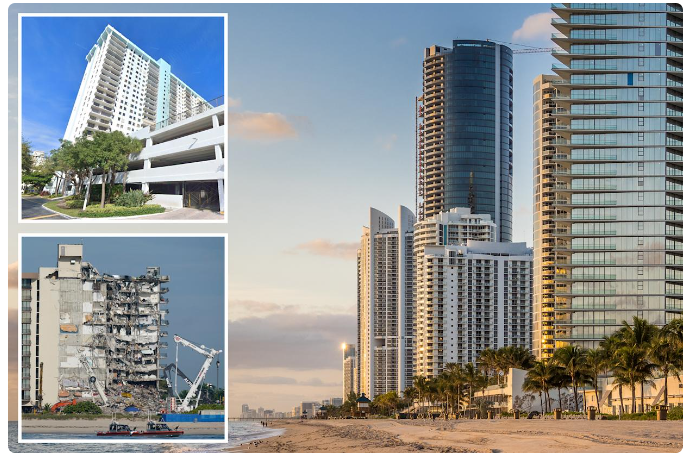
    Condominium owners in St. Petersburg face towering uncertainty as over 200 buildings must complete Milestone Inspection Reports by Dec. 31.

    Condominium owners in St. Petersburg face towering uncertainty as over 200 buildings must complete Milestone Inspection Reports by Dec. 31.

    A new state law requires mandatory structural studies on older condo buildings with three or more stories. Senate Bill 4-D also requires association boards to increase repair funding reserves, and many owners now face six-figure special assessment fees.

    Don Tyre, building official manager, provided city council members an update on the local process at a committee meeting. He noted that 225 condo buildings must submit reinspection reports this year, as all exist within three miles of the coast.

    “I’m hoping to get three-quarters of the buildings to submit by December,” Tyre said. “There are going to be some issues; this is a new regulatory requirement. There’s only so many engineering firms that do this work.”

    He said bill provisions allow deadline extension in some extenuating circumstances. The city will address delinquent buildings on a “case-by-case basis.”

    The legislation, stems from the Chaplain South Tower’s collapse in Surfside, Florida. The catastrophe – still under investigation and blamed on several factors – killed 98 people


    Miami-Dade and Broward Counties were the only jurisdictions to mandate structural inspection programs for existing buildings before the collapse. The local ordinances required buildings over 40 years old to receive a 10-year recertification.

    “That’s, basically, what we’re going to be following – a 25-year inspection program with a 10-year reinspection portion,” Tyre said. “December of this year is the big date. It’s been postponed once; I don’t anticipate it being postponed again.”

    He noted that 68 of the 225 buildings have submitted milestone reports. The legislation also applies to commercial structures of any height with an occupancy limit exceeding 500 people.

    Local governments must submit a 180-day notice to affected owners and associations. St. Petersburg issued those forms

    Tyre explained Phase I is a visual inspection from an architect or engineer to discern “any possible substantial structural deterioration.” Those could require further evaluations, and stakeholders must submit a Phase II Inspection report within 180 days.

    “The responsibility falls to the condo ownership group and architectural or engineering firm they hire to provide that documentation,” Tyre added. “If they deem it necessary to go into a Phase II inspection, that’s a more forensic investigation.”

    He said that could include building material sample testing, movement measurements, soil studies and “a number of different building imaging options.” The owners have one year to pull permits and start repairs if the architectural or engineering firm finds significant deterioration.

    “If there’s a life safety issue, that’s when we (the city) would step in as a regulatory authority,” Tyre said. “And potentially, either evacuate the building or a portion of the building – it could be limited to just a small area, like a couple of balconies or something like that.

    “There’s going to be some condo associations or buildings that will require a deeper review.”

    Tyre said the inspections focus on structural integrity rather than code violations and fall outside the city’s scope. However, building officials will provide oversight.

    Councilmember Brandi Gabbard requested the update and noted that received reports would constitute municipal public records. She said that would help inform prospective buyers.

    “Anybody who has ever bought or sold a condo knows that sometimes it is challenging to get all of the documentation regarding the condo association the way it is now,” Gabbard said. “But then when you add this on top of it, and the type of reserves that we could potentially see being increased, there is some concern over transparency …”

    Tyre said building officials must redact some information, and residents must submit a formal public records request to receive documentation. Elizabeth Abernethy, director of planning and development services, said they could explore creating an online portal to streamline the process.

    The legislation allows local governments to implement a fee for reviewing submitted inspection reports. Abernethy believes the city has adequate staff to “get through this initial push and wouldn’t be necessary to charge an additional fee for review those reports.”

    However, buildings needing repairs must pay associated permitting costs. Gabbard said she has “no desire” to require additional payments.

    “Some of these reserve needs are going to be pretty hefty,” she added. “I don’t think we need to pile on.”

    Thank You for the contribution of this article so others can learn.

    Florida Condo Building Inspections (SB4d)

    The State of Florida  Property Management Association with Legal & Engineering Members are here to  provide help so you understand the new laws and how to take the correct action to ensure you are in full compliance.

    http://FLBuildingInspections.com  (a division of SFPMA)


    <

    p style=”text-align: center;”> 

    Tags: , ,
    Tips for Budgeting in HOAS and Condominium Associations. by Campbell Property Management

    Tips for Budgeting in HOAS and Condominium Associations. by Campbell Property Management

    Tips for Budgeting in HOAS and Condominium Associations

    by Campbell Property Management 

    Creating a budget is one of the primary and most important functions that any community association board does during its tenure. The budget will serve as the guideline to determine the dollar amount owners are charged to live in their communities. There are differing obligations to consider when budgeting for a Homeowners Association (HOA) versus a condominium association. Today, we will discuss the differences and offer tips when creating your own community association budget.

    Let’s start with HOAs.

    HOA budgets are often a bit simpler than those for condominium associations. That is because HOA budgets normally do not require reserves. Reserves refer to funds set aside for future capital expenses and major repairs or replacements of common property or assets within the community. Unless members of the association have voted to create reserve accounts, or the original developer of the property put reserves in the HOA’s Declaration of Covenants, Conditions, and Restrictions (CC&R) – commonly referred to as simply the “declaration” – reserves are not mandatory for HOAs. However, if the HOA votes to put money away for future capital expenses, or defer line items (like maintenance), they have that option. Unlike condominium associations, HOAs are not limited or hamstrung by Florida’s Reserve Statutes, which require specific line items in the condo’s budget. For HOAs, the reserves are more like a savings account to use at the board’s discretion.

    One of the misconceptions of the budgeting process is going into it with the intention of trying to hit a target assessment mark. Members may get in the mindset of trying to raise or lower assessments or reach a specific number, like deciding we want $400 a month assessments, then trying to figure out how to get there. Whether for HOAS or condominium associations, that’s really not how budgets are supposed to work.

    Budgets are estimates of expected expenses for the upcoming year that are created in order to derive a necessary revenue stream. The idea is to put all of your expected expenses into a basket, itemize them through your budget, the sum of which is the necessary amount of revenue you have to generate. When you divide that amount by unit owners, that is what produces the amount of the community’s assessments, which are the monthly fees associated with living within that community.

    Of course, budgets are guidelines – you’re not restricted or expected to spend every dollar on each line item. A budget is not a cap for how much you are able to spend on those items and it’s also not a restriction to only spend those specific items listed in the budget. Again, it’s an estimate and guideline so an association can collect the appropriate amount of money from its residents.

    Ultimately, things may happen that were not taken into account at the time of the budgeting process. Sometimes more money is needed and other times less money is spent than what was budgeted. Both situations are certainly within the parameters of what is acceptable because this is an estimation and a guideline for best practices relative to budgets; it is not a hard and steadfast rule.

    Regarding condominium associations

    Florida’s Condominium and Cooperative Acts law requires associations to fund for reserves, which is the default that has existed for decades. Through next year, the board will retain the ability to call for a vote to waive or partially fund reserves. However, as of January 1, 2025, all structural integrity reserve items must be fully funded and can no longer be waived or partially funded (the well-intended purpose of this legislation is to prevent another Surfside tragedy).

    With these tips in mind, we hope you have a good budget season. If ever you have any questions or concerns, please feel free to reach out to one of Sachs Sax Caplan’s experienced community association attorneys at 561-994-4499. We look forward to working with you.


    Tags:
    Local Condos Failing to Comply with New Milestone Inspections Law

    Local Condos Failing to Comply with New Milestone Inspections Law

    Recent reporting by the Sun Sentinel chronicled how 124 condominium buildings, representing approximately 25,000 residences in unincorporated Palm Beach County, failed to submit their milestone inspection reports by the end of 2024 as required under the new Florida law.

    The circumstances described in the article are possibly playing out in other jurisdictions throughout the state in light of the recent passing of the December 31, 2024, deadline by which many residential condominium and cooperative buildings of three stories or more throughout the state were required to have completed their milestone inspections and reports. The article indicated that Palm Beach County officials are now strongly urging the representatives of those communities to submit the required inspection paperwork as soon as possible.

    The Florida law, which was enacted in response to the 2021 tragedy of the building collapse in Surfside, required associations for many residential condominium and cooperative buildings 30 years or older and with three or more stories to have filed an inspection report detailing necessary structural building maintenance and required repairs by December 31, 2024 (with the balance of such buildings having to do so by December 31, 2025, depending upon when they reached 30 years of age). During the first phase of the required milestone inspection, a state-licensed architect or engineer must examine the building to assess the condition of its main structural elements. If no repairs are needed and the building passes, the next milestone inspection is due in 10 years.  For buildings in which deterioration is detected, a second phase of inspections is subsequently required to take place within the ensuing 180 days, but that timeframe can be extended if extra time is deemed necessary.

    Unfortunately, some condominium and cooperative associations required to have complied failed to do so, citing factors which include a lack of funds to perform such inspections, unavailability of qualified professionals to timely perform the inspections and reports, or a general misunderstanding as to the need to comply with the required inspections. Elected and other governmental officials seem to be struggling with the best approach to compel compliance, given that stakeholders in many communities are complaining about the burdens being imposed upon them due to the inspection requirements as well as the newly enacted structural integrity reserve funding obligations, installation or upgrades of bi-directional amplification systems for emergency responders, and the need to fund costly property insurance premiums also required by state law.

    The newspaper quotes Palm Beach County officials illustrating that their objective is to make sure buildings are maintained and repaired, and indicating they are neither looking to “kick people out of their houses” nor “to basically knock down buildings.”

    The story indicates that in unincorporated Palm Beach County, more than 500 buildings were supposed to have filed their milestone inspection, but almost a quarter of them failed to do so. The recent reporting found that more than 100 buildings in the county have entered into the second phase of inspections, and more than 200 remain under review under the first phase.  For the 124 properties that have not yet provided any milestone-inspection information, county officials say they remain in the dark about the state of those buildings.

    As we continue to move past the inspection and reporting deadline, and approach the deadline for the remainder of buildings required to comply, local governmental officials will wrestle with the best approaches to enforce compliance with the requirements.  Some authorities may opt to begin enforcement with a notice being sent out to remind association registered agents and directors that they are not yet in compliance, steering clear of immediately imposing fines or other penalties. However, other authorities may feel that optimal compliance with the inspection and reporting requirements may not be likely to be achieved without the threat of fines or similar measures.

    The recent article further mentioned that along with potential fines, the commissioners and other officials also discussed the use of new signage to be posted at the buildings alerting residents to the fact that the structure has not yet been inspected, as well as the issuance of noncompliance notices to be distributed to all the board members.

    For residential condominiums and cooperatives that do not undergo the required inspection, the potential consequences could include difficulty in obtaining insurance renewals along with increased premiums. They could also face potential legal action from their owners, who could find themselves unable to sell their residences and seeking remedies for any decreases in property values that may ensue. Ultimately, the associations for such communities may be forced to increase their assessments in response to these repercussions and any fines that may be imposed.

    Our firm strongly recommends that all the associations for residential condominium and cooperative communities that have not already complied with these new requirements for milestone inspections make them an immediate priority and take all reasonable actions necessary to complete the initial phase and file the necessary report to their corresponding building department as soon as possible.

    by ROBERTO BLANCH, SIEGFRIED RIVERA


    Find engineers for your Inspections.

    Tags:
    Florida’s brewing condo crisis as property values drop in once-coveted retirement haven

    Florida’s brewing condo crisis as property values drop in once-coveted retirement haven

    A slow-motion crisis is unfolding in Florida’s condo market, threatening to upend the state’s image as a haven for retirees and reasonably priced beach living.

    Owners of the state’s older condos are bracing for steep special assessments, while racing to sell their homes and receiving only tepid buyer response.

    Amid a property market that’s still vibrant for nearly every other segment, Florida’s aging condominiums are losing value. And nearly 1,400 buildings are now blacklisted from receiving mortgage financing, making those apartments an even-tougher sell.

    Thousands of Florida condo units face special repair assessments which are making them difficult to sell — and causing them to lose value quickly. oldmn – stock.adobe.com
    Thousands of Florida condo units face special repair assessments which are making them difficult to sell — and causing them to lose value quickly. oldmn – stock.adobe.com

    At the heart of this turmoil is a basic reality: Florida’s aging condo buildings desperately need repairs, and state officials are forcing them to assess (and pay for) those long-overdue upgrades.

    Under a law enacted after the tragic 2021 collapse of Champlain Towers South in Surfside, which saw 98 people lose their lives, condo boards may no longer defer major structural improvements to another day — or decade. The “Building Safety Act” required every condo tower in Florida aged 30 years or older to complete a structural integrity study by the end of 2024, to get a full grasp of what problems need fixing.


    This year, the tab for those repairs comes due. Condo boards must now set aside funds to fix the issues found in those studies — from concrete restoration to balcony overhauls. And the assessments on individual condo owners are looking both pricey and unsettling.

    “You’re going to see a massive reduction in the value of these buildings based on these giant special assessments and the work that has to be done,” said Orest Tomaselli, CEO of Strategic Inspections, which advises condo boards nationally on how to shore up their reserves.

    In Florida buildings he’s worked with, Tomaselli has seen special assessments as low as $250 per month, to a property that levied $2,500 per month, per unit owner, for a three-year stretch.

    The assessments result from inspection and repair mandates stemming from the 2021 Surfside building collapse that killed 98 people. AP
    The assessments result from inspection and repair mandates stemming from the 2021 Surfside building collapse that killed 98 people. AP

    “There are real people in these units that may be displaced,” Tomaselli said of the assessments, “that may lose their nest egg and may lose tremendous amounts of value in their units.”

    ”At Aventura’s Mediterranean Village, a waterfront condo complex with a marina out front, unit owners were hit with six-figure special assessments last year, some as high as $400,000, according to published reports.


    At Miami’s Cricket Club, a 50-year-old waterfront tower burdened with $134,000 special assessments per condo, 23 of the building’s 217 condos are currently for sale, according to brokerage Compass. In a Miami market where the median condo price was $445,000 in the fourth quarter of last year, condos at the Cricket Club are seeking buyers with prices as low as $220,000 for a 1,950-square-foot two-bedroom on the 19th floor.  (The owner initially sought $330,000).

    The Summit Towers in Hollywood, FL is facing a $56 million assessment. Google Maps
    The Summit Towers in Hollywood, FL is facing a $56 million assessment. Google Maps

    Meanwhile, at Summit Towers in Hollywood, a building-wide special assessment of $56 million led to the ousting of four board members in a January election, in favor of new members who promised “a more moderate approach” to building up reserves, said Amy Greenberg, a broker and resident of the building with several listings there.

    “A lot of people moved here to be able to retire and live their life here, and they’re on fixed incomes,” said Kathleen DiBona, a 50-year resident of Hollywood who serves as president of the Hollywood Beach Civic Association. “They’re having a difficult time being able to manage all that’s coming and hitting them.”Many owners whom DiBona knows in Hollywood, a city dotted with older towers, are seeking to off-load units with little success. Others, she said, have dropped insurance coverage for their condos so they can manage to pay their special assessments.

    Failure to pay these assessments will impact more than just the individual owners who can’t afford them. If 15% of unit owners in a building default, the entire property could become ineligible for mortgage financing, according to Tomaselli of Strategic Inspections.

    “What happens if nobody can get a loan to buy a unit in your building?” says Joseph Hernandez, a Miami-based partner in the real estate group of law firm Bilzin Sumberg. “It essentially makes the units in your building unsaleable and it makes the value of those units go down.

    “We may see a lot of condo projects go into distress.”

    Some could already be getting close. In February, Fannie Mae, the national mortgage finance agency, updated its running list of “unavailable” US condo buildings, meaning they are no longer eligible for mortgage financing. Of the 4,885 buildings currently on the list, 29% are located in Florida, the highest share of any state. The top reason: “critical repairs or deferred maintenance,” according to a person familiar with the roster.

    One newly flagged example is 4000 Island Blvd., a 32-story condominium in Aventura’s exclusive Williams Island, which was built in 1985 and added to Fannie Mae’s no-lending list in January. At least 24 unit owners are trying to sell, according to Compass. Barry Sytner, the condo board’s president, called the building’s inclusion on Fannie Mae’s list “incorrect,” noting that the property just secured a bank loan commitment to cover expenses tied to its 40-year inspection.

    There are roughly 1.1 million condo units in Florida that are 30 years old or more, and subject to the new law, according to the Florida Policy Project. Of those, 58% are concentrated along the Southwest and Southeast coastal counties, in places like Tampa, Clearwater and the greater Miami metro area, including Fort Lauderdale and Palm Beach County.

    Around two dozen condos are up for sale in this Aventura, FL condo building, according to reports. miamiresidence.com
    Around two dozen condos are up for sale in this Aventura, FL condo building, according to reports. miamiresidence.com

    That means the law’s reach extends to more than half of all condo owners in Florida’s famed retirement enclaves. According to brokerage ISG World, apartments that are over 30 years old accounted for 86% of all Southeast Florida condo listings in the fourth quarter of 2024 — a total of  17,198 properties for sale across Miami-Dade, Broward and Palm Beach counties.

    Yet even as thousands of newcomers flock to the region, these abundant and discounted units are languishing on the market, weighed down by the threat of special assessments and uncertainty over looming repair costs.

    “The fear of the unknown is scaring the hell out of potential buyers,” said Craig Studnicky, ISG’s chief executive officer.

    “Remember that show, ‘Let’s Make a Deal?’ ” Studnicky said. “They may get a special assessment and it could be quite modest, which means you just made one hell of a deal. But what if you’re wrong, and the special assessment is gargantuan?  Not only is the special assessment big, but the scope of construction is big, and you’re going to be living in a construction site for the next two years.”

    The full extent of special assessments is still an open question for many Florida properties. While the state deadline for condos to submit their structural integrity studies was on Dec. 31, only 39% of buildings in Southeast Florida have done so, according to the Miami Association of Realtors.

    Some of that’s because engineers were simply not available, amid a statewide rush to get these studies completed. Others could be gambling that enforcement won’t be robust or swift, said Peter Zalewski, a Miami-based broker, analyst and condo investment consultant.

    “You’re going to see a massive reduction in the value of these buildings based on these giant special assessments and the work that has to be done,” said Orest Tomaselli, CEO of Strategic Inspections.
    “You’re going to see a massive reduction in the value of these buildings based on these giant special assessments and the work that has to be done,” said Orest Tomaselli, CEO of Strategic Inspections.

    “You have buildings that are shopping for studies, because maybe they’re coming in too high, and maybe they can find someone who can lowball it,” Zalewski said.

    “People are figuring out what to do,” Zalewski added. “They think there will be a silver bullet, some kind of cure in the upcoming Florida legislative session” amid outcry from condo owners

    The state legislature, which convenes its 2025 session March 4, has no plans to bail out condos or offer reprieve from the deadlines to fund repairs, Florida legislative leaders said at a condo conference last month held by Miami Realtors, according to Homes.com.

    “A lot of people moved here to be able to retire and live their life here, and they’re on fixed incomes,” said Kathleen DiBona. Courtesy of Kathleen DiBona
    “A lot of people moved here to be able to retire and live their life here, and they’re on fixed incomes,” said Kathleen DiBona. Courtesy of Kathleen DiBona

    Lawmakers, however, might consider financing solutions to help condos cover the cost of structural studies and maintenance, including allowing reserve funds they set aside to be invested.

    Despite some maintenance challenges, Florida’s older condos still reflect the only affordable opportunity at homeownership for those who can’t swing the price tags of Miami’s new crop of ultra-luxury developments, says Scott Diffenderfer, a Miami-Beach-based broker for Compass who specializes in sales of older units.

    He says he’s pretty upfront with potential buyers these days about the scope and costs of repair that some of his listings will undergo.

    Brokers view the new regulations and mandatory repairs as a necessary correction to Florida’s once-lax condo standards, Diffenderfer explained.

    Previously, buyers had little insight into a building’s true condition — much like purchasing a used car without a Carfax report.

    Now, with stricter enforcement requiring proper reserves and full disclosure of maintenance history, brokers say the condo market could become more transparent and ultimately unlock greater value for owners.

    “For probably 75% of the buildings in South Florida, when the dust settles, people are going to say, ‘You know what? That was painful. But look at these buildings!’ ” Studnicky said. “They’re in great shape.”

    We see our members for the past years the ones being called upon by condo Boards to help them navagate the waters for inspections, Boards tell us SFPMA Directory is one place they find the most help, top companies giving them the honest assessments for Owners.


    Tags: , ,