Find Blog Articles for Florida’s Condo, HOA and the Management Industry.
Within 90 days after the end of the fiscal year, or annually on such date provided in the bylaws, the association must have prepared a financial report on the financial activities of the preceding fiscal year.
Within 21 days after the financial report is completed, but no later than 120 days after the end of the fiscal year, the board must provide each member with a copy of the financial report or, at a minimum, provide written notice that a copy of the financial report is available upon request, at no charge to the members.
Some things to consider:
The financial report must consist of a complete set of financial statements prepared in accordance with generally accepted accounting principles. The level of financial reporting that must be prepared by the board is based on the total annual revenue (including reserves) of the association, as follows:
1. An association with total annual revenues of $150,000 or more, but less than $300,000, shall prepare compiled financial statements.
2. An association with total annual revenues of at least $300,000, but less than $500,000, shall prepare reviewed financial statements.
3. An association with total revenues of $500,000 or more shall prepare audited financial statements.
4. An association with total annual revenues of less than $150,000 shall prepare a report of cash receipts and expenditures.
Interestingly, if the board desires to raise the level of financial reporting, it may be increased without membership approval by board action alone, unless the governing documents provide otherwise. In addition, if the board is not inclined to approve a heightened level of reporting, but the members want to do so, then upon twenty (20%) percent of the parcel owners petitioning the board to increase the level of financial reporting from that required by Statute for that fiscal year, the board must notice and hold a membership meeting within thirty (30) days of receipt of the petition. To raise the level of financial reporting, a majority of members present at such meeting must cast their vote in favor of doing so.
However, lowering the reporting threshold is a different matter entirely because only the members can make that decision. To accomplish this, a majority of members present at a properly noticed membership meeting must cast their vote in favor of lowering the level of financial reporting. The meeting must take place prior to the end of the fiscal year in question.
Tags: Budgets, Budgets & Finance
Florida enacted strict laws requiring regular structural inspections for condos, particularly older buildings, following the tragic Champlain Towers collapse in Surfside.
Condo associations that fail to get inspections done could face penalties, including difficulty securing insurance, higher insurance costs, and potential legal action from unit owners.
Inspection reports must be disclosed to potential buyers, making it difficult to sell units if the building has not been inspected and repairs are needed.
In Florida, if your condo association fails to get a required “milestone inspection” done by the deadline, they could face legal consequences, including potential fines and penalties, as the law mandates these inspections for structural integrity, particularly for buildings reaching 30 years old and every 10 years thereafter; however, if you are actively trying to schedule the inspection and encounter delays due to factors like a backlog of engineers, you might be able to demonstrate “good faith effort” to avoid severe repercussions.
Florida law requires most condominium buildings to undergo a comprehensive “milestone inspection” once they reach 30 years old and then every 10 years after that.
If the inspection is not completed on time, the condo association could face penalties or legal action from the state or unit owners.
If the association can demonstrate they were actively trying to schedule the inspection and encountered unavoidable delays (like a shortage of qualified engineers), they might be able to avoid severe penalties.
SB 4-D increases the safety of Florida’s condominiums by requiring inspections for all condominiums and cooperative buildings that are three stories or higher. SB 4-D requires the following for condominiums and cooperatives:
SB 154 revised the requirement for condominiums to collect reserves and allows a majority of voting residents to elect not to provide reserves or to provide less reserves than required. However, this legislation prohibits waiving or reducing reserve funding for repairs and maintenance of structural components identified in the SIRS.
Additionally, SB 154 refined the requirements of the SIRS to provide clarification on the items required in a SIRS and expanded who can perform a SIRS.
SB 154 allowed a specific type of condominium (multi-condominium with 25 condominiums or more) to provide no reserves or less reserves than required if an alternative funding method was approved by the Division of Condominiums, Timeshares, and Mobile Homes. The Division received funding to contract with a third-party to review alternative funding methods submitted to the Division for review and approval.
HB 1021 increases transparency and accountability through changes to meeting requirements, voting, education for condominium directors, recordkeeping and reporting, and support from the Florida Department of Business and Professional Regulation (DBPR). Additionally, HB 1021 introduced criminal penalties for board members who act in bad faith, increased DBPR’s ability to address resident complaints through investigations, and established a criminal referral process to streamline accountability for individuals that have engaged in criminal activity.
The SIRS requirements do not apply to buildings less than three stories in height; single-family, two-family, or three family dwellings with three or fewer habitable stories above ground; any portion or component of a building that has not been submitted to the condominium form of ownership; or any portion or component of a building that is maintained by a party other than the association.
A residential condominium association must complete a SIRS for every building in the condominium that is three stories or higher, as determined by the Florida Building Code.
Unit owner-controlled associations existing on or before July 1, 2022, must have a SIRS completed by December 31, 2024. A residential condominium must have a SIRS completed at least every 10 years after the condominium’s creation.
If your budget is adopted on or before December 31, 2024, you may vote to waive or provide less than the required SIRS reserves with a majority vote of the total voting interest of the association. You will need to begin funding your SIRS reserves in accordance with the reserve study January 1, 2026.
If your budget is adopted on or after January 1, 2025, you may not waive your SIRS reserves and need to begin funding your SIRS reserves in accordance with the reserve study.
Within 45 days after receiving the SIRS, the association must provide the division with a statement indicating the study was completed and provided to the unit owners.
An association that is required to complete a MI in accordance with section 553.899, Florida Statutes, on or before December 31, 2026, may complete the SIRS simultaneously with the milestone inspection (MI). However, in no event may the SIRS be completed after December 31, 2026.
If the MI required by section 553.899, Florida Statutes, or an inspection completed for a similar local requirement, was performed within the past 5 years and meets the SIRS requirements, such inspection may be used in place of the visual inspection portion of the SIRS.
A milestone inspection is a structural inspection of the building, including the load-bearing elements.
A SIRS is based off a visual inspection of the items required in s. 718.112(2)(g), F.S. and is a budget planning tool that identifies components of a condominium that are the responsibility of the association to maintain and replace and includes a plan to fund future maintenance and repairs.
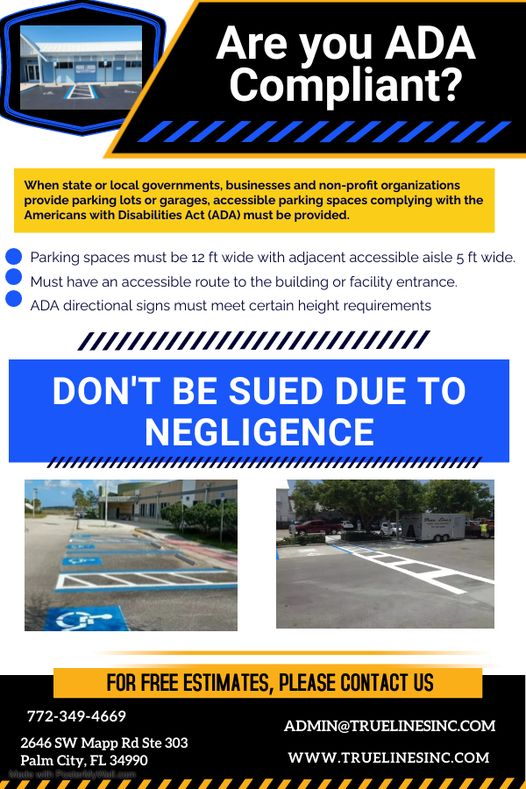
Accessible parking isn’t just a nice thing to have – it’s the law.
Most parking lots must provide accessible parking spaces that align with ADA standards.
This legal requirement ensures people with disabilities can park safely and conveniently, making it easier for them to patronize businesses, access services, and participate in community life.
Navigating the legal landscape can be challenging, but with our expertise, your parking lot can open doors for all.
Connect with us to stay informed about the crucial aspects of making your parking lot welcoming and accessible to all.
772-349-4669
admin@truelinesinc.com

Property Maintenance is an integral part of managing the day to day operations for every type of property. Search the Members Directory for Companies working with Property Management, Condo and HOA properties in Florida from Tallahassee to the Keys.
[one_third]
Tags: Management News, SFPMA Members
HOA rules are intended to protect the health, safety and welfare of the community; complying with the restrictions is mandatory. Homeowners who fail to do so may initially receive a warning from the association, but continued noncompliance could result in fines or a court injunction to have the decorations removed.
Homeowners who have an issue with the holiday-decorations rules should request a meeting with the board to ask if they can be revised. Board members should be receptive to reasonable input from owners and craft rules accordingly; most owners don’t want an Ebenezer Scrooge on the board.
Fair Housing Act implications may make some holiday rules unenforceable. Religious discrimination is illegal under the act. An HOA is not allowed to show preference to one religion over another. When drafting rules, associations should be careful to avoid using terms that refer to specific holidays such as Christmas, Hanukkah or Kwanzaa. Rather, the rules should apply to all “holiday decorations” or reference “holiday trees” to ensure the religious beliefs of certain owners are not given preferential treatment.
Before decorating your home, review the community association rules to determine what restrictions, if any, exist that would regulate holiday displays. It’s a good idea to contact the community manager or the board of directors for guidance. While the holidays are a time to celebrate, owners who fail to review their association’s rules may end up with coal in their stockings. by By Kevin M. Hirzel
One of the thorniest issues to tackle in an HOA is homeowners in delinquency – not paying their dues or being significantly behind on dues payments. The community and owner dues are two sides of the same coin. The community canno maintain the grounds, amenities, or sidewalks without yearly owner dues. However, financial issues are a minefield of complications from family tragedy to cantankerous entitlement.
A challenging question arises: What should an HOA do if a homeowner refuses to pay their dues? Your options range from leveling fines to revoking voting rights. Many communities favor withdrawing voting rights – cutting off the privilege of community control that comes from being a contributing homeowner in the community. Any HOA considering this route should plan carefully to ensure this decision is legal, permitted, and potentially effective before putting it in place.
Your state determines the legality of suspending voting rights in an HOA. Some states allow for the suspension of HOA voting rights for specific reasons or in general, but others prohibit the rest of any remaining owner voting rights. You will need to check the detailed laws regarding HOAs in your state. There may also be rules relating to HOA homeowner rights regarding delinquency and suspension of voting rights in your county and municipality.
The next question is whether your own HOA permits this policy. Next, check your governing documents and by-laws to determine if there are already policies regarding dues delinquency and when an owner’s voting rights can be permitted.
The legal language in HOA governing documents can vary widely. For example, according to some condo associations, all homeowners are subject to the same rules, which means no voting rights. On the other hand, some HOAs may define that an owner always has certain voting rights, like council elections. Still, you may be able to suspend lesser voting rights regarding community matters.
Finding a practical consequence for delinquent dues has always been a challenge for HOAs. The community can’t support many homeowners using the roads and amenities without paying into the infrastructure. Nevertheless, choosing the proper measures to achieve your goals is also imperative.
Suspending voting rights is a sticky proposition. Some homeowners won’t care, some will be devastated. This means it’s also worth considering a few alternatives or additional penalties that may drive homeowners to get right with their dues more effectively.
Refuse delinquent owners of any more permit approvals. No guest parking, and no home improvement projects. Guest parking is for people who are contributing to the neighborhood road and lot maintenance.
A first-time refusal to allow someone access to the pool due to their inability to maintain it can emphasize its importance. Consider denying non-paying homeowners something they will miss that their dues contribute to paying for if this type of solution is permitted in your state and governing documents. Your HOA gets to have sweet amenities because everyone pays in. Those who don’t, don’t. Also, this has a fair, lower impact on families experiencing financial hardship. However, they may need to use their voting rights to oppose special assessments they cannot pay or fight an oppressive fee structure.
When approaching the issue of HOA owners with delinquent dues, remember to create an adaptive and considerate system of response. Build a plan that equally accounts for the absent-minded, the scam artists, the family hardships, and the belligerent bullies. Whatever your solution, make it your central goal to resume regular dues for each property without causing or being subject to unnecessary loss.


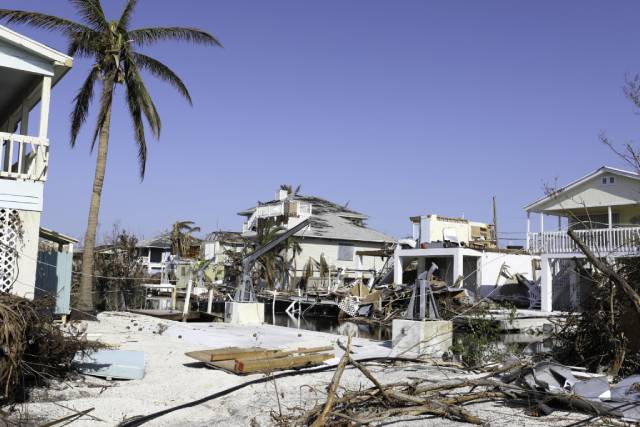
SFPMA has a team of Legal Experts, adjusters, estimators and claim specialists for the benefit of the Condo and HOA’s who sustained damage from the storms and fire, water or mold.
With the know-how and experience to analyze, evaluate, and negotiate the best settlement for your Insurance Claim!
PROPERTY DAMAGE
WHAT WE PROVIDE CONDO & HOA’S
A Claim usually includes inspections, detailed estimates, more inspections, client reviews, negotiating with insurance companies, consulting with insurance company and most importantly, getting you your money as fast as possible.
http://FloridaAdjusting.com