
Become our Member : JOIN SFPMA TODAY   LogIn / Register: LOGIN/REGISTER

SFPMA Industry Articles | news, legal updates, events & education! 

Find Blog Articles for Florida’s Condo, HOA and the Management Industry. 

WILL THE NEW LAWS BE DEVASTATING FINANCIALLY TO SOME FLORIDA RESIDENTS?

WILL THE NEW LAWS BE DEVASTATING FINANCIALLY TO SOME FLORIDA RESIDENTS?

  • Posted: Jul 14, 2022
  • By:
  • Comments: Comments Off on WILL THE NEW LAWS BE DEVASTATING FINANCIALLY TO SOME FLORIDA RESIDENTS?

WILL THE NEW LAWS BE DEVASTATING FINANCIALLY TO SOME FLORIDA RESIDENTS?

By Eric Glazer, Esq.

In a word — YES. Are all these new laws really necessary?  In a word –YES.  This is all happening due to a complete lack of foresight and planning by The Florida Legislature.  Mandatory Reserves and Mandatory Inspections should always have been the law.  I urged The Florida Legislature in May of 2018 to make reserves mandatory.  Instead they waited for a building to collapse and for 98 people to die before making these common sense laws.  Of course a building should require an inspection after 25 or 30 years.  Of course a building should be required to make necessary repairs to prevent a potential collapse.  Of course a building should be required to put away money each month for future repairs.  Of course that amount should be determined by a professional architect or engineer and not an unqualified board member who has a financial interest in the outcome of the reserve study. These laws should have been required thirty years ago, as building started to boom.  Instead however, The Florida Legislature always caved to the developer lobby in order to keep the cost of living in a condominium artificially cheap, and the sale of units flowing.  Now, because these laws were not in place thirty years ago, current condominium owners have a lot of catching up to do financially to pay for the sins of the past.


The days of a couple or a widower from up north retiring to a high rise condominium in Florida if their sole income is social security are done and over.  That cannot happen anymore.  They need to look for a condominium less than three stories in height that has some reserves put away.


If your condominium is at least 30 years old and is 6 stories or higher, has no fire sprinklers or  Engineered life safety system, has not yet undergone a Mandatory Phase One and Phase Two Inspection, has not made the repairs required by those inspections and has no reserves in the bank, you are now forced to either sell your condominium unit immediately or pay massive special assessments that you may not be able to afford, or even come close to affording it.


On the flip side, if your condominium is at least 30 years old and is 6 stories or higher, and already has fire sprinklers or  an Engineered life safety system, has already undergone a Mandatory Phase One and Phase Two Inspection, has already made the necessary repairs, and is fully funding reserves, you have little to nothing to worry about.  Your monthly assessments should remain where they are, give or take the increases in insurance that are simply astronomical.


Developers are waiting to pounce.  They are focusing their attention on those condominium at least 30 years old and are 6 stories or higher, but has no fire sprinklers or Engineered life safety system, has not yet undergone a Mandatory Phase One and Phase Two Inspection, and has not made the repairs that will be required by those inspections and has no reserves in the bank.  Developers will be approaching the Boards of these condominiums with offers to buy everyone’s unit for a certain price.  You will either consent to selling or have to pay the costs for all these inspections, repairs and funding of reserves.  For many there will be no choice at all.  They will have to sell and somehow find housing elsewhere.


Like everything else, the poor people or even the average workers who had saved up enough money for a down payment on their condo and proudly purchased their unit, they will get hit the hardest.  In reality, in upper class buildings, they were either putting reserve money aside all along, or worse comes to worse they can stroke a check for these increased costs.  They’re OK.


This will take years to sort out.  Some condos simply won’t be able to comply with the new laws and the owners will sell out to a developer.  Some condominiums will opt not to sell and pass massive special assessments and/or borrow the money from a bank.  Either way their expenses are going up.  Many associations will be foreclosing on many of their owners who can’t afford these special assessments.  I can tell you that even before these massive changes go into effect, foreclosures are already on the rise, simply due to nearly $6.00 per gallon of gasoline and out of control food prices.  These new laws will start what I believe will be a tremendous increase in foreclosures, perhaps as bad as 2007 and 2008.  Yet, all of it is necessary.  You can’t allow buildings not to get inspected, you can’t allow building not to get fixed, you can’t allow buildings not to have fire safety measures and you can’t allow buildings to deliberately waive a requirement to put funds away each month for future structural repairs.


The Band Aid was ripped off in one shot.  As a result, Florida condominiums and their owners will have some tough financial times ahead.  There will definitely be gentrification in some neighborhoods.  The look, feel and face of Florida will change going forward.  If only these measures were passed when these buildings were being built so people would not be forced out of their homes today.  There simply was no foresight and now the change won’t be smooth and gradual, but will be difficult and immediate.  And yet, there’s no other way to go.  A collapse like Champlain Towers can never happen again.


Tags:
THE NEW CONDO LAWS —- MANDATORY INSPECTIONS – PART ONE & PART TWO

THE NEW CONDO LAWS —- MANDATORY INSPECTIONS – PART ONE & PART TWO

  • Posted: Jun 14, 2022
  • By:
  • Comments: Comments Off on THE NEW CONDO LAWS —- MANDATORY INSPECTIONS – PART ONE & PART TWO

Let’s start discussing the new condominium laws that go into effect on July 1st.  We won’t cover them all in one week, so look forward to next week’s blog as well.

IF YOU HAVE A MANAGEMENT COMPANY the statute says:

If a community association manager or a community association management firm has a contract with a community association that has a building on the association’s property that is subject to s. 553.899, (the Mandatory Inspections statute) the community association manager or the community association management firm must comply with that section as directed by the board.

This is a weird provision to me.  Clearly, it’s warning managers and management companies to comply with the new mandatory inspection statute. But it also says “as directed by the board.”  What does that mean?  Suppose the board tells the manager that they are deliberately not complying with the new mandatory inspection statute? Does that get the management company off the hook?  Can the management company now sit back and do nothing?  I certainly don’t think that’s the intent of the statute, but it should definitely be clearer.  In any event, at least to me, the management company must not hinder the association’s efforts to comply with the new mandatory inspection statute.  If I were a manager or management company, I would document my efforts thru e-mails to all of the Board members urging them to comply and reminding them of their responsibility to comply with the new mandatory inspection requirements.

Remember, prior to this new law becoming effective, only Dade and Broward had mandatory / structural inspection requirements.  Wellwe now have in every Florida county something called milestone inspections — and there is part one and part two.

In every county in Florida, your first milestone/structural  inspection is after 30 years and every ten years thereafter.  But, if your condo is ON THE COAST or within three miles of the coast, your first milestone/structural inspection is AFTER TWENTY FIVE YEARS AND EVERY TEN YEARS THEREAFTER. And this applies to every condo or co-op that is three stories or more in height by December 31 of the year in which the building reaches 30 years of age

The structural inspection of a building, including an inspection of load-bearing walls and the primary structural members and primary structural systems, must be done by by a licensed architect or engineer authorized to practice in this state for the purposes of attesting to the life safety and adequacy of the structural components of the building and, to the extent reasonably possible, determining the general structural condition of the building as it affects the safety of such building, including a determination of any necessary maintenance, repair, or replacement of any structural component of the building.

If the building’s certificate of occupancy was issued on or before July 1, 1992, meaning that you are already 30 years old, the building’s initial milestone inspection must be performed before December 31, 2024.


Here is what’s required in a Phase One Inspection:

PHASE ONE  (a) For phase one of the milestone inspection, a licensed architect or engineer authorized to practice in this state shall perform a visual examination of habitable and nonhabitable areas of a building, including the major structural components of a building, and provide a qualitative assessment of the structural conditions of the building. If the architect or engineer finds no signs of substantial structural deterioration to any building components under visual examination, phase two of the inspection, as provided in paragraph (b), is not required.

In all candorin a post Champlain Towers worldif I’m the phase one guy — I don’t want to be sued for saying this building is in perfect shape and doesn’t even need a phase two inspection.  I think the Phase One Inspection will Always result in the First architect or engineer calling for a Phase Two study.  What does he or she have to lose?


MANDATORY BUILDING INSPECTIONS – PART TWO

By Eric Glazer, Esq.

So last week we discussed the fact that the change in the law will now require every condominium building in the state that is 3 stories or higher and at least 30 years old (25 years old if within 3 miles of the coast) to undergo a Phase One inspection, every 10 years, by a licensed architect or engineer who is looking for visual signs of structural damage to the building.

Now if I’m the guy doing the Phase One Inspection, it’s pretty likely that I’m going to find something that requires a Phase Two inspection.  Why not?  Is it worth the potential liability for saying the building is fine and then someone is injured or killed because of a structural defect?  Of course not.  So count on lots of Phase Two Inspections.  Here is what that entails:


PHASE TWO – Only If found to be necessary after the Phase One Inspection

(b) A phase two of the milestone inspection must be performed if any substantial structural deterioration is identified during phase one. A phase two inspection may involve destructive or nondestructive testing at the inspector’s direction. The inspection may be as extensive or as limited as necessary to fully assess areas of structural distress in order to confirm that the building is structurally sound and safe for its intended use and to recommend a program for fully assessing and repairing distressed and damaged portions of the building. When determining testing locations, the inspector must give preference to locations that are the least disruptive and most easily repairable while still being representative of the structure. An inspector who completes a phase two milestone inspection shall prepare and submit an inspection report pursuant to subsection (8).

(8) Upon completion of a phase one or phase two milestone inspection, the architect or engineer who performed the inspection must submit a sealed copy of the inspection report with a separate summary of, at minimum, the material findings and recommendations in the inspection report to the condominium association or cooperative association, and to the building official of the local government which has jurisdiction. The inspection report must, at a minimum, meet all of the following criteria:

(a) Bear the seal and signature, or the electronic signature, of the licensed engineer or architect who performed the inspection.

(b) Indicate the manner and type of inspection forming the basis for the inspection report.

(c) Identify any substantial structural deterioration, within a reasonable professional probability based on the scope of the inspection, describe the extent of such deterioration, and identify any recommended repairs for such deterioration.

(d) State whether unsafe or dangerous conditions, as those terms are defined in the Florida Building Code, were observed.

(e) Recommend any remedial or preventive repair for any items that are damaged but are not substantial structural deterioration.

(f) Identify and describe any items requiring further inspection.

THE ASSOCIATION’S RESPONSIBILITY

(9) The association must distribute a copy of the inspector-prepared summary of the inspection report to each condominium unit owner or cooperative unit owner, regardless of the findings or recommendations in the report, by United States mail or personal delivery and by electronic transmission to unit owners who previously consented to receive notice by electronic transmission; must post a copy of the inspector-prepared summary in a conspicuous place on the condominium or cooperative property; and must publish the full report and inspector prepared summary on the association’s website, if the association is required to have a website.

 (10) A local enforcement agency may prescribe timelines and penalties with respect to compliance with this section.

(11) A board of county commissioners may adopt an ordinance requiring that a condominium or cooperative association schedule or commence repairs for substantial structural deterioration within a specified timeframe after the local enforcement agency receives a phase two inspection report; however, such repairs must be commenced within 365 days after receiving such report. If an association fails to submit proof to the local enforcement agency that repairs have been scheduled or have commenced for substantial structural deterioration identified in a phase two inspection report within the required timeframe, the local enforcement agency must review and determine if the building is unsafe for human occupancy.

The bottom line is that if forced to do a Phase One inspection, you can ensure you will be required to do a Phase Two Inspection.  The Phase Two Inspection will be costly and the architect or engineer performing the study has full reign over the property.  What they say needs fixing, needs fixing.  And what do they have to lose in stating that certain structural repairs should be made?  On the other hand, they have a lot to lose if they don’t recommend a fix and catastrophe strikes.  Rest assured that Phase Two Study will require repairs and they won’t come cheap.


Tags: , ,
NEW CONDO AND CO-OP LAWS NOW AWAITING SIGNATURE BY THE GOVERNOR.

NEW CONDO AND CO-OP LAWS NOW AWAITING SIGNATURE BY THE GOVERNOR.

  • Posted: May 27, 2022
  • By:
  • Comments: Comments Off on NEW CONDO AND CO-OP LAWS NOW AWAITING SIGNATURE BY THE GOVERNOR.
LADIES AND GENTLEMEN: I PRESENT TO YOU THE NEW CONDO AND CO-OP LAWS NOW AWAITING SIGNATURE BY THE GOVERNOR.
IF THEY SOUND SCARY AND IMMENSELY EXPENSIVE, YOU ARE INTERPRETING THEM CORRECTLY. THE FLORIDA LEGISLATURE HAS CHANGED CONDOMINIUM LAW FOREVER. THE COST TO STAY IN YOUR CONDO WILL NEVER BE THE SAME. BUT DON’T BLAME THE FLORIDA LEGISLATURE FROM MAKING LAWS THAT SHOULD HAVE BEEN MADE DECADES AGO BY PREVIOUS FLORIDA LEGISLATURES. THE TRUTH IS…..THIS IS WHAT HAD TO BE DONE. ANYTHING ELSE WOULD HAVE ALLOWED CONDOMINIUM OWNERS TO CONTINUE LIVING A LIE THAT THEIR ASSESSMENTS ARE CHEAP AND AFFORDABLE AND WOULD HAVE ALLOWED THE CAN TO BE KICKED DOWN THE ROAD AGAIN AND PUT LIVES AT RISK..
IRONICALLY, MY REQUEST FOR MANDATORY EDUCATION FOR BOARD MEMBERS WAS NOT INCLUDED IN THE BILL, YET THE BILL GOES OUT OF ITS WAY TO CHARGE DIRECTORS WITH BREACH OF FIDUCIARY DUTY FOR NOT FOLLOWING THESE NEW LAWS THAT MANY WILL NOT BE ABLE TO EVEN UNDERSTAND WITHOUT LEGAL ASSISSTANCE OR EDUCATION.
I DID MY BEST TO PUT THEM IN A FORMAT THAT IS AS SIMPLE TO FOLLOW AS YOU CAN GET, BUT BELIEVE ME YOU WILL NEED TO READ THEM OVER AND OVER TO UNDERSTAND WHAT THE LAW ACTUALLY REQUIRES.

TO GET YOUR COPY CLICK HERE.

PROXIES: WHAT ARE THEY AND WHEN CAN WE USE THEM?  By Eric Glazer, Esq.

PROXIES: WHAT ARE THEY AND WHEN CAN WE USE THEM? By Eric Glazer, Esq.

  • Posted: May 24, 2022
  • By:
  • Comments: Comments Off on PROXIES: WHAT ARE THEY AND WHEN CAN WE USE THEM? By Eric Glazer, Esq.

PROXIES: WHAT ARE THEY AND WHEN CAN WE USE THEM?

By Eric Glazer, Esq.

The term “proxy” is often thrown around incorrectly.  In simple English, if you can’t make it to a meeting to actually cast your vote or appear in person, you sign a document called a “proxy” which allows someone else to appear on your behalf.  They act in your place.  The proxy form may give the proxy holder little power, or a lot of power, depending upon how the proxy itself is written.

As we should all know by now, a quorum of owners (in attendance by person or by proxy) is required in order to have the annual election.  Let’s say you cannot make it to the annual meeting, but you know that your neighbor Joe is going.  You can execute a limited proxy form, simply authorizing Joe to show up for you in order that your attendance be counted toward a quorum.  Or, you can give Joe more power and sign a general proxy, allowing Joe the ability to do all things on your behalf as if you were present.  This may include actually voting in the annual election for you, voting on waiving reserves, voting on adopting amendments to the governing documents and other different types of powers.

The BIG DIFFERENCE between condominiums and HOAs when it comes to proxies is that in an HOA, proxies are allowed when voting in the election, unless the documents say they are not allowed.  That’s why, the campaigning is even different in an HOA as compared to a condominium.  In an HOA, you don’t need your neighbor’s vote in order to win the election, you simply need their proxy.  If you get their proxy, on the night of the election, you can show up holding a dozen different proxies from 12 different homes and you would get 12 ballots, one for each proxy that you have.  Then, you would get another ballot for your own home.  You get 13 votes, even though none of the people that gave  you their proxy is at the meeting.

The condominium statutes do not allow for proxy voting in the election.  Why the two statutes should differ makes no sense, but they always have.  In a condominium, you can give your neighbor a proxy which allows them to appear on your behalf at the annual meeting, solely in order that your attendance be counted toward a quorum that is needed, but you can’t give them a proxy which turns over your right to vote to them.

Unit owners in a residential condominium may vote by limited proxies for votes taken to waive or reduce reserves,  for votes taken to waive the year end  financial reporting requirements; for votes taken to amend the declaration ; for votes taken to amend the articles of incorporation or bylaws pursuant and for any other matter for which the statute  requires or permits a vote of the unit owners.

To be clear, if you are going to be in attendance at a meeting where a vote is being taken on these issues, you do not need to sign a proxy form.  Unit owners may vote in person at unit owner meetings. This subparagraph does not limit the use of general proxies or require the use of limited proxies for any agenda item or election at any meeting of a timeshare condominium association or a nonresidential condominium association.

In a condo a proxy given is effective only for the specific meeting for which originally given and any lawfully adjourned meetings thereof. A proxy is not valid longer than 90 days after the date of the first meeting for which it was given. Each proxy is revocable at any time at the pleasure of the unit owner executing it.  An example of a limited  proxy to use can be found by clicking here.

While the condo statute does not say what information the proxy must contain, the HOA statute does, and says:

To be valid, a proxy must be dated, must state the date, time, and place of the meeting for which it was given, and must be signed by the authorized person who executed the proxy. A proxy is effective only for the specific meeting for which it was originally given, as the meeting may lawfully be adjourned and reconvened from time to time, and automatically expires 90 days after the date of the meeting for which it was originally given. A proxy is revocable at any time at the pleasure of the person who executes it. If the proxy form expressly so provides, any proxy holder may appoint, in writing, a substitute to act in his or her place.

While the condo and HOA statutes allow the owners to vote by proxy if they can’t make it to a meeting, both of these statutes forbid directors from voting by proxy.    A board member cannot give another board member his or her proxy to vote on an issue the board must vote on, even if the board members is going to be out of town.  That board member can however take advantage of today’s technology and cast their vote by speakerphone or zoom.

There’s a lot to know about proxies…and hopefully this cleared up some of the confusion surrounding them.  Or…… did I just make it even more confusing than you thought?

OUT OF SIGHT DOES NOT MEAN OUT OF MIND  By Eric Glazer, Esq.

OUT OF SIGHT DOES NOT MEAN OUT OF MIND By Eric Glazer, Esq.

  • Posted: May 09, 2022
  • By:
  • Comments: Comments Off on OUT OF SIGHT DOES NOT MEAN OUT OF MIND By Eric Glazer, Esq.

OUT OF SIGHT DOES NOT MEAN OUT OF MIND

By Eric Glazer, Esq.

I like to re-publish this article every few years because it is so important.  As we get closer to summer we are simultaneously getting closer to lots and lots of empty condominium units because many owners are returning up north for a few months.  Just because you leave your Florida condominium for a few months however does not mean that your responsibility to maintain your unit stops once you hit the Georgia border.

Every declaration of condominium has a general clause that requires the owner of the unit to maintain his or her unit in good condition.  In fact, arbitration decisions have held that “where an owner does not reside in the unit, it is incumbent on the owner to routinely and periodically examine and inspect the unit to ensure the absence of leaks and conditions that would otherwise lead to damage to the building and its occupants.  In recognition of the fact that where multiple owners occupy a single building, a problem that develops in one unit may well affect other units and the common element components of the building.”  See: Los Prados Condominium Association v. Lemley Case No. 03-6092; May 25, 2004, Arbitrator, Scheuerman.

So, if you’re headed up north for a few months, and you know that a friendly neighbor is going to remain in Florida, make sure to leave that neighbor a key to your unit and ask him or her to check the place every now and then.  And…..if your association governing documents require that you leave the association with a key, you BETTER DO THAT!  There is virtually no excuse for failing to do so, but that’s for another column.  If you don’t leave a key, remember that the law provides:

(5) RIGHT OF ACCESS TO UNITS.—

(a) The association has the irrevocable right of access to each unit during reasonable hours, when necessary for the maintenance, repair, or replacement of any common elements or of any portion of a unit to be maintained by the association pursuant to the declaration or as necessary to prevent damage to the common elements or to a unit.

If the association thinks a leak is coming from your unit, if they don’t have a key, they’re using a locksmith and/or breaking your lock or door to get in.  And, they’re entitled to do it, if they have no other reasonable means to get in.  And…….. it’s the unit owner who is going to pay for the lock and door repair if there really was a leak.  Bottom line…be smart….plan ahead and make sure that when Florida gets in your rear view mirror this year, someone is still left behind watching your unit.

Keep informed with articles for Condo and HOA’s 

FIRE SAFETY SYSTEM — FAIR WARNING?

FIRE SAFETY SYSTEM — FAIR WARNING?

  • Posted: May 03, 2022
  • By:
  • Comments: Comments Off on FIRE SAFETY SYSTEM — FAIR WARNING?

FIRE SAFETY SYSTEM — FAIR WARNING?

A serious DEADLINE (January 1, 2024) is creating another serious expense for Condo owners in the near future: FS 718.112 (l) — Firesafety.—Any high-rise association building must ensure compliance with the Florida Fire Prevention Code. That means that these buildings must retrofit either a fire sprinkler system or an engineered life safety system as specified in the Florida Fire Prevention Code.

But make no mistake: These buildings in question got ample warning: Since 2014 bills are being discussed and enacted creating this requirement. The deadline for the necessary retrofitting changed a few times – some ill-advised board members who didn’t care about the safety of their neighbors had the law firm of Becker& Poliakoff (former Senator Ellyn Bogdanoff, now an attorney with the Becker Law Firm) lobbying against this requirement, trying to remove this requirement in the statutes or minimum trying to postpone this deadline “forever”.

In 2017 then Governor Rick Scott even vetoed a bill that would have actually allowed residents to vote to end sprinkler and other safety requirements.

Let’s make no mistake: Safety requirements, especially in high-rise buildings, are absolutely necessary – even if some high cost is involved. We have seen in Surfside that neglecting safety requirements – or even ignoring them – can have deadly consequences.

Hopefully all these high-rise condominium buildings had board members that took care of creating reserve funds for installing the required Fire Safety System. They surely had long-time warnings.  We don’t want to see families losing their home because they were unable to pay the special assessment because the board members failed to collect the necessary funds over all these years.


 Need a Fire Safety Company for your Buildings?

Search our Members Directory – top companies can be found all over Florida that work with Condo and HOA’s.

When you are looking for companies to take care of your buildings fire safety, Our members are here to help.

ASAP Fire Sprinkler Protection LLC

AMAZING PODCAST THAT DISCUSSES THE COLLAPSE IN SURFSIDE IN DETAIL AND FROM SO MANY DIFFERENT ANGLES.

AMAZING PODCAST THAT DISCUSSES THE COLLAPSE IN SURFSIDE IN DETAIL AND FROM SO MANY DIFFERENT ANGLES.

  • Posted: Apr 28, 2022
  • By:
  • Comments: Comments Off on AMAZING PODCAST THAT DISCUSSES THE COLLAPSE IN SURFSIDE IN DETAIL AND FROM SO MANY DIFFERENT ANGLES.

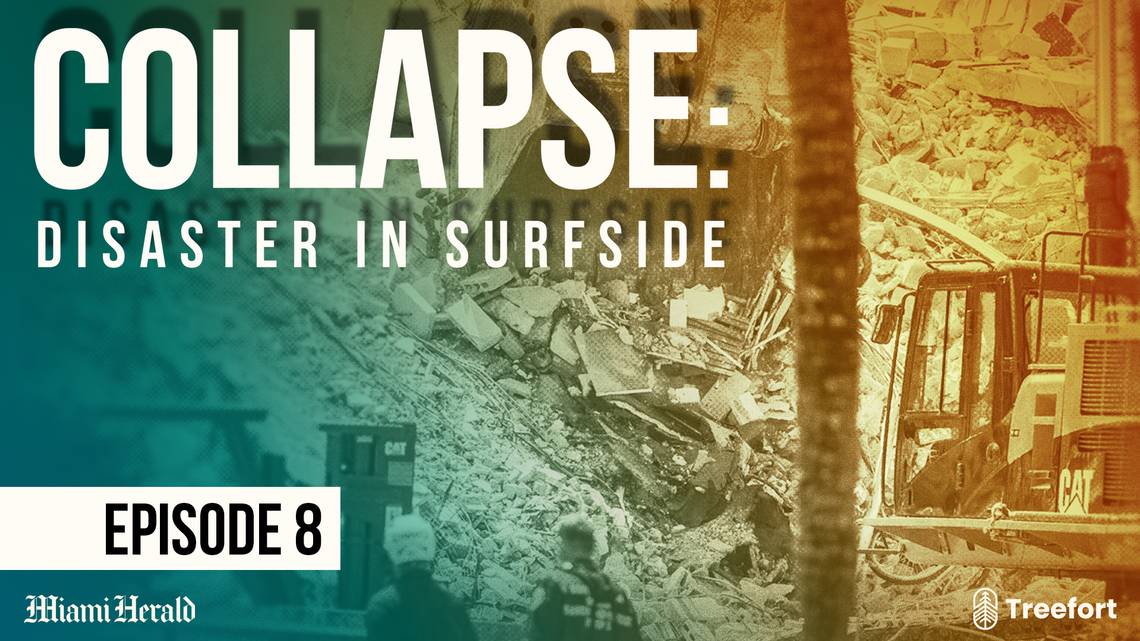
THE MIAMI HERALD HAS PREPARED AN AMAZING PODCAST THAT DISCUSSES THE COLLAPSE IN SURFSIDE IN DETAIL AND FROM SO MANY DIFFERENT ANGLES.

IN TODAY’S MIAMI HERALD, ERIC GLAZER IS INTERVIEWED REGARDING THE LAWS THAT LED TO THE DISASTER AND HOW THE LEGISLATURE IGNORED PRIOR WARNINGS.

TO LISTEN TO THE PODCAST CLICK HERE


EPISODE 8: THE RULES ARE DIFFERENT HERE Almost a year after the tragic fall of Champlain Towers South in Surfside, the Florida Legislature has done nothing to prevent another disaster. It’s an approach often taken in Tallahassee: Miami-Dade County’s problems are its own to fix. But the flaws at Champlain South aren’t necessarily limited to Miami-Dade, or even Florida. They could be present in older waterfront buildings around the world.

Episode 8: The Rules Are Different Here of Collapse: Disaster in Surfside, a new podcast from Miami Herald/Treefort Media, shows listeners how the long-term consequences of the deadly accident are still up in the air — and explores how previous decades of inaction by lawmakers and the Champlain South condo board contributed to the collapse.

Listen to the Podcast and hear the interview with Eric Glazer.

Tags:
THE DIFFERENCE BETWEEN HOA AND CONDO LAW – IT’S LIKE NIGHT AND DAY! by Glazer Sachs

THE DIFFERENCE BETWEEN HOA AND CONDO LAW – IT’S LIKE NIGHT AND DAY! by Glazer Sachs

THE DIFFERENCE BETWEEN HOA AND CONDO LAW – IT’S LIKE NIGHT AND DAY!

By Glazer Sachs / written by Jan Bergemann

To be very honest, I am at a total loss when I look at the HOA Act the Florida legislature created with FS 720. Sometimes I wonder why they created this statute at all, considering that the provisions contained in this statute have no teeth — and it is widely known that even the best laws are useless without any proper enforcement tools.

The history of FS 720 clearly shows that enforcement of its provisions is only possible for homeowners who have lots of spare change in their pockets.

The biggest “joke” in the statutes is one sentence. Many good families lost their homes and life savings because the following sentence headlines the whole Florida HOA Act:

FS 720.302(2) The Legislature recognizes that it is not in the best interest of homeowners’ associations or the individual association members thereof to create or impose a bureau or other agency of state government to regulate the affairs of homeowners’ associations.

In all honesty, the only ones served by this sentence are specialized attorneys and their bank accounts – to the detriment of the homeowners living in these community associations.

While the FLORIDA CONDO ACT (FS718) has many detailed provisions that can be partially and easily enforced by a regulatory agency (Division of Florida Condominiums, Timeshares, and Mobile Homes), approximately 2.5 million homeowners living and/or owning property in these homeowners’ associations are treated like unwanted stepchildren by the Florida legislature.

With the existing, unenforceable statutes in place, it’s a financially risky proposition for retirees and investors to buy property within these communities. Homeowners are left to fight for themselves with no help to enforce the existing laws.

Simple matters, such as elections, record requests or financial issues, turn into expensive lawsuits that can quickly become monsters eating up families’ life savings. Many homeowners run around with blinders, ignoring permanent violations of Florida statutes, because they don’t want to risk spending their last dime on legal bills.

The proper legislation that would make life in homeowners’ associations much easier – and less expensive – is in place, but only for condominium associations.

The provisions contained in FS 720 are stacked against the homeowners, especially since in many associations budget shortfalls caused by unpaid dues and/or foreclosures are causing heavy financials burdens on the owners still paying their dues.

High legal bills are creating an even bigger hardship on the owners still paying the ever-increasing assessments, caused by the fact that the provisions contained in the HOA Act FS 720 provide no easy solutions for simple disputes.

The question that baffles everyone: Why is the Florida legislature unwilling to enact simple laws that would stop most of these shenanigans we are all reading about daily in the media? The established wording from the condo statutes could easily be used for the HOA statutes. Case law and the Florida Administrative Code is in place.  Nobody has to reinvent the wheel.

But who fights these bills that would simplify life in HOAs in Florida? The only feasible explanation: The service providers, especially the attorneys that claim to lobby for the associations. They are the only ones who benefit from these useless HOA statutes.

It is definitely easier to fleece the owners if the laws are confusing and can be interpreted any way anybody wants. With the statutes for HOAs it is very easy to create mini-dictatorships and fill their own pockets – if some determined folks so desire. Is that what the folks who “invented” homeowners’ associations had in mind when they created these communities?


Tags: ,
SO WHO CAN BE AN OFFICER OR DIRECTOR IN YOUR COMMUNITY?

SO WHO CAN BE AN OFFICER OR DIRECTOR IN YOUR COMMUNITY?

  • Posted: Apr 08, 2022
  • By:
  • Comments: Comments Off on SO WHO CAN BE AN OFFICER OR DIRECTOR IN YOUR COMMUNITY?

SO WHO CAN BE AN OFFICER OR DIRECTOR IN YOUR COMMUNITY?

When reading the Florida statutes in regards to meetings and elections you will find that the word “MEMBERS” can be found everywhere in the provisions regulating meetings and elections. It even says that the annual meeting has to be a membership meeting, meaning that you have to be a MEMBER (deeded owner) to participate. The association even has the right to ask anybody who is not a member to leave the meeting. I have seen it done in various associations.

It’s a little different with officers, since the statutes are silent on the matter, but it seems to me that it would be pretty ridiculous to make a non-member “president of the board” – a person that doesn’t even have voting rights or could even get kicked out of the meeting since he/she is not a member.

I honestly don’t understand the reasoning behind making a non-member an officer. Don’t forget, a board (including the president) has far-reaching powers and could actually ruin the personal finances of all association members by making wrong decisions.

It really leaves the question: Why making a person “PRESIDENT” who has no financial interests in the association and would not even be affected by “stupid” decisions made by the board?

Even if laws and by-laws allow non-members to be an officer, it’s in my opinion a pretty stupid decision by the board to make a non-member the “PRESIDENT”.