SFPMA

SFPMA Industry Articles | news, legal updates, events & education! 

Find Blog Articles for Florida’s Condo, HOA and the Management Industry. 

Protecting Tenants at Foreclosure Act of 2009

Protecting Tenants at Foreclosure Act of 2009

  • Posted: Dec 09, 2019
  • By:
  • Comments: Comments Off on Protecting Tenants at Foreclosure Act of 2009

Protecting Tenants at Foreclosure Act of 2009

Resurrected and Here to Stay

by KBR Legal/ Jeffrey Rembaum, Esq.

On May 20 2009, just after the peak of the national foreclosure crisis, a federal statute was enacted to help protect a residential tenant who was renting a unit subject to foreclosure from being evicted without being afforded a reasonable amount of time to find alternative housing.

The federal law was known as “Protecting Tenants at Foreclosure Act of 2009”.  It generally provided that a bona fide tenant was authorized to remain in a residential unit that was acquired by a new party through foreclosure for the balance of the unexpired term of the lease, unless the unit was acquired by a party that intended to occupy the unit, in which case the tenant was authorized to remain in the unit for ninety days after receiving a notice to vacate.

For purposes of the federal law, a “bona fide tenant” was a tenant who was not the mortgagor or the parent, spouse, or child of the mortgagor and who was under a lease that was the result of an arms-length transaction where rent was not substantially lower than fair market value.

The federal law assured that residential tenants would have a reasonable amount of time to plan and find alternative housing after the unit they were renting was foreclosed and acquired by a new party. However, it also assisted community associations in finding desirable tenants to rent units they owned through the foreclosure of the association’s assessment lien for a fair market value, which then helped the association recoup unpaid assessments and bad debt otherwise attributable to the unit.

The protections of the federal law were intended to “sunset”, which is a term meaning ”to expire”, on December 31, 2012. However, the Dodd-Frank Wall Street Reform and Consumer Protection Act (Dodd-Frank Act) later extended the sunset date to December 31, 2014. Once the federal law finally expired on January 1, 2015, tenants of residential property in Florida no longer had any special protection from eviction by parties acquiring such units by foreclosure.

Then, approximately six month later, the Florida legislature adopted its own version of the law as part of the Florida Residential Landlord and Tenant Act. Specifically, section 83.561, Florida Statutes, became effective on June 15, 2015, and provides that “if a tenant is occupying a residential premises that is the subject of a foreclosure sale, the purchaser named in the certificate of title is permitted to give a tenant a thirty day notice to vacate and the tenant must comply”. Therefore, as of June 15, 2015, residential tenants had a much shorter timeframe of thirty days’ notice to vacate a unit acquired by foreclosure.


Finally, on June 23, 2018, the federal Protecting Tenants at Foreclosure Act became effective again. It no longer contains any sunset or expiration date; so it is here to stay. Since a federal law will supersede a Florida law when it is more stringent, the provisions of the Federal Protecting Tenants at Foreclosure Act giving tenants more time to vacate residential property after it is acquired by a new party through foreclosure will apply to transactions in Florida despite the shorter timeframe provided by state statute.


Kaye Bender Rembaum, Attorneys at Law

[one_third]Palm Beach Office
Gardens Professional Center
9121 N. Military Trail,
Suite 200
Palm Beach Gardens, FL 33410
Phone: (561) 241-4462
Fax: (561) 223-3957[/one_third] [one_third]Broward Office
1200 Park Central Blvd. S.
Pompano Beach, FL 33064
Phone: (954) 928-0680
Fax: (954) 772-0319[/one_third] [one_third_last]Tampa Office
1211 North Westshore Blvd
suite 409
Tampa, Fl 33607
Phone: 813-375-0731[/one_third_last]


[AdSense-C]

Tags: , , ,
Know the Rules of Restroom Renovations

Know the Rules of Restroom Renovations

  • Posted: Dec 09, 2019
  • By:
  • Comments: Comments Off on Know the Rules of Restroom Renovations

Know the Rules of Restroom Renovations

by Steven C Fraser, Esq. Fraser Lawyers

An area that gets a lot of foot traffic in any building, and one which everyone eventually will see and use, the restroom is a critical component of all commercial and industrial buildings. Typically thought of as only a functional space, the restroom has been transformed both by increased regulatory requirements for businesses (e.g., OSHA, ADA compliance, etc.) and by a shift to create more comfortable, inviting spaces for occupants.

These shifts put unique pressures on managers of aging buildings that may have fallen behind the curve on restroom design, aesthetics and function.


An area that gets a lot of foot traffic in any building, and one which everyone eventually will see and use, the restroom is a critical component of all commercial and industrial buildings. Typically thought of as only a functional space, the restroom has been transformed both by increased regulatory requirements for businesses (e.g., OSHA, ADA compliance, etc.) and by a shift to create more comfortable, inviting spaces for occupants.

These shifts put unique pressures on managers of aging buildings that may have fallen behind the curve on restroom design, aesthetics and function.


Norman Chapman facilities supervisor at Petigru Commercial Properties in Columbia, South Carolina., manages about 22 different properties, most of which were built anywhere from 25-30 years ago. He says that most of the buildings’ restrooms are located within tenants’ suites, which means the tenants are responsible for the upkeep and cleaning of those rooms. “We also have some common bathrooms,” says Chapman, “all of which are updated and modern.”

For example, most of Petigru’s properties feature restrooms that have wood frame cabinetry, decorative table legs, granite countertops, aged-bronze fixtures, high-end lighting and bold color schemes. Situated in a region that has a rich history.

Knowing that workers are more satisfied when it’s clear their employers care about them, Chapman says Petigru puts extra effort into keeping its restrooms fresh and updated, regardless of the building’s age. “Bathrooms are as important as the common hallways in a multi-tenant building, so we really try to keep up with the times and have them look nice,” says Chapman, “all in the name of attracting tenants that want a comfortable, functional space for their employees.”


OSHA’s Restroom Requirements for Businesses

When adding new facilities or renovating existing restrooms in an older building, there are some important regulatory requirements to keep in mind. In regulating the availability of and workers’ access to restroom facilities, the Occupational Safety and Health Administration (OSHA) has specific rules that must be followed. OSHA’s documentation is extremely detailed and complex, but at a basic level the Society for Human Resource Management (SHRM) highlights these requirements:

  • Toilet facilities must be available at every worksite.
  • Companies with 15 or fewer employees are required to offer only one unisex bathroom and toilet with a locking door.
  • For larger companies, the requirements are:
  • Two toilets for 16 to 35 employees
  • Three toilets for 36 to 55 employees
  • Four toilets for 56 to 80 employees
  • Five toilets for 81 to 110 employees
  • Six toilets for 111 to 150 employees and
  • One additional toilet for every 40 employees over 150.
  • Employers must provide gender-segregated facilities for coed workforces over 15 employees, with bathrooms designated as being for male or female use (unless they can be occupied by no more than one person and can be locked from the inside).
  • Each toilet must be in a separate compartment, with a door, and must be separated from the next by partitions sufficiently high to ensure privacy.
  • Hand-washing facilities must be provided and maintained in a sanitary condition. All restrooms must have running water, soap and either hand towels or air-dryers.


ADA Compliance Counts

An important consideration for all businesses and public spaces today, the Americans with Disabilities Act (ADA) has strict rules in place concerning the construction and renovation of restroom facilities. If you’re running an older building where the restroom facilities haven’t been recently updated, then you may need to revisit your restrooms to make sure they are up to code.

The complete ADA guidelines are available here. According to Buildings, the basic ADA guidelines that facilities managers should keep in mind for single-user restrooms are:

  • There must be 30” X 48” access to the sink (in other words, the door can’t swing into this rectangle).
  • The measurement starts from the point where users have 9” vertical clearance for their feet and 27” vertical clearance for their knees.
  • The center line of the toilet must be between 16” to 18” from the side wall.
  • To allow a wheelchair to turn, there must be a clear circle of at least 60 inches around the side wall and 56 inches from the rear wall.
  • The toilet seat height must be 17-19 inches.


According to Chapman, it’s important to factor both OHSA and ADA requirements into a restroom renovation in an older building, with the latter posing some of the bigger challenges for a upgrading an existing space. “You need at least one ADA stall (depending on how many tenants are on a floor of the building) in every bathroom, and that can take up some extra room,” he explains. This sometimes requires re-thinking how space is used, and whether or not the restroom redesign will require borrowing space from other private areas of the building. In a case like that, the restroom renovation project will require planning and timing around lease agreements as well.


Improving Comfort Levels

All older buildings will eventually have to go through some type of restroom renovation project. Whether the purpose is modernization, comfort, functionality, compliance or a combination of all four, this is a facility area that requires ongoing attention and commitment.

Not only do restroom renovations help keep occupants comfortable, but they can also enhance property value, improve employee morale, and help establish your company as one that cares about its employees, customers, and business partners.

The information provided on this page does not, and is not intended to, constitute legal advice; instead, all information, content, and materials available on this site are for general informational purposes only.


STEVEN C. FRASER, P.A

(877) 862-7188

221 W Hallandale Beach Blvd
Hallandale Beach, Florida 33009
(877) 862-7188
sfraser@fraserlawfl.com


[AdSense-B]


Tags: ,
TALLAHASSEE, Fla. — New laws take effect Oct. 1 in Florida, impacting state residents. A total of 27 new laws go in to effect.

TALLAHASSEE, Fla. — New laws take effect Oct. 1 in Florida, impacting state residents. A total of 27 new laws go in to effect.

TALLAHASSEE, Fla. — New laws take effect Oct. 1 in Florida, impacting state residents.

  • 27 new state laws in Florida
  • New laws take effect Oct. 1 
  • Texting while driving ban, hazing and protection of police dogs and horses

A total of 27 new laws go in to effect.

However, the biggest is a provision of a law that already went into effect: holding a phone or other device while driving.

State lawmakers passed a law that made texting while driving a primary offense in Florida. That law went into effect in July. But starting Tuesday, a provision of the law goes into effect that requires drivers to be “hands-free” in certain areas. If you are spotted holding a phone, whether that be talking on it, flipping through emails, playing Pokemon Go or anything else, police can pull you over and cite you if you are driving in a school or work zone.

We talked to drivers in the Bay area who said they support the new law.

“I think it’s smart because the school zone by my house on MacDill, every single time I’m going through there when the lights are on people are just blowing by me, not paying attention,” said John Meyer. “I don’t think these people on their phones are even going to see the crossing guards. It’s a problem and I’m glad they’re doing something about it.”

“I think we need to protect our children first and foremost. It would be horrible to lose a child over a cell phone and I truly believe they need to implement this law,” said Elisandra Garcia.

Up next, especially for college students, a new hazing law comes into effect.

Senate Bill 1080 will target people who plan acts of hazing or recruit others to help – if there is a permanent injury during the hazing, that will now be a third degree felony. Reporting a hazing incident will get you immunity under the new law.

Police dogs and horses are getting some added protection in a new law taking effect tomorrow. Anyone killing or severely injuring a police horse or dog will now face a potential of 15 years in prison. That is a 10 year increase over the current law.


Among the laws going into effect:

  • TEXTING WHILE DRIVING. Lawmakers passed a bill (HB 107) that strengthened the state’s ban on texting while driving by making it a “primary” offense, allowing police to pull over motorists for texting behind the wheel. Most of the measure took effect July 1. But starting Tuesday, it will require motorists to go hands-free on wireless devices in school and work zones. The law directs law-enforcement officers to provide verbal or written warnings until the end of the year for motorists who don’t put down cell phones in those areas. Tickets will start to be issued Jan. 1, punishable as a moving violation with three points assessed against the driver’s license.
  • HAZING. A new law (SB 1080) was crafted after Andrew Coffey, a Florida State University fraternity pledge from Lighthouse Point, died in 2017 after drinking a bottle of Wild Turkey bourbon that had been taped to his hand. The law targets people who plan acts of hazing or solicit others to engage in hazing and makes it a third-degree felony if the hazing results in a permanent injury. The bill also provides immunity to people who call 911 or campus security to report the need for medical assistance during hazing incidents.
  • POLICE DOGS AND HORSES. The measure (SB 96) makes it a second-degree felony, up from a third-degree felony, for people who kill or cause great bodily harm to police, fire or search-and-rescue dogs or police horses. The change boosts the amount of potential prison time from five years to 15 years. Supporters said the bill stems, at least in part, from the deaths of Fang, a member of the Jacksonville Sheriff’s Office canine unit shot and killed by a teenager fleeing after carjacking two women at a gas station, and a Palm Beach County Sheriff’s Office police dog named Cigo that was killed in the line of duty.
  • CHILD-LIKE SEX DOLLS. The law (SB 160), in part, makes it a first-degree misdemeanor to sell, give away or show child-like sex dolls. The charge increases to a third-degree felony on subsequent violations. A committee staff analysis said the importation to the U.S. of sex dolls that resemble children has become increasingly prevalent. “Such dolls are manufactured in China, Hong Kong, or Japan and are shipped to the U.S. labeled as clothing mannequins or models in order to avoid detection,” the analysis said.
  • VETERANS’ COURTS. The law (SB 910) removes a requirement that military veterans be honorably discharged to be eligible for participation in veterans’ courts. It also expands overall eligibility to current or former U.S. defense contractors and military members of allied countries. Veterans’ courts are designed to provide treatment interventions to military veterans and active-duty service members who are charged with criminal offenses and suffer from military-related injuries, such as post-traumatic stress disorder, traumatic brain injury or a substance-abuse disorder.


[AdSense-C]


You can read the other laws going into effect Tuesday below. to get more details on them, go to the Florida House website.

  • CS/HB 9: Community Redevelopment Agencies:
    Requiring ethics training for community redevelopment agency commissioners; requiring a community redevelopment agency to follow certain procurement procedures; requiring a community redevelopment agency to publish certain digital boundary maps on its website; providing termination dates for certain community redevelopment agencies, etc.


  • CS/SB 262 Child Welfare:
    Providing for the name of a child’s guardian ad litem or attorney ad litem to be entered on court orders in dependency proceedings; requiring cooperation between certain parties and the court to achieve permanency for a child as soon as possible; requiring the court during an adjudicatory hearing to advise parents in plain language of certain requirements to achieve permanency with their child, etc.


  • CS/CS/HB 725 Commercial Motor Vehicles:
    Exempting persons who operate a commercial motor vehicle solely in intrastate commerce which does not transport hazardous materials in amounts that require placarding from certain requirements related to electronic logging devices and hours of service supporting documents until a specified date; extending an exemption from specified commercial motor vehicle requirements for a commercial vehicle having a certain gross vehicle weight rating and gross combined weight rating, under certain circumstances; revising length and load extension limitations for stinger-steered automobile transporters, etc.


  • CS/CS/HB 827 Engineering:
    Prohibiting specified services to the department for a project that is wholly or partially funded by the department and administered by a local governmental entity from being performed by the same entity; revising licensure certification requirements to include active engineering experience and a minimum age; revising the timeframes in which a fee owner or the fee owner’s contractor using a private provider to provide building code inspection services must notify the local building official, etc.


  • CS/HB 1057 Motor Vehicles:
    Revises provisions relating to motor vehicle lamps, lights, & warning signals; provides requirements & penalties; revises requirements for release statements & pickup notices for damaged or dismantled motor vehicles; authorizes entity that processes certain transactions or certificates for derelict or salvage motor vehicles to be authorized electronic filing system agent; authorizes DHSMV to adopt rules.


  • CS/HB 1247 Construction Bonds:
    Requires notice of nonpayment to be under oath; specifies that claimant or lienor who serves fraudulent notice of nonpayment forfeits his or her rights under bond; provides that service of fraudulent notice of nonpayment is complete defense to claimant’s or lienor’s claim against bond; provides that provision relating to attorney fees applies to certain suits brought by contractors.


  • HB 1323 City of Tampa, Hillsborough County:
    Revises investment policy provisions to conform with general law.

[AdSense-B]


  • HB 1373 Hillsborough County Civil Service Act:
    Repeals special act relating to the establishment of a fair, neutral, & impartial system for administering employee discipline; requires that agency or authority previously covered under act must provide fair, neutral, & impartial system for administering employee discipline of suspension, involuntary demotion, or dismissal & appeals of such discipline.


  • HB 7001 OGSR/State University DSO Research Funding:
    Removes scheduled repeal of exemption relating to exemption from public meeting requirements for portions of certain state university DSO meetings at which proposal seeking research funding or plan for initiating or supporting research is discussed.


  • HB 7003 OGSR/Alzheimer’s Disease Research Grant Advisory Board:
    Removes scheduled repeal of exemption from public records & meeting requirements for applications provided to Alzheimer’s Disease Research Grant Advisory Board within DOH & review of such applications.


  • HB 7009 OGSR/Identification and Location Information/Department of Health:
    Removes scheduled repeal of exemption from public record requirements for certain personal identifying & location information of specified personnel of DOH, & spouses & children thereof.


  • HB 7011 OGSR/Division of Emergency Management: 
  • Removes scheduled repeal of exemption from public meeting requirements for information provided to DEM for purpose of being provided assistance with emergency planning.


  • SB 7018 OGSR/Public Research Facility/Animal Research:
    Amending a provision which provides an exemption from public records requirements for the personal identifying information of a person employed by, under contract with, or volunteering for a public research facility that conducts or is engaged in activities related to animal research; removing the scheduled repeal of the exemption, etc.


  • HB 7025 OGSR/Treatment-based Drug Court Programs: 
  • Removes scheduled repeal of exemption from public records requirements for certain information relating to screenings for participation in treatment-based drug court programs, behavioral health evaluations, & subsequent treatment status reports.


  • HB 7033 OGSR/Family Trust Companies:
    Removes scheduled repeal of exemption relating to certain information held by OFR relating to family trust companies.


  • SB 7034 OGSR/Automated License Plate Recognition System:
    Amending a specified provision which provides a public records exemption for certain images and data obtained through the use of an automated license plate recognition system and for personal identifying information of an individual in data generated from such images; removing the scheduled repeal of the exemption, etc.


  • SB 7036 OGSR/Payment of Toll on Toll Facilities/Identifying Information:
    Amending a specified provision which provides an exemption from public records requirements for personal identifying information held by the Department of Transportation, a county, a municipality, or an expressway authority for certain purposes; deleting the scheduled repeal of the exemption, etc.


  • HB 7047  OGSR/Security Breach Information:
    Removes scheduled repeal of exemption from public record requirements for certain information received by Department of Legal Affairs relating to security breaches.
  • HB 7049 OGSR/Florida Consumer Collection Practices Act:
    Removes scheduled repeal of exemption from public record requirements for certain information held by Office of Financial Regulation pursuant to investigation or examination under Florida Consumer Collection Practices Act.
  • HB 7059  OGSR/Concealed Carry License/DACS:
    Removes scheduled repeal of exemption from public records requirements for certain personal identifying information held by tax collector when individual applies for license to carry concealed weapon or firearm.
  • HB 7091 OGSR/Hurricane and Flood Loss Model Trade Secrets:
    Removes scheduled repeal of exemption relating to certain information related to trade secrets used to design an insurance hurricane or flood loss model.
  • HB 7097 OGSR/Informal Enforcement Actions and Trade Secrets/OFR:
    Removes scheduled repeal of exemptions from public records requirements for certain informal enforcement actions engaged in & trade secrets held by OFR.
  • CS/HB 7125 Administration of Justice:
    Providing for reallocation of unencumbered funds returned to the Crime Stoppers Trust Fund; increasing threshold amounts for certain theft offenses; revising criminal penalties for the third or subsequent offense of driving while license suspended, revoked, canceled, or disqualified; requiring the Department of Children and Families to provide rehabilitation to criminal offenders designated as sexually violent predators; establishing eligibility criteria for expunction of a criminal history record by a person found to have acted in lawful self-defense; creating the Task Force on the Criminal Punishment Code adjunct to the Department of Legal Affairs, etc.


[AdSense-B]

Tags: , , , ,
Tampa Office Is Now Open  &  Attorney Shawn Brown Joins KBR

Tampa Office Is Now Open & Attorney Shawn Brown Joins KBR

  • Posted: Jun 05, 2019
  • By:
  • Comments: Comments Off on Tampa Office Is Now Open & Attorney Shawn Brown Joins KBR

Tampa Office Is Now Open  & Attorney Shawn Brown Joins KBR

The award-winning service you have to come to expect from Kaye Bender Rembaum now reaches the Tampa area with the opening of our third office location. Shawn Brown, Esq. joins the firm and is named managing attorney for our Tampa location.
Mr. Brown is Board Certified in Condominium and Planned Development Law and is an active member of its Committee, where he serves as Chair of the Safe Harbor Subcommittee. He is also a member of the legislative review group, and is tasked with reviewing and providing comments and edits to the legislation affecting community associations each legislative session. Mr. Brown also served with the Auxiliary Committee, reviewing and editing various chapters in the 4th Edition of the Florida Condominium and Community Association Law, published by the Florida Bar. Mr. Brown also sits on the Real Property Litigation Committee, where he chairs the Judicial Litigation Support and Education Subcommittee, and the Problem Studies Committee of the Real Property, Probate and Trust Law Section of The Florida Bar. In addition, Brown was recently appointed by the President of The Florida Bar to the Condominium and Planned Development Law Certification Committee where he will now review and approve applications of attorneys seeking to become board certified in Condominium and Planned Development Law.
Mr. Brown’s focus has been exclusively on the practice of all aspects of community association law, representing condominium and homeowner associations and handling issues ranging from collection of assessments and foreclosures to covenant enforcement and litigation. He is routinely invited to provide both association boards of directors and community association managers with regular legislative and case law updates.
We are very excited about our new Tampa location and having Mr. Brown join Kaye Bender Rembaum’s award-winning team.
Our new office is located at 1211 N. Westshore Boulevard in Tampa, and can be reached at 813-375-0731.

COME HELP US CELEBRATE

RSVP: Mary@KBRLegal.com


[AdSense-A]
Tags: , , ,
Kaye Bender Rembaum, with offices in Pompano Beach and Palm Beach Gardens, has opened an office in Tampa and named Shawn Brown, Esq. as Managing Attorney.

Kaye Bender Rembaum, with offices in Pompano Beach and Palm Beach Gardens, has opened an office in Tampa and named Shawn Brown, Esq. as Managing Attorney.

  • Posted: May 10, 2019
  • By:
  • Comments: Comments Off on Kaye Bender Rembaum, with offices in Pompano Beach and Palm Beach Gardens, has opened an office in Tampa and named Shawn Brown, Esq. as Managing Attorney.

Community Association Law Firm Kaye Bender Rembaum

Opens Third Office in Florida

Shawn Brown, Esq. joins Firm as Managing Attorney of new Tampa office


SOUTH FLORIDA – Leading Florida association law firm Kaye Bender Rembaum, with offices in Pompano Beach and Palm Beach Gardens, has opened an office in Tampa and named Shawn Brown, Esq. as Managing Attorney.

“This is a tremendous opportunity for us to expand our footprint on the west coast,” said Robert Kaye, Esq., managing Firm member of Kaye Bender Rembaum. “Shawn shares our commitment for delivering exceptional service to our clients. His knowledge and experience will be an asset as we continue to build our presence in the Tampa market.”

Prior to joining Kaye Bender Rembaum, Brown was a partner in the law firm of Frazier & Brown and the law firm of Redding & Brown, both in Tampa.

Board Certified in Condominium and Planned Development Law by The Florida Bar, Brown is an active member of the Condominium and Planned Development Committee where he serves as chair of the Safe Harbor Subcommittee, is a member of the legislative review group and is tasked with reviewing and providing comments and edits to the legislation affecting community associations each legislative session. He also served as a member of the Auxiliary Committee, reviewing and editing different chapters in the 4th Edition of the Florida Condominium and Community Association Law published by The Florida Bar. Brown also sits on the Real Property Litigation Committee, where he is chair of the Judicial Litigation Support and Education Subcommittee, and the Problem Studies Committee of the Real Property, Probate and Trust Law Section of The Florida Bar.

“I am thrilled to join such a well-respected Firm with a proven track record of success in community association law,” said Brown. “I look forward to this opportunity and

growing our presence here with existing and new clients.”

Brown’s focus has been exclusively on the practice of all aspects of community association law and regularly practicing before the trial and appellate levels of state and federal courts, including arguing before the Florida Supreme Court and administrative agencies such as the Florida Division of Condominiums. He has extensive experience in all aspects of community association law and real estate law, representing condominium and homeowner associations and handling issues ranging from collection of assessments and foreclosures to covenant enforcement and litigation. He is routinely invited to provide both association boards of directors and community association managers with regular legislative and case law updates.

Brown also represents individuals in real estate transactions and litigation, devoting his practice to working with clients on a broad range of legal issues that community associations, property owners and buyers and sellers of real estate face on a regular basis.

A graduate of Stetson University and Stetson University College of Law, Brown was a recipient of the U.S. Senator Max Cleland scholarship and served as an intern to United States Senator Connie Mack in his Washington D.C. office while attending American University. He is a resident of Tampa.

The new Kaye Bender Rembaum office is located at 1211 N. Westshore Boulevard in Tampa.

Kaye Bender Rembaum is a full-service commercial law firm concentrating on the representation of more than 1,000 community associations throughout Florida. With offices in Broward, Hillsborough and Palm Beach counties, the Firm was recently presented with the 2019 Readers’ Choice Award for Legal Services by the Florida Community Association Journal, an award they’ve received annually since 2014. For more information, visit www.KBRLegal.com, call 954-928-0680 and follow the Firm on www.facebook.com/KayeBenderRembaum.

Members of SFPMA.Com – State of Florida Property Management Association  Pompano Beach OfficePalm Beach Office,

EmmaJean Livingston | Pierson Grant PR

6451 North Federal Highway, Suite 1200 Fort Lauderdale, FL 33308
T: 954.776.1999, ext. 242 | E: elivingston@piersongrant.com


[AdSense-C]

Tags: , , ,
Again it was asked; Why our our Community need a Website? and How will it Help us?

Again it was asked; Why our our Community need a Website? and How will it Help us?

  • Posted: May 04, 2019
  • By:
  • Comments: Comments Off on Again it was asked; Why our our Community need a Website? and How will it Help us?

Website Benefits

This question was asked of us from an association that had under 150 owner units, We informed them of some benefits that will help them with communication going forward for all owners.

  • Post meeting minutes securely online for all residents & Board review

    Every resident & Board member will always be at every meeting when you post the minutes online in a secure HOA website. Time, convenience, and information are the keys to a happy and informed neighborhood. With a Board only area as well as a place for general meeting minutes, you’ll always get the right information to the right person, group, or committee in a way that’s secure and convenient for everyone.

  • Eliminate their newsletter or Mailing, start using email bulletins

    The price of postage stamps has risen every year for over a decade, and the price of envelopes and mailers is always an unwelcoming addition to budgets of any size. Throw in the cost of gas to drive around the neighborhood placing it in boxes, or using snail mail to get out sometimes time sensitive information and before you know it, you’ve spent money, lost time, and everyone still isn’t informed. Email bulletins are quick, simple, and cost free to send 24 hours a day to residents who need to be in the know. Easily create and Email a monthly newsletter with a beautiful design, or send out individual announcements through your website.


[AdSense-C]


  • Spend less time in Board/Committee meetings using Task manager

    Enjoy 24 hour access to a feature that allows Board/Committee members to vote on specific tasks, add notes or questions, and approve or deny processes online…at their convenience. How many times are communities held up on projects and important decisions because someone missed a meeting or is not in the loop? An AtHomeNet website can even facilitate live Board Only Chats and virtual meetings if need be; but the Task Manager feature can be a HOA Board’s best friend.

  • Handle financial needs with full TOPS Accounting Integration

    View, update, and handle resident accounts with the only authorized, fully supported, software integration with the nations leading Accounting software firm, TOPS. AtHomeNet websites are the only professional websites for HOAs that offer this two way integration. A major time and money saver.

  • Avoid merchant fees with FREE online dues payment

    Dodge the unwelcomed hassle that comes with paying a seemingly endless array of “processing fees” charged by any number of companies to handle your residents’ dues payments. Setting up online payments for your community is FREE, and an unprecedented convenience that once your residents have, they won’t want to live without.

  • Increase rules compliance and ARC forms management & processing

    Limited access to information can cause confusion, infractions, and dissention among residents. These situations not only are troubling for the resident, but also for the Board members who have to spend hours on the phone, or time on personal visits and sometimes costly legal battles. ARC violations are mostly caused by procedural issues or lack of resident information. Handle ARC committee request, post rules and forms, and resolve questions before they become issues using your website.

  • Get the word out immediately about activities & events

    Email bulletins, Announcements, & Events Calendar are three features that come standard with your website. As soon as a resident logs in, they can view “What’s New” since the last time they logged in. Keeping your residents in the loop no longer takes the hours of time going door to door, posting fliers, making phone calls. Send out new information to thousands of residents in minutes through your website’s dynamic informative features set.


[AdSense-B]


  • Allow residents to reserve amenities 24 hours a day online

    The ability to pick a facility such as a tennis court, a clubhouse, or the golf course…see instantly what times are available, and then sign out a time, or send a request for approval to reserve a time, can be a massive time saver and convenience for every community. The Reservations feature can be tailored to list the available hours for a specific resource. This exciting feature streamlines an amenity reservations process that normally could take forever to coordinate successfully; handling it in minutes, 24 hours a day in a secure online environment.

  • Handle documents purchasing and downloads securely anytime

    Residents can access needed business, real estate, and other documents through your website and get a hold of them quickly and without the hassle of going through a 3rd party. Security is never a concern, as your website has a public and private side, so only those who you grant access to, get access to certain areas, information, and privileges.

  • Track, approve, deny, debate Board tasks through the website

    Your Board only area has a lot of great functionality. Your Board members can enjoy using the Task Manager to handle specific tasks on their schedule. Live Chat can bring to the forefront issues that need to be resolved or debated instantly in a secure venue, or facilitate virtual Board meetings. Board Only Message Board can facilitate communication and debate amongst the Board in a forum where everyone can follow an issue and everyone’s input from start to finish. A Board the communicates freely and easily, is a Board that gets things done!

  • Generate Revenue selling classified ads and banner ads

    You set the prices, you determine the website area, you collect the revenue. Local businesses and private advertisers are always looking for more exposure and to reach new customers. Your community website is a daily gathering place for hundreds to thousands of internal and external visitors and with unlimited page creation, your website can be as profitable as you want it to be.

  • Eliminate expensive costs of printing community directories

    A trip to Kinkos Fedex or for a college student at term paper time is a necessity! A trip to Kinkos or Fedex for an HOA is an unnecessary and costly inconvenience. Once your resident directory is printed, if someone leaves, someone moves in, or anyone changes their number, the directory has to be updated with possibly even more printing costs. Online resident directories let your residents share as much or as little about themselves and their contact information as they please…and updating them takes seconds of your valuable time.

  • Replace printed fliers via 24 hr a day online announcements

    If you only counted parties, socials, holiday events, and meetings, you would still spend hundreds, maybe thousands of dollars and hours of time designing eye catching fliers to post on overcrowded bulletin boards, or resident’s doors or mailboxes. Between the wind, the trashcan, and the guy who pulls it down and takes it home so he doesn’t forget, sadly many of these fliers will never be greeted by the eyes they are intended to catch. Online Announcements are yet another quick and easy solution that gets immediate results, doesn’t cost a nickel, and is totally immune to wind, rain, and snatchers.

  • Save money by listing homes for sale & other sale items FREE

    Professional listings in real estate magazines can cost hundreds of dollars, some even charging outrageous fees in a per home basis. Otherwise your homes for sale and other items such as garage sales, babysitting services, etc. are free to get lost in a sea of craigslist ads that get thousands more every day. Your Homes for Sale and Classifieds areas are dedicated to showcasing your communities’ best to those in the community, and those outside the community. Most importantly, it’s another great feature that is standard in your website and won’t cost your Association a penny regardless of how much information is listed.

  • Coordinate volunteer efforts without wasting $$$ on promotion

    Most non-profit organizations spend valuable dollars that could go to their cause just on promotion, advertising, and volunteer coordination. Your Association need not be a victim of this. Easily disseminate information, coordinate live chats securely in the website, and get the word out about event times, donations, and other charitable acts from the convenience of your laptop.

  • Post CCRS, HOA Rules, & other docs for secure 24 hr review

    Residents, Board Members, and Committee members can review all of your community’s important documents whenever they need to. Set security levels so you can decide exactly who can see what, so unwanted eyes on your sensitive documents will never be an issue. Another major time and hassle saver.


[AdSense-A]


  • Instantly gauge community feelings on critical issues with Surveys

    Not sure if everyone is on board with the new procedure to replace gate cards? Perhaps you want to know if there is a holiday party at the clubhouse this year, will there even be enough residents still here to justify the costs? Using the “Surveys” feature to create and send a survey you can customize to ask exactly what you want is the best way to find out how everyone feels about any given topic or issue. Residents can only vote once, and they can answer via multiple choice or free form?.it’s totally up to you. Create a survey in minutes, and let your website do the work to tally the results so you can make the best decisions.

  • Send email bulletins & announcements on time sensitive issues

    Email Bulletins are a quick way to alert everyone in the community about an issue without having to hold any special meetings or send out an individual email to hundreds of residents. We provide new designs and themes you can choose from every month for free, which allows us to offer an outstanding catalogue of pre-designed email bulletins for your unlimited use. You can also design your own in no time at all. Using Announcements and Email bulletins in tandem means that your residents will never be in the dark about important community issues.

  • Track, approve, deny, debate Board tasks through the website

    Your Board only area has a lot of great functionality. Your Board members can enjoy using the Task Manager to handle specific tasks on their schedule. Live Chat can bring to the forefront issues that need to be resolved or debated instantly in a secure venue, or facilitate virtual Board meetings. Board Only Message Board can facilitate communication and debate amongst the Board in a forum where everyone can follow an issue and everyone’s input from start to finish. A Board the communicates freely and easily, is a Board that gets things done!

  • Cut down on calls, emails, and letters with online FAQ section

    Residents are going to have questions, lots of questions…but you community does not have the time or resources available to place a live operator on a toll free hotline 24 hours a day. Many communities share a lot of the same issues, resources, and operating procedures; so it becomes quickly obvious that questions like ‘Where can I find a copy of the CCRs” or “What is the procedure for requesting Architectural changes on my property” will be asked repeatedly. The FAQ section can be as long or as short as you want it, and updating it can be done in a matter of minutes. The more you cut down on time spent answering the same questions from different people, the more time you can spend handling other important community business.


[AdSense-B]


  • Post cost free vendor job bids in your website at your leisure

    When jobs need to be completed in your community, compile them all in one easy to find 24 hour accessible online location; making it easy for those willing and able to do the work to find you, and avoiding paying for ads on various websites, newspapers, and employment services.

If you are searching for a website design company search our directory, we have the top companies to help your condo and hoa. 

Tags: , ,
Escaping The Towering Inferno – Condominium Fire Sprinkler Retrofit and Engineered Life Safety System Requirements

Escaping The Towering Inferno – Condominium Fire Sprinkler Retrofit and Engineered Life Safety System Requirements

  • Posted: Oct 05, 2018
  • By:
  • Comments: Comments Off on Escaping The Towering Inferno – Condominium Fire Sprinkler Retrofit and Engineered Life Safety System Requirements

Escaping The Towering Inferno –

Condominium Fire Sprinkler Retrofit and Engineered Life Safety System Requirements

There appears to be some confusion surrounding the compliance date of the Engineered Life Safety System for those condominium associations that previously voted to opt out of the requirement to install condominium fire sprinkler retrofit. What is not confusing is that the safety of all occupants living in high-rise condominiums is paramount. No one wants to be responsible for death or injury caused by an incident that can be minimized with necessary precautions. How should the board of directors of a “high-rise” condominium balance the needs for fire safety against the considerable expense incurred in the implementation and installation of fire safety systems?

A high-rise building is a building where an occupiable floor is greater than seventy-five feet (75’) above the lowest level of fire department vehicle access. Pursuant to Florida law, condominiums that are considered high-rise buildings are required to have, or otherwise install, a fire sprinkler system, unless the condominium association had previously opted out, or is otherwise exempt, as further addressed below, by following the proper statutory protocol for which the deadline to do so has long since passed. However, for those high-rise condominiums that did successfully opt out, the association is still responsible for the installation of an Engineered Life Safety System (the “ELSS”).

A caveat, and for some condominium associations, a blessing, is that the fire sprinkler system (or ELSS) is not required if every unit in the condominium has exterior walkway access. Therefore, if the only access into the condominium unit is through an interior hallway, the condominium association would need to install a fire sprinkler system (or have already opted out and thereby need to comply with the requirements of the ELSS).

[AdSense-B]

Section 718.112(2)(l), Florida Statutes, is quite clear on the requirements to install a fire sprinkler system, but the statute does not address the condominium association’s requirements for the implementation of the ELSS – that comes from the Florida Fire Prevention Code (the “FFPC”). The FFPC defines an ELSS as a system which contains any or all of the following systems:

1) partial automatic sprinkler protection,

2) smoke detection alarms,

3) smoke control,

4) compartmentation, and/or

5) other approved lifesaving systems.

An ELSS must be developed by a registered professional engineer experienced in fire and life safety system design and authorized by the local compliance authority. Typical examples of ELSS within a high-rise condominium building could be a partial fire sprinkler system that serves the common areas, fire and smoke alarms that are in compliance with the local fire authority standards, and fire proof walls, floors and corridors designed to prevent the flow of the fire and smoke throughout the condominium building.

As to any high-rise building required to install the automatic fire sprinkler system that did not opt out, the FFPC requires that any condominium that meets the definition of a high-rise building, must, by December 31, 2019, have installed the automatic fire sprinkler system. As to those who opted out, the exact date for ELSS compliance is anything but clear. The Condominium Act does not provide a date, and while the FFPC provides a clear deadline for the installation of the automatic fire sprinkler system, the FFPC does not patently provide a similar date for the installation of the ELSS. Some lawyers and fire safety professionals take the position that, because the ELSS is a substitute for the automatic fire sprinkler system, December 31, 2019 is, therefore, the ELSS compliance date. However, others may take the position that the lack of patent clarity in the FFPC means no deadline is provided.

[AdSense-A]

Whether the local fire safety authorities will actually interpret and enforce the Florida Fire Prevention Code to require an ELSS approved plan, or ELSS completed installation by December 31, 2019 or even still, take the position that no ELSS deadline is provided at all is anyone’s guess. The answers might even vary by jurisdiction. What is clear is that:

  • The Florida legislature needs to address the ELSS compliance deadline to provide clarity for the betterment and safety of all of Florida’s high-rise communities; and
  • Any board member of a high-rise condominium association with questions regarding any of the issues addressed herein needs to consult with both their association’s legal counsel and with the local fire safety officials with jurisdiction for enforcement of the ELSS.

Jeffrey Rembaum, Esq. of Kaye, Bender, Rembaum attorneys at law, legal practice consists of representation of condominium, homeowner, commercial and mobile home park associations, as well as exclusive country club communities and the developers who build them. He is a regular columnist for The Condo News, a biweekly publication and Legal Writer for Florida Rising Magazine, was inducted into the 2012, 2013 & 2014 Florida Super Lawyers. He can be reached at 561-241-4462.

Re Published with Permission: JR / KBR Legal

[AdSense-C]

Tags: , ,
Three Kaye Bender Rembaum Attorneys Receive New Florida Bar Certification as Specialists in Condominium and Planned Development Law

Three Kaye Bender Rembaum Attorneys Receive New Florida Bar Certification as Specialists in Condominium and Planned Development Law

The law firm of Kaye Bender Rembaum announced that the Florida Bar has confirmed that three of its attorneys, founding and managing member Robert L. Kaye, firm member Andrew B. Black and senior associate Allison L. Hertz, are among the inaugural class of esteemed attorneys to be officially certified in the new area of Condominium and Planned Development Law. The new certification is effective as of June 1, 2018.


Robert L. Kaye, Andrew B. Black and Allison L. Hertz

Board certification is the highest level of recognition by the Florida Bar and recognizes attorneys’ special knowledge, skills and proficiency in various areas of law and professionalism and ethics in practice. Only certified attorneys may utilize terms such as “specialist,” “expert” and/or “B.C.S.” (Board Certified Specialist) when referring to their legal credentials. Board Certified Florida Bar Members are rigorously evaluated for professionalism and tested for their expertise in their areas of law. According to the Florida Bar, certification is the highest evaluation of attorneys’ competency. Attorneys must meet stringent application criteria before officially becoming certified, including satisfactory peer review as it relates to character, ethics and professionalism, satisfying the certification area’s continuing legal education requirements and passing a rigorous examination.

[AdSense-B]

“For more than 30 years, I focused my practice on community association law. I am honored and proud to be recognized by the Bar for this high level of expertise in this area, as demonstrated by being awarded this certification,” said Kaye. “I am also proud of Allison and Andrew joining me among The Florida Bar’s inaugural class to receive this particular certification. We are pleased to not only offer our clients the high-quality legal services that they are accustomed to receive from all of our attorneys but to also have available board certified legal services in this area of law.”

Kaye, Black and Hertz are among the first lawyers obtaining the Condominium and Planned Land Development Law certification by the Florida Bar. They account for less than one percent (1%) of nearly 118,000 Florida lawyers. Thus far, only 127 lawyers obtained this certification. The Florida Bar website maintains a free online directory of all board certified attorneys, categorized by specialty area. Find it at FloridaBar.org/certification.

[AdSense-A]

Kaye Bender Rembaum is a full-service commercial law firm concentrating on the representation of more than 1,000 community associations throughout Florida. With offices in Broward and Palm Beach counties, the Firm was recently presented with the 2018 Readers’ Choice Award for Legal Services by the Florida Community Association Journal, an award they’ve received annually since 2014. Members of State of Florida Property Management Association (SFPMA.com) For more information, visit www.KBRLegal.comcall 954-928-0680 and follow the Firm on www.facebook.com/KayeBenderRembaum.


Tags: , , ,
House Bill 841 containing this year’s community association legislation.

House Bill 841 containing this year’s community association legislation.

KAYE BENDER REMBAUM’S 2018 LEGISLATIVE GUIDE – HOUSE BILL 841 AFFECTING COMMUNITY ASSOCIATION IS SIGNED INTO LAW

House Bill 841 containing this year’s community association legislation (“HB 841” or “Bill”) has made its way through the 2018 Florida legislative session and was signed into law by Governor Scott on March 23rd. As the Bill is now signed into law, it becomes effective on July 1, 2018. The following is a digest explanation of these newest laws to affect Florida’s community associations:

Condominium Official Record-keeping: Certain official records must be permanently maintained from the inception of the association, including the following:

(i) a copy of the plans, permits, warranties, and other items provided by the developer;
(ii) a copy of the recorded declaration of condominium and all amendments thereto
(iii) a copy of the recorded bylaws and all amendments thereto;
(iv) a certified copy of the articles of incorporation and all amendments thereto;
(v) a copy of the current rules; and
(vi) all meeting minutes.

All other official records of the association must be maintained within the state for at least seven years, unless otherwise provided by general law. Notwithstanding, all election records, including electronic election records, must only be maintained for one year from the election.


Kaye Bender Rembaum
9121 N Military Trail #200,
Palm Beach Gardens, FL 33410


Condominium Website: As a result of the 2017 legislative session, the website posting requirement applies to condominiums containing 150 or more non-timeshare units. The deadline to post digital copies of the governing documents, association contracts, budget, financial report, and other required documents on the association’s website is extended to January 1, 2019. Of the documents to be posted to the website, a list of bids received by the association within the past year for contracts entered into by the association and any monthly income and expense statement must also be posted. Notwithstanding this requirement, the failure to post these documents on the website does not, in and of itself, invalidate any action or decision of the association. Additionally, in complying with the posting requirement, there is no liability for disclosing information that is protected or restricted unless such disclosure was made with a knowing or intentional disregard of the protected or restricted nature of such information.


Condominium Financial Reporting: In the event an association fails to comply with an order by the Division of Florida Condominiums, Timeshares, and Mobile Homes to provide an owner with a copy of the financial report within a specified amount of days, then the association is prohibited from waiving the financial reporting requirement for the fiscal year in which the owner’s initial request for a copy was made and for the following fiscal year, too.


Condominium/Cooperative Board Meeting Notices: Notice of any board meeting in which regular or special assessments against unit owners are to be considered must specifically state that assessments will be considered and provide the estimated cost and description of the purposes for such assessments.


Condominium/Cooperative Meeting Notices: The association may adopt a rule for conspicuously posting meeting notices and agendas on the association’s website for at least the minimum period of time for which a notice of a meeting is also required to be physically posted on the condominium property. This rule must include a requirement that the association send an electronic notice in the same manner as a notice for a meeting of the members, including a hyperlink to the website where the notice is posted. (As yet, it is not patently clear whether this is in place of the existing “posting in a conspicuous place” requirement or in lieu of it. The safer course of action is to do both.)


Condominium Director Term: A director can serve a term longer than one year if permitted by the bylaws or articles of incorporation. However, a director cannot serve more than eight consecutive years, unless approved by two-thirds of all votes cast in the election or unless there are not enough eligible candidates to fill vacancies on the board. This part of the legislation replaces and fixes last year’s ridiculous new law that a director could not serve more than four consecutive two-year terms. (It appears that based on this year’s legislative changes, directors can serve any length of term so long as authorized by the articles or bylaws. At present, directors can only serve one or two year terms depending on the provisions of the articles and bylaws. Also, staggered terms remain permitted.)


Condominium/Cooperative Electronic Notice: A unit owner who consents to receiving notices by electronic transmission is solely responsible for removing or bypassing filters that block receipt of mass emails sent to members on behalf of the association in the course of giving electronic notices.


Condominium Director Recall: A recall is only effective if it is facially valid. (Of course, as what the term of art “facially valid” is intended to mean is left out of the legislation.) In any event, if the recall is determined to be facially invalid by the board, then the unit owner representative of the recall effort may file a petition challenging the board’s determination on facial validity. Similarly, a recalled board member may file a petition challenging the facial validity of the recall effort. If the arbitrator determines that the recall was invalid, the petitioning board member is immediately reinstated and the recall is null and void. In some instances, the arbitrator may award prevailing party attorney fees.


Condominium Material Alterations: In situations where the declaration as amended does not specify the procedure for approving material alterations or substantial additions to the common elements or association property, the already statutorily required approval of seventy-five percent of the total voting interests of the association must now be obtained before the material alterations or substantial additions to the common elements or association property are commenced. (Clearly then, if the declaration is silent as to the procedure for material alterations or substantial additions to common elements or association property, this new legislation implies that a curative vote of the members to approve the changes is a thing of the past. It does not make sense to force the association to restore the property to its prior condition where the members might vote to approve the change. Hopefully, this will be fixed in next year’s legislative proposals.)


Condominium Electric Vehicles: A declaration of condominium or restrictive covenant may not prohibit or be enforced so as to prohibit any unit owner from installing an electric vehicle charging station within the boundaries of the unit owner’s limited common element parking area. Moreover, the board may not prohibit a unit owner from installing an electric vehicle charging station for an electric vehicle within the boundaries of his or her limited common element parking area. The unit owner is entirely responsible for the charging station, including its installation, maintenance, utilities charges (which must be separately metered), insurance, and removal if no longer needed. The association may impose certain requirements upon the installation and operation of the charging station, including, for example, that the unit owner comply with all safety requirements and building codes, that the unit owner comply with reasonable architectural standards adopted by the association governing charging stations, and that the unit owner use the services of a licensed and registered electrical contractor or engineer knowledgeable in charging stations. Labor performed on or materials furnished for the installation of a charging station may not be the basis for filing a construction lien against the association, but such a lien may be filed against the unit owner.


Condominium Director Conflicts of Interest: The process allowing a director to enter into a contract with the director’s association has become better organized. Disclosure requirements that were set out in section 718.3026(3), Florida Statutes were deleted from that location and relocated to section 718.3027, Florida Statutes. In brief, directors and officers of non-timeshare condominiums must disclose to the board any activity that could be reasonably considered a conflict of interest. A rebuttable presumption of such a conflict exists if:

i) directors or officers of the association (including their relatives) enter into a contract for goods or services with the association;

ii) directors or officers of the association (including their relatives) holds an interest in a corporation. Limited liability corporation, partnership or other business entity that conducts business with the association.

In the event of such a conflict, then the proposed activity and all relevant contracts must be attached to the meeting agenda and the requirements of section 617.0832, Florida Statutes must be adhered to, as well. The relevant provisions of section 617.0832, Florida Statutes follow:

“No contract or other transaction between a corporation and one or more of its directors or any other corporation, firm, association, or entity in which one or more of its directors are directors or officers or are financially interested shall be either void or voidable because of such relationship or interest, because such director or directors are present at the meeting of the board of directors or a committee thereof which authorizes, approves, or ratifies such contract or transaction, or because his or her or their votes are counted for such purpose, if:

a) The fact of such relationship or interest is disclosed or known to the board of directors or committee which authorizes, approves, or ratifies the contract or transaction by a vote or consent sufficient for the purpose without counting the votes or consents of such interested directors;

b) The fact of such relationship or interest is disclosed or known to the members entitled to vote on such contract or transaction, if any, and they authorize, approve, or ratify it by vote or written consent; or

c) The contract or transaction is fair and reasonable as to the corporation at the time it is authorized by the board, a committee, or the members.”

In addition, section 718.3027, Florida Statutes, provides that the disclosures required by this section must be set out in the meeting minutes, and the contract must be approved by two-thirds of all of the directors present (excluding the conflicted director). At the next membership meeting, the existence of the contract must be disclosed to the members and then may be canceled by a majority vote of the members present. If the contract is canceled, the association is only liable for the reasonable value of the goods and services provided up to the time of cancellation and is not liable for any termination fee, liquidated damages, or other form of penalty for such cancellation. Finally, in the event of a failure to disclose a conflict or potential conflict, the contract is voidable and terminates upon the filing of a written notice terminating the contract which contains at least 20 percent of the voting interests of the association. (Note that section 718.112(2)(p) Florida Statutes, pertaining to service provider contracts still provides that “an association, which is not a timeshare condominium association, may not employ or contract with any service provider that is owned or operated by a board member or with any person who has a financial relationship with a board member or officer, or a relative within the third degree of consanguinity by blood or marriage of a board member or officer. This paragraph does not apply to a service provider in which a board member or officer, or a relative within the third degree of consanguinity by blood or marriage of a board member or officer, owns less than 1 percent of the equity shares.”)


Condominium/Cooperative Grievance Committee: The grievance committee appointed by the board to conduct hearings for fines and use right suspensions for violations of the governing documents must be comprised of at least three members who are not officers, directors, or employees of the association, or the spouse, parent, child, brother, or sister of an officer, director, or employee. (The restriction against not allowing someone living with the director from serving on the committee was removed.) The fine or suspension can only be imposed if approved by a majority of the committee. If a fine is approved, the fine payment is due five days after the date of the committee meeting at which the fine is approved. (This seems illogical in that the offending member may not have received the required written notice of the confirmation of the fine from the association.) The association must provide written notice of the approved fine or suspension by mail or hand delivery.


Cooperative Official Records: The official records must be made available to a unit owner within ten working days after receipt of written request by the board or its designee.


Cooperative Director/Officer Eligibility: In a residential cooperative association of more than ten units, co-owners of a unit may not serve as members of the board at the same time unless the co-owners own more than one unit or unless there are not enough eligible candidates to fill the vacancies on the board at the time of the vacancy.


Cooperative Director/Officer Financial Delinquency: A director or officer more than 90 days delinquent in the payment of any monetary obligation due to the association shall be deemed to have abandoned the office, creating a vacancy in the office to be filled according to law.


Cooperative Bulk Communication Contracts: Cooperatives are now lawfully permitted to enter into bulk communication contracts which can include internet services and such expenses are deemed common expenses of the cooperative.


HOA/Cooperative Board Email Use: Members of the board may use email as a means of communication but may not cast a vote on an association matter via email.


HOA Fines: If a fine levied by the board is approved by the grievance committee, the fine payment is due five days after the date of the committee meeting at which the fine is approved. (This seems illogical in that the offending member may not have received the required notice of the confirmation of the fine from the association.)


HOA Amendments: A proposal to amend the governing documents must contain the full text of the provision to be amended with new language underlined and deleted language stricken. However, if the proposed change is so extensive that underlining and striking through language would hinder, rather than assist, the understanding of the proposed amendment, the following notation must be inserted immediately preceding the proposed amendment: “Substantial rewording. See governing documents for current text.” An immaterial error or omission in the amendment process does not invalidate an otherwise properly adopted amendment. (In other words, HOA proposed amendments must be presented in the same manner as proposed condominium amendments have been required to do for years and years.)


HOA Election by Acclamation: If an election is not required because there are either an equal number or fewer qualified candidates than vacancies exist, and if nominations from the floor are not required and write-in nominations are not permitted, then such qualified candidates shall commence service on the board of directors, regardless of whether a quorum is attained at the annual meeting. (This is a major change!)


HOA Application of Payments: The application of assessment payments received by the association is applicable regardless of any purported accord and satisfaction or any restrictive endorsement, designation, or instruction placed on or accompanying a payment

http://rembaumsassociationroundup.com/2018/03/26/kaye-bender-rembaums-2018-legislative-guide-house-bill-841-affecting-community-association-is-signed-into-law/




Tags: , , ,
DEFIBRILLATORS  Is the Liability Worth the Risk?

DEFIBRILLATORS Is the Liability Worth the Risk?

  • Posted: Mar 24, 2018
  • By:
  • Comments: Comments Off on DEFIBRILLATORS Is the Liability Worth the Risk?

DEFIBRILLATORS

Is the Liability Worth the Risk?

About the Editor: Jeffrey Rembaum, Esq.


Jeffrey Rembaum, Esq.’s law practice consists of representation of condominium, homeowner, commercial  and mobile home park associations, as well as exclusive country club communities and the developers who build them.  He is a regular columnist for The Condo News, a biweekly publication.

Kaye Bender Rembaum, Attorneys at Law

The law firm of Kaye Bender Rembaum, with its 16 lawyers and offices in Broward and Palm Beach Counties, is a full service law firm devoted to the representation of more than 1,000 community and commercial associations, developers, and their members throughout the State of Florida. Under the direction of attorneys Robert L. Kaye, Michael S. Bender and Jeffrey A. Rembaum, the law firm of Kaye Bender Rembaum strives to provide its clients with an unparalleled level of personalized and professional service that takes into account their clients’ individual needs and financial concerns.

The Firm is ranked ninth in South Florida and 62nd in the Southern U.S. among “Top 300 Small Businesses” by Business Leader magazine.


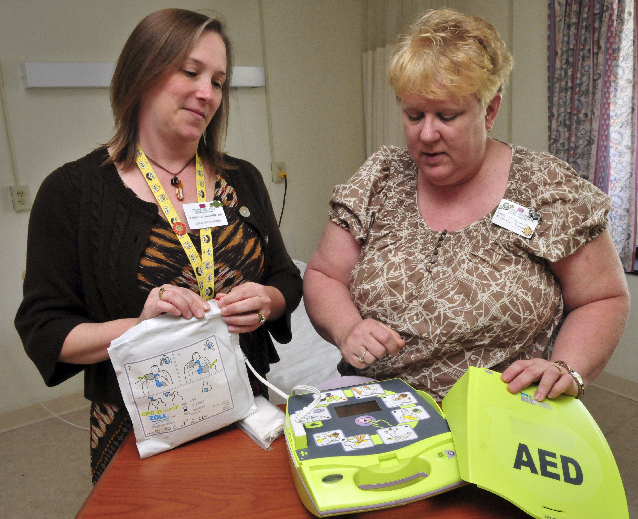
According to the American Heart Association, sudden cardiac arrest (“SCA”) is a leading cause of death in the United States. It is estimated that more than 350,000 lives are taken each year due to the abrupt loss of heart function. However, with technological advances, the number of deaths due to SCA have been lowered through the use of an automated external defibrillator (“AED”). An AED is a portable medical instrument that delivers an electrical impulse to the heart to disrupt and correct an otherwise fatal irregular heartbeat (arrhythmia) and allows a normal rhythm to resume. Although AEDs have been credited with saving countless lives by making it possible for non-medical individuals to respond to a medical emergency, the question must be asked: “Is the liability worth the risk?”

The purchase and availability of AEDs is controlled by state and federal laws and regulations. Pursuant to Florida law, AEDs are required to be installed in public schools, dental offices, and assisted living facilities. AEDs are optional in state parks and state owned or leased facilities. There is no requirementthat community associations in Florida install AED devices on association property and/or association fitness facilities. Although not legally required, there is a growing trend of community associations considering installing AEDs on association property to better protect their residents. When considering whether or not to install an AED device, associations must ensure that all parties (i.e., association management, board of directors, residents, and any other authorized user) understand the potential liability associated with the use of an AED and the protections afforded to them under Florida law.

Continue reading

Tags: , , ,