SFPMA

SFPMA Industry Articles | news, legal updates, events & education! 

Find Blog Articles for Florida’s Condo, HOA and the Management Industry. 

THE NEW CONDO LAWS —- MANDATORY INSPECTIONS – PART ONE & PART TWO

THE NEW CONDO LAWS —- MANDATORY INSPECTIONS – PART ONE & PART TWO

  • Posted: Jun 14, 2022
  • By:
  • Comments: Comments Off on THE NEW CONDO LAWS —- MANDATORY INSPECTIONS – PART ONE & PART TWO

Let’s start discussing the new condominium laws that go into effect on July 1st.  We won’t cover them all in one week, so look forward to next week’s blog as well.

IF YOU HAVE A MANAGEMENT COMPANY the statute says:

If a community association manager or a community association management firm has a contract with a community association that has a building on the association’s property that is subject to s. 553.899, (the Mandatory Inspections statute) the community association manager or the community association management firm must comply with that section as directed by the board.

This is a weird provision to me.  Clearly, it’s warning managers and management companies to comply with the new mandatory inspection statute. But it also says “as directed by the board.”  What does that mean?  Suppose the board tells the manager that they are deliberately not complying with the new mandatory inspection statute? Does that get the management company off the hook?  Can the management company now sit back and do nothing?  I certainly don’t think that’s the intent of the statute, but it should definitely be clearer.  In any event, at least to me, the management company must not hinder the association’s efforts to comply with the new mandatory inspection statute.  If I were a manager or management company, I would document my efforts thru e-mails to all of the Board members urging them to comply and reminding them of their responsibility to comply with the new mandatory inspection requirements.

Remember, prior to this new law becoming effective, only Dade and Broward had mandatory / structural inspection requirements.  Wellwe now have in every Florida county something called milestone inspections — and there is part one and part two.

In every county in Florida, your first milestone/structural  inspection is after 30 years and every ten years thereafter.  But, if your condo is ON THE COAST or within three miles of the coast, your first milestone/structural inspection is AFTER TWENTY FIVE YEARS AND EVERY TEN YEARS THEREAFTER. And this applies to every condo or co-op that is three stories or more in height by December 31 of the year in which the building reaches 30 years of age

The structural inspection of a building, including an inspection of load-bearing walls and the primary structural members and primary structural systems, must be done by by a licensed architect or engineer authorized to practice in this state for the purposes of attesting to the life safety and adequacy of the structural components of the building and, to the extent reasonably possible, determining the general structural condition of the building as it affects the safety of such building, including a determination of any necessary maintenance, repair, or replacement of any structural component of the building.

If the building’s certificate of occupancy was issued on or before July 1, 1992, meaning that you are already 30 years old, the building’s initial milestone inspection must be performed before December 31, 2024.


Here is what’s required in a Phase One Inspection:

PHASE ONE  (a) For phase one of the milestone inspection, a licensed architect or engineer authorized to practice in this state shall perform a visual examination of habitable and nonhabitable areas of a building, including the major structural components of a building, and provide a qualitative assessment of the structural conditions of the building. If the architect or engineer finds no signs of substantial structural deterioration to any building components under visual examination, phase two of the inspection, as provided in paragraph (b), is not required.

In all candorin a post Champlain Towers worldif I’m the phase one guy — I don’t want to be sued for saying this building is in perfect shape and doesn’t even need a phase two inspection.  I think the Phase One Inspection will Always result in the First architect or engineer calling for a Phase Two study.  What does he or she have to lose?


MANDATORY BUILDING INSPECTIONS – PART TWO

By Eric Glazer, Esq.

So last week we discussed the fact that the change in the law will now require every condominium building in the state that is 3 stories or higher and at least 30 years old (25 years old if within 3 miles of the coast) to undergo a Phase One inspection, every 10 years, by a licensed architect or engineer who is looking for visual signs of structural damage to the building.

Now if I’m the guy doing the Phase One Inspection, it’s pretty likely that I’m going to find something that requires a Phase Two inspection.  Why not?  Is it worth the potential liability for saying the building is fine and then someone is injured or killed because of a structural defect?  Of course not.  So count on lots of Phase Two Inspections.  Here is what that entails:


PHASE TWO – Only If found to be necessary after the Phase One Inspection

(b) A phase two of the milestone inspection must be performed if any substantial structural deterioration is identified during phase one. A phase two inspection may involve destructive or nondestructive testing at the inspector’s direction. The inspection may be as extensive or as limited as necessary to fully assess areas of structural distress in order to confirm that the building is structurally sound and safe for its intended use and to recommend a program for fully assessing and repairing distressed and damaged portions of the building. When determining testing locations, the inspector must give preference to locations that are the least disruptive and most easily repairable while still being representative of the structure. An inspector who completes a phase two milestone inspection shall prepare and submit an inspection report pursuant to subsection (8).

(8) Upon completion of a phase one or phase two milestone inspection, the architect or engineer who performed the inspection must submit a sealed copy of the inspection report with a separate summary of, at minimum, the material findings and recommendations in the inspection report to the condominium association or cooperative association, and to the building official of the local government which has jurisdiction. The inspection report must, at a minimum, meet all of the following criteria:

(a) Bear the seal and signature, or the electronic signature, of the licensed engineer or architect who performed the inspection.

(b) Indicate the manner and type of inspection forming the basis for the inspection report.

(c) Identify any substantial structural deterioration, within a reasonable professional probability based on the scope of the inspection, describe the extent of such deterioration, and identify any recommended repairs for such deterioration.

(d) State whether unsafe or dangerous conditions, as those terms are defined in the Florida Building Code, were observed.

(e) Recommend any remedial or preventive repair for any items that are damaged but are not substantial structural deterioration.

(f) Identify and describe any items requiring further inspection.

THE ASSOCIATION’S RESPONSIBILITY

(9) The association must distribute a copy of the inspector-prepared summary of the inspection report to each condominium unit owner or cooperative unit owner, regardless of the findings or recommendations in the report, by United States mail or personal delivery and by electronic transmission to unit owners who previously consented to receive notice by electronic transmission; must post a copy of the inspector-prepared summary in a conspicuous place on the condominium or cooperative property; and must publish the full report and inspector prepared summary on the association’s website, if the association is required to have a website.

 (10) A local enforcement agency may prescribe timelines and penalties with respect to compliance with this section.

(11) A board of county commissioners may adopt an ordinance requiring that a condominium or cooperative association schedule or commence repairs for substantial structural deterioration within a specified timeframe after the local enforcement agency receives a phase two inspection report; however, such repairs must be commenced within 365 days after receiving such report. If an association fails to submit proof to the local enforcement agency that repairs have been scheduled or have commenced for substantial structural deterioration identified in a phase two inspection report within the required timeframe, the local enforcement agency must review and determine if the building is unsafe for human occupancy.

The bottom line is that if forced to do a Phase One inspection, you can ensure you will be required to do a Phase Two Inspection.  The Phase Two Inspection will be costly and the architect or engineer performing the study has full reign over the property.  What they say needs fixing, needs fixing.  And what do they have to lose in stating that certain structural repairs should be made?  On the other hand, they have a lot to lose if they don’t recommend a fix and catastrophe strikes.  Rest assured that Phase Two Study will require repairs and they won’t come cheap.

[AdSense-A]


Tags: , ,
WHO REPAIRS THE INCIDENTAL DAMAGES CAUSED BY THE ASSOCIATION? Article by KBR Legal

WHO REPAIRS THE INCIDENTAL DAMAGES CAUSED BY THE ASSOCIATION? Article by KBR Legal

  • Posted: Jun 14, 2022
  • By:
  • Comments: Comments Off on WHO REPAIRS THE INCIDENTAL DAMAGES CAUSED BY THE ASSOCIATION? Article by KBR Legal

WHO REPAIRS THE INCIDENTAL DAMAGES CAUSED BY THE ASSOCIATION?

 Imagine: the association has just informed you it is set to begin a massive concrete restoration project. As part of the project, the contractor will need access to the rebar beneath the concrete slab connected to (or in legalese, “appurtenant to”) your unit’s balcony. To access the balcony slab, the contractor will have to remove the custom Italian tiles you just installed on your balcony. Who is responsible for the costs of the removal? Who is responsible to replace the tiles? The answers to these questions will largely depend on whether the governing documents of the association include an “incidental damage clause” and the specific circumstances of the situation, too.
In its most simplistic sense, an incidental damage clause in the declaration means that the association is responsible to repair any “incidental damage” caused by the association’s exercise of its maintenance, repair, and/or replacement responsibility. However, the existence or absence of such language is not always dispositive as to the repair responsibility. This is similar to “i” before “e” unless after “c” as there always seem to be exceptions.

For example, the repair and replacement obligation of the association may be limited only to damage caused to the unit and not cover any owner improvements to limited common elements, such as the balcony; or the obligation may be limited to damage to improvements only as originally installed by the developer, too. Whether the association or the owner will be responsible to repair the damage is highly fact-specific and will depend on the exact language in the governing documents of the association. Arbitration decisions of the Division of Florida Condominiums, Timeshares, and Mobile Homes (the Division), discussed below, provide some guidance as to when the association may be responsible for incidental damage and when the owners will be responsible to repair same. That said, bear in mind that such decisions are not precedential and in addition only apply to the parties in the arbitration that resulted in the Division’s order. However, it does provide a good understanding of how the Division may rule in a similar circumstance.

As discussed above, where the governing documents contain incidental damage language, and the association damages a portion of the unit while conducting its maintenance, repair, and replacement responsibility, the association is likely responsible for the repair. This is illustrated in Rock v. Point East Three Condominium Corporation, Inc., Arb. Case No. 99-0220, Final Order (September 29, 2000).

In Rock, the association removed a shelf located under a sink and several wall tiles in order to repair rough plumbing in the common elements. The association replaced the wall tiles but did not replace the shelf after the repairs were completed. The unit owner sought, among other things, to have the association replace the shelf. The unit owner also sought to have the association repair tiles in the dining room of the unit which had “popped up” as a result of an unrelated water leak. The association’s declaration of condominium provided that the association was responsible to repair conduits and rough plumbing and provided that “[a]ll incidental damage caused to an apartment by such work shall be promptly repaired by the association.” The arbitrator ordered the association to replace the shelf, holding that the incidental damage to the shelf was caused by the repair to the rough plumbing, which was the association’s duty to maintain. As such, the incidental damage language of the declaration applied to the shelf. However, the arbitrator held the association was not responsible to replace the tiles in the dining room, as the damage to the tiles was not incidental to any work the association performed to repair the rough plumbing.

Therefore, Rock clearly establishes that while an association is responsible to repair portions of the unit that are damaged as a result of the association’s exercise of its maintenance, repair, and replacement obligation, the damage must be incidental to the association’s work.

If the declaration requires the association to repair or replace incidental damage to the unit, the association will likely be responsible to repair and replace owner modifications to the units, too, unless the declaration provides otherwise. In Brickell Town House Association, Inc. v. Del Valle, et al., Arb. Case No. 95-0133 Final Order (September 12, 1995), the association was required to remove certain owner-installed alterations to the unit in order to access and maintain the common elements. The unit owners asserted that the association was responsible to replace the alterations in accordance with the incidental damage provision in the declaration of condominium. The arbitrator agreed, holding that the association was required to reimburse the owners for the expenses required to restore the units to the condition which existed immediately prior to the association’s reconstruction activities, including betterments which were added by the unit owners since the original construction of the units by the developer.

In accordance with the holdings in Brickell and Rock, if the governing documents provide that the association is responsible for incidental damage to the unit, the association will likely be responsible to repair any portions of the unit damaged by the association’s exercise of its maintenance, repair, and replacement responsibility, including alterations made by owners (unless specifically provided for otherwise).

On a different note, if the governing documents of the association contain incidental damage language which is specific to damage caused to units, then the association will not be responsible for incidental damage caused to owner modifications to the common elements or the limited common elements. Similarly, the association will likely not be responsible to repair any damage to any owner alteration to a unit where the declaration required association approval and the owner failed to obtain same prior to installation of the improvement.

In Continental Towers, Inc. v. Nassif, Arb. Case No. 99-0866, Summary Final Order (November 24, 1999), the association needed to conduct concrete restoration, waterproofing, and other repairs to the unit owner balconies. The unit owners had installed tiles on the balcony and argued that the association was responsible for the replacement of the tile because the declaration provided that the association was responsible for incidental damage to the unit. However, the balcony was part of the common elements, not the unit. Therefore, the incidental damage language in the declaration did not apply to the tile, and, absent any other agreement between the parties, the association had no responsibility to repair and replace same. The arbitrator concluded that:

…in the absence of an agreement between the parties or a controlling provision of the documents, ‘it cannot be said from the mere fact of association permission that the association has assumed the perpetual obligation to remove and replace the personal property when necessary to repair and replace the common elements.’ The arbitrator adopts the rationale articulated in the Carriage House case. Since the balcony is a part of the common elements, and the tile was not part of the original construction, the unit owners are responsible for its removal and replacement.

Further, where there are owner modifications which were not approved as required by the declaration, the association will likely not be responsible to repair notwithstanding the incidental damage requirement set out in the declaration. In Harrison v. Land’s End Condominium Association, Inc., Arb. Case No. 94-0298, Final Order (June 27, 1995), the association was required to remove an owner-installed balcony finish in order to effectuate repairs to the balcony slab. In this case, the balcony was considered part of the unit, and the declaration contained a provision requiring the association to repair incidental damage to the unit. The declaration also required the owner to obtain approval of the association before making any alterations to the bal-cony. However, the owner never obtained such approval. Therefore, despite the incidental damage provision, the arbitrator determined that the association was not responsible to replace the balcony finish because the owner did not obtain association approval as required by the declaration.

Therefore, if an alteration requires association approval and an owner fails to obtain such approval, the association will far more likely not be responsible to repair any incidental damage to the alteration notwithstanding the existence of incidental damage language.

Generally, the association’s repair obligation is limited to actual damage caused to the unit as a result of its maintenance, repair, and replacement obligation. If the unit owners are required to vacate their unit in order for the association to effectuate the repairs, the association is not generally responsible to reimburse the owners for the costs of same. However, as the Brickell case, discussed above, shows us, that is not always the case. In Brickell, the owners also argued that the association was responsible to reimburse them for the costs they incurred in vacating the unit for the repairs. In this case, the association chose to proceed with a method of repairing damage to common element pipes from the interior of the units, which required the unit owners in the affected units to vacate. The association did not explore an option in which the repairs could be made from the exterior, which would permit the unit owners to remain in the unit. The arbitrator agreed with the owners and ordered the association to pay for the costs the owners incurred in vacating the units. As you can glean, this case is very fact specific, which led to this outcome.

In an order denying the association’s motion for rehearing, the arbitrator in Brickell, reiterated its earlier decision that the board, within its business judgment, decided to proceed with a method of reconstruction that required the removal of the owners. Therefore, the expenses of those owners are a common expense to be borne by all owners. The important consideration in this case was the fact that the association proceeded with the repairs from the interior without exploring options to proceed from the exterior. The arbitrator notes that the order should not be construed to mean that an association would be responsible for accommodations for all unit owners in the event that the condominium building had to be tented for termites, or if a hurricane rendered the building uninhabitable. In those cases, all owners would be required to vacate the units, and there can be no other decision of the board. Additionally, in Brickell, if there was no way for the association to make the repairs that would allow the owners to remain in unit, the arbitrator’s decision may have been different. How-ever, as the association chose to displace certain unit owners to effectuate the repairs without exploring any other options, the association was responsible for the owners’ costs to vacate.

Finally, even when there is no incidental damage language in the governing documents, the association may be responsible for damage to the units if the association fails to conduct necessary maintenance to the common elements, when the association knows that such maintenance is necessary. In Dibiase v. Beneva Ridge, Arb. Case No. 92-0210, Final Order (January 19, 1994), the association was aware that the common element parking area was consistently flooding into an owner’s unit. The association retained an engineer to conduct a drainage study, and the engineer recommended several remedial measures to address the drainage problem. While the association took some remedial steps, the association did not follow through on the study’s recommendations. The arbitrator concluded that the association was responsible for the owner’s costs to repair the unit caused by the flooding. The arbitrator explained that, while “[n]o association is required to protect the property against a 100-year storm…” the association was responsible to take those steps reasonably necessary to protect the condominium property.

As the association had an expert report that advised if the association did not take certain remedial measures, the damage to the condominium property would continue, the association had an obligation to make the repairs. As the association failed to follow the report, it was responsible for the damage caused to the unit.

In accordance with the decision in Dibiase, if the association receives a report from an expert advising that certain repairs must be performed, and the association fails to take action, the association may be responsible for the costs of any damage to the units caused by its failure to act.

As you have likely gleaned from the foregoing discussion, it can be difficult to determine who is responsible to repair and replace improvements damaged during the association’s exercise of its maintenance, repair, and replacement obligations. Given the complexities of the issue, your association should consult with its legal counsel with any inquiries regarding the association’s responsibility for incidental damage.

Kaye Bender Rembaum

We are dedicated to providing clients with an unparalleled level of personalized and professional service regardless of their size and takes into account their individual needs and financial concerns. Our areas of concentration include

1200 Park Central Boulevard South, Pompano Beach, FL. Tel: 954.928.0680
9121 North Military Trail, Suite 200, Palm Beach Gardens, FL. Tel: 561.241.4462
1211 N. Westshore Boulevard, Suite 409, Tampa, FL. Tel: 813.375.0731
  • Assessment collections
  • Construction defect claims
  • Contract drafting and negotiation
  • Cooperatives
  • Covenant enforcement
  • Fair Housing
  • Land Use and Zoning
  • Litigation and Arbitration
  • Master/ Sub Association Issues
  • Pre and Post Turnover Planning
  • Real Estate and Title Concerns
  • Review and amendment of covenants

[AdSense-A]


Tags: ,
Legislative Changes Opens the Door to New Options for Resolving “Disputes” In Condominium and Cooperative Associations By: Jennifer Horan, Esq.

Legislative Changes Opens the Door to New Options for Resolving “Disputes” In Condominium and Cooperative Associations By: Jennifer Horan, Esq.

  • Posted: Jun 14, 2022
  • By:
  • Comments: Comments Off on Legislative Changes Opens the Door to New Options for Resolving “Disputes” In Condominium and Cooperative Associations By: Jennifer Horan, Esq.

Legislative Changes Opens the Door to New Options for Resolving “Disputes” In Condominium and Cooperative Associations

By: Jennifer Horan, Esq. / Becker

Earlier this year, the Florida legislature passed changes to Florida’s Condominium Act (Chapter 718) the Cooperative Act (Chapter 719), and the Homeowners Association Act (Chapter 720), Florida Statute. These amendments went into effect on July 1, 2021 and opened the door to allow condominium and cooperative associations a new option for addressing disputes between unit owners and the association through presuit mediation. Previously, disputes between condominium associations and unit owners (or cooperatives and unit owners) were required to be submitted to arbitration through the Division of Florida Condominiums, Timeshares, and Mobile Homes of the Department of Business and Professional Regulation (the “Division”) before filing a lawsuit regarding any of the following issues:


(a) The authority of the board of directors, under this chapter or association document, to:

1. Require any owner to take any action, or not to take any action, involving that owner’s unit or the appurtenances thereto.

2. Alter or add to a common area or element.

(b) The failure of a governing body, when required by this chapter or an association document, to:

1. Properly conduct elections.

2. Give adequate notice of meetings or other actions.

3. Properly conduct meetings.

4. Allow inspection of books and records.

(c) A plan of termination.


Before the 2021 legislative changes, the parties to an arbitration could request a referral to mediation; however, the request for mediation came with a potential “cost.” If the parties attended mediation but were unable to resolve their dispute, unless all parties agreed in writing to continue the arbitration proceeding, the arbitration was dismissed. The parties were then forced decide whether to proceed with filing a lawsuit to resolve their dispute. However, with the new legislative changes, a party to a dispute in a condominium or cooperative association has the option of either petitioning the Division for nonbinding arbitration or initiating presuit mediation. Now that there are options to consider when it comes to alternative dispute resolution, it is important to know the difference between arbitration and mediation.


Mediation and arbitration are both forms of “alternative dispute resolution” or methods of resolving disputes outside of a courtroom. Despite what you may see on TV, lawsuits are often extremely time consuming and expensive; not all disputes can be resolved in a sixty-minute time slot like they are in Law & Order. As such, alternative dispute resolution can provide a more expedient and less costly option to formal litigation.


Mediation is a confidential process that is conducted with an independent, trained, neutral third-party mediator. The mediator does not give legal advice and does not make any decisions regarding the dispute. Instead, the mediator acts to facilitate discussion between the parties and assists them in reaching an agreed upon resolution. In reaching an agreement, the parties have some degree of flexibility and can come up with creative solutions that may not be available remedies in court. In mediation, the parties are in control of their own destiny; they cannot be forced to accept a resolution in mediation. However, if they are able to resolve their dispute, the parties will document their agreement in the form of a written settlement agreement which will be binding in the same manner as a contract.


Unlike mediation, arbitration is more similar to litigation. A case in arbitration begins with the filing of a petition for arbitration. The petition must cite, among other things, that the petitioner gave the respondent advance written notice of the specific nature of the dispute; a demand for relief, and a reasonable opportunity to comply; and a notice of intention to file an arbitration petition or other legal action in the absence of a resolution of a dispute. Once the petition is reviewed by the Division, a copy of the petition is served to all of the respondents. The arbitrator is typically required to conduct a hearing within thirty (30) days of the case being assigned unless a continuance is granted for good cause shown. You can call witnesses and present evidence at an arbitration hearing; however, the arbitration hearing typically has a less formal “feeling” than a trial. There will be a ruling where one party “prevails”, as determined by an arbitrator. An arbitration decision is then generally rendered within thirty (30) days after a final hearing. The arbitration decision is only final in those disputes in which the parties have agreed to be bound by the arbitrator’s decision. However, an arbitration decision can also become final if a complaint for a trial de novo is not filed in court within thirty (30) days of the arbitration decision.


Arbitration does not give parties the flexibility and control over the resolution process that is provided in mediation. However, arbitration does provide a forum for resolving disputes that is typically more efficient and more cost effective than litigation. If you find yourself involved in dispute that is subject to alternative dispute resolution under the Condominium Act (Chapter 718) or the Cooperative Act (Chapter 719), Florida Statutes, you should discuss with your association’s legal counsel whether arbitration or mediation provides a better forum to resolve your particular issue.


Jennifer Horan

Shareholder

Tags: , ,
Kaye Bender Rembaum is a full service commercial law firm dedicated to the representation of community associations throughout Florida.

Kaye Bender Rembaum is a full service commercial law firm dedicated to the representation of community associations throughout Florida.

  • Posted: May 05, 2022
  • By:
  • Comments: Comments Off on Kaye Bender Rembaum is a full service commercial law firm dedicated to the representation of community associations throughout Florida.

Kaye Bender Rembaum is a full service commercial law firm dedicated to the representation of community associations throughout Florida. Under the direction of attorneys Robert L. Kaye, Esq., Michael S. Bender, Esq., and Jeffrey A. Rembaum, Esq. Kaye Bender Rembaum provides its clients with an unparalleled level of personalized and professional service regardless of their size and takes into account their individual needs and financial concerns. They have offices in Pompano Beach, Palm Beach Gardens and Tampa, and in Miami-Dade by appointment.

The associates of Kaye Bender Rembaum establish relationships with clients to understand their needs and goals. Kaye Bender Rembaum assists clients in all matters of Association representation including, but not limited to, collection of assessments, contract negotiation, covenant review and amendment, covenant enforcement and construction defect claims. Kaye Bender Rembaum also keeps clients up-to-date on new developments in the law and how they personally affect them. The firm provides prompt, effective, high quality, cost-efficient and understandable legal advice and services to a diverse client base. Associates strive to help clients operate and administer their communities better and to educate them on their responsibilities and duties under Florida law and their governing community documents. Robert Kaye, Michael Bender and Jeffrey Rembaum are industry leaders who are often sought out by public policy makers and the media for advice and commentary on community association law.

The information you obtain at this site is not, nor is it intended to be, legal advice. You should consult an attorney for individual advice regarding your own situation. Thank you for your interest in Kaye Bender Rembaum.


Practice Areas

Kaye Bender Rembaum is dedicated to providing clients with an unparalleled level of personalized and professional service regardless of their size and takes into account their individual needs and financial concerns. Our areas of concentration include:

  • Assessment Collections
  • Construction Defect Claims
  • Contract Drafting and Negotiation
  • Covenant Enforcement
  • Fair Housing
  • Land Use and Zoning
  • Litigation and Arbitration
  • Master / Sub Association Issues
  • Pre and Post Turnover Planning
  • Review and Amendments of Covenants

Contact Us

Tags:
Statutory Meeting Requirements by Becker

Statutory Meeting Requirements by Becker

  • Posted: May 04, 2022
  • By:
  • Comments: Comments Off on Statutory Meeting Requirements by Becker

Statutory Meeting Requirements

 POSTED ON 

Many condominium and homeowners’ associations’ activities are required to have a certain amount of transparency. One way that association activities are made transparent is through statutory provisions requiring most kinds of meetings to be open and noticed to the membership. In fact, applicable laws governing the operation of condominium and homeowners’ associations allow board members to communicate by email but prohibits them from voting on issues by email.

Notably, a gathering of a quorum of board members to conduct association business is considered a board meeting (whether taking place in person or by real-time electronic means) and is required to be noticed and open to association members. However, two important exceptions apply. Namely, meetings of the board or an association committee at which the association’s attorney is participating for the purpose of rendering advice upon proposed or pending litigation are not required to be open to association members. Similarly, board meetings held to discuss personnel matters are also not required to be open to association members.

Association members are entitled to speak at open meetings on “designated items” (HOA) or an item on the agenda in a condominium. However, the rights of members to speak at meetings is subject to any rules adopted by the association governing the frequency, duration, and manner of member statements. The right to attend open meetings includes the right to tape record or videotape them, as long as such recording activity is not disruptive. Furthermore, the Division of Florida Condominiums has adopted rules regarding recording condominium association meetings (found in Fla. Admin. Code Rule 61B-23.002(10)), and the Homeowners’ Association Act provides that homeowners’ associations may adopt their own pertaining to recording homeowners’ association meetings.

As such, there are statutory meeting requirements that must be followed for board meetings which must be kept in mind when an association is adopting or changing its procedures. Failing to follow the basic statutory requirements may result in problems. Questions about board meetings, committee meetings, which have their own set of requirements, and members’ meetings should be directed to legal counsel for guidance.


As leaders in Community Association Law, we not only helped write the law – we also teach it.

Did you know Becker provides over 200 educational classes per year throughout the State of Florida on a variety of topics ranging from board member certification to compliance, and everything in between? Our most popular classes are now available online!

To view our entire class roster, visit:
beckerlawyers.com/classes

Tags: ,
AMAZING PODCAST THAT DISCUSSES THE COLLAPSE IN SURFSIDE IN DETAIL AND FROM SO MANY DIFFERENT ANGLES.

AMAZING PODCAST THAT DISCUSSES THE COLLAPSE IN SURFSIDE IN DETAIL AND FROM SO MANY DIFFERENT ANGLES.

  • Posted: Apr 28, 2022
  • By:
  • Comments: Comments Off on AMAZING PODCAST THAT DISCUSSES THE COLLAPSE IN SURFSIDE IN DETAIL AND FROM SO MANY DIFFERENT ANGLES.

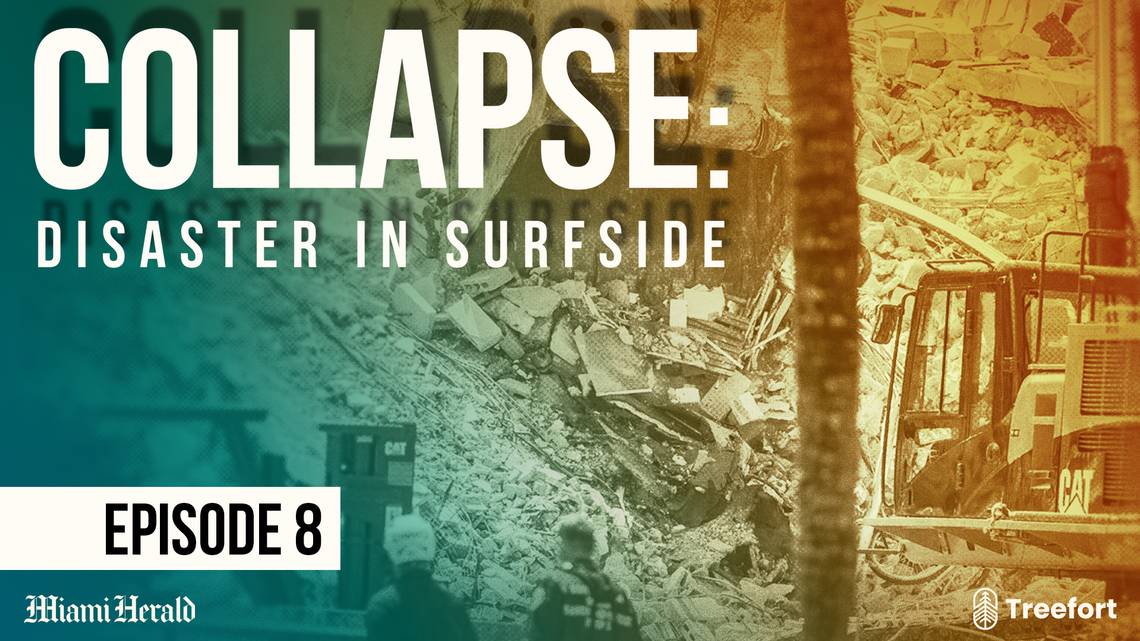
THE MIAMI HERALD HAS PREPARED AN AMAZING PODCAST THAT DISCUSSES THE COLLAPSE IN SURFSIDE IN DETAIL AND FROM SO MANY DIFFERENT ANGLES.

IN TODAY’S MIAMI HERALD, ERIC GLAZER IS INTERVIEWED REGARDING THE LAWS THAT LED TO THE DISASTER AND HOW THE LEGISLATURE IGNORED PRIOR WARNINGS.

TO LISTEN TO THE PODCAST CLICK HERE


EPISODE 8: THE RULES ARE DIFFERENT HERE Almost a year after the tragic fall of Champlain Towers South in Surfside, the Florida Legislature has done nothing to prevent another disaster. It’s an approach often taken in Tallahassee: Miami-Dade County’s problems are its own to fix. But the flaws at Champlain South aren’t necessarily limited to Miami-Dade, or even Florida. They could be present in older waterfront buildings around the world.

Episode 8: The Rules Are Different Here of Collapse: Disaster in Surfside, a new podcast from Miami Herald/Treefort Media, shows listeners how the long-term consequences of the deadly accident are still up in the air — and explores how previous decades of inaction by lawmakers and the Champlain South condo board contributed to the collapse.

Listen to the Podcast and hear the interview with Eric Glazer.

Tags:
BOARD MEMBER to BOARD MEMBER EMAILS: ARE THEY OFFICIAL RECORDS?

BOARD MEMBER to BOARD MEMBER EMAILS: ARE THEY OFFICIAL RECORDS?

  • Posted: Apr 08, 2022
  • By:
  • Comments: Comments Off on BOARD MEMBER to BOARD MEMBER EMAILS: ARE THEY OFFICIAL RECORDS?

BOARD MEMBER to BOARD MEMBER EMAILS: ARE THEY OFFICIAL RECORDS?

On January 6, 2022, the Department of Business and Professional Regulation (DBPR), through the Division of Florida Condominiums, Timeshares, and Mobile Homes (Division), entered a Final Order Granting Petition for Declaratory Statement in the matter of In re: Petition for Declaratory Statement, James Hanseman, Petitioner (the Hanesman Declaratory Statement). In this Final Order, the Division Director (Chevonne Christian) stated that all board member to board member emails are official records of the association. Unfortunately, this Order was entered i) without regard to who owns the device from which the email was sent;

ii) without regard to whether the manager was included in the email chain; iii) without regard to whether the email was sent to a minority or majority of board members; and iv) without regard to the board members’ constitutional right of privacy. The decision does not consider the sacrosanct requirement that a quorum of board members is needed to conduct business. If a board member can enter into a conversation with a minority of the board without triggering a required meeting notice, then a board member should also be able to communicate, by any means, with a minority of the board, including email, without it rising to the level of being considered an official record of the association. However, given the scope of the Order, this will likely require an act of the Florida legislature to accomplish.

In general, a petition for declaratory statement may be used to resolve questions or doubts as to how the statutes, rules, or orders may apply to the petitioner’s particular circumstances. These statements are only binding upon the parties who join in the proceeding. The Division issues “declaratory statements” when requested by parties who are unclear about the applicability of portions of the Condominium Act, Chapter 718, Florida Statutes. Declaratory statements are formal written positions taken by the Division on the laws and rules the Division is authorized to enforce and interpret. Importantly, with regard to the Hanesman Declaratory Statement’s precedential value, it has none whatsoever. It only applies to the parties named in the Hanesman Declaratory Statement, which includes the petitioner, Mr. Hanseman, and the Wildewood Springs II-B Condominium Association Inc. This decision is merely persuasive authority, at best. In fact, the Division does not even have to follow their own written precedent. Yet, it is predictive as to how the Division will rule should a similar fact pattern be presented. So, beware!

The Hanesman Declaratory Statement could stand for the broader proposition that all director emails are official records of the association, or perhaps it stands for the narrower proposition that board member emails are not automatically excluded as an official association record merely because the emails were sent from a director’s private email address and privately owned computer. Time will tell, I hope. In the meantime, applying its broadest interpretation means that the Division has now opined that all director-to-director emails are official records. This broad interpretation means such emails must be produced in response to a member’s official records request, unless later excluded from production due to matters of privilege. This broad interpretation also means that for all requests to inspect the official records of the association, directors will have to search their own hard drives and provide copies to the manager or whoever is coordinating the inspection. If this broad interpretation is to be applied, it is yet another burdensome requirement for board members and could be viewed as an extreme overreach of a governmental administrative agency. In light of this possible interpretation and obligation to turn over board member to board member emails, who will want to serve on the board, now?

Let us examine the history of this important topic. On March 6, 2002, Sue Richardson, the Chief Assistant General Counsel of the DBPR, issued an opinion which provided that “[c]ondominium owners do have the right to inspect email correspondences between the board of directors and the property manager as long as the correspondence is related to the operation of the association and does not fall within the…statutorily protected exceptions…[The DBPR does not have] regulations expressly requiring archiving emails, but…if the email correspondence relates to the operation of the association property, it is required to be maintained by the association, whether on paper or electronically, under chapter 718, Florida Statutes.”

In Humphrey v. Carriage Park Condominium Association Inc. Arb. Case No. 2008-04-0230 (Final Order, March 30, 2009), the arbitrator of the Division ordered that

“…emails…existing…on the personal computers of individual directors…are not official records of the association…Even if directors communicate among themselves by email strings or chains, about the operation of the association, the status of the electronic communication on their personal computer would not change. Similarly, an email to an individual director or to all directors as a group, addressed only to their personal computers, is not a written communication to the association.”

The arbitrator reasoned that “[t]his must be so because there is no obligation to turn on [the] personal computer with any regularity, or to open and read emails before deleting them.”

Then, on July 1, 2014, the Florida Legislature amended s. 718.112(2)(c) to provide that board members may communicate via email. Just because the legislature clarified that directors may do so does not mean that such email communications should automatically be considered official records of the association. Board members are not publicly elected officials. Yet, the Division’s recent Hanseman Declaratory Statement creates a basis to conclude that the Division desires to hold a director’s email communications to the same standards.

A condominium association is a privately owned entity whose members elect representatives to effectuate the orderly operations of the association. Serving as a board member of a condominium association is not at all akin to holding public office, and in our opinion, board members should not be held to the same standard as that of elected officials. The last thing a community association board member needs is to be micromanaged by one or more cantankerous owners and the vocal minority.

In the Hanesman Declaratory Statement, Ms. Christian takes the position that because §718.111(12)(a), Fla. Stat., provides, in relevant part, that the “official records of the association” include “all of the written records of the association not specifically included in the foregoing which are related to the operation of the association,”

that nothing exempts records when created or transmitted with a board member owned device rather than association owned device.

She then applied what she referred to as the plain meaning of the term “writing,” referring to the definition of the term from Black’s Law Dictionary (11th ED. 2019), which provided “emails constitute a form of writing.”

In fact, had the Florida Legislature intended for emails from one board member to another to be considered official records subject to inspection, then when it amended Chapter 718.112, eff. July 1, 2018, to provide that “members of the board of administration may use email as a means of communication but may not cast a vote on an association matter via email,” the legislature could have clarified that such emails were considered a part of the official records. Obviously, the legislature did not do so. This can only mean that the legislature had no intent whatsoever for a director’s email sent from their personal computer to a minority of other board members to be considered an official record.

What is the end game of the Hanesman Declaratory Statement? The implications are far-reaching, indeed. Does this mean that text messages must be disclosed? What about communications on messaging apps such as WhatsApp and Signal? If not, why not? The logic is arguably the same. What about conversations held with a board member outside of a meeting—must the board member make a disclosure he or she had such conversation at the next noticed meeting? Where does it end?

It is rather common knowledge that there is already a mechanism in the law to acquire documents of every kind. It is called a “subpoena duces tecum” and is used in active litigation to compel production of documents. In this author’s opinion, that is the only circumstance in which a board member’s private emails must be produced, unless and until the Florida Legislature or an appellate court squarely addresses this issue.

As the phrase goes, “one step forward and two steps back.” In other words, while a board member can use email to communicate with a fellow board member, it may come with the steep price of later required disclosure. So, if you want to avoid email disclosure, you may want to consider using a phone to discuss matters. If you want to play it really safe, then be sure to only chat to a minority of board members, too. Until there is an appellate court decision or statutory law that squarely addresses email disclosure, please be sure to discuss these matters with your association’s attorney. In the meantime, perhaps consider using dedicated association-hosted email addresses for association-related emails.

Tags: , ,
Attorney-Client Privilege: Are Litigation-Related Communications Between An Association, Attorney, and Management Protected?

Attorney-Client Privilege: Are Litigation-Related Communications Between An Association, Attorney, and Management Protected?

  • Posted: Mar 24, 2022
  • By:
  • Comments: Comments Off on Attorney-Client Privilege: Are Litigation-Related Communications Between An Association, Attorney, and Management Protected?

Attorney-Client Privilege: Are Litigation-Related Communications Between An Association, Attorney, and Management Protected?

BY   / of Becker

The attorney-client privilege is one of the oldest and most respected privileges in the law. The purpose underlying this fundamental privilege is to ensure that clients receive accurate and competent legal advice by encouraging full disclosure to their lawyer without fear that the information will be revealed to others. The privilege covers written and oral communications and protects both individual and institutional clients including community associations.

However, the attorney-client privilege does not apply to every communication with an attorney and in certain circumstances can even be waived. For the privilege to exist, three requirements must be met: there must be a communication; the communication must have been intended to remain confidential; and the communication must have been made in the context of obtaining legal advice.

Pursuant to Florida’s Evidence Code, a communication between lawyer and client is “confidential” if it is not intended to be disclosed to third persons other than:

  1. Those to whom disclosure is in furtherance of the rendition of legal services to the client.
  2. Those reasonably necessary for the transmission of the communication.

Florida courts have stated that the second exception (i.e. those reasonably necessary for the transmission of the communication) applies to agents of the client. This is so because in Florida, all corporate powers are exercised by, or under the authority of, the association’s board of directors. Further, as an inanimate entity an association cannot speak directly to its lawyers and must instead act through agents.

A management company and its personnel are generally responsible for the day-to-day operations of the community, implementing directives of the board, and serving as a liaison between an association and its counsel. Although a reasonable interpretation of the Florida Evidence Code and case law implies that a property management company is likely an agent of the association, such a determination is not guaranteed.

However, there are steps that can be taken by the association and its counsel to support an assertion of privilege such as including language in their management contracts that expressly extends the attorney-client privilege from the association to include the manager. The association’s counsel can also prepare a general Board Resolution authorizing the management company and its employees to act as agents of the association where necessary to further communications with legal counsel.

Evidentiary privileges (such as the attorney-client privilege) are sacred protections in a court of law. It is imperative that proper measures are taken to ensure that said privileges are not compromised. If your association finds itself involved in a potential or pending litigation, the board needs to work closely with the association’s attorney to protect the privileges the law provides to keep confidential communications out of the hands of the wrong people.


John Stratton

John handles business litigation and appellate matters representing individuals and corporations across an array of industries. He has significant and successful litigation experience in complex commercial, corporate, land use, and condominium litigation, contract disputes, commercial loan workouts, and civil appellate proceedings in both state and federal appellate courts.


Tags:
LAST SURFSIDE-INSPIRED BILL FAILS – A Perfect Opportunity Lost

LAST SURFSIDE-INSPIRED BILL FAILS – A Perfect Opportunity Lost

  • Posted: Mar 24, 2022
  • By:
  • Comments: Comments Off on LAST SURFSIDE-INSPIRED BILL FAILS – A Perfect Opportunity Lost

As a result of the 2022 Florida legislative session, there will be no new statutes requiring mandated building/engineering inspections, no statutory changes to budgeting procedures, no mandated reserve study requirements, and no statutory changes to required disclosures.

While only a very few Florida counties have mandated in their code of ordinances that older condominium buildings have life-safety inspections, that does not mean required maintenance and proper planning can be otherwise avoided elsewhere. Board members must exercise their fiduciary duties with due care and due diligence. Voluntary engineering inspections and professional reserve studies should be considered to take place on a regular schedule. Maintenance, repairs, and replacements should be budgeted and funding sources properly identified.

As often explained by Board Certified attorney Lisa Magill, “is the law the only reason you stop at a red light? Probably not. You stop because there’s a likelihood a truck will smash into you from the side.” In other words, common sense should prevail. All condominium unit owners know that one day the roof, air conditioners, and water and cooling towers will need to replaced, the building will need to painted to ensure a water tight seal remains intact, the pool will need re-surfacing, and the parking areas and asphalt will need attention, too. Perhaps one of most expensive repairs, which is rarely discussed, let alone planned for and budgeted in advance, that even the Florida Statutes do not specifically mention it by name, is concrete restoration, which can cost tens of thousands of dollars, and often such repairs cost millions of dollars depending on the extent of the repairs. But, such repairs are a given. It is not a matter of “if” but rather only a matter of “when” these repairs will be required.

The only way to avoid a revolt of the membership when explaining the upcoming multi-million dollar assessment is to lessen the blow by having some, if not all, of the needed monies already saved in a reserve account. Section 718. 112(1)(f)(2)(a) provides that, “[i]n addition to annual operating expenses, the budget must include reserve accounts for capital expenditures and deferred maintenance. These accounts must include, but are not limited to, roof replacement, building painting, and pavement resurfacing, regardless of the amount of deferred maintenance expense or replacement cost, and any other item that has a deferred maintenance expense or replacement cost that exceeds $10,000. The amount to be reserved must be computed using a formula based upon estimated remaining useful life and estimated replacement cost or deferred maintenance expense of each reserve item. The association may adjust replacement reserve assessments annually to take into account any changes in estimates or extension of the useful life of a reserve item caused by deferred maintenance.”

While a majority of the quorum of the membership can vote to waive or reduce reserves, this can only occur if the board of directors provides the membership such opportunity. For example, when voting to reduce reserves the percentage by which the required reserve can be reduced is decided in advance by the board and then presented to the membership for the vote. In light of the Champlain Towers South disaster, boards of directors should put considerable thought into these decisions.

On March 12, Ann Greggis of Florida Politics reported that “the Legislature’s inability to pass any legislation updating condo regulations in the wake of last summer’s disaster that killed 98 people stunned observers…For this Session, nine bills sought to change rules regarding condominium associations…An estimated two million people live in 912,000 Florida condo units that are 30-years or older. Another 131,773 units are 20 to 30 years old, according to the Florida Engineering Society & American Council of Engineering Companies of Florida….The executive director of the engineering society and council called the failure to pass any legislation this year a ‘missed opportunity,’ according to a news release.”

On March 11, Jon Schuppe and Phil Prazan, NBC 6 South Florida reported that, “[i]n the nine months since 98 people died in the collapse of a Surfside, Florida, condominium, state lawmakers have pledged to pass measures that could help avoid a similar disaster.

On Friday, they failed.

Negotiations between the Florida Senate and House of Representatives, both controlled by Republicans, broke down, with the two sides unable to agree on a bill that would require inspections of aging condo buildings and mandate that condo boards conduct studies to determine how much they need to set aside for repairs. The talks were undone by a disagreement over how much flexibility to give condo owners in the funding of those reserves.”

Never has the term “sausage factory” been more appropriate to describe the 2022 team of Florida legislators who failed to pass meaningful legislation that could have helped thwart another Champlain Towers South disaster. But, just because the legislature failed in doing so (for this year), that does not mean, as a board member, that you can fail, too. Make a commitment to your condominium community to plan for the future. Adopt a board resolution, or even amend the condominium declaration, to have required building inspections and reserve studies. In addition, if your association is waiving reserves year after year, stop it and start saving for the future. You will be glad you did.


Tags:
LEGISLATIVE ALERT! DON’T LET MANDATORY CONDOMINIUM EDUCATION DIE!

LEGISLATIVE ALERT! DON’T LET MANDATORY CONDOMINIUM EDUCATION DIE!

  • Posted: Mar 20, 2022
  • By:
  • Comments: Comments Off on LEGISLATIVE ALERT! DON’T LET MANDATORY CONDOMINIUM EDUCATION DIE!

LEGISLATIVE ALERT!

DON’T LET MANDATORY CONDOMINIUM EDUCATION DIE!


AT THE MOMENT, THERE ARE TWO CONDO BILLS MAKING ITS WAY TO THE FINISH LINE THIS WEEK. ONLY ONE WILL GET THERE.
SB 1702 – CONTAINS THE LANGUAGE THAT I DRAFTED, SENATOR RODRIGUEZ FILED AND REPRESENTATIVE BORERRO FILED, REQUIRING THAT CONDOMINIUM BOARD MEMBERS TAKE AN EDUCATIONAL CLASS AND SIGN AN AFFIDAVIT STATING THEY READ THEIR GOVERNING DOCUMENTS.
HB 7069 – DOES NOT CONTAIN THE EDUCATIONAL REQUIREMENT AND BOARD MEMBERS CAN STILL GET CERTIFIED SIMPLY BY SIGNING THAT DUMB FORM STATING THAT THEY READ THEIR GOVERNING DOCUMENTS.
IN A POST SURFSIDE WORLD I CAN ASSURE YOU, EDUCATION OF CONDOMINIUM BOARD MEMBERS WILL SAVE LIVES. IF HB 7069 PASSES, THE STATE OF FLORIDA IS ABOUT TO PASS DOZENS OF NEW CONDOMINIUM LAWS RELATED TO SAFETY WITHOUT ANY BOARD MEMBER HAVING THE OBLIGATION TO LEARN ANY OF THESE NEW LAWS. HOW INSANE IS THIS?
PLEASE CONTACT THE PRESIDENT OF THE SENATE WILTON SIMPSON AND:
THE SPEAKER OF THE HOUSE CHRIS SPROWLS BY CLICKING ON THEIR NAMES AND TELLING THEM TO ENSURE THAT THE FLORDA LEGISLATURE PASS
SB- 1702 BECAUSE CONDO BOARD MEMBERS MUST BE REQUIRED TO BE EDUCATED IN A POST CHAMPLAIN TOWERS WORLD AND THAT EDUCATION WILL SAVE LIVES.
GUYS……..WE ARE RIGHT THERE……..ALMOST HOME.
BUT I NEED YOUR HELP TO GET THIS PAST THE FINISH LINE.
LET’S GET THIS DONE AND NOT TAKE NO FOR AN ANSWER.
WE WILL REMEMBER THOSE THAT VOTED AGAINST CONDO EDUCATION AND JEOPARDIZED .THE SAFETY OF FLORIDANS THROUGHOUT OUR STATE.
Fort Lauderdale Office
One Emerald Place
3113 Stirling Road, Suite 201
Fort Lauderdale, FL 33312
954-983-1112
Orlando
(By Appt Only)
4767 New Broad Street, Suite 332
Orlando, FL 32814
407-515-1060
Tags: