SFPMA

SFPMA Industry Articles | news, legal updates, events & education! 

Find Blog Articles for Florida’s Condo, HOA and the Management Industry. 

Association Publication of Deadbeat List & Third-Party Purchaser Assessment Liability: by KBRLegal.com

Association Publication of Deadbeat List & Third-Party Purchaser Assessment Liability: by KBRLegal.com

Association Publication of Deadbeat List & Third-Party Purchaser Assessment Liability: 

by KBRLegal.com


Association Publication of Deadbeat List & Third-Party Purchaser Assessment Liability: 

Two New Cases Board Members and Managers Need to Know About


CASE No. 1: On June 12, 2020, the Florida’s Fifth District Court of Appeal (“5th DCA”) entered its opinion in Latheresa Williams, On Behalf Of Herself And All Others Similarly Situated v. Salt Springs Resort Association, Inc., and Bosshardt Property Management, LLC., Case No. 5D18-3913 (Fla. 5th DCA 2020), The holding of this case echoes advice I have all too often provided to board members and managers to NOT publish what is commonly referred to as a “deadbeat list.” This type of list is posted in the community and identifies each debtor’s name and sometimes the assessment balance past due, too. No good ever comes from publication of such a list. In fact, the Florida Consumer Collection Practices Act (the “FCCPA”) forbids it if such publication of the deadbeat list is to harass and/or annoy the debtor.


More specifically, section 559.72, Florida Statutes, provides in relevant part that “[i]n collecting consumer debts, no person shall… [p]ublish or post, threaten to publish or post, or cause to be published or posted before the general public individual names or any list of names of debtors, commonly known as a deadbeat list, for the purpose of enforcing or attempting to enforce collection of consumer debts.”


In this case, the plaintiff was seeking class action status for all others similarly treated. This could lead to tremendous liability should discovery later evidence that the association and/or its management company regularly published deadbeat lists. At trial, the court had granted a motion to dismiss filed by the association based on a prior case, Bryan v. Clayton, also a 5th DCA case dating back to 1977 where the Court held that maintenance assessments were not “debts” for purposes of the FCCPA. In order to re-consider the prior Bryan decision, all of the 5th DCA sitting appellate judges participated in the Williams case, a process legally known as an “En Banc” style of review.


The Court in Williams took note that the FCCPA is designed to protect consumers and does not limit unlawful activities only to “debt collectors,” but rather to “all persons” involved in the collection of a debt. By way of contrast, the Federal Fair Debt Collection Practices Act (FFDCPA) applies only to debt collectors, which excludes the association and arguably its management company, and not to “all persons” involved in the collection of a debt, as in the FCCPA.


Under the prior Bryan holding, a past due assessment obligation was not even considered a “debt” for purposes of the FCCPA and the FFDCPA. In the recent Williams case, the Court went to great lengths to explain that, in fact, an association assessment obligation “is a debt which arose out of an obligation by a consumer out of a money, property, insurance or services transaction which is primarily for personal, family, or household purposes” and is therefore subject to FCCPA.


Thus, the Court remanded the case back to the trial court for further proceedings. While, its unknown how the plaintiff’s attempt for a class action certification will resolve, it is extremely likely that one or more defendants will be found to have violated the FCCPA for having published the “deadbeat list.” The takeaway from the Williams case is to never, ever publish a list of association debtors. This does not at all mean that the board cannot be provided a list of those members delinquent in their assessment obligations. However, it does mean such a list should not be made readily available to the membership by posting or mailing, etc.


[AdSense-B]


CASE No. 2: On May 20, 2020, Florida’s Third District Court of Appeal entered its opinion in Old Cutler Lakes by the Bay Community Association, Inc. v. SRP SUB, LLC, Case No. 3D19-528 (Fla. 3d DCA 2020) regarding the liability of a third-party purchaser at a mortgage foreclosure sale for assessments that came due prior to the third-party acquiring title to the property. The Court’s holding in this case is in line with its prior holding in the case of Beacon Hill Homeowners Association, Inc. v. Colfin Ah-Florida 7, LLC, 221 So. 3d 710 (Fla. 3d DCA 2017), which based its decision on the landmark case decided by Florida’s Fourth District Court of Appeal in Pudlit 2 Joint Venture, LLP v. Westwood Gardens Homeowners Association, Inc., 169 So.3d 145 (Fla. 4th DCA 2015).


In the Old Cutler Lakes case, SRP SUB, LLC (“SRP”) was the successful bidder at a foreclosure sale on a first mortgage held by Wells Fargo. After obtaining title by a certificate of title, SRP filed an action for declaratory relief seeking a determination as to its liability for assessments that accrued prior to the issuance of the certificate of title. In relevant part, the Declaration of Covenant and Restrictions of Old Cutler Lakes by the Bay (“Declaration”) provided the following:


The sale or transfer of any Lot pursuant to the foreclosure or any proceeding in lieu thereof of a first mortgage meeting the above qualifications, shall extinguish the lien of such assessments as to payments which became due prior to such sale or transfer.


This language is similar to the language contained in the declarations in the Beacon Hill and Pudlit 2 cases. In these cases, the courts applied a constitutional principal prohibiting the impairment of contracts in deciding that the statutory safe harbor did not control over the provisions of the declarations where the statute did not require such application and the declarations did not contain “Kaufman” language, which has the effect of making amendments to the Florida Statutes automatically applicable to a declaration as they are “amended from time to time.” As the provisions of the declarations expressly created rights for third-party purchasers, the third-party purchasers are “intended third-party beneficiaries” to such provisions which rights cannot be impaired pursuant to the constitutional principal prohibiting the impairment of contracts. In following the holdings of the Beacon Hill and Pudlit 2 cases, SRP was found not liable for any of the past due assessments that accrued prior to the issuance of the certificate of title. Thus, as with many declarations which have not been amended since their creation by the community’s developer, these, as yet to be amended, declarations may provide for a complete wipe out of all assessments that accrued prior to the transfer of title as a result of a mortgage foreclosure action or by deed in lieu of foreclosure.


The takeaway from the cases discussed above emphasizes the importance of reviewing and updating the association’s declaration, with the guidance of your association’s legal counsel, to ensure that it provides for necessary and available protections for the association and its members, including the use of “Kaufman” language, if appropriate to collect as much overdue assessment revenue as possible.


Rembaum’s Association Roundup  The community association legal news that you can use!

Kaye Bender Rembaum is a full service commercial law firm devoted to the representation of community associations throughout Florida. Under the direction of attorneys Robert L. Kaye, Esq.Michael S. Bender, Esq., and Jeffrey A. Rembaum, Esq., Kaye Bender Rembaum is dedicated to providing clients with an unparalleled level of personalized and professional service regardless of their size and takes into account their individual needs and financial concerns. We have offices in Broward County (Pompano Beach), Palm Beach County (Palm Beach Gardens), (Hillsborough County) Tampa, and office locations in Miami-Dade County by appointment.

Read More


Tags: , ,
Association Publication of Deadbeat List & Third-Party Purchaser Assessment Liability: by KBRLegal

Association Publication of Deadbeat List & Third-Party Purchaser Assessment Liability: by KBRLegal

Association Publication of Deadbeat List & Third-Party Purchaser Assessment Liability:

by KBRLegal

Two New Cases Board Members and Managers Need to Know About


CASE No. 1: On June 12, 2020, the Florida’s Fifth District Court of Appeal (“5th DCA”) entered its opinion in Latheresa Williams, On Behalf Of Herself And All Others Similarly Situated v. Salt Springs Resort Association, Inc., and Bosshardt Property Management, LLC., Case No. 5D18-3913 (Fla. 5th DCA 2020), The holding of this case echoes advice I have all too often provided to board members and managers to NOT publish what is commonly referred to as a “deadbeat list.” This type of list is posted in the community and identifies each debtor’s name and sometimes the assessment balance past due, too. No good ever comes from publication of such a list. In fact, the Florida Consumer Collection Practices Act (the “FCCPA”) forbids it if such publication of the deadbeat list is to harass and/or annoy the debtor.


More specifically, section 559.72, Florida Statutes, provides in relevant part that “[i]n collecting consumer debts, no person shall… [p]ublish or post, threaten to publish or post, or cause to be published or posted before the general public individual names or any list of names of debtors, commonly known as a deadbeat list, for the purpose of enforcing or attempting to enforce collection of consumer debts.”


In this case, the plaintiff was seeking class action status for all others similarly treated. This could lead to tremendous liability should discovery later evidence that the association and/or its management company regularly published deadbeat lists. At trial, the court had granted a motion to dismiss filed by the association based on a prior case, Bryan v. Clayton, also a 5th DCA case dating back to 1977 where the Court held that maintenance assessments were not “debts” for purposes of the FCCPA. In order to re-consider the prior Bryan decision, all of the 5th DCA sitting appellate judges participated in the Williams case, a process legally known as an “En Banc” style of review.


The Court in Williams took note that the FCCPA is designed to protect consumers and does not limit unlawful activities only to “debt collectors,” but rather to “all persons” involved in the collection of a debt. By way of contrast, the Federal Fair Debt Collection Practices Act (FFDCPA) applies only to debt collectors, which excludes the association and arguably its management company, and not to “all persons” involved in the collection of a debt, as in the FCCPA.


Under the prior Bryan holding, a past due assessment obligation was not even considered a “debt” for purposes of the FCCPA and the FFDCPA. In the recent Williams case, the Court went to great lengths to explain that, in fact, an association assessment obligation “is a debt which arose out of an obligation by a consumer out of a money, property, insurance or services transaction which is primarily for personal, family, or household purposes” and is therefore subject to FCCPA.


Thus, the Court remanded the case back to the trial court for further proceedings. While, its unknown how the plaintiff’s attempt for a class action certification will resolve, it is extremely likely that one or more defendants will be found to have violated the FCCPA for having published the “deadbeat list.” The takeaway from the Williams case is to never, ever publish a list of association debtors. This does not at all mean that the board cannot be provided a list of those members delinquent in their assessment obligations. However, it does mean such a list should not be made readily available to the membership by posting or mailing, etc.


CASE No. 2: On May 20, 2020, Florida’s Third District Court of Appeal entered its opinion in Old Cutler Lakes by the Bay Community Association, Inc. v. SRP SUB, LLC, Case No. 3D19-528 (Fla. 3d DCA 2020) regarding the liability of a third-party purchaser at a mortgage foreclosure sale for assessments that came due prior to the third-party acquiring title to the property. The Court’s holding in this case is in line with its prior holding in the case of Beacon Hill Homeowners Association, Inc. v. Colfin Ah-Florida 7, LLC, 221 So. 3d 710 (Fla. 3d DCA 2017), which based its decision on the landmark case decided by Florida’s Fourth District Court of Appeal in Pudlit 2 Joint Venture, LLP v. Westwood Gardens Homeowners Association, Inc., 169 So.3d 145 (Fla. 4th DCA 2015).


In the Old Cutler Lakes case, SRP SUB, LLC (“SRP”) was the successful bidder at a foreclosure sale on a first mortgage held by Wells Fargo. After obtaining title by a certificate of title, SRP filed an action for declaratory relief seeking a determination as to its liability for assessments that accrued prior to the issuance of the certificate of title. In relevant part, the Declaration of Covenant and Restrictions of Old Cutler Lakes by the Bay (“Declaration”) provided the following:


The sale or transfer of any Lot pursuant to the foreclosure or any proceeding in lieu thereof of a first mortgage meeting the above qualifications, shall extinguish the lien of such assessments as to payments which became due prior to such sale or transfer.


This language is similar to the language contained in the declarations in the Beacon Hill and Pudlit 2 cases. In these cases, the courts applied a constitutional principal prohibiting the impairment of contracts in deciding that the statutory safe harbor did not control over the provisions of the declarations where the statute did not require such application and the declarations did not contain “Kaufman” language, which has the effect of making amendments to the Florida Statutes automatically applicable to a declaration as they are “amended from time to time.” As the provisions of the declarations expressly created rights for third-party purchasers, the third-party purchasers are “intended third-party beneficiaries” to such provisions which rights cannot be impaired pursuant to the constitutional principal prohibiting the impairment of contracts. In following the holdings of the Beacon Hill and Pudlit 2 cases, SRP was found not liable for any of the past due assessments that accrued prior to the issuance of the certificate of title. Thus, as with many declarations which have not been amended since their creation by the community’s developer, these, as yet to be amended, declarations may provide for a complete wipe out of all assessments that accrued prior to the transfer of title as a result of a mortgage foreclosure action or by deed in lieu of foreclosure.


The takeaway from the cases discussed above emphasizes the importance of reviewing and updating the association’s declaration, with the guidance of your association’s legal counsel, to ensure that it provides for necessary and available protections for the association and its members, including the use of “Kaufman” language, if appropriate to collect as much overdue assessment revenue as possible.


The Kaye Bender Rembaum Team Remains Available To You and Your Community Association

The health and safety of your Community and all residents is very important to us. We also realize that our clients have uncertainty and concerns around the continuing operation of your Community, and our team of attorneys will remain available to all of you during these times.

Be sure to check out our very useful and informative COVID-19 section on our website, which is updated regularly, as we continue to follow developments affecting community associations. You can visit it by clicking HERE.


[AdSense-B]


Tags: , ,
IS CAMPAIGNING ALLOWED IN YOUR ASSOCIATION ELECTION?  By Eric Glazer, Esq.

IS CAMPAIGNING ALLOWED IN YOUR ASSOCIATION ELECTION? By Eric Glazer, Esq.

IS CAMPAIGNING ALLOWED IN YOUR ASSOCIATION ELECTION?

By Eric Glazer, Esq.

Election season is approaching in community associations all across the state.  We already learned that if the governing docs say “No signs” you can’t put out Trump or Biden signs on your property.  But what about the people running for the Board in your own community?  Can they at least campaign?

Many associations do a wonderful thing.  They hold a “Meet the Candidates Night.”  Everyone running for the Board gets to speak to the community for a few minutes.  The truth is however, incumbents have it harder on such an evening because the crowd often times interrupts the candidate by yelling about some dumb decisions the candidate previously made while on the board.  The newbies have it easier.  However, if you have a Meet The Candidates Night by Zoom or some other video conference, everyone can be muted while the candidate speaks.  I definitely recommend it and I have hosted several of these previously.

Can the Board send out a letter to the community suggesting how people vote and/or telling everyone why they should vote for the incumbents again?


The Florida Administrative Code states: (for condominiums)

The second notice and accompanying documents shall not contain any communication by the board that endorses, disapproves, or otherwise comments on any candidate.

In other words – when the ballots gets sent out – no comments by the Board.

But that’s it.  That’s the only mention about campaigning in the law.  Now obviously, Board members should not be utilizing association resources for their personal elections.  They should not be using association letterhead, envelopes and contacting members by accessing their e-mail addresses that the other candidates don’t have access to.

However, no candidate is prohibited from spending their own resources and creating a letter to send to the unit owners telling them why they are the best man or woman for the Board position.

Good luck to all the candidates!


Learn how to perform your new job on the Board!

Responsibilities of a Board of Directors for a Condo Association

The duties of the condo board encompass every aspect of the condominium’s governance and management. They are the people making all of the major decisions and establishing policies for the condo association. Under Florida law, the board or its committees set assessments for residents, hire personnel, maintain common areas, purchase insurance, obtain accounting and legal services and establish house rules.  Condominium Associations

[AdSense-C]


Tags: , ,
WEBINAR: NAVIGATING THE FEDERAL FAIR HOUSING: ASSISTANCE ANIMAL OR PET by KBR Legal, Pompano Beach

WEBINAR: NAVIGATING THE FEDERAL FAIR HOUSING: ASSISTANCE ANIMAL OR PET by KBR Legal, Pompano Beach

  • Posted: Jul 20, 2020
  • By:
  • Comments: Comments Off on WEBINAR: NAVIGATING THE FEDERAL FAIR HOUSING: ASSISTANCE ANIMAL OR PET by KBR Legal, Pompano Beach

WEBINAR: NAVIGATING THE FEDERAL FAIR HOUSING: ASSISTANCE ANIMAL OR PET

WEBINAR Florida Register

WEBINAR: NAVIGATING THE FEDERAL FAIR HOUSING: ASSISTANCE ANIMAL OR PET Date/Time Date(s) – 2020-07-23 1:00 pm – 2:15 pm Location Pompano Beach Office Register HERE A one-hour CE credit course with credit available as IFM or ELE. Provider #: 0005092 | Course #: 9630144 Online bookings are not available for this event.

Tags: , , , ,
MAINTAINING ORDER: A DISCUSSION ON RULES & REGULATIONS, GOVERNING DOCUMENTS AND FINING IN COMMUNITY ASSOCIATIONS /by Katzman Chaldler / July 23rd

MAINTAINING ORDER: A DISCUSSION ON RULES & REGULATIONS, GOVERNING DOCUMENTS AND FINING IN COMMUNITY ASSOCIATIONS /by Katzman Chaldler / July 23rd

  • Posted: Jul 20, 2020
  • By:
  • Comments: Comments Off on MAINTAINING ORDER: A DISCUSSION ON RULES & REGULATIONS, GOVERNING DOCUMENTS AND FINING IN COMMUNITY ASSOCIATIONS /by Katzman Chaldler / July 23rd

MAINTAINING ORDER: A DISCUSSION ON RULES & REGULATIONS, GOVERNING DOCUMENTS AND FINING IN COMMUNITY ASSOCIATIONS

WEBINAR Florida Register

MAINTAINING ORDER: A DISCUSSION ON RULES & REGULATIONS, GOVERNING DOCUMENTS AND FINING IN COMMUNITY ASSOCIATIONS by Katzman Chandler Date: Thursday, July 23, 2020 Time: 12:00 pm – 2:00 pm Location: Online Event via, Zoom What are community association covenants and restrictions? What rules and regulations? How are they adopted and enforced? This course provides answers to these questions, as well as a primer on association governing documents, their order of priority and enforceability, and includes a review of fines and fining procedures. REGISTER NOW

Tags: , ,
WEBINAR: GUEST RESTRICTIONS AND SCREENING by Kaye Bender Rembaum Today at 1pm Register Now..

WEBINAR: GUEST RESTRICTIONS AND SCREENING by Kaye Bender Rembaum Today at 1pm Register Now..

  • Posted: Jun 16, 2020
  • By:
  • Comments: Comments Off on WEBINAR: GUEST RESTRICTIONS AND SCREENING by Kaye Bender Rembaum Today at 1pm Register Now..

WEBINAR: GUEST RESTRICTIONS AND SCREENING by Kaye Bender Rembaum

by KBRLegal.com

Date/Time
Date(s) – 2020-06-16
1:00 pm – 2:00 pm

Location
Pompano Beach Office

Course #: 9630142 | Provider #: 0005092  |  1 CE Credit in HR or ELEOne registrant per form will be accepted.
Limited to the first 100 to register

REGISTER HERE

Online bookings are not available for this event.


Tags: , ,
Is This A Better Way to Conduct Board Meetings? | Axela Technologies

Is This A Better Way to Conduct Board Meetings? | Axela Technologies

  • Posted: Jun 04, 2020
  • By:
  • Comments: Comments Off on Is This A Better Way to Conduct Board Meetings? | Axela Technologies

Is This A Better Way to Conduct Board Meetings? | Axela Technologies

This Pandemic has been a horrific human tragedy, and by no means can there ever be a silver lining. At best, we’ve learned some lessons, and new ways of doing business have been established as viable.

One of these things that we have learned is how we can improve community association board of director meetings.


Some Lessons Learned from the Pandemic

Companies have learned that remote working does not degrade productivity and perhaps even improves it. I would expect that in the future that “hot bunking” work stations in offices will allow companies to hire more people without having to expand to a larger space.

From a community association perspective, the greatest thing that has been discovered is the unbelievable success of video conference meetings.


Problems With Traditional Board Meetings

I have been to my share of community association meetings and usually, there are two problems:

  1. The membership usually fails to understand that a board meeting is NOT their meeting. Membership meetings are one thing but board meetings are another.

    The membership is positioned as observers who may articulate their issues in an open forum at the beginning or end of the meetings.  Board meetings may allow for an open forum but seldom do members sit and wait their turn.  Instead, it is often the case that they interrupt their elected directors from conducting meetings. This takes people off subject and often leads to confrontations.

  2. Many meetings are scheduled at inconvenient times so that members cannot attend, and that is a very bad practice. Sometimes these meetings are scheduled by design to minimize attendance, and sometimes they are held during work hours when people simply cannot attend.


Digital Board Meetings Are Just Better

Video conference meetings allow all members of the association an opportunity to see their community association board of directors as work.

It has been quite an eye-opener. More than that, it has been a brilliant experience for me to see how an unruly gathering can be changed into an orderly business meeting.

If I had my choice this would be the only way to perform board meetings going forward.

One Potential Drawback

The only drawback is that there are people who don’t have the technical skill or equipment to be able to participate in such a meeting.

My dear 92-year-old mother would love to have a computer but I won’t get her one until she figures out the remote control. I’ve done everything I can to help her learn, but mastery eludes her.

Getting people with limited technology experience to be able to attend will be the challenge if meetings go completely digital.

I invite suggestions.


Digital Meetings Are Better for Everyone

Regarding the first problem of unruly and disruptive meetings, a video conference has the best feature and it’s called a mute button. (My wife has been trying to get one for my big mouth for years, but I digress.)

In the past three months and countless meetings, I have never experienced such orderly, productive meetings, and considering these difficult times it has been a Godsend.

  • The board gets to conduct their meetings without being interrupted by members who come with personal agendas and the agenda is adhered to.
  • The members can be heard loud and clear during the open forum portion of the meeting, so they are not ignored or interrupted.
  • The administrator can record the meeting for prosperity, and minutes can then be properly composed.

It’s a perfect way to conduct board meetings and produce very effective results. This Pandemic has been tragic, but this is one small lesson or process that we can now say was an unintended benefit of a very unfortunate situation.


[AdSense-A]


Tags: , , ,
There will be a new normal. Boards cannot simply flip a switch to bring them back to Jan. 2020 operations. by Donna DiMaggio of Becker

There will be a new normal. Boards cannot simply flip a switch to bring them back to Jan. 2020 operations. by Donna DiMaggio of Becker

  • Posted: May 08, 2020
  • By:
  • Comments: Comments Off on There will be a new normal. Boards cannot simply flip a switch to bring them back to Jan. 2020 operations. by Donna DiMaggio of Becker

There will be a new normal. Boards cannot simply flip a switch to bring them back to Jan. 2020 operations.

by Donna DiMaggio Esq. of Becker


There is no reason that permanent sanitizer stations shouldn’t remain in place in high traffic areas including near front desks, in elevators and near access screens.

The days of having dozens of lounge chairs at the pool and tightly packed gyms should be over.

Boards may start using a reservation system for certain amenities to better enforce social distancing.

Boards who have been lax in the past about prohibiting dual usage by unit owners and their tenants should tighten up those restrictions.

Unauthorized short-term rental activity and guest usage should also be scrutinized to reduce density in the common areas.

The days of having an open door policy in the Association office should likely cease.

Some residents like to congregate in the association office for a variety of reasons but that activity was not terribly helpful in ordinary times let alone now.

Inquiries can be handled via email, phone or by attending a meeting.

Digitizing association records to conduct online document inspections as well as holding online votes will not only maximize your efficiencies but can reduce the disputes which erupt with traditional voting, inspection and meeting protocols.


Here’s what you need to know to live through the coronavirus crisis in South Florida

South Florida continues to be under movement restrictions due to efforts to control the spread of the new coronavirus. Although the state began on May 4 to open in phases, South Florida will have to wait longer due to higher rates of infections and deaths. Here are the key things you need to know about the situation.

[AdSense-C]

Working and getting out

  • BUSINESS THAT MUST REMAIN CLOSED: Non-essential businesses in Broward, Palm Beach and Miami-Dade counties remain under shutdown orders. The statewide shutdown order is being lifted in phases, but excludes South Florida. We put together a complete list of businesses considered “essential” that may remain open.
  • FACE MASKS: Broward, Palm Beach and Miami-Dade counties have all ordered face masks to be worn by customers and employees in grocery stores, pharmacies and other retail stores that are allowed to be open during the shutdown orders. Businesses are expected to enforce the rules and could face penalties if they do not.
  • CURFEWS: Although some cities have started to lift curfews imposed in March, several remain in effect with exceptions being made only for those traveling to and from work or for essential needs. Broward County: Hallandale Beach between 11 p.m. and 5 a.m. Palm Beach County: Town of Palm Beach between 9 p.m. and 6 a.m. Miami-Dade County: Key Biscayne between 10 p.m. and 5 a.m.; Miami Beach between midnight and 5 a.m.; North Miami Beach between 10 p.m. and 5 a.m.; and the city of Miami between 10 p.m. and 5 a.m.
  • STAY-HOME ORDERSSouth Florida’s three counties technically remain under stay-home orders except for essential travel. But some outdoor activities are being allowed to resume. See “recreational activities” below for more information.
  • CANCELED EVENTS: With an order prohibiting public gatherings of 10 or more people, nearly all events have been canceled or postponed.
  • RELIGIOUS SERVICES: Although religious services are exempt from the state’s order closing businesses, the Archdiocese of Miami and the Diocese of Palm Beach suspended Masses and liturgical events. The Miami archdiocese also shut down various drive-through confessionals that some parishes started offering. The Chabad Of South Broward advised that most minyanim are not currently meeting. Many local churches and houses of worship have transitioned to online prayers, meditation posts and services. Check with your local church or religious provider for updates.
  • TRANSPORTATION: Brightline, the higher-speed rail between Miami, Fort Lauderdale and West Palm Beach, suspended service until further notice beginning March 26. Tri-Rail announced it would trim back its schedule but suspend fares on all its trains beginning March 28. Several airlines including American, United and JetBlue have cut back the number of flights between South Florida and New York City-area airports. Spirit Airlines, based in Miramar, completely suspended flights to the area. Most major airlines are now requiring masks to be worn at all times in terminals and airplanes.

Recreational activities

  • PARKS: County parks in South Florida reopened on April 30 with social distancing rules in place, along with bans on groups of 10 or more. Most cities also opened their parks with some exceptions. See the complete city-by-city list of park openings here.
  • STATE PARKSState parks around Florida started to reopen May 4 in phases, with the exception of those in South Florida including Hugh Taylor Birch State Park in Fort Lauderdale, Dr. Von D. Mizell-Eula Johnson State Park in Dania Beach and Oleta River State Park in North Miami Beach.
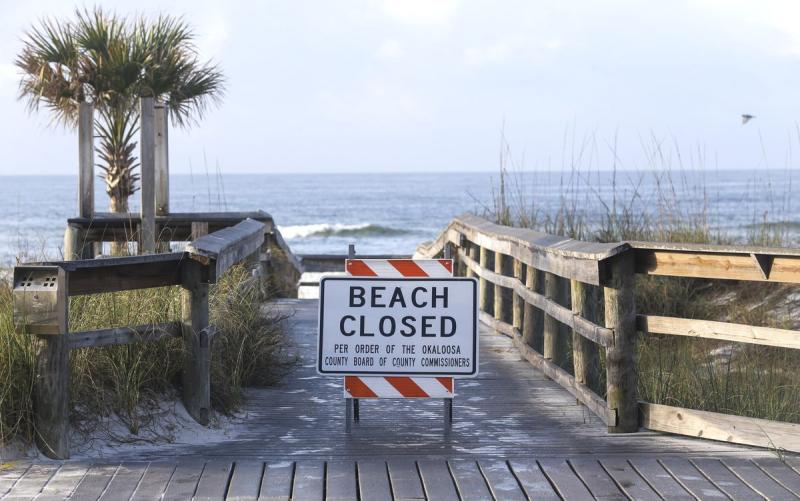
  • BEACHES: All beaches in Broward, Palm Beach and Miami-Dade counties remain closed, even to casual strollers. Beaches in other parts of the state have started to reopen with restrictions.
  • BOATING: South Florida’s counties began opening boat ramps and marinas on April 29. Congregations on sand bars remain prohibited.
  • GOLF COURSES: South Florida’s counties as well as most cities have now allowed golf courses to open with restrictions on group size and use of golf carts.
  • GYMS, THEATERS, ARCADES: All are included in the business closure orders that were issued in South Florida’s three counties and are being enforced by cities. Concert venues, auditoriums, movie theaters and playhouses are also closed.
  • CASINOS: South Florida casinos — including Seminole Hard Rock Hotel and Casino in Hollywood, the Seminole Classic in Hollywood, just south of the Hard Rock, the Seminole Casino in Coconut Creek and the Miccosukee Resort & Gaming casino — are closed until further notice.
  • FLORIDA KEYS: The Monroe County Sheriff’s Office announced Monday that the Florida Keys are closed to all tourists and visitors because of the coronavirus. Although some beaches have begun to reopen, the Keys are closed to visitors.
  • CRUISES: The three major cruise lines that sail out of South Florida have suspended service at least into the summer.


[AdSense-B]

Schools and colleges

  • PRE-K AND K-12 SCHOOLS: Schools across Florida are closed for the remainder of the school year. Classes and graduations are being held virtually.
  • COLLEGES: Public and private colleges and universities have closed or moved to online classes. On-campus events are part of the state-wide ban on large gatherings. Graduation ceremonies for state colleges have also been canceled.

Eating and shopping

  • BARS, RESTAURANTS AND NIGHTCLUBS: Bars and nightclubs are closed, and restaurants are closed to dining. But many eateries are open for takeout and delivery. We have been compiling a list of Broward, Palm Beach and Miami-Dade eateries offering takeout and delivery. All food-delivery apps are waiving delivery fees until further notice.
  • GROCERY STORES: Supermarket across South Florida are changing their hours as well as designating certain days and times exclusively for senior citizens or people at higher risk of coronovirus. In addition, all three South Florida counties are requiring customers and employees to wear face masks at all times in the stores.
  • FREE MEALS FOR STUDENTS: Public schools in Broward, Palm Beach and Miami-Dade counties are providing free meals at selected locations on days that school would have otherwise been in session. Broward County: Breakfast is available 8-10 a.m. and lunch 11 a.m. to 1 p.m. at select schoolsPalm Beach County: 35 schools will distribute free meals this week Monday through Thursday, and can receive Friday’s meals on Monday, Wednesday and Friday for two meals each day. Meals and are free to anyone under 18 years of age regardless of financial need. Miami-Dade: Students and families may pick up hot meals to go, both breakfast and lunch, between 9:00 a.m. and 12:30 p.m.

Help with finances

  • HOW TO GET FINANCIAL ASSISTANCE: We won’t lose our homes because of the coronavirus crisis. Our power won’t be shut off. And we’re not going to go hungry. Financial services companies, nonprofit relief programs, utilities and government assistance agencies are offering ways to help consumers get through layoffs, business interruptions and self quarantines.
  • HELP FOR RESTAURANT WORKERS: Restaurant workers have been hit hard by the coronavirus crises, particularly here in South Florida, a resort region and tourist destination known globally for being a foodie paradise. But there are efforts here to ease the burden facing kitchen staff, servers, bartenders and others.


[AdSense-A]

Staying safe

  • WHAT TO DO IF YOU’RE SICK: If you wake up with a cough or fever and are worried you have coronavirus, you have several options. In Florida, as in other states, hospitals and doctors have been primed on how to screen patients who come into their offices or the Emergency Department with symptoms. Only people who have severe symptoms should go to a hospital. If your symptoms are mild, call your doctor or the health department to get an appointment for a test. Some local test sites can now get results in up to 15 minutes with rapid tests but will turn away people without appointments.
  • WHERE TO FIND TESTING SITES: Drive-thru testing sites are being set up at locations around South Florida. Testing may be limited to individuals who meet the current Centers for Disease Control and Prevention guidelines: Older adults and people who have severe underlying chronic medical conditions who have fever, cough or any type of respiratory distress; any people — including healthcare workers — who within 14 days of symptom onset had contact with a suspected or confirmed coronavirus patient; and any people with history of travel from an affected area or an area with community spread. Here is complete list of testing sites in Broward, Palm Beach and Miami-Dade counties.


Tags: , , , ,
Re-opening Amenities In Times Of Uncertainty, Part 2 by Kaye Bender Rembaum

Re-opening Amenities In Times Of Uncertainty, Part 2 by Kaye Bender Rembaum

  • Posted: May 06, 2020
  • By:
  • Comments: Comments Off on Re-opening Amenities In Times Of Uncertainty, Part 2 by Kaye Bender Rembaum

Re-opening Amenities In Times Of Uncertainty, Part 2 by Kaye Bender Rembaum

by Kaye Bender Rembaum

In response to our article below, we have received inquiries from readers  regarding the ability of an  association located in Palm Beach County to use volunteers to provide the pool  monitoring as required by Palm  Beach County Emergency Order Number 5.

In relevant part, the Palm Beach County Order provides that as to the re-opening of community swimming pools the association must have “[o]ne (1) or more facility staff or management be present at each facility location to monitor and ensure compliance with the [Order].” There is no definitive instruction in the Order as to how a community association is to comply this particular requirement. However, based upon the plain meaning of the words, the association should have personnel from management or association staff physically present at the association’s pool facilities during its operating hours to monitor the use of the pool facilities to ensure compliance with the Order.


Webinar: Association Continuity During COVID-19

Register Today

Thursday, May 7, 2020

12 Noon to 1:00pm

Kaye Bender Rembaum attorneys Michael S. Bender and Jeffrey A. Rembaum will be a part of a panel discussion presented by Castle Group, in Episode 2 of “Association Continuity and Other COVID-19 Concerns.” There will be a special focus on the re-opening of community amenities.

Panelists include:

Craig Vaughan, Castle Group President

Michael S. Bender, Esq., BCS

Jeffrey A. Rembaum, Esq., BCS

Brendan T. Lynch, AIP AAI, Plastridge Insurance, President


Register to Attend HERE


[AdSense-C]


In addition, based upon an April 28, 2020, posting from the Palm Beach County website, it is suggested that an association could also appoint a committee of community volunteers to perform the pool monitoring. The issue created by the Palm Beach County Website posting is that the Order required “facility staff or management” to provide the pool monitoring. The term “volunteers” was not not used.


With that in mind,  if an association located in Palm Beach County decides to use volunteers to provide the pool monitoring function, then the following should be taken into consideration: 


1) If a resident who contracts Covid-19 later sues the association alleging a breach of the Order somehow led to their contracting of the virus, then will the association be in a position to show compliance with the Order when, in fact, volunteers were used? While such a lawsuit is remote, given today’s litigious environment it is not out the question.

2) Does the association have legal defense coverage which would at least provide for assignment of defense counsel so that the association will not have to go out of pocket in the event its other insurance policies do not provide coverage?

3) Does the association have insurance coverage in place to cover acts of volunteers?

4) Does the association have volunteer workers comp type coverage in place?


Although not required by the Order, we suggest that the association consider conspicuously posting or having available as a handout a summary of the CDC Social Distancing Guidelines and the Palm Beach County Emergency Order Number 5 as related to use of community pools.  The following links are provided for your reference:

Palm Beach County Emergency Order Number 5

The Palm Beach County Website April 28 posting related to volunteers  

Remember to also discuss the re-opening plan with your association’s legal counsel. 


Kaye Bender Rembaum, Attorneys at Law

The law firm of Kaye Bender Rembaum, with its 19 lawyers and offices in Broward, Palm Beach and Hillsborough Counties, is a full service law firm devoted to the representation of more than 1,200 community and commercial associations, developers, and their members throughout the State of Florida. Under the direction of attorneys Robert L. Kaye, Michael S. Bender and Jeffrey A. Rembaum, the law firm of Kaye Bender Rembaum strives to provide its clients with an unparalleled level of personalized and professional service that takes into account their clients’ individual needs and financial concerns.

http://KBRLegal.com


[AdSense-B]


Tags: , , , , ,
Re-opening Amenities In Times Of Uncertainty Part. 1 by Kaye Bender Rembaum

Re-opening Amenities In Times Of Uncertainty Part. 1 by Kaye Bender Rembaum

  • Posted: May 04, 2020
  • By:
  • Comments: Comments Off on Re-opening Amenities In Times Of Uncertainty Part. 1 by Kaye Bender Rembaum

Re-opening Amenities In Times Of Uncertainty pt. 1

by Kaye Bender Rembaum

The re-opening of amenities is anything but easy due to the local Orders being promulgated by Palm Beach, Broward and Miami-Dade Counties. Please be sure to review your County’s specific order(s) to ensure your association remains in compliance. These Orders have similarities but are also VERY different.

A link to the recent re-opening Orders follows:

Palm Beach County, Emergency Order Number 5

Broward County, Emergency Order 20-08

Miami-Dade County, Emergency Order 21020


As to the Palm Beach County Order, take note that that staff and management are responsible to ensure compliance with the Order with respect to the tennis/racquet court facilities, and that one or more facility staff or management must be present at the pool to monitor and “ensure compliance with the restrictions of the Order.” However, it is not at all clear what measures must be taken to “ensure compliance with this Order.” We do not think it would be sufficient to only post a sign setting forth the CDC Guidelines and the additional restrictions in the Order. Although the tennis/racquet court facilities guidelines, unlike the community pool guidelines, do not require personnel to be present at the tennis/racquet courts to monitor and ensure compliance, in our opinion the board should consider some type of responsible monitoring.


Webinar: Association Continuity During COVID-19

Register Today

Thursday, May 7, 2020

12 Noon to 1:00pm

Kaye Bender Rembaum attorneys Michael S. Bender and Jeffrey A. Rembaum will be a part of a panel discussion presented by Castle Group, in Episode 2 of “Association Continuity and Other COVID-19 Concerns.” There will be a special focus on the re-opening of community amenities.

Panelists include:

Craig Vaughan, Castle Group President

Michael S. Bender, Esq., BCS

Jeffrey A. Rembaum, Esq., BCS

Brendan T. Lynch, AIP AAI, Plastridge Insurance, President


Register to Attend HERE


[AdSense-A]


With respect to a swimming pool in Palm Beach County, “facility staff or management” must be present at the pool whenever it is open to monitor and ensure compliance with the restrictions set out in the Order, including social distancing and pool bathroom sanitation. If that cannot be accomplished, then the pool and or bathrooms should remain closed.


When opening a swimming pool in Broward County, their Order provides that the pool may not operate at more than 50% capacity. In person supervision in addition to sanitizing gates, railings and showers is required if the pool deck furnishings are left in place. However, by removing the furnishings, the wording of the Order seems to indicate the need to sanitize gates, railings and showers has been eliminated.  If the decision by the Board is to reopen the pool, whether the furnishings remain or are removed a level of reasonable cleaning/sanitizing should be maintained, as necessary maintenance remains a continuing obligation of the association with regard to common elements/areas, which would require sanitizing the pool gates, handrails, doors, bathrooms and the like minimally as the association normally would,  but clearly should be performed more frequently during these times.


Residents of Miami-Dade County will have to wait a while longer to be able to use their association swimming pool because their Order does not yet address opening association swimming pools.


We have heard that certain county staff are giving their personal interpretations of the Order(s) in response to questions from board members. If you think that relying on these unofficial and unauthorized interpretations will shield your association from immunity, think again! It is far more likely that staff interpretations of the County Orders will not provide any protection whatsoever, most especially if a resident contracts Covid-19 and a lawsuit is brought against the association. Until local governments revise their Orders to provide missing clarity, the plain language, conservative interpretation of these Orders should be followed to help ensure your association is protected as much as possible under the circumstances. Remember, too, that an association can have stricter requirements than those set out in the orders, but cannot adopt less strict requirements.


It is also unclear from the Orders how governmental enforcement of the restrictions is to occur by the County or any municipality, as it seems very (very) unlikely that there will be patrols driving around to check on compliance. Even if such patrols did exist, they could not hope to keep up. The more likely scenario is that the self-reporting of violations could possibly lead to monetary or other penalties against the association. Clearly, if the Board is of the opinion that the requirements in their County’s Order cannot be met at this time, it or are removed is certainly within the reasonable business judgment of the Board to keep those amenities closed. However, that said, reasonable business judgment should not be used by a board to make a decision to open amenities where the board believes it lacks the ability to be fully compliant with their county’s local Orders.


[AdSense-B]


We encourage board members to contact their association’s legal counsel for guidance regarding reopening any tennis/racquet courts and/or pool facility, and to continue to monitor the guidelines, directives and orders issued by the CDC and the applicable local authorities. Stay safe.


Kaye Bender Rembaum, Attorneys at Law

The law firm of Kaye Bender Rembaum, with its 19 lawyers and offices in Broward, Palm Beach and Hillsborough Counties, is a full service law firm devoted to the representation of more than 1,200 community and commercial associations, developers, and their members throughout the State of Florida. Under the direction of attorneys Robert L. Kaye, Michael S. Bender and Jeffrey A. Rembaum, the law firm of Kaye Bender Rembaum strives to provide its clients with an unparalleled level of personalized and professional service that takes into account their clients’ individual needs and financial concerns.

http://KBRLegal.com


Tags: , , , ,