SFPMA

SFPMA Industry Articles | news, legal updates, events & education! 

Find Blog Articles for Florida’s Condo, HOA and the Management Industry. 

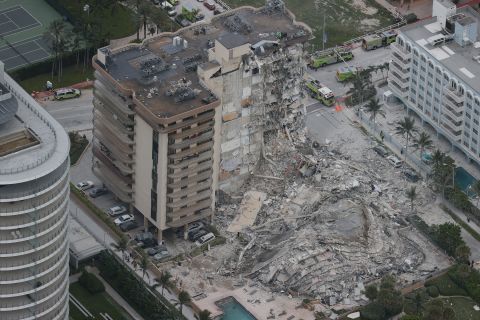
Florida’s condominium laws will undergo a top-to-bottom review by a task force established by the Florida Bar Association after the deadly collapse of the Champlain Towers South condo building in Surfside.

Florida’s condominium laws will undergo a top-to-bottom review by a task force established by the Florida Bar Association after the deadly collapse of the Champlain Towers South condo building in Surfside.

  • Posted: Jul 08, 2021
  • By:
  • Comments: Comments Off on Florida’s condominium laws will undergo a top-to-bottom review by a task force established by the Florida Bar Association after the deadly collapse of the Champlain Towers South condo building in Surfside.

Florida’s condominium laws will undergo a top-to-bottom review by a task force established by the Florida Bar Association after the deadly collapse of the Champlain Towers South condo building in Surfside.

Members of the task force who confirmed its existence to The Washington Post on Tuesday said their goal is to review state laws and regulations that govern condo developments, board operations and maintenance rules, and recommend potential changes to the governor and the state legislature.

Condo regulations in Florida have come under close scrutiny since the tragedy in Surfside on June 24, with at least 46 people confirmed dead and 94 still unaccounted for as of midday Wednesday. While investigators warn it could be months before a cause of the collapse is known, attention has turned to the decisions made — or not made — by city officials, consultants, developers and the residents and board members of Champlain Towers South.

“What we’re looking at are specific changes to prevent that from happening again,” William Sklar, an adjunct faculty member of the University of Miami’s law school and task force chair told The Post. “We also want to be realistic relative to the needs of unit owners, and we don’t want to dissuade [board members] from service.” Navigating those competing interests, Sklar and others acknowledged, is a complex mission. What lures many to condos in the first place is precisely what can eventually undermine them: Shared responsibility for maintenance with the perks of private ownership.

‘I anticipate a lot of push-pull’

Despite the detailed, extensive condo laws in Florida, several real estate experts said the rules are often easy to manipulate or have toothless enforcement.

“Condos are so critical to our local economy, but the state does nothing to bring clarity to it because it’s a cash cow,” said Peter Zalewski, a Florida condo industry analyst. “No one wants to kill the market prices.”

Condo owners and developers aren’t the only ones who may be skittish of changes: Politicians eager to enact tougher oversight in the wake of Surfside are still responsive to the will of voters, said Peggy Rolando, a Miami-based real estate lawyer and co-chair of the Florida Bar Association’s Condominium and Planned Development Committee.

“In Florida, condo owners are a hugely powerful political force,” Rolando said. Board meetings of well-heeled condo associations warrant campaign stops, and some buildings are even large enough to be their own voting precinct, she said.

Even tightening regulations in the name of building safety is likely to face resistance. Experts agreed the current rules that give condo owners significant leeway to defer costly maintenance can lead to a worst-case scenario in which a building becomes too unsafe to inhabit and too expensive to repair.

At the same time, they recognized putting off pricey fixes is sometimes a matter of short-term economic survival. In a place like South Florida, affordable housing is scarce, and many residents are fixed-income retirees who can’t easily absorb sudden spikes in homeowner fees.

“I anticipate a lot of push-pull,” Rolando said. “There’s an expression in South Florida that ‘you’re throwing grandma off the balcony’: If you’re passing laws saying ‘you must fully fund reserves for the entire building’ and price people out of their homes, you’re going to have a very unhappy constituency.”

Scrutiny on volunteer condo boards

After the collapse in Surfside, attention — and blame — quickly settled on the Champlain Towers South Condominium Association.

The association is the subject of at least 10 lawsuits filed since the building fell. In each of the complaints, residents detail what they say are oversights and failures of the condo board to act on crucial maintenance they argue contributed to the building’s structural instability.

But a Washington Post investigation found that while plans for repairs dragged on for years even as the building’s 40-year safety certification was coming due, dozens of unit owners in the condo balked at the estimated repair costs, which eventually tallied $15 million. In April 2019, dozens of owners signed a letter raising last-minute objections to the repair plans and asked for a lower assessment. A few months later, five of the seven board members quit.

The tension exhibited by the fallen tower’s condo association underscores why a condo building’s troubles don’t start and end with its board of directors, said Peter M. Dunbar, a longtime legal expert in Florida real estate who has written several reference books on Florida condominium law and management used by the state.

Florida condo board seats are volunteer roles in which elected members are not required to have any specialized training or vetting, even in buildings where board members are responsible for reserve accounts worth hundreds of thousands or even millions of dollars and approve maintenance for complex amenities like elevators and swimming pools.

New board members have 90 days to take an elective course approved by the Division of Florida Condominiums, Timeshares, and Mobile Homes Complaints/​Investigations or simply file a statement saying they have read the condominium’s rules and legal documents and understand their duties as a board member, Dunbar said.

“The lack of knowledge is not often where I find the biggest concerns,” Dunbar said. “You may know what you’re supposed to be doing, but are you doing it in a timely fashion, and are you doing it to the extent it’s required? To me, that’s a bigger issue.”

Anyone who serves as a director of an association has what Florida law states is a “fiduciary duty” to the association, or an obligation to act in the association’s best interests where maintenance, finances, quality of life and property value are concerned. In other words, Dunbar said, board members don’t have to know how to fix everything; they just need to hire the right people to assess what needs fixing and then act on those recommendations.

“But because they’re elected, they also have the pressures of their constituents,” Dunbar said. “The difference for the volunteer board is, you can do your best, and a resident can still say, ‘I don’t want to pay,’ and recall you.”

Public battles over personal budgets

Condo board members face personal liability if they’re found to have acted negligently or criminally in an individual capacity. But most problems that befall condo associations are not from nefarious board members or tightfisted unit owners, said Rolando, the Florida Bar Association’s Condominium and Planned Development Committee co-chair.

More often, personal circumstances or simple human nature cloud decision-making.

“There are very, very few associations that have really extensive, comprehensive reserve structures,” she said. “But if you know your neighbor just lost their job, or just sent their kid off to college, what are you going to do? You have an obligation to do the right thing for the association. But you have people who don’t want to or can’t afford to do the right thing.”

Documents from the Champlain Towers South Condo Association revealed infighting among neighbors as building repairs grew more urgent and more costly; one neighbor recounted toxic board meetings that would devolve into “screaming and yelling.”

The tension can erode the quality of life in a building where board members and condo owners pass one another every day in the lobby, by the pool or walking the dog, Rolando said.

“I have a lot of sympathy for board members because I think it’s rewarding that you can do something that improves your community and has a direct impact,” she added. “But it’s also enormously demanding, unpaid and thankless. I guess it’s like being a mom or something.”

The Florida legislature requires condo associations to have financial reserves for painting, roof repair, paving and any item of deferred maintenance that exceeds $10,000, Rolando said.

Rolando said she sympathizes with unit owners who face unmanageable costs that can balloon from years of neglected or delayed maintenance.

“Mandatory reserves are probably the right thing to do fiscally. But when you’re dealing with human beings with myriad financial issues, do you want to force people into a situation where they can’t afford to pay and will have to sell their unit?” Rolando said. “There are no good answers.”

Transparency and tougher rules

Members of the new safety task force hinted that changes to safety certifications and inspection schedules are likely to meet the least resistance.

Sklar, the task force co-chair, suggested that South Florida’s 40-year safety recertification program could be significantly narrowed to 10, 25 or 30 years and that it could be applied uniformly statewide; right now, it applies only to Miami-Dade and Broward counties.

Other considerations include expanding inspections to include geological and hydrological factors affecting building stability and structure, and periodic and comprehensive reviews of specific building elements such as concrete, rebar and electrical.

Sklar said the law allowing condo owners to hold an annual vote and waive fully funding the association’s reserves will need to be re-examined as well.

The task force will also consider ways the government can help residents who can’t afford the reserves or maybe bought into a lower-cost building or live on a fixed income.

“We may review if there’s a low-cost, government-backed, subsidized financing available,” he told The Post.

Zalewski, the condo industry analyst, said he hopes the task force also considers making real estate transactions more transparent and favorable to buyers. Under Florida law, a prospective condo buyer has a 15-day right of rescission, or ability to pull out of a pending condo purchase, if they are buying directly from a developer; if the purchase is made from an existing condo owner, the period shrinks to three days.

Zalewski, who is critical of the three-day rescission period, said that amount of time does not give a prospective buyer an adequate period to do the research and inspections that could prevent them from buying into a condo building that has hidden costs lurking down the road.

“The three days doesn’t make sense if you’re worried about the buyer,” he said. “It would change the market overnight because it would force everyone to be on the up and up.”

Tags: , ,

Is It Time To Amend Your Condominium Declaration? by Becker

Is It Time To Amend Your Condominium Declaration? by Becker

Is It Time To Amend Your Condominium Declaration?

BY   / Becker


Does your Declaration of Condominium still refer to Chapter 711 as the Florida Condominium Act? Well, maybe it is not that old, but perhaps it has been a decade since it has been revised. If that is the case, then it may be time to amend the governing documents to ensure that they include the most recent amendments to the Condominium Act and address changes in your community’s needs which have developed over time.

Section 718.110(1)(a), Florida Statute, provides that if a declaration fails to provide a method of amending the document, it may be amended, as to most matters, if the amendment is approved by owners of not less than two-thirds (2/3rd) of the units. There are two major exceptions, however. First, changing any appurtenances to the unit or changing an owner’s percentage share in the common expenses requires the approval of all owners and all lienholders, unless the original declaration provides otherwise. Second, an association cannot amend a declaration to create timeshares without the approval of the all owners and all lienholders, unless the original declaration provides otherwise.

Now that you know the basics of an amendment, lets discuss “why” in terms of a growing issue in Florida (i.e., short term rentals). If the goal is to amend the declaration to address the onslaught of short term rentals popping up with more and more frequency in condominiums, Section 718.110(13) must be considered. This statute provides that any amendment prohibiting owners from renting their units, altering the duration of the rental term, or limiting the number of times owners are entitled to rent will only apply to owners who agree to the amendment and to owners who purchase their unit after the effective date of the amendment. The amendment however limited it seems now, may be prudent today nonetheless. Why? Because it may take a bit for the new restrictions to apply to all owners and those short term rental investors while gaining momentum are still in the minority.

Amendments should not be taken lightly. If an amendment is done incorrectly, it will be deemed void or invalid. Once you have ideas as to what your Association needs in light of what the governing documents provide, it is important to meet with the Association’s attorney to discuss these. The attorney can then advise of those changes which would be permitted and craft language aimed at meeting the Association’s needs harmonizing those with the Condominium Act.


Robyn M. Severs

Shareholder / Orlando
904.423.5372
RSEVERS@beckerlawyers.com


Tags: , ,
Fair Collections Everyone In Your Association Can Smile About

Fair Collections Everyone In Your Association Can Smile About

  • Posted: Jun 29, 2021
  • By:
  • Comments: Comments Off on Fair Collections Everyone In Your Association Can Smile About

Fair Collections Everyone In Your Association Can Smile About

When a condominium, cooperative, or HOA homeowner doesn’t pay fees and assessments owed to the condominium association, cooperative, or HOA on time, a problem is created for both the association and the homeowner. Associations are forced to act against the homeowner. Homeowners risk losing their homes. It all seems so unfair, doesn’t it?

At Axela Technologies, we believe “Fair is Fair”

Axela Technologies brings order to the chaos and a solution to the problem. Condominium Associations, Cooperatives, and HOAs can count on Axela Technologies to deal fairly with the debtor and assist them in getting caught up with their delinquent fees and assessments. Homeowners have a far better shot of getting themselves back in good financial standing without suffering the consequences of severe legal bills and expenses created when the matter is referred to an attorney.

Axela Technologies is a full-service debt collection agency using modern technology to solve an age-old problem. When home or unit owners stop paying their fees in a timely fashion, the whole association suffers. That just isn’t fair to all of the other homeowners who do pay on time!

Happycollections 1 1

The Unspoken Challenges With Using Attorneys For Collections

Turning the matter over to an attorney conveys to the homeowner how serious their delinquency is. However, it isn’t necessarily the best decision because the attorney does not collect dues/fees. If delinquent payments stem from the homeowner’s financial difficulties, placing a lien on the property hinders the homeowner from selling the property for debt repayment. Buyers will want the lien paid off before closing, and banks are often unwilling to refinance a mortgage or provide a new loan to the owner until the lien is satisfied.

This scenario ultimately impedes the Community association from their goal of collecting delinquencies. Attorneys are useful and necessary but only if all other methods of collections have failed. The attorney will bill the association for their services. Again, the homeowners who do pay on time may be stuck paying that bill, too. That doesn’t seem very fair, does it?

Happycollections 2 2

Fair Collections Are Innate With A Merit-Based System

Axela Technologies not only collects the association’s money, but we perform on a merit-based system. In other words, if we don’t collect from the delinquent home or unit owner, we don’t get paid. Our interests are firmly aligned with the interests of the association.

You might be wondering how we can make such a bold claim and wonder how we get paid for our collection services. Because we specialize in association collections and employ a great deal of technology to assist in our collection efforts, we have become particularly good at what we do. We have reasonable fees that we pass along to the delinquent home or unit owner. We collect our fees from the delinquent owner. It is efficient and effective and, most importantly, FAIR!

Happycollections 3 1

We View Foreclosure As The Last Result

We typically clear up 95% or more of all delinquencies BEFORE the matter needs to be turned over to an attorney for foreclosure. We view foreclosure as the end result of a home or unit owner who simply wouldn’t respond to reason over the course of our collection efforts.

I know this sounds too good to be true but it isn’t! Kindly email, call, or schedule a Zoom conference with a member of Axela Technologies business development team so we can take a closer look at your association’s needs and offer a modern solution for your consideration. After all, Fair is Fair!


Tags: , ,
BIG NEWS ABOUT Glazer and Sachs & Condo Craze and HOAs BLOG – View our new Website!

BIG NEWS ABOUT Glazer and Sachs & Condo Craze and HOAs BLOG – View our new Website!

  • Posted: Mar 22, 2021
  • By:
  • Comments: Comments Off on BIG NEWS ABOUT Glazer and Sachs & Condo Craze and HOAs BLOG – View our new Website!

BIG NEWS ABOUT MY BLOGS! by Eric Glazer of Glazer & Sachs

As you know, I have been writing a blog 50 times per year for the last 10 years. That’s over 500 columns that have spoken about virtually every aspect of community association living. Our readers love it. The only complaint about the blog was that it was not searchable by topic. It was difficult to find a specific blog about a specific topic. Not any more!  From now on, by going to either the website for Glazer and Sachs,

Or, by going to the website for Condo Craze and HOAs, you can click on our BLOG link –type a few key words in the search bar- and find a blog about a topic of your choice. You also still have the option to scroll through all our blogs in chronological order.

It’s just another way our firm tries to make the law accessible and enjoyable to everyone with an interest in community association law, whether you’re a Board member, owner, manager or service provider. We hope you enjoy reading them half as much as we enjoy writing them.


View our New Website


Tags: , , ,
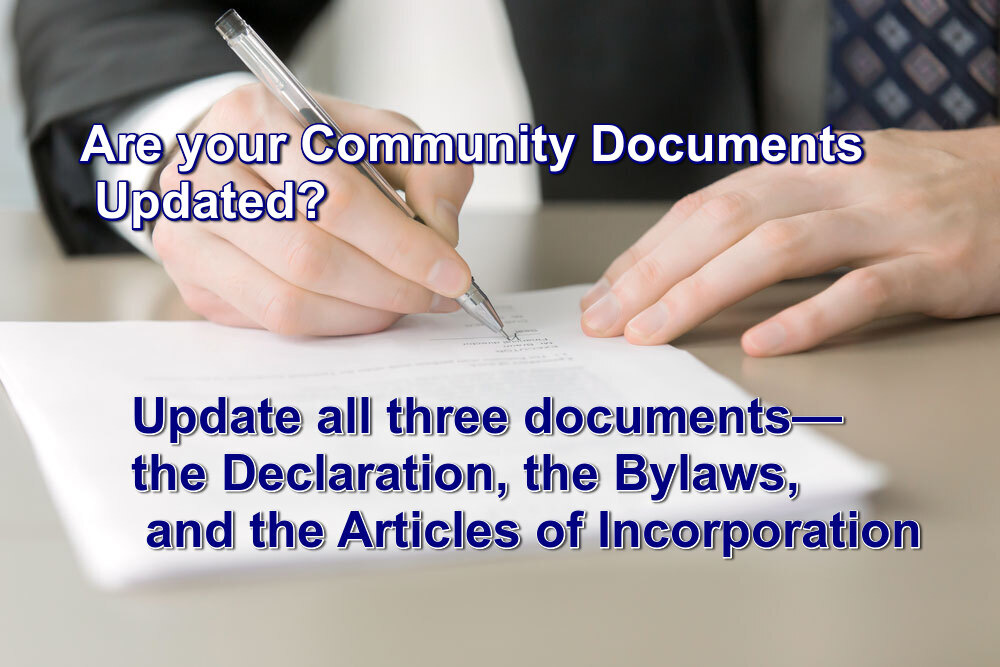
Take Action today have one of our Legal Members help with a comprehensive, custom-tailored for your community updates to all three documents—the Declaration, the Bylaws, and the Articles of Incorporation

Take Action today have one of our Legal Members help with a comprehensive, custom-tailored for your community updates to all three documents—the Declaration, the Bylaws, and the Articles of Incorporation

  • Posted: Mar 14, 2021
  • By:
  • Comments: Comments Off on Take Action today have one of our Legal Members help with a comprehensive, custom-tailored for your community updates to all three documents—the Declaration, the Bylaws, and the Articles of Incorporation

Are your community Documents Updated?

Homeowners Associations and Condominium Associations have three governing documents: the Declaration, the Bylaws, and the Articles of Incorporation.
The Declaration is the “contract with the membership” – it contains things like pet restrictions, vehicle restrictions, guest rules, the ability to do background screening on incoming buyers and tenants, insurance obligations, and other things that affect every community member’s everyday life.
The Bylaws are your go-to for procedures such as who gets to vote? How many members comprise the board? When are your elections? Who can be on the board? Who can call meetings? When is the annual meeting?
And the Articles of Incorporation are your contract with the State of Florida that incorporate you as a corporation-not-for-profit.
All three documents reference one another, and it’s important to have congruency.

Take Action today have one of our Legal Members help with a comprehensive, custom-tailored for your community updates to all three documents—the Declaration, the Bylaws, and the Articles of Incorporation

Covid-19 has brought many changes; every community should have these added to their governing documents.


The Process of updating governing documents.

The board shoulders a bit more responsibility – giving us lots of information about your association—and then we collaborate together on the tougher provisions, ensuring you have the very best guidance and governing documents that are perfect for your community.

  • Search of original documents and amendments all the way through the mailing of proxies and finally recording of your new documents..
  • Our presence at town hall meetings, board meetings, or assistance with mailings.
  • There will be a lot of questions from owners, we can help answer these for your community.

Legal Members can provide not only guidance about your community standards, but also lots and lots of ideas from all of the other communities with whom we work! Some of the most popular updating provisions these days include: preventing AirBNB and sober homes, creating a non-smoking building (while grandfathering in current residences), eliminating investors, protecting the association from corporate takeover, and screening new residents and tenants for criminal histories and good credit references!

We are here to help protect and modernize your community!


How much time does it take to update documents?

This depends quite a bit on you! As soon as you retain our services with payment, we send you a packet of information you need to get started. We also are ready to schedule your telephone conference within the following fourteen days. That said, some associations need a bit of extra time—someone’s on vacation, or it’s hard to coordinate calendars with everyone. (And that is perfectly alright!)

You will also have an opportunity, after our phone conference, to review everything before we create your docs. Rewriting 60-100 page documents takes a bit of time! We ask for six-to-eight weeks to create your new documents, and then we send them to you.
Once you get them, you’ll start “getting the vote” in your community! Some Associations can do this within a few weeks—and for others, the process can be months! This timeline is what fits best for your community, and we are happy to provide support in any way needed.

Updating governing documents can be an exciting time for your community—there are so many incredible updates to protect and modernize your association!


Tags: , ,
Community Update: February Wrap Up – Florida Condo & HOA Law Blog

Community Update: February Wrap Up – Florida Condo & HOA Law Blog

  • Posted: Mar 01, 2021
  • By:
  • Comments: Comments Off on Community Update: February Wrap Up – Florida Condo & HOA Law Blog

Spring is just around the corner and sprucing up is often top of mind. Whether that means improving yards, documents, or relationships, this edition of Becker’s Community Update offers practical guidance on how to move forward. Check out the hot topics below, and don’t forget to connect with us on Facebook to get real time updates on these issues and more!

by Becker / Florida Condo & HOA Law Blog

While Mother Nature may be hard to harness, community associations are often tasked with doing just that to protect both residents and property. In Responsibility for Tree Branches and Roots Elizabeth Lanham-Patrie explores how the law decides who needs to tackle this chore.

In the second part of our two part series Amending Governing Documents, Jay Roberts outlines best practices for getting proposed changes approved by membership.

Maritrini Soto Garcia discusses presidential power in Does a Community Association Board President Have Executive Action Authority or Unilateral Powers?, and reminds everyone that the work of a community association is, ultimately, a group effort.

Assessments are not the most popular feature of a community association, but they are a vital resource in maintaining the amenities and ambiance to which the community has grown accustomed. In THIS CASE: Abbey Park Homeowners Association, Inc. v. Bowen, Rob Caves reviews how the Florida court decided the seminal case regarding an owner’s right to withhold payment of an assessment.


If you have new members on your board or a new manager for your community and want them to be part of our Community Update, have them subscribe here:


Amending Governing Documents Part II – How?

By: Jay Roberts, Esq.

In Part I of this two-part series, we discussed the importance of amending governing documents. Part II discusses tips on how a board of directors can put itself in the best position to have the proposed amendments approved by the membership.

START EARLY:

Work with the association’s counsel to craft the language appropriate for the amendments well before you plan to present it to the membership formally.

Click here to read more!

Does a Community Association Board President Have Executive Action Authority or Unilateral Powers?

By: Maritrini Soto Garcia, Esq.

Community associations are not administered by a single director or officer of the board, instead, the affairs of such associations are administered by its board. The articles of incorporation and/or bylaws of an association most often specify the required minimum number of board members. In the condominium context, the Florida Condominium Act provides that in the absence of such specification, the board of administration must be composed of five members (or three members in condominiums with five or fewer units).

Click here to read more!

Abbey Park Homeowners Association, Inc. v. Bowen,

508 So.2d 554 (Fla. 4th DCA 1987)

By: Rob Caves, Esq.

Assessments paid by owners are the lifeblood of any community association and efforts to collect assessments are the most consequential and common legal proceedings any association engages in. Typically, there are few valid defenses an owner can raise to challenge the collection of properly adopted assessments. One common defense that is attempted is that the association is failing to properly maintain the common elements of a condominium or the common areas of a homeowners’ association.

The seminal case on the issue of whether owners can withhold the payment of assessments due to the association’s failure to properly maintain the common elements is Abbey Park Homeowners Association, Inc. v. Bowen, 508 So.2d 554 (Fla. 4th DCA 1987). In the case, the appellate court held that the failure to maintain the common elements is not an affirmative defense to the association’s action to foreclose on the unit for the failure to pay assessments. Accordingly, a claim by an owner that the association is improperly maintaining the condominium property would not be a valid defense to the association’s action to collect unpaid assessments or enforce the association’s assessment lien against a unit.

However, there are subsequent cases that hold that while such claims are not affirmative defenses to a foreclosure action by an association, they could constitute counterclaims and entitle the owner to a “set-off” if they were to prove that the association failed to properly maintain the condominium property and such failure resulted in damage to the unit owner or their property. See Qualcom Corp. v. Global Commerce Center Association, Inc., 59 So. 3d 347 (Fla. 4th DCA 2011) (holding that the owner was able to argue at trial that its damages from a roof leak, if proven, could be a “set-off” against the outstanding assessments). However, the facts which would entitle an owner to a set-off would be very specific and would not apply to an owner’s general allegation that the common elements, or common areas, were not being maintained, as was alleged in Abbey Park.

Accordingly, pursuant to the legal principles outlined in the Abbey Park case, the fact that an owner alleges that the association is not properly maintaining the common property, or operating the association, would not be a defense against the association’s action to collect properly levied assessments.


CALLING ALL BOARD MEMBERS AND COMMUNITY MANAGERS

As a service to the community and industry, we are pleased to offer some of our most popular classes online! While our in-person classes remain suspended until further notice due to COVID-19, we are thrilled to bring you the following classes to participate in from the comfort of your own home.

HOA/Condo Board Member Certification

VIEW ALL CLASSES


Tags: , , ,
GOVERNOR DESANTIS EXTENDS STATE OF EMERGENCY FOR ANOTHER 60 DAYS ON FEBRUARY 26TH, 2021

GOVERNOR DESANTIS EXTENDS STATE OF EMERGENCY FOR ANOTHER 60 DAYS ON FEBRUARY 26TH, 2021

  • Posted: Mar 01, 2021
  • By:
  • Comments: Comments Off on GOVERNOR DESANTIS EXTENDS STATE OF EMERGENCY FOR ANOTHER 60 DAYS ON FEBRUARY 26TH, 2021

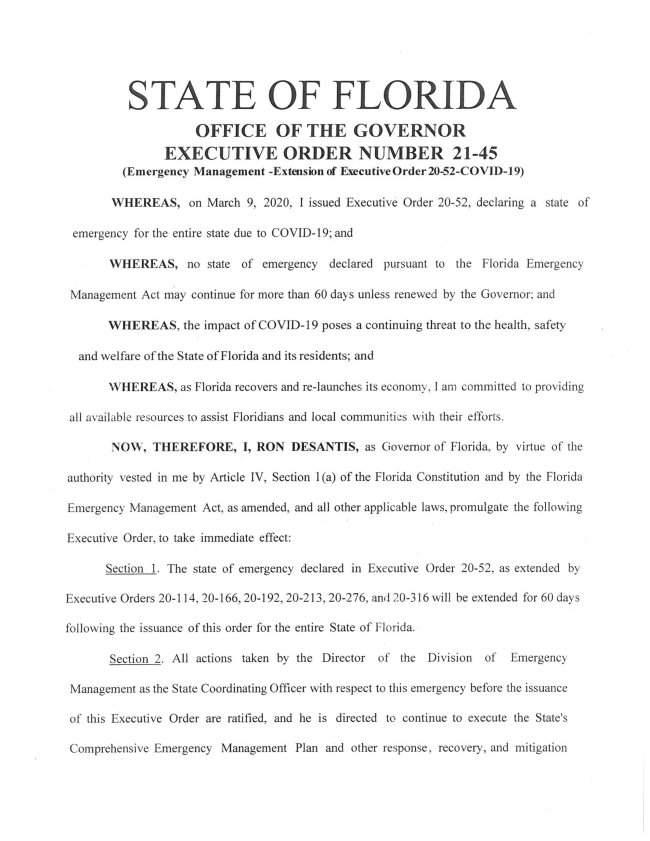
As a result of this Order, Emergency Powers of the Boards of Directors for community associations remain in effect for another 60 days.

Read the Entire Emergency Order Here


Visit the new Website:
READ ALL THE FLORIDA ASSOCIATION LAWS
LISTEN TO ANY PAST SHOW
GO TO OUR SHOW’S WEBSITE
SEND US YOUR COMMENTS
READ OUR NEWSLETTERS
REGISTER FOR OUR SEMINARS
READ OUR BLOG
Tags: , ,
Broward County Condo & HOA Expo Tuesday, February 23, 2021!

Broward County Condo & HOA Expo Tuesday, February 23, 2021!

  • Posted: Feb 17, 2021
  • By:
  • Comments: Comments Off on Broward County Condo & HOA Expo Tuesday, February 23, 2021!

Join Us Tuesday, February 23, 2021!

Property Management Expo & Seminars

Seminars: 9:00 am – 4:30 pm
Exhibits: 10:30 am – 3:00 pm

For one day only, The Signature Grand will be packed with the latest products and services as well as an array of industry experts. It’s an unparalleled opportunity to make valuable connections and speak directly with local and national experts about the topics that are relevant to you and your property.

Register Today

In the interest of public health and safety, and in accordance with state guidelines, the Broward County Condo & HOA Expo has reduced capacity in meeting rooms and public spaces.  At this time, it will be mandatory for all participants to wear a face mask or protective covering, and we ask that everyone observes social distancing in all public event spaces.

Get legal insights, financial advice, communication tips, proactive management solutions and much more from some of the region’s top professionals. This one-day event will also give you a sneak peek at the latest design trends gracing today’s most prestigious developments, plus innovations in building and remodeling and the newest energy efficiency options.

Tags: , ,
Discriminatory Practices, Is Your Association Prepared?  by Rembaum’s Association Roundup

Discriminatory Practices, Is Your Association Prepared? by Rembaum’s Association Roundup

  • Posted: Jan 28, 2021
  • By:
  • Comments: Comments Off on Discriminatory Practices, Is Your Association Prepared? by Rembaum’s Association Roundup

Discriminatory Practices, Is Your Association Prepared?

by Rembaum’s Association Roundup  presented by: Kaye Bender Rembaum

On September 26, 2016, Rembaum’s Association Round Up published an extremely important article regarding a community association’s potential liability when allegations by one member accuse another member of a discriminatory practice. (Click HERE to view the 2016 article). On September 13, 2016, HUD made clear that a housing provider is responsible for discriminatory practices that may take place. In its Rules and Regulations set out in Chapter 24, Part 100 of the Code of Federal Regulations, effective which further interprets the Federal Fair Housing Act, HUD explained that it believes that, “we are long past the time when racial harassment is a tolerable price for integrated housing; a housing provider is responsible for maintaining its properties free from all discrimination prohibited by the Act.” Those regulations became effective on October 14, 2016.

In this author’s opinion, HUD went way too far by mandating that housing providers act as the investigator, police, judge and jury in cases of alleged discrimination. After all, there are countless Fair Housing offices in each state where complaints can be filed and are actively investigated, often times with only a bare inference. Community association board members are volunteers with no required special training other than to be “certified” within 90 days of taking office, which certification can be met by signing a one-page form acknowledging duties or taking a two-hour class. Neither the individual board members nor the community as a whole should have to bear liability for its board of directors not taking action in a neighbor to neighbor dispute. Afterall, the court room is the proper setting where such matters should be resolved.

In the January 25, 2021, edition of the Palm Beach Post reporter Mike Diamond Special to Palm Beach Post USA TODAY NETWORK, authored an article titled “Judge Won’t Dismiss HOA Religious Bias Suit.” In the article the judge was quoted as follows: ““the La-Grassos [the plaintiff’s] have plausibly alleged a claim against the association for its failure to respond to or seek to control Ms. Tannenholz’s allegedly discriminatory conduct.” Amongst other things, the allegation is that Tannenholz’s told La-Grassos, “you do not belong in a community that is 80% Jewish and that La-Grassos should “move the F… out and go to a white supremist community.”

But for HUD’s position that a housing provider can have liability for discriminatory practices of the residents it is unlikely the association would be a defendant in this lawsuit. By forcing housing providers, such as Florida’s countless condominium, homeowners’ and cooperative associations, to interject themselves into what should be private disputes amongst neighbors, HUD is providing the deepest of pockets to the plaintiff’s attorneys. At the end of the day, it is just another reason to sue the innocent community association to create liability where there should not be any in the first place.


Practical Tip no. 1: In light of this lurking danger, be sure to check in with your association’s insurance agent to be sure the association has proper liability coverage for accusations of discrimination.

Practical Tip no. 2: Also, given that there can even be personal liability in such actions, board members would be wise to speak to their own personal insurance agents too… Afterall you never know when that umbrella policy may come in handy. Remember this, too: if one board member has knowledge about an event, then such knowledge can be imputed to all board members as if they are all similarly aware. In other words, when one board member knows, then the association itself is on notice.

Practical Tip no. 3: Consider formally adopting a “no discrimination” type of rule. It could be as simple as “discrimination of any kind will not be tolerated”.

Practical Tip no. 4: If your association is made aware of an alleged discriminatory practice, then a written record of such allegation and the association’s efforts to remedy the situation should be made.

Be sure to discuss each and every alleged discriminatory practice brought to the attention of the board and/or its manager with the association’s attorney to obtain the proper guidance needed.


Jeffrey Rembaum, Esq.

Board Certified Specialist in Condominium and Planned Development Law and a community association lawyer with the law firm Kaye Bender Rembaum, in its Palm Beach Gardens office.

His law practice consists of representing condominium, homeowners, and cooperative associations, developers and unit owners throughout Florida.

He can be reached by email at JRembaum@KBRLegal.com or by calling 561-241-4462.


Tags: , , ,
Florida Condominium Act, extensively regulates amendments to condominium documents. by Becker

Florida Condominium Act, extensively regulates amendments to condominium documents. by Becker

Florida Condominium Act, extensively regulates amendments to condominium documents.

Joseph E. Adams / Becker
BlogPublication Florida Condo & HOA Law Blog


Q: After the unit owners in a condominium association vote to approve an amendment, is there a time limit or deadline by which the amendment must be recorded with the county? (M.A. via e-mail)

A: Chapter 718 of the Florida Statutes, known as the Florida Condominium Act, extensively regulates amendments to condominium documents. However, the Act does not contain a specific deadline for when properly adopted amendments to the condominium documents must be recorded.

Section 718.110(3) of the Act states that amendments to the declaration are effective when properly recorded in the public records of the county where the declaration is recorded. Similarly, Section 718.112(1)(b) of the Act states that amendments to the articles of incorporation or bylaws are not valid unless recorded in the public records of the county where the declaration of condominium is recorded. Further, Chapter 617, the Florida Not For Profit Corporation Act, provides that amendments to the articles of incorporation must be filed in the office of the Department of State.

In my opinion, the recording of such amendments is a ministerial act that the board would be required to undertake within a reasonable time of the approval of the amendment. While there is room debate what is reasonable, I would say absent unusual circumstances (such as an intervening legal challenge or some after-discovered error), 30 days from approval would be a reasonable time frame.

However, there is also no specific prohibition in the statute preventing an association from recording an amendment long after the owner vote. I occasionally see situations where an association failed to record an amendment due to changes in the board or management or other circumstances, and records an amendment a year or longer after its approval. This is obviously not an ideal situation since you might have new owners who did not get a chance to vote on the amendment and who could claim that they bought there unit based on what was in the public records.


Q: Can you explain what a “material alteration” is? We have a constant argument in our condominium association, usually driven by one particular owner, over what the board can and cannot do. (J.F., via e-mail)

A: This is one of the most common areas of disputes in condominiums. As you probably know, Section 718.113(2) of the Florida Condominium Act provides that there can be no material alterations or substantial additions to the common elements except as authorized by the declaration of condominium. If the declaration is silent, then 75 percent of all voting interests must approve the alteration or addition (there is usually one voting interest per unit).

The standard still used by the courts today comes from a decision from a Florida appeals court rendered almost 50 years ago. In ruling that a unit owner’s closing in a screened lanai with windows was a material alteration, the court stated that the term means “to palpably or perceptively vary or change the form, shape, elements or specifications of a building from its original design, or current condition, in such a manner as to appreciably affect or influence its function, use or appearance.” Using this test, appellate courts have ruled that changing the exterior color scheme of condominium buildings is a material alteration, as is changing mansard roof shingles made of cedar to tile type shingles.

As with most rules, there are exceptions, one being the so-called “necessary maintenance exception,” which originates from a series of appellate court cases from the Second District Court of Appeals (which includes southwest Florida). These cases basically say that certain changes can be made without and owner vote when necessary to comply with law or when necessary for the proper maintenance and preservation of the condominium property.


Joe Adams is an attorney with Becker & Poliakoff, P.A., Fort Myers.

Send questions to Joe Adams by e-mail to jadams@beckerlawyers.com.

Past editions may be viewed at floridacondohoalawblog.com.


Tags: , ,