SFPMA

SFPMA Industry Articles | news, legal updates, events & education! 

Find Blog Articles for Florida’s Condo, HOA and the Management Industry. 

How To Seal Pavers For a High Gloss Wet Look | Brick, Driveway & Concrete Pavers

How To Seal Pavers For a High Gloss Wet Look | Brick, Driveway & Concrete Pavers

  • Posted: Oct 22, 2025
  • By:
  • Comments: Comments Off on How To Seal Pavers For a High Gloss Wet Look | Brick, Driveway & Concrete Pavers

A bit of gloss on your driveway gives it a beautiful, just-finished look that will last for a long time if done correctly. Click the link for our tips on how to seal brick and concrete driveways, and be sure to contact us today for all of your indoor or outdoor flooring needs!

Looking for a wet look, gloss appearance that brings out the colors in your pavers?  Do you want something that holds up to sun and weathering for 2 to 3 years – or more?
You’re in the right place.  To get the results above, it’s important to understand how to seal pavers… and why.  We’ve got your answers below.
 

Details below. Click to go there now.


It’s Easier Than You Think To Seal Your Pavers

 
After 18 years of dealing with the question of how to seal pavers the right way, my best recommendations are as follows:

  1. Spray apply rather than roller apply.
  2. Use water based sealers rather than solvent based.
  3. Use urethane sealers rather than acrylic sealers.

Let’s expand on these 3 guidelines a little further. (And here’s a quick video to show you what we mean.)


Spray Application vs Roller to Seal Pavers

While roller applying a sealer is easier than spraying, roller application does not work as well on pavers compared to something like concrete.
The biggest drawback when rolling sealer on brick pavers is that the roller can pick up the joint sand and roll it over the top of the brick paver surface.  This is especially true if the joints are wide. Furthermore, the amount of sealer that soaks into the sand joints is difficult to control when rolling.
 

How Much Sealer Do I Apply

Apply a flood coat to the paver surface including the joints. This method will apply the sealer very generously while allowing the sealer to soak into the sand joints as well.
As long as you apply the paver sealer on a windless day, the coverage can be generous and effortless.
If you really can’t get a pump up garden sprayer, opt for a sponge-type roller to apply the sealer. A nap roller is more likely to grab and trap your joint sand.


Water Based Sealer vs Solvent Based

Solvent based sealers are bad for the environment! Manufacturers are gradually moving away from these type products.
Regardless, solvent based sealers are more difficult to spray apply than water-based sealers, and they don’t really seal the joint sand, as well as the water based products.
The solvent based sealer tends to seal only the top surface of the sand compared to the water based, which soak down deeper into the sand.
 
From our lead chemist:
” While solvent-based sealers can produce a nice high gloss surface, they can also make the surface slippery if applied too thick
Also the gloss finish, typically burns off after 6 months of exposure to the sun. “
 
 
Water based acrylic sealers eliminate the issues with using solvents and are better at stabilizing joint sand to prevent sand loss.
However, it is important to use a high solids acrylic sealer or a urethane modified acrylic sealer, otherwise they fade and lose the glossy appearance after 6 months to a year.

Polyurethane vs Acrylic

Water based polyurethanes are a tougher sealer than acrylics and are more UV resistant and chemically resistant.
They don’t yellow, perform better outside and they are more resistant to chemicals oil, brake fluid, and chlorine.
The best water based polyurethanes are 2-part products (Part A and B requiring mixing). These 2-part polyurethanes when mixed together chemically cross link to form a paver sealer that is highly durable and long lasting when exposed to sunlight and/or freeze thaw.
A big plus is that they are much less sensitive to moisture. You can apply a 2-part polyurethane water based sealer as soon as you finish pressure washing. We call it “same day” sealing.
 
 
” The down side of using 2 part polyurethanes to seal pavers is that they are more expensive.  And once you have mixed them, you have to use them.  There is no shelf life or coming back the next day to seal pavers, with left over mixed product. 
Tags:
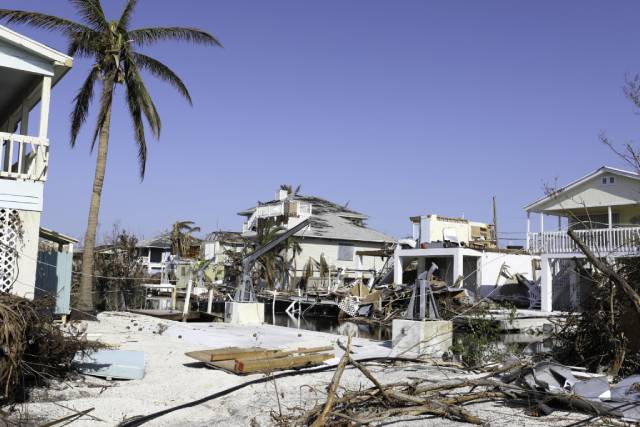
Don’t let a natural disaster catch your community off guard! Take charge and be prepared!

Don’t let a natural disaster catch your community off guard! Take charge and be prepared!

The coastal Northeast is experiencing a concerning trend of heating at a faster rate compared to other regions in North America. Researchers have identified a strong correlation between the accelerated warming and the rapidly increasing temperatures in the North Atlantic Ocean and increasing storm intensity. Natural disasters such as hurricanes, tornadoes and coastal flooding can strike at any moment, leaving communities devastated and in need of immediate assistance. It is crucial for communities to be prepared in order to minimize the impact of these disasters and ensure the safety of their residents.

Preparing your community for a natural disaster is crucial to minimize damage, save lives, and facilitate a swift recovery. Here are a few steps to assist with your preparation:

Assessment and Planning:

  • Identify the types of natural disasters that are common in your area, such as earthquakes, hurricanes, floods, wildfires, or tornadoes.
  • Conduct a thorough risk assessment to understand the potential impact of these disasters on infrastructure, buildings, and residents.
  • Collaborate with professionals to create a comprehensive disaster preparedness plan.
  • Make sure that the community has backed up records of their site plans, architectural and structural drawings, as this can greatly assist in the post disaster assessment and recovery process.

Initial building evaluation performed based on the severity of the storm/event:

  • The degree of safety & habitability of the subject building is not always obvious. If there is any doubt or question that there may be structural or building envelope damage to a building, call you Professional Engineer or Architect and have an evaluation performed.
  • In some instances, you may be required by your local municipality to have your professional assist with stabilizing the structure before parties can enter the structure to collect personal belonging that may remain.

Communication and Engagement:

  • Establish a reliable communication system to disseminate information before, during, and after a disaster. This can include email, social media, or text alerts.
  • Designate community leaders or volunteers responsible for communicating updates and instructions.

Contact Insurance:

  • It can take a while to get adjusters to scene following an event. Be sure to take before, during and after photos of any damage that occurred.

Post-Disaster Recovery:

  • Establish a recovery plan that includes damage assessment, debris removal, and restoration of essential services.
  • Plans and specifications may be required to repair or reconstruct the building, depending on severity.
  • Code requirements can impact the work based on if it is classified as repair vs reconstruction. This needs to be carefully reviewed and considered as insurance carriers may try to exclude some of the necessary work, so the Architect or Engineer needs to be well versed on preparing plans for this type of work.

Remember, disaster preparedness is an ongoing effort. Regularly review and update your plans based on new information, changing community demographics, and emerging technologies. By taking proactive steps, you can help your community minimize the impact of natural disasters and ensure a more resilient future.

Contact our team for more information how to be proactive! 

[AdSense-C]

The Falcon Group
Miami
15405 NW 7th Avenue in Miami, FL 33169
ph: 305.663.1970 x509
info@falconengineering.com
 
WEST PALM BEACH, FLORIDA
5651 Corporate Way, Suite 4, West Palm Beach, Florida 33407
Phone: 561-290-0504
info@falconengineering.com
 
Tags: , , ,
Is Pond and Lake Algae Bloom Dangerous? by SOLitude Lake Management.

Is Pond and Lake Algae Bloom Dangerous? by SOLitude Lake Management.

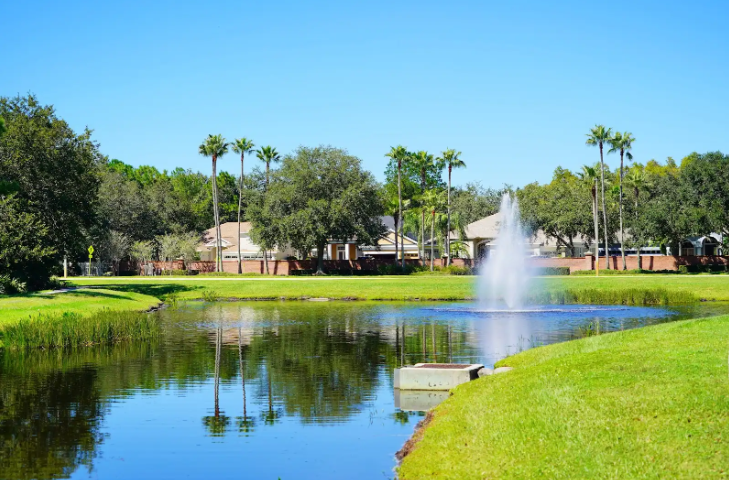
Warm weather often comes with an increase in algal blooms in our waterways. Algae is a nuisance – it can grow in slimy, smelly mats, create eyesores, and entangle swimmers and fishing hooks.

Rather than creating places to connect with neighbors, watch beautiful sunsets, and host fun activities, waterbodies containing nuisance algae growth can lead to nasty comments and complaints. But in worst-case scenarios, it may pose a danger to the community. 

Although most algae aren’t dangerous to our health, we must be mindful and diligent about limiting our exposure to certain types of algal blooms. Harmful Algal Blooms (HABs), also known as blue-green algae or cyanobacteria, are a very serious issue impacting the safety of our waterways. Exposure to HABs can be life-threatening for people, pets, and wildlife due to toxins they are capable of releasing.

However, the toxicity of an algal bloom cannot be confirmed with a visual inspection. Suspected HABs must be sampled and tested at a lab to confirm the species of algae present. Once the species is confirmed, a management plan can be implemented.

What does harmful algae look like?

Harmful algal blooms can look like blue or green paint spilled into the water. It may also appear as thick, puffy blue or green foam on the surface of the water, or as swirling colors beneath the surface of the water. HABs can also have distinct smells that have been described as grassy, fishy, or septic.

What should I do if I suspect the presence of harmful algae?

Here are four things to do – or not do! – if you see anything that looks like an HAB in your waterbody:

  1. Call a professional immediately: It is impossible to tell from a visual inspection whether an algal bloom is toxic. It must be appropriately sampled and tested.
  2. Avoid it: Do not swim or wade through blue-green algal scums. Do not boat, water ski, jet ski, or fish where algal scum is present. And certainly, don’t source drinking water where algal blooms are present!
  3. Keep pets out: Do not let your pets swim in or drink from the water. Toxic algae blooms can be fatal to dogs and other animals. Even short exposures to some HABs can be fatal.
  4. Take extra precautions: If you or your family members, including pets, have been in water with any algae present, always shower off with soap and clean water after swimming.

Keep Your Water Safe and Clean with Annual Management

Keeping your community safe and happy is an utmost priority – because safe, happy residents are more engaged with each other, pleased with community leadership, and proud of where they live. An annual management program is one of the best ways to maintain the safety and aesthetics of your waterbodies. When monitored and managed on a consistent basis, it’s possible to identify and get ahead of HABs or other water quality problems before community members are affected.

Crown&Geyser_1HP_Bonita Springs, FL_GregO'Connor solitude lake managaement fountains and aeration systems vendor partners aquamaster

Annual Management Programs Tailored to You

Annual management programs are tailored to your specific needs, and may integrate an array of professional tools and strategies, including water quality testingfountains and aerationnutrient remediationbiological bacteria applicationsshoreline management and restorationbathymetric mapping, and mechanical solutions like mechanical hydro-raking or dredging. Contact your lake management professional to begin designing your custom annual management program.

Manage Algae & Pond Weeds with SOLitude

Tags: ,
Need a few reasons to digitize your paper-based engineering and architectural drawings? How about these?

Need a few reasons to digitize your paper-based engineering and architectural drawings? How about these?

1- Accessibility and Sharing. Digital files are easy to search, copy and share, saving valuable time and improving collaboration.
2- Storage and Document Integrity. Digital drawings are much less expensive to store than paper copies and are not subject to degradation over time.
3- Flexibility. Digital drawings are easy to rework or update, streamlining change processes and speeding renovations.
4- Details. Digital designs allow for the addition of audio or video to individual elements, providing an extra level of detail (e.g., materials, site layout, construction processes).
At the end of the day, digitization is a huge time and cost saver.
Call Us—561.372.1290
Tags: , ,
2025 –THE BEGINNING OF MASSIVE CHANGES TO OUR CONDO COMMUNITIES

2025 –THE BEGINNING OF MASSIVE CHANGES TO OUR CONDO COMMUNITIES


There are certain years that are more defining than others. Certain years that stand out. Well, if you live in a Florida condominium, 2025 will be that year. To understand why, we have to pay respect to another year that stands out more than any other ever will, and that is 2021, the year the Champlain Towers collapsed in Surfside, Florida killing 98 innocent men, women and children.


As a result of 2021, and The Florida Legislature’s promise to Floridians that another Surfside will never happen again, massive legislation was passed requiring mandatory inspections, mandatory repairs, mandatory education for Board members and perhaps the most important and controversial new law, the requirement to fund reserves for your condominium that is 3 stories or taller, based upon a Structural Integrity Reserve Study that needed to be prepared by an architect, engineer or someone with CAI credentials and completed by December 31st, 2024.


If you didn’t do it yet —– you’re late and in violation of Florida law.


Think about this…….any condominium budget you will ever pass again must include mandatory reserves based upon the results of that structural integrity reserve study. Here’s the new law:


For a budget adopted on or after December 31, 2024, the members of a unit-owner-controlled association that must obtain a structural integrity reserve study may not determine to provide no reserves or less reserves than required by Your Structural Integrity Reserve Study.


Here’s what a structural integrity reserve study is and how often it must be performed:


(g) Structural integrity reserve study.—

1. A residential condominium association must have a structural integrity reserve study completed at least every 10 years after the condominium’s creation for each building on the condominium property that is three stories or higher in height, as determined by the Florida Building Code, which includes, at a minimum, a study of the following items as related to the structural integrity and safety of the building:


a. Roof.

b. Structure, including load-bearing walls and other

primary structural members and primary structural

systems as those terms are defined in s. 627.706.

c. Fireproofing and fire protection systems.

d. Plumbing.

e. Electrical systems.

f.  Waterproofing and exterior painting.

g. Windows and exterior doors.

h. Any other item that has a deferred maintenance

expense or replacement cost that exceeds $10,000

and the failure to replace or maintain such item

negatively affects the above items as determined

by the visual inspection portion of the structural

integrity reserve study.


Yes – for those condo associations that have ignored funding reserves for years or decades — your bill has come due. And it’s going to be expensive. For those of you who thought it was a bad idea to put away money for a rainy day because you might not be alive at that time —- I guess the bad news is —–YOU LIVED!


Which Sediment or Muck Removal Option Is Best for My Waterbody?

Which Sediment or Muck Removal Option Is Best for My Waterbody?

Virtually all explanations of dredging include the physical scooping up of underwater sand and clay sediments to enhance a merchant ship’s access to a port or waterway. If these waterways become inaccessible, the economic consequences are far-reaching.

Today, however, massive algal blooms, animal fatalities from toxic byproducts of algae, and the spread of invasive plants and animals are sharing the front-page news with national economic interests. For those of us living on a waterbody, it’s clear that our personal economic interests are rewarded via higher property values if the nearby water is both navigable and healthy. As a waterbody ages and becomes “silted-in,” organic nutrients fuel invasive plant and algae growth, and property owners suffer the consequences of bright green water, fish kills, and dangerous swimming conditions. Unfortunately, the solution to these rampant biological problems involves more than just scooping up the muck. Hence, we need to look at dredging options and aquatic management in a unified perspective.

Choosing the Dredging Tool for Your Waterbody

Fortunately, there are many proactive aquatic management solutions that can be implemented to help slow or prevent the aging of waterbodies, such as proper land use management, maintenance of beneficial vegetative buffers and sediment traps, installation of aeration systems, and utilization of nutrient absorbing products. However, when sediment buildup is too much to dock a boat or when aquatic plants and algae are perpetually out of control, you’ll need to call in a professional waterbody manager accompanied by a portfolio of dredging techniques.

There are several methods of sediment or muck removal: hydraulic dredging, clamshell or backhoe dredging, dry dredging, and hydro-raking. The chosen method will depend on a number of factors, including sediment composition, environmental sensitivity, the volume of materials removed, budget, and disposal considerations.

Which Dredging or Sediment Removal Option Is Best for My Waterbody?

Mechanical Dredging

Mechanical dredges (clamshell or backhoe dredgers) use buckets to scoop out bottom sediment and transfer it to trucks or barges for transport to disposal sites. Truck transportable mechanical dredges such as Aquamogs can remove small volumes of sediments such as shoals that prevent boater access to a lake, while large oceangoing dredgers are capable of digging to great depths to facilitate the new era of ultra–large container ships. In the case of the drawdown and excavation method (dry dredging), the whole waterbody is drained and sufficient shoreline access is needed for the trucking and hauling involved. However, most lakes cannot be emptied due to environmental concerns or high water tables.

Hydraulic Dredge

Hydraulic Dredging

Hydraulic dredges are the workhorse of the dredging industry and are effective in moving large volumes of organic and inorganic sediment. They work by sucking slurry (a mixture of sediment and water) from the bottom and then pumping it to an offshore location through a pipeline. Hydraulic dredges have almost continuous operating cycles, allowing the removal of large volumes of material in a short time while minimizing the resuspension of material into the water column due to their closed-cycle system of operation. Typically, this method is better suited for sediments with little debris mixed in, as large objects and rocks can damage the cutter and clog the pipeline. A large disposal area is also required.

Hydro-rake

Hydro-raking

Unlike the mechanical and hydraulic dredge, the hydro-rake cannot be used to remove sediment, however, it is an effective tool for accumulated muck removal. Hydro-raking is frequently chosen as a method to remove nuisance aquatic vegetation, root structures, debris, and organic muck on a smaller scale waterbody.  The hydro-rake can best be described as a floating barge upon which is mounted a backhoe with a digging bucket or rake capable of removing accumulated muck in water as shallow as 18 inches. Hydro-raking can effectively target organic muck accumulations and debris in coves, stormwater ponds, and other shallow areas. If a pond is periodically maintained through hydro-raking, the need to perform a large-scale dredging project may be eliminated, saving financial resources and minimizing ecological disruptions.

Paragraph 5 - Managing vegetation in and around - fountains and aeration

How to Maintain Balanced Water Quality

Dredging is generally thought of as an expensive activity, but both your waterbody can benefit significantly from just a few days of budget-friendly spot dredging at pump intakes, swimming areas, or around boat docks. However, the ultimate cost-savings approach is proactive management. By taking preventative steps to reduce erosion, limit weed and algae growth, and maintain balanced water quality, it’s possible to prolong the need for both dredging and hydro-raking. The best way to accomplish this is through an annual management program that leans on sustainable strategies like aeration, nutrient remediation, shoreline maintenance, and many other custom solutions to maintain a healthy, functional waterbody.

To learn more or navigate through a wide variety of sediment, aquatic plant, or algae removal options for your waterbody, we encourage you to speak with your lake or pond management professional.


Tags:
Florida’s brewing condo crisis as property values drop in once-coveted retirement haven

Florida’s brewing condo crisis as property values drop in once-coveted retirement haven

A slow-motion crisis is unfolding in Florida’s condo market, threatening to upend the state’s image as a haven for retirees and reasonably priced beach living.

Owners of the state’s older condos are bracing for steep special assessments, while racing to sell their homes and receiving only tepid buyer response.

Amid a property market that’s still vibrant for nearly every other segment, Florida’s aging condominiums are losing value. And nearly 1,400 buildings are now blacklisted from receiving mortgage financing, making those apartments an even-tougher sell.

Thousands of Florida condo units face special repair assessments which are making them difficult to sell — and causing them to lose value quickly. oldmn – stock.adobe.com

At the heart of this turmoil is a basic reality: Florida’s aging condo buildings desperately need repairs, and state officials are forcing them to assess (and pay for) those long-overdue upgrades.

Under a law enacted after the tragic 2021 collapse of Champlain Towers South in Surfside, which saw 98 people lose their lives, condo boards may no longer defer major structural improvements to another day — or decade. The “Building Safety Act” required every condo tower in Florida aged 30 years or older to complete a structural integrity study by the end of 2024, to get a full grasp of what problems need fixing.


This year, the tab for those repairs comes due. Condo boards must now set aside funds to fix the issues found in those studies — from concrete restoration to balcony overhauls. And the assessments on individual condo owners are looking both pricey and unsettling.

“You’re going to see a massive reduction in the value of these buildings based on these giant special assessments and the work that has to be done,” said Orest Tomaselli, CEO of Strategic Inspections, which advises condo boards nationally on how to shore up their reserves.

In Florida buildings he’s worked with, Tomaselli has seen special assessments as low as $250 per month, to a property that levied $2,500 per month, per unit owner, for a three-year stretch.

The assessments result from inspection and repair mandates stemming from the 2021 Surfside building collapse that killed 98 people. AP

“There are real people in these units that may be displaced,” Tomaselli said of the assessments, “that may lose their nest egg and may lose tremendous amounts of value in their units.”

”At Aventura’s Mediterranean Village, a waterfront condo complex with a marina out front, unit owners were hit with six-figure special assessments last year, some as high as $400,000, according to published reports.


At Miami’s Cricket Club, a 50-year-old waterfront tower burdened with $134,000 special assessments per condo, 23 of the building’s 217 condos are currently for sale, according to brokerage Compass. In a Miami market where the median condo price was $445,000 in the fourth quarter of last year, condos at the Cricket Club are seeking buyers with prices as low as $220,000 for a 1,950-square-foot two-bedroom on the 19th floor.  (The owner initially sought $330,000).

The Summit Towers in Hollywood, FL is facing a $56 million assessment. Google Maps

Meanwhile, at Summit Towers in Hollywood, a building-wide special assessment of $56 million led to the ousting of four board members in a January election, in favor of new members who promised “a more moderate approach” to building up reserves, said Amy Greenberg, a broker and resident of the building with several listings there.

“A lot of people moved here to be able to retire and live their life here, and they’re on fixed incomes,” said Kathleen DiBona, a 50-year resident of Hollywood who serves as president of the Hollywood Beach Civic Association. “They’re having a difficult time being able to manage all that’s coming and hitting them.”Many owners whom DiBona knows in Hollywood, a city dotted with older towers, are seeking to off-load units with little success. Others, she said, have dropped insurance coverage for their condos so they can manage to pay their special assessments.

Failure to pay these assessments will impact more than just the individual owners who can’t afford them. If 15% of unit owners in a building default, the entire property could become ineligible for mortgage financing, according to Tomaselli of Strategic Inspections.

“What happens if nobody can get a loan to buy a unit in your building?” says Joseph Hernandez, a Miami-based partner in the real estate group of law firm Bilzin Sumberg. “It essentially makes the units in your building unsaleable and it makes the value of those units go down.

“We may see a lot of condo projects go into distress.”

Some could already be getting close. In February, Fannie Mae, the national mortgage finance agency, updated its running list of “unavailable” US condo buildings, meaning they are no longer eligible for mortgage financing. Of the 4,885 buildings currently on the list, 29% are located in Florida, the highest share of any state. The top reason: “critical repairs or deferred maintenance,” according to a person familiar with the roster.

One newly flagged example is 4000 Island Blvd., a 32-story condominium in Aventura’s exclusive Williams Island, which was built in 1985 and added to Fannie Mae’s no-lending list in January. At least 24 unit owners are trying to sell, according to Compass. Barry Sytner, the condo board’s president, called the building’s inclusion on Fannie Mae’s list “incorrect,” noting that the property just secured a bank loan commitment to cover expenses tied to its 40-year inspection.

There are roughly 1.1 million condo units in Florida that are 30 years old or more, and subject to the new law, according to the Florida Policy Project. Of those, 58% are concentrated along the Southwest and Southeast coastal counties, in places like Tampa, Clearwater and the greater Miami metro area, including Fort Lauderdale and Palm Beach County.

Around two dozen condos are up for sale in this Aventura, FL condo building, according to reports. miamiresidence.com

That means the law’s reach extends to more than half of all condo owners in Florida’s famed retirement enclaves. According to brokerage ISG World, apartments that are over 30 years old accounted for 86% of all Southeast Florida condo listings in the fourth quarter of 2024 — a total of  17,198 properties for sale across Miami-Dade, Broward and Palm Beach counties.

Yet even as thousands of newcomers flock to the region, these abundant and discounted units are languishing on the market, weighed down by the threat of special assessments and uncertainty over looming repair costs.

“The fear of the unknown is scaring the hell out of potential buyers,” said Craig Studnicky, ISG’s chief executive officer.

“Remember that show, ‘Let’s Make a Deal?’ ” Studnicky said. “They may get a special assessment and it could be quite modest, which means you just made one hell of a deal. But what if you’re wrong, and the special assessment is gargantuan?  Not only is the special assessment big, but the scope of construction is big, and you’re going to be living in a construction site for the next two years.”

The full extent of special assessments is still an open question for many Florida properties. While the state deadline for condos to submit their structural integrity studies was on Dec. 31, only 39% of buildings in Southeast Florida have done so, according to the Miami Association of Realtors.

Some of that’s because engineers were simply not available, amid a statewide rush to get these studies completed. Others could be gambling that enforcement won’t be robust or swift, said Peter Zalewski, a Miami-based broker, analyst and condo investment consultant.

“You’re going to see a massive reduction in the value of these buildings based on these giant special assessments and the work that has to be done,” said Orest Tomaselli, CEO of Strategic Inspections.

“You have buildings that are shopping for studies, because maybe they’re coming in too high, and maybe they can find someone who can lowball it,” Zalewski said.

“People are figuring out what to do,” Zalewski added. “They think there will be a silver bullet, some kind of cure in the upcoming Florida legislative session” amid outcry from condo owners

The state legislature, which convenes its 2025 session March 4, has no plans to bail out condos or offer reprieve from the deadlines to fund repairs, Florida legislative leaders said at a condo conference last month held by Miami Realtors, according to Homes.com.

“A lot of people moved here to be able to retire and live their life here, and they’re on fixed incomes,” said Kathleen DiBona. Courtesy of Kathleen DiBona

Lawmakers, however, might consider financing solutions to help condos cover the cost of structural studies and maintenance, including allowing reserve funds they set aside to be invested.

Despite some maintenance challenges, Florida’s older condos still reflect the only affordable opportunity at homeownership for those who can’t swing the price tags of Miami’s new crop of ultra-luxury developments, says Scott Diffenderfer, a Miami-Beach-based broker for Compass who specializes in sales of older units.

He says he’s pretty upfront with potential buyers these days about the scope and costs of repair that some of his listings will undergo.

Brokers view the new regulations and mandatory repairs as a necessary correction to Florida’s once-lax condo standards, Diffenderfer explained.

Previously, buyers had little insight into a building’s true condition — much like purchasing a used car without a Carfax report.

Now, with stricter enforcement requiring proper reserves and full disclosure of maintenance history, brokers say the condo market could become more transparent and ultimately unlock greater value for owners.

“For probably 75% of the buildings in South Florida, when the dust settles, people are going to say, ‘You know what? That was painful. But look at these buildings!’ ” Studnicky said. “They’re in great shape.”

We see our members for the past years the ones being called upon by condo Boards to help them navagate the waters for inspections, Boards tell us SFPMA Directory is one place they find the most help, top companies giving them the honest assessments for Owners.


Tags: , ,
ROUTINE INSPECTON IS THE FOUNDATION UPON WHICH ALL GREAT MAINTENANCE PLANS ARE BUILT.

ROUTINE INSPECTON IS THE FOUNDATION UPON WHICH ALL GREAT MAINTENANCE PLANS ARE BUILT.

  • Posted: Jan 11, 2025
  • By:
  • Comments: Comments Off on ROUTINE INSPECTON IS THE FOUNDATION UPON WHICH ALL GREAT MAINTENANCE PLANS ARE BUILT.

Managers here is a maintenance checklist to get the ball rolling? We’ve created just the one to help you identify problem areas before they reach critical status.

Preventive Maintenance is Key, A good manager should get out of the Office and walk the property, get your hands dirty, take action on any problem or the start of a problem you see. This way you will not have a major problem later.

SRI Consultants has come up with a great checklist for you to use. DL it below.

Sign up for your FREE 3-page property maintenance checklist now http://ow.ly/M7YV50IITeO
And make sure to reach out when you require detailed inspections and repair recommendations by a licensed engineer (Hint: 30-40-50-year surveys). We look forward to your call!

Ask our AI about 4D

Do you have questions about Florida’s building safety legislation, Senate Bill 4D? Just enter your query in the textbox  and click “Send Query”. For example, try asking, “What is the Florida Senate Bill 4D?”. This AI tool is experimental and provides no warranties regarding the accuracy of its results. Use at your own risk.

AI gets smarter with every Q&A asked.  it will take time to have every query become available. Try it out. 

This AI tool is experimental and provides no warranties regarding the accuracy of its results. Use at your own risk.
Contact SRI Consultants at office@sriconsultants.net or call (561) 372-1290


Tags: ,
Accessible parking isn’t just a nice thing to have – it’s the law. – TrueLines

Accessible parking isn’t just a nice thing to have – it’s the law. – TrueLines

  • Posted: Dec 20, 2024
  • By:
  • Comments: Comments Off on Accessible parking isn’t just a nice thing to have – it’s the law. – TrueLines

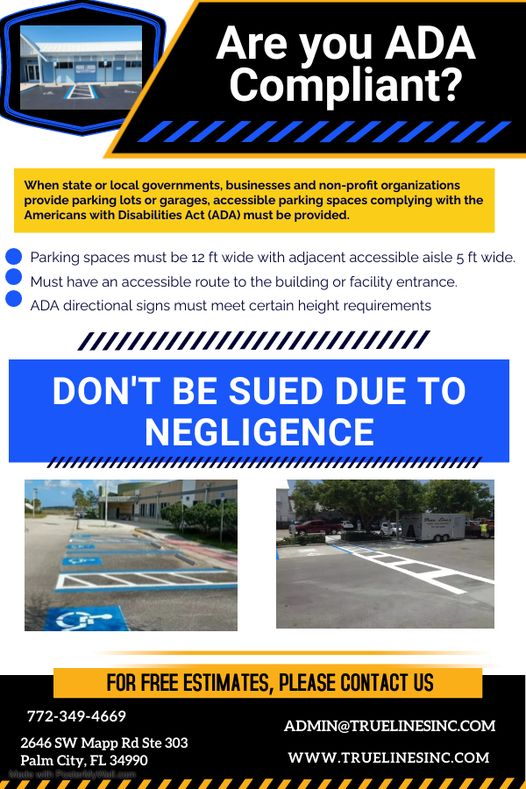
Accessible parking isn’t just a nice thing to have – it’s the law.

Most parking lots must provide accessible parking spaces that align with ADA standards.

This legal requirement ensures people with disabilities can park safely and conveniently, making it easier for them to patronize businesses, access services, and participate in community life.

Navigating the legal landscape can be challenging, but with our expertise, your parking lot can open doors for all.

Connect with us to stay informed about the crucial aspects of making your parking lot welcoming and accessible to all.

772-349-4669

admin@truelinesinc.com

www.truelinesinc.com


SOUTHEAST FLORIDA’S EXPERT ASPHALT MAINTENANCE CONTRACTOR

Tags: