SFPMA

SFPMA Industry Articles | news, legal updates, events & education! 

Find Blog Articles for Florida’s Condo, HOA and the Management Industry. 

The Subtle and Not-So-Subtle Differences Between Homeowners and Condominium Associations

The Subtle and Not-So-Subtle Differences Between Homeowners and Condominium Associations

  • Posted: Jul 20, 2021
  • By:
  • Comments: Comments Off on The Subtle and Not-So-Subtle Differences Between Homeowners and Condominium Associations

The Subtle and Not-So-Subtle Differences Between Homeowners and Condominium Associations

Florida has created an abundance of legislation governing homeowners’ and condominium associations. You would think that, by now, laws affecting both types of communities would have more parity than they actually do. (Please note that that commercial condominiums are not addressed in this article.)

Perhaps the most appreciative difference between a homeowners association and a residential condominium association is that the homeowners association exists in common law, but the condominium only exists because of legislation adopted by the Florida Legislature. That said, homeowners associations are subject to Chapter 720, Florida Statutes, and condominium associations are subject to Chapter 718, Florida Statutes. There is both parity and significant differences between these two Acts, the latter of which are further addressed below. We begin by examining bidding.


Bidding: A homeowners association is only required to obtain bids if the aggregate cost of the project (referring to the materials, work, and/or services) exceeds 10 percent of the total budget including reserves, if any. On the other hand, condominium associations are required to obtain bids if the aggregate cost of the project exceeds 5 percent of the total budget including reserves, if any. Please note, there is no requirement in the legislation for a community association to obtain a definitive number of a bids. Therefore, at least two would be appropriate. Also remember, there are exceptions to the bidding requirement for professional services such as attorneys, accountants, and landscape architects.


Certified Written Inquiry: A condominium association owner has the right to send a certified written inquiry to the board, and the board is obligated to answer it within 30 days (or 60 days if the certified written inquiry is provided to the community association’s lawyer to respond to). A failure to respond means that if the owner files a legal action over the item for which certified written inquiry was provided and loses, the owner will not be responsible to pay for the association’s prevailing party attorneys’ fees. There is no similar provision for a homeowners association.


Common Areas: Common areas in a homeowners association are owned by the association itself. In other words, no owner can claim an ownership interest in a homeowner association’s common areas. However, as to condominiums, the equivalent of the homeowner association’s common area is referred to as “common elements”. All of the unit owners of the condominium association own an indivisible interest in the common elements.


Disputes: In a homeowners association, disputes between an association and a parcel owner regarding use of or changes to the parcel or the common areas and other covenant enforcement disputes, disputes regarding amendments to the association documents, disputes regarding meetings of the board and committees appointed by the board, membership meetings not including election meetings, and access to the official records of the association must be the subject of a demand for pre-suit mediation served by an aggrieved party before the dispute is filed in the local court. Before a homeowners association can commence litigation where the amount in controversy is in excess of $100,000, the approval of a majority of a quorum of the membership is required. There is no similar provision as applied to condominium associations.


In a condominium association, prior to the institution of court litigation, a party to a “dispute” (as such term is hereinafter defined) must petition the Division of Florida Condominiums, Timeshares, and Mobile Homes of the Department of Business and Professional Regulation for non-binding arbitration or, as of July 1, 2021, avail themselves of the presuit mediation process as set out in Chapter 720.  “Disputes” subject to mandatory arbitration or presuit mediation include 1) the authority of the board of directors, under this chapter or association document to: i) require any owner to take any action, or not to take any action, involving that owner’s unit or the appurtenances thereto ii) alter or add to a common area or element; or 2) the failure of a governing body, when required by this chapter or an association document, to: i) properly conduct elections ii) give adequate notice of meetings or other actions iii) properly conduct meetings iv) allow inspection of books and records; and 3) a plan of termination pursuant to §718.117, Fla. Stat.


Elections: Elections in a homeowners association take place as per the bylaws, while elections for condominiums take place following the regime set out in chapter 718, Florida Statutes, more specifically §718.112, Fla. Stat., and the provisions of the Florida Administrative Code. In order to hold a homeowners association election, a quorum must be attained unless the bylaws provide otherwise. No quorum is required to hold a condominium election, but rather 20 percent of the eligible voters need to cast a ballot in order to hold the election. In a condominium association of more than 10 units, co-owners of a unit cannot serve on the board at the same time unless there are not enough candidates, or they own more than one unit. Commencing July 1, 2018, condominium association board members cannot serve more than eight consecutive years absent certain exceptions (note, this statute is not retroactive in its application). There is no similar co-owner prohibition and term limit restriction for homeowners associations.


Elections by acclimation: In a condominium association if the same number of candidates, or less, run for the board as the number of seats available, then there is no need to have the election. This is referred to as an “election by acclimation” which means, those candidates will comprise the present board upon the annual meeting. If the election is contested because there are more candidates than seats available and at least 20 percent of the eligible voters do not cast a ballot, then last year’s board rolls over.


As to homeowners associations, if the election process allows candidates to be nominated in advance of the meeting, the association is not required to allow nominations at the meeting. An election is not required unless more candidates are nominated than vacancies exist. If an election is not required because there are either an equal number or fewer qualified candidates than vacancies exist, and if nominations from the floor are not required pursuant to the statute or the bylaws and write-in nominations are not permitted, then the candidates who nominated themselves in advance shall commence service on the board of directors regardless of whether a quorum is attained at the annual meeting. Otherwise, if those conditions are not met and a quorum is not attained for a homeowners association’s election, then last year’s board rolls over to this year’s board.


Elections, Voting: Unless otherwise set out in the bylaws, homeowners association members vote in the election for the board by proxy and/or ballot. On the other hand, condominium association owners cannot vote for the election of directors by proxy but rather must vote themselves by secret absentee ballot using the the inner and outer envelope system. A homeowners association only needs to use the inner and outer envelope system when the bylaws call for secret absentee ballots.


Fines: A condominium association cannot levy a fine greater than $1,000 for any one violation and cannot lien and foreclose the fine under any circumstances. In a homeowners association, an association can foreclose to collect a fine if both i) the fine is $1,000 or more and ii) the authority to lien is set out in the declaration.


Frequently Asked Questions and Answers Sheet: As to condominium associations §718.504, Fla. Stat., requires that a “Frequently Asked Questions and Answers” sheet be made available to prospective purchasers and to owners who request it. It must be updated annually and must include the following questions along with the answers to these questions: 1) What are my voting rights in the condominium association? 2) What restrictions exist in the condominium documents on my right to use my unit? 3) How much are my assessments to the condominium association for my unit type, and when are they due? 4) Do I have to be a member in any other association? If so, what is the name of the association and what are my voting rights in this association? Also, how much are my assessments? 5) Am I required to pay rent or land use fees for recreational or other commonly used facilities? If so, how much am I obligated to pay annually? 6) Is the condominium association or any other mandatory membership association involved in any court cases in which it may face liability in excess of $100,000? If so, identify each such case. There is no similar provision or requirement for homeowners associations.


Leasing Restrictions: Effective July 1, 2021  as to HOA leasing restrictions, any restriction that prohibits or regulates rental agreements applies only to (i) an owner who acquires title to a parcel after the effective date of the governing document or amendment, or (ii) an owner who consents, individually or through a representative, to the governing document or amendment.  As to condominium associations, according to §718.110(13), Fla. Stat., an amendment prohibiting unit owners from renting their units or altering the duration of the rental term or specifying or limiting the number of times unit owners are entitled to rent their units during a specified period, applies only to unit owners who consent to the amendment and unit owners who acquire title to their units after the effective date of the amendment.


Liens and Foreclosures: In a homeowners association, prior to recording a lien against a delinquent owner’s lot, the owner must be provided a statutorily compliant warning letter at least 45 days prior to recording the lien, warning the homeowner that if the assessment is not paid a lien may be recorded. Then, the owner must be provided a second letter at least 45 days prior to filing the foreclosure lawsuit warning that if the lien is not satisfied (paid-off), then a lawsuit to foreclose the lien may be filed anytime thereafter. For a condominium association the warning/waiting periods for both letters was 30 days. Effective July 1, 2021 this was changed to 45 days.


Material Alterations: Unless otherwise provided in the declaration of covenants and restrictions, a material alteration to a homeowners association’s common area is decided by the board. In condominium associations, material alterations require 75 percent approval of all unit owners unless the declaration provides otherwise.


Official Records Requests: In a homeowners association, official record requests must be made by certified U.S. mail to create the rebuttable presumption the association willfully failed to respond. There is no similar requirement for a condominium association. Every community association should adopt specific rules governing official records requests, how often they can be made, and where they must be delivered. If your association has not done so, you are urged to discuss this with the association‘s lawyer.


Quorums: A quorum of the membership for a homeowners association membership meeting consists of 30 percent of the entire membership unless a lower number is provided for in the bylaws. A quorum for a condominium association membership meeting occurs when there is a majority of the voting interests present unless a lower number is provided for in the bylaws.


Reserve Accounts: A homeowners association only has restricted reserve accounts if initially created by the developer or voted on and approved by a majority of the entire membership. In a condominium association, the budget must include reserve accounts for capital expenditures and deferred maintenance. These accounts must include, but are not limited to, roof replacement, building painting, and pavement resurfacing, regardless of the amount of deferred maintenance expense or replacement cost, and any other item that has a deferred maintenance expense or replacement cost that exceeds $10,000. Condominium boards and homeowners association boards with restricted reserves may propose lower or no reserves to the membership which is subject to approval by a majority of a quorum of the members. However, neither board is obligated to propose lower reserves. A condominium association board and a homeowners association board with restricted reserves must fully fund those reserves in the budget each year as must homeowners association boards whose association has adopted restricted reserves.


Transfer Fees: As per §689.28, Fla. Stat., transfer fees when buying and leasing a home in the state of Florida are prohibited. But, there are exceptions for both homeowners and condominium associations with this caveat. There is no cap, per se, that a homeowners association can charge a prospective member as a part of acquiring their property, but such fee must be authorized in the declaration (or other recorded document). However, as per §718.112 Fla. Stat., a condominium association can only charge up to $150 per applicant. A husband/wife or parent/dependent child are considered one applicant. A condominium association can only charge a transfer fee if it has the authority to approve transfers, and the authority for the transfer fee, specifically, must be set out in the declaration or bylaws (and as set forth above, as of July 1, 2021 it is presently limited to a maximum $150.00).


Warranties: A developer and general contractor of a condominium provides statutory warranties to buyers of units as further detailed in Chapter 718, Fla. Stat. There are no similar statutory warranties set out in Chapter 720, Fla. Stat., for buyers of a home within a homeowners association. A developer of a condominium, pursuant to relevant law, also provides an implied warranty of habitability. As to a homeowners association, §553.835, Fla. Stat., provides in relevant part that there is no such warranty for off-site improvements (i.e., the common areas) with a small exception for the shared components of a townhome type community.


Websites: A condominium association that has a condominium with 150 or more units must host an association website and post certain official records to it. Homeowners associations have no similar requirement.


If you have any questions in regard to these matters be sure to discuss them with an attorney of your choosing.

(Reprinted with permission from the April 2021 edition of the Florida Community Association Journal and updated to reflect  recent legislation effective July 1, 2021)


Tags: , ,
Property Management Fees vs HOA Management Fees: How Different Are They?

Property Management Fees vs HOA Management Fees: How Different Are They?

  • Posted: Jul 16, 2021
  • By:
  • Comments: Comments Off on Property Management Fees vs HOA Management Fees: How Different Are They?

Property Management Fees vs HOA Management Fees: How Different Are They?

The Difference Between Property Management Fees and HOA Management Fees

Many people confuse property management and HOA management, but the two are starkly different. Property management is the daily supervision and management of a rental property — be it residential or commercial. HOA management, on the other hand, refers to the management of homeowners associations.

The tasks of property managers include but are not limited to the following:

  • Advertising vacant rental units
  • Conducting property showings
  • Overseeing tenant applications
  • Screening potential tenants
  • Handling the lease agreement
  • Ensuring compliance with lease terms
  • Collecting and depositing rent
  • Coordinating maintenance, cleaning, repairs
  • Resolving tenant complaints

The tasks of HOA managers include but are not limited to the following:

  • Ensuring the maintenance of common areas
  • Coordinating with vendors
  • Attending board meetings
  • Collecting dues
  • Helping with budget planning and execution
  • Sending notices on behalf of the board
  • Communicating with homeowners
  • Ensuring compliance with the law and governing documents
  • Advising the HOA board

That being said, the difference between property management fees and HOA management fees has to do with the service being paid for. Typical property management fees cover property management services, whereas HOA management fees cover HOA management services. Both types of services, though, can be performed by a company or an independent manager.


Factors That Affect Property Management Company Fees

Property management is not a one-size-fits-all type of service. When it comes to property management fee calculation, there are a number of factors that can increase or decrease the amount.

  • Location. A luxury apartment located in a high-end neighborhood will naturally command a higher rental rate. As such, a property manager may adjust their fees accordingly.
  • Size. It is harder to manage a large rental property, so the fee tends to be more expensive the bigger the place.
  • Type. Some companies or managers charge a different rate depending on the type of property — single-family home, commercial property, condo unit, apartment, etc.
  • Condition. Older properties usually require more maintenance and repairs, thus equating to a higher fee.
  • Services. Companies and managers offer a wide variety of services. If you only need select services, you may end up paying a lower fee. The reverse is true if you need a more comprehensive extent of services.

All of these factors, except maybe the condition of the property, can also affect HOA management fees. Homeowners association management can come in the form of full-service management, remote management, or simple consulting services. Obviously, full-service management is more expensive than the other two.

Companies also tend to charge a lower price if you have more properties for them to manage. This is because of how certain administrative tasks scale, allowing companies to charge a discounted price for 10 properties or more.


What Is the Average Property Management Fee for Rental Properties?

How much you ultimately pay each month for property management services will also depend on the company’s fee structure. Some companies or managers charge an ongoing flat fee, while others take a portion of the monthly rent.


Percentage of Rent

This is the most widely used structure among property management companies. In exchange for their services, a company will charge you a certain percentage of the rent. Average property management fees structured this way sit between 8 and 12 percent of the gross rent.

For instance, if the monthly rent for one rental property is $10,000 and the rate is 6 percent, then according to the property management fee calculator, the company gets to keep $600.

Of course, there is a difference between charging a percentage of the rent collected and rent due. Rent collected is the actual amount the company collected from tenants, while rent due is the monthly rent that tenants should pay. Your contract should specify that the fee is for rent collected. Otherwise, you would need to pay your property manager even if tenants fail to pay their rent.


Flat Fee

In contrast, there are some companies or managers that charge a flat rate. When you go with flat fee property management, you will need to pay a set amount every month. A single-family home may command $100 a month, though it will really depend on the extent of the services, the size of the property, and other factors.


Other Home or Condo Property Management Fees to Know

Apart from the actual management fee, companies and managers may also charge separate sums for extra services. Some will try to hide this breakdown from you and intentionally skirt the topic. Many homeowners only find out about these extra fees after they have signed the contract. Thus, it is essential to ask each candidate for their full property management price list.

Here are the other fees you should look out for:


Initial Setup Fees

Some companies will charge you an initial fee designed to cover the costs of setting up an account with them, inspecting the property, and notifying tenants of the change in management. You should expect to pay about $500 or less for the initial setup fee.


New Tenant Placement Fees

Tenant placement fees cover the costs of marketing your vacant property, screening tenants, constructing the lease agreement, and so on. As with the ongoing management fee, this can come in the form of a flat rate or a percentage of the rent — usually 50 to 100 percent.


Vacancy Fees

If you hire a property management company to manage a vacant unit, they may charge you a vacancy fee. This can range from $50 per unit to as much as an entire month’s rent.


Maintenance Fees

Some management companies have in-house workers who perform maintenance work. In that case, look out for a maintenance fee in your contract. This fee can cost you $20 to $45 per person, typically not including the cost of materials and supplies.


Eviction Fees

Evictions are common in the rental property realm. But, if you want the company or your manager to evict a tenant for you, it will cost you a few hundred dollars. That does not include any court expenses, too.


Early Termination Fees

Contracts have set lifespans. If you try to end your contract earlier than specified, the company may charge you an early termination fee. This can range from the cost of one month’s services to the cost of the services for the remainder of the contract. Some companies may even take legal action against you for breach of contract.

If you want to avoid such a situation, make sure to check your agreement thoroughly before signing it. See if you can negotiate your way out of an early termination fee. You should also consider shortening the length of your contract to one year. That way, you have the option of renewing it annually.


How Much Are HOA Management Fees?

If you plan on hiring an HOA management company, here are the fees you should keep in mind.


Initiation Fees

Similar to property management companies, an HOA management company may charge you an initiation fee to get the ball rolling. This can cost you a few thousand dollars up to a whopping $30,000. Of course, it really depends on the size of your association and the services you require.


Monthly Management Fees

Since managing associations usually means managing communities with numerous properties, monthly fees typically rely on a rate per unit. On average, an HOA management company will charge you $10 to $20 per unit per month. They may offer you a discounted price, though, if you meet a certain number of units.


Early Termination Fees

This works similarly to early termination fees in property management contracts. The key to avoiding having to pay this sum is to lock yourself into a shorter contract period. Instead of signing a management contract good for multiple years, start with one and renew from there.


Other Fees

Some companies don’t offer all-inclusive packages. This means they will charge a separate fee for certain services, such as a fixed amount for each time a manager attends a board meeting. There is also something called a transition fee, which covers the cost of transferring from one company to another.


Is Paying Property Management Fees Worth It?

Property management is certainly a difficult undertaking for many homeowners. As such, many choose to outsource the task to a professional. And, with professional services come professional fees. Property management fees may seem unaffordable to you now, but they can be worth it in the end.

As for HOA management, it can be an equally challenging endeavor. If your HOA board wants to seek expert help, start looking for an HOA management company in your area today. Use our comprehensive online directory for fast and accurate results!


Legislative Changes on the Horizon by Becker

Legislative Changes on the Horizon by Becker

  • Posted: Jul 14, 2021
  • By:
  • Comments: Comments Off on Legislative Changes on the Horizon by Becker

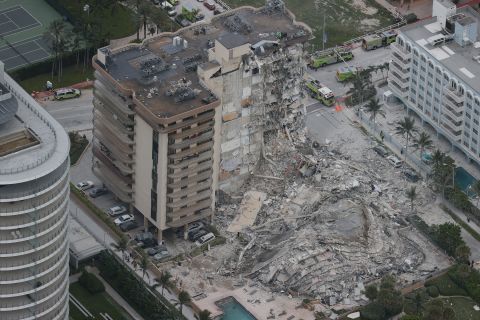
The tragic Champlain Towers South collapse has resulted in an outpouring of support worldwide, while also raising safety concerns among those who reside in community associations in Florida.

Becker’s Community Association Law team hears from clients daily seeking advice on how to assess the structural integrity of their building. The firm has always advised that individual building evaluations can only be addressed with the involvement of a qualified engineer. Separately, clients request guidance on legal steps to help their association more easily navigate these complicated issues. It is apparent that additional resources are needed to help safeguard the significant percentage of Floridians living in communities.

For this reason, the Florida Bar has appointed the Condominium Law and Policy Life Safety Task Force. This group will serve as a resource to the Governor and Legislature as they review all aspects of Florida condominium law, development, association operations, and maintenance to determine and recommend if legislative and or regulatory changes should be enacted. The task force consists of eight members, including Becker Shareholder Joseph E. Adams. Joe currently serves as the Co-Chair of the Florida Bar’s Condominium and Planned Development Committee, and is a former Chair of the Florida Condominium Council appointed by the Florida Legislature.

The Condominium Law and Policy Life Safety Task Force will discuss possible initiatives such as more frequent and statewide mandatory structural certifications, reserve funding mandates, removing hurdles to a board’s ability to assess and borrow for necessary repairs, as well as exploring the feasibility of a government-backed low interest loan program.

Becker’s Community Association Law Team will continue to monitor these developments as they evolve and will share with you as soon as information becomes available.


Donna DiMaggio BergerJoseph E. AdamsKenneth S. Direktor | 07.09.2021
Perspective Type – Client Advisory


Selective Enforcement: A Grossly Misunderstood Concept in the entire body of community association law.

Selective Enforcement: A Grossly Misunderstood Concept in the entire body of community association law.

  • Posted: Jul 14, 2021
  • By:
  • Comments: Comments Off on Selective Enforcement: A Grossly Misunderstood Concept in the entire body of community association law.

Selective Enforcement: A Grossly Misunderstood Concept in the entire body of community association law.

by https://kbrlegal.com/

Without exception, the affirmative defense of “selective enforcement” is one of the most misunderstood concepts in the entire body of community association law. How often have you heard something like this: “The board has not enforced the fence height limitation, so it cannot enforce any other architectural rules”? Simply put, nothing could be further from the truth.

When a community association seeks to enforce its covenants and/or its board adopted rules and regulations, an owner can, under the right circumstances, assert an affirmative defense such as the affirmative defense of selective enforcement. An affirmative defense is a “yes I did it, but so what” type of defense. In civil lawsuits, affirmative defenses include the statute of limitations, the statute of fraudswaiver, and more. However, it’s just not as simple as that. For example, a fence height limitation is a very different restriction than a required set back. Under most if not all circumstances, the failure to enforce a  fence height requirement is very different from the failure to enforce a setback requirement. Ordinarily, the affirmative defense of selective enforcement will only apply if the violation or circumstances are comparable, such that one could reasonably rely upon the non-enforcement of a particular covenant, restriction, or rule with respect to their own conduct or action.

In the seminal case of Chattel Shipping and Investment Inc. v. Brickell Place Condominium Association Inc., 481 So.2d 29 (FLA. 3rd DCA 1986), 45 owners had improperly enclosed their balconies. Thereafter, the association informed all of the owners that it would thereafter take “no action with respect to existing enclosed balconies, but prohibit future balcony constructions and enforce the enclosure prohibition.” As you might have already predicted, nevertheless, thereafter an owner of a unit, Chattel Shipping, enclosed their unit; and the association secured a mandatory injunction in the trial court requiring the removal of the balcony enclosure erected without permission. The owner appealed. In the end, the appellate court disagreed with the owner who argued that the association decision to enforce the “no enclosure” requirement only on a prospective basis was both selective enforcement and arbitrary. The court held that the adoption and implementation of a uniform policy under which, for obvious reasons of practicality and economy, a given building restriction will be enforced only prospectively cannot be deemed “selective and arbitrary.”

In Laguna Tropical, A Condominium Association Inc. v. Barnave, 208 So. 3d 1262, (Fla. 3d DCA 2017), the court again used the purpose of the restriction in its determination of whether the association engaged in selective enforcement. In Laguna Tropical, a rule prohibited floor covering other than carpeting unless expressly permitted by the association. Additionally, the rule provided that owners must place padding between the flooring and the concrete slab so that the flooring would be adequately soundproof. In this case, an owner installed laminate flooring on her second floor unit and the neighbor below complained that the noise disturbed his occupancy. As a result of the complaint, the association demanded that the owner remove the laminate flooring. However, the owner argued selective enforcement because the association only enforced the carpeting restriction against the eleven exclusively upstairs units in the condominium. The court noted that the remaining units in the condominium were either downstairs units only, or were configured to include both first-floor and second-floor residential space within the same unit.

Again, the court looked to the purpose of the prohibition on floor coverings other than carpet and found that the prohibition was plainly intended to avoid noise complaints. Therefore, no selective enforcement was proven because no complaints were shown to have arisen regarding any units except the eleven exclusively upstairs units.

What about cats and dogs? In another case, Prisco v. Forest Villas Condominium Apartments Inc., 847 So. 2d 1012 (Fla. 4th DCA 2003), the Fourth District Court of Appeals heard an appeal alleging selective enforcement regarding the association’s pet restrictions. The association had a pet restriction which stated that other than fish and birds, “no pets whatsoever” shall be allowed. In this case, the association had allowed an owner to keep a cat in her unit, but refused to allow another owner to keep a dog. The association argued that there was a distinction between the dog and the cat. However, on appeal, the court found that the restriction was clear and unambiguous that all pets other than fish and birds were prohibited. Therefore, the court reasoned that the facts which make dogs different from cats did not matter because the clear purpose of the restriction was to prohibit all types of pets except fish and birds. In other words, the court held that the plain and obvious purpose of a restriction should govern any interpretation of whether the association engaged in selective enforcement.

If an association has a “no pets” rule and allows cats, must it allow dogs, too? There is a long line of arbitration cases that have distinguished dogs from cats and other pets for purposes of selective enforcement. For example, in Beachplace Association Inc. v. Hurwitz, Case no. 02-5940, a Department of Business and Professional Regulation Division of Florida Condominium Arbitration case, the arbitrator found, in response to an owner’s selective enforcement defense raised in response to the association’s demand for removal of a dog, that even though cats were allowed, that comparison of dogs to cats was not a comparative, like kind situation. Further the arbitrator found that cats and dogs had significant distinctions such as barking versus meowing, and therefore the owner’s attempted use of the selective enforcement argument failed.

But, in Hallmark of Hollywood Condominium Association Inc. v. Andrews, Case 2003-09-2380, another Department of Business and Professional Regulation Division of Florida Condominium Arbitration case, the learned arbitrator James Earl decided that because the association has a full blown “no pets of any kind”  requirement and since cats were allowed, then dogs must be allowed, too. In other words, the defendant owner’s waiver defense worked. But, the arbitrator wisely noted in a footnote as follows: “The undersigned notes that there is a long line of arbitration cases that have distinguished dogs from cats and other pets for purposes of selective enforcement. However, the fourth district court of appeal has ruled that where the condominium documents contain particular language prohibiting all pets, any dissimilarity between dogs and cats is irrelevant and both must be considered. See Prisco.” The distinction between the two arbitration cases could be explained because of timing in that the 4th DCA’s decision in Prisco was not yet published when Hurwitz was decided.

From these important cases, it can be gleaned that

(i) even if an association has ignored a particular rule or covenant, that by giving written notice to the entire community that it will be enforced prospectively, the rule or covenant can be reinvigorated and becomes fully enforceable once again (though of course, prior non-conforming situations may have to be grandfathered depending on the situation),

(ii) if an association or an owner is seeking an estoppel affirmative defense, they must be sure all of the necessary elements are pled,

(iii) at times a court will look to the purpose of the rule itself where it makes sense to do so, and

(iv) dogs and cats are different, but they are both considered “pets.”

Remember to always discuss the complexities of re-enforcement of covenants and rules and regulations that were not enforced for some time with your association’s legal counsel in an effort to mitigate negative outcomes. The process (commonly referred to as “republication”) can restore the viability of a covenant or rule that may have been waived due to the lack of uniform and timely enforcement.


JOIN US FOR A DOUBLE WEBINAR ON JULY 28TH, 2021.

JOIN US FOR A DOUBLE WEBINAR ON JULY 28TH, 2021.

  • Posted: Jul 14, 2021
  • By:
  • Comments: Comments Off on JOIN US FOR A DOUBLE WEBINAR ON JULY 28TH, 2021.

JOIN US FOR A DOUBLE WEBINAR ON JULY 28TH, 2021.

GREGG WALLICK WILL BE TEACHING ROOFING 101 AND WILL BE POINTING OUT DANGER SIGNS IN YOUR ROOF AND ANSWERING ALL OF YOUR QUESTIONS.

ATTORNEY ERIC GLAZER KNOWS THAT ASSOCIATIONS ARE MORE EAGER THAN EVER TO BEGIN MAKING REPAIRS, BUT WILL TEACH THE IMPORTANCE OF CONTRACT REVIEW BEFORE SIGNING ON THE DOTTED LINE.

TO REGISTER FOR THIS ON-LINE WEBINAR: CLICK HERE

PIONEER PEST SERVICES, INC.

PIONEER PEST SERVICES, INC.

  • Posted: Jul 12, 2021
  • By:
  • Comments: Comments Off on PIONEER PEST SERVICES, INC.

PIONEER PEST SERVICES, INC.

Pioneer Pest Services first starts by conducting a thorough inspection of the residential or commercial property with a focus on areas that attract pests or allow them access in. Our technicians will then perform a thorough interior and exterior treatment pertaining directly to your needs. The greatest part of Pioneer’s pest service program is that it’s convenient, effective, and most importantly, family friendly. We will only need to come inside for the first service! Our pest prevention done on the outside greatly reduces any need for products being used on the inside of your home.


  • Perimeter treatment on exterior to prevent bugs inside
  • Only 4 treatments a year (unless additional services requested)
  • No hidden upcharges
  • Money-Back Guarantee
  • Removal of cobwebs, spider webs, and mud daubers
  • Application of products in all cracks and crevices under appliances, cabinetry and water source areas
  • Products not accessible by pets or children
  • No baseboard spraying needed
  • FREE follow ups and customer service calls between services


Pioneer Pest Services

(386) 753-3744

Dependability starts with Pioneer Pest Services!

Pioneer Pest Services, Inc. was established in 1985 and proudly serves Volusia, Flagler, Lake, and Seminole counties. We are a local family-owned and operated company with a proven track record for reliable and professional pest services.

Our goal is to partner with homeowners, business owners, and property managers to control pest, termite, and lawn and shrub problems. We will immediately assess and address current pest issues, as well as your lawn and shrub needs, and help you to prevent them from happening in the future.

Whether they fly, creep, sting, or swarm, pests are a persistent problem for Floridians—and they can do serious damage if they’re not kept in check. At Pioneer Pest Services, we understand that pests need to be taken care of promptly and effectively. That’s been our mission for the past three decades! A local, family-owned company, we’re committed to quality service for residential and commercial customers in Volusia, Flagler, Seminole, and Lake counties. RELIABLE PEST SERVICES SINCE 1985

If problems do occur between scheduled services we return at no cost to you. 100% satisfaction guaranteed.


CONTACT PIONEER PEST SERVICES, INC.

Wesley Rapplean
wrapplean@pioneerpestservices.com
Business Development Manager

Pioneer Pest Services
480 Old Daytona Rd
http://www.pioneerpestservices.com
386-212-3407


Tags:
I WARNED ABOUT THE DANGERS OF INADEQUATE RESERVES  By Eric Glazer, Esq.

I WARNED ABOUT THE DANGERS OF INADEQUATE RESERVES By Eric Glazer, Esq.

  • Posted: Jul 12, 2021
  • By:
  • Comments: Comments Off on I WARNED ABOUT THE DANGERS OF INADEQUATE RESERVES By Eric Glazer, Esq.

I WARNED ABOUT THE DANGERS OF INADEQUATE RESERVES

By Eric Glazer, Esq.

In May of 2018, at about the same time the engineer was advising Champlain Towers South that their building need millions and millions of dollars in repairs, I wrote about the dangers facing condominiums all over the state because of the ability for owners to opt out of funding reserve accounts. I implored The Florida Legislature to get tough when it comes to reserves and make them at least partially mandatory. We know that as a result of the tragedy in Surfside, now The Florida Legislature will be forced to look long and hard for the first time at making condominium residents across our state put money away for major expensive repairs, or continue to allow many associations to ignore the necessary repairs and keep kicking the can down the road.

I can tell you right now that lobbyists who represent developers and contractors will try to prevent new laws requiring developers to fund reserve accounts before turnover, and even the residents after turnover. Why? Because it will make it harder to sell condominium units if reserves are mandatory. That means monthly assessments will be higher and units may not sell so quickly. They will make arguments like the government should be less intrusive into the lives of our Florida condominium residents and If the residents don’t want to fund reserves they know the risk. Right. And cigarettes don’t cause cancer.

Today, I’m simply going to reprint, verbatim, my blog written in May, 2018 below. Your thoughts are welcome.


SHOULD RESERVES BE MANDATORY?


I hate beating around the bush, so I want to get to the point. A financial crisis is coming and it’s going to be a big one. It’s also going to hit those that can least afford it. It’s going to result in massive amounts of foreclosures. It’s going to result in countless cases of elderly persons being displaced from their homes. The worst part is, it’s absolutely avoidable but I don’t believe any legislator would ever have the courage to float a bill to save the pending disaster.


My last 24 hours made it clear to me what’s on the way. I was at a meeting last night in a 55 and over condominium that is about 40 years old. Elderly unit owners were complaining that the pipes are getting old, there are occasional leaks, and they sometimes have to come out of pocket a few hundred bucks in order to clean up the mess in their unit and/or repair that broken pipe. They are complaining about bills for a few hundred bucks and find it difficult to pay them because their sole income is social security.


To state the obvious, there is no reserve account. There never will be. Generally, senior citizens don’t believe in reserving funds for repairs that may be necessary a decade or two from now because they believe they won’t be here anyway. So, year after year goes by, decade after decade goes by and there is never a reserve fund to fall back on should a major repair become necessary. As I write this column, the season’s first storm is forming in the Gulf, and it’s still May. We all know what just one storm can do to the community’s finances. Even if we are lucky to escape this year, next year and the next five years without a hurricane or tropical storm coming, there is another storm coming that is simply unavoidable and definitely on its way.


Think of how much building has gone on in the past 50 years. It is staggering. But the buildings are getting older. As the buildings start to approach the 40 year mark or more, things start to break down and repairs become unavoidable. Concrete restoration is incredibly expensive, and unavoidable. Replacement of pipes is incredibly expensive, and unavoidable. And the same goes for electrical renovations and roof replacements. All unavoidable. Yet, so many people, especially seniors, are rolling the dice thinking that none of these repairs will be necessary while they own the property. That may be true for now, but eventually, everyone rolls a 7.


If you roll a 7 at the craps table however, you get up and go home. If you roll a 7 at the condo and all these repairs are necessary while you’re the owner, you may lose your home because year after year after year you decided to waive the funding of reserves and now you have nothing to fall back on.


So what’s the answer? I know this is going to sound unpopular, but if action is not taken now it’s going to result in much bigger problems of people losing their homes later on. So, like it or not, some form of reserves should be mandatory and not subject to being waived. There, I said it. Let’s streamline the way reserves are calculated. Let’s get rid of the “life expectancy” formula the state says you should follow but nobody does. It’s a joke anyway. We all know the truth that the life expectancy of the roof somehow gets longer, the closer you get to the original estimate of how long it was going to last. Five years ago it had a five year life expectancy. Money is tight, so today it has a new 10 year life expectancy. Somehow, like fine wine, the roof got better with age. We all know that happens, and it happens every day. So how about we make things simple. Let’s just say every condominium must contribute 10% of its annual budget to reserves for roof, plumbing, electrical, structural and painting. It all goes into one pot and it can be used for any repair necessary for those categories. It can’t be waived. If however an association wants to contribute more, they can.


If we implemented this, I’m guessing the average monthly increase for most condominiums that are not already reserving funds would be anywhere from $25.00 to $75.00 per month. I know that for some that increase is not easy. However, it’s going to be a lot more expensive if any one of these inevitable repairs become necessary and it’s time to pass a special assessment because there are no reserve funds. God forbid two of these items need repair. Sorry, but it’s still easier for a person on a fixed income to pay an extra 30 or 40 dollars per month than it is to come up with a special assessment of a few grand.


Mandatory reserves, for even modest amounts, is a necessary evil. I say so because I see the hand writing on the wall. I see buildings getting older and unavoidable repairs coming on strong. I also see hurricane seasons becoming active with the potential to cause catastrophic results to our communities. I see fear in the faces of senior citizens now when faced with small special assessments. What I don’t see is sound financial planning for the inevitable, and I don’t want to see people, especially the elderly, losing their homes when they don’t have the money to pony up and fix up their homes when a special assessment comes their way.


This year The Florida Legislature looked into the future and envisioned that in the next decade or so, we will all be driving electric cars. So, they bravely passed an electric vehicle statute to deal with that issue right now, before the issue got out of hand a decade from now. I’m asking them to do the same thing now and protect people from losing their homes over the next decade or two by ensuring the condo has a piggy bank to shake lose when massive expensive repairs become unavoidably necessary. Mandatory reserves are needed now.


Tags:
Florida’s condominium laws will undergo a top-to-bottom review by a task force established by the Florida Bar Association after the deadly collapse of the Champlain Towers South condo building in Surfside.

Florida’s condominium laws will undergo a top-to-bottom review by a task force established by the Florida Bar Association after the deadly collapse of the Champlain Towers South condo building in Surfside.

  • Posted: Jul 08, 2021
  • By:
  • Comments: Comments Off on Florida’s condominium laws will undergo a top-to-bottom review by a task force established by the Florida Bar Association after the deadly collapse of the Champlain Towers South condo building in Surfside.

Florida’s condominium laws will undergo a top-to-bottom review by a task force established by the Florida Bar Association after the deadly collapse of the Champlain Towers South condo building in Surfside.

Members of the task force who confirmed its existence to The Washington Post on Tuesday said their goal is to review state laws and regulations that govern condo developments, board operations and maintenance rules, and recommend potential changes to the governor and the state legislature.

Condo regulations in Florida have come under close scrutiny since the tragedy in Surfside on June 24, with at least 46 people confirmed dead and 94 still unaccounted for as of midday Wednesday. While investigators warn it could be months before a cause of the collapse is known, attention has turned to the decisions made — or not made — by city officials, consultants, developers and the residents and board members of Champlain Towers South.

“What we’re looking at are specific changes to prevent that from happening again,” William Sklar, an adjunct faculty member of the University of Miami’s law school and task force chair told The Post. “We also want to be realistic relative to the needs of unit owners, and we don’t want to dissuade [board members] from service.” Navigating those competing interests, Sklar and others acknowledged, is a complex mission. What lures many to condos in the first place is precisely what can eventually undermine them: Shared responsibility for maintenance with the perks of private ownership.

‘I anticipate a lot of push-pull’

Despite the detailed, extensive condo laws in Florida, several real estate experts said the rules are often easy to manipulate or have toothless enforcement.

“Condos are so critical to our local economy, but the state does nothing to bring clarity to it because it’s a cash cow,” said Peter Zalewski, a Florida condo industry analyst. “No one wants to kill the market prices.”

Condo owners and developers aren’t the only ones who may be skittish of changes: Politicians eager to enact tougher oversight in the wake of Surfside are still responsive to the will of voters, said Peggy Rolando, a Miami-based real estate lawyer and co-chair of the Florida Bar Association’s Condominium and Planned Development Committee.

“In Florida, condo owners are a hugely powerful political force,” Rolando said. Board meetings of well-heeled condo associations warrant campaign stops, and some buildings are even large enough to be their own voting precinct, she said.

Even tightening regulations in the name of building safety is likely to face resistance. Experts agreed the current rules that give condo owners significant leeway to defer costly maintenance can lead to a worst-case scenario in which a building becomes too unsafe to inhabit and too expensive to repair.

At the same time, they recognized putting off pricey fixes is sometimes a matter of short-term economic survival. In a place like South Florida, affordable housing is scarce, and many residents are fixed-income retirees who can’t easily absorb sudden spikes in homeowner fees.

“I anticipate a lot of push-pull,” Rolando said. “There’s an expression in South Florida that ‘you’re throwing grandma off the balcony’: If you’re passing laws saying ‘you must fully fund reserves for the entire building’ and price people out of their homes, you’re going to have a very unhappy constituency.”

Scrutiny on volunteer condo boards

After the collapse in Surfside, attention — and blame — quickly settled on the Champlain Towers South Condominium Association.

The association is the subject of at least 10 lawsuits filed since the building fell. In each of the complaints, residents detail what they say are oversights and failures of the condo board to act on crucial maintenance they argue contributed to the building’s structural instability.

But a Washington Post investigation found that while plans for repairs dragged on for years even as the building’s 40-year safety certification was coming due, dozens of unit owners in the condo balked at the estimated repair costs, which eventually tallied $15 million. In April 2019, dozens of owners signed a letter raising last-minute objections to the repair plans and asked for a lower assessment. A few months later, five of the seven board members quit.

The tension exhibited by the fallen tower’s condo association underscores why a condo building’s troubles don’t start and end with its board of directors, said Peter M. Dunbar, a longtime legal expert in Florida real estate who has written several reference books on Florida condominium law and management used by the state.

Florida condo board seats are volunteer roles in which elected members are not required to have any specialized training or vetting, even in buildings where board members are responsible for reserve accounts worth hundreds of thousands or even millions of dollars and approve maintenance for complex amenities like elevators and swimming pools.

New board members have 90 days to take an elective course approved by the Division of Florida Condominiums, Timeshares, and Mobile Homes Complaints/​Investigations or simply file a statement saying they have read the condominium’s rules and legal documents and understand their duties as a board member, Dunbar said.

“The lack of knowledge is not often where I find the biggest concerns,” Dunbar said. “You may know what you’re supposed to be doing, but are you doing it in a timely fashion, and are you doing it to the extent it’s required? To me, that’s a bigger issue.”

Anyone who serves as a director of an association has what Florida law states is a “fiduciary duty” to the association, or an obligation to act in the association’s best interests where maintenance, finances, quality of life and property value are concerned. In other words, Dunbar said, board members don’t have to know how to fix everything; they just need to hire the right people to assess what needs fixing and then act on those recommendations.

“But because they’re elected, they also have the pressures of their constituents,” Dunbar said. “The difference for the volunteer board is, you can do your best, and a resident can still say, ‘I don’t want to pay,’ and recall you.”

Public battles over personal budgets

Condo board members face personal liability if they’re found to have acted negligently or criminally in an individual capacity. But most problems that befall condo associations are not from nefarious board members or tightfisted unit owners, said Rolando, the Florida Bar Association’s Condominium and Planned Development Committee co-chair.

More often, personal circumstances or simple human nature cloud decision-making.

“There are very, very few associations that have really extensive, comprehensive reserve structures,” she said. “But if you know your neighbor just lost their job, or just sent their kid off to college, what are you going to do? You have an obligation to do the right thing for the association. But you have people who don’t want to or can’t afford to do the right thing.”

Documents from the Champlain Towers South Condo Association revealed infighting among neighbors as building repairs grew more urgent and more costly; one neighbor recounted toxic board meetings that would devolve into “screaming and yelling.”

The tension can erode the quality of life in a building where board members and condo owners pass one another every day in the lobby, by the pool or walking the dog, Rolando said.

“I have a lot of sympathy for board members because I think it’s rewarding that you can do something that improves your community and has a direct impact,” she added. “But it’s also enormously demanding, unpaid and thankless. I guess it’s like being a mom or something.”

The Florida legislature requires condo associations to have financial reserves for painting, roof repair, paving and any item of deferred maintenance that exceeds $10,000, Rolando said.

Rolando said she sympathizes with unit owners who face unmanageable costs that can balloon from years of neglected or delayed maintenance.

“Mandatory reserves are probably the right thing to do fiscally. But when you’re dealing with human beings with myriad financial issues, do you want to force people into a situation where they can’t afford to pay and will have to sell their unit?” Rolando said. “There are no good answers.”

Transparency and tougher rules

Members of the new safety task force hinted that changes to safety certifications and inspection schedules are likely to meet the least resistance.

Sklar, the task force co-chair, suggested that South Florida’s 40-year safety recertification program could be significantly narrowed to 10, 25 or 30 years and that it could be applied uniformly statewide; right now, it applies only to Miami-Dade and Broward counties.

Other considerations include expanding inspections to include geological and hydrological factors affecting building stability and structure, and periodic and comprehensive reviews of specific building elements such as concrete, rebar and electrical.

Sklar said the law allowing condo owners to hold an annual vote and waive fully funding the association’s reserves will need to be re-examined as well.

The task force will also consider ways the government can help residents who can’t afford the reserves or maybe bought into a lower-cost building or live on a fixed income.

“We may review if there’s a low-cost, government-backed, subsidized financing available,” he told The Post.

Zalewski, the condo industry analyst, said he hopes the task force also considers making real estate transactions more transparent and favorable to buyers. Under Florida law, a prospective condo buyer has a 15-day right of rescission, or ability to pull out of a pending condo purchase, if they are buying directly from a developer; if the purchase is made from an existing condo owner, the period shrinks to three days.

Zalewski, who is critical of the three-day rescission period, said that amount of time does not give a prospective buyer an adequate period to do the research and inspections that could prevent them from buying into a condo building that has hidden costs lurking down the road.

“The three days doesn’t make sense if you’re worried about the buyer,” he said. “It would change the market overnight because it would force everyone to be on the up and up.”

Tags: , ,

Engineering & Compliance for your Buildings

Engineering & Compliance for your Buildings

Engineering & Compliance for your Buildings

The question on the minds of many South Floridians, especially those in older, beachfront buildings that are faced day in and day out with similar conditions as the Champlain Towers South: salty air, rising seas and aging concrete. here are some of our members of SFPMA in Engineering & Compliance. Members of the State of Florida Property Management Association SFPMA.ORG are ready to help!


UNITED PROFESSIONAL ENGINEERING

561-582-1733

Leaders in Professional Engineering

Providing exceptional engineering services through integrity, reliability and professionalism. With over 21 years of experience, we are the leaders in the industry, and we can help you as well!

United Professional Engineering (UPE) provides a unique “one-stop-shop” for all your structural engineering needs. Our South Florida area founded firm has been in business since 2005 and we have a diverse team; from licensed designers and structural engineers to inspectors and general contractors. For that reason, our projects range from designing and restoration to structural inspections and more!

At UPE, we understand how valuable your time is and we are committed to providing our industry leading expertise to your next project. Our team welcomes any and all challenges to ensure a smooth and cost-effective project for all our clients and everyone involved. Your journey with us is important, and we take pride in making it memorable!


SRI Consultants

561-372-1290

Coastal areas like South Florida have a unique need for concrete rehabilitation and protection services predominantly related to assessing structural damage. At SRI Consultants, we provide the highest level of expertise in assessing the state of aging structures and are committed to saving clients time and money by determining repair quantities during inspection. With over thirty-five years of experience, and a registered professional engineer in Florida & Virginia, the president and founder of SRI, Mr. Shirish “Raj”pathak, is a NACE Cathodic Protection Specialist. We have specialists in structural engineering, civil engineering, environmental engineering and corrosion engineering at your disposal. The extra effort and attention to detail put forth by our team ensure you receive the highest quality services available to the industry.

We are dedicated to providing the highest level of expertise in assessing the state of aging structures. Our staff is committed to saving clients time and money by determining any repair quantities during inspection.


The Falcon Group – Engineering Architecture Energy Consultants Specialists

An industry-leader providing professional, cost effective and innovative architectural and engineering designs, solutions and services through the use of highly qualified staff and outstanding customer service.


The Falcon Group is a multidisciplinary engineering, architectural and energy consulting firm with offices in New Jersey, New York, Pennsylvania, Connecticut, Maryland, Washington DC, Virginia and Miami. Our services include Civil, Structural, MEP Engineering, Architecture. Energy Consulting and Aerial Imaging services.

The Falcon Group is a unique Engineering and Architectural firm that focuses on the specific needs of Community Associations, including Capital Reserve Studies and Transition Reports, along with full-service engineering capabilities: Civil, Structural, Mechanical/Electrical/Plumbing (MEP), Architecture, Energy Consulting and Litigation Support services.


O&S Engineers & Architects

305.676.9888

O&S Associates, Inc. (O&S) is a full-service multi-disciplinary architectural and engineering consulting and design firm.

One key attribute that separates O&S from a typical engineering firm is the range and diversity of our experience. Our team of seasoned professionals excels in project leadership, teamwork, dedication, and cooperation, which provides our clients with superior designs and exceptional service. This expertise and our commitment to quality provide clients with the latest technologies and advances in materials and products.

O&S specializes in design and restoration, particularly structural/civil engineering and MEP services including historic preservation and facility renewal. Our engineering specialties include parking, MEP, structural, restoration, exterior envelope services, energy audits, façade law compliance, cogeneration, and HVAC. O&S provides sustainable design on all our projects. We maintain LEED Accredited Professionals as an effort to show our commitment to “Green” design.


ONM&J Structural Engineers & Special Inspections

(561) 835-9994

O’Donnell, Naccarato, Mignogna & Jackson, Inc. (ONM&J) is one of Florida’s most experienced structural engineering firms.  It is the firm’s reputation for innovative design solutions that keeps ONM&J ready to service public and private clients.

  Headquartered in West Palm Beach since 1985, ONM&J offers clients resources throughout the state of Florida.

ONM&J approaches every project with a fresh eye providing flexible, economical, structural design.  The firm is a capable and integral member of the project team for projects ranging from high-rise residential to single-story retail, including all types of civic facilities.  Functional and aesthetic project goals are identified and resolved through the firm’s unique project management approach. This approach involves a design strategy that meets at the project’s inception, followed by the development of inventive solutions to structural systems, thorough pre-construction consultations, as well as assisting the project team during construction and beyond with post construction evaluations.


Tags:
Is It Time To Amend Your Condominium Declaration? by Becker

Is It Time To Amend Your Condominium Declaration? by Becker

Is It Time To Amend Your Condominium Declaration?

BY   / Becker


Does your Declaration of Condominium still refer to Chapter 711 as the Florida Condominium Act? Well, maybe it is not that old, but perhaps it has been a decade since it has been revised. If that is the case, then it may be time to amend the governing documents to ensure that they include the most recent amendments to the Condominium Act and address changes in your community’s needs which have developed over time.

Section 718.110(1)(a), Florida Statute, provides that if a declaration fails to provide a method of amending the document, it may be amended, as to most matters, if the amendment is approved by owners of not less than two-thirds (2/3rd) of the units. There are two major exceptions, however. First, changing any appurtenances to the unit or changing an owner’s percentage share in the common expenses requires the approval of all owners and all lienholders, unless the original declaration provides otherwise. Second, an association cannot amend a declaration to create timeshares without the approval of the all owners and all lienholders, unless the original declaration provides otherwise.

Now that you know the basics of an amendment, lets discuss “why” in terms of a growing issue in Florida (i.e., short term rentals). If the goal is to amend the declaration to address the onslaught of short term rentals popping up with more and more frequency in condominiums, Section 718.110(13) must be considered. This statute provides that any amendment prohibiting owners from renting their units, altering the duration of the rental term, or limiting the number of times owners are entitled to rent will only apply to owners who agree to the amendment and to owners who purchase their unit after the effective date of the amendment. The amendment however limited it seems now, may be prudent today nonetheless. Why? Because it may take a bit for the new restrictions to apply to all owners and those short term rental investors while gaining momentum are still in the minority.

Amendments should not be taken lightly. If an amendment is done incorrectly, it will be deemed void or invalid. Once you have ideas as to what your Association needs in light of what the governing documents provide, it is important to meet with the Association’s attorney to discuss these. The attorney can then advise of those changes which would be permitted and craft language aimed at meeting the Association’s needs harmonizing those with the Condominium Act.


Robyn M. Severs

Shareholder / Orlando
904.423.5372
RSEVERS@beckerlawyers.com


Tags: , ,