SFPMA

SFPMA Industry Articles | news, legal updates, events & education! 

Find Blog Articles for Florida’s Condo, HOA and the Management Industry. 

BIG NEWS ABOUT Glazer and Sachs & Condo Craze and HOAs BLOG – View our new Website!

BIG NEWS ABOUT Glazer and Sachs & Condo Craze and HOAs BLOG – View our new Website!

  • Posted: Mar 22, 2021
  • By:
  • Comments: Comments Off on BIG NEWS ABOUT Glazer and Sachs & Condo Craze and HOAs BLOG – View our new Website!

BIG NEWS ABOUT MY BLOGS! by Eric Glazer of Glazer & Sachs

As you know, I have been writing a blog 50 times per year for the last 10 years. That’s over 500 columns that have spoken about virtually every aspect of community association living. Our readers love it. The only complaint about the blog was that it was not searchable by topic. It was difficult to find a specific blog about a specific topic. Not any more!  From now on, by going to either the website for Glazer and Sachs,

Or, by going to the website for Condo Craze and HOAs, you can click on our BLOG link –type a few key words in the search bar- and find a blog about a topic of your choice. You also still have the option to scroll through all our blogs in chronological order.

It’s just another way our firm tries to make the law accessible and enjoyable to everyone with an interest in community association law, whether you’re a Board member, owner, manager or service provider. We hope you enjoy reading them half as much as we enjoy writing them.


View our New Website


Tags: , , ,
Vote No For House Bill 305!

Vote No For House Bill 305!

  • Posted: Mar 22, 2021
  • By:
  • Comments: Comments Off on Vote No For House Bill 305!

Vote No For House Bill 305!

Homeowners, tell your representative to Vote NO on House Bill 305! Do not let the insurance industry take away your rights with House Bill 305. Your voice counts! Call or email your representative today!

Vote No For House Bill 305!
Homeowners, tell your representative to Vote NO on House Bill 305! Do not let the insurance industry take away your rights with House Bill 305. Your voice counts!
Contact Representative Rommel at:
Capitol Office: (850)717-5106
District Office: (239)417-6200
Email at: Representative Rommel or
Click here for your representative:


Tags: , ,
Community Update: February Wrap Up – Florida Condo & HOA Law Blog

Community Update: February Wrap Up – Florida Condo & HOA Law Blog

  • Posted: Mar 01, 2021
  • By:
  • Comments: Comments Off on Community Update: February Wrap Up – Florida Condo & HOA Law Blog

Spring is just around the corner and sprucing up is often top of mind. Whether that means improving yards, documents, or relationships, this edition of Becker’s Community Update offers practical guidance on how to move forward. Check out the hot topics below, and don’t forget to connect with us on Facebook to get real time updates on these issues and more!

by Becker / Florida Condo & HOA Law Blog

While Mother Nature may be hard to harness, community associations are often tasked with doing just that to protect both residents and property. In Responsibility for Tree Branches and Roots Elizabeth Lanham-Patrie explores how the law decides who needs to tackle this chore.

In the second part of our two part series Amending Governing Documents, Jay Roberts outlines best practices for getting proposed changes approved by membership.

Maritrini Soto Garcia discusses presidential power in Does a Community Association Board President Have Executive Action Authority or Unilateral Powers?, and reminds everyone that the work of a community association is, ultimately, a group effort.

Assessments are not the most popular feature of a community association, but they are a vital resource in maintaining the amenities and ambiance to which the community has grown accustomed. In THIS CASE: Abbey Park Homeowners Association, Inc. v. Bowen, Rob Caves reviews how the Florida court decided the seminal case regarding an owner’s right to withhold payment of an assessment.


If you have new members on your board or a new manager for your community and want them to be part of our Community Update, have them subscribe here:


Amending Governing Documents Part II – How?

By: Jay Roberts, Esq.

In Part I of this two-part series, we discussed the importance of amending governing documents. Part II discusses tips on how a board of directors can put itself in the best position to have the proposed amendments approved by the membership.

START EARLY:

Work with the association’s counsel to craft the language appropriate for the amendments well before you plan to present it to the membership formally.

Click here to read more!

Does a Community Association Board President Have Executive Action Authority or Unilateral Powers?

By: Maritrini Soto Garcia, Esq.

Community associations are not administered by a single director or officer of the board, instead, the affairs of such associations are administered by its board. The articles of incorporation and/or bylaws of an association most often specify the required minimum number of board members. In the condominium context, the Florida Condominium Act provides that in the absence of such specification, the board of administration must be composed of five members (or three members in condominiums with five or fewer units).

Click here to read more!

Abbey Park Homeowners Association, Inc. v. Bowen,

508 So.2d 554 (Fla. 4th DCA 1987)

By: Rob Caves, Esq.

Assessments paid by owners are the lifeblood of any community association and efforts to collect assessments are the most consequential and common legal proceedings any association engages in. Typically, there are few valid defenses an owner can raise to challenge the collection of properly adopted assessments. One common defense that is attempted is that the association is failing to properly maintain the common elements of a condominium or the common areas of a homeowners’ association.

The seminal case on the issue of whether owners can withhold the payment of assessments due to the association’s failure to properly maintain the common elements is Abbey Park Homeowners Association, Inc. v. Bowen, 508 So.2d 554 (Fla. 4th DCA 1987). In the case, the appellate court held that the failure to maintain the common elements is not an affirmative defense to the association’s action to foreclose on the unit for the failure to pay assessments. Accordingly, a claim by an owner that the association is improperly maintaining the condominium property would not be a valid defense to the association’s action to collect unpaid assessments or enforce the association’s assessment lien against a unit.

However, there are subsequent cases that hold that while such claims are not affirmative defenses to a foreclosure action by an association, they could constitute counterclaims and entitle the owner to a “set-off” if they were to prove that the association failed to properly maintain the condominium property and such failure resulted in damage to the unit owner or their property. See Qualcom Corp. v. Global Commerce Center Association, Inc., 59 So. 3d 347 (Fla. 4th DCA 2011) (holding that the owner was able to argue at trial that its damages from a roof leak, if proven, could be a “set-off” against the outstanding assessments). However, the facts which would entitle an owner to a set-off would be very specific and would not apply to an owner’s general allegation that the common elements, or common areas, were not being maintained, as was alleged in Abbey Park.

Accordingly, pursuant to the legal principles outlined in the Abbey Park case, the fact that an owner alleges that the association is not properly maintaining the common property, or operating the association, would not be a defense against the association’s action to collect properly levied assessments.


CALLING ALL BOARD MEMBERS AND COMMUNITY MANAGERS

As a service to the community and industry, we are pleased to offer some of our most popular classes online! While our in-person classes remain suspended until further notice due to COVID-19, we are thrilled to bring you the following classes to participate in from the comfort of your own home.

HOA/Condo Board Member Certification

VIEW ALL CLASSES


Tags: , , ,
GOVERNOR DESANTIS EXTENDS STATE OF EMERGENCY FOR ANOTHER 60 DAYS ON FEBRUARY 26TH, 2021

GOVERNOR DESANTIS EXTENDS STATE OF EMERGENCY FOR ANOTHER 60 DAYS ON FEBRUARY 26TH, 2021

  • Posted: Mar 01, 2021
  • By:
  • Comments: Comments Off on GOVERNOR DESANTIS EXTENDS STATE OF EMERGENCY FOR ANOTHER 60 DAYS ON FEBRUARY 26TH, 2021

As a result of this Order, Emergency Powers of the Boards of Directors for community associations remain in effect for another 60 days.

Read the Entire Emergency Order Here


Visit the new Website:
READ ALL THE FLORIDA ASSOCIATION LAWS
LISTEN TO ANY PAST SHOW
GO TO OUR SHOW’S WEBSITE
SEND US YOUR COMMENTS
READ OUR NEWSLETTERS
REGISTER FOR OUR SEMINARS
READ OUR BLOG
Tags: , ,
HOW DO YOU PROTECT YOUR RIGHT TO VOTE IF YOU LIVE OUT OF THE STATE OR COUNTRY? By Eric Glazer, Esq.

HOW DO YOU PROTECT YOUR RIGHT TO VOTE IF YOU LIVE OUT OF THE STATE OR COUNTRY? By Eric Glazer, Esq.

  • Posted: Mar 01, 2021
  • By:
  • Comments: Comments Off on HOW DO YOU PROTECT YOUR RIGHT TO VOTE IF YOU LIVE OUT OF THE STATE OR COUNTRY? By Eric Glazer, Esq.

LOTS OF COMPLAINTS THIS YEAR ABOUT PEOPLE NOT GETTING THE CHANCE TO VOTE BECAUSE THE MAIL IS SLOW. HOW DO YOU PROTECT YOUR RIGHT TO VOTE IF YOU LIVE OUT OF THE STATE OR COUNTRY?

By Eric Glazer, Esq.

This year I am hearing the following complaint more than ever before: I live out of the state, or out of the country and I never received a ballot to vote in the election.

A little over a year ago I was involved in a case where many owners who lived in Finland did not get their ballots timely.  Instead of having their vote not count, someone who lived in the condominium e-mailed them the ballot.  These owners then took that ballot, placed it in a ballot envelope, placed that ballot envelope in another envelope and signed the exterior, and mailed it back to the association usually by overnight mail.  Some owners didn’t bother to use the interior ballot envelope.

The association didn’t want to count these votes.  The association also didn’t want to count the votes of owners who had their ballot envelopes dropped off by a neighbor, claiming that this was voting by proxy.

Read the attached opinion to find out how the arbitrator ruled.  It makes for interesting reading.  The bottom line…….if you’re out of town…..have the ballot e-mailed to you.

To read the case, click here.


About HOA & Condo Blog

Eric Glazer graduated from the University of Miami School of Law in 1992 after receiving a B.A. from NYU. He has practiced community association law for more than 2

decades and is the owner of Glazer and Sachs, P.A. a seven attorney law firm with offices in Fort Lauderdale and Orlando and satellite offices in Naples, Fort Myers and Tampa.

Since 2009, Eric has been the host of Condo Craze and HOAs, a weekly one hour radio show that airs at noon each Sunday on 850 WFTL.

See: www.condocrazeandhoas.com

He is the first attorney in the State of Florida that designed a course that certifies condominium residents as eligible to serve on a condominium Board of Directors and has now certified more than 10,000 Floridians all across the state. He is certified as a Circuit Court Mediator by The Florida Supreme Court and has mediated dozens of disputes between associations and unit owners. Eric also devotes significant time to advancing legislation in the best interest of Florida community association members.

Tags: , ,
A newly filed bill by Senator Jason Pizzo, SB 1490, could create a significant change in terms of an association’s ability to invest the community’s operating and reserve funds in depositories other than a traditional bank or savings and loan.

A newly filed bill by Senator Jason Pizzo, SB 1490, could create a significant change in terms of an association’s ability to invest the community’s operating and reserve funds in depositories other than a traditional bank or savings and loan.

  • Posted: Feb 26, 2021
  • By:
  • Comments: Comments Off on A newly filed bill by Senator Jason Pizzo, SB 1490, could create a significant change in terms of an association’s ability to invest the community’s operating and reserve funds in depositories other than a traditional bank or savings and loan.

A newly filed bill by Senator Jason Pizzo, SB 1490, could create a significant change in terms of an association’s ability to invest the community’s operating and reserve funds in depositories other than a traditional bank or savings and loan. 


For years there have been significant legal constraints on a condominium association’s ability to use reserve funds. In addition to the statutory requirement to obtain membership approval for non-designated reserve usage, the prevailing school of thought was that association funds could not be invested since investments can and do fail.

A newly filed bill by Senator Jason Pizzo, SB 1490, could create a significant change in terms of an association’s ability to invest the community’s operating and reserve funds in depositories other than a traditional bank or savings and loan.

The bill provides as follows:

“Unless otherwise prohibited in the declaration, and in accordance with s. 718.112(2)(f), an association, including a multicondominium association, may invest any funds in one or any combination of investment products described in this subsection.”

If this bill passes and an association invests funds in any type of investment product other than a depository account, the association must meet all of the following requirements:

  1. The board shall annually develop and adopt a written investment policy statement and select an investment adviser who is registered under s. 517.12, F.S. and who is not related by affinity or consanguinity to any board member or unit owner. Any investment fees and commissions may be paid from the invested reserve funds or operating funds.
  2. The investment adviser selected by the board shall invest any funds not deposited into a depository account in compliance with the prudent investor rule in s. 518.11, F.S. It is important to note that the statutory prudent investor rule is a test of conduct and not resulting performance. Under this statute, no specific investment or course of action is, taken alone, considered prudent or imprudent. Instead, the investment adviser is deemed to be acting as a fiduciary and he or she may invest in every kind of property and type of investment, subject to that statute. The fiduciary’s investment decisions are evaluated on the basis of whether he or she exercised reasonable business judgment regarding the anticipated effect on the investment portfolio as a whole under the facts and circumstances prevailing at the time of the decision or action. Although the proposed statute requires that funds invested be subject to insurance under the Securities Investor Protection Corporation, it is important to note that this insurance is only there if the brokerage firm fails, not if the investment turns out to be ill-advised and loses the association’s money.
  3. The investment adviser shall act as a fiduciary to the association in compliance with the standards set forth in the Employee Retirement Income Security Act of 1974 at 29 U.S.C. s. 1104(a)(1)(A)-(C).
  4. At least once each calendar year, the association shall provide the investment adviser with the association’s investment policy statement, the most recent reserve study report or a good faith estimate disclosing the annual amount of reserve funds which would be necessary for the association to fully fund reserves for each reserve item, and the financial reports.
  5. The investment adviser shall annually review these documents and provide the association with a portfolio allocation model that is suitably structured to match projected reserve fund and liability liquidity requirements. There must be at least thirty-six (36) months of projected reserves in cash or cash equivalents available to the association at all times.
  6. Portfolios managed by the investment adviser may contain any type of investment necessary to meet the objectives in the investment policy statement; however, portfolios may not contain stocks, securities, or other obligations that the State Board of Administration is prohibited from investing in under ss. 215.471, 215.4725, and 215.473, F.S. or that state agencies are prohibited from investing in under s. 215.472.

Lastly, the bill would exempt registered investment advisors from having their bids subjected to the competitive bidding requirements found in Section 718.3026, F.S.  The companion bill to SB 1490 is HB 1005 (Killebrew/Fine).

As more associations change their old habits and begin to fund reserves, the allure of more aggressive investment vehicles for these funds, which can be substantial amounts, is undeniable. However, the risk is also undeniable. As such, if this bill becomes law and the investment of reserves becomes available, boards are strongly encouraged to take an extremely cautious, measured approach with reserves.

While investment of your association’s operating and reserve funds might result in a substantially better return than a savings account, you might also see significant losses. The investment of association funds must be done with careful consideration of the demographic in your community, the age of your buildings and facilities, the required liquidity of your funds and, most importantly, the sensitivities and risk tolerance of your membership all taken into account. If your members fuss about your board’s landscaping decisions imagine the potential fallout if you make the wrong investment decisions!


Very truly yours,

Donna DiMaggio Berger, Founder & Executive Director
Community Association Leadership Lobby
Tags: , , ,
Keeping Politics Out of Your Community Association by Becker

Keeping Politics Out of Your Community Association by Becker

  • Posted: Feb 22, 2021
  • By:
  • Comments: Comments Off on Keeping Politics Out of Your Community Association by Becker

Keeping Politics Out of Your Community Association

by Becker / Donna DiMaggio Berger | 09.15.2020


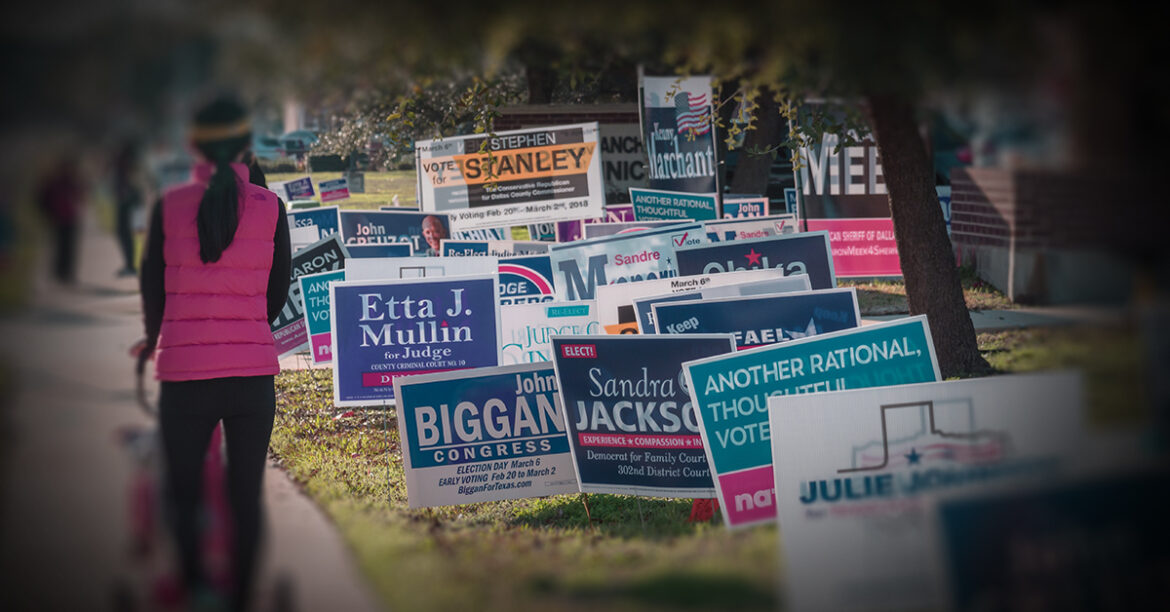
Not surprisingly, the chatter about whether or not political signs should be permitted in private residential communities has increased as we draw closer to the elections in November.

Let’s first discuss whether or not an owner in a Florida HOA has the “right” to install signs. The short answer is “no” with one exception. FL homeowners’ associations can prohibit all types of signs other than one security sign located ten or fewer feet from the entrance to the home. All other signs including “For Sale” signs, signs installed by vendors doing work at a home, seasonal and congratulatory greetings and political signage may be prohibited IF the board determines that doing so is in the best interests of the community. Naturally, if the members disagree with their board’s decisions they may decide not to re-elect that board in the future.

Some owner signs enhance a community’s charm including seasonal greetings, and in the time of Covid, the congratulatory yard signs letting neighbors know of a child’s accomplishments when a traditional party could not take place. However, other signs cause concern. Many boards dislike the posting of “For Sale” signs as an abundance of those signs may send the wrong signal to both residents and potential purchasers.

And, it goes without saying that political signs these days are capable of igniting deep fractions inside residential communities. One school of thought is that some people’s sensitivities should not dictate others’ ability to promote their political candidate of choice.

The other school of thought associated with political signs is that they do not belong inside a private residential community where they can do more harm than good. The advocates for keeping politics out of communities believe that one’s political ideology is more productively expressed through monetary donations, volunteering for a campaign and/or waging war on social media sites to one’s heart’s content.

Some owners maintain that their constitutional rights are being trampled if their association denies them the right to install a political sign or political flag. In fact, you need a state actor to be the entity violating one’s First Amendment rights in order to mount a sound constitutional argument. In Florida, condos and HOAs have not been found to be state actors so prohibiting political signs and political flags is possible either through a recorded covenant or a board rule if the board has rule-making authority under the governing documents. In the case of Quail Creek Prop. Owners Association, Inc. v. Hunter, 538 So. 2d 1288, 1289 (Fla. 2nd DCA 1989), the Second District Court of Appeal found that an association’s sign restriction was not unconstitutional as “neither the recording of the protective covenant in the public records, nor the possible enforcement of the covenant in the courts of the state, constitutes sufficient “state action” to render the parties’ purely private contracts relating to the ownership of real property unconstitutional.”

Some boards choose to regulate the number and size of political signs and political flags as well as how long they can remain in place. However, when it comes to wording on those signs and what may or may not be considered offensive that requires a more in-depth analysis which some boards understandably wish to avoid. After much debate, many communities simply decide that political signs are best left outside their communities.

The place you call home should be a respite from the world and respites often don’t involve contentious political signage next door.


Tags: ,
An Introduction to HB 969: Florida’s Proposed Data Privacy Law by Becker

An Introduction to HB 969: Florida’s Proposed Data Privacy Law by Becker

  • Posted: Feb 18, 2021
  • By:
  • Comments: Comments Off on An Introduction to HB 969: Florida’s Proposed Data Privacy Law by Becker

An Introduction to HB 969: Florida’s Proposed Data Privacy Law

Jack S. Kallus | Becker Lawyers
Client Advisory


Yesterday, House Bill 969 titled Consumer Data Privacy was introduced as a potential new law to protect the personal data of Florida consumers. Governor Ron DeSantis’ stated goal for the bill is to “safeguard the privacy and security of consumer data.”

The bill is intended to give consumers more control over the personal information that businesses routinely collect and may even sell to third parties. Many of the basic rights under the new bill mirror that of the California Consumer Privacy Act passed in 2018 (CCPA). Like the CCPA, HB 969 attempts to secure new privacy rights for Florida consumers. If you are a Florida resident, you may ask businesses to disclose what personal information they have about you and what they do with that information as well as the right to request a business delete and to not sell your personal information. Consumers will also have the right to be notified, before or at the point businesses collect personal information, about the types of personal information being collected and what the business may do with that information. Generally, businesses will not be able to discriminate against you for exercising your rights under HB 969.

As stated above, the consumer will be provided the right to request that businesses disclose what personal information they have collected, used, shared, or sold about the consumer, and why they collected, used, shared, or sold that information. Businesses must provide a consumer with this information for the twelve-month period preceding the request and must provide the information free of charge.

If passed, HB 969 would require businesses to inform consumers about certain information being collected at the time of collection. Businesses would be required to inform consumers about:(i) categories of personal information collected; (ii) specific pieces of personal information collected; (iii) sources from which the business collected personal information; (iv) purposes for which the business uses the personal information; (v) categories of third parties with whom the business shares the personal information; and (vi) categories of information that the business sells or discloses to third parties.

If the business sells consumers’ personal information, then the information at collection must include a “Do Not Sell or Share My Personal Information” link. The information of consumer rights must also contain a link to the business’s privacy policy, where consumers can get a description of the business’s privacy practices and of their privacy rights.


A Florida consumer may also request that businesses stop selling their personal information (“opt-out”). With some exceptions, businesses cannot sell your personal information after they receive an opt-out request unless later provide authorization allowing them to do so again. Businesses must respect the consumer’s decision to opt-out for at least twelve months before requesting that the consumer authorize the sale of the consumer’s personal information. Businesses can offer consumers financial incentives in exchange for collecting, keeping, or selling personal information. However, businesses cannot use financial incentive practices that are unjust, unreasonable, coercive, or usurious in nature.

After discovering what personal information is collected, used, shared or sold a consumer may request that a business delete the personal information collected and to tell their service providers to do the same. However, there are many exceptions that allow businesses to keep personal information. Businesses must respond to a request to delete within 45 calendar days and can only extend that deadline once by another 30 days (75 days total) if they notify the consumer.

Consumers may be worried about retaliation for exercising rights under HB 969. However, the bill prohibits businesses from denying goods or services, charging a different price, or providing a different level or quality of goods or services just because a consumer exercised rights under the proposed law. Businesses also cannot make the consumer waive these rights, and any such contract provision is unenforceable.

What happens if a business violates HB 969? What rights are given to the consumer? Much like the CCPA, HB 969 only provides a private cause of action against a business if there is a data breach, and even then, only under limited circumstances. A consumer can sue a business if their nonencrypted and nonredacted personal information was stolen in a data breach as a result of the business’s failure to maintain reasonable security procedures and practices to protect it. If this happens, the consumer can sue for the amount of monetary damages actually suffered from the breach or up to $750 per incident. An important aspect of the proposed law is that it does not provide for prevailing party legal fees.

For all other violations of HB 969, only the Department of Legal Affairs (“Department”) can file an action. If the Department has reason to believe that any business is in violation and that proceedings would be in the public interest, the Department may bring an action against such business and may seek a civil penalty of not more than $2,500 for each unintentional violation or $7,500 for each intentional violation. Such fines may be tripled if the violation involves a consumer who is sixteen years of age or younger. A business may be found to be in violation if it fails to cure any alleged violation within 30 days after being notified in writing by the Department of the alleged noncompliance.

The bill also contains other provisions outlining who is protected under the bill, what is considered personal information, data retention and biometric information rules and procedures for businesses to follow. We will publish additional articles exploring these provisions and expand on the information addressed in this article. In addition, we will explore the importance of Florida enacting a well-balanced privacy law which does not act as an anchor for businesses and appropriately protects the rights of Florida consumers.

[AdSense-B]


Tags: , ,
A group of Tampa Bay lawmakers have filed a series of bills to support tenants facing eviction during the COVID-19 pandemic.

A group of Tampa Bay lawmakers have filed a series of bills to support tenants facing eviction during the COVID-19 pandemic.

  • Posted: Feb 01, 2021
  • By:
  • Comments: Comments Off on A group of Tampa Bay lawmakers have filed a series of bills to support tenants facing eviction during the COVID-19 pandemic.

A group of Tampa Bay lawmakers have filed a series of bills to support tenants facing eviction during the COVID-19 pandemic. 

A group of Tampa Bay lawmakers have filed a series of bills to support tenants facing eviction during the COVID-19 pandemic. 

Sen. Darryl Rouson filed SB 412 and SB 926 in an effort to address eviction records and housing insecurity. 

The Residential Tenancies bill, SB 412, would help address housing insecurity by referring matters of eviction to mediation in circuit courts with established mediation programs. It would also remove the requirement for the tenant to deposit money owed during eviction proceedings into the court registry.

“Our state should be utilizing mediation to discuss options for tenants and landlords prior to the eviction proceeding,” Rouson said at a press conference Monday. 

Rep. Fentrice Driskell filed the Senate’s companion bill HB 481


The related bill, Eviction Records (SB 926), would allow for defendants to move to seal their eviction record if the court finds they were adversely affected by COVID-19. The bill would apply to eviction complaints filed after March 1, 2020.
“What we’re really trying to do here, to put it very plainly, is to help level the playing field and make sure that we can slow it down a bit so that we can hear the facts,” Driskell said.

The goal: to prevent future landlords from refusing to rent to tenants adversely impacted by COVID-19. 

“Nothing is more sacred than adequate shelter, safe and secure housing, particularly during a health crisis,” Rouson said. “We allow records to be expunged and sealed for criminal offenses. Why not for the unfortunate situation of an eviction so that people can truly get a clean, start.” 

Rep. Dianne Hart filed the companion bill for eviction records, HB 657. 


During Monday’s press conference, Rouson emphasized that nearly 180 families a day are being evicted from their homes in Florida.
“Even with a moratorium in place many people were not spared from the process of losing their homes,” Hart said. “Even though these circumstances were not within anyone’s control, once you have an eviction on your record, it is exceedingly difficult to find another landlord willing to give you an opportunity to rent.”

“This is not a partisan issue. The landlord does not ask your party affiliation when he begins an eviction process,” Rouson said. “No one likes going through an eviction process, why not have mediation, to discuss options between landlords and tenants when people are unable to pay and afford the rent.”

Eviction-related bills spurred by the economic impact of the COVID-19 pandemic have been coming in hot to the Florida legislature. 

In early January, Sen. Shevrin Jones filed a bill, SB 576, which would prohibit landlords from refusing to enter into a rental agreement with a prospective tenant solely based on an eviction that occurred during the pandemic.

Back in December, the passage of the $900 billion federal relief package allocated about $1.4 billion in rental relief assistance to Florida.

But, without protection from the state, which let its eviction moratorium expire in September, more tenants may face evictions come March 31 — a deadline extended by the CDC.

A National Low Income Housing Coalition report found that Florida has the second highest eviction risk rate across the country. The report found that 15.6% of Florida renters were at risk of eviction in the two months following December, compared to a national risk of eviction rate of 8.4%.

[AdSense-B]

Tags: , ,