What happens when it floods? Contact us for a comprehensive inspection of your property’s Stormwater System.
|
||||||||||

Find Blog Articles for Florida’s Condo, HOA and the Management Industry.
|
||||||||||

🏡✨ Calling all condo residents and property managers! 📣
Have you ever wondered how the fate of an entire community can change in the blink of an eye?
Chinese investors purchased properties in a condominium, sparking hope and excitement. However, the developer defaulted on agreements, pushing the property into financial turmoil. 📉💼
What made matters even more complex was that at least 75% of the units were owned by foreign investors residing in China, where they had no idea they owed any maintenance fees!
The delinquency rate became a looming problem for the entire community.
Tags: Collections, Management News, Members ArticlesAs the transitional period between the summer and winter seasons, Autumn is a pivotal time to reflect on the challenges that your waterbody faced during the warmer months and contemplate your goals for the future. Autumn also provides an optimal window to implement maintenance services and water quality testing strategies that will help set your aquatic ecosystem up for success in the coming year.
Autumn is a time of transition and no doubt, your waterbody will experience changes that manifest when spring and summer return. But stakeholders can shape these outcomes through an integrated management program that’s thoughtfully tailored to their unique property and budget. As the warmer months come to an end, an Aquatic Specialist can help property stakeholders assess the health and physical condition of their waterbodies and strategize a clear path to achieve their goals for the following year.
Address Aquatic Weeds & Muck with Mechanical SolutionsWeeds and pond algae are some of the most common problems that plague aquatic ecosystems during the warmer months. Though property owners and managers may be happy to see them disappear late in the season, the die-off of terrestrial and aquatic plants can impact the physical and chemical composition of the water, creating problems that seemingly lie dormant until warm weather returns. Mechanical harvesting and hydro-raking can be used to physically remove floating and submersed plants to prevent accumulation and muck development at the bottom.
Target Decomposing Pond Plants with Natural Biological BacteriaPhysical removal of pond weeds is effective, but plant fragments often remain. Biological bacteria play an essential role in the decomposition of remaining organic materials. They are found naturally in lakes and ponds, but can also be supplemented through a process called biological augmentation. These beneficial bacteria are aerobic, which means they require oxygen to carry out their metabolic processes.
Maintain Healthy Dissolved Oxygen Levels with Fountains & AeratorsBut as the days grow shorter and cooler, dissolved oxygen (DO) can become depleted, reducing the efficiency of this process. Introducing floating aeration equipment or a submersed aerator can help maintain balanced DO levels, which facilitates decomposition and curbs the accumulation of nutrient-rich muck over the winter months. For stakeholders that already own a fountain or aerator, Autumn is an appropriate time to have units inspected and repaired to help prolong the performance of the equipment.
Balance Lake Nutrient Levels and Enhance Water QualityNutrients like phosphorus are an underlying cause of nuisance pond weed and algae growth. Phosphorus is naturally occurring in the water but is also transported by sources like lawn fertilizers, pet waste, trash, and agricultural runoff. Autumn is a good time to take action against nutrient imbalances and prevent explosive weeds and algae when the spring season arrives. If water quality tests reveal elevated phosphorus levels, products like Phoslock¹, Alum, and EutroSORB² can help target excess nutrients in waterbodies of all shapes, sizes, and uses. A professional can recommend the best solution based on the characteristics of your waterbody
Read the Full Article includes a larger list of services for your Lakes.
Tags: Lake Management ArticlesHosted by the Business Waste Assessments Section
Thursday, Nov. 2, 2023
11 a.m. to 1 p.m.
Hosted on Zoom – link available when you register.
The Department of Solid Waste is hosting a free solid and hazardous waste management webinar for property managers and waste haulers. Learn what your roles and responsibilities are for managing other people’s waste and wastes generated at your properties. You will have the opportunity to ask the Business Waste Assessments team questions. The webinar will give an overview of solid, hazardous and universal waste regulations and management practices including:
Who should attend?
The webinar will not be recorded.
Use our Where Does It Go? Search Tool to help determine what wastes are hazardous and what to do with them. Find local resources for reuse, recycling and disposal. To be directed to the proper information, first select “For Businesses.”

Homeowner delinquencies create havoc and stress in a community association. Unfortunately, HOAs and condo associations don’t have a lot they can do about them. When a homeowner stops paying their monthly assessments, the association only has a few options to recoup that lost money.
Of these options, the only one that has any real ‘teeth’ in the eyes of the law is lien and foreclosure.
Two sides of the same coin, a lien and a foreclosure are an HOA or condo association’s most aggressive form of collections actions. The lien is the threat of force, a legal response that tells the delinquent owner that this is well and truly their last chance to make good on what they owe to the community. The foreclosure is the bite to that bark, and can be costly and time consuming.
While a foreclosure isn’t something we recommend, filing a lien can often be the very thing you need to yield results. When a homeowner becomes seriously delinquent and the other methods have failed to produce results, you need to be ready to rip the band-aid off and make it happen.
The FDCPA has a laundry list of what have been deemed predatory collections practices, and also specify who can and cannot make collection attempts. Engaging in any kind of communications that could be deemed harassment is only going to hurt your community in the long run
Keeping track of the specific requests and demands you have made, as well as when you made them, will help keep your association free and clear of any claims of harassment or illegal collections allegations.
Those notices aren’t just common courtesies, they’re required interactions your association must have with a delinquent homeowner. They are entitled to a certain amount of time to pay back monies owed before legal action is taken against them.
These restrictions will set forth the ways you’re required to communicate payment demands, the fees and charges you’re allowed to include in the lien, and any time constraints you have to abide by.
Your primary goal should be to collect the money you are owed, not to punish delinquent homeowners. Referring a collections file to your lawyer is not a method of collection, but rather an intention to foreclose as soon as possible so you can get in a better paying homeowner. As the saying goes, a bird in the hand is worth two in the bush – working with your existing community members to set up a payment plan or find another way to settle the debt is almost always better than giving them the boot. Foreclosure does not result in money in your pocket, just an empty home on the block.
Axela Technologies specializes in HOA collections practices that successfully recover funds for the community without the inhumane, barbaric treatment owners tend to get from the foreclosure process. Is your HOA ready to file a lien? Call us today or click here for your no-cost collections analysis
MIAMI – The Florida law known as the “Homeowners’ Association Bill of Rights” took effect on October 1st.
It revises the requirements for the governance and regulation of homeowners’ associations to:
We are sure there will be more to come, as the State’s changes to the Law slimmed down the original Law and added to the original law.
SFPMA and Our Legal Members. October 1, 2023
Tags: Condo and HOA Law, Management News
The use of associations funds is one of the most critical roles a board of directors manages on behalf of its members. Many times the benefit of those funds can make or break an association. It is essential to get a snapshot of what’s going on with the association’s funds before the purchase of your unit and even more so after your purchase. While it may seem challenging to know what is going on before your purchase, the reality is that you can get an idea by reviewing the financials and checking to see the association has a reserve study on file.
Not enough homework is done early on by potential buyers, or their agents, to determine the association’s financial strength, and they assume that all is well. That assumption can cost thousands of dollars if made incorrectly. How can you avoid it? The first step would be to dig into the financial statements; within those statements, you’ll know much money your association has in its operating account and reserve account (if it exists.) Second, you can review the Income/Expense (also known as a P&L) to determine if significant variances exist. If they do, you will need to find out why they exist. You can then compare your current operating and reserve account funds to what your reserve study states you should have. The reality is that most associations won’t meet the suggested capital contributions needed within the reserve study; however, you do want to know if the difference isn’t outrageous. If it is, you may decide not to purchase in that building, or if you’re a current owner, it may be time to sell. Remember, it’s not if it will happen, but when it will happen.
For individuals wondering what a reserve study is, it is a long-term capital budget planning tool that helps the board of directors and management identify both the physical analysis (useful life) and the financial analysis of the components in the common areas. This tool will allow your board to plan appropriately, project its future projects, and determine when and how the money they do have should be spent. I’ve seen it firsthand where a board wants to upgrade the pool area because they promised the owners they would improve the look of the property, but at the same time the cooling tower needs a significant overhaul. As odd as it may seem for most, this decision is simple; however, that is only true based on the leaders (board) you have appointed.
While many communities don’t have reserves, this should not stop you from obtaining a reserve study. The cost to get a reserve study is minimal compared to the information/knowledge you and your board would gain. We strongly recommend our clients obtain it; in fact, we had a client who listened to our suggestion and purchased a reserve study a few months before the budget season. Once they received the study, they quickly realized that it was time to start putting real plans in place. A few months later, that board decided to begin funding the reserves.
For those potential buyers looking to purchase in an association, make sure you do your homeowner. For those owners that already own in an association, make sure to ask your board members if they have a reserve study on file and if not to consider getting one. I believe it’s better to know what will potentially come so the proper steps and plans can be taken to either correct and/or communicate it to your membership.
![]() |
As the Co-Founder and CEO of Affinity Management Services, Rafael P. Aquino leads his team to redefine excellence. They serve community associations efficiently |
|
and effectively with dedication and passion. Rafael’s energy and positive spirit is the foundation of Affinity Management Services’ company culture, which instills enthusiasm and excitement when providing expert advice to its board members and relieving the day-to-day burdens of running a community association. Since 2007, Rafael has developed a work culture that values responsive and high-quality services. He has led his team by following a proactive vs reactive philosophy. The same approach Rafael instills in the day to day operations of each association. Today, Affinity Management Services maintains its success and benefits as a result of the foundation Rafael has built and continues to foster by providing educational seminars, continuing education classes for association managers and board members alike.Rafael and his team help condominium and homeowners’ associations save money and improve their communities. His calm, personable, and service-oriented nature helps him to establish strong relationships with ease. Rafael is known as a sincere and honest leader who looks out for the best interests of his clients and communities, and he strongly advocates for their needs. His role requires coordination and communication, as such he takes logical and intelligent steps to approach challenges head-on.
For more information about Rafael P. Aquino and Affinity Management Services please visit www.ManagedByAffinity.com or call 1-800-977-6279 |
In order to properly adjust any claim for damage to a structure, it is important to prepare a detailed repair estimate. Sarasohn & Company will do that on your behalf. Whenever necessary, we will employ the services of architects, engineers, contractors and other independent experts at no additional cost to you.
Full consideration is given to the provisions of your policy, as well as applicable statutes and case law, so as to maximize the recovery. This includes consideration of depreciation, coinsurance, code upgrades, deductibles and any other factors important to a successful adjustment. Sarasohn & Company is also equipped to provide project management for the reconstruction process. Project management is a field used in large construction projects to coordinate the various aspects of the repairs. This service is provided at no additional cost.
All insurance policies require the submission of a complete inventory of both the damaged and undamaged personal property. This includes machinery, trade fixtures, appliances, merchandise inventory, household furnishings, clothing and all other movable property insured under the policy. This coverage also covers improvements and betterments on tenants’ policies, which can be treated several ways for claims purposes.
Sarasohn & Company has on its staff, experienced personnel who are capable of filling these requirements. In addition to listing the property involved, our experts will calculate the replacement cost and actual cash value of each item as well as the repair cost when appropriate. We will determine salvage value, if any, and help arrange for protection of the property from further damage, as required by the policy. Our services can be helpful in documenting your tax loss, if any.
One of the most complex aspects of your claim involves calculating the loss of income you will suffer as a direct result of damage to real or personal property. Sarasohn’s long term experience has helped to develop a team of forensic accountants who have proven to be outstanding in their ability to adjust claims in a way most favorable to the policyholder. The services of CPA’s and tax attorneys are engaged when necessary, at no additional cost to you.
One of the questions that usually arise in a loss of income claim involves the continuation of payroll during the period of restoration. It is extremely important that a method be established as soon as possible after the loss, to resolve this aspect of the claim. Sarasohn & Company, with its years of experience will assist you with these important decisions. Extra expense coverage can be used creatively to make up for insufficient property coverage, should that scenario exist.
Stephen Sarasohn SPPA
stephensarasohn@gmail.com
Public Adjusters since 1924
www.sarasohn.net
561-368-5000 office
561-866-3589 cell
[AdSense-C]
Tags: Insurance, Management News, Members Articles, Public Adjuster Articles
Following the hot, humid weather that accompanies summer, the fall season brings a sigh of relief with less intense sunshine and cooler temperatures. Just as the trees reflect the changing of the seasons, your water resources can also experience change. Fall is a perfect window to complete lasting maintenance. It’s important to stay on top of lake and pond management to facilitate fall recreational activities and to ensure you can enjoy it to its full potential come spring.
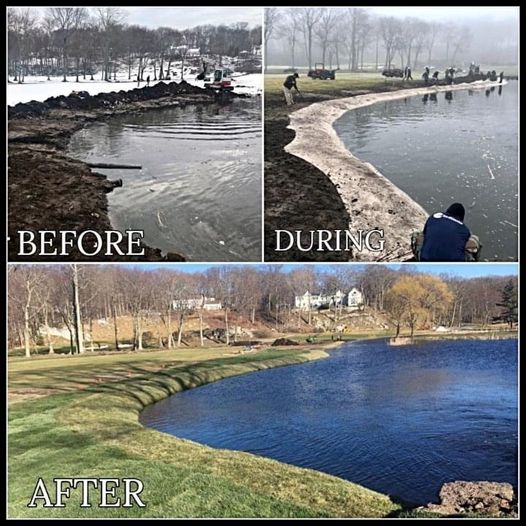
As algae and vegetation growth subside, there are many opportunities to tackle management projects that could not be accommodated during the summer. Erosion around shorelines often becomes more visible and this short window before winter is perfect to introduce a bioengineered shoreline using SOX Solutions. Depending on the size of the affected area, SOX can be installed within a few days or weeks to anchor sediment in place. It can then be planted with grass or sod to restore aesthetic beauty to the landscape around your waterbody. The knitted mesh system’s strength and integrity ensure the transformation is safe and long-lasting.
In addition to addressing dangerous erosion issues, the shoreline should be examined for woody vegetation and invasive plants like Phragmites australis, both of which should be physically removed to prevent further destabilization and potential damage to stormwater equipment. Native buffer species should be trimmed and the clippings should be removed from the site. Likewise, falling leaves, grass clippings, and other fall materials should be cleared to ensure they do not enter the water, decay, and create harmful water quality imbalances that could encourage algae growth come spring. Plant matter is also known to clog stormwater equipment and floating fountains.
If erosion and plant decay have accumulated over many years due to lack of proactive management, it may be time to restore depth in affected areas with hydro-raking. A hydro-rake is a floating barge with a mounted backhoe that can gather up to 500 pounds of muck in each scoop and deposit it on the land for disposal. Because a hydro-rake works from the water, it does not impact delicate shorelines. Fall is a perfect time for hydro-raking projects so the accumulation of leaves, branches, and decomposing plant matter can be removed before they negatively impact water quality conditions later in the year.
That brings us to aeration. If your lake or pond has a fountain, now is the perfect time to schedule an ‘oil and seals’ service, which should be performed every three years. For those who live in colder climates, you may desire removal and winter storage for your fountain. If so, this should be completed by early December. In slightly warmer climates, fountains and submersed aeration systems can be left in the water to reduce ice formation and prevent stratification (the distinct layering of water temperatures and dissolved oxygen levels), which can cause fish kills. And new solutions like Oxygen Saturation Technology can also prevent fish kills by introducing necessary oxygen to anoxic layers of the water without causing thermal stratification.
Proactive management is crucial to preserve the long-term health and beauty of your water resources. However, no two waterbodies are exactly the same and benefit most from a customized plan. Data is an important tool to help learn what your lake or pond needs to thrive. Just as water quality testing provides insight into the chemical components of the water, it is also beneficial to examine the physical components of the water resource.
Bathymetric mapping is the go-to tool to “see” below the surface and uncover the unique depths, contours and structural components at the bottom. When completed every 3-5 years, bathymetric studies can be compared to track physical changes over time. Other types of mapping can reveal total surface area and sediment accumulation, making it easier to create a timeline and budget for future dredging needs.
Mapping can take place any time of year, but it is often prioritized during the fall when the valuable data is used to facilitate planning or permitting needs and inform budget projections.
While most sport fishing tends to subside as temperatures decline, angling activities do not have to end. Autumn provides the perfect backdrop to stock rainbow trout, which thrive all fall and winter. To do this successfully, it’s important to ensure water temperatures have consistently reached below 70 degrees. Once introduced to your waterbody, trout will thrive over the next few months until temperatures rise back up in the spring.
Stocking a lake in the fall is one of the easiest things owners can do to create some fish diversity and to add excitement to their fishing experience. Trout are especially fun to fish and can transform a community pond from just an aesthetic feature to an exciting meeting place for adults and children alike.
In addition to trout stocking, waterbodies prized for their year-long fishing experiences can benefit from pond liming. In acidic ponds, liming is an important method for correcting the associated water quality issues and improving fish productivity. Fall and winter are the recommended timeframes to complete these applications as they can’t always be prioritized during the growing season. The process is delicate, so it’s important to consult with a freshwater management professional to implement a water quality assessment and determine if liming is right for your waterbody.
Though year-round annual management is an important part of pond ownership, fall is a great time to implement a variety of techniques and strategies that aren’t always feasible during the warmer months. It’s also a time to consider your goals for the following year and begin the planning required to achieve them. Your professional lake manager can help you throughout the process and ensure you are on the right track to maximize your budget and the enjoyment of your waterbody for years to come.
Tags: Common Area Issues, Lake Management Articles, Management News, Members Articles