Become our Member : JOIN SFPMA TODAY   LogIn / Register: LOGIN/REGISTER

SFPMA Industry Articles | news, legal updates, events & education! 

Find Blog Articles for Florida’s Condo, HOA and the Management Industry. 

Having a Building Condition Assessment performed

Having a Building Condition Assessment performed

  • Posted: Nov 14, 2018
  • By:
  • Comments: Comments Off on Having a Building Condition Assessment performed

Having a Building Condition Assessment performed

As buildings age they become more inefficient, which can mean unnecessary, out of pocket expenditures every month. Having a Building Condition Assessment performed by a P.E. is especially important for aging facilities. It is imperative to the overall health and future of your building to conduct a “checkup” every 3-5 years. Contact us today for more information or to schedule an assessment.

Find us on the Members Directory:  https://sfpma.com/listing/the-falcon-group/


40/50 Year Recertification for Miami-Dade and Broward County, Florida

Is your building approaching 40 years of age? Are you aware that there may be county requirements that as a building owner you may need to comply with, known as the 40 Year Recertification?

Even if you have not yet received a “Notice of Required Inspection” by the code compliance section of your county or city, it is the property owner’s responsibility to acquire the initial 40/50-year (re)certification and to recertify their building every 10 years thereafter. Because of this, the inspections must be done by or under the supervision of a qualified, Professional Engineer (PE) or Registered Architect (RA).

Florida – Miami
15405 NW 7th Avenue
Miami, FL 33169
P: (305) 663-1970


Falcon is here to help

We provide both Structural and Electrical inspection expertise in-house with Professional Engineers, Registered Architects and Licensed Inspectors. Our professionals are able to perform site visits, prepare reports, and provide repair recommendations and specifications. Falcon can also assist with the bidding process for the repair work, along with the construction oversight to ensure all repairs are being done with all recommended requirements enforced. We provide a list of the necessary repairs in the report at no cost to you.

Our services are provided in these South Florida Cities:

  • Aventura
  • Boca Raton
  • Carol City
  • Coconut Creek
  • Coconut Grove
  • Cooper City
  • Coral Springs
  • Dania Beach
  • Davie
  • Deerfield Beach
  • Fort Lauderdale
  • Hallandale Beach
  • Hallandale
  • Hialeah
  • Hillsboro Beach
  • Hollywood
  • Homestead
  • Lauderhill
  • Miami Dade and Broward Counties
  • Miami
  • Miramar
  • North Lauderdale
  • North Miami Beach
  • North Miami
  • Oakland Park
  • Parkland
  • Pembroke Pines
  • Plantation
  • Pompano Beach
  • Sunrise
  • Tamarac
  • West Park
  • Weston


“The Falcon Group is one of the best for all of your Buildings. When you need architectural, Engineering Services and Structural including 40 Year Recertification. They should be the number one choice. In Florida, William Pyznar and the Team who are members of SFPMA are the type of company we stand behind for our Property Management Industry.” SFPMA


Tags: , , ,
DON’T LET TAXES COMPOUND THE PROBLEM OF A NATURAL DISASTER

DON’T LET TAXES COMPOUND THE PROBLEM OF A NATURAL DISASTER

  • Posted: Oct 10, 2018
  • By:
  • Comments: Comments Off on DON’T LET TAXES COMPOUND THE PROBLEM OF A NATURAL DISASTER

DON’T LET TAXES COMPOUND THE PROBLEM OF A NATURAL DISASTER

by Enrolled Agent Steven J. Weil, Ph.D., EA, LCAM, Royale Management Services, Inc.

In the unlikely event that you or someone you know becomes the victim of a natural disaster, and where you or where they live becomes a federally-declared disaster area, you will want to know all the ways to mitigate the results.  Not only can preparation help to protect life and property, it can also guard against staggering financial loss.

The key is to know what to expect.  If you live in a condo or HOA, you will want to know what the association’s master insurance policy covers and what it does not.  Insurance may help defray some of the costs associated with restoring and replacing damaged and destroyed property, but to keep monetary losses as low as possible, it helps to understand the relevant sections of the tax code.  Under the new Tax Cut and Jobs Act, for example, there is tax relief for victims who suffer casualty losses and are living in a federally-declared disaster area.

Claims require documentation.  You will surely want to make an inventory of the valuables in your home to help you document losses for insurance and tax purposes.  Take photos or videotape not only the interior of your home but also the property and structures outside it.  Damage to your vehicles, landscaping and other possessions may also be tax deductible.

If there’s a chance you might have to evacuate your home, take important documents with you or move them to a safer location, like a bank safe deposit box or a waterproof or fireproof container. Consider photographing important documents like birth certificates, car registration, driver’s license, proof of home ownership, insurance policies, important contracts, medical information, passport, tax documents, etc., and upload these electronic records to a secure cloud-based service.

Tax deductions for homes and buildings with structural damage require a qualified appraisal and records of the repairs to restore the building to its previous condition. Homeowners insurance will cover some personal goods in many cases, whether or not the home is covered for the type of disaster that occurred. Keep in mind that all claims for damage must first be submitted to the property owner’s insurance carrier, even if the property is not covered, in order to take a casualty loss deduction. In other words, your disaster loss may be tax deductible but only to the amount over any insurance reimbursement.

Two additional limitations may be waived in certain federally-declared disaster areas:  You must deduct $100 per event and reduce the total of all personal use property losses by 10 percent of your adjusted gross income.

Be aware that the IRS may extend tax filing deadlines, permit easier access to victims’ funds held in workplace retirement plans, and make other provisions designed to provide financial relief to those affected by a natural disaster.  The IRS website can help you learn about any special announcements, bulletins or special relief being offered during ongoing disasters.

Disaster-related losses can be deductible on your tax return, but only if you follow the rules and provide the appropriate documentation.  You also may be permitted to choose either the current year or the previous year to claim your losses, and your refund could be greater in the non-disaster year than in the current disaster year.

Help in determining the best course in your situation is always available from a qualified tax professional to help you make sure you are taking advantage of every relevant tax provision available to you.


Tags: , , , ,
Escaping The Towering Inferno – Condominium Fire Sprinkler Retrofit and Engineered Life Safety System Requirements

Escaping The Towering Inferno – Condominium Fire Sprinkler Retrofit and Engineered Life Safety System Requirements

  • Posted: Oct 05, 2018
  • By:
  • Comments: Comments Off on Escaping The Towering Inferno – Condominium Fire Sprinkler Retrofit and Engineered Life Safety System Requirements

Escaping The Towering Inferno –

Condominium Fire Sprinkler Retrofit and Engineered Life Safety System Requirements

There appears to be some confusion surrounding the compliance date of the Engineered Life Safety System for those condominium associations that previously voted to opt out of the requirement to install condominium fire sprinkler retrofit. What is not confusing is that the safety of all occupants living in high-rise condominiums is paramount. No one wants to be responsible for death or injury caused by an incident that can be minimized with necessary precautions. How should the board of directors of a “high-rise” condominium balance the needs for fire safety against the considerable expense incurred in the implementation and installation of fire safety systems?

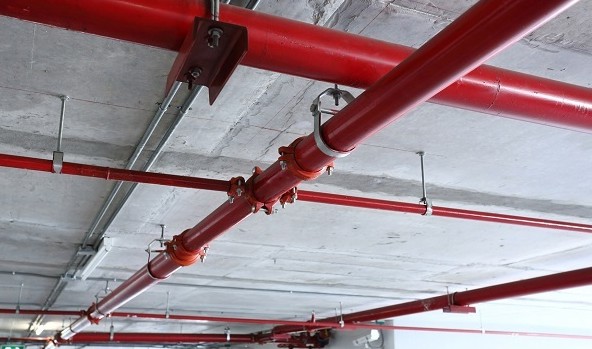
A high-rise building is a building where an occupiable floor is greater than seventy-five feet (75’) above the lowest level of fire department vehicle access. Pursuant to Florida law, condominiums that are considered high-rise buildings are required to have, or otherwise install, a fire sprinkler system, unless the condominium association had previously opted out, or is otherwise exempt, as further addressed below, by following the proper statutory protocol for which the deadline to do so has long since passed. However, for those high-rise condominiums that did successfully opt out, the association is still responsible for the installation of an Engineered Life Safety System (the “ELSS”).

A caveat, and for some condominium associations, a blessing, is that the fire sprinkler system (or ELSS) is not required if every unit in the condominium has exterior walkway access. Therefore, if the only access into the condominium unit is through an interior hallway, the condominium association would need to install a fire sprinkler system (or have already opted out and thereby need to comply with the requirements of the ELSS).

Section 718.112(2)(l), Florida Statutes, is quite clear on the requirements to install a fire sprinkler system, but the statute does not address the condominium association’s requirements for the implementation of the ELSS – that comes from the Florida Fire Prevention Code (the “FFPC”). The FFPC defines an ELSS as a system which contains any or all of the following systems:

1) partial automatic sprinkler protection,

2) smoke detection alarms,

3) smoke control,

4) compartmentation, and/or

5) other approved lifesaving systems.

An ELSS must be developed by a registered professional engineer experienced in fire and life safety system design and authorized by the local compliance authority. Typical examples of ELSS within a high-rise condominium building could be a partial fire sprinkler system that serves the common areas, fire and smoke alarms that are in compliance with the local fire authority standards, and fire proof walls, floors and corridors designed to prevent the flow of the fire and smoke throughout the condominium building.

As to any high-rise building required to install the automatic fire sprinkler system that did not opt out, the FFPC requires that any condominium that meets the definition of a high-rise building, must, by December 31, 2019, have installed the automatic fire sprinkler system. As to those who opted out, the exact date for ELSS compliance is anything but clear. The Condominium Act does not provide a date, and while the FFPC provides a clear deadline for the installation of the automatic fire sprinkler system, the FFPC does not patently provide a similar date for the installation of the ELSS. Some lawyers and fire safety professionals take the position that, because the ELSS is a substitute for the automatic fire sprinkler system, December 31, 2019 is, therefore, the ELSS compliance date. However, others may take the position that the lack of patent clarity in the FFPC means no deadline is provided.

Whether the local fire safety authorities will actually interpret and enforce the Florida Fire Prevention Code to require an ELSS approved plan, or ELSS completed installation by December 31, 2019 or even still, take the position that no ELSS deadline is provided at all is anyone’s guess. The answers might even vary by jurisdiction. What is clear is that:

  • The Florida legislature needs to address the ELSS compliance deadline to provide clarity for the betterment and safety of all of Florida’s high-rise communities; and
  • Any board member of a high-rise condominium association with questions regarding any of the issues addressed herein needs to consult with both their association’s legal counsel and with the local fire safety officials with jurisdiction for enforcement of the ELSS.

Jeffrey Rembaum, Esq. of Kaye, Bender, Rembaum attorneys at law, legal practice consists of representation of condominium, homeowner, commercial and mobile home park associations, as well as exclusive country club communities and the developers who build them. He is a regular columnist for The Condo News, a biweekly publication and Legal Writer for Florida Rising Magazine, was inducted into the 2012, 2013 & 2014 Florida Super Lawyers. He can be reached at 561-241-4462.

Re Published with Permission: JR / KBR Legal

Tags: , ,
Keep Everyone Up to Date and Connected

Keep Everyone Up to Date and Connected

  • Posted: Jul 21, 2018
  • By:
  • Comments: Comments Off on Keep Everyone Up to Date and Connected

Keep Everyone Up to Date and Connected

What’s on your Desk? Members should send us information and news, We use this to post and send to our industry.

Keep everyone up to date and connectedSFPMA using Mail Chimp and Direct E-Mail makes it easy to send timely, personalized, relevant messages to large groups, small groups, or specific individuals. Recipients can customize how they receive messages and they can respond via the links within. Keeping everyone up to date and connected is key.

Add to our Events Calendar
Members can send us an Email and fill out the form on the Members Portal when they are having an event, meeting, and seminars. We add this to our events calendar a place that everyone can view. The events are also sent to our Social Media pages and the Many Groups we are part of. If you look at any social media group they have hundreds and some have thousands of members our goal is to let many people view the events and show up, We believe in information and through these events many companies get new clients once they find out what you do and how you can help Managers, Board Members, Condo and HOA professionals.

Just click this link to List your company.

Continue reading

Tags: , ,
Recruiting Potential HOA Board Members

Recruiting Potential HOA Board Members

  • Posted: Jun 26, 2018
  • By:
  • Comments: Comments Off on Recruiting Potential HOA Board Members

Recruiting Potential HOA Board Members

Interview qualifications a candidate must be given are communication, education, willingness and other skills necessary for a new position on the Board

One of the best ways to enhance your community and make it the best that it can be is to volunteer as a member of the HOA board. Becoming a board member can take up a lot of valuable time, but it is well worth the investment of energy and passion. At times, filling positions on the board can be a challenge because homeowners have a lot of demands on their time, but having a stable and energetic board is one of the most crucial parts of a successful homeowners association. Here are a few tips for recruiting potential HOA board members.

Appeal to the Specific Talents of Your Homeowners

Sometimes homeowners may not be getting involved in their community because they believe they do not have the right strengths or talents for the job. However, an HOA board does not simply need people who are good at accounting (although this is a very important skill for HOA boards to possess), it needs people with all manner of skills. Find people in your community who are skilled at construction, design, information technology, or gardening and appeal to their specific skill-set to help get them involved

Direct Complaints into Participatory Roles

When a homeowner expresses discontent in the way the association is being run, far from being a bad thing, these complaints are actually opportunities for wonderful, passionate residents of the community to get involved. If you find that a particular homeowner is often politely complaining, try to see if you can encourage them to get involved so that they can have an active hand in improving the community.

Continue reading

Tags: , ,
Three Kaye Bender Rembaum Attorneys Receive New Florida Bar Certification as Specialists in Condominium and Planned Development Law

Three Kaye Bender Rembaum Attorneys Receive New Florida Bar Certification as Specialists in Condominium and Planned Development Law

The law firm of Kaye Bender Rembaum announced that the Florida Bar has confirmed that three of its attorneys, founding and managing member Robert L. Kaye, firm member Andrew B. Black and senior associate Allison L. Hertz, are among the inaugural class of esteemed attorneys to be officially certified in the new area of Condominium and Planned Development Law. The new certification is effective as of June 1, 2018.


Robert L. Kaye, Andrew B. Black and Allison L. Hertz

Board certification is the highest level of recognition by the Florida Bar and recognizes attorneys’ special knowledge, skills and proficiency in various areas of law and professionalism and ethics in practice. Only certified attorneys may utilize terms such as “specialist,” “expert” and/or “B.C.S.” (Board Certified Specialist) when referring to their legal credentials. Board Certified Florida Bar Members are rigorously evaluated for professionalism and tested for their expertise in their areas of law. According to the Florida Bar, certification is the highest evaluation of attorneys’ competency. Attorneys must meet stringent application criteria before officially becoming certified, including satisfactory peer review as it relates to character, ethics and professionalism, satisfying the certification area’s continuing legal education requirements and passing a rigorous examination.

“For more than 30 years, I focused my practice on community association law. I am honored and proud to be recognized by the Bar for this high level of expertise in this area, as demonstrated by being awarded this certification,” said Kaye. “I am also proud of Allison and Andrew joining me among The Florida Bar’s inaugural class to receive this particular certification. We are pleased to not only offer our clients the high-quality legal services that they are accustomed to receive from all of our attorneys but to also have available board certified legal services in this area of law.”

Kaye, Black and Hertz are among the first lawyers obtaining the Condominium and Planned Land Development Law certification by the Florida Bar. They account for less than one percent (1%) of nearly 118,000 Florida lawyers. Thus far, only 127 lawyers obtained this certification. The Florida Bar website maintains a free online directory of all board certified attorneys, categorized by specialty area. Find it at FloridaBar.org/certification.

Kaye Bender Rembaum is a full-service commercial law firm concentrating on the representation of more than 1,000 community associations throughout Florida. With offices in Broward and Palm Beach counties, the Firm was recently presented with the 2018 Readers’ Choice Award for Legal Services by the Florida Community Association Journal, an award they’ve received annually since 2014. Members of State of Florida Property Management Association (SFPMA.com) For more information, visit www.KBRLegal.comcall 954-928-0680 and follow the Firm on www.facebook.com/KayeBenderRembaum.


Tags: , , ,
Aerial drone imagery and digital data provides engineers detailed, comprehensive information to develop effective repair and maintenance programs.

Aerial drone imagery and digital data provides engineers detailed, comprehensive information to develop effective repair and maintenance programs.

Falcon Drone Services, a subsidiary of The Falcon Group, is a multi-faceted aerial imaging company with a strong engineering and production background. We understand and can anticipate the needs of your facility.


Drone technology has become an essential inspection tool for the assessment, mapping, and planning of existing buildings, roadways, bridges and communities. Aerial drone imagery and digital data provides engineers detailed, comprehensive information to develop effective repair and maintenance programs. At Falcon, we refer to the integration of drone technology and engineering as Dronegineering.

Miles Abrams

Vice President of Falcon Drone Services

mabrams@falcondrones.us

(908) 864-0442


Our drones pilots can be utilized for a multitude of applications:

  1. Building Inspections
  2. Site Planning & Surveying
  3. 3D Modeling
  4. Thermographic Imaging
  5. Construction Safety & Progress Reporting
  6. Energy Audits & Leak Investigation
  7. Marketing & Promotional Videos

Contact us today! We would be glad to meet with you and discuss our capabilities, or even arrange for a demonstration flight.

Tags: ,
SureWay Moving & Storage offer all agents a %10 payment for any move reference.

SureWay Moving & Storage offer all agents a %10 payment for any move reference.

SureWay Moving & Storage offer all agents a %10 payment for any move reference.

WHY REALTORS SHOULD PARTNER WITH A LOCAL MOVING COMPANY
• Help your client with his or her moving services and put more money in your wallet.
• Have a competitive advantage over other realtors
• Increase your exposure as a realtor by forming a partnership with a Local Moving Company
• Increase your marketing capacity and creativity.

SureWay Moving & Storage

Brandon Morales
Executive Director
(954) 523-5999
1919 NW 19th Street
Ft. Lauderdale, FL 33311
http://www.surewaymoving.com

Tags: ,
House Bill 841 containing this year’s community association legislation.

House Bill 841 containing this year’s community association legislation.

KAYE BENDER REMBAUM’S 2018 LEGISLATIVE GUIDE – HOUSE BILL 841 AFFECTING COMMUNITY ASSOCIATION IS SIGNED INTO LAW

House Bill 841 containing this year’s community association legislation (“HB 841” or “Bill”) has made its way through the 2018 Florida legislative session and was signed into law by Governor Scott on March 23rd. As the Bill is now signed into law, it becomes effective on July 1, 2018. The following is a digest explanation of these newest laws to affect Florida’s community associations:

Condominium Official Record-keeping: Certain official records must be permanently maintained from the inception of the association, including the following:

(i) a copy of the plans, permits, warranties, and other items provided by the developer;
(ii) a copy of the recorded declaration of condominium and all amendments thereto
(iii) a copy of the recorded bylaws and all amendments thereto;
(iv) a certified copy of the articles of incorporation and all amendments thereto;
(v) a copy of the current rules; and
(vi) all meeting minutes.

All other official records of the association must be maintained within the state for at least seven years, unless otherwise provided by general law. Notwithstanding, all election records, including electronic election records, must only be maintained for one year from the election.


Kaye Bender Rembaum
9121 N Military Trail #200,
Palm Beach Gardens, FL 33410


Condominium Website: As a result of the 2017 legislative session, the website posting requirement applies to condominiums containing 150 or more non-timeshare units. The deadline to post digital copies of the governing documents, association contracts, budget, financial report, and other required documents on the association’s website is extended to January 1, 2019. Of the documents to be posted to the website, a list of bids received by the association within the past year for contracts entered into by the association and any monthly income and expense statement must also be posted. Notwithstanding this requirement, the failure to post these documents on the website does not, in and of itself, invalidate any action or decision of the association. Additionally, in complying with the posting requirement, there is no liability for disclosing information that is protected or restricted unless such disclosure was made with a knowing or intentional disregard of the protected or restricted nature of such information.


Condominium Financial Reporting: In the event an association fails to comply with an order by the Division of Florida Condominiums, Timeshares, and Mobile Homes to provide an owner with a copy of the financial report within a specified amount of days, then the association is prohibited from waiving the financial reporting requirement for the fiscal year in which the owner’s initial request for a copy was made and for the following fiscal year, too.


Condominium/Cooperative Board Meeting Notices: Notice of any board meeting in which regular or special assessments against unit owners are to be considered must specifically state that assessments will be considered and provide the estimated cost and description of the purposes for such assessments.


Condominium/Cooperative Meeting Notices: The association may adopt a rule for conspicuously posting meeting notices and agendas on the association’s website for at least the minimum period of time for which a notice of a meeting is also required to be physically posted on the condominium property. This rule must include a requirement that the association send an electronic notice in the same manner as a notice for a meeting of the members, including a hyperlink to the website where the notice is posted. (As yet, it is not patently clear whether this is in place of the existing “posting in a conspicuous place” requirement or in lieu of it. The safer course of action is to do both.)


Condominium Director Term: A director can serve a term longer than one year if permitted by the bylaws or articles of incorporation. However, a director cannot serve more than eight consecutive years, unless approved by two-thirds of all votes cast in the election or unless there are not enough eligible candidates to fill vacancies on the board. This part of the legislation replaces and fixes last year’s ridiculous new law that a director could not serve more than four consecutive two-year terms. (It appears that based on this year’s legislative changes, directors can serve any length of term so long as authorized by the articles or bylaws. At present, directors can only serve one or two year terms depending on the provisions of the articles and bylaws. Also, staggered terms remain permitted.)


Condominium/Cooperative Electronic Notice: A unit owner who consents to receiving notices by electronic transmission is solely responsible for removing or bypassing filters that block receipt of mass emails sent to members on behalf of the association in the course of giving electronic notices.


Condominium Director Recall: A recall is only effective if it is facially valid. (Of course, as what the term of art “facially valid” is intended to mean is left out of the legislation.) In any event, if the recall is determined to be facially invalid by the board, then the unit owner representative of the recall effort may file a petition challenging the board’s determination on facial validity. Similarly, a recalled board member may file a petition challenging the facial validity of the recall effort. If the arbitrator determines that the recall was invalid, the petitioning board member is immediately reinstated and the recall is null and void. In some instances, the arbitrator may award prevailing party attorney fees.


Condominium Material Alterations: In situations where the declaration as amended does not specify the procedure for approving material alterations or substantial additions to the common elements or association property, the already statutorily required approval of seventy-five percent of the total voting interests of the association must now be obtained before the material alterations or substantial additions to the common elements or association property are commenced. (Clearly then, if the declaration is silent as to the procedure for material alterations or substantial additions to common elements or association property, this new legislation implies that a curative vote of the members to approve the changes is a thing of the past. It does not make sense to force the association to restore the property to its prior condition where the members might vote to approve the change. Hopefully, this will be fixed in next year’s legislative proposals.)


Condominium Electric Vehicles: A declaration of condominium or restrictive covenant may not prohibit or be enforced so as to prohibit any unit owner from installing an electric vehicle charging station within the boundaries of the unit owner’s limited common element parking area. Moreover, the board may not prohibit a unit owner from installing an electric vehicle charging station for an electric vehicle within the boundaries of his or her limited common element parking area. The unit owner is entirely responsible for the charging station, including its installation, maintenance, utilities charges (which must be separately metered), insurance, and removal if no longer needed. The association may impose certain requirements upon the installation and operation of the charging station, including, for example, that the unit owner comply with all safety requirements and building codes, that the unit owner comply with reasonable architectural standards adopted by the association governing charging stations, and that the unit owner use the services of a licensed and registered electrical contractor or engineer knowledgeable in charging stations. Labor performed on or materials furnished for the installation of a charging station may not be the basis for filing a construction lien against the association, but such a lien may be filed against the unit owner.


Condominium Director Conflicts of Interest: The process allowing a director to enter into a contract with the director’s association has become better organized. Disclosure requirements that were set out in section 718.3026(3), Florida Statutes were deleted from that location and relocated to section 718.3027, Florida Statutes. In brief, directors and officers of non-timeshare condominiums must disclose to the board any activity that could be reasonably considered a conflict of interest. A rebuttable presumption of such a conflict exists if:

i) directors or officers of the association (including their relatives) enter into a contract for goods or services with the association;

ii) directors or officers of the association (including their relatives) holds an interest in a corporation. Limited liability corporation, partnership or other business entity that conducts business with the association.

In the event of such a conflict, then the proposed activity and all relevant contracts must be attached to the meeting agenda and the requirements of section 617.0832, Florida Statutes must be adhered to, as well. The relevant provisions of section 617.0832, Florida Statutes follow:

“No contract or other transaction between a corporation and one or more of its directors or any other corporation, firm, association, or entity in which one or more of its directors are directors or officers or are financially interested shall be either void or voidable because of such relationship or interest, because such director or directors are present at the meeting of the board of directors or a committee thereof which authorizes, approves, or ratifies such contract or transaction, or because his or her or their votes are counted for such purpose, if:

a) The fact of such relationship or interest is disclosed or known to the board of directors or committee which authorizes, approves, or ratifies the contract or transaction by a vote or consent sufficient for the purpose without counting the votes or consents of such interested directors;

b) The fact of such relationship or interest is disclosed or known to the members entitled to vote on such contract or transaction, if any, and they authorize, approve, or ratify it by vote or written consent; or

c) The contract or transaction is fair and reasonable as to the corporation at the time it is authorized by the board, a committee, or the members.”

In addition, section 718.3027, Florida Statutes, provides that the disclosures required by this section must be set out in the meeting minutes, and the contract must be approved by two-thirds of all of the directors present (excluding the conflicted director). At the next membership meeting, the existence of the contract must be disclosed to the members and then may be canceled by a majority vote of the members present. If the contract is canceled, the association is only liable for the reasonable value of the goods and services provided up to the time of cancellation and is not liable for any termination fee, liquidated damages, or other form of penalty for such cancellation. Finally, in the event of a failure to disclose a conflict or potential conflict, the contract is voidable and terminates upon the filing of a written notice terminating the contract which contains at least 20 percent of the voting interests of the association. (Note that section 718.112(2)(p) Florida Statutes, pertaining to service provider contracts still provides that “an association, which is not a timeshare condominium association, may not employ or contract with any service provider that is owned or operated by a board member or with any person who has a financial relationship with a board member or officer, or a relative within the third degree of consanguinity by blood or marriage of a board member or officer. This paragraph does not apply to a service provider in which a board member or officer, or a relative within the third degree of consanguinity by blood or marriage of a board member or officer, owns less than 1 percent of the equity shares.”)


Condominium/Cooperative Grievance Committee: The grievance committee appointed by the board to conduct hearings for fines and use right suspensions for violations of the governing documents must be comprised of at least three members who are not officers, directors, or employees of the association, or the spouse, parent, child, brother, or sister of an officer, director, or employee. (The restriction against not allowing someone living with the director from serving on the committee was removed.) The fine or suspension can only be imposed if approved by a majority of the committee. If a fine is approved, the fine payment is due five days after the date of the committee meeting at which the fine is approved. (This seems illogical in that the offending member may not have received the required written notice of the confirmation of the fine from the association.) The association must provide written notice of the approved fine or suspension by mail or hand delivery.


Cooperative Official Records: The official records must be made available to a unit owner within ten working days after receipt of written request by the board or its designee.


Cooperative Director/Officer Eligibility: In a residential cooperative association of more than ten units, co-owners of a unit may not serve as members of the board at the same time unless the co-owners own more than one unit or unless there are not enough eligible candidates to fill the vacancies on the board at the time of the vacancy.


Cooperative Director/Officer Financial Delinquency: A director or officer more than 90 days delinquent in the payment of any monetary obligation due to the association shall be deemed to have abandoned the office, creating a vacancy in the office to be filled according to law.


Cooperative Bulk Communication Contracts: Cooperatives are now lawfully permitted to enter into bulk communication contracts which can include internet services and such expenses are deemed common expenses of the cooperative.


HOA/Cooperative Board Email Use: Members of the board may use email as a means of communication but may not cast a vote on an association matter via email.


HOA Fines: If a fine levied by the board is approved by the grievance committee, the fine payment is due five days after the date of the committee meeting at which the fine is approved. (This seems illogical in that the offending member may not have received the required notice of the confirmation of the fine from the association.)


HOA Amendments: A proposal to amend the governing documents must contain the full text of the provision to be amended with new language underlined and deleted language stricken. However, if the proposed change is so extensive that underlining and striking through language would hinder, rather than assist, the understanding of the proposed amendment, the following notation must be inserted immediately preceding the proposed amendment: “Substantial rewording. See governing documents for current text.” An immaterial error or omission in the amendment process does not invalidate an otherwise properly adopted amendment. (In other words, HOA proposed amendments must be presented in the same manner as proposed condominium amendments have been required to do for years and years.)


HOA Election by Acclamation: If an election is not required because there are either an equal number or fewer qualified candidates than vacancies exist, and if nominations from the floor are not required and write-in nominations are not permitted, then such qualified candidates shall commence service on the board of directors, regardless of whether a quorum is attained at the annual meeting. (This is a major change!)


HOA Application of Payments: The application of assessment payments received by the association is applicable regardless of any purported accord and satisfaction or any restrictive endorsement, designation, or instruction placed on or accompanying a payment

http://rembaumsassociationroundup.com/2018/03/26/kaye-bender-rembaums-2018-legislative-guide-house-bill-841-affecting-community-association-is-signed-into-law/




Tags: , , ,