SFPMA

SFPMA Industry Articles | news, legal updates, events & education! 

Find Blog Articles for Florida’s Condo, HOA and the Management Industry. 

Charging into the Future! Electric Vehicle Charging Stations in your Community

Charging into the Future! Electric Vehicle Charging Stations in your Community

  • Posted: Apr 07, 2026
  • By:
  • Comments: Comments Off on Charging into the Future! Electric Vehicle Charging Stations in your Community

Charging into the Future! Electric Vehicle Charging Stations in your Community

Through innovation, electric vehicles are trending in popularity, and are becoming more commonplace in society. As more people are considering to buy electric vehicles, thought has to be also given on how to provide the means to charge them. While single family home owners install charging stations for their vehicle as part of their vehicle buying considerations, communities such as Condominium Associations that have common element parking facilities generally do not have existing car charging facilities for their residents. Associations may look to the future of their Community, and may consider the value and feasibility for installing charging stations. Having charging stations is a potential selling point for prospective residents, as some may currently use electric vehicles and would prefer residences with charging facilities. For current residents, it can also be seen as a perk, as it allows them the option to acquire an electric vehicle that they otherwise could not have practical usage of. In some situations, Associations also will need to address legislation on car charging stations that might affect the existing Association’s rules/bylaws in regards to these stations.

However, as many Communities were originally built without consideration to future charging stations, Associations will need to determine how robust their existing electrical infrastructure is to accept these new installations. The Falcon Group can help your Community with your charging station needs. We can provide an assessment of the existing site and existing electrical systems, and identify key points of the feasibility of installing new charging stations, such as:

Determination of existing electrical capacity
Quantity of charging stations based on available space and electrical capacity.
Potential locations the charging stations
Required real estate for new electrical infrastructure for the charging stations.
Recommendations of electrical system upgrades (including service upgrades) needed to meet your Community’s target.
Potential federal/state incentives for installing charging stations.

Falcon also offers full design, bidding and construction administration services for charging station installations that meets your Community’s needs.

Contact The Falcon Group today and one of our experts will focus on all of your building and association’s specific needs.

Reza Koosha-Mirsaidi

Senior Electrical Engineer


Tags:
What you can’t see is often more important than what you can.

What you can’t see is often more important than what you can.

When talking about people we often say it’s what is on the inside that counts, well the same can be said for condominiums. What you can’t see is often more important than what you can.

Many associations came about when developers converted apartment buildings into condos. Others in south Florida are just getting old and while it might not always be obvious on the outside a look inside the walls, under the slab or in the elevator equipment room will give you a better picture of the problems that lurk beneath the surface. All of these things have useful life’s and tend to wear out over time.

If the association has not made plans for replacing and updating these things as they wear out, by putting away the reserves necessary to replace them the question is not will there be an ugly surprise it is when will there be an ugly surprise. Developers and ever boards are good at investing in the things we can see and they help drive value like fancy wallpaper, marble floors, landscaping and quality amenities but often overlook things like old plumbing, outdated electrical services panels, and mechanical equipment.

If the association does not have the funds to give these items attention when needed, the result is special assessments or worse yet failures and disruptions in the lives of residents.


SFPMA and our Vendors and Members serve the Property Management Industry right here in Florida. Find the Top professionals on our

Directory for all of your buildings repairs. we are building our new Directory, will be active soon.


find-a-service:  for companies that work with Condo and HOA Boards and Property Managers in Florida.


Tags: ,
4 “Tricks” to a Healthier Lake! Regularly test the water quality! by Allstate Resource Management

4 “Tricks” to a Healthier Lake! Regularly test the water quality! by Allstate Resource Management

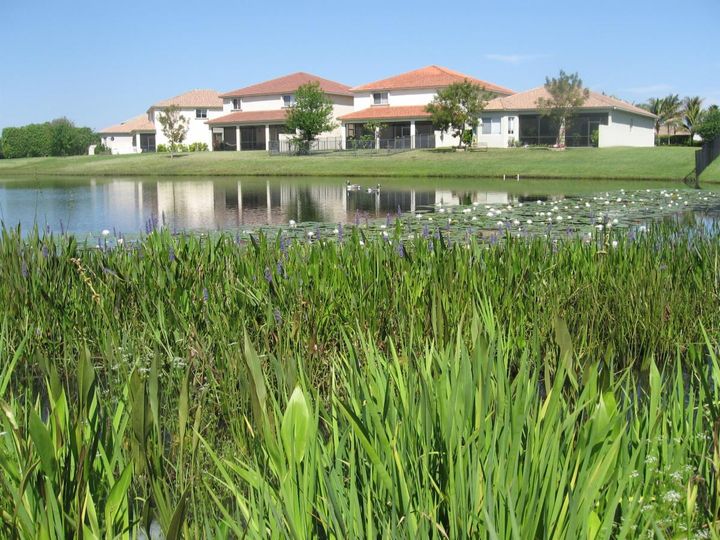
The first step in keeping your lake healthy is regularly testing the water quality. Ensure that your lake management company is testing the water before treatments.

Algae is a common problem in Florida lakes, but there are methods you can use to control it. Partnering with a professional lake company is key! A lake maintenance company can put together a comprehensive plan designed specifically for your lake.
Aeration is essential for maintaining healthy oxygen levels in your lake. Use a lake aerator to keep the water moving and to promote healthy oxygen levels.
Invasive plant species, such as cattails or water hyacinths, can quickly take over your lake and create an unhealthy environment for aquatic life. Let our lake specialists work with your HOA to help control and eradicate invasive plants.
6900 S.W. 21st Court
Building 9
Davie, FL 33317
Toll-Free: 800.270.6558
Local: 954.382.9766
Tags: , , ,
Drones capture thousands of high-quality photos as they move in and around buildings at different altitudes.

Drones capture thousands of high-quality photos as they move in and around buildings at different altitudes.

Drones capture thousands of high-quality photos as they move in and around buildings at different altitudes.

 
Performing drone inspections on a consistent basis allows property managers to observe time-dependent changes such as concrete deterioration, roof wear and tear, and hurricane damage.
 
At SRI, our FAA-certified pilots perform drone surveys of residential and commercial properties throughout South Florida.
 
Learn more about our drone services @ https://ow.ly/Qy6u50QWZNw


DRONE SURVEYS

Red circle blog post icon

Drones take many videos and high-quality photos as they move in and around buildings at different altitudes. In a single mission, hundreds of data points can be captured for later use. That data provides a historical record to aid in insurance claims, maintenance and future renovations. At SRI, our FAA-certified pilots perform drone surveys of residential and commercial properties throughout South Florida. We use Catalogger image management software to easily store, search and access image and video data.

FAA-Certified Drone Pilots

All of our pilots have passed the FAA’s Small UAS Rule (Part 107) examination and maintain their flying credentials by passing recurrent examinations every two years.

Image Management with Catalogger
 
With a simple interface, Catalogger allows users to quickly access and share drone survey photos to guide maintenance, repair, and improvement projects. Image data is stored on the cloud and can be viewed on multiple devices via a password-protected portal.
Mission Planning With Recorded GPS Coordinates

Allows for repeated flights along the same path. Missions can be scheduled periodically to observe time-dependent changes such as concrete deterioration, roof wear and tear, hurricane damage, and modifications to surrounding structures.

Catalogger image management system logo
 
Tags: , ,
Happy Holidays & A Joyful New Year from the SOLitude Family

Happy Holidays & A Joyful New Year from the SOLitude Family

  • Posted: Dec 18, 2025
  • By:
  • Comments: Comments Off on Happy Holidays & A Joyful New Year from the SOLitude Family

Happy Holidays & A Joyful New Year

As 2025 wraps up, we want to thank you for joining us in our mission to protect freshwater resources.

We know this past year was difficult for many, but we hope you were able to create memorable experiences on and around your waterbody despite the challenges we all faced. We believe that a balanced waterbody, whether it’s utilized for recreation, stormwater collection, or aesthetics, can make those around it happier and healthier.
 
As we look forward into 2025 and beyond, we are more passionate than ever to maintain our precious aquatic resources and promote meaningful experiences for our loyal clients.

During this time, contact us here or leave a message at 888-480-LAKE (5253).

 
Tags: ,
International Subsea Services -Geosynthetic clay liners have a long-lasting resistance to physical and chemical break-down

International Subsea Services -Geosynthetic clay liners have a long-lasting resistance to physical and chemical break-down

Derrek Offutt, PM Chief Executive Officer at International Subsea Services

GCL Liners

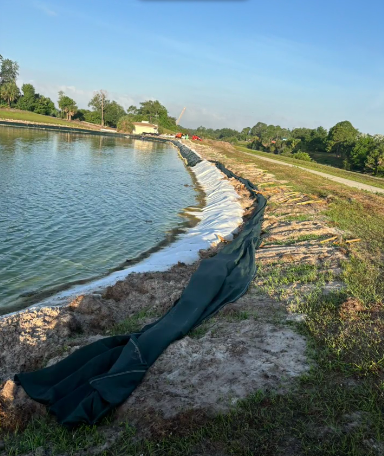
Geosynthetic Clay Liners (GCL) are high-performance geocomposites that are used as an alternative to conventional compacted clay liners. GCLs consist of two layers of geotextile stitched together enclosing a layer of processed sodium bentonite. Bentonite is a natural sealant, and when in contact with water, swells to form a low permeability clay liner. Geosynthetic clay liners have a long-lasting resistance to physical and chemical break-down in harsh environments such as landfills and other containment systems.

Advantages
* Unique self-sealing attributes that reduce the risk of punctures and leakage.
* Excellent shear resistance properties due to needlepoint reinforcement.
* Reduced leakage by a factor of 30 over compacted clay.
* Better hydraulic performance.
* Ease of installation. & Increased air space.
* Cost-effective: one truckload of GCL replaces 200 truckloads of clay.

SS your Lake Bank Restoration Specialist!!!!

Call today to schedule a free onsite estimate !
https://lnkd.in/ebRqUP2X
727-742-5982

Is Pond and Lake Algae Bloom Dangerous? by SOLitude Lake Management.

Is Pond and Lake Algae Bloom Dangerous? by SOLitude Lake Management.

Warm weather often comes with an increase in algal blooms in our waterways. Algae is a nuisance – it can grow in slimy, smelly mats, create eyesores, and entangle swimmers and fishing hooks.

Rather than creating places to connect with neighbors, watch beautiful sunsets, and host fun activities, waterbodies containing nuisance algae growth can lead to nasty comments and complaints. But in worst-case scenarios, it may pose a danger to the community. 

Although most algae aren’t dangerous to our health, we must be mindful and diligent about limiting our exposure to certain types of algal blooms. Harmful Algal Blooms (HABs), also known as blue-green algae or cyanobacteria, are a very serious issue impacting the safety of our waterways. Exposure to HABs can be life-threatening for people, pets, and wildlife due to toxins they are capable of releasing.

However, the toxicity of an algal bloom cannot be confirmed with a visual inspection. Suspected HABs must be sampled and tested at a lab to confirm the species of algae present. Once the species is confirmed, a management plan can be implemented.

What does harmful algae look like?

Harmful algal blooms can look like blue or green paint spilled into the water. It may also appear as thick, puffy blue or green foam on the surface of the water, or as swirling colors beneath the surface of the water. HABs can also have distinct smells that have been described as grassy, fishy, or septic.

What should I do if I suspect the presence of harmful algae?

Here are four things to do – or not do! – if you see anything that looks like an HAB in your waterbody:

  1. Call a professional immediately: It is impossible to tell from a visual inspection whether an algal bloom is toxic. It must be appropriately sampled and tested.
  2. Avoid it: Do not swim or wade through blue-green algal scums. Do not boat, water ski, jet ski, or fish where algal scum is present. And certainly, don’t source drinking water where algal blooms are present!
  3. Keep pets out: Do not let your pets swim in or drink from the water. Toxic algae blooms can be fatal to dogs and other animals. Even short exposures to some HABs can be fatal.
  4. Take extra precautions: If you or your family members, including pets, have been in water with any algae present, always shower off with soap and clean water after swimming.

Keep Your Water Safe and Clean with Annual Management

Keeping your community safe and happy is an utmost priority – because safe, happy residents are more engaged with each other, pleased with community leadership, and proud of where they live. An annual management program is one of the best ways to maintain the safety and aesthetics of your waterbodies. When monitored and managed on a consistent basis, it’s possible to identify and get ahead of HABs or other water quality problems before community members are affected.

Crown&Geyser_1HP_Bonita Springs, FL_GregO'Connor solitude lake managaement fountains and aeration systems vendor partners aquamaster

Annual Management Programs Tailored to You

Annual management programs are tailored to your specific needs, and may integrate an array of professional tools and strategies, including water quality testingfountains and aerationnutrient remediationbiological bacteria applicationsshoreline management and restorationbathymetric mapping, and mechanical solutions like mechanical hydro-raking or dredging. Contact your lake management professional to begin designing your custom annual management program.

Manage Algae & Pond Weeds with SOLitude

Tags: ,
Which Sediment or Muck Removal Option Is Best for My Waterbody?

Which Sediment or Muck Removal Option Is Best for My Waterbody?

Virtually all explanations of dredging include the physical scooping up of underwater sand and clay sediments to enhance a merchant ship’s access to a port or waterway. If these waterways become inaccessible, the economic consequences are far-reaching.

Today, however, massive algal blooms, animal fatalities from toxic byproducts of algae, and the spread of invasive plants and animals are sharing the front-page news with national economic interests. For those of us living on a waterbody, it’s clear that our personal economic interests are rewarded via higher property values if the nearby water is both navigable and healthy. As a waterbody ages and becomes “silted-in,” organic nutrients fuel invasive plant and algae growth, and property owners suffer the consequences of bright green water, fish kills, and dangerous swimming conditions. Unfortunately, the solution to these rampant biological problems involves more than just scooping up the muck. Hence, we need to look at dredging options and aquatic management in a unified perspective.

Choosing the Dredging Tool for Your Waterbody

Fortunately, there are many proactive aquatic management solutions that can be implemented to help slow or prevent the aging of waterbodies, such as proper land use management, maintenance of beneficial vegetative buffers and sediment traps, installation of aeration systems, and utilization of nutrient absorbing products. However, when sediment buildup is too much to dock a boat or when aquatic plants and algae are perpetually out of control, you’ll need to call in a professional waterbody manager accompanied by a portfolio of dredging techniques.

There are several methods of sediment or muck removal: hydraulic dredging, clamshell or backhoe dredging, dry dredging, and hydro-raking. The chosen method will depend on a number of factors, including sediment composition, environmental sensitivity, the volume of materials removed, budget, and disposal considerations.

Which Dredging or Sediment Removal Option Is Best for My Waterbody?

Mechanical Dredging

Mechanical dredges (clamshell or backhoe dredgers) use buckets to scoop out bottom sediment and transfer it to trucks or barges for transport to disposal sites. Truck transportable mechanical dredges such as Aquamogs can remove small volumes of sediments such as shoals that prevent boater access to a lake, while large oceangoing dredgers are capable of digging to great depths to facilitate the new era of ultra–large container ships. In the case of the drawdown and excavation method (dry dredging), the whole waterbody is drained and sufficient shoreline access is needed for the trucking and hauling involved. However, most lakes cannot be emptied due to environmental concerns or high water tables.

Hydraulic Dredge

Hydraulic Dredging

Hydraulic dredges are the workhorse of the dredging industry and are effective in moving large volumes of organic and inorganic sediment. They work by sucking slurry (a mixture of sediment and water) from the bottom and then pumping it to an offshore location through a pipeline. Hydraulic dredges have almost continuous operating cycles, allowing the removal of large volumes of material in a short time while minimizing the resuspension of material into the water column due to their closed-cycle system of operation. Typically, this method is better suited for sediments with little debris mixed in, as large objects and rocks can damage the cutter and clog the pipeline. A large disposal area is also required.

Hydro-rake

Hydro-raking

Unlike the mechanical and hydraulic dredge, the hydro-rake cannot be used to remove sediment, however, it is an effective tool for accumulated muck removal. Hydro-raking is frequently chosen as a method to remove nuisance aquatic vegetation, root structures, debris, and organic muck on a smaller scale waterbody.  The hydro-rake can best be described as a floating barge upon which is mounted a backhoe with a digging bucket or rake capable of removing accumulated muck in water as shallow as 18 inches. Hydro-raking can effectively target organic muck accumulations and debris in coves, stormwater ponds, and other shallow areas. If a pond is periodically maintained through hydro-raking, the need to perform a large-scale dredging project may be eliminated, saving financial resources and minimizing ecological disruptions.

Paragraph 5 - Managing vegetation in and around - fountains and aeration

How to Maintain Balanced Water Quality

Dredging is generally thought of as an expensive activity, but both your waterbody can benefit significantly from just a few days of budget-friendly spot dredging at pump intakes, swimming areas, or around boat docks. However, the ultimate cost-savings approach is proactive management. By taking preventative steps to reduce erosion, limit weed and algae growth, and maintain balanced water quality, it’s possible to prolong the need for both dredging and hydro-raking. The best way to accomplish this is through an annual management program that leans on sustainable strategies like aeration, nutrient remediation, shoreline maintenance, and many other custom solutions to maintain a healthy, functional waterbody.

To learn more or navigate through a wide variety of sediment, aquatic plant, or algae removal options for your waterbody, we encourage you to speak with your lake or pond management professional.


Tags:
You don’t get to take a holiday break from condo rules.

You don’t get to take a holiday break from condo rules.

  • Posted: Dec 20, 2024
  • By:
  • Comments: Comments Off on You don’t get to take a holiday break from condo rules.

If you’re one of the 62 million Americans living in condo and homeowners associations (HOAs), you don’t get to take a holiday break from condo rules.

Humbug, you say? Well…

“A hallmark of a shared ownership community is that you give up some of your rights for the good of the community. If there are restrictions involving holiday decorations, including lights and signage, you’re generally bound by them

Option 1: Nothing may happen if the HOA rules aren’t enforced.
Option 2: You might get a letter asking you to take down your decor.
Option 3: You might get fined for breaking condo rules.


Be safe, Ask your board for rules they may have for decorations on the Grounds….

Constructive ways to balance your need to deck the halls with condo rules that ban decorations:

  • Talk to your neighbors.
  • If it’s your first holiday in your new home, check your association’s rules and regulations to find out what’s really allowed.
  • Condos that ban lights and signage most of the year may be lenient about decorations during the holiday season. “But do understand these rules and regulations are enforceable by boards of corporations that are created contractually,”

Take your holiday case to the board. Call the president and ask if you can speak at the next meeting. Show up with a short written proposal to modify the HOA rules to allow specific kinds of decorations, like lights on balconies or door wreaths.

Check state laws on condo rules. Got no satisfaction from your trip to the condo board? You might be able to appeal to a higher authority. Some states have a large body of home owners association laws that may override HOA rules in certain instances, while other states have few home owners association laws.

Tags: ,