SFPMA

SFPMA Industry Articles | news, legal updates, events & education! 

Find Blog Articles for Florida’s Condo, HOA and the Management Industry. 

HOA Architectural Committees Required Statutory Procedures Requirement For Published Standards Required Self Help

HOA Architectural Committees Required Statutory Procedures Requirement For Published Standards Required Self Help

HOA Architectural Committees

Required Statutory Procedures, Requirement For Published Standards and Required Self Help.


REQUIREMENT OF FORMAL PROCEDURES

There are strict legal requirements that a homeowners’ association’s (HOA) architectural review committee (ARC) must follow, most especially if the ARC intends to deny an owner’s request. As this author has witnessed countless times, it is likely that many ARCs do not conduct their activities in conformity with Florida law such that an ARC denial may not withstand judicial scrutiny. If these legal requirements are not followed, and the ARC denies the owner’s architectural request, then it would be quite easy for the owner to challenge the ARC’s decision and prevail. Upon prevailing, the owner would be entitled to their prevailing party attorney’s fees and costs, as well. It is so easy to avoid this outcome, yet so few associations take the time to do it right.

Pursuant to §720.303(2), Florida Statutes, a meeting of the ARC is required to be open and noticed in the same manner as a meeting of the association’s board of directors. Notice of the ARC meeting must be posted in a conspicuous place in the community at least 48 hours in advance of the meeting, and the meeting must be open for all members to attend. Further, pursuant to §720.303(2)(c)(3), Florida Statutes, members of the ARC are not permitted to vote by proxy or secret ballot. Also, bare bone minutes should be taken to create a record of ARC decisions—especially denials.

We often hear from many HOAs that the ARC does not meet openly and does not notice their meetings. This leaves decisions made by the ARC vulnerable to challenge. If the ARC denies an application but fails to do so at a properly noticed board meeting, the owner can challenge the denial, claiming that it is not valid because the ARC did not follow proper procedure. In such cases, the ARC’s denial of an application is not valid because the ARC failed to comply with the procedural requirements for the meeting even if an application violates the declaration or other association-adopted architectural standards. However, by complying with the provisions of Chapter 720, Florida Statutes, your HOA can work to avoid this debacle.

PUBLISHED STANDARDS

Often a top priority for an HOA is ensuring that homes in the community maintain a harmonious architectural scheme in conformity with community standards and guidelines, and because the ARC is at the frontline of owners’ alterations and improvements to their homes, it is instrumental in ensuring that the community standards and guidelines are met. Pursuant to §720.3035(1), Florida Statutes, an HOA, or the ARC, “has the authority to review and approve plans and specifications only to the extent that the authority is specifically stated or reasonably inferred as to location, size, type, or appearance in the declaration or other published guidelines and standards.” But not every owner request is typically addressed in the declaration or other published guidelines and standards. If not, then the association may not be in a good position for proper denial. Therefore, the ARC is only as effective as the objective guidelines and standards (set forth in the declaration and other published guidelines and standards) are inclusive. So, what is the association to do when the ARC receives an owner’s application for an alteration to the home, but the association does not have any architectural guidelines or standards regulating the requested alteration?

While not court tested yet, a possible solution for this conundrum is to include a “catch-all” provision in the declaration to proactively address those ARC applications where a member may request a modification that is not directly addressed by the governing documents. Such a “catch-all” provision stands for the proposition that, if such a request is made, then the existing state of the community is the applicable standard by which the ARC application is to be judged. For example, imagine if an owner applies to the ARC to paint the owner’s house pink. If there are no architectural guidelines or standards that address what color a house must be, and there are no pink houses in the community, then the existing state of the community may provide a lawful basis for the ARC to deny the request because there are no existing pink houses in the community.


THE TROUBLE WITH SELF-HELP PROVISIONS

What if an owner refuses to maintain the owner’s property, such as pressure washing a dirty roof, despite the HOA sending demand letters, levying a fine, and perhaps even suspending the owner’s right to use the HOA’s recreational facilities? What is the HOA’s next step? Is it time to file a lawsuit to compel compliance? Well, Chapter 718 (governing condominiums), Chapter 719 (governing cooperatives), and Chapter 720 (governing HOAs) of the Florida Statutes authorize the association to bring an action at law or in equity to enforce the provisions of the declaration against the owner. Additionally, many declarations contain “self-help” language that authorizes the association to cure a violation on behalf of the owner and even, at times, assess the owner for the costs of doing so. These “self-help” provisions generally contain permissive language, meaning the association, may, but is not obligated to, cure the violation. Sadly, in this instance the word “may” means “shall,” and to find out why, read on.

There is a general legal principal that, if a claimant has a remedy at law (e.g., the ability to recover money damages under a contract), then it lacks the legal basis to pursue a remedy in equity (e.g., an action for injunctive relief). Remember, too, that an association’s declaration is a contract. In the context of an association, the legal remedy would be exercising the “self-help” authority granted in the declaration. An equitable remedy would be bringing an action seeking an injunction to compel an owner to take action to comply with the declaration. Generally, a court will only award an equitable remedy when the legal remedy is unavailable, insufficient, or inadequate.

Assume that the association’s declaration contains both the permissive “self-help” remedy and the right to seek an injunction from the court. Accordingly, it would appear the association has a decision to make—go to court to seek the injunction or enter onto the owner’s property, cure the violation, and assess the costs of same to the owner. However, recent Florida case law affirmed a complication to what should be a simple decision. In two cases decided ten years apart, Alorda v. Sutton Place Homeowners Association, Inc., 82 So.3d 1077 (Fla. 2nd DCA 2012) and Mauriello v. Property Owners Association of Lake Parker Estates, Inc., 337 So.3d 484 (Fla. 2nd DCA 2022), Florida’s Second District Court of Appeal decided that an association did not have the right to seek an injunction to compel an owner to comply with the declaration if the declaration provided the association the authority, but not the obligation, to engage in “self-help” to remedy the violation. Expressed simply, this is because the legal contractually based “self-help” remedy must be employed before one can rely upon equitable remedy of an injunction. Therefore, even though the declaration provided for an optional remedy of “self-help,” it must be used before seeking the equitable remedy of an injunction.

In Alorda, the owners failed to provide the association with proof of insurance required by the declaration. Although the declaration allowed the association to obtain the required insurance, the association filed a complaint against the owners seeking injunctive relief, asking the court to enter a permanent mandatory injunction requiring the owners to obtain the requested insurance. The owners successfully argued that even though they violated the declaration, the equitable remedy of an injunction was not available because the association already had an adequate legal remedy—the “self-help” option of purchasing the required insurance and assessing them for same. The Court agreed.

In Mauriello, the declaration contained similar language as in Alorda but involved the issue of the owners failing to keep their lawn and landscaping in good condition as required by the declaration. The association filed a complaint seeking a mandatory injunction ordering the owners to keep their lawn and landscaping in a neat condition. However, the facts were complicated by the sale of the home in the middle of the suit when the new owners voluntarily brought the home into compliance with the declaration. The parties continued to fight over who was entitled to prevailing party attorney’s fees with the association arguing it was entitled to same because the voluntary compliance was only obtained after the association was forced to commence legal action. The owners, citing Alorda, argued that the complaint should have been dismissed at the onset because the association sought an equitable remedy (injunction) when a legal remedy was already available—the exercise of its “self-help” authority. The Court considered the award of attorney’s fees after the dismissal of the association’s action for an injunction. Ultimately, the Court held that the owners were the prevailing party as the association could not seek the injunction because it already had an adequate remedy at law.

Accordingly, if your association’s declaration contains a “self-help” provision, and your association desires to seek an injunction against an owner rather than pursue “self-help,” the board should discuss the issue in greater detail with the association’s legal counsel prior to proceeding. Also, remember that if the association wants to enforce architectural standards, then they must be published to the membership; and always remember to notice ARC meetings and take minutes.

[AdSense-A]

Tags: , ,
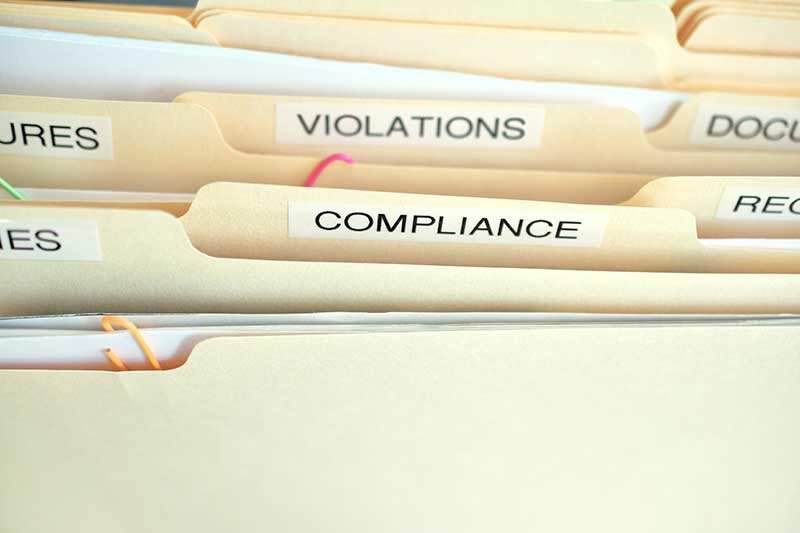
CAN YOU REPEAT THAT?     Is Your Condominium in Compliance?

CAN YOU REPEAT THAT? Is Your Condominium in Compliance?

  • Posted: Feb 08, 2023
  • By:
  • Comments: Comments Off on CAN YOU REPEAT THAT? Is Your Condominium in Compliance?

CAN YOU REPEAT THAT?

Is Your Condominium in Compliance?

Additional Clarity Provided

If your condominium is greater than 75 feet tall, then you need to read this article (most especially due to a small but meaningful typo in the prior version which is now revised with the red text below).

It is essential for condominium associations to ensure that their buildings are in compliance with the requirements of the Florida Fire Prevention Code (the “Fire Code”). For the safety of all residents, associations must ensure they stay up to date with the latest and greatest in fire safety provisions. One of these essential safety features is a requirement that systems be built into new and existing buildings to ensure that first responders’ radios will work throughout buildings in an emergency situation. Pursuant to Section 11.10.1 of the Fire Code, “in all new and existing buildings, minimum radio signal strength for fire department communications shall be maintained at a level determined by the AJH [the authority having jurisdiction]. Additionally, Section 11.10.2. provides that where required by the authority having jurisdiction, two-way radio communication enhancement systems must comply with the requirements of the Fire Code.

When originally adopted, the requirements of Sections 11.10.1 and 11.10.2 of the Fire Code applied only to new buildings, so the requirement was not a burden on existing buildings. However, in 2013, the Fire Code was updated as set out above to provide that all new and existing buildings must maintain adequate fire department radio signal strength inside the building. This new requirement applied to all buildings and did not provide a grace period. This posed a significant problem for many high-rise condominiums, as the installation of the necessary equipment involves opening walls and ceilings and can be quite costly to the association. The cost of such installation was a substantial burden to condominiums, not expecting to be required to install same, and therefore never budgeted for the installation.

Recognizing the problem, in 2016 the Florida Legislature adopted section 633.202(18), Florida Statutes, which provided a grace period for high-rise buildings. Existing high-rise buildings were not required to comply with minimum radio strength for fire department communications until January 1, 2022. You may be thinking, “that date is passed”, but do not panic. If your condominium has not yet complied with the requirements, have no fear. The 2021 Florida Legislature amended section 633.202(18), Florida Statutes, to provide another extension for compliance.

In accordance with the newly amended statute, existing high-rise buildings now have until January 1, 2025 to come into compliance with the requirements. However, the association must apply for an appropriate permit for the required installation by January 1, 2024. More specifically, section 633.202(18), Florida Statutes, is amended to provide, in pertinent part, that:

(18) The authority having jurisdiction shall determine the minimum radio signal strength for fire department communications in all new high-rise and existing high-rise buildings. Existing buildings are not required to comply with minimum radio strength for fire department communications and two-way radio system enhancement communications as required by the Florida Fire Prevention Code until January 1, 2025. However, by January 1, 2024, an existing building that is not in compliance with the requirements for minimum radio strength for fire department communications must apply for an appropriate permit for the required installation with the local government agency having jurisdiction and must demonstrate that the building will become compliance by January 1, 2025. Existing apartment buildings are not required to comply until January 1, 2025…

Therefore, all existing high-rise buildings must come into compliance by January 1, 2025. It is important to note that this time extension applies only to high-rise buildings. By way of over simplification, it does not apply to buildings less than 75 feet tall (the measurement can be tricky, so if your building is close to 75 feet check with your association attorney regarding this measurement). In 2018, the Florida Department of Financial Services, Division of State Fire Marshal issued a Declaratory Statement finding that section 633.202(18), Florida Statutes does not apply to the enforcement of Section 11.10 of the Fire Code to buildings under 75 feet in height. Therefore, if your building is greater than 75 feet in height, it is required to comply with the radio signal strength required by the authority having jurisdiction at this time.

In light of the foregoing, it is essential that your association take action to determine whether sufficient fire department radio signal exists in your building. We recommend the association reach out to the local fire code official to determine the exact requirements for your jurisdiction. If sufficient signal does not exist in your building, it is essential to prepare a plan (including design, permits, financing, etc.) to ensure that your building will comply by the deadline of January 1, 2025.

Federal Court Identifies Potential Collection Issue for Community Associations in Florida

Federal Court Identifies Potential Collection Issue for Community Associations in Florida

Federal Court Identifies Potential Collection Issue for Community Associations in Florida

Community association operations rely upon the timely and full payment of all assessments by all of the owners. One of the mechanisms that Florida law provides to put associations in a stronger position when an owner becomes delinquent is the “secured interest” of the association in the unpaid assessments by way of its ongoing lien against the unit or lot for the unpaid assessments. This secured interest puts the claim of the association at a higher priority than most other claims, other than a first mortgage or unpaid property taxes. However, a recent decision in the United States Bankruptcy Court for the Southern District of Florida, In re: Adam, Case No.: 22-10140-MAM, September 23, 2022, has cast a potential cloud on that secured interest.

In the In re Adam case, the Association previously obtained a judgment of foreclosure for over $76,000, which was considered as a secured interest by the Court. The Association was also claiming an additional $36,558 which came due after the judgment was entered. The owners were asking the Court to decide that the $36,000 was not secured and therefore uncollectible in the bankruptcy (or at least not fully collectible).

In deciding whether certain association claims were secured and collectible in the bankruptcy setting, the Court undertook an analysis of Florida law on the subject. The Court noted that both the Florida Condominium Act (Chapter 718 F.S.) and the Homeowner’s Association Act (Chapter 720 F.S.) currently contain express provisions that identify that the lien of the association is effective from the original recording of the declaration (with the added requirement in HOA’s that the declaration specifically expresses this lien right). However, the Court also points out that the Condominium Act was amended in 1992 to provide for this effective date. (The Homeowner’s Association Act was amended to provide for it in 2008.) Prior to these amendments, these Statutes provided for the effective date of the lien to be when it was recorded in the public records of the county. The analysis of the Court required it to consider whether the current version of the Statute applies to the situation or whether an earlier version of the Statute is the controlling authority. (This case involved a condominium so only the Condominium Act was considered in the decision.)

To make that determination, the Court applied the principles of the seminal case of Kaufman v. Shere, 347 So.2d 627 (Fla. 3d DCA 1977), which require declarations to contain the specific phrase “as amended from time to time” when identifying the Statute that governs the documents in order for the current version of the Statute to apply. This is because Statutes are not retroactive in their application unless the legislature expressly makes them so in the Statute itself. Both the U.S. and Florida Constitutions do not allow for the State to make a law that infringes upon the vested rights in an existing contract (which would be the declaration). As a result, the contract (declaration) would need to have the specific “as amended from time to time” language (often called “Kaufman” language) to automatically incorporate changes to the Statute that is not otherwise retroactive.

When the Court reviewed the governing documents, it noted that they were from 1987 and did not have the Kaufman language. As such, the Court held that the provisions of the declaration were the same as the Statute in 1987, which provided that the lien was effective only upon being recorded in the public records of the county. Since the Association did not file another lien for the amount being claimed subsequent to the foreclosure judgment, the Court concluded that this portion was not secured. In the bankruptcy setting, this meant that the Association would likely be unable to recover most, if not all of this claim from the Debtors, Mr. and Ms. Adam.

While this issue may be most relevant to associations when dealing with a case in bankruptcy, it is possible that it could also be raised in state court foreclosure cases under certain circumstances. It is also important to note that this Bankruptcy Court did not include a significant issue in the analysis regarding the Statute at issue, that being whether or not the statutory provision was “substantive” or “procedural”, as those terms apply to this situation, which could have led to a different result. (This portion of the legal analysis is quite technical and beyond the scope of this article.)

For communities whose declarations were recorded prior to the statutory changes described above, the first step in protecting the interests of the association is to review the documents to determine whether Kaufman language is already in them. If not, the board may wish to consider proposing an amendment to the owners to change the documents to include this language, if not for the entire declaration, then at least for the timing of the effectiveness of the lien of the association. Having qualified legal counsel review these issues in the documents is a strong business practice.

About Robert
Robert L. Kaye is Board Certified in Condominium and Planned Development Law. Mr. Kaye attended Michigan State University, graduating with a B.B.A. in General Business in 1976. In 1986, Mr. Kaye graduated from the Detroit College of Law, magna cum laude. Mr. Kaye initially practiced tax law for the firm of Raymond, Rupp, Weinberg, Stone & Zuckerman, P.C. in Troy, Michigan, before moving to South Florida in 1987, joining Becker & Poliakoff to concentrate in the area of community association representation. In 1991, Robert Kaye left that employ to start Kaye & Roger, P.A. He was the managing shareholder of the Firm from its inception, directing all legal operations and overseeing its growth to represent over 1,000 Communities in South Florida at the time of its name change to Robert Kaye & Associates, P.A. on January 1, 2003.
On January 1, 2009 Mr. Kaye joined with Michael Bender to form Kaye & Bender, now known as Kaye Bender Rembaum, after Jeffrey Rembaum joined in 2012. Mr. Kaye serves on the Florida Bar’s Grievance Committee, is a member of the Condominium Committee of the Real Property Section of The Florida Bar, and previously served on the Committee on the Unlicensed Practice of Law. He also lectures on Community Association law and is regularly published on the subject. Mr. Kaye hosts KBR’s appearances on the radio show, ‘Ask the Experts’, from 6pm to 7pm, the first Thursday of each month.
See his full bio HERE.

Tags: ,
Condominium Unit Owner Insurance The Risks of Not Purchasing Insurance For Your Condominium Unit

Condominium Unit Owner Insurance The Risks of Not Purchasing Insurance For Your Condominium Unit

Condominium Unit Owner Insurance

The Risks of Not Purchasing Insurance For Your Condominium Unit

Do you think you do not need condominium insurance because your condominium association has it? You would be so very wrong if you do! It has happened more times than I can count—the supply line that feeds the toilet ruptures in the upstairs unit while the owner of the unit is out of town, the upstairs unit owner forgot that he or she started to fill the tub and it overflows, or the upstairs unit owner ignores a broken toilet, all of which result in water flowing down into the unit below. Next thing you know, the remediation workers arrive and start ripping out the soaked, damaged drywall in the units below and after cutting holes in the drywall use their industrial-sized blowers to dry things out to prevent mold.

Meanwhile, the downstairs unit owners want to have a “word” with the upstairs unit owner to discuss who is going to pay for the repairs. They demand a copy of the upstairs unit owner’s insurance policy. The owner of the upstairs unit where the leak occurred smiles and explains, “The condominium association has insurance. They’ll take care of it.” Right? Wrong! Even if the condominium association has the duty of repair to portions of the damaged property, typically the damaged common elements, the upstairs unit owner is not off the hook because both the condominium association and its insurance company can often “subrogate” their financial damages against the upstairs unit owner and so, too, can the downstairs unit owners and their insurance companies. At the end of the day, the upstairs owner who caused the damages could have significant financial liability. (In plain English, to “subrogate” a claim means that one party goes after the other for their financial damages for having caused the damage in the first place.)

So, now that I have your attention, most especially if you are a unit owner who does not have insurance for your unit—in the example described above, not only can the upstairs unit owner bear significant financial liability, but even their condominium unit is at risk of being foreclosed to satisfy a judgment against them—and there is no homestead protection! Because the upstairs unit owner decided not to purchase insurance, he could actually lose his unit in a foreclosure. The following explanation is why:

By way of oversimplification, the Condominium Act, more specifically, §718.111(11)(f), Florida Statutes, requires the condominium association to insure everything that the unit owner is not responsible to insure. The unit owner is responsible to insure

all personal property within the unit or limited common elements, and floor, wall, and ceiling coverings, electrical fixtures, appliances, water heaters, water filters, built-in cabinets and countertops, and window treatments, including curtains, drapes, blinds, hardware, and similar window treatment components, or replacements of any of the foregoing which are located within the boundaries of the unit and serve only such unit…  the association is not obligated to pay for any reconstruction or repair expenses due to property loss to any improvements installed by a current or former owner of the unit or by the developer if the improvement benefits only the unit for which it was installed and is not part of the standard improvements installed by the developer on all units as part of original construction, whether or not such improvement is located within the unit.

But, however, the unit owner’s insurance policy, typically referred to as an “HO-6 policy,” not only includes coverage for the items set forth above plus other personal items, but also includes liability coverage for having caused damages to the condominium property.

§718.111(11)(j)1–2, Florida Statutes, makes patently clear that

A unit owner is responsible for the costs of repair or replacement of any portion of the condominium property not paid by insurance proceeds if such damage is caused by intentional conduct, negligence, or failure to comply with the terms of the declaration or the rules of the association by a unit owner, the members of his or her family, unit occupants, tenants, guests, or invitees, without compromise of the subrogation rights of the insurer.

The provisions… regarding the financial responsibility of a unit owner for the costs of repairing or replacing other portions of the condominium property also apply to the costs of repair or replacement of personal property of other unit owners or the association, as well as other property, whether real or personal, which the unit owners are required to insure. (emphasis added.)

Furthermore, also pursuant to §718.111(11)(g)2, Florida Statutes

unit owners are responsible for the cost of reconstruction of any portions of the condominium property for which the unit owner is required to carry property insurance [set out above], or for which the unit owner is responsible, and the cost of any such reconstruction work undertaken by the association is chargeable to the unit owner and enforceable as an assessment and may be collected in the manner provided for the collection of assessments pursuant to § 718.116, Fla. Stat. (emphasis added.)

§718.116, Florida Statutes, is the unit fore-closure section of the Condominium Act which explains the steps necessary to foreclose against an owner’s unit for failing to pay assessments.

In condominium living, the general rule is that the party who has the duty of purchasing insurance for a particular portion of the condominium property also has the primary duty to repair the damages to such portion regardless of fault (unless the condominium association has opted out of that regime by a vote of the unit owners, which is a rarity). But, simply because the condominium association has insurance and may have that primary duty of repair after the insurable casualty event, that does not mean that the negligent unit owner that caused the damage will not be the primary target for reimbursement for expenses incurred by the condominium association’s insurance company or by the condominium association for its deductible and related expenses. The same concept applies for the downstairs unit owners, who could seek reimbursement from the upstairs unit owner for any necessary expense incurred because the upstairs unit owner was negligent.

There are typically two parts to the HO-6 insurance policy, the primary coverage for personal losses and the other for liability coverage. Condominium associations should consider amending their declaration to require every unit owner to have both personal and liability coverage, and at a minimum, liability coverage. Your condominium association should discuss this requirement with the condominium association’s insurance agent as well as review the possibility of amending the declaration of condominium with legal counsel.

Anytime a condominium association experiences a casualty event, in addition to reporting the claim to the insurance carrier, usually through the condominium association’s insurance agent, the condominium association should be in touch with its legal counsel to explore all the different aspects necessary to both repair and reimburse the condominium association for its financial losses. At the end of the day, owning a condominium unit and not having purchased insurance is similar to taking a rowboat out on a rough sea day without life preservers.


Kaye Bender Rembaum, Attorneys at Law

The law firm of Kaye Bender Rembaum, with its 20 lawyers and offices in Broward, Palm Beach and Hillsborough Counties, is a full service law firm devoted to the representation of more than 1,200 community and commercial associations, developers, and their members throughout the State of Florida. Under the direction of attorneys Robert L. Kaye, Michael S. Bender and Jeffrey A. Rembaum, the law firm of Kaye Bender Rembaum strives to provide its clients with an unparalleled level of personalized and professional service that takes into account their clients’ individual needs and financial concerns.

Tags:
It is essential for condominium associations to ensure that their buildings are in compliance with the requirements of the Florida Fire Prevention Code

It is essential for condominium associations to ensure that their buildings are in compliance with the requirements of the Florida Fire Prevention Code

  • Posted: Sep 22, 2022
  • By:
  • Comments: Comments Off on It is essential for condominium associations to ensure that their buildings are in compliance with the requirements of the Florida Fire Prevention Code

It is essential for condominium associations to ensure that their buildings are in compliance with the requirements of the Florida Fire Prevention Code

It is essential for condominium associations to ensure that their buildings are in compliance with the requirements of the Florida Fire Prevention Code (the “Fire Code”). For the safety of all residents, associations must ensure they stay up to date with the latest and greatest in fire safety provisions. One of these essential safety features is a requirement that systems be built into new and existing buildings to ensure that first responders’ radios will work throughout buildings in an emergency situation. Pursuant to Section 11.10.1 of the Fire Code, “in all new and existing buildings, minimum radio signal strength for fire department communications shall be maintained at a level determined by the AJH [the authority having jurisdiction]. Additionally, Section 11.10.2. provides that where required by the authority having jurisdiction, two-way radio communication enhancement systems must comply with the requirements of the Fire Code.

When originally adopted, the requirements of Sections 11.10.1 and 11.10.2 of the Fire Code applied only to new buildings, so the requirement was not a burden on existing buildings. However, in 2013, the Fire Code was updated as set out above to provide that all new and existing buildings must maintain adequate fire department radio signal strength inside the building. This new requirement applied to all buildings and did not provide a grace period. This posed a significant problem for many high-rise condominiums, as the installation of the necessary equipment involves opening walls and ceilings and can be quite costly to the association. The cost of such installation was a substantial burden to condominiums, not expecting to be required to install same, and therefore never budgeted for the installation.

Recognizing the problem, in 2016 the Florida Legislature adopted section 633.202(18), Florida Statutes, which provided a grace period for high-rise buildings. Existing high-rise buildings were not required to comply with minimum radio strength for fire department communications until January 1, 2022. You may be thinking, “that date is passed”, but do not panic. If your condominium has not yet complied with the requirements, have no fear. The 2021 Florida Legislature amended section 633.202(18), Florida Statutes, to provide another extension for compliance.

In accordance with the newly amended statute, existing high-rise buildings now have until January 1, 2025 to come into compliance with the requirements. However, the association must apply for an appropriate permit for the required installation by January 1, 2024. More specifically, section 633.202(18), Florida Statutes, is amended to provide, in pertinent part, that:

The authority having jurisdiction shall determine the minimum radio signal strength for fire department communications in all new high-rise and existing high-rise buildings. Existing buildings are not required to comply with minimum radio strength for fire department communications and two-way radio system enhancement communications as required by the Florida Fire Prevention Code until January 1, 2025. However, by January 1, 2024, an existing building that is not in compliance with the requirements for minimum radio strength for fire department communications must apply for an appropriate permit for the required installation with the local government agency having jurisdiction and must demonstrate that the building will become compliance by January 1, 2025. Existing apartment buildings are not required to comply until January 1, 2025…

Therefore, all existing high-rise buildings must come into compliance by January 1, 2025. It is important to note that this time extension applies only to high-rise buildings. By way of over simplification, it does not apply to buildings less than 75 feet tall (the measurement can be tricky, so if your building is close to 75 feet check with your association attorney regarding this measurement). In 2018, the Florida Department of Financial Services, Division of State Fire Marshal issued a Declaratory Statement finding that section 633.202(18), Florida Statutes does not apply to the enforcement of Section 11.10 of the Fire Code to buildings under 75 feet in height. Therefore, if your building is less than 75 feet in height, it is required to comply with the radio signal strength required by the authority having jurisdiction at this time.

In light of the foregoing, it is essential that your association take action to determine whether sufficient fire department radio signal exists in your building. The minimum requirements may differ by jurisdiction, and we recommend the association reach out to the local fire code official to determine the requirements for your jurisdiction. If sufficient signal does not exist in your building, it is essential to prepare a plan (including design, permits, financing, etc.) to ensure that your building will comply by the deadline of January 1, 2025.

The law firm of Kaye Bender Rembaum, with its 20 lawyers and offices in Broward, Palm Beach and Hillsborough Counties, is a full service law firm devoted to the representation of more than 1,200 community and commercial associations, developers, and their members throughout the State of Florida. Under the direction of attorneys Robert L. Kaye, Michael S. Bender and Jeffrey A. Rembaum, the law firm of Kaye Bender Rembaum strives to provide its clients with an unparalleled level of personalized and professional service that takes into account their clients’ individual needs and financial concerns.

The Firm is ranked ninth in South Florida and 62nd in the Southern U.S. among “Top 300 Small Businesses” by Business Leader magazine.


Safety is on the minds of every Building owner from Fire sprinklers, Extinguishers, Monitoring, Alarms and Testing and system certification. 

Find Top Companies for your buildings Fire Sprinkler and Equipment

Congratulations, Jeff Rembaum, Firm Members and Attnys at Kaye Bender Rembaum

Congratulations, Jeff Rembaum, Firm Members and Attnys at Kaye Bender Rembaum

Jeffrey A. Rembaum Once Again Named to Florida Trend’s Legal Elite

Only 1.4% of Florida’s lawyers appear among the exclusive Florida Legal Elite, and Kaye Bender Rembaum is proud to announce attorney Jeffrey A. Rembaum, BCS has once again been selected.

Now in its 19th year, Florida Legal Elite presents the state’s top licensed and practicing attorneys selected by their peers. Florida Trend invited all in-state members of the Florida Bar to name attorneys whom they highly regard or would recommend to others. The list of top vote recipients was examined using Florida Bar membership status and histories. A panel of previous Legal Elite honorees from across the state representing different practice areas reviewed the list of finalists. Congratulations, Jeffrey!


Allison L. Hertz Named Co-Chair of Condominium & Planned Development Committee of The Florida Bar’s RPPTL Section.

The Real Property, Probate and Trust Law (RPPTL) Section of the Florida Bar announced that attorney Allison L. Hertz, BCS of Kaye Bender Rembaum has been named Co-Chair of its Condominium & Planned Development Committee. Ms. Hertz, a Board Certified Specialist in Condominium and Planned Development Law, joins a long line of the most preeminent and respected attorneys in this field of law to have held this position.

“I am honored and proud to serve as Co-Chair for the Committee and will continue to provide input for the betterment of all Florida community associations”, said Allison Hertz. Jeffrey Rembaum added, “Ms. Hertz is extremely knowledgeable in this body of law, and will no doubt be a valuable asset to the RPPTL committee.”

Ms. Hertz is also the Vice-chair of the Condominium & Planned Development Law Certification Review Committee, and she recently served as Chair of the Condominium & Planned Development Committee’s Hurricane Protection Subcommittee, and was a member of the Committee’s Emergency Powers Task Force.


KBR Attorneys Elevated to Firm Members

Danielle M. Brennan, Esq., BCS has been elevated to Firm Member at Kaye Bender Rembaum, P.L in Palm Beach Gardens, FL and Emily E. Gannon, Esq. has been elevated to Firm Member at Kaye Bender Rembaum, P.L in Pompano Beach, FL.

Danielle M. Brennan (pictured top left) is a Board Certified Specialist in Condominium and Planned Development Law. Ms. Brennan joined Kaye Bender Rembaum as an Associate Attorney in the Firm’s community association department in the Palm Beach Gardens’ office in April 2013. Ms. Brennan assists clients on all aspects of community association operations and enjoys leading presentations for managers and board members.


Emily E. Gannon (pictured bottom left) joined Kaye Bender Rembaum in April 2012, and assists the Firm’s association clients on all aspects of community association operations. Emily is also a frequent lecturer on community association law, which includes leading seminars providing CEUs for property managers and certifications for board members.

Congratulations to each new Firm Member of the Kaye Bender Rembaum team!


KBR’s Jeffrey Green Attains Florida Bar’s

Board Certified Specialist in Construction Law

The Florida Bar has confirmed Firm Member Jeffrey D. Green, to be officially certified in Construction Law.

Board certification is the highest level of recognition by the Florida Bar and demonstrates an attorney’s significant competency and experience in a specialty field of law. Attorneys must meet stringent application criteria before officially becoming certified, including satisfactory peer review assessments as it relates to proficiency, character, ethics and professionalism, completing the certification area’s continuing legal education requirements and passing a rigorous written examination. Only attorneys who have earned the “board-certification” distinction are allowed to describe themselves as legal “specialists” or “experts” in a specific field.

“Board Certification is an achievement I’m very proud of, and I am excited to continue assisting our clients in construction-related matters and all other areas of association law,” said Jeffrey Green. Michael Bender added, “This is a career milestone for Jeffrey that warrants recognition. He’s an extremely knowledgeable and skilled attorney and we appreciate all he has done for the Firm and its clients.”

Congratulations to Jeffrey Green on this impressive achievement.


Latest Videos with Kaye Bender Rembaum

Association Leadership S3:E12 | August 17, 2022 | SB-4D and more on Preparing your 2023 Budget

Lunch & Learn | Cyberstalking and Defamation in Community Associations


Tags: ,
Mandatory Condominium & Cooperative Building Inspections and Non-Waivable Reserve Requirement

Mandatory Condominium & Cooperative Building Inspections and Non-Waivable Reserve Requirement

Mandatory Condominium & Cooperative Building Inspections and Non-Waivable Reserve Requirement

The City of Surfside, Champlain Towers South Related Legislation Already in Effect


With home insurers leaving Florida in droves, and following pressure from members of both political parties in the legislature to actually do something about it, in May 2022, the governor called a special legislative session to address the problem. A very real concern to the insurers is the effect of both time and inclement weather on Florida’s aging high-rise buildings. Until now, and for the most part, Florida law largely ignored these concerns. Enter Senate Bill 4-D (SB 4-D), which already became effective upon being signed into law by Governor DeSantis on May 26, 2022. This new piece of legislation addresses condominium and cooperative building inspections and reserve requirements. (While this article primarily addresses these new laws in the context of condominium association application, they are equally applicable to cooperative associations.)

By way of background, during the regular legislative session, there were several bills introduced in the Florida House of Representatives and in the Florida Senate addressing building safety issues, but none of them were passed into law due to the inability to match the language of the bills in both the house and the senate which is a requirement for legislation to pass and go to the governor for consideration. As such, it was a little surprising to many observers that the legislature was able to approve SB 4-D in essentially a 48-hour window during the special session in May. The language used in SB 4-D was initially drafted into a proposed bill in November 2021. At that time and during the most recent legislative session, input was provided by many industry professional groups including engineers, reserve study providers, and association attorneys. Many of these industry professionals indicated that there were challenges with some of the language and concepts being proposed in SB 4-D during session.

Notwithstanding these challenges and in an effort to ensure some form of life safety legislation was passed this year, SB 4-D was unanimously approved in both the house and senate and signed by the governor. A plain reading of this well-intended, but in some instances not completely thought-out, legislation evidences these challenges. Some will say it is a good start that will need significant tweaking, which is expected in the 2023 legislative session. Others praise it, and, yet others say it is an overreach of governmental authority, such as an inability to waive or reduce certain categories of reserves. You be the judge. We begin by examining the mandatory inspection and reserve requirements of SB 4-D.

I. Milestone Inspections: Mandatory Structural Inspections For Condominium and Cooperative Buildings. (§553.899, Fla. Stat.)

You will not find these new milestone inspection requirements in Chapters 718 or 719 of the Florida Statutes, but rather in Chapter 553, Florida Statutes, as cited above.

Milestone Inspections

The term “milestone inspection” means a structural inspection of a building, including an inspection of load-bearing walls and the primary structural members and primary structural systems. The aforementioned terms are defined in §627.706, Florida Statutes, and are to be carried out by a licensed architect or engineer authorized to practice in this state for the purposes of attesting to the life safety and adequacy of the structural components of the building and, to the extent reasonably possible, determining the general structural condition of the building as it affects the safety of such building, including a determination of any necessary maintenance, repair, or replacement of any structural component of the building. The purpose of such an inspection is not to determine if the condition of an existing building is in compliance with the Florida Building Code or the fire safety code.

Substantial Structural Deterioration

The term “substantial structural deterioration” means substantial structural distress that negatively affects a building’s general structural condition and integrity. The term does not include surface imperfections such as cracks, distortion, sagging, deflections, misalignment, signs of leakage, or peeling of finishes, unless the licensed engineer or architect performing the phase one or phase two inspection determines that such surface imperfections are a sign of substantial structural deterioration.

Milestone Inspections For Buildings Three Stories or More In Height

A condominium association under Chapter 718 and a cooperative association under Chapter 719 must have a milestone inspection performed for each building that is three stories or more in height by December 31 of the year in which the building reaches 30 years of age, based on the date the certificate of occupancy for the building was issued, and every 10 years thereafter.

Within Three Miles of Coastline

If the building is three or more stories in height and is located within three miles of a coastline, the condominium association or cooperative association must have a milestone inspection performed by December 31 of the year in which the building reaches 25 years of age, based on the date the certificate of occupancy for the building was issued, and every 10 years thereafter.

The condominium association or cooperative association must arrange for the milestone inspection to be performed and is responsible for ensuring compliance.

The condominium association or cooperative association is responsible for all costs associated with the inspection.

If The Certificate of Occupancy was Issued Before July 1, 1992

If a milestone inspection is required under this statute and the building’s certificate of occupancy was issued on or before July 1, 1992, the building’s initial milestone inspection must be performed before December 31, 2024. If the date of issuance for the certificate of occupancy is not available, the date of issuance of the building’s certificate of occupancy shall be the date of occupancy evidenced in any record of the local building official. 

Upon determining that a building must have a milestone inspection, the local enforcement agency must provide written notice of such required inspection to the condominium association or cooperative association by certified mail, return receipt requested. 

Within 180 days after receiving the written notice, the condominium association or cooperative association must complete phase one of the milestone inspection. For purposes of this section, completion of phase one of the milestone inspection means the licensed engineer or architect who performed the phase one inspection submitted the inspection report by email, United States Postal Service, or commercial delivery service to the local enforcement agency.

A Milestone Inspection Consists of Two Phases

(a) PHASE 1—For phase one of the milestone inspection, a licensed architect or engineer authorized to practice in this state must perform a visual examination of habitable and non-habitable areas of a building, including the major structural components of a building, and provide a qualitative assessment of the structural conditions of the building. If the architect or engineer finds no signs of substantial structural deterioration to any building components under visual examination, phase two of the inspection (discussed below) is not required. An architect or engineer who completes a phase one milestone inspection shall prepare and submit an inspection report.

(b) PHASE 2—A phase two of the milestone inspection must be performed if any substantial structural deterioration is identified during phase one. A phase two inspection may involve destructive or nondestructive testing at the inspector’s direction. The inspection may be as extensive or as limited as necessary to fully assess areas of structural distress in order to confirm that the building is structurally sound and safe for its intended use and to recommend a program for fully assessing and repairing distressed and damaged portions of the building. When determining testing locations, the inspector must give preference to locations that are the least disruptive and most easily repairable while still being representative of the structure. An inspector who completes a phase two milestone inspection must prepare and submit an inspection report.

Post-Milestone Inspection Requirements

Upon completion of a phase one or phase two milestone inspection, the architect or engineer who performed the inspection must submit a sealed copy of the inspection report with a separate summary of, at minimum, the material findings and recommendations in the inspection report to the condominium association or cooperative association, and to the building official of the local government which has jurisdiction. The inspection report must, at a minimum, meet all of the following criteria:

  1. Bear the seal and signature, or the electronic signature, of the licensed engineer or architect who performed the inspection.
  2. Indicate the manner and type of inspection forming the basis for the inspection report.
  3. Identify any substantial structural deterioration within a reasonable professional probability based on the scope of the inspection, describe the extent of such deterioration, and identify any recommended repairs for such deterioration.
  4. State whether unsafe or dangerous conditions, as those terms are defined in the Florida Building Code, were observed.
  5. Recommend any remedial or preventive repair for any items that are damaged but are not substantial structural deterioration.
  6. Identify and describe any items requiring further inspection.

Local Government Enforcement

A local enforcement agency may prescribe timelines and penalties with respect to compliance with the milestone inspection requirements.

A board of county commissioners may adopt an ordinance requiring that a condominium or cooperative association schedule or commence repairs for substantial structural deterioration within a specified timeframe after the local enforcement agency receives a phase two inspection report; however, such repairs must be commenced within 365 days after receiving such report. If an association fails to submit proof to the local enforcement agency that repairs have been scheduled or have commenced for substantial structural deterioration identified in a phase two inspection report within the required timeframe, the local enforcement agency must review and determine if the building is unsafe for human occupancy.

Board’s Duty After Obtaining The Milestone Report

Upon completion of a phase one or phase two milestone inspection and receipt of the inspector-prepared summary of the inspection report from the architect or engineer who performed the inspection, the association must distribute a copy of the inspector-prepared summary of the inspection report to each unit owner, regardless of the findings or recommendations in the report, by United States mail or personal delivery and by electronic transmission to unit owners who previously consented to receive notice by electronic transmission; must post a copy of the inspector-prepared summary in a conspicuous place on the condominium or cooperative property; and must publish the full report and inspector-prepared summary on the association’s website, if the association is required to have a website.

Who Pays for The Milestone Inspection?

Pursuant to §718.112, Florida Statutes, if an association is required to have a milestone inspection performed, the association must arrange for the milestone inspection to be performed and is responsible for ensuring compliance with all of the requirements thereof. The association is responsible for all costs associated with the inspection.

Failure to Obtain the Milestone Inspection

If the officers or directors of an association willfully and knowingly fail to have a milestone inspection performed pursuant to §553.899, Florida Statutes, such failure is a breach of the officers’ and directors’ fiduciary relationship to the unit owners.

Manager’s Duty

If a community association manager or a community association management firm has a contract with a community association that has a building on the association’s property that is subject to milestone inspection, the community association manager or the community association management firm must comply with the requirements of performing such inspection as directed by the board.

Exemptions

For clarity, the otherwise required milestone inspection does not apply to a single family, two-family, or three-family dwelling with three or fewer habitable stories above ground.

Florida Building Commission Requirements

The Florida Building Commission must review the milestone inspection requirements and make recommendations, if any, to the legislature to ensure inspections are sufficient to determine the structural integrity of a building. The commission must provide a written report of any recommendations to the governor, the president of the senate, and the speaker of the house of representatives by December 31, 2022. 

The Florida Building Commission must consult with the State Fire Marshal to provide recommendations to the legislature for the adoption of comprehensive structural and life safety standards for maintaining and inspecting all types of buildings and structures in this state that are three stories or more in height. The commission must provide a written report of its recommendations to the governor, the president of the senate and the speaker of the house of representatives by December 31, 2023.

II. Structural Integrity Reserve Studies and Mandatory Reserves:

The reserve legislation set out in §718.112 (f)(2)(a), Florida Statutes, is, for all intents and purposes, re-written. Prior to examining these most recent revisions, it is necessary to first examine the definitions set out in §718.103, Florida Statutes, where a brand-new term is added as follows: 

Structural integrity reserve study means a study of the reserve funds required for future major repairs and replacement of the common areas based on a visual inspection of the common areas applicable to all condominiums and cooperative buildings 3 stories or higher. 

Hereafter, the structural integrity reserve study is referred to as “SIRS.” Now we can turn our attention to the requirements of the SIRS as set out in §718.112 (f)(2)(a), Florida Statutes.

The Structural Integrity Reserve Study (required for all condominium and cooperative buildings three stories or higher regardless of date of certificate of occupancy):

An association must have a SIRS completed at least every 10 years after the condominium’s creation for each building on the condominium property that is three stories or higher in height which includes, at a minimum, a study of the following items as related to the structural integrity and safety of the building:

  1. Roof
  2. Load-bearing walls or other primary structural members
  3. Floor
  4. Foundation
  5. Fireproofing and fire protection systems
  6. Plumbing
  7. Electrical systems
  8. Waterproofing and exterior painting
  9. Windows
  10. Any other item that has a deferred maintenance expense or replacement cost that exceeds $10,000 and the failure to replace or maintain such item negatively affects the items listed in subparagraphs a.-i., as determined by the licensed engineer or architect performing the visual inspection portion of the structural integrity reserve study.

The SIRS may be performed by any person qualified to perform such study. However, the visual inspection portion of the structural integrity reserve study must be performed by an engineer licensed under Chapter 471 or an architect licensed under Chapter 481. 

As further set out in the legislation, at a minimum, “a structural integrity reserve study must identify the common areas being visually inspected, state the estimated remaining useful life and the estimated replacement cost or deferred maintenance expense of the common areas being visually inspected, and provide a recommended annual reserve amount that achieves the estimated replacement cost or deferred maintenance expense of each common area being visually inspected by the end of the estimated remaining useful life of each common area.”

The amount to be reserved for an item is determined by the association’s most recent structural integrity reserve study that must be completed by December 31, 2024. If the amount to be reserved for an item is not in the association’s initial or most recent structural integrity reserve study or the association has not completed a structural integrity reserve study, the amount must be computed using a formula based upon estimated remaining useful life and estimated replacement cost or deferred maintenance expense of each reserve item.

If the condominium building is less than three stories, then the legislation provides that “in addition to annual operating expenses, the budget must include reserve accounts for capital expenditures and deferred maintenance. These accounts must include, but are not limited to, roof replacement, building painting, and pavement resurfacing, regardless of the amount of deferred maintenance expense or replacement cost, and any other item that has a deferred maintenance expense or replacement cost that exceeds $10,000.” 

The association may adjust replacement reserve assessments annually to take into account any changes in estimates or extension of the useful life of a reserve item caused by deferred maintenance. 

If an association fails to complete a SIRS, such failure is a breach of an officer’s and director’s fiduciary relationship to the unit owners.

Non-Waivable and Waivable Reserves In The Unity Owner-Controlled Association

As to the SIRS, the legislation is patently clear that unit owners may not vote for no reserves or lesser reserves for items set forth in the SIRS report. There is ongoing debate among attorneys in regard to whether a condominium under three stories can waive or reduce reserves for any of the reserve items required to be in the SIRS that are included in the under- three-story condominium reserve—for example, roof and painting. (For those interested, examine lines 1029 to 1033 and 1050 to 1071 in SB 4-D.)

Mandatory Reserves In The Developer-Controlled Association

Before turnover of control of an association by a developer to unit owners other than a developer pursuant to §718.301, Florida Statutes, the developer-controlled association may not vote to waive the reserves or reduce the funding of the reserves. (Previously, a developer could fully waive all reserves for the first two years, meaning this is a monumental change.)

Pre-Turnover Developer Duty

Before a developer turns over control of an association to unit owners other than the developer, the developer must have a SIRS completed for each building on the condominium property that is three stories or higher in height.

III. Official Records

Official records of the condominium and cooperative association include structural integrity reserve studies, financial reports of the association or condominium, and a copy of the inspection reports and any other inspection report relating to a structural or life safety inspection of condominium or cooperative property. 

In addition to the right to inspect and copy the declaration, bylaws, and rules, renters have the right to inspect the milestone inspection report and structural integrity reserve study inspection reports as well.

Structural integrity reserve studies must be maintained for at least 15 years after the study is completed. In addition, inspection reports and any other inspection report relating to a structural or life safety inspection of condominium property must be maintained for 15 years after receipt of such report.

IV. Association Websites

In addition to other positing requirements, the inspection reports described above and any other inspection report relating to a structural or life safety inspection of condominium property and the association’s most recent structural integrity reserve study must be posted to the website.

V. Jurisdiction of Division of Condominiums, Timeshares and Mobile Homes

Pre-turnover, the Division of Florida Condominiums, Timeshares, and Mobile Homes (Division) may enforce and ensure compliance with rules relating to the development, construction, sale, lease, ownership, operation, and management of residential condominium units, and complaints related to the procedural completion of milestone inspections. After turnover has occurred, the Division has jurisdiction to investigate complaints related only to financial issues, elections, and the maintenance of and unit owner access to association records, and the procedural completion of structural integrity reserve studies.

VI. New Reporting Requirements For All Condominium and Cooperative Associations

On or before January 1, 2023, condominium associations existing on or before July 1, 2022, must provide the following information to the Division in writing, by email, United States Postal Service, commercial delivery service, or hand delivery, at a physical address or email address provided by the division and on a form posted on the division’s website:

  1. The number of buildings on the condominium property that are three stories or higher in height.
  2. The total number of units in all such buildings.
  3. The addresses of all such buildings.
  4. The counties in which all such buildings are located.

An association must provide an update in writing to the division if there are any changes to the information in the list within six months after the change.

VII. Applicable To All Sellers of Units

As a part of the sales process, the seller of a condominium or cooperative unit and developers must provide to potential purchasers a copy of the inspector-prepared summary of the milestone inspection report and a copy of the association’s most recent structural integrity reserve study or a statement that the association has not completed a structural integrity reserve study.

VIII. Glitches

As with any new legislation of such a substantial nature, there often follow in subsequent years what are referred to as “glitch bills” which help provide additional clarity, remove ambiguity, and fix unintended errors. Some observe are (i) the term “common areas” is used in the legislation when in fact the correct term is “common element;” (ii) clarity needs to be provided regarding whether reserve items that are required to be in SIRS, but show up in the under-three-story reserves, such as paint and paving, can be waived or reduced by the membership; and (iii) for those buildings that are within three miles of the coastline, additional clarity could be provided to provide better guidance as to how to perform the measurement.

Tags: , , ,
VIOLATION REMEDIES: SELF-HELP vs. INJUNCTION – Which to Use?

VIOLATION REMEDIES: SELF-HELP vs. INJUNCTION – Which to Use?

VIOLATION REMEDIES: SELF-HELP vs. INJUNCTION

Which to Use

Imagine this scenario: you are on the board of directors of your association. The association has repeatedly requested that an owner pressure wash their dirty roof to bring it into compliance with the community standards, but the owner refuses to do so. The association has already sent a number of demand letters and even levied a fine and perhaps a suspension of use rights, too, but the owner still will not comply. What is the association’s next step?

  • Is it time to file a lawsuit to compel compliance? Chapters 718 (governing condominiums), 719 (governing cooperatives), a 720 (governing homeowners associations), Florida Statutes, authorize the association to bring an action at law or in equity to enforce the provisions of the declaration against the owner.

OR

  • Is it time for the association to use its “self-help” remedy? In fact, many declarations contain such “self-help” language, which authorizes the association to cure the violation on behalf of an owner and even, at times, assess the owner for the costs of doing so. These “self-help” provisions generally contain permissive language, meaning that the association may, but is not “obligated” to, cure the violation.

Assume that the association’s declaration contains both the permissive “self-help” remedy and the right to seek an injunction from the court that orders the owner to clean their roof or else be in contempt of court. Thus, it would appear the association has a decision to make: (i) go to court to seek the injunction; or (ii) enter onto the owner’s property, pressure clean the roof, and assess the costs to the owner. Not so fast! Recent case law from Florida’s Second District Court of Appeal affirmed a complication to what should be a simple decision, discussed in greater detail below.
In two cases decided 10 years apart, Florida’s Second District Court of Appeal decided that an association did not have the right to seek an injunction to compel an owner to comply with the declaration if the declaration provided the association the authority to engage in “self-help” to remedy the violation. Prior to a discussion of the cases, a brief explanation of legal and equitable remedies is necessary.

There is a general legal principle that, if a claimant has a remedy at law (e.g., the ability to recover money damages under a contract), then it lacks the legal basis to pursue a remedy in equity (e.g., an action for injunctive relief). In the association context, a legal remedy would be to exercise the “self-help” authority granted in the association’s declaration. An equitable remedy would be to bring an action seeking an injunction to compel an owner to take action to comply with the declaration (e.g., compelling the owner to pressure wash their roof). A court will typically only award an equitable remedy when a legal remedy (such as “self-help”) is unavailable, insufficient, or inadequate.

This distinction is first illustrated in Alorda v. Sutton Place Homeowners Association, Inc., 82 So. 3d 1077 (Fla. 2d DCA 2012). In Alorda, the owners failed to provide the association with proof of insurance coverage as required by the declaration. The association sent multiple demand letters to the owners, but they failed to comply. The declaration provided, in pertinent part, that “[t]he owner shall furnish proof of such insurance to the Association at the time of purchase of a lot and shall furnish proof of renewal of such insurance on each anniversary date. If the owner fails to provide such insurance the Association may obtain such insurance and shall assess the owner for the cost of the same in accordance with the provisions of this Declaration” (emphasis added). In accordance with the foregoing, the association had the option to purchase the insurance on behalf of the owners and assess them for the costs of same.

However, the association chose instead to file a complaint against the owners seeking the equitable remedy of injunctive relief, asking the court to enter a permanent mandatory injunction requiring the owners to obtain the required insurance coverage. The owners then filed a motion to dismiss the suit arguing that even though they had violated a provision of the declaration, the equitable remedy of an injunction is not available because the association had an adequate remedy at law. In other words, the owners argued that, because the association could have, pursuant to the declaration, undertaken the ”self-help” option by purchasing the required insurance and assessing it against the owners, they had an available legal remedy and, therefore, the equitable remedy sought (a mandatory injunction) was not available to the association. The court, citing to a different case, Shaw v. Tampa Electric Company, 949 So.2d 1006 (Fla. 2d DCA 2007), explained that a mandatory injunction is proper only where a clear right has been violated, irreparable harm has been threatened, and there is a lack of an adequate remedy at law. As the association had an adequate remedy at law (the authority to purchase the insurance on behalf of the owners), the third requirement was not met. Therefore, the court held that the association failed to state a cause of action and dismissed the case. (This case might be decided differently today as it appears the insurance marketplace will not permit an association to purchase insurance for a unit that it does not own, so the legal remedy presumed available to the association would be inadequate).

Similarly, in the recent case of Mauriello v. The Property Owners Association of Lake Parker Estates, Inc., Case No. 2D21-500 (Fla. 2d DCA 2022), Florida’s Second District Court of Appeal considered the award of attorneys’ fees after the dismissal of the association’s action for an injunction. Ultimately, the court held that the owners were the prevailing party as the association could not seek an injunction because the association had an adequate remedy at law. In Mauriello, the owners failed to maintain their lawn and landscaping in good condition as required by the declaration. As such, the association filed a complaint seeking a mandatory injunction ordering the owners to maintain the lawn and landscaping in a “neat condition.” The association’s declaration contained similar language to the declaration at issue in Alorda. The declaration provided that, if an owner failed to perform any maintenance required by the declaration, the association, after written notice, “may have such work performed, and the cost thereof shall be specifically assessed against such Lot which assessment shall be secured by the lien set forth in Section 9 of this Article VI” (emphasis added). In other words, the association had the permissive “self-help” authority pursuant to the declaration.

The facts of this case were complicated by the sale of the home in the middle of the suit. The new owners voluntarily brought the home into compliance with the declaration, and the case became moot. However, the parties continued to fight over who was entitled to prevailing party attorneys’ fees. The association argued it was entitled to prevailing party attorneys’ fees because the voluntary compliance was only obtained after the association was forced to commence legal action. The owners, citing Alorda, argued that they were entitled to prevailing party attorneys’ fees as the association’s complaint never stated a cause of action in the first place. They argued that the complaint should have been dismissed at the outset because the association sought an equitable remedy (mandatory injunction) when a legal remedy was available to the association (exercise of “self-help” authority).

Florida’s Second District Court of Appeal agreed with the owners that Alorda was controlling. The Court explained that, as in Alorda, “the association’s declaration gave it the option of remedying the alleged violation itself, assessing the owner for the cost, and if the owner failed to pay, placing a lien on the property and foreclosing if it remained unpaid.” As such, the association had an adequate remedy at law and could not seek the equitable remedy of an injunction, which was initially sought by the association. Because the mandatory injunction was not available to the association, the association’s complaint failed to state a proper cause of action and, thus, should have been dismissed by the trial court at the outset. Therefore, the association was not entitled to its sought-after prevailing party attorneys’ fee award, which is otherwise granted if a party comes into compliance after the lawsuit is served.

Sections 718.303 (as to condominiums), 719.303 (as to cooperatives), and 720.305 (as to homeowners associations), Florida Statutes, contain similar language that specifically authorizes the association to bring actions at law or in equity, or both, in the event an owner fails to comply with the governing documents of the association. However, neither the Court in Alorda nor the Court in Mauriello addressed the association’s statutory authority to bring an injunction against an owner who fails to comply with the requirements of the declaration, but rather found that the association must use the “self-help” remedy since it was available to cure the violation.

Notwithstanding the Alorda and Mauriello decisions rendered by Florida’s Second District Court of Appeal, past appellate court decisions from other appellate jurisdictions in Florida have permitted community associations to pursue claims for injunctive relief against violating owners so long as a violation of the restrictive covenant is alleged in the complaint. As such, the Alorda and Mauriello cases appear to be departures from the established principle. Additionally, as both decisions came from Florida’s Second District Court of Appeal, the decisions are certainly binding on those associations within the jurisdiction of the Second District, but there has been no indication that other districts will follow suit. However, there is risk that other appellate district courts may be persuaded by the holdings of Alorda and Mauriello.

As such, if your association’s declaration contains a “self-help” provision, and your association chooses to seek an injunction against an owner rather than pursue “self-help,” the board should definitely discuss the issue in greater detail with the association’s legal counsel prior to proceeding.

The Kaye Bender Rembaum Team Remains Available To You and Your Community Association


Tags: ,
Violation Remedies: Self Help vs. Injunction by Jeffrey Rembaum, Esq. of Kaye, Bender, Rembaum

Violation Remedies: Self Help vs. Injunction by Jeffrey Rembaum, Esq. of Kaye, Bender, Rembaum

  • Posted: Jul 14, 2022
  • By:
  • Comments: Comments Off on Violation Remedies: Self Help vs. Injunction by Jeffrey Rembaum, Esq. of Kaye, Bender, Rembaum

Imagine this scenario: you are on the board of directors of your association. The association has repeatedly requested that an owner pressure wash their dirty roof to bring it into compliance with the community standards, but the owner refuses to do so. The association has already sent a number of demand letters and even levied a fine and perhaps a suspension of use rights, too, but the owner still will not comply. What is the association’s next step?

  • Is it time to file a lawsuit to compel compliance? Chapters 718 (governing condominiums), 719 (governing cooperatives), a 720 (governing homeowners associations), Florida Statutes, authorize the association to bring an action at law or in equity to enforce the provisions of the declaration against the owner.

or

  • Is it time for the association to use its “self-help” remedy? In fact, many declarations contain such “self-help” language, which authorizes the association to cure the violation on behalf of an owner and even, at times, assess the owner for the costs of doing so. These “self-help” provisions generally contain permissive language, meaning that the association may, but is not “obligated” to, cure the violation.


Assume that the association’s declaration contains both the permissive “self-help” remedy and the right to seek an injunction from the court that orders the owner to clean their roof or else be in contempt of court. Thus, it would appear the association has a decision to make: (i) go to court to seek the injunction; or (ii) enter onto the owner’s property, pressure clean the roof, and assess the costs to the owner. Not so fast! Recent case law from Florida’s Second District Court of Appeal affirmed a complication to what should be a simple decision, discussed in greater detail below.

In two cases decided 10 years apart, Florida’s Second District Court of Appeal decided that an association did not have the right to seek an injunction to compel an owner to comply with the declaration if the declaration provided the association the authority to engage in “self-help” to remedy the violation. Prior to a discussion of the cases, a brief explanation of legal and equitable remedies is necessary.

There is a general legal principle that, if a claimant has a remedy at law (e.g., the ability to recover money damages under a contract), then it lacks the legal basis to pursue a remedy in equity (e.g., an action for injunctive relief). In the association context, a legal remedy would be to exercise the “self-help” authority granted in the association’s declaration. An equitable remedy would be to bring an action seeking an injunction to compel an owner to take action to comply with the declaration (e.g., compelling the owner to pressure wash their roof). A court will typically only award an equitable remedy when a legal remedy (such as “self-help”) is unavailable, insufficient, or inadequate.

This distinction is first illustrated in Alorda v. Sutton Place Homeowners Association, Inc., 82 So. 3d 1077 (Fla. 2d DCA 2012). In Alorda, the owners failed to provide the association with proof of insurance coverage as required by the declaration. The association sent multiple demand letters to the owners, but they failed to comply. The declaration provided, in pertinent part, that “[t]he owner shall furnish proof of such insurance to the Association at the time of purchase of a lot and shall furnish proof of renewal of such insurance on each anniversary date. If the owner fails to provide such insurance the Association may obtain such insurance and shall assess the owner for the cost of the same in accordance with the provisions of this Declaration” (emphasis added). In accordance with the foregoing, the association had the option to purchase the insurance on behalf of the owners and assess them for the costs of same.

However, the association chose instead to file a complaint against the owners seeking the equitable remedy of injunctive relief, asking the court to enter a permanent mandatory injunction requiring the owners to obtain the required insurance coverage. The owners then filed a motion to dismiss the suit arguing that even though they had violated a provision of the declaration, the equitable remedy of an injunction is not available because the association had an adequate remedy at law. In other words, the owners argued that, because the association could have, pursuant to the declaration, undertaken the ”self-help” option by purchasing the required insurance and assessing it against the owners, they had an available legal remedy and, therefore, the equitable remedy sought (a mandatory injunction) was not available to the association. The court, citing to a different case, Shaw v. Tampa Electric Company, 949 So.2d 1006 (Fla. 2d DCA 2007), explained that a mandatory injunction is proper only where a clear right has been violated, irreparable harm has been threatened, and there is a lack of an adequate remedy at law. As the association had an adequate remedy at law (the authority to purchase the insurance on behalf of the owners), the third requirement was not met. Therefore, the court held that the association failed to state a cause of action and dismissed the case. (This case might be decided differently today as it appears the insurance marketplace will not permit an association to purchase insurance for a unit that it does not own, so the legal remedy presumed available to the association would be inadequate).

Similarly, in the recent case of Mauriello v. The Property Owners Association of Lake Parker Estates, Inc., Case No. 2D21-500 (Fla. 2d DCA 2022), Florida’s Second District Court of Appeal considered the award of attorneys’ fees after the dismissal of the association’s action for an injunction. Ultimately, the court held that the owners were the prevailing party as the association could not seek an injunction because the association had an adequate remedy at law. In Mauriello, the owners failed to maintain their lawn and landscaping in good condition as required by the declaration. As such, the association filed a complaint seeking a mandatory injunction ordering the owners to maintain the lawn and landscaping in a “neat condition.” The association’s declaration contained similar language to the declaration at issue in Alorda. The declaration provided that, if an owner failed to perform any maintenance required by the declaration, the association, after written notice, “may have such work performed, and the cost thereof shall be specifically assessed against such Lot which assessment shall be secured by the lien set forth in Section 9 of this Article VI” (emphasis added). In other words, the association had the permissive “self-help” authority pursuant to the declaration.

The facts of this case were complicated by the sale of the home in the middle of the suit. The new owners voluntarily brought the home into compliance with the declaration, and the case became moot. However, the parties continued to fight over who was entitled to prevailing party attorneys’ fees. The association argued it was entitled to prevailing party attorneys’ fees because the voluntary compliance was only obtained after the association was forced to commence legal action. The owners, citing Alorda, argued that they were entitled to prevailing party attorneys’ fees as the association’s complaint never stated a cause of action in the first place. They argued that the complaint should have been dismissed at the outset because the association sought an equitable remedy (mandatory injunction) when a legal remedy was available to the association (exercise of “self-help” authority).

Florida’s Second District Court of Appeal agreed with the owners that Alorda was controlling. The Court explained that, as in Alorda, “the association’s declaration gave it the option of remedying the alleged violation itself, assessing the owner for the cost, and if the owner failed to pay, placing a lien on the property and foreclosing if it remained unpaid.” As such, the association had an adequate remedy at law and could not seek the equitable remedy of an injunction, which was initially sought by the association. Because the mandatory injunction was not available to the association, the association’s complaint failed to state a proper cause of action and, thus, should have been dismissed by the trial court at the outset. Therefore, the association was not entitled to its sought-after prevailing party attorneys’ fee award, which is otherwise granted if a party comes into compliance after the lawsuit is served.

Sections 718.303 (as to condominiums), 719.303 (as to cooperatives), and 720.305 (as to homeowners associations), Florida Statutes, contain similar language that specifically authorizes the association to bring actions at law or in equity, or both, in the event an owner fails to comply with the governing documents of the association. However, neither the Court in Alorda nor the Court in Mauriello addressed the association’s statutory authority to bring an injunction against an owner who fails to comply with the requirements of the declaration, but rather found that the association must use the “self-help” remedy since it was available to cure the violation.

Notwithstanding the Alorda and Mauriello decisions rendered by Florida’s Second District Court of Appeal, past appellate court decisions from other appellate jurisdictions in Florida have permitted community associations to pursue claims for injunctive relief against violating owners so long as a violation of the restrictive covenant is alleged in the complaint. As such, the Alorda and Mauriello cases appear to be departures from the established principle. Additionally, as both decisions came from Florida’s Second District Court of Appeal, the decisions are certainly binding on those associations within the jurisdiction of the Second District, but there has been no indication that other districts will follow suit. However, there is risk that other appellate district courts may be persuaded by the holdings of Alorda and Mauriello.

As such, if your association’s declaration contains a “self-help” provision, and your association chooses to seek an injunction against an owner rather than pursue “self-help,” the board should definitely discuss the issue in greater detail with the association’s legal counsel prior to proceeding. 

Find out more about KBR Legal – If your community is looking for representation give us a call.

Kaye Bender Rembaum is a full service commercial law firm devoted to the representation of community associations throughout Florida. Under the direction of attorneys Robert L. Kaye, Esq., Michael S. Bender, Esq., and Jeffrey A. Rembaum, Esq. Kaye Bender Rembaum is dedicated to providing clients with an unparalleled level of personalized and professional service regardless of their size and takes into account their individual needs and financial concerns. Most of our attorneys are Board Certified in Condominium and Planned Development Law.

Tags: , ,
WHO REPAIRS THE INCIDENTAL DAMAGES CAUSED BY THE ASSOCIATION? Article by KBR Legal

WHO REPAIRS THE INCIDENTAL DAMAGES CAUSED BY THE ASSOCIATION? Article by KBR Legal

  • Posted: Jun 14, 2022
  • By:
  • Comments: Comments Off on WHO REPAIRS THE INCIDENTAL DAMAGES CAUSED BY THE ASSOCIATION? Article by KBR Legal

WHO REPAIRS THE INCIDENTAL DAMAGES CAUSED BY THE ASSOCIATION?

 Imagine: the association has just informed you it is set to begin a massive concrete restoration project. As part of the project, the contractor will need access to the rebar beneath the concrete slab connected to (or in legalese, “appurtenant to”) your unit’s balcony. To access the balcony slab, the contractor will have to remove the custom Italian tiles you just installed on your balcony. Who is responsible for the costs of the removal? Who is responsible to replace the tiles? The answers to these questions will largely depend on whether the governing documents of the association include an “incidental damage clause” and the specific circumstances of the situation, too.

In its most simplistic sense, an incidental damage clause in the declaration means that the association is responsible to repair any “incidental damage” caused by the association’s exercise of its maintenance, repair, and/or replacement responsibility. However, the existence or absence of such language is not always dispositive as to the repair responsibility. This is similar to “i” before “e” unless after “c” as there always seem to be exceptions.

For example, the repair and replacement obligation of the association may be limited only to damage caused to the unit and not cover any owner improvements to limited common elements, such as the balcony; or the obligation may be limited to damage to improvements only as originally installed by the developer, too. Whether the association or the owner will be responsible to repair the damage is highly fact-specific and will depend on the exact language in the governing documents of the association. Arbitration decisions of the Division of Florida Condominiums, Timeshares, and Mobile Homes (the Division), discussed below, provide some guidance as to when the association may be responsible for incidental damage and when the owners will be responsible to repair same. That said, bear in mind that such decisions are not precedential and in addition only apply to the parties in the arbitration that resulted in the Division’s order. However, it does provide a good understanding of how the Division may rule in a similar circumstance.

As discussed above, where the governing documents contain incidental damage language, and the association damages a portion of the unit while conducting its maintenance, repair, and replacement responsibility, the association is likely responsible for the repair. This is illustrated in Rock v. Point East Three Condominium Corporation, Inc., Arb. Case No. 99-0220, Final Order (September 29, 2000).

In Rock, the association removed a shelf located under a sink and several wall tiles in order to repair rough plumbing in the common elements. The association replaced the wall tiles but did not replace the shelf after the repairs were completed. The unit owner sought, among other things, to have the association replace the shelf. The unit owner also sought to have the association repair tiles in the dining room of the unit which had “popped up” as a result of an unrelated water leak. The association’s declaration of condominium provided that the association was responsible to repair conduits and rough plumbing and provided that “[a]ll incidental damage caused to an apartment by such work shall be promptly repaired by the association.” The arbitrator ordered the association to replace the shelf, holding that the incidental damage to the shelf was caused by the repair to the rough plumbing, which was the association’s duty to maintain. As such, the incidental damage language of the declaration applied to the shelf. However, the arbitrator held the association was not responsible to replace the tiles in the dining room, as the damage to the tiles was not incidental to any work the association performed to repair the rough plumbing.

Therefore, Rock clearly establishes that while an association is responsible to repair portions of the unit that are damaged as a result of the association’s exercise of its maintenance, repair, and replacement obligation, the damage must be incidental to the association’s work.

If the declaration requires the association to repair or replace incidental damage to the unit, the association will likely be responsible to repair and replace owner modifications to the units, too, unless the declaration provides otherwise. In Brickell Town House Association, Inc. v. Del Valle, et al., Arb. Case No. 95-0133 Final Order (September 12, 1995), the association was required to remove certain owner-installed alterations to the unit in order to access and maintain the common elements. The unit owners asserted that the association was responsible to replace the alterations in accordance with the incidental damage provision in the declaration of condominium. The arbitrator agreed, holding that the association was required to reimburse the owners for the expenses required to restore the units to the condition which existed immediately prior to the association’s reconstruction activities, including betterments which were added by the unit owners since the original construction of the units by the developer.

In accordance with the holdings in Brickell and Rock, if the governing documents provide that the association is responsible for incidental damage to the unit, the association will likely be responsible to repair any portions of the unit damaged by the association’s exercise of its maintenance, repair, and replacement responsibility, including alterations made by owners (unless specifically provided for otherwise).

On a different note, if the governing documents of the association contain incidental damage language which is specific to damage caused to units, then the association will not be responsible for incidental damage caused to owner modifications to the common elements or the limited common elements. Similarly, the association will likely not be responsible to repair any damage to any owner alteration to a unit where the declaration required association approval and the owner failed to obtain same prior to installation of the improvement.

In Continental Towers, Inc. v. Nassif, Arb. Case No. 99-0866, Summary Final Order (November 24, 1999), the association needed to conduct concrete restoration, waterproofing, and other repairs to the unit owner balconies. The unit owners had installed tiles on the balcony and argued that the association was responsible for the replacement of the tile because the declaration provided that the association was responsible for incidental damage to the unit. However, the balcony was part of the common elements, not the unit. Therefore, the incidental damage language in the declaration did not apply to the tile, and, absent any other agreement between the parties, the association had no responsibility to repair and replace same. The arbitrator concluded that:

…in the absence of an agreement between the parties or a controlling provision of the documents, ‘it cannot be said from the mere fact of association permission that the association has assumed the perpetual obligation to remove and replace the personal property when necessary to repair and replace the common elements.’ The arbitrator adopts the rationale articulated in the Carriage House case. Since the balcony is a part of the common elements, and the tile was not part of the original construction, the unit owners are responsible for its removal and replacement.

Further, where there are owner modifications which were not approved as required by the declaration, the association will likely not be responsible to repair notwithstanding the incidental damage requirement set out in the declaration. In Harrison v. Land’s End Condominium Association, Inc., Arb. Case No. 94-0298, Final Order (June 27, 1995), the association was required to remove an owner-installed balcony finish in order to effectuate repairs to the balcony slab. In this case, the balcony was considered part of the unit, and the declaration contained a provision requiring the association to repair incidental damage to the unit. The declaration also required the owner to obtain approval of the association before making any alterations to the bal-cony. However, the owner never obtained such approval. Therefore, despite the incidental damage provision, the arbitrator determined that the association was not responsible to replace the balcony finish because the owner did not obtain association approval as required by the declaration.

Therefore, if an alteration requires association approval and an owner fails to obtain such approval, the association will far more likely not be responsible to repair any incidental damage to the alteration notwithstanding the existence of incidental damage language.

Generally, the association’s repair obligation is limited to actual damage caused to the unit as a result of its maintenance, repair, and replacement obligation. If the unit owners are required to vacate their unit in order for the association to effectuate the repairs, the association is not generally responsible to reimburse the owners for the costs of same. However, as the Brickell case, discussed above, shows us, that is not always the case. In Brickell, the owners also argued that the association was responsible to reimburse them for the costs they incurred in vacating the unit for the repairs. In this case, the association chose to proceed with a method of repairing damage to common element pipes from the interior of the units, which required the unit owners in the affected units to vacate. The association did not explore an option in which the repairs could be made from the exterior, which would permit the unit owners to remain in the unit. The arbitrator agreed with the owners and ordered the association to pay for the costs the owners incurred in vacating the units. As you can glean, this case is very fact specific, which led to this outcome.

In an order denying the association’s motion for rehearing, the arbitrator in Brickell, reiterated its earlier decision that the board, within its business judgment, decided to proceed with a method of reconstruction that required the removal of the owners. Therefore, the expenses of those owners are a common expense to be borne by all owners. The important consideration in this case was the fact that the association proceeded with the repairs from the interior without exploring options to proceed from the exterior. The arbitrator notes that the order should not be construed to mean that an association would be responsible for accommodations for all unit owners in the event that the condominium building had to be tented for termites, or if a hurricane rendered the building uninhabitable. In those cases, all owners would be required to vacate the units, and there can be no other decision of the board. Additionally, in Brickell, if there was no way for the association to make the repairs that would allow the owners to remain in unit, the arbitrator’s decision may have been different. How-ever, as the association chose to displace certain unit owners to effectuate the repairs without exploring any other options, the association was responsible for the owners’ costs to vacate.

Finally, even when there is no incidental damage language in the governing documents, the association may be responsible for damage to the units if the association fails to conduct necessary maintenance to the common elements, when the association knows that such maintenance is necessary. In Dibiase v. Beneva Ridge, Arb. Case No. 92-0210, Final Order (January 19, 1994), the association was aware that the common element parking area was consistently flooding into an owner’s unit. The association retained an engineer to conduct a drainage study, and the engineer recommended several remedial measures to address the drainage problem. While the association took some remedial steps, the association did not follow through on the study’s recommendations. The arbitrator concluded that the association was responsible for the owner’s costs to repair the unit caused by the flooding. The arbitrator explained that, while “[n]o association is required to protect the property against a 100-year storm…” the association was responsible to take those steps reasonably necessary to protect the condominium property.

As the association had an expert report that advised if the association did not take certain remedial measures, the damage to the condominium property would continue, the association had an obligation to make the repairs. As the association failed to follow the report, it was responsible for the damage caused to the unit.

In accordance with the decision in Dibiase, if the association receives a report from an expert advising that certain repairs must be performed, and the association fails to take action, the association may be responsible for the costs of any damage to the units caused by its failure to act.

As you have likely gleaned from the foregoing discussion, it can be difficult to determine who is responsible to repair and replace improvements damaged during the association’s exercise of its maintenance, repair, and replacement obligations. Given the complexities of the issue, your association should consult with its legal counsel with any inquiries regarding the association’s responsibility for incidental damage.

Kaye Bender Rembaum

We are dedicated to providing clients with an unparalleled level of personalized and professional service regardless of their size and takes into account their individual needs and financial concerns. Our areas of concentration include

1200 Park Central Boulevard South, Pompano Beach, FL. Tel: 954.928.0680
9121 North Military Trail, Suite 200, Palm Beach Gardens, FL. Tel: 561.241.4462
1211 N. Westshore Boulevard, Suite 409, Tampa, FL. Tel: 813.375.0731
  • Assessment collections
  • Construction defect claims
  • Contract drafting and negotiation
  • Cooperatives
  • Covenant enforcement
  • Fair Housing
  • Land Use and Zoning
  • Litigation and Arbitration
  • Master/ Sub Association Issues
  • Pre and Post Turnover Planning
  • Real Estate and Title Concerns
  • Review and amendment of covenants

[AdSense-A]


Tags: ,