
Become our Member : JOIN SFPMA TODAY   LogIn / Register: LOGIN/REGISTER

SFPMA Industry Articles | news, legal updates, events & education! 

Find Blog Articles for Florida’s Condo, HOA and the Management Industry. 

5 Questions to Ask When Setting Long-term Lake & Pond Management Goals by SOLitude

5 Questions to Ask When Setting Long-term Lake & Pond Management Goals by SOLitude

  • Posted: Jan 23, 2024
  • By:
  • Comments: Comments Off on 5 Questions to Ask When Setting Long-term Lake & Pond Management Goals by SOLitude

5 Questions to Ask When Setting Long-term Lake & Pond Management Goals

Winter seems to be the time of year that we all think about goals. Whether it’s assessing how successful we were at achieving previously made goals or setting new milestones to achieve, the long cold nights seem to make us all reflect a little more. This time of year is also perfect for evaluating and setting long-term goals for lakes, ponds, and stormwater facilities. As aquatic resource management consultants, these goals are critical to deciding the who, what, when, where, why and how of managing each client’s waterbody.

Setting and exceeding long-term goals for freshwater resources requires the understanding and discussion of many factors. Each waterbody is unique, and each client is unique. In order not to get lost, focusing on the following five factors can make your goals measurable and, ultimately, achievable:

1. What type of waterbody is being managed?

This question seems to be very simple, but it is deceptively complicated. For example, some people live in communities with stormwater management ponds that are the focal point of the community. Even in cases like this where pond aesthetics are important, pond maintenance services still must focus on ensuring that stormwater functions are working properly. Alternately, a drinking water reservoir is going to be managed much differently, as is a recreational lake or mill pond.

Stakeholder goals - on the job- team picture - meeting with clients - event - solution

2. Who are the stakeholders?

A bio-swale in a retirement community and a 300-acre lake with public access are going to have different stakeholders and decision makers. Making sure the correct people are involved in goal setting is important to consider before a pond management plan is designed. Often, there are many stakeholders with different goals for the same waterbody, so it’s important to take into account each group’s expectations when developing a lake management plan.

family fishing - pond fishing - lake fishing - hobby fishing - trophy fishery - fish services - fish stocking - electrofishing - fish feeders - fish prey - grow big fish - bass fishing - pond liming 9

3. What is the waterbody going to be used for?

Just as there are different types of waterbodies, there are many different uses of waterbodies. A private farm pond can be managed for waterfowl and fish habitat. A lake association may want swimming and recreation to be the primary use of their waterbody. Deciding the primary uses of the lake, pond or stormwater facility is another primary driver of successful goal setting.

stormwater inspection lake and pond management - stormwater drain - rock wall - regulatory permitting - john phelps - de - 4

4. What are the regulatory requirements and restrictions?

Each jurisdiction has a unique set of regulations. In order for a long-term pond management plan to work, understanding which strategies can and cannot be used is fundamental to goal setting. For example, triploid grass carp are an excellent natural aquatic vegetation management option in some states, but are illegal to stock in others. Working with a professional lake manager will help ensure that you are in compliance with any local, state or federal regulations.

5. What is the budget for the waterbody?

Budget is often the factor in the speed at which certain goals can be attained, but it does not have to be the limiting factor in success or failure of a goal. A smaller budget can be used creatively to systematically tackle the small hurdles on the way to those bigger milestones. As a rule of thumb, practicing proactive pond management is much more cost effective than addressing water quality problems that have gotten out of hand.

professional lake management company understands the importance of collaborating with clients to address and answer these five questions early on in the management process. From there, long-term goals that are measurable and achievable can be set. With time and patience, goals like reducing phytoplankton algae cell counts or phosphorous levels by a specified amount can be achieved.

Goal setting should begin with the first conversation. Through planning and communication, a diverse lake and pond management firm works with each client to create goals that guide the strategies and techniques applied to their unique aquatic ecosystem. Ultimately, a successful pond management program considers attainable goals, as well as the ever-changing variability of Mother Nature and our human impact.
 

Learn how to restore depth and prolong your lake’s lifespan with proactive solutions.

Learn how to restore depth and prolong your lake’s lifespan with proactive solutions.

  • Posted: Jan 21, 2024
  • By:
  • Comments: Comments Off on Learn how to restore depth and prolong your lake’s lifespan with proactive solutions.

Why is My Pond Drying Up?

Why Is My Pond Drying Up?

We’ve all experienced the surprises and pain points that come with aging. Year after year, we undergo changes that impact our health and physical functions. This process is a natural and inevitable part of life that not only affects humans and animals, but also lakes and ponds. And just like people can expedite their rate of aging through unhealthy diets or lack of exercise, our water resources can age faster when exposed to excess nutrients, erosion, invasive weeds, harmful algal blooms, and pollution. As these factors compound, a waterbody will slowly fill in with muck, sediment, and debris, resulting in a loss of depth and volume. Over the course of 10-20 years, a pond can recede—or, seemingly, dry up—until it resembles nothing more than a marsh.

Once a waterbody has reached this point, dredging is one of the few solutions available to restore it to a healthier and more functional condition. Dredging is the process of physically removing hundreds or thousands of pounds of sediment and organic materials that accumulated over time.

Depending on the unique needs, budget, and characteristics of a property, professionals may recommend one of two styles of dredging:


mechanical-dredging

Mechanical Dredging

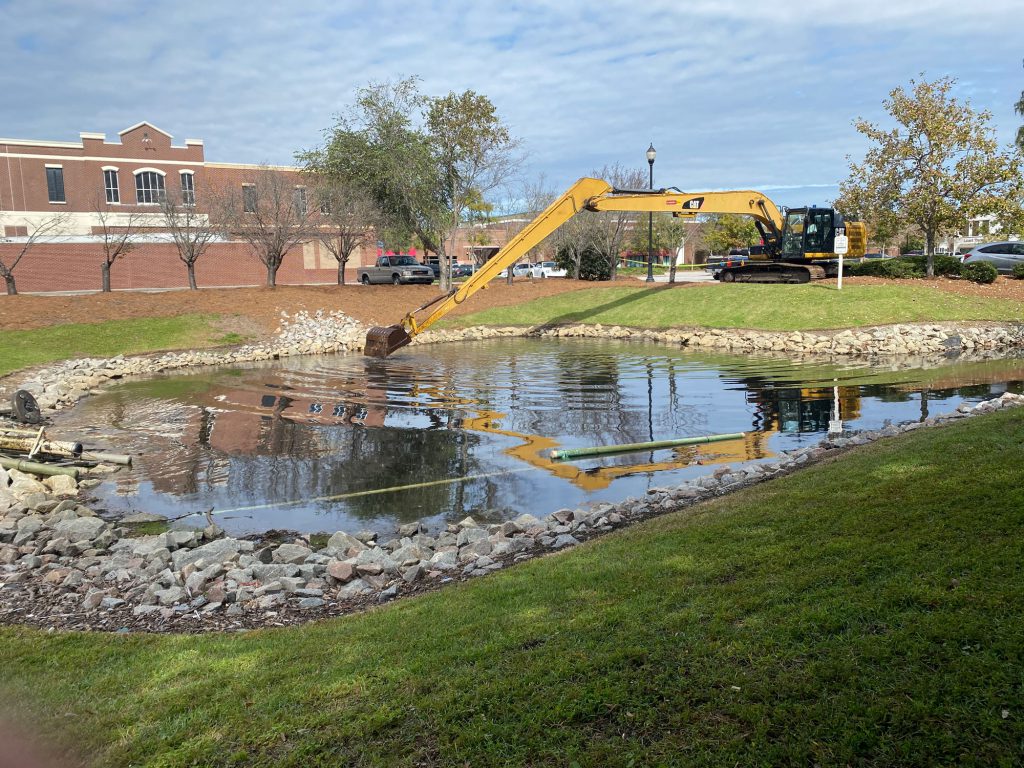
During mechanical dredging, a waterbody is completely drained to allow full visibility of the bottom. A long-reach excavator is used to scoop out excess materials, which are then removed from the site using semi-trucks and trailers.

hydraulic dredge - dredging - sediment removal - muck removal

Hydraulic Dredging

Hydraulic dredging does not require a waterbody to be fully drained. Instead, hydraulic dredges use a specialized tube to pump water and materials into a holding tank for filtration. The filtered water is then returned to the waterbody.

Though dredging is highly effective at resetting an aged waterbody, it is one of the largest expenses a community will ever face. Stakeholders should also be prepared to take swift and ongoing action to cultivate their new aquatic ecosystem once the project is complete. Without responsible management, they may see their water resource prematurely return to its prior condition.


Tags:
A Road Map to Your Ideal Waterbody by SOLitude

A Road Map to Your Ideal Waterbody by SOLitude

  • Posted: Jan 16, 2024
  • By:
  • Comments: Comments Off on A Road Map to Your Ideal Waterbody by SOLitude

A Road Map to Your Ideal Waterbody

Navigating Your Lake Management Journey

As any lake owner or manager knows, maintaining a waterbody is hard work. At best, you may experience a few hiccups every now and then like small mats of algae or cloudiness. At worst, you may face toxic blooms of cyanobacteria, severe erosion issues, or flooding. Achieving the lake or pond of your dreams is not a linear process; it’s a journey. Whether you’re new to water management or well into your quest, it’s never too late to reevaluate your trajectory and make sure you’re taking the safest and most efficient route toward your waterbody goals.

Identify your goals and stakeholders

In order to achieve the goals you’ve set for your lake or pond, it’s important to visualize them. Maybe you desire a small backyard pond for swimming, fishing, and kayaking with friends and family. You may need a stormwater pond that efficiently collects rainwater while providing aesthetic beauty. Perhaps you oversee a large lake or drinking water reservoir that requires safe, clean water for the public. With the support of an experienced Aquatic Expert, HOA managers, property owners, municipal leadersgolf course superintendents, and other decision-makers can develop a detailed roadmap tailored to their unique needs and budget, as well as to the one-of-a-kind characteristics of their waterbodies.

testing-water-quality-in-lakes

Conduct lake water quality testing

One of the most important steps when navigating your journey is establishing baseline knowledge about your aquatic ecosystem. Professionals conduct visual surveys and advanced water quality testing to learn about the physical and chemical properties of an aquatic ecosystem. Parameters like dissolved oxygen (DO), nutrient levels, pH, and turbidity provide valuable context by allowing professionals to identify potential imbalances, predict future problems, and develop a timeline to implement short- and long-term management solutions.

Plan ahead to prolong your lake’s lifespan

In lake and pond management, every waterbody has a countdown. Over time, sediment, debris, animal waste, and other organic materials accumulate at the bottom of all lakes and ponds. As an ecosystem becomes more shallow, it loses its capacity to hold water, which can increase the risk of flooding during storms and severely damage shoreline areas. Eventually, dredging services will be needed to physically remove these materials and restore the waterbody to its original depth and volume. Though this is a natural occurrence, it can be expedited by human activities such as construction and urban development, agriculture, and recreation. Luckily, by planning ahead, stakeholders can cruise past these dead-ends, ensuring a smoother journey.

Proactive management helps you stay ahead of water quality issues

If dredging is a dead-end street on the roadmap towards the waterbody of your dreams, proactive management solutions are shortcuts. By implementing preventive measures and sustainable practices, you can sidestep the need for extensive restoration efforts, as well as smaller roadblocks like nuisance weeds and algae. Shoreline managementnutrient mitigation, biological bacteria, fountains and aeration, and ongoing water quality monitoring can help you cultivate a healthy, beautiful, functional waterbody – and enjoy it for as long as possible.

drone-technology-3

Elevate your pond management plan with new technologies

Furthermore, advanced technologies and solutions like professional dronesbathymetric mapping, and electrofishing can serve as navigational tools on your management journey. These technologies help stakeholders better understand depth, underwater features, and even fish populations, allowing them to use their time, attention, and resources more efficiently.

Achieve your ideal waterbody with help from experts

Lake and pond management is never smooth sailing. Water is in a constant state of change, impacted by weather conditions, wildlife, land use, and countless other factors. Navigating these complexities requires a proactive approach that incorporates as much knowledge and innovation as possible. With an experienced Aquatic Expert as your guide, you can enjoy each milestone on your journey while keeping your goals firmly on the horizon.

Why Autumn Is a Pivotal Time for Your Waterbody – Summer may be over, but that doesn’t mean you should neglect your lake or pond! Check out these fall maintenance tips

Why Autumn Is a Pivotal Time for Your Waterbody – Summer may be over, but that doesn’t mean you should neglect your lake or pond! Check out these fall maintenance tips

  • Posted: Oct 21, 2023
  • By:
  • Comments: Comments Off on Why Autumn Is a Pivotal Time for Your Waterbody – Summer may be over, but that doesn’t mean you should neglect your lake or pond! Check out these fall maintenance tips

Should You Implement Lake and Pond Maintenance Services In the Fall?

As the transitional period between the summer and winter seasons, Autumn is a pivotal time to reflect on the challenges that your waterbody faced during the warmer months and contemplate your goals for the future. Autumn also provides an optimal window to implement maintenance services and water quality testing strategies that will help set your aquatic ecosystem up for success in the coming year.


Set Your Lake Up for Success This Fall

Autumn is a time of transition and no doubt, your waterbody will experience changes that manifest when spring and summer return. But stakeholders can shape these outcomes through an integrated management program that’s thoughtfully tailored to their unique property and budget. As the warmer months come to an end, an Aquatic Specialist can help property stakeholders assess the health and physical condition of their waterbodies and strategize a clear path to achieve their goals for the following year.


Address Aquatic Weeds & Muck with Mechanical Solutions

Weeds and pond algae are some of the most common problems that plague aquatic ecosystems during the warmer months. Though property owners and managers may be happy to see them disappear late in the season, the die-off of terrestrial and aquatic plants can impact the physical and chemical composition of the water, creating problems that seemingly lie dormant until warm weather returns. Mechanical harvesting and hydro-raking can be used to physically remove floating and submersed plants to prevent accumulation and muck development at the bottom.


Target Decomposing Pond Plants with Natural Biological Bacteria

Physical removal of pond weeds is effective, but plant fragments often remain. Biological bacteria play an essential role in the decomposition of remaining organic materials. They are found naturally in lakes and ponds, but can also be supplemented through a process called biological augmentation. These beneficial bacteria are aerobic, which means they require oxygen to carry out their metabolic processes.


Maintain Healthy Dissolved Oxygen Levels with Fountains & Aerators

But as the days grow shorter and cooler, dissolved oxygen (DO) can become depleted, reducing the efficiency of this process. Introducing floating aeration equipment or a submersed aerator can help maintain balanced DO levels, which facilitates decomposition and curbs the accumulation of nutrient-rich muck over the winter months. For stakeholders that already own a fountain or aerator, Autumn is an appropriate time to have units inspected and repaired to help prolong the performance of the equipment.


Balance Lake Nutrient Levels and Enhance Water Quality

Nutrients like phosphorus are an underlying cause of nuisance pond weed and algae growth. Phosphorus is naturally occurring in the water but is also transported by sources like lawn fertilizers, pet waste, trash, and agricultural runoff. Autumn is a good time to take action against nutrient imbalances and prevent explosive weeds and algae when the spring season arrives. If water quality tests reveal elevated phosphorus levels, products like Phoslock¹, Alum, and EutroSORB² can help target excess nutrients in waterbodies of all shapes, sizes, and uses. A professional can recommend the best solution based on the characteristics of your waterbody


Read the Full Article includes a larger list of services for your Lakes. 

Tags:
7 Pond Maintenance Tips from SOLitude to Complete This Fall

7 Pond Maintenance Tips from SOLitude to Complete This Fall

7 Ways to Prepare Your Waterbody for Success This Autumn

Following the hot, humid weather that accompanies summer, the fall season brings a sigh of relief with less intense sunshine and cooler temperatures. Just as the trees reflect the changing of the seasons, your water resources can also experience change. Fall is a perfect window to complete lasting maintenance. It’s important to stay on top of lake and pond management to facilitate fall recreational activities and to ensure you can enjoy it to its full potential come spring.

1. Rehabilitate eroded shorelines:

As algae and vegetation growth subside, there are many opportunities to tackle management projects that could not be accommodated during the summer. Erosion around shorelines often becomes more visible and this short window before winter is perfect to introduce a bioengineered shoreline using SOX Solutions. Depending on the size of the affected area, SOX can be installed within a few days or weeks to anchor sediment in place. It can then be planted with grass or sod to restore aesthetic beauty to the landscape around your waterbody. The knitted mesh system’s strength and integrity ensure the transformation is safe and long-lasting.

1. Rehabilitate Eroded Shorelines (before) - resized1. Rehabilitate Eroded Shorelines (after) - resized
2. Manage nuisance and beneficial plants

2. Manage nuisance and beneficial shoreline plants:

In addition to addressing dangerous erosion issues, the shoreline should be examined for woody vegetation and invasive plants like Phragmites australis, both of which should be physically removed to prevent further destabilization and potential damage to stormwater equipment. Native buffer species should be trimmed and the clippings should be removed from the site. Likewise, falling leaves, grass clippings, and other fall materials should be cleared to ensure they do not enter the water, decay, and create harmful water quality imbalances that could encourage algae growth come spring. Plant matter is also known to clog stormwater equipment and floating fountains.

3. Restore valuable depth

3. Restore valuable depth and volume:

If erosion and plant decay have accumulated over many years due to lack of proactive management, it may be time to restore depth in affected areas with hydro-raking. A hydro-rake is a floating barge with a mounted backhoe that can gather up to 500 pounds of muck in each scoop and deposit it on the land for disposal. Because a hydro-rake works from the water, it does not impact delicate shorelines. Fall is a perfect time for hydro-raking projects so the accumulation of leaves, branches, and decomposing plant matter can be removed before they negatively impact water quality conditions later in the year.

4. Execute your aeration plan

4. Execute your aeration plan:

That brings us to aeration. If your lake or pond has a fountain, now is the perfect time to schedule an ‘oil and seals’ service, which should be performed every three years. For those who live in colder climates, you may desire removal and winter storage for your fountain. If so, this should be completed by early December. In slightly warmer climates, fountains and submersed aeration systems can be left in the water to reduce ice formation and prevent stratification (the distinct layering of water temperatures and dissolved oxygen levels), which can cause fish kills. And new solutions like Oxygen Saturation Technology can also prevent fish kills by introducing necessary oxygen to anoxic layers of the water without causing thermal stratification.

5. Collect data & identify...

5. Collect Data & Identify physical changes in your waterbody:

Proactive management is crucial to preserve the long-term health and beauty of your water resources. However, no two waterbodies are exactly the same and benefit most from a customized plan. Data is an important tool to help learn what your lake or pond needs to thrive. Just as water quality testing provides insight into the chemical components of the water, it is also beneficial to examine the physical components of the water resource.

Bathymetric mapping is the go-to tool to “see” below the surface and uncover the unique depths, contours and structural components at the bottom. When completed every 3-5 years, bathymetric studies can be compared to track physical changes over time. Other types of mapping can reveal total surface area and sediment accumulation, making it easier to create a timeline and budget for future dredging needs.

Mapping can take place any time of year, but it is often prioritized during the fall when the valuable data is used to facilitate planning or permitting needs and inform budget projections.

6. Stock winter sport fish

6. Stock winter sport fish:

While most sport fishing tends to subside as temperatures decline, angling activities do not have to end. Autumn provides the perfect backdrop to stock rainbow trout, which thrive all fall and winter. To do this successfully, it’s important to ensure water temperatures have consistently reached below 70 degrees. Once introduced to your waterbody, trout will thrive over the next few months until temperatures rise back up in the spring.

Stocking a lake in the fall is one of the easiest things owners can do to create some fish diversity and to add excitement to their fishing experience. Trout are especially fun to fish and can transform a community pond from just an aesthetic feature to an exciting meeting place for adults and children alike.

rebalance water quality - nutrient remediation and liming

7. Rebalance water quality:

In addition to trout stocking, waterbodies prized for their year-long fishing experiences can benefit from pond liming. In acidic ponds, liming is an important method for correcting the associated water quality issues and improving fish productivity. Fall and winter are the recommended timeframes to complete these applications as they can’t always be prioritized during the growing season. The process is delicate, so it’s important to consult with a freshwater management professional to implement a water quality assessment and determine if liming is right for your waterbody.

water testing - lake assessment - surveying - mapping - solitude team - colleague - leadership - community

Takeaways:

Though year-round annual management is an important part of pond ownership, fall is a great time to implement a variety of techniques and strategies that aren’t always feasible during the warmer months. It’s also a time to consider your goals for the following year and begin the planning required to achieve them. Your professional lake manager can help you throughout the process and ensure you are on the right track to maximize your budget and the enjoyment of your waterbody for years to come.


Find out more about SOLitude Lake Management. Members of SFPMA helping clients with their water bodies all over Florida and in Many other States. 


Tags: , , ,
3 Lake Webinar Today: Management Strategies That Won’t Bust Your Budget Sept 27 | 1 PM (EDT) | 1 CE Credit*

3 Lake Webinar Today: Management Strategies That Won’t Bust Your Budget Sept 27 | 1 PM (EDT) | 1 CE Credit*

  • Posted: Sep 27, 2023
  • By:
  • Comments: Comments Off on 3 Lake Webinar Today: Management Strategies That Won’t Bust Your Budget Sept 27 | 1 PM (EDT) | 1 CE Credit*

Our expert will reveal how you can manage your lake or stormwater pond without going over budget!

Sign up today and learn the three categories of lake management expenses and how you can avoid costly restoration services. Earn 1 CE Credit!

REGISTER HERE
This webinar is approved for 1 CE credit for Community Managers and is also open to the public. Can’t make the live webinar? Register anyway and you’ll receive a recording.


MEET YOUR PRESENTER
David Cottrell
Botanist, Lake Management Expert,
Business Development Consultant

* This course is approved for 1 credit hour by the Community Association Managers International Certification Board (CAMICB) and the Florida Department of Business and Professional Regulation (DBPR)


Tags:
Explore the three eco-friendly solutions that remove excess nutrients from lakes and ponds to promote a healthy aquatic environment.

Explore the three eco-friendly solutions that remove excess nutrients from lakes and ponds to promote a healthy aquatic environment.

Explore the three eco-friendly solutions that remove excess nutrients from lakes and ponds to promote a healthy aquatic environment.

If algae and weeds are infesting your water, it could be due to high nutrient levels. You deserve an aquatic paradise, not an eyesore.


EXPLORE NUTRIENT REMEDIATION SOLUTIONS
Tags:
Safeguard Your Lake’s Shoreline by SOLitude

Safeguard Your Lake’s Shoreline by SOLitude

Safeguard Your Lake’s Shoreline

Protect your lake by properly planning and budgeting for shoreline restoration and management. There are solutions for every budget, from cost-effective vegetative shoreline buffers to innovative erosion repair systems.

Budgeting for Shoreline Restoration and Management

Lakes and ponds are essential for stormwater collection, recreation, beauty, and wildlife refuge. But their benefits have an expiration date. Eventually, due to erosion and other aspects of the natural aging process, your lake can become an eyesore and a liability. Lake shoreline restoration projects are inevitable – and sometimes costly – so it’s imperative to get ahead of expenses by calculating an accurate timeline and budget.

We know you cherish your water resources; after all, they can be assets that enhance the value and desirability of your property. We want to help you preserve them for as long as possible through proper planning and maintenance efforts. This starts with understanding the effects of erosion and budget considerations that impact important decisions.

erosion-damage-erosion-runoff

What is shoreline erosion?

Erosion is natural due to wind, rain, and wildlife activity, but can be accelerated through cultural impacts like recreation, landscaping, and construction. It can also look different from one waterbody to the next, from receding or unstable banks to sediment deposits along the shoreline. Ignoring these signs can result in damaged assets and possible liability risks.

No matter your budget, every property deserves access to shoreline erosion solutions. Even if the damage is minimal, such as one-inch dropoffs, it’s possible to get ahead of it through cost-effective means or larger investments.

littoral-shelf-beneficial-buffer

Guard Your Shoreline with A Vegetative Buffer

An economical solution for shoreline protection is a vegetative buffer containing native plants with deep root systems. When established around the perimeter, beneficial buffers help hold soil in place and slow the flow of stormwater to prevent deterioration. Buffers are also cost-effective to maintain, requiring only routine trimming and monitoring for the growth of undesirable plants.

Tags:
Managing nuisance algae and aquatic weeds in your lake can be challenging, but it doesn’t have to be

Managing nuisance algae and aquatic weeds in your lake can be challenging, but it doesn’t have to be

Managing nuisance algae and aquatic weeds in your lake can be challenging, but it doesn’t have to be. Learn how proactive management solutions can help improve lake health and create an ecosystem that is less likely to develop common water quality issues.

Algae and Invasive Weeds: The Biggest Burden of Lake Managers and Owners

One of the biggest headaches lake and pond owners or managers face is nuisance growth of algae and aquatic weeds. Aquatic weeds and algae are an eyesore and a top complaint from stakeholders. People look forward to enjoying the water during the warmer months, but if nuisance growth is not prevented before spring, it may come to define your property all summer long. Poorly-maintained waterbodies can lead to disconnected communities, reduced property values, liability issues, and weak confidence in leadership.


Why Algae & Weeds Develop

Aquatic weeds and algae can be hard to eliminate as they are merely a symptom of more systemic water quality issues – in particular, a surplus of nutrients in the waterbody. Warm weather combined with excess nutrients can create imbalances that make lakes and ponds more susceptible to weeds and algae. These imbalances can be further exacerbated by depleted dissolved oxygen levels, poor circulation, and erosion.

A Reactive Strategy to Algae & Weed Control

Nutrients commonly enter lakes and ponds through stormwater runoff that picks up pollutants, lawn clippings, animal waste, and eroded shoreline sediment. Nutrients are released as these materials break down. If these problems are allowed to continue for too long, property owners and managers will have to turn to more reactive solutions like mechanical harvesting or EPA-registered herbicides and algaecides to eliminate nuisance growth. Though they do not address the root cause, these are often the quickest and most cost-effective strategies to quickly remove nuisance growth, and introduce an annual management program from a “clean slate.”


A Proactive Approach to Algae & Weed Control

Proactive management begins with in-depth water quality testing to identify water quality imbalances before they manifest. After establishing a baseline, professionals continue monitoring to spot changes and take action early on. Dissolved oxygen is essential to a healthy waterbody, so fountains and aerators are often the next step. Fountains circulate and oxygenate lakes and ponds from the surface, while submersed aerators pump oxygen-rich bubbles from the bottom. In tandem, they work to restore balance to the water column.


“Deactivate” Excess Nutrients for Healthy Water Quality

To target excess and unwanted nutrients directly, products such as PhoslockAlum, or EutroSORB can be used to “deactivate” or remove them from the water column. This approach typically yields long-lasting results as long as steps are taken to prevent future runoff.

littoral zone buffer management shoreline restoration and erosion controll

Halt Runoff & Maintain Healthy Water

This is where shoreline management comes in. Native plants introduced around the water’s perimeter can help slow runoff and filter out pollutants. They also help contain soil along the bank to prevent erosion. If a shoreline is too impaired, bioengineering materials and techniques can be used to rebuild it for years of erosion protection.


Reduced Algae and Restored Tranquility

“One of our lakes has been experiencing regular algae blooms and SOLitude’s biologist performed a comprehensive lake and water analysis to determine the cause of the problem. Recommendations were presented and the problem was resolved!”

Peter D., Community Manager


Tags: ,