
Become our Member : JOIN SFPMA TODAY   LogIn / Register: LOGIN/REGISTER

SFPMA Industry Articles | news, legal updates, events & education! 

Find Blog Articles for Florida’s Condo, HOA and the Management Industry. 

A guide to holiday decorating that will keep you off your HOA’s naughty list

A guide to holiday decorating that will keep you off your HOA’s naughty list

  • Posted: Dec 17, 2024
  • By:
  • Comments: Comments Off on A guide to holiday decorating that will keep you off your HOA’s naughty list

A guide to holiday decorating that will keep you off your HOA’s naughty list

Check your association’s bylaws before making your home festive

The holidays are here, and many of the 74.1 million Americans who reside in community association neighborhoods are preparing to decorate their homes. These homeowners should be aware that many community associations have bylaws that regulate lights, trim and decorative displays. The most common association rules that regulate holiday decorations address:

  • Time. Many homeowners associations (HOAs) regulate the hours that lights may be illuminated and dates on which decorations can be displayed before and after a holiday.
  • Location. Most community association rules limit placement. In neighborhoods of single-family houses, decorations are generally permitted on the exterior of the home and must be kept within the boundaries of the yard. Owners should ensure decorations do not blow into a neighbor’s yard. In attached condominiums, many associations limit or preclude holiday decorations in common areas such as hallways and doors. Most condominium bylaws contain a restriction that prohibits an owner from making a modification to the exterior of a unit without permission from the association.
  • Nuisance. Bylaws typically preclude homeowners from creating a “nuisance.” While this definition is somewhat subjective, it could include holiday lights that are too bright or Christmas music that is played loudly throughout the night. In most cases, common sense dictates what may be disruptive to neighbors.
  • Safety. Most bylaws or rules aim to prevent dangerous or hazardous activities. If your holiday display creates a fire hazard or attracts numerous visitors who park in the street and block access for emergency vehicles, you may run into issues with your association or the local municipality.

HOA rules are intended to protect the health, safety and welfare of the community; complying with the restrictions is mandatory. Homeowners who fail to do so may initially receive a warning from the association, but continued noncompliance could result in fines or a court injunction to have the decorations removed.

Homeowners who have an issue with the holiday-decorations rules should request a meeting with the board to ask if they can be revised. Board members should be receptive to reasonable input from owners and craft rules accordingly; most owners don’t want an Ebenezer Scrooge on the board.

Fair Housing Act implications may make some holiday rules unenforceable. Religious discrimination is illegal under the act. An HOA is not allowed to show preference to one religion over another. When drafting rules, associations should be careful to avoid using terms that refer to specific holidays such as Christmas, Hanukkah or Kwanzaa. Rather, the rules should apply to all “holiday decorations” or reference “holiday trees” to ensure the religious beliefs of certain owners are not given preferential treatment.

Before decorating your home, review the community association rules to determine what restrictions, if any, exist that would regulate holiday displays. It’s a good idea to contact the community manager or the board of directors for guidance. While the holidays are a time to celebrate, owners who fail to review their association’s rules may end up with coal in their stockings. by By Kevin M. Hirzel

Tags: , ,
Should Delinquent Owners Voting Rights Be Revoked?

Should Delinquent Owners Voting Rights Be Revoked?

  • Posted: Nov 04, 2024
  • By:
  • Comments: Comments Off on Should Delinquent Owners Voting Rights Be Revoked?

Should Delinquent Owners Voting Rights Be Revoked?

by Steve Walz

One of the thorniest issues to tackle in an HOA is homeowners in delinquency – not paying their dues or being significantly behind on dues payments. The community and owner dues are two sides of the same coin. The community canno maintain the grounds, amenities, or sidewalks without yearly owner dues. However, financial issues are a minefield of complications from family tragedy to cantankerous entitlement.

A challenging question arises: What should an HOA do if a homeowner refuses to pay their dues? Your options range from leveling fines to revoking voting rights. Many communities favor withdrawing voting rights – cutting off the privilege of community control that comes from being a contributing homeowner in the community. Any HOA considering this route should plan carefully to ensure this decision is legal, permitted, and potentially effective before putting it in place.

Is it Legal to Suspend Delinquent Owner Voting Rights?

Your state determines the legality of suspending voting rights in an HOA. Some states allow for the suspension of HOA voting rights for specific reasons or in general, but others prohibit the rest of any remaining owner voting rights. You will need to check the detailed laws regarding HOAs in your state. There may also be rules relating to HOA homeowner rights regarding delinquency and suspension of voting rights in your county and municipality.

Is it Permitted to Suspend Voting Rights Over Dues Delinquency?

The next question is whether your own HOA permits this policy. Next, check your governing documents and by-laws to determine if there are already policies regarding dues delinquency and when an owner’s voting rights can be permitted.

The legal language in HOA governing documents can vary widely. For example, according to some condo associations, all homeowners are subject to the same rules, which means no voting rights. On the other hand, some HOAs may define that an owner always has certain voting rights, like council elections. Still, you may be able to suspend lesser voting rights regarding community matters.

Can Suspending Voting Rights Effectively Resolve Delinquent Dues?

Finding a practical consequence for delinquent dues has always been a challenge for HOAs. The community can’t support many homeowners using the roads and amenities without paying into the infrastructure. Nevertheless, choosing the proper measures to achieve your goals is also imperative.

Considerations

  • If a homeowner never votes on anything, suspending their voting rights will not impact them in any way. Likewise, if the community votes on very little.
  • How can you fairly make exceptions for invested people experiencing financial hardship?
  • How can you protect against people who take advantage of safety net systems?
  • Never combine vote suspension and leveled fees  (not dues). This opens the door to corruption and the ability for the board to tax a homeowner out of being able to vote, then drive them from the community. If you revoke voting rights, this must only be for dues and not the total owed amount in fees.
  • You may revoke some – but not all – types of voting. Most HOAs take a few types of votes: meeting votes, election votes, special assessment votes, and so on. You may find selective vote limitations to be more effective – or permitted by your documents.
  • Prevent them from making changes, but don’t prevent them from self-advocation.

Other Potentially Effective Ways to Penalize Delinquent Dues

Suspending voting rights is a sticky proposition. Some homeowners won’t care, some will be devastated. This means it’s also worth considering a few alternatives or additional penalties that may drive homeowners to get right with their dues more effectively.

Denying Permit Approvals

  • Parking permits
  • Building permits

Refuse delinquent owners of any more permit approvals. No guest parking, and no home improvement projects. Guest parking is for people who are contributing to the neighborhood road and lot maintenance.

Denying Amenity Access

  • Pool access
  • Spa/Fitness room access
  • Clubhouse bookings
  • Sport court reservations

A first-time refusal to allow someone access to the pool due to their inability to maintain it can emphasize its importance. Consider denying non-paying homeowners something they will miss that their dues contribute to paying for if this type of solution is permitted in your state and governing documents. Your HOA gets to have sweet amenities because everyone pays in. Those who don’t, don’t. Also, this has a fair, lower impact on families experiencing financial hardship. However, they may need to use their voting rights to oppose special assessments they cannot pay or fight an oppressive fee structure.

When approaching the issue of HOA owners with delinquent dues, remember to create an adaptive and considerate system of response. Build a plan that equally accounts for the absent-minded, the scam artists, the family hardships, and the belligerent bullies. Whatever your solution, make it your central goal to resume regular dues for each property without causing or being subject to unnecessary loss.


Tags: , ,
Did you know that CCTV trucks are vital tools for inspecting the condition of underground pipes?

Did you know that CCTV trucks are vital tools for inspecting the condition of underground pipes?

Did you know that CCTV trucks are vital tools for inspecting the condition of underground pipes?
Equipped with high-resolution cameras mounted on crawlers, these trucks can navigate through pipelines, capturing video footage of the interior. This allows inspectors to identify problems like cracks, blockages, corrosion, or misalignment, all without having to dig up the pipes.
This non-destructive method of pipe verification is crucial for preventative maintenance, ensuring the quality of pipelines and helping to diagnose issues before they cause serious problems.
It also helps with making sure the pipes are clear so they dont block up or prevent drainage of your properties parking lots and Loading Docks.  Setting up a plan for cleaning and Maintenance is important, especially with the Florida Storms. 
Call us at (954) 210-4100
📧Email us at Service@getgreenteam.com
For other inquiries email us:
Projects@getgreenteam.com
Backflow@getgreenteam.com
Vacservice@getgreenteam.com
Tags: , , ,
STORM DAMAGE CLAIMS FOR YOUR CONDO AND HOA PROPERTIES!

STORM DAMAGE CLAIMS FOR YOUR CONDO AND HOA PROPERTIES!

SFPMA & Members are ready to Handle Storm Damage & Claims for Condo and HOA Properties!

These Trusted Members are; Legal Firms, Public Adjusters, Roofing, Engineering & Service Companies that work with you on Solutions to Storm Related Damage.


Has your Home, Condo or HOA Sustained Property Damage?

 SFPMA has a team of Legal Experts, adjusters, estimators and claim specialists for the benefit of the Condo and HOA’s who sustained damage from the storms and fire, water or mold.

With the know-how and experience to analyze, evaluate, and negotiate the best settlement for your  Insurance Claim!

“Get the maximum settlement for your damage claim!”


PROPERTY DAMAGE

  • Hurricane Storm Damage
  • Water Damage / Floods
  • Fire Damage
  • Mold Damage
  • Roof Damage and Leaks
  • Sinkholes & Earthquakes
  • Property Vandalism and Theft


WHAT WE PROVIDE CONDO & HOA’S

  • Property Inspections & Site Analysis
  • Review of your Insurance Policy
  • Damage Report Backing up the Claim
  • Loss Estimates Documentation
  • Negotiation and Settlement with Insurance Companies


A Claim usually includes inspections, detailed estimates, more inspections, client reviews, negotiating with insurance companies, consulting with insurance company and most importantly, getting you your money as fast as possible.

http://FloridaAdjusting.com


When unit owners refuse to pay their assessments, it puts everyone in a bind, condominium assessment liens might be one way?

When unit owners refuse to pay their assessments, it puts everyone in a bind, condominium assessment liens might be one way?

  • Posted: Jul 16, 2024
  • By:
  • Comments: Comments Off on When unit owners refuse to pay their assessments, it puts everyone in a bind, condominium assessment liens might be one way?

Florida Condominium Associations and Homeowners Association Boards have many challenges in managing the needs of their communities. As a result, when unit owners refuse to pay their assessments, it puts everyone in a bind. Fortunately, there is a key tool that you may use in Florida to compel payment of the monies due: a condominium assessment lien.

Collecting Assessment Revenue Through A Condominium Assessment Lien
There are steps that must be taken in order for a condominium association lien to be properly filed. This is a brief summary of the steps:


*A condominium association’s governing documents in conjunction with Section 718.116, Florida Statutes, are the genesis of the condominium association’s authority to impose and perfect assessment liens against individually owned units within the community.


Delinquency Notice

This is not a requirement but good collection practices dictate that the association attempt collection efforts prior to engaging a law firm. Sometimes the unit owner may have just forgotten to place the payment in the mail. These delinquency notices can help remind the unit owner of their payment obligation.


Notice of Intent to Lien

The first statutorily required step is to send a formal letter from the law firm announcing the association’s intent to place a lien on the unit for the failure to pay. The letter has very specific requirements and should be sent from the association’s attorney. If a condominium, the association must wait 30 days from the date of this letter to record its lien. The time frame for a Homeowners Association is 45 days.


Claim of Lien

This is the actual document that gets recorded in the public records and encumbers the unit. It must have the Unit legal description, the owners name and a description of the delinquency. There is a form in the statute and Florida law requires that this lien be created and recorded by the association attorney.


Notice of Intent to Foreclose

After the lien is recorded, another notice must go to the unit owner announcing the intention to take the unit by legal process. The association must also wait an additional 30 days after this notice is sent. 45 days for HOAs.


Foreclosure Action

This is the lawsuit that will take the unit. A Lis Pendens is recorded when the lawsuit is filed to provide public notice of the legal action on the lien. Most lien foreclosure actions result in either settlement of the claim of taking of the unit. Defenses to lien foreclose actions are tough to prove and seldom release the unit owner from the obligation to pay the assessment.


Time Is not on your side, dont delay if this is the action you are taking?

It is imperative that all these steps are followed to the tee or the lien may be dismissed outright. In addition to these steps, Florida condominium associations can take additional steps such as suspending unit owner common element or amenity rights. This is done by alerting the unit owner of the delinquency and then if amount is greater than $1,000 and 90 days the Board may consider the suspension of voting rights at a board meeting. The unit owner will then receive notice of the suspension after the vote has occurred.


Florida Condominium Associations

Under Florida State Law, only an attorney may draft a condominium assessment lien, because it contains a legal statement. Once the lien is filed, there is a one year timeline for Florida condominium associations to file suit. If the Association misses that deadline, the whole lien process will have to be redone. Therefore, it is paramount that the steps are followed properly, and in a timely fashion, or you may forfeit what is due to the community.

Remember to contact your Attny, Ask them for the best options for your communities!


Tags: , ,

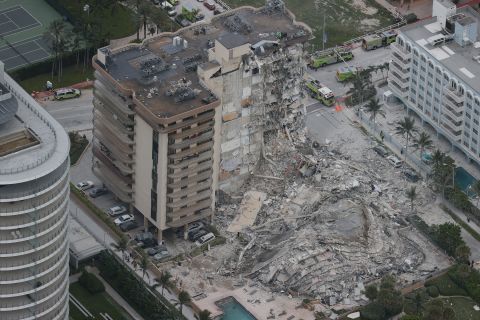
One thing has become clear since the fall of the Champlain Towers South condo: many condos are falling apart, often because owners don’t want to spend the money to maintain them. Soon, they might have no choice but to pay.

One thing has become clear since the fall of the Champlain Towers South condo: many condos are falling apart, often because owners don’t want to spend the money to maintain them. Soon, they might have no choice but to pay.

  • Posted: Jul 16, 2024
  • By:
  • Comments: Comments Off on One thing has become clear since the fall of the Champlain Towers South condo: many condos are falling apart, often because owners don’t want to spend the money to maintain them. Soon, they might have no choice but to pay.

A Broward task force will likely ask the state to boost inspections and change funding of reserves. But any new rules will face regulatory and political hurdles.

Broward County task force agreed, informally, to recommend a change in state law that would make it harder for condos to waive the proper funding of reserves and to require more frequent inspections for coastal condos. The changes, if adopted by the state, could make condo living more expensive, but safer.

“It’s going to hurt in the beginning, but that’s where we have to get,” insurance expert Paul Handerhan, president of the Federal Association for Insurance Reform (FAIR), told the committee Monday, echoing many of their own opinions. “… There’s no way to get out of this without paying.”

Monday’s was the second of three meetings for the Broward County Condominium Structural Issues Committee, set up by Mayor Steve Geller to quickly offer recommendations to the Florida Legislature, whose committee meetings begin next month.

The Florida Bar and the Community Associations Institute trade group also are studying issues arising from the June 24 condo collapse in Surfside, and will offer recommendations to the governor and Legislature.

All are focused on just a few topics, including the issues of reserves and inspections.

Currently, reserves can be waived by majority vote of those present at a condo meeting. And the first major inspection is not required in Broward until a building turns 40.

“We’re here to try to come up with creative ways to make buildings safe. What Surfside has done is made city officials, building officials, condo residents, everybody aware of the widespread lack of maintenance in older condos,” said Hollywood Commissioner Caryl Shuham, who has a degree in civil engineering and is an attorney.

She recommended, and the committee conceptually agreed, that condos should have to present a reserve study to unit owners and secure a super-majority vote to waive full funding of reserves. She also suggested reserves not be waived unless an engineer has inspected the building and issued a report.

The potential cost to condo owners is not lost on state, county and city officials or the civic and industry leaders huddling on the issue. While some million-dollar condo owners might have no trouble forking over extra money, many unit owners are not in that category. Even the inspections are costly, one condo representative said. Unit owners could be forced out and condo sales could be stifled, some said.

“In certain cases, you could be mandating the death of a building,” said Fred Nesbitt, president of the Galt Ocean Mile condo association in Fort Lauderdale, which opposes reserve mandates. “I think we should still give owners choice.”

Geller said condos that don’t properly save for repairs face sticker shock with giant special assessments. By the time a major problem is found, he said, it’s too late to start paying into reserves.

“You can’t insure a burning building, and you can’t start reserving for an emergency that has already arrived,” he said.

The cause of the Champlain collapse remains unknown but is under investigation. Because there was evidence of poor maintenance and crumbling, cracking concrete at the Champlain, there has been a sharp focus on how government can ensure that condos are kept in good repair.

“It’s terrifying to me that we’re in this place,” said state Sen. Lauren Book, one of four state legislators on the county committee. Book complained that there’s no one keeping track of individual condos – where they stand with insurance, reserves and repairs.

The committee also debated whether more frequent inspections are needed. Broward is one of two counties in Florida – the other being Miami-Dade – that requires buildings to be inspected for electrical and structural safety at age 40 and every 10 years subsequently.

Dr. Jennifer Jurado, Broward County’s climate change sustainability director, said the striking increase in sea level here – more than a foot over 20 years – could increase deterioration of concrete in buildings along the coast. She also cited temperate change and flood levels in saying that inspections should begin earlier, at 25 or 30 years.

But Dan Lavrich, a structural engineer and chairman of the Broward County Board of Rules and Appeals, which oversees application of the building code, questioned the need. Any change in the inspection program would have to be approved by Rules and Appeals, and the Florida Building Commission.

“The rest of the state has no program at all,” he said of the 40-year safety program, “and they don’t have any problems.”

The Broward committee will hold what it expects to be its final meeting next week, on Aug. 30, where formal recommendations will be voted on.

Reposted via: https://www.floridarealtors.org/news-media/news-articles/2021/08/condo-law-changes-likely-after-surfside-its-complicated


Tags: , , , ,
The Florida Legislature has been hard at work trying to address water quality issues throughout the state.

The Florida Legislature has been hard at work trying to address water quality issues throughout the state.

Some of those issues start with failing septic systems.

To help solve the problem, lawmakers passed new septic system requirements in Florida. Take a look below to get up to speed on these new requirements and their deadlines.

A septic system, also known as an onsite wastewater treatment system (OWTS), is a system that treats wastewater from a home and allows it to be absorbed by the soil without causing contamination or odor. It typically consists of a septic tank and a drainfield:
  • Septic tank
    A watertight, underground chamber that holds wastewater long enough for solids to settle and grease and oil to float. The tank is usually made of concrete, fiberglass, or polyethylene and has compartments and a T-shaped outlet to prevent sludge and scum from leaving.
  • Drainfield
    A shallow, covered excavation in unsaturated soil where bacteria break down wastewater pollutants. The treated effluent then returns to the property’s soil and groundwater

Tags:
Property Management Legal Forms: forms are always needed for proper operation.

Property Management Legal Forms: forms are always needed for proper operation.

  • Posted: Jun 26, 2024
  • By:
  • Comments: Comments Off on Property Management Legal Forms: forms are always needed for proper operation.

Property Management Legal Forms

As you become a CAM Manager and start your business or have a Property Management Business that is established, forms are always needed for proper operation.


We offer Subscriptions – Where for a small fee you can download and get access to EVERY FORM YOU WILL NEED FROM THOUSANDS OF FORMS


View the Property Management Forms


PMLegalForms.com – Property Management, Eviction, Notices to Tenants and Owners, Letters, and many other Legal Documents can be found, View from over 85,000+ Legal Forms simply find and download!  

With our New Subscription Plans you can subscribe and get access to all of our Forms at any time!  We now have Forms for every State in the US. You can buy just the single form you need or Subscribe and get access to all of the Forms for one low price!


Just some of the essential forms to assist Property Managers with: leasing your premises, complying with legal requirements, and keeping relations with your tenants amicable. Forms include the 1. Landlord Tenant Closing Statement to Reconcile Security Deposit, 2. Residential Rental Lease Application, 3. Residential Rental Lease Agreement, 4. Commercial Building or Space Lease, 5. Security Deposit Agreement and other forms.


Tags: , ,
Find everything you need to know about Florida Building Inspections SB-4D

Find everything you need to know about Florida Building Inspections SB-4D

Florida Condo Building Inspections (SB4d)

http://FLBuildingInspections.com  (a division of SFPMA)

Find everything you need to know about Florida Building Inspections SB-4D

It’s a confusing time for everyone affected, and we can all use some extra clarity. Our experts dove through the 88 page document and outline what you need to know about SB-4D so you can focus on making your building safer instead of deciphering the wordy documents.

Florida state legislature took swift action to implement inspection reform to mitigate the risk of a similar tragedy in the future. As of May 27th, 2022, Florida passed several laws to keep building safer in the state by requiring specific inspections and funding mechanisms. These new Florida condo laws mean significant changes for building owners across Florida, all within a relatively short time.


The State of Florida Property Management Association with Legal & Engineering Members are here to help you understand the new laws and how to take the correct action now to ensure you are in full compliance.

When you need your condo inspection contact us!


More about Florida Building Inspections:

Our Building Services Division, With the addition of the new Law, (SB4D) We have had many calls, emails and messages sent to SFPMA. There are so many with questions, many are still asking what can they do? How do we go about doing these inspections! We are Bringing this information to Boards, Owners and Management Professionals throughout Florida.

Condos need to take action for Registration before January 2023. Next is Inspections by an Engineer or Architect along with Mandatory Reserve Funding.

SFPMA and our Members will provide information to make these new legal requirements easier to understand and learning through the articles re: Legal, Maintenance, Engineering, Services to name a few.


Florida Condo Building Inspections (SB4d)

Milestone Inspections

Structural Integrity Reserve Studies

Mandatory Reserves


On our website and social media we have pages where we post daily with updates, Laws and the Top Companies/Members who are ready to inspect your buildings.

Please like and follow our New Division and Pages,  In time these pages will have the information, New Articles and Contact forms where Boards and Managers can fill out and sfpma will forward these to the Engineers  Members for Inspections.  remember to send articles and other for the new areas,  membership@sfpma.com

as we move into the new year, there will bring many condo changes that buildings, boards and managers will need to comply, SFPMA and our Members are here to guide you and bring you the steps, legal and inspections brought to you by the engineering members.


Our Website:

Florida Condo Building Inspections (SB4d)

http://FLBuildingInspections.com  a division of SFPMA

The State of Florida Property Management Association with Legal & Engineering Members are here to help you understand the new laws and how to take the correct action now to ensure you are in full compliance.


LinkedIn:

Florida Condo Building Inspections

Legal and Service Information for Florida Building Inspections Find the Facts! The information will be posted here from the members of SFPMA and our Management, we want this to be the go to place for all the information for condo Boards ad Owners along with the Management Professionals who need to also know what their buildings need.


Facebook:

@CondoBuildingInspections


Tags: , ,