SFPMA

SFPMA Industry Articles | news, legal updates, events & education! 

Find Blog Articles for Florida’s Condo, HOA and the Management Industry. 

OUT OF SIGHT DOES NOT MEAN OUT OF MIND  By Eric Glazer, Esq.

OUT OF SIGHT DOES NOT MEAN OUT OF MIND By Eric Glazer, Esq.

  • Posted: May 09, 2022
  • By:
  • Comments: Comments Off on OUT OF SIGHT DOES NOT MEAN OUT OF MIND By Eric Glazer, Esq.

OUT OF SIGHT DOES NOT MEAN OUT OF MIND

By Eric Glazer, Esq.

I like to re-publish this article every few years because it is so important.  As we get closer to summer we are simultaneously getting closer to lots and lots of empty condominium units because many owners are returning up north for a few months.  Just because you leave your Florida condominium for a few months however does not mean that your responsibility to maintain your unit stops once you hit the Georgia border.

Every declaration of condominium has a general clause that requires the owner of the unit to maintain his or her unit in good condition.  In fact, arbitration decisions have held that “where an owner does not reside in the unit, it is incumbent on the owner to routinely and periodically examine and inspect the unit to ensure the absence of leaks and conditions that would otherwise lead to damage to the building and its occupants.  In recognition of the fact that where multiple owners occupy a single building, a problem that develops in one unit may well affect other units and the common element components of the building.”  See: Los Prados Condominium Association v. Lemley Case No. 03-6092; May 25, 2004, Arbitrator, Scheuerman.

So, if you’re headed up north for a few months, and you know that a friendly neighbor is going to remain in Florida, make sure to leave that neighbor a key to your unit and ask him or her to check the place every now and then.  And…..if your association governing documents require that you leave the association with a key, you BETTER DO THAT!  There is virtually no excuse for failing to do so, but that’s for another column.  If you don’t leave a key, remember that the law provides:

(5) RIGHT OF ACCESS TO UNITS.—

(a) The association has the irrevocable right of access to each unit during reasonable hours, when necessary for the maintenance, repair, or replacement of any common elements or of any portion of a unit to be maintained by the association pursuant to the declaration or as necessary to prevent damage to the common elements or to a unit.

If the association thinks a leak is coming from your unit, if they don’t have a key, they’re using a locksmith and/or breaking your lock or door to get in.  And, they’re entitled to do it, if they have no other reasonable means to get in.  And…….. it’s the unit owner who is going to pay for the lock and door repair if there really was a leak.  Bottom line…be smart….plan ahead and make sure that when Florida gets in your rear view mirror this year, someone is still left behind watching your unit.
Keep informed with articles for Condo and HOA’s 

FIRE SAFETY SYSTEM — FAIR WARNING?

FIRE SAFETY SYSTEM — FAIR WARNING?

  • Posted: May 03, 2022
  • By:
  • Comments: Comments Off on FIRE SAFETY SYSTEM — FAIR WARNING?

FIRE SAFETY SYSTEM — FAIR WARNING?

A serious DEADLINE (January 1, 2024) is creating another serious expense for Condo owners in the near future: FS 718.112 (l) — Firesafety.—Any high-rise association building must ensure compliance with the Florida Fire Prevention Code. That means that these buildings must retrofit either a fire sprinkler system or an engineered life safety system as specified in the Florida Fire Prevention Code.

But make no mistake: These buildings in question got ample warning: Since 2014 bills are being discussed and enacted creating this requirement. The deadline for the necessary retrofitting changed a few times – some ill-advised board members who didn’t care about the safety of their neighbors had the law firm of Becker& Poliakoff (former Senator Ellyn Bogdanoff, now an attorney with the Becker Law Firm) lobbying against this requirement, trying to remove this requirement in the statutes or minimum trying to postpone this deadline “forever”.

In 2017 then Governor Rick Scott even vetoed a bill that would have actually allowed residents to vote to end sprinkler and other safety requirements.

Let’s make no mistake: Safety requirements, especially in high-rise buildings, are absolutely necessary – even if some high cost is involved. We have seen in Surfside that neglecting safety requirements – or even ignoring them – can have deadly consequences.

Hopefully all these high-rise condominium buildings had board members that took care of creating reserve funds for installing the required Fire Safety System. They surely had long-time warnings.  We don’t want to see families losing their home because they were unable to pay the special assessment because the board members failed to collect the necessary funds over all these years.


 Need a Fire Safety Company for your Buildings?

Search our Members Directory – top companies can be found all over Florida that work with Condo and HOA’s.

When you are looking for companies to take care of your buildings fire safety, Our members are here to help.

ASAP Fire Sprinkler Protection LLC

AMAZING PODCAST THAT DISCUSSES THE COLLAPSE IN SURFSIDE IN DETAIL AND FROM SO MANY DIFFERENT ANGLES.

AMAZING PODCAST THAT DISCUSSES THE COLLAPSE IN SURFSIDE IN DETAIL AND FROM SO MANY DIFFERENT ANGLES.

  • Posted: Apr 28, 2022
  • By:
  • Comments: Comments Off on AMAZING PODCAST THAT DISCUSSES THE COLLAPSE IN SURFSIDE IN DETAIL AND FROM SO MANY DIFFERENT ANGLES.

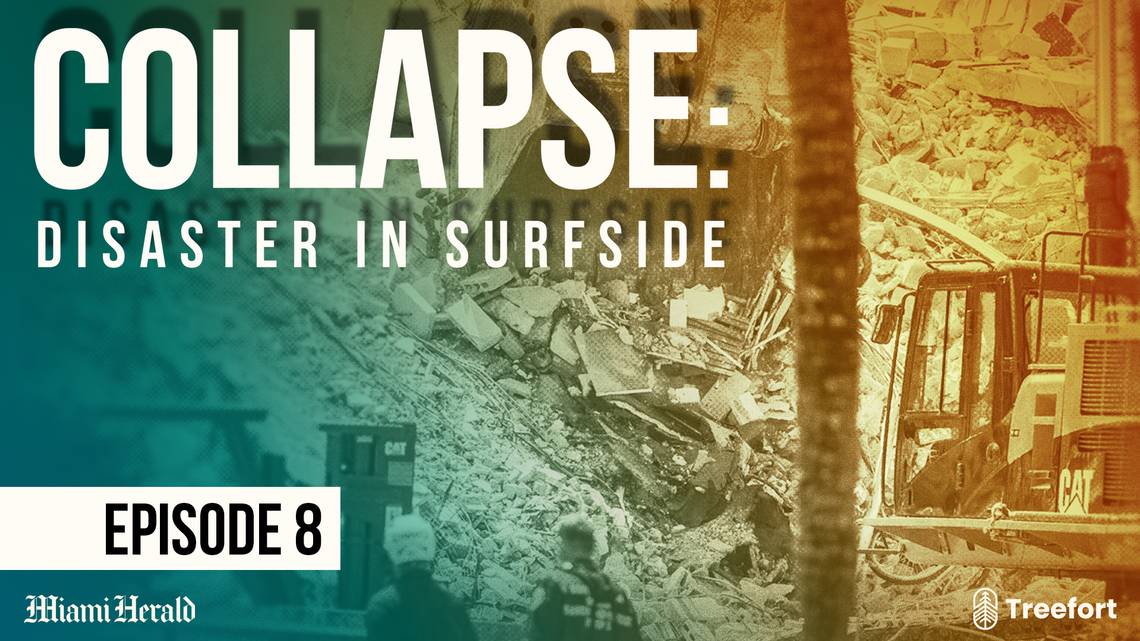
THE MIAMI HERALD HAS PREPARED AN AMAZING PODCAST THAT DISCUSSES THE COLLAPSE IN SURFSIDE IN DETAIL AND FROM SO MANY DIFFERENT ANGLES.

IN TODAY’S MIAMI HERALD, ERIC GLAZER IS INTERVIEWED REGARDING THE LAWS THAT LED TO THE DISASTER AND HOW THE LEGISLATURE IGNORED PRIOR WARNINGS.

TO LISTEN TO THE PODCAST CLICK HERE


EPISODE 8: THE RULES ARE DIFFERENT HERE Almost a year after the tragic fall of Champlain Towers South in Surfside, the Florida Legislature has done nothing to prevent another disaster. It’s an approach often taken in Tallahassee: Miami-Dade County’s problems are its own to fix. But the flaws at Champlain South aren’t necessarily limited to Miami-Dade, or even Florida. They could be present in older waterfront buildings around the world.

Episode 8: The Rules Are Different Here of Collapse: Disaster in Surfside, a new podcast from Miami Herald/Treefort Media, shows listeners how the long-term consequences of the deadly accident are still up in the air — and explores how previous decades of inaction by lawmakers and the Champlain South condo board contributed to the collapse.

Listen to the Podcast and hear the interview with Eric Glazer.

Tags:
THE DIFFERENCE BETWEEN HOA AND CONDO LAW – IT’S LIKE NIGHT AND DAY! by Glazer Sachs

THE DIFFERENCE BETWEEN HOA AND CONDO LAW – IT’S LIKE NIGHT AND DAY! by Glazer Sachs

THE DIFFERENCE BETWEEN HOA AND CONDO LAW – IT’S LIKE NIGHT AND DAY!

By Glazer Sachs / written by Jan Bergemann

To be very honest, I am at a total loss when I look at the HOA Act the Florida legislature created with FS 720. Sometimes I wonder why they created this statute at all, considering that the provisions contained in this statute have no teeth — and it is widely known that even the best laws are useless without any proper enforcement tools.

The history of FS 720 clearly shows that enforcement of its provisions is only possible for homeowners who have lots of spare change in their pockets.

The biggest “joke” in the statutes is one sentence. Many good families lost their homes and life savings because the following sentence headlines the whole Florida HOA Act:

FS 720.302(2) The Legislature recognizes that it is not in the best interest of homeowners’ associations or the individual association members thereof to create or impose a bureau or other agency of state government to regulate the affairs of homeowners’ associations.

In all honesty, the only ones served by this sentence are specialized attorneys and their bank accounts – to the detriment of the homeowners living in these community associations.

While the FLORIDA CONDO ACT (FS718) has many detailed provisions that can be partially and easily enforced by a regulatory agency (Division of Florida Condominiums, Timeshares, and Mobile Homes), approximately 2.5 million homeowners living and/or owning property in these homeowners’ associations are treated like unwanted stepchildren by the Florida legislature.

With the existing, unenforceable statutes in place, it’s a financially risky proposition for retirees and investors to buy property within these communities. Homeowners are left to fight for themselves with no help to enforce the existing laws.

Simple matters, such as elections, record requests or financial issues, turn into expensive lawsuits that can quickly become monsters eating up families’ life savings. Many homeowners run around with blinders, ignoring permanent violations of Florida statutes, because they don’t want to risk spending their last dime on legal bills.

The proper legislation that would make life in homeowners’ associations much easier – and less expensive – is in place, but only for condominium associations.

The provisions contained in FS 720 are stacked against the homeowners, especially since in many associations budget shortfalls caused by unpaid dues and/or foreclosures are causing heavy financials burdens on the owners still paying their dues.

High legal bills are creating an even bigger hardship on the owners still paying the ever-increasing assessments, caused by the fact that the provisions contained in the HOA Act FS 720 provide no easy solutions for simple disputes.

The question that baffles everyone: Why is the Florida legislature unwilling to enact simple laws that would stop most of these shenanigans we are all reading about daily in the media? The established wording from the condo statutes could easily be used for the HOA statutes. Case law and the Florida Administrative Code is in place.  Nobody has to reinvent the wheel.

But who fights these bills that would simplify life in HOAs in Florida? The only feasible explanation: The service providers, especially the attorneys that claim to lobby for the associations. They are the only ones who benefit from these useless HOA statutes.

It is definitely easier to fleece the owners if the laws are confusing and can be interpreted any way anybody wants. With the statutes for HOAs it is very easy to create mini-dictatorships and fill their own pockets – if some determined folks so desire. Is that what the folks who “invented” homeowners’ associations had in mind when they created these communities?


Tags: ,
SO WHO CAN BE AN OFFICER OR DIRECTOR IN YOUR COMMUNITY?

SO WHO CAN BE AN OFFICER OR DIRECTOR IN YOUR COMMUNITY?

  • Posted: Apr 08, 2022
  • By:
  • Comments: Comments Off on SO WHO CAN BE AN OFFICER OR DIRECTOR IN YOUR COMMUNITY?

SO WHO CAN BE AN OFFICER OR DIRECTOR IN YOUR COMMUNITY?

When reading the Florida statutes in regards to meetings and elections you will find that the word “MEMBERS” can be found everywhere in the provisions regulating meetings and elections. It even says that the annual meeting has to be a membership meeting, meaning that you have to be a MEMBER (deeded owner) to participate. The association even has the right to ask anybody who is not a member to leave the meeting. I have seen it done in various associations.

It’s a little different with officers, since the statutes are silent on the matter, but it seems to me that it would be pretty ridiculous to make a non-member “president of the board” – a person that doesn’t even have voting rights or could even get kicked out of the meeting since he/she is not a member.

I honestly don’t understand the reasoning behind making a non-member an officer. Don’t forget, a board (including the president) has far-reaching powers and could actually ruin the personal finances of all association members by making wrong decisions.

It really leaves the question: Why making a person “PRESIDENT” who has no financial interests in the association and would not even be affected by “stupid” decisions made by the board?

Even if laws and by-laws allow non-members to be an officer, it’s in my opinion a pretty stupid decision by the board to make a non-member the “PRESIDENT”.


LEGISLATIVE ALERT! DON’T LET MANDATORY CONDOMINIUM EDUCATION DIE!

LEGISLATIVE ALERT! DON’T LET MANDATORY CONDOMINIUM EDUCATION DIE!

  • Posted: Mar 20, 2022
  • By:
  • Comments: Comments Off on LEGISLATIVE ALERT! DON’T LET MANDATORY CONDOMINIUM EDUCATION DIE!

LEGISLATIVE ALERT!

DON’T LET MANDATORY CONDOMINIUM EDUCATION DIE!


AT THE MOMENT, THERE ARE TWO CONDO BILLS MAKING ITS WAY TO THE FINISH LINE THIS WEEK. ONLY ONE WILL GET THERE.
SB 1702 – CONTAINS THE LANGUAGE THAT I DRAFTED, SENATOR RODRIGUEZ FILED AND REPRESENTATIVE BORERRO FILED, REQUIRING THAT CONDOMINIUM BOARD MEMBERS TAKE AN EDUCATIONAL CLASS AND SIGN AN AFFIDAVIT STATING THEY READ THEIR GOVERNING DOCUMENTS.
HB 7069 – DOES NOT CONTAIN THE EDUCATIONAL REQUIREMENT AND BOARD MEMBERS CAN STILL GET CERTIFIED SIMPLY BY SIGNING THAT DUMB FORM STATING THAT THEY READ THEIR GOVERNING DOCUMENTS.
IN A POST SURFSIDE WORLD I CAN ASSURE YOU, EDUCATION OF CONDOMINIUM BOARD MEMBERS WILL SAVE LIVES. IF HB 7069 PASSES, THE STATE OF FLORIDA IS ABOUT TO PASS DOZENS OF NEW CONDOMINIUM LAWS RELATED TO SAFETY WITHOUT ANY BOARD MEMBER HAVING THE OBLIGATION TO LEARN ANY OF THESE NEW LAWS. HOW INSANE IS THIS?
PLEASE CONTACT THE PRESIDENT OF THE SENATE WILTON SIMPSON AND:
THE SPEAKER OF THE HOUSE CHRIS SPROWLS BY CLICKING ON THEIR NAMES AND TELLING THEM TO ENSURE THAT THE FLORDA LEGISLATURE PASS
SB- 1702 BECAUSE CONDO BOARD MEMBERS MUST BE REQUIRED TO BE EDUCATED IN A POST CHAMPLAIN TOWERS WORLD AND THAT EDUCATION WILL SAVE LIVES.
GUYS……..WE ARE RIGHT THERE……..ALMOST HOME.
BUT I NEED YOUR HELP TO GET THIS PAST THE FINISH LINE.
LET’S GET THIS DONE AND NOT TAKE NO FOR AN ANSWER.
WE WILL REMEMBER THOSE THAT VOTED AGAINST CONDO EDUCATION AND JEOPARDIZED .THE SAFETY OF FLORIDANS THROUGHOUT OUR STATE.
Fort Lauderdale Office
One Emerald Place
3113 Stirling Road, Suite 201
Fort Lauderdale, FL 33312
954-983-1112
Orlando
(By Appt Only)
4767 New Broad Street, Suite 332
Orlando, FL 32814
407-515-1060
Tags:
BIG DECISION BY THE DBPR SAYS E-MAILS BETWEEN BOARD MEMBERS ARE “OFFICIAL RECORDS” THAT CAN BE SEEN BY ALL UNIT OWNERS.

BIG DECISION BY THE DBPR SAYS E-MAILS BETWEEN BOARD MEMBERS ARE “OFFICIAL RECORDS” THAT CAN BE SEEN BY ALL UNIT OWNERS.

  • Posted: Mar 02, 2022
  • By:
  • Comments: Comments Off on BIG DECISION BY THE DBPR SAYS E-MAILS BETWEEN BOARD MEMBERS ARE “OFFICIAL RECORDS” THAT CAN BE SEEN BY ALL UNIT OWNERS.

Those of who have taken the Board Certification Class know that the answer to this question is that as long as the e-mails were on the private e-mail accounts of the Board members, they are not “official records” and therefore the unit owners cannot obtain copies of them. Well….that was all changed in one full swoop.


BEFORE YOU HIT THAT “SEND” BUTTON

By Eric Glazer, Esq.

Florida Statute states:
120.565 Declaratory statement by agencies.—
(1) Any substantially affected person may seek a declaratory statement regarding an agency’s opinion as to the applicability of a statutory provision, or of any rule or order of the agency, as it applies to the petitioner’s particular set of circumstances.

A man by the name of James Hanseman recently sought a declaratory statement from The Department of Business and Professional Regulation, Division of Condominiums, Timeshares, and Mobile Homes regarding whether e-mail communications between and among board members are “official records” within the meaning of Florida Statute 718.111(12), where such records relate to the Association’s operations but are sent to and/or from personal computers and devices rather than Association owned computers and devices.

Those of who have taken my Board Certification Class know that the answer to this question is that as long as the e-mails were on the private e-mail accounts of the Board members, they are not “official records” and therefore the unit owners cannot obtain copies of them. Well….that was all changed in one full swoop.

In this declaratory statement, Chevonne Christian the Division Director opined that:


The .. official records of the association” include .. all other written records of the association not specifically included in the foregoing which are related to the operation of the association.”§ 718.111 (12)(a) l8., Fla. Stat. Nothing in this provision exempts such records when created or transmitted with a board member-owned device rather than an Association owned device.

The plain meaning of the statute is always the starting point in statutory interpretation.”

GTC, Inc. v. Edgar, 961 So. 2d 781, 785 (Fla. 2007). Dictionaries can be used to determine the meaning of words. Metro. Dade County v. Milton, 707 So. 2d 913, 915 (Fla. 3d DCA 1998).

Emails constitute a form of writing. Writing, Black’s Law Dictionary (11th ed. 2019).

Consequently, emails are “written records,” and their existence as such does not depend on the ownership of the device through which the emails are transmitted.

Accordingly, emails that otherwise constitute “official records” are not excluded from thestatutory definition of “official records” merely because they are created or transmitted with board members’ personal devices.

Wow! If e-mails constitute a form of writing, no doubt text messages also constitute a form of writing. So how is this going to work? Let’s say a unit owner makes a records request for e-mails between board members during the month of February, 2022. Do all of the Board members now have an obligation to look through their e-mails and texts for the past month, print them out and hand them in to the association? Suppose each director simply says that we don’t communicate by e-mail or texts, even though they do? What remedy does the unit owner have?

While the decision is debatable as to whether or not these e-mails are “official records” it is undeniable, that it is simply unenforceable. It will be interesting to see the first arbitration case that relies on this declaratory statement. It will be even more interesting if that arbitration case gets appealed and we ultimately get a decision of the courts. Will a director ever be required to physically turn over their phone or computer by a court? Who knows? But I think we will either have a legislative fix or a court opinion within a year. In the interim, keep in mind that before you hit the SEND button on an e-mail, think about the fact that said e-mail may one day be seen by everyone in the condominium, or even a judge or jury.

NO ASSOCIATION WEBSITE? WHAT ARE YOU WAITING FOR?

NO ASSOCIATION WEBSITE? WHAT ARE YOU WAITING FOR?

  • Posted: Mar 02, 2022
  • By:
  • Comments: Comments Off on NO ASSOCIATION WEBSITE? WHAT ARE YOU WAITING FOR?

When the original bill was filed that required condominiums to have a website, the statute was only going to apply with condominiums of 500 units or more. In effect, the statute would have applied to less than one percent of all condominiums in the state. I met with the legislator who drafted the bill and suggested that the bill be revised to apply to all condominiums with 50 units or more. The compromise was 150 units.

As we know, The Florida Legislature does not like to regulate HOAs, so for whatever reason, HOAs with 150 homes or more are not required to have a website. Instead, if a homeowner wants access to records, they must make the request by certified mail, return receipt requested. If the association ignores them, the unit owner has to ask for pre-suit mediation. If that fails, the unit owner has to file a lawsuit. All because they wanted copies of some of the official records. It’s ridiculous.

Why not make your community more transparent and accessible now? Who cares if you’re an HOA and you’re not requited by law to have a website? Set one up anyway, regardless of the number of homes you have. Are homeowners in a 50 home community less entitled to see the records than an owner in a 150 home community? Of course not.
If you’re in a condominium of less than 150 units, I understand that the law does not require your condominium association to have a website containing the official records. So what? Create one anyway. I can tell you that over the past two years, as least as far as the larger condominiums go, there has been less arguments between owners and the board when it comes to being able to access the official records, simply because the association is required to have these official records on an association website.

I will also warn condominium associations that the DBPR is not fooling around when making sure that condominium associations with 150 units or more comply with the law. They will investigate any complaint received from an owner who claims their association is not complying with the law. They want those records posted on-line. The association’s failure to do so can and will result in a fine for several thousand dollars.

Placing the records on-line frees up the manager’s valuable time because now they are less likely to have to respond to unit owner requests for access to records. I’m looking forward to see how Rafael feels about the law. Have you had success in your community with the association’s website? If your community doesn’t have one, would you want one?

SFPMA suggests even if you are not required to have a website HAVE ONE BUILT FOR YOUR CONDO OR HOA.

Search our directory find the top companies to help you. 

The New York Times was doing a story about the incredible number of condominiums in Miami and how fast they were all built read it here!

The New York Times was doing a story about the incredible number of condominiums in Miami and how fast they were all built read it here!

  • Posted: Jan 31, 2022
  • By:
  • Comments: Comments Off on The New York Times was doing a story about the incredible number of condominiums in Miami and how fast they were all built read it here!

HOW IN THE WORLD DID WE  GET HERE?

By Eric Glazer, Esq.

So, I get a call a few weeks ago from a reporter at The New York Times.  He was doing a story about the incredible number of condominiums in Miami and how fast they were all built.  How the entire skyline on the coast changed dramatically in the past 40 years or so and if it’s possible that The Champlain Towers in Miami was just a freak occurrence, or something that we need to start thinking about regarding all condominiums that were rushed through and given the green light.  Is it possible for other similarly situated buildings to start falling down?

The story is somewhat startling but not surprising.  It’s a story about greed, out of control construction, tampering with Mother Nature, little to no inspections, rushed through permits,  law firms and politicians helping developers  and The Florida Legislature turning a blind eye towards all of it.

If you’re living in a building in Miami, this is a must read.  If you don’t live in Miami, but are concerned about whether or not your building was built properly, it’s a must read as well.  Besides myself, there are politicians, builders, developers and other experts that tell their side of the story in detail.  Some of it is shocking.

Because so many turned their backs years ago, no wonder the story is called THE TICKING CLOCK OF MIAMI’S CONDO EMPIRE.  You should also know that coincidentally, Robert Lisman, who is the resident from Champlain Towers East, is the producer of our Condo Craze You Tube channel.  It’s a long article but again, it’s a must read.  To read it, click the Towers and the Ticking Clock below:

The Towers and the Ticking Clock


Tags:
FANNIE AND FREDDIE ARE ABOUT TO MAKE IT MUCH TOUGHER TO GET A LOAN TO BUY A CONDO.

FANNIE AND FREDDIE ARE ABOUT TO MAKE IT MUCH TOUGHER TO GET A LOAN TO BUY A CONDO.

  • Posted: Jan 25, 2022
  • By:
  • Comments: Comments Off on FANNIE AND FREDDIE ARE ABOUT TO MAKE IT MUCH TOUGHER TO GET A LOAN TO BUY A CONDO.

FANNIE AND FREDDIE ARE ABOUT TO MAKE IT MUCH TOUGHER TO GET A LOAN TO BUY A CONDO.

By Eric Glazer, Esq


IT MAY BECOME IMPOSSIBLE TO GET A NEW MORTGAGE IN MANY CONDOS

As if condos didn’t have enough problems, Fannie Mae and Freddie Mac have just come out with new guidelines that condos must follow.  Fannie Mae and Freddie Mac are government-sponsored agencies that purchase large quantities of home loans to keep money circulating throughout the home mortgage economy.   They won’t purchase these loans any longer unless:

Delinquent assessments for Established Condominium Projects

No more than 15% of the total number of units in a project are 60 or more days delinquent in the payment of their HOA assessments.

The Condo Must Have a Reserve Study

The reserve study must comply with the following requirements:

  1. The reserve study generally must include:
  • An inventory of major components of the project
  • Financial analysis and evaluation of current reserve fund adequacy, and
  • Proposed annual reserve funding plan
  1. A reserve study’s financial analysis must validate that the project has appropriately allocated the recommended reserve funds to provide the Condominium Project with sufficient financial protection comparable to Freddie Mac’s standard budget requirements for replacement reserves
  2. The reserve study’s annual reserve funding plan, which details total costs identified for replacement components, must meet or exceed the study’s recommendation and conclusion
  3. The most current reserve study (or update) must be dated within 36 months of the Seller’s determination that a Condominium Project is eligible
  4. The reserve study must be prepared by an independent expert skilled in performing such studies (such as a reserve study professional, a construction engineer, a certified public accountant who specializes in reserve studies or any professional with demonstrated experience and knowledge in completing reserve studies)
  5. The reserve study must meet or exceed requirements set forth in any applicable state statutes
  6. The reserve study must comment favorably on the project’s age, estimated remaining life, structural integrity and the replacement of major components

If the Seller relies on a reserve study that meets the requirements of this section, the project’s budget must contain appropriate allocations to support the costs identified in the study.


Tags: , ,