SFPMA

SFPMA Industry Articles | news, legal updates, events & education! 

Find Blog Articles for Florida’s Condo, HOA and the Management Industry. 

MASTER ASSOCIATION V. SUB ASSOCIATION – WHO WINS?  (Part 1)  By Eric Glazer, Esq.

MASTER ASSOCIATION V. SUB ASSOCIATION – WHO WINS?  (Part 1) By Eric Glazer, Esq.

  • Posted: Jan 18, 2021
  • By:
  • Comments: Comments Off on MASTER ASSOCIATION V. SUB ASSOCIATION – WHO WINS?  (Part 1) By Eric Glazer, Esq.

MASTER ASSOCIATION V. SUB ASSOCIATION – WHO WINS?  (Part 1)

By Eric Glazer, Esq.

Published January 18, 2021

A very interesting case was just decided by Florida’s Second District Court of Appeal.  RIVIERA-FORT MYERS MASTER ASSOCIATION, INC., v. GFH INVESTMENTS, LLC.  2020 WL 7767856.  To simplify, in a mixed-use community, meaning a community made up of commercial property and residential housing, the Master Association adopted seven amendments to the community’s master declaration. The court referred to the sub associations as the “Liner Buildings.”  In general terms, the amendments addressed the Master Association’s authority to approve proposed uses of the property located in the sub communities, (Liner Buildings) increased assessments on them, and imposed additional restrictions on the Liner’s tenants.

I write about the case because it is a great learning case about the relationship between a Master and a Sub and about community living in general.  The court said so much that we will break up this blog over a two week period.  Let’s start:

Are all amendments voted on by owners to the governing documents legal?

 “In determining the enforceability of an amendment to restrictive covenants, the test is one of reasonableness.”Holiday Pines Prop. Owners Ass’n v. Wetherington, 596 So. 2d 84, 87 (Fla. 4th DCA 1992). This court defined “reasonable” as “not arbitrary, capricious, or in bad faith.” Hollywood Towers Condo. Ass’n v. Hampton, 40 So. 3d 784, 787 (Fla. 4th DCA 2010). In other words, as we stated in Holiday Pines, the modification of restrictions cannot “destroy the general plan of development.” Holiday Pines, 596 So. 2d at 87 (citing Nelle v. Loch Haven Homeowners Ass’n, 413 So. 2d 28 (Fla. 1982)). Amendments which cause “the relationship of lot owners to each other and the right of individual control over one’s own property” to be altered are unenforceable. Id. at 88. Such an alteration is considered a “radical change of plans.” Id. Klinow v. Island Court at Boca W. Prop. Owners’ Ass’n, 64 So.3d 177, 180 (Fla. 4th DCA 2011) (footnote omitted). Klinow further defined “radical change” as “a change which would create an inconsistent scheme, or a deviation in benefit from that of the grantee to that of the grantor.” Id. (citing FlamingoRanch Estates, Inc. v. Sunshine Ranches Homeowners, Inc.,303 So. 2d 665, 666 (Fla. 4th DCA 1974)).

Can the HOA Be More Restrictive than the local zoning authority?

It is well established that restrictive covenants can be more restrictive than limitations imposed by municipalities. See, e.g., Luani Plaza, Inc. v. Burton, 149 So. 3d 712, 714–16 (Fla. 3d DCA 2014) (allowing a business owners’ association to prohibit residential use of a commercial property despite municipal permission for residential use); Stuart Sportfishing, Inc. v. Kehoe, 541 So. 2d 169, 170 (Fla. 4th DCA 1989) (holding that a less-restrictive zoning ordinance did not control over a more-stringent restrictive covenant); Tolar v. Meyer, 96 So. 2d 554, 556 (Fla. 3d DCA 1957) (holding that a zoning decision allowing property to be used as a church did not control over a restrictive covenant prohibiting such a use).

Do Owners Give Up Some Freedom When They Move Into a Condo or HOA?

owners of property in condominium complexes necessarily accept a greater degree of restriction on their property rights); Hidden Harbour Estates, Inc. v. Basso, 393 So. 2d 637, 640 (Fla. 4th DCA 1981)

Next week I’ll write about some other facets of the law discussed in the opinion.


Tags: , ,
Webinar: Is your Association’s website compliant with Florida Law? by KatzmanChandler & Concierge Plus

Webinar: Is your Association’s website compliant with Florida Law? by KatzmanChandler & Concierge Plus

  • Posted: Nov 23, 2020
  • By:
  • Comments: Comments Off on Webinar: Is your Association’s website compliant with Florida Law? by KatzmanChandler & Concierge Plus

Webinar: Is your Association’s website compliant with Florida Law?

by KatzmanChandler & Concierge Plus

TUESDAY, NOVEMBER 24, 2020

11:00 AM IN EASTERN TIME (US AND CANADA)

Register Now

http://ow.ly/SRAw50CpukW

Florida Law has required Condominium Associations of 150 or more units to maintain websites with very specific requirements. Maintaining a generic, public website where governing documents and meeting minutes are uploaded, is simply not sufficient. Specific documents, information, and security, including access password protection, is required.
Katzman Chandler and our friends at Concierge Plus are hosting a webinar to discuss Association websites and statutory compliance.
Tags: , ,
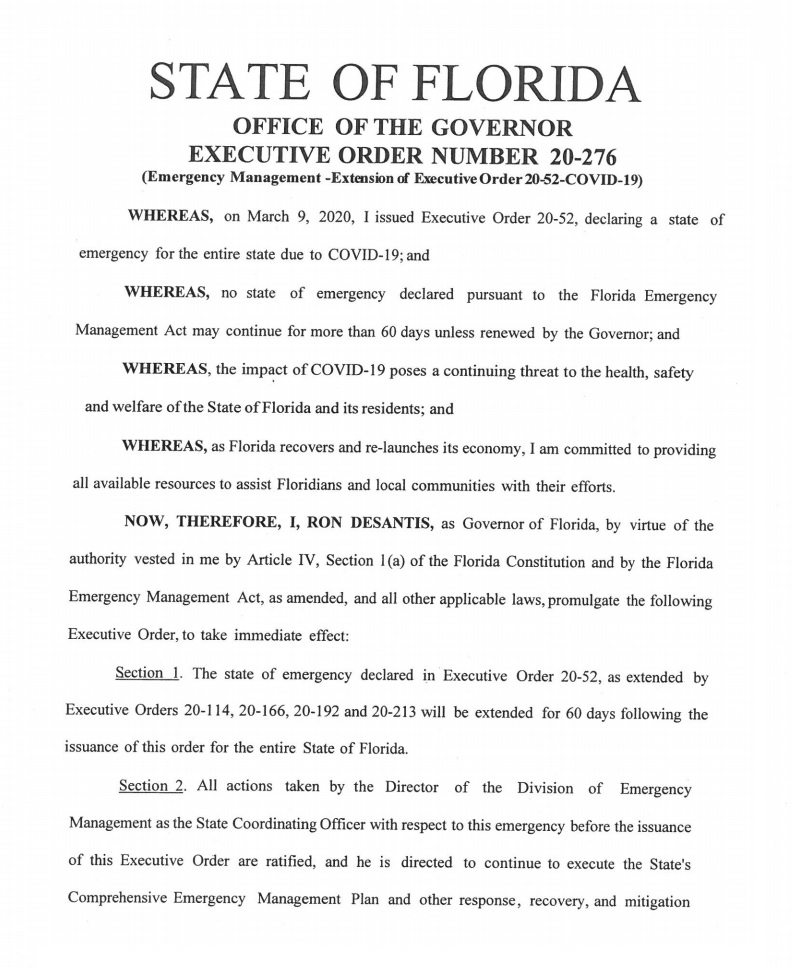
Governor DeSantis has Extended the Florida State of Emergency for 60-Days from November 3rd, 2020

Governor DeSantis has Extended the Florida State of Emergency for 60-Days from November 3rd, 2020

  • Posted: Nov 04, 2020
  • By:
  • Comments: Comments Off on Governor DeSantis has Extended the Florida State of Emergency for 60-Days from November 3rd, 2020

Governor DeSantis has Extended the Florida State of Emergency for 60-Days from November 3rd, 2020

Download the PDF: SLG-BIZHUB20110309120_nov4-2020

Below are images of the order. Please click on either image to download the Order 


Tags: , ,
Association Publication of Deadbeat List & Third-Party Purchaser Assessment Liability: by KBRLegal

Association Publication of Deadbeat List & Third-Party Purchaser Assessment Liability: by KBRLegal

Association Publication of Deadbeat List & Third-Party Purchaser Assessment Liability:

by KBRLegal

Two New Cases Board Members and Managers Need to Know About


CASE No. 1: On June 12, 2020, the Florida’s Fifth District Court of Appeal (“5th DCA”) entered its opinion in Latheresa Williams, On Behalf Of Herself And All Others Similarly Situated v. Salt Springs Resort Association, Inc., and Bosshardt Property Management, LLC., Case No. 5D18-3913 (Fla. 5th DCA 2020), The holding of this case echoes advice I have all too often provided to board members and managers to NOT publish what is commonly referred to as a “deadbeat list.” This type of list is posted in the community and identifies each debtor’s name and sometimes the assessment balance past due, too. No good ever comes from publication of such a list. In fact, the Florida Consumer Collection Practices Act (the “FCCPA”) forbids it if such publication of the deadbeat list is to harass and/or annoy the debtor.


More specifically, section 559.72, Florida Statutes, provides in relevant part that “[i]n collecting consumer debts, no person shall… [p]ublish or post, threaten to publish or post, or cause to be published or posted before the general public individual names or any list of names of debtors, commonly known as a deadbeat list, for the purpose of enforcing or attempting to enforce collection of consumer debts.”


In this case, the plaintiff was seeking class action status for all others similarly treated. This could lead to tremendous liability should discovery later evidence that the association and/or its management company regularly published deadbeat lists. At trial, the court had granted a motion to dismiss filed by the association based on a prior case, Bryan v. Clayton, also a 5th DCA case dating back to 1977 where the Court held that maintenance assessments were not “debts” for purposes of the FCCPA. In order to re-consider the prior Bryan decision, all of the 5th DCA sitting appellate judges participated in the Williams case, a process legally known as an “En Banc” style of review.


The Court in Williams took note that the FCCPA is designed to protect consumers and does not limit unlawful activities only to “debt collectors,” but rather to “all persons” involved in the collection of a debt. By way of contrast, the Federal Fair Debt Collection Practices Act (FFDCPA) applies only to debt collectors, which excludes the association and arguably its management company, and not to “all persons” involved in the collection of a debt, as in the FCCPA.


Under the prior Bryan holding, a past due assessment obligation was not even considered a “debt” for purposes of the FCCPA and the FFDCPA. In the recent Williams case, the Court went to great lengths to explain that, in fact, an association assessment obligation “is a debt which arose out of an obligation by a consumer out of a money, property, insurance or services transaction which is primarily for personal, family, or household purposes” and is therefore subject to FCCPA.


Thus, the Court remanded the case back to the trial court for further proceedings. While, its unknown how the plaintiff’s attempt for a class action certification will resolve, it is extremely likely that one or more defendants will be found to have violated the FCCPA for having published the “deadbeat list.” The takeaway from the Williams case is to never, ever publish a list of association debtors. This does not at all mean that the board cannot be provided a list of those members delinquent in their assessment obligations. However, it does mean such a list should not be made readily available to the membership by posting or mailing, etc.


CASE No. 2: On May 20, 2020, Florida’s Third District Court of Appeal entered its opinion in Old Cutler Lakes by the Bay Community Association, Inc. v. SRP SUB, LLC, Case No. 3D19-528 (Fla. 3d DCA 2020) regarding the liability of a third-party purchaser at a mortgage foreclosure sale for assessments that came due prior to the third-party acquiring title to the property. The Court’s holding in this case is in line with its prior holding in the case of Beacon Hill Homeowners Association, Inc. v. Colfin Ah-Florida 7, LLC, 221 So. 3d 710 (Fla. 3d DCA 2017), which based its decision on the landmark case decided by Florida’s Fourth District Court of Appeal in Pudlit 2 Joint Venture, LLP v. Westwood Gardens Homeowners Association, Inc., 169 So.3d 145 (Fla. 4th DCA 2015).


In the Old Cutler Lakes case, SRP SUB, LLC (“SRP”) was the successful bidder at a foreclosure sale on a first mortgage held by Wells Fargo. After obtaining title by a certificate of title, SRP filed an action for declaratory relief seeking a determination as to its liability for assessments that accrued prior to the issuance of the certificate of title. In relevant part, the Declaration of Covenant and Restrictions of Old Cutler Lakes by the Bay (“Declaration”) provided the following:


The sale or transfer of any Lot pursuant to the foreclosure or any proceeding in lieu thereof of a first mortgage meeting the above qualifications, shall extinguish the lien of such assessments as to payments which became due prior to such sale or transfer.


This language is similar to the language contained in the declarations in the Beacon Hill and Pudlit 2 cases. In these cases, the courts applied a constitutional principal prohibiting the impairment of contracts in deciding that the statutory safe harbor did not control over the provisions of the declarations where the statute did not require such application and the declarations did not contain “Kaufman” language, which has the effect of making amendments to the Florida Statutes automatically applicable to a declaration as they are “amended from time to time.” As the provisions of the declarations expressly created rights for third-party purchasers, the third-party purchasers are “intended third-party beneficiaries” to such provisions which rights cannot be impaired pursuant to the constitutional principal prohibiting the impairment of contracts. In following the holdings of the Beacon Hill and Pudlit 2 cases, SRP was found not liable for any of the past due assessments that accrued prior to the issuance of the certificate of title. Thus, as with many declarations which have not been amended since their creation by the community’s developer, these, as yet to be amended, declarations may provide for a complete wipe out of all assessments that accrued prior to the transfer of title as a result of a mortgage foreclosure action or by deed in lieu of foreclosure.


The takeaway from the cases discussed above emphasizes the importance of reviewing and updating the association’s declaration, with the guidance of your association’s legal counsel, to ensure that it provides for necessary and available protections for the association and its members, including the use of “Kaufman” language, if appropriate to collect as much overdue assessment revenue as possible.


The Kaye Bender Rembaum Team Remains Available To You and Your Community Association

The health and safety of your Community and all residents is very important to us. We also realize that our clients have uncertainty and concerns around the continuing operation of your Community, and our team of attorneys will remain available to all of you during these times.

Be sure to check out our very useful and informative COVID-19 section on our website, which is updated regularly, as we continue to follow developments affecting community associations. You can visit it by clicking HERE.


[AdSense-B]


Tags: , ,
community association boards completely overlook the significance of who is serving as the association’s registered agent. by Donna DiMaggio Berger

community association boards completely overlook the significance of who is serving as the association’s registered agent. by Donna DiMaggio Berger


Far too many community association boards completely overlook the significance of who is serving as the association’s registered agent. I’ve found associations whose registered agent is a former board member who is either deceased or who has moved away or a former law firm or lawyer who no longer represents the association.

Pursuant to Section 607.0501,F.S, the duties of a registered agent are to forward to the corporation at its official address any process, notice, or demand which is served on or received by the registered agent. If the registered agent fails in this regard, the association may miss crucial litigation deadlines as well as Code compliance hearings which can result in substantial damage to the association. Current board members and managers should also seriously consider whether they are up to the task of serving as Registered Agent as that role does come with potential liability.


Donna DiMaggio Berger is a Board Certified Specialist in Condominium and Planned Development Law as well as a Fellow in the College of Community Association Law a prestigious national organization which recognizes excellence and ethics in the field of community association law. Ms. Berger has counseled condominium, cooperative, timeshare, mobile home and homeowner associations throughout Florida.  Her work with these communities includes covenant enforcement, covenant amendment, contract review and drafting, collections and foreclosures, as well as advising these associations about the statutory and documentary guidelines for the daily administration of their communities.

Ms. Berger has led various advocacy initiatives working with legislators and other public policy makers on behalf of those who live, serve and work in common interest ownership communities. She has testified before the Florida Legislature regarding community association law and frequently appears on radio talk shows and in print media discussing these issues.


Tags: , , ,
WAIT – IT GETS WORSE  By Eric Glazer, Esq.  Published July 13, 2020

WAIT – IT GETS WORSE By Eric Glazer, Esq. Published July 13, 2020

  • Posted: Jul 13, 2020
  • By:
  • Comments: Comments Off on WAIT – IT GETS WORSE By Eric Glazer, Esq. Published July 13, 2020

WAIT – IT GETS WORSE

By Eric Glazer, Esq.

I recently explained how lucky the banks are when they foreclose on a unit or a home and take back ownership.  The law protects them, and despite how much the unpaid condo or HOA assessments are, the bank is only responsible for the lesser of one year of assessments or 1% of the mortgage.  Many of you are outraged over that and I’m with you.

The association always hopes that a 3rd party buys the property at the bank’s foreclosure sale instead of the foreclosing bank, because under the law, a 3rd party, unlike the bank, would owe all past due assessments to the association.

But even though the law requires some payments to the association, your condo or HOA may get zero because of a terrible provision that may be looming in your governing documents.  Despite the fact that the law requires banks to pay the lesser of one year of assessments or 1% of the mortgage, and requires a 3rd party purchaser to pay all past due assessments, many of you have provisions in your governing documents that say the banks owe nothing when they take back ownership of a home or unit after a foreclosure and that a 3rd party purchaser owes nothing if they buy the property at a foreclosure sale.  That’s right, not a penny is owed to the association.  You are wiped out.

So what controls, the law or your governing documents?  In May Florida’s Third District Court of Appeal ruled in Old Cutler Lakes by the Bay Community Association v. SRP SUB .  A third party purchaser took title to a unit within the community via a bank mortgage foreclosure auction.

The governing documents contained the following provision: “The sale or transfer of any Lot pursuant to the foreclosure or any proceeding in lieu thereof of a first mortgage meeting the above qualifications, shall extinguish the lien of such assessments as to payments which became due prior to such sale or transfer.”

The Third DCA concluded that the 3rd part purchaser at the sale is not liable for any of the past-due assessments, attorney’s fees and/or costs that accrued prior to its acquiring title.

So what do you do now?  Check your governing documents.  Make sure they don’t contain a similar provision.  If they do, you certainly want to talk you’re your attorney about amending them properly so you at least get the crumbs owed to the association when a bank forecloses.


Click the banner below, Read other Articles.


Tags: , ,
FACIAL COVERING REQUIREMENTS COUNTY BY COUNTY & A HAND SANITIZER RECALL by Kaye Bender Rembaum

FACIAL COVERING REQUIREMENTS COUNTY BY COUNTY & A HAND SANITIZER RECALL by Kaye Bender Rembaum

  • Posted: Jul 06, 2020
  • By:
  • Comments: Comments Off on FACIAL COVERING REQUIREMENTS COUNTY BY COUNTY & A HAND SANITIZER RECALL by Kaye Bender Rembaum

FACIAL COVERING REQUIREMENTS COUNTY BY COUNTY & A HAND SANITIZER RECALL

by Kaye Bender Rembaum

Below you will find face covering requirements for Palm Beach, Broward, Miami-Dade, Hillsborough, Pinellas, Pasco and Manatee Counties. In addition, the cities of Hallandale and Aventura are disucussed.

Where appropriate, face covering requirements for those living in condominiums and homeowners’ associations are discussed as well.

A recall was issued for a certain manufacture of hand sanitizer products which is presented immediately below the face covering information.


PALM BEACH COUNTY

Palm Beach County Order No. 2020-012 provides that effective June 25, 2020, facial coverings are required to be worn in public.  Specifically, facial coverings are required to be worn in:


i) Businesses and establishments of any type, including, without limitation, restaurants, retail stores, grocery stores, gyms, indoor recreational facilities and vehicles for hire,

ii) Public places, including outdoor areas that are open and regularly accessible, and outdoor common areas within private communities, where social distancing is not possible or not being practiced, 

iii) Palm Tran transit services, and

iv) County and municipal governmental facilities. 


Facial coverings are defined under the Palm Beach County Order as any covering which snugly covers the nose and mouth, whether store bought or homemade, mask or clothing covering, including, but not limited to, a scarf, bandana, handkerchief, or other similar cloth covering and which is secured in place. The Order is clear that facial coverings are required to be worn in outdoor common areas within private communities accessible to more than one housing unit where social distancing cannot be accomplished or is not being practiced.

One must also wear a facial covering while working in or visiting businesses and establishments, including indoor recreational facilities.

Businesses and establishments are further required to ensure compliance with the Order and establish a process for verification of compliance upon customer entry into the establishment, and to conspicuously post a specific sign in three languages (CLICK HERE TO LINK-http://discover.pbcgov.org/pdf/covid19/Retail-Mask-Poster.pdf) indicating that persons must wear facial coverings and maintain social distancing.

The Order does not specifically identify indoor common elements or common areas of condominium and homeowners’ associations as businesses or establishments where facial coverings must be worn. However, due to the fact that any type of business or establishment must comply and indoor recreational facilities are specifically listed as establishments in the Order, we believe that the Order likely applies to indoor common element and common area facilities.  Therefore, we recommend that you treat your indoor facilities as establishments under the Order until further orders or guidance is provided by the County.  This means that associations should monitor and require compliance with facial covering requirements, particularly in indoor recreational facilities, and conspicuously post the designated sign required by the Order.

There are exceptions to the facial covering requirements for certain individuals and in certain situations where they are not feasible, including, but not limited to, by children under two (2), by persons who have medical conditions such as asthma or COPD, and while consuming food or beverages.  However, the exceptions are limited and should be implemented in accordance with the Order so as not to cause the spread of the virus.  Finally, compliance is serious as the county has now indicated that fines and penalties may be issued for businesses that do not comply. Whether this includes associations is to be determined.


BROWARD COUNTY

Generally, facial coverings must be worn anytime you obtain a good or service from any establishment, including entering, exiting, and otherwise moving around within the establishment (and must be worn by persons working in those establishments during in-person interactions).

The covering should cover the nose and mouth, and comply with the CDC recommendations on the use and sanitation of such coverings. There are certain limited exemptions, including, without limitation, children under the age of two or children of any age while in the custody of licensed childcare facilities, persons with medical conditions, or during the time-period when you are receiving a good/service that precludes wearing a facial covering (e.g., eating, drinking, receiving a facial grooming).

Violations are subject to potential civil penalties (fines) and/or criminal enforcement (2nd degree misdemeanor).  Suspected violations can be reported to local municipal code enforcement.  The Broward County Order does not specifically require facial coverings within private residential communities (condos/HOAs). Please note, however, that cities may have stricter requirements than the county, so you should confirm with your city accordingly.

Any questions concerning the county requirements can be directed to the County COVID19 Hotline: ‪(954) 357-9500.


The relevant FAQ from the county, and the three (3) Orders are below:

FAQ about Facial Coverings from County: https://www.broward.org/CoronaVirus/Documents/FacialCoveringsFAQs.pdf

EO #12: https://www.broward.org/CoronaVirus/Documents/EmergencyOrder20-12.pdf

EO #13: https://www.broward.org/CoronaVirus/Documents/EmergencyOrder20-13.pdf

EO #14: https://www.broward.org/CoronaVirus/Documents/EmergencyOrder20-14.pdf


CITY OF HALLANDALE

Facial coverings are required within the common areas of all buildings with multiple residents per Emergency Order HB20-12.


CITY OF HOLLYWOOD

All persons beyond legal boundary of residential property are required to wear facial coverings consistent with CDC guidelines as per Emergency Order 2020-06.


MIAMI-DADE COUNTY

Miami-Dade County issued Emergency Order 20-20 on April 9, 2020 (“Order 20-20”) which requires that all persons working in or visiting grocery stores, restaurants, pharmacies, construction sites, public transit vehicles, vehicles for hire, and locations where social distancing measures are not possible to wear facial coverings. In other words, face masks are required where social distancing is not possible. The Order defines a facial covering as “any covering which snugly covers the face and mouth, whether store bought or homemade, and which is secured with ties or ear loops.”

On May 15, 2020, Miami-Dade County issued Emergency Order 23-20 (“Order 23-20”) further providing that anyone “working in or visiting an establishment, including but not limited to airports, seaports, and mass transit facilities and vehicles” must wear a facial covering as described in Order 20-20. However, Order 23-20 provides an exemption for children under the age of two years, persons who have trouble breathing, where federal or state safety regulations prohibit the wearing of facial coverings, and for persons engaged in strenuous physical activity.

On May 27, 2020, Order 23-20 was amended to provide an additional exemption to the facial covering requirement “while persons are eating or drinking.” Additionally, Order 23-20 adopts The New Normal; A Guide for Residents and Commercial Establishments (the “New Normal Guidelines”) which includes industry specific protocols for the reopening of retail and commercial establishments, including general reopening guidelines that provide that facial coverings must be worn inside businesses and commercial establishments or wherever social distancing is not possible.

On June 22, 2020, Mayor Carlos A. Gimenez released a statement regarding the importance of wearing masks and social distancing. He reiterated that masks are required indoors at business establishments and outdoors when people cannot practice social distancing to remain at least six (6) feet apart. In his statement, Mayor Gimenez acknowledged the stricter rules issued by some municipalities in Miami-Dade County, including Miami, North Miami Beach, Aventura, Hialeah, and Miami Gardens.


CITY OF AVENTURA

As pertains to community associations, the City Manager of Aventura issued Emergency Order Number 12 (“Order 12”) which provides additional mandates requiring the use of facial coverings in the interior “Common Areas” of commercial buildings and residential condominium and cooperative buildings. Order 12 provides that common areas include lobby/reception areas, hallways, elevators, mailrooms, clubhouse/meeting rooms, and stair wells. That means that you are required to wear a mask in any interior common areas of condominium or cooperative buildings in the City of Aventura. It is important to note that Order 12 provides that property managers/building managers are required to enforce the facial covering requirement.


HILLSBOROUGH COUNTY

Order 2020-27 went into effect on 5pm June 24, 2020.  The order does not specifically apply to community associations as they are not a “business” under the order. Face coverings must be worn inside all indoor establishments. Businesses are required to enforce the mask order and can be charged with a second-degree misdemeanor if they don’t, a penalty of up to 60-days in jail and/or six months’ probation and a $500 fine.  The exception does not apply to children under two, persons with pre-existing medical conditions that would be worsened by a mask, hearing-impaired persons, those working in a profession that would be unable to perform their duties with a mask such as public safety, exercising, eating and drinking, or those already observing federal social distancing guidelines (the 6-foot rule).

Tampa is the only exception in Hillsborough where the mask rule would apply to community associations.  if you are outside your home, you must wear a face covering and if no face covering,  up to a $500 citation could be issued.  This would apply to community associations whenever a resident is outside of their residence.


PINELLAS COUNTY

Order 20-14 went into effect on 5pm June 24, 2020. Face coverings must be worn in all indoor public places in Pinellas County.  While not specifically drafted to apply to community associations, the definition of indoor public place would cover community associations when the residents can access the facility.  The only exceptions applicable to community associations are if less than 10 people are in the facility and they are practicing social distancing.  Parties not wearing a mask can receive a civil citation of $100 for a first offense, $250 for a second and $500 for a third. Additional repeat violations may result in a misdemeanor arrest.  The exceptions mirror those of Hillsborough County and Pinellas’s enforcement cannot conflict with the Americans with Disabilities Act.  The Order does not apply to government entities or hospitals or persons under the age of 18.


PASCO COUNTY

Order went into effect ‪5pm on June 25, 2020.  Face coverings must be worn inside all businesses, government offices, and schools.  The definition of businesses is nebulous enough to ensnare community associations under the “providing services to the public” standard.  If someone does not wear a mask in the aforementioned places, they will not be able to enter the business, or will be removed once inside. Individual business owners are required to enforce the ordinance or may face a fine up to $250. The exceptions mirrors Hillsborough County and Pasco’s enforcement cannot conflict with the Americans with Disabilities Act.  It is suggested you speak with your community association’s attorney due to the lack of specificity in Pasco County’s Order to determine if the Order may apply to your community association.


MANATEE COUNTY

No mask requirements.


HAND SANITIZER RECALL 

The Food and Drug Administration issued a warning on nine alcohol-based hand sanitizers manufactured by Eskbiochem SA de CV in Mexico because  it contains wood methanol, a toxic substance.  It can result in death if ingested or if  absorbed through the skin.

“Consumers who have been exposed to hand sanitizer containing methanol should seek immediate treatment, which is critical for potential reversal of toxic effects of methanol poisoning,” the FDA wrote on June 19.”

Following is list of the hand sanitizers manufactured by Eskbiochem:


All-Clean Hand Sanitizer (NDC: 74589-002-01)

Esk Biochem Hand Sanitizer (NDC: 74589-007-01)

CleanCare NoGerm Advanced Hand Sanitizer 75% Alcohol (NDC: 74589-008-04)

The Good Gel Antibacterial Gel Hand Sanitizer (NDC: 74589-010-10)

CleanCare NoGerm Advanced Hand Sanitizer 80% Alcohol (NDC: 74589-005-03)

CleanCare NoGerm Advanced Hand Sanitizer 75% Alcohol (NDC: 74589-009-01)

CleanCare NoGerm Advanced Hand Sanitizer 80% Alcohol (NDC: 74589-003-01)

Saniderm Advanced Hand Sanitizer (NDC: 74589-001-01)


Tags: , , ,
New Guidelines for Community Associations – Stricter Disciplinary Civil Penalties of Noncompliance Now In Effect

New Guidelines for Community Associations – Stricter Disciplinary Civil Penalties of Noncompliance Now In Effect

  • Posted: Jun 22, 2020
  • By:
  • Comments: Comments Off on New Guidelines for Community Associations – Stricter Disciplinary Civil Penalties of Noncompliance Now In Effect

Florida’s Department of Business and Professional Regulation Issues New Guidelines for Community Associations

Stricter Disciplinary Civil Penalties of Noncompliance Now In Effect


Board members and property managers of condominium communities need to be aware that the State of Florida’s Department of Business and Professional Regulation issued revisions to rules pertaining to violations and penalties, 61B-21, Condominium Resolution Guidelines for Unit Owner Controlled Associations,

The disciplinary guidelines detail minor violations and penalty guidelines within Chapter 718, F.S.  If a violation is deemed minor, the division will send a Notice of Noncompliance to the association. A community association’s failure to timely comply with the Notice of Noncompliance may result in sanctions, including civil monetary damages and enforcement. For the violations not deemed minor by the division, there is no longer a notice/warning requirement and, if found guilty of the violation, the Association may be fined pursuant to the new standards in the rule.   Rulemaking Authority 120.695, 718.501(1)(d)6., (f) FS. Law Implemented 718.501(1)(d)6. FS. History–New 6-4-98, Amended 10-23-18. 

 These disciplinary guidelines were enacted to inform affected parties about the range of penalties which may be imposed for violations, pursuant to subsection 61B-21.003 detailing penalty guidelines in the following categories: Accounting Records, Assessing, Board, Budgets, Commingle, Common Expenses, Conflict of Interest, Converter Reserves, Debit Card, Elections, Estoppel Certificate, Final Order, Fiduciary Duty, Investigation, Property, Records, Reporting, Reserves, Special Assessment and Website.

[AdSense-A]


“It is important for community associations and the governing boards to understand the consequences and potential monetary ramifications they will face if they do not abide by these new guidelines,” said Frank J Mari, Director of State of Florida Property Management Association. “Ignoring or not fully compiling with the Florida Department of Business and Professional Regulation’s rules, as well as Chapter 718, Florida Statutes, in a timely manner can have a detrimental effect on an association’s financial standing.”

If an association fails to comply with a Notice of Noncompliance, a civil penalty will be imposed between $5 and $10, per unit, for each minor violation. The penalty will be assessed beginning with the middle of the specified range and adjusted either up or down based upon any aggravating or accepted mitigating circumstances. The minimum total penalty to be assessed shall be calculated according to these guidelines or $500, whichever amount is greater. In no event shall a penalty for a minor violation exceed $2,500, the statutory maximum for a single minor violation. For all other violations (those not deemed to be minor), the penalty imposed is between $10-$30 per unit for each violation and the statutory maximum is $5,000.00. For both types of violations, multiple counts of the violated provision or a combination of the listed violations are added together to determine an overall total penalty.


SFPMA – State of Florida Property Management Association is an Organization in Florida that Advocates Educates for Members in the Condo, HOA and Property Management Industry. On behalf of our Industry Members our goal is to keep the industry informed and Provide information for their protection. We have on our Website sfpma.com resources where Board Members, Property Managers can Learn, Network, Engage and Find Top Companies that work in the industry – Search for companies on our Members Directory

Legal Sponsors: KBRLegal.comPompano Beach and Palm Beach offices. are the Legal Sponsors for our Association we value the important information and articles they provide for our industry.


[AdSense-B]


Tags: , , ,
WEBINAR: GUEST RESTRICTIONS AND SCREENING by Kaye Bender Rembaum Today at 1pm Register Now..

WEBINAR: GUEST RESTRICTIONS AND SCREENING by Kaye Bender Rembaum Today at 1pm Register Now..

  • Posted: Jun 16, 2020
  • By:
  • Comments: Comments Off on WEBINAR: GUEST RESTRICTIONS AND SCREENING by Kaye Bender Rembaum Today at 1pm Register Now..

WEBINAR: GUEST RESTRICTIONS AND SCREENING by Kaye Bender Rembaum

by KBRLegal.com

Date/Time
Date(s) – 2020-06-16
1:00 pm – 2:00 pm

Location
Pompano Beach Office

Course #: 9630142 | Provider #: 0005092  |  1 CE Credit in HR or ELEOne registrant per form will be accepted.
Limited to the first 100 to register

REGISTER HERE

Online bookings are not available for this event.


Tags: , ,
Stay Ahead of the Curve:  Lessons in Technology Learned from Covid-19 by Jeffrey Rembaum, Esq.  Kaye Bender Rembaum

Stay Ahead of the Curve: Lessons in Technology Learned from Covid-19 by Jeffrey Rembaum, Esq. Kaye Bender Rembaum

  • Posted: Jun 04, 2020
  • By:
  • Comments: Comments Off on Stay Ahead of the Curve: Lessons in Technology Learned from Covid-19 by Jeffrey Rembaum, Esq. Kaye Bender Rembaum

Stay Ahead of the Curve:  Lessons in Technology Learned from Covid-19

by Jeffrey Rembaum, Esq.   Kaye Bender Rembaum


The statutory emergency powers granted to community associations as a result of the Covid-19 State of Emergency proved to be a valuable resource for the orderly operations of Florida’s community associations. Many associations had to make significant changes to how they conducted the business of their association. For example, holding board meetings via “Zoom” and “GotoWebinar” became invaluable. But, when the State of Emergency is over can annual meetings and board meetings continue to take place on the internet? Sure they can, subject to the important considerations explained below. In addition, what other technologies can be utilized by the board?


 In fact, at the present time there are three statutory grants of technology that an association can utilize to make conducting the business of the association easier on a regular basis. They include, holding meetings electronically, voting electronically, and using email as an official means of communication to the members rather than the U.S. Postal Service. Electronic board meetings allow the board to continue conducting the business of the association without putting themselves or others in harm’s way. But even more than that, by attending electronically think of all of the gas that is saved since no one has to drive to the meeting. More than that, think of the extra time spent not driving or walking to the meeting and how it could be used as family quality time or just to relax.


However, if the board chooses to use video conferencing, it is important to remember that the board must comply with the statutory provisions regarding board meetings. The members must receive notice of the meeting pursuant to the bylaws of the association, and in any event, at least 48 hours in advance of the meeting. Additionally, condominium association members must have the right to speak to all designated agenda items and HOA members also get the additional right to speak on any item discussed by the board (this is because from a strict statutory interpretation condominium association boards are only supposed to address what is set out on the agenda, while such restriction does not apply to HOA boards). Remember, there is no exception to the meeting notice requirements and the need to provide opportunity for member comment. Therefore, any video conferencing software the board utilizes must allow members to virtually attend the meeting and have the opportunity to speak.


The second technology that associations can utilize to make life easier is electronic voting. Florida law allows condominiums, homeowners associations, and cooperatives to conduct elections and other owner votes electronically. When an association board adopts electronic voting, each member of the association must opt in, in writing, and can then vote safely from the comfort of their own home. Imagine all of the time saved by punching a computer button to get the tally, rather than counting by hand, in some instances over 1,000 votes!


To adopt electronic voting, the Board must first adopt a resolution authorizing an online voting system. The board resolution must provide that members will receive notice of the opportunity to vote online and must establish reasonable procedures and deadlines for members to consent, in writing, to online voting, and procedures for members to opt out of online voting. Once the board has approved electronic voting, the board must select an online voting system that complies with the requirements of Florida law. The online voting system must be able to do the following: (1) authenticate the owner’s identity, (2) authenticate the validity of each electronic vote to ensure that the vote is not changed during transmission, (3) transmit a receipt to each owner who casts an electronic vote, (4) be able to separate any authentication or identifying information from the ballot when voting must be done by secret ballot, and (5) be able to store and keep electronic votes accessible for recount, inspection, and review purposes.


Please take note that the board cannot force owners to vote electronically. Thus, a necessary step is to obtain each member’s written consent to participate in electronic voting. If an owner does not consent or opts out of electronic voting, then the board must allow that owner to paper vote.


The third technology an association can utilize which saves money, paper and time, is using electronic notices for official association communications. In other words, give up postage stamps in favor of using e-mail. Generally, associations are required to send official notices via mail or hand delivery. However, the association may choose to send notice via e-mail but only if an owner has provided their written consent to receive their notices electronically.


E-mails used for official association communications can only be sent to those owners who consent, in writing, to receive their official notices by electronic transmission. The written consent must specifically authorize the association to transmit notice electronically. An owner who has consented to electronic notice may opt out at any time. The association must retain a roster of the e-mail addresses and the written consents of owners as an official record of the association. The member is responsible to ensure the association’s emails are not blocked or categorized as spam. Failure to receive an email due to a member’s inability to receive the email will not be a valid reason for objecting. Budget adoption notices, annual meeting notices, election notices, board meeting notices and so much more can be provided via email.


  Over the last several months, many associations have had to learn how to utilize technology to conduct the business of their association during the Covid-19 pandemic. Some have done so correctly and likely others have not. Thus, in utilizing any of the technology discussed in this article, an important step is to consult with your association’s attorney to ensure proper compliance with all the statutory requirements. Let us also turn a negative into a positive by continuing to use technology to assist the association with smooth operation. Who knows, perhaps one day, there will be a way for members to virtually enjoy the amenities, too. Until then, you’ll find me at the pool deck.


Jeffrey Rembaum’s, Esq.

legal practice consists of representation of condominium, homeowners, commercial and mobile home park associations, as well as exclusive country club communities and the developers who build them. Mr. Rembaum is a Certified Specialist in Condominium and Planned Development Law. He is the creator of “Rembaum’s Association Roundup,” an e-magazine devoted to the education of community association board members, managers, developers and anyone involved with Florida’s community associations. His column appears monthly in the Florida Community Association Journal. Every year since 2012, Mr. Rembaum has been selected to the Florida Super Lawyers list, and was also named Legal Elite by Florida Trends Magazine.

He can be reached at 561-241-4462.


Tags: , , ,